
A bird on the glass means one of two things depending on what you're looking for: a real bird that has just flown into or landed against your window (which needs your immediate attention), or a symbolic event that many people interpret as a message, omen, or sign of change. Both interpretations are valid, and this guide covers both, starting with what to actually do right now if there's a bird sitting stunned on your windowsill.
Bird on the Glass Meaning: What It Really Means Now

Marcus Whitmore
6 May 2026
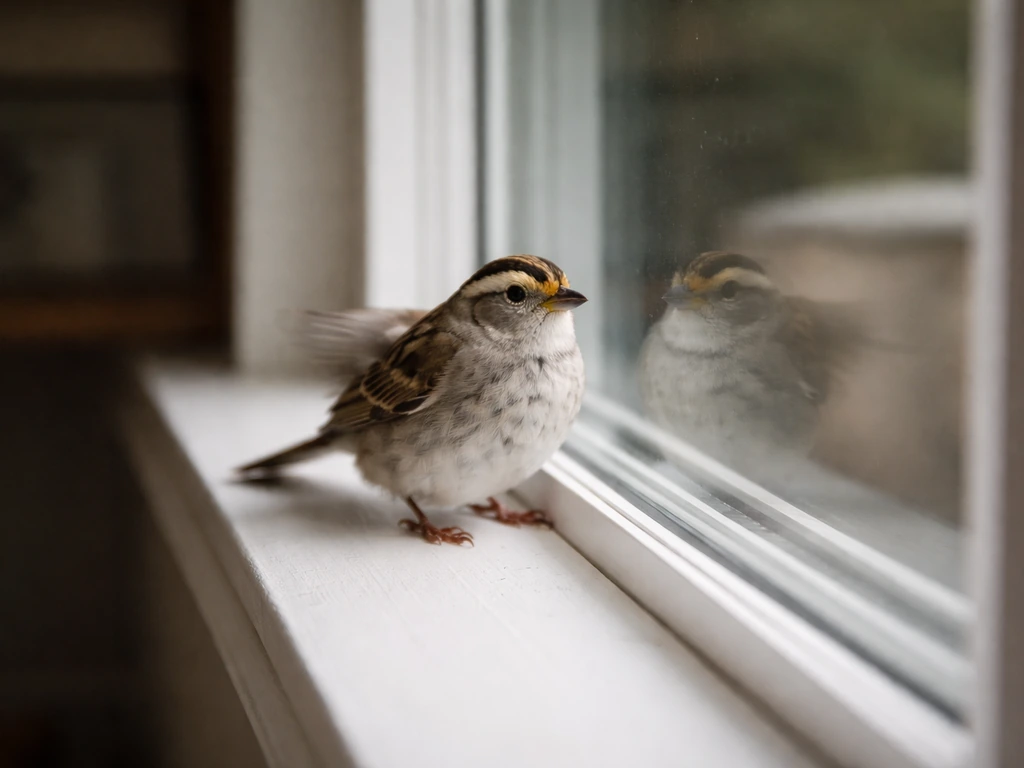
What 'bird on the glass' usually refers to
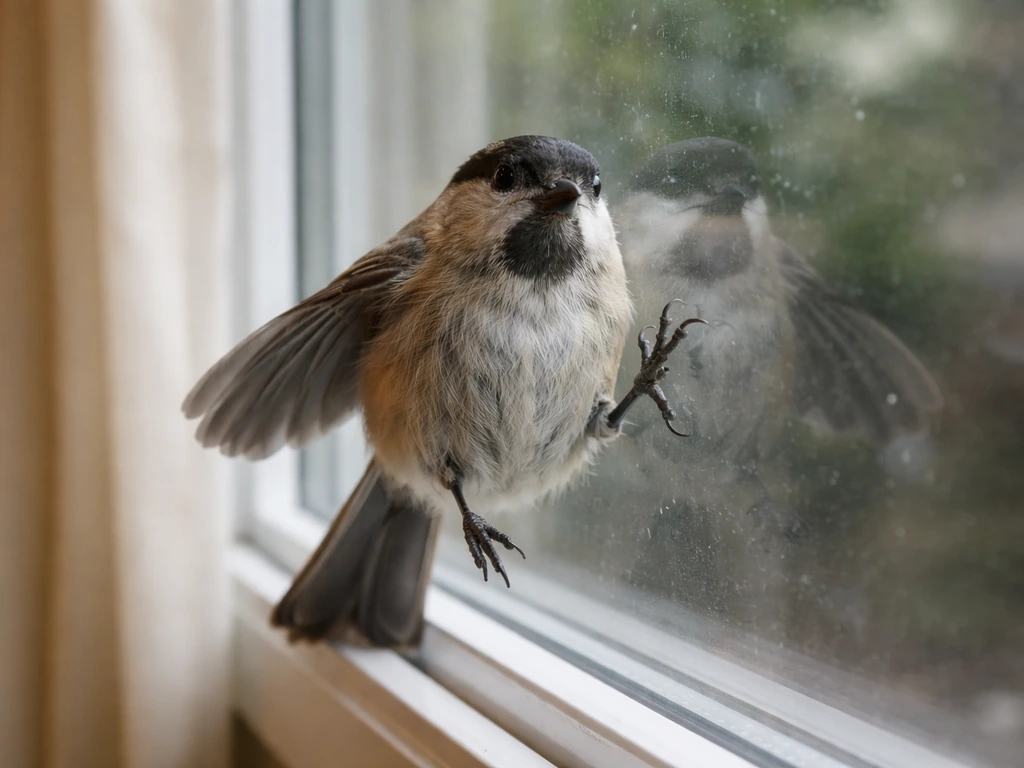
When people search for 'bird on the glass meaning,' they're usually describing one of three situations: a bird that just collided with a window and is dazed or injured, a bird that keeps pecking or hovering at a window as if it's trying to get through, or a more symbolic or spiritual experience they want to make sense of. The phrase itself isn't a formal idiom the way 'early bird gets the worm' is, it's more of a descriptive shorthand for a genuinely strange moment that feels like it carries weight. And honestly, it often does, whether you're coming at it from a practical angle or a symbolic one.
The practical situation (a window strike or persistent perching) is extremely common. Birds hit windows millions of times every year, and unlike some wildlife events, it happens in ordinary backyards, city apartments, and suburban homes. The symbolic interpretation, that a bird at the glass is a messenger, a warning, or a sign of transition, has roots across many cultures and is something a huge number of people take seriously. This article treats both as worth your time.
Why birds hit or hover at glass in the first place
Birds cannot see glass the way humans do. They don't perceive it as a solid barrier, so they simply don't avoid it. What they do see is either a reflection of the sky and vegetation (which looks like open space to fly into) or, when a window is clear enough, the plants and trees on the other side of the house. Both scenarios look like safe, open passage. That's the core problem: the bird isn't being careless, it's making a perfectly reasonable decision based on what its eyes are telling it.
There are a few specific triggers that make window strikes more likely. During spring and fall migration, birds are moving in large numbers and often disoriented, especially at night. Bright artificial lighting from buildings attracts migrating birds that normally navigate by stars, pulling them off course and toward windows. A single Chicago exhibition hall caused the deaths of nearly 1,000 migrating songbirds in one event, which gives you a sense of how serious the light issue can be.
There's also a territorial behavior that looks a lot like a bird 'talking to the glass.' In spring especially, birds (robins and cardinals are common culprits) see their own reflection in a window and interpret it as a rival bird invading their territory. They'll peck, hover, and flutter at the window repeatedly, sometimes for weeks. It's exhausting for the bird and baffling for the people watching it. Birds can also panic and flee from a predator, making them more likely to misjudge a window. Greenhouses, glass walkways, and heavily landscaped windows are especially high-risk.
What to do right now if the bird is injured
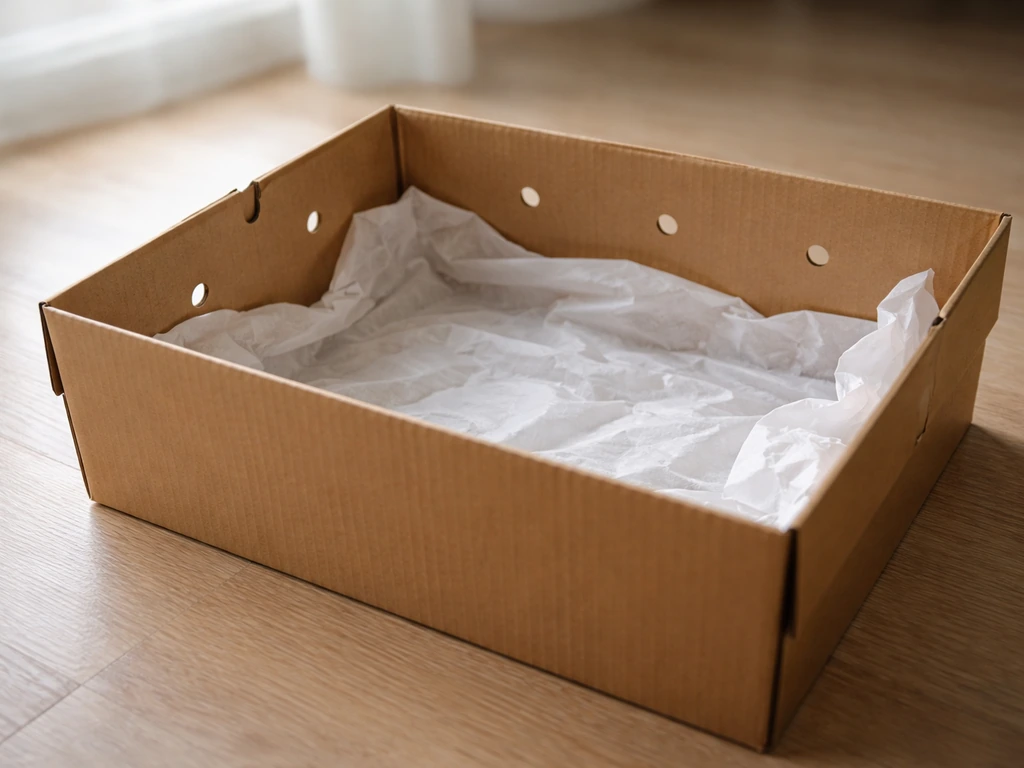
If a bird has just hit your window and is sitting stunned on the ground or windowsill, the first 60 minutes matter a lot. If a bird collision victim is dazed, keep it in a quiet, dark container and contact a wildlife rehabilitator. Here's what to do, in order:
- Gently place the bird in a cardboard box or paper bag with a few air holes. A shoebox works perfectly. Line it loosely with a paper towel.
- Keep the container in a dark, quiet, warm area—away from pets, children, and loud noise. Darkness reduces stress significantly.
- Do not feed or give water to the bird. This is a common instinct but it can cause serious harm. Even a stunned bird that looks fine may have internal injuries.
- Wait about one hour. Many birds that are merely dazed will recover on their own in that time.
- After an hour, take the box outside, open it, and see if the bird flies away on its own. If it does, great.
- If the bird doesn't fly, seems lethargic, is bleeding, or can't stand, contact a licensed wildlife rehabilitator immediately.
Even if the bird seems fine and flies off quickly, window-collision victims can have internal injuries that aren't visible right away. A bird that flies 20 feet and then drops is not a rare outcome. If you have any doubt, reaching out to a wildlife rehabber is always the right call.
When to call wildlife rescue
Contact a licensed wildlife rehabilitator right away, not after another hour of waiting, if the bird is bleeding, has a visibly broken wing or leg, is lying on its side, is being circled by cats or other predators, or shows no response to gentle movement near it. In the US, you can find your nearest licensed wildlife rehabilitator through the National Wildlife Rehabilitators Association or the Wildlife Center of Virginia's finder tool. Most areas also have a local Audubon chapter that can point you in the right direction. Keep in mind that handling wild birds without a license is regulated under federal law in the US, so your job is to stabilize and hand off, not to treat.
The spiritual and symbolic meanings people attach to 'bird on the glass'
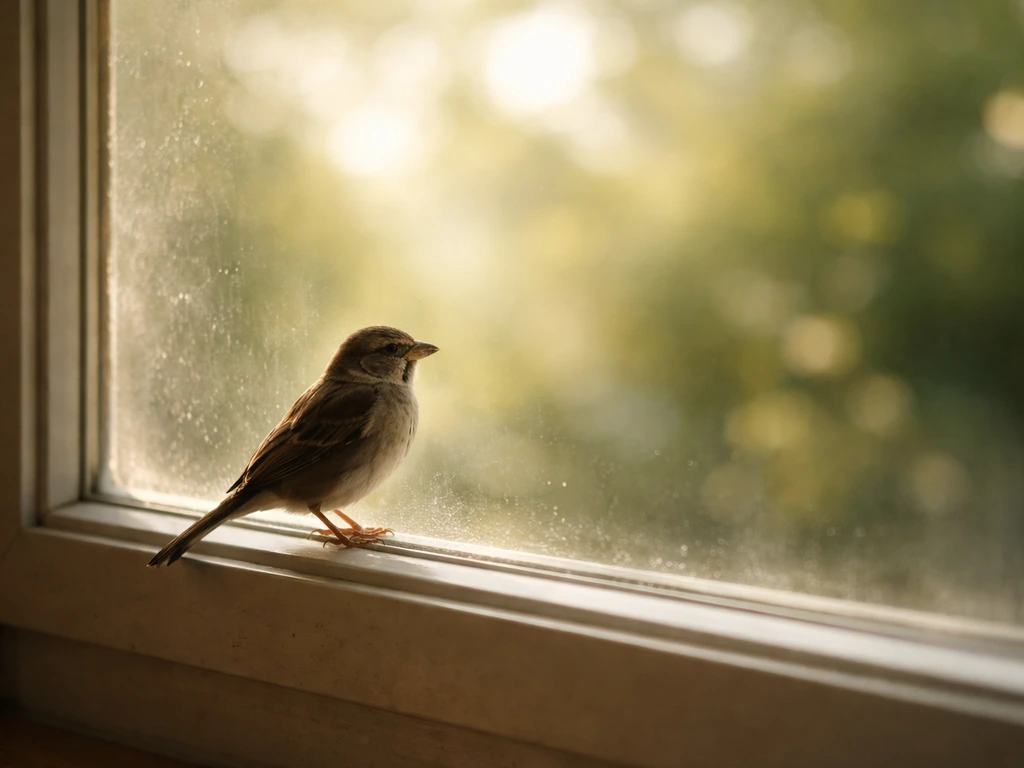
Across cultures and throughout history, birds appearing at windows have carried symbolic weight. The 'on the glass' moment, where a bird presses against the boundary between the outside world and your interior space, lends itself naturally to symbolic interpretation. Glass is a threshold, a liminal surface, and birds have long been understood as messengers between worlds in folklore traditions from Celtic to Indigenous North American to West African belief systems. If you want to explore the bird with twig in mouth meaning, you can use the same approach and consider the symbolism alongside the bird's species and behavior bird on the glass meaning.
Some of the most common symbolic readings people associate with a bird at the glass include messages from the spirit world or a deceased loved one trying to make contact, a warning of change or upheaval coming in your life, a sign of good luck depending on the species (a cardinal is often interpreted this way in American folk belief), a reminder to pay attention to something you've been ignoring, and a signal that you're at a personal threshold, about to cross into a new phase. The species matters a lot in these readings. A hawk at the glass carries different energy than a small sparrow. A crow means something different than a dove. If the specific bird matters to you, it's worth looking up what that bird symbolizes on its own terms.
Why the interpretations vary so much
There's no single authoritative meaning for a bird on the glass because symbolism is always contextual. What a bird at the window means in Victorian English superstition (often seen as a death omen) differs sharply from what it means in many Indigenous traditions (a messenger, not necessarily negative) or in modern spiritual communities (usually a positive sign of connection). Your own emotional state when it happens also shapes what the experience means to you. If you're grieving and a cardinal appears at your window the day after a loved one's funeral, that moment will feel categorically different than if it happens on a random Tuesday.
Culture, timing, species, and personal belief all intersect. That's not a weakness in the interpretation, it's how symbolism actually works. The meaning isn't fixed in the bird; it's constructed at the meeting point between the event and the person witnessing it. This is similar to how other bird-at-a-location images work: a bird on a branch carries its own symbolic weight of rest and perspective, while a bird in the sky suggests freedom or aspiration. If you want the bird with a branch in its mouth meaning, look at the setting and the bird's symbolism for clues about what it might represent to you bird on a branch. If you want a quick bird on the glass meaning summary, use culture, species, and context to narrow it down. If you’re trying to pin down the bird in the sky meaning, focus first on what you actually saw and how the moment felt to you a bird in the sky suggests freedom or aspiration. The glass specifically adds the idea of boundaries and thresholds, something trying to reach you from the other side.
Common symbolic themes and what they represent
| Interpretation | What it suggests | Cultural roots |
|---|---|---|
| Message from a loved one | A deceased person is trying to communicate or offer comfort | American folk belief, spiritualism, many Indigenous traditions |
| Warning or bad omen | Something difficult is coming; pay attention to what's around you | Victorian English superstition, some European folklore |
| Good luck or blessing | A positive event or opportunity is on the way | Various, especially when the bird is a cardinal or dove |
| Call to change or transition | You are at a threshold; something in your life is shifting | Modern spiritual communities, New Age interpretation |
| Boundary or reflection | You are being asked to examine something you've been avoiding | Psychological/metaphorical reading, Jungian-adjacent thinking |
| Territorial or aggressive energy | A disruption of boundaries in your waking life | Contemporary symbolic reading, also grounded in actual bird behavior |
How to prevent birds from hitting your windows
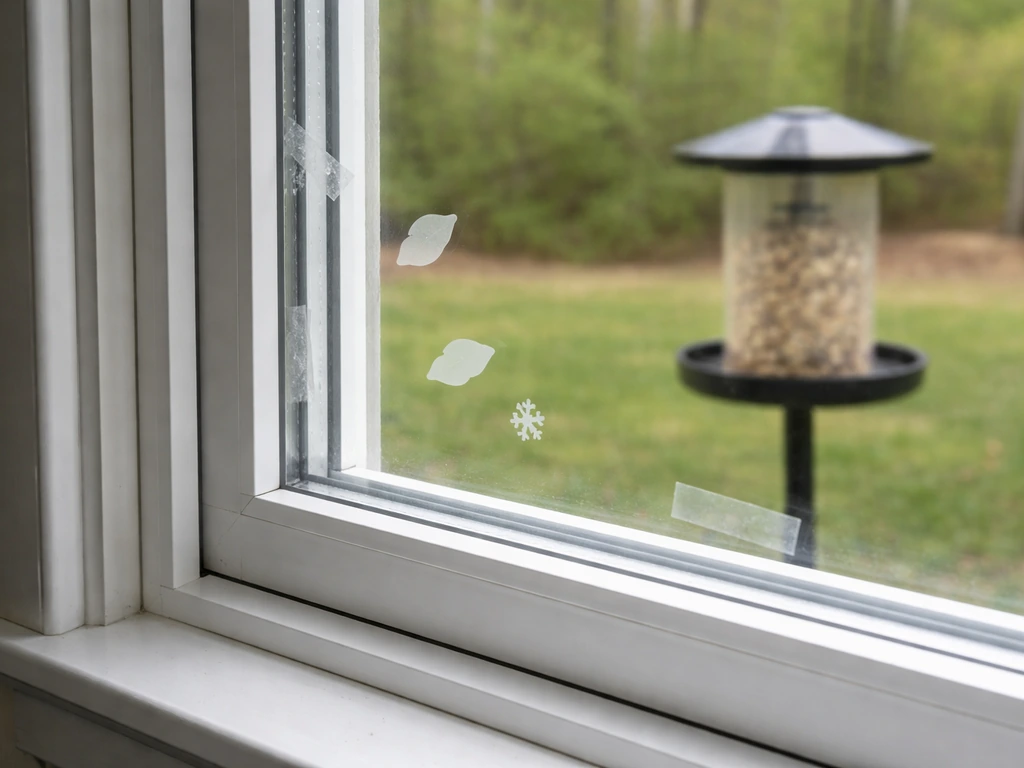
If birds are repeatedly hitting the same window, the good news is that it's a solvable problem. The key insight from research is that deterrents need to go on the outside of the window, not the inside. A sticker on the inside of the glass doesn't help much because the bird is responding to what it sees from the outside, a reflection or an apparent passage through. External treatments break up that illusion.
- Apply window decals or tape on the outside of the glass in a 2-inch by 2-inch grid pattern. The spacing matters: small, evenly placed markers make the whole window surface look impenetrable, while a few large stickers leave too much open space for a bird to aim for.
- Install external insect screens—they reduce reflections and give birds a tactile cue that something solid is there.
- Use external window film designed for bird safety (UV-reflective products that birds can see but humans largely can't).
- Move bird feeders either within 3 feet of windows (so birds don't build up enough speed to hurt themselves) or more than 30 feet away.
- Turn off or dim interior lighting at night during spring and fall migration seasons, especially if you live near a migration corridor.
- Use window blinds or curtains on the inside to break up the see-through effect if the bird is responding to plants it sees on the other side of the house.
For the territorial pecking problem (the bird fighting its own reflection), the solution is to break up the reflection specifically on the outside of that window. Soap or paint on the glass, external screens, or even hanging strips of fabric or paper outside the window can interrupt the reflection enough to stop the behavior.
How to decide what the bird on the glass means for you
If you're a skeptic, you don't need to dismiss the event as meaningless just because you're not taking it as a spiritual sign. A bird at your window is genuinely striking. It's unusual. It's worth noticing. The behavioral explanation, reflection, lighting, migration stress, territorial instinct, is fascinating on its own, and understanding why it happened can feel satisfying in a different way. Practical curiosity is its own form of engagement.
If you're open to symbolic interpretation, there's no single right reading to lock onto. Instead of asking 'what does this mean universally,' ask 'what does this feel like it's pointing to for me, right now, given what's happening in my life?' That's the more honest question, and it tends to produce a more useful answer. Was there something you'd been thinking about before the bird appeared? A decision you've been putting off? A person you've been missing? The bird at the glass often feels significant because it interrupts your ordinary day with something that demands attention, and that interruption itself is the message, whatever form you want to give it.
Both paths, practical and symbolic, are worth following. Help the bird first. Then sit with what the moment meant to you.
FAQ
What should I do if the bird is alive but seems stunned after hitting the window?
If it is still breathing but dazed, keep kids and pets away, dim the lights nearby, and place a towel under the bird so it can rest, then contact a wildlife rehabilitator. Do not feed it or give water, because handling and fluid intake can worsen injuries.
If the bird flies off after the collision, does that mean it is safe to ignore?
No. If the bird is alert enough to fly away, it may still have internal trauma that is not visible. The article advises rehab contact if there are any concerning signs, but for peace of mind, you can call a rehabilitator to ask whether your species and symptoms match a “monitor at home” situation.
How can I reduce bird strikes at night in my home or apartment?
Use lighting and reflections changes outside the window first. Turn off nearby interior lights at night when possible, and close curtains or blinds when you cannot relocate the light source. The key rule is that deterrents need to be placed on the outside so birds do not see a clear “open passage.”
Why does the same bird keep hitting or pecking at one window, and what should I fix first?
Yes, repeated visits often come from reflection and territorial aggression. If you see the bird pecking or hovering at the same pane for days, prioritize external fixes like external screens, soap or paint applied outside the glass, or hanging fabric strips to break up the mirror-like view.
Is it okay to move the bird myself to another spot after a collision?
Do not attempt to “relocate” a bird by carrying it outside if it is injured. Federal wildlife protection rules can apply in the US, so stabilization and handoff to a licensed rehabilitator is the safer path. If you must move it to protect it from cats, use a box and minimal handling.
How can I tell whether my bird-on-the-glass situation is a collision or a territorial reflection problem?
Look for clues in the moment: a stunned bird suggests collision injury, while persistent fluttering and pecking suggests reflection-driven territorial behavior. If the bird keeps returning to the same window even after it flies off briefly, that pattern points more toward territorial/reflection issues than a one-time accident.
What if the bird looks okay but won’t leave the window area?
In most cases, you should avoid forcing contact. If a bird is bleeding, has a visible injury, or shows no response, the article recommends immediate rehab contact. If it is acting normal but keeps lingering, you can use visual deterrents and wait, without trying to catch it.
Should I interpret bird symbolism differently depending on the species, or is the practical explanation always enough?
Species can change the “symbolic” read people prefer, but it does not change the practical first steps. If you want to combine both approaches, identify the bird type and note the behavior, then interpret the threshold or interruption theme in the context of your personal situation right then.
What should I do if birds keep returning to the same window week after week?
If the bird seems uninjured and is repeatedly checking the same pane, focus on preventing the visual illusion rather than waiting for the bird to “learn.” External treatments like screens or outside-mounted visual blockers typically work better than anything placed on the interior glass.
What if the bird you find after a window strike dies, and I keep seeing more birds around the same area?
If the bird dies, treat it as a wildlife-handling situation rather than a “sign” event. Wear gloves if you clean up, bag the remains, and contact local wildlife officials or a rehabilitator if you are seeing multiple deaths or suspect a larger hazard like lighting during migration.
Next Article
War Bird Meaning: Literal, Slang, and Historical Uses
Understand war bird meaning: literal, slang metaphor for fighters, and historical bird symbolism, plus close phrase comp