
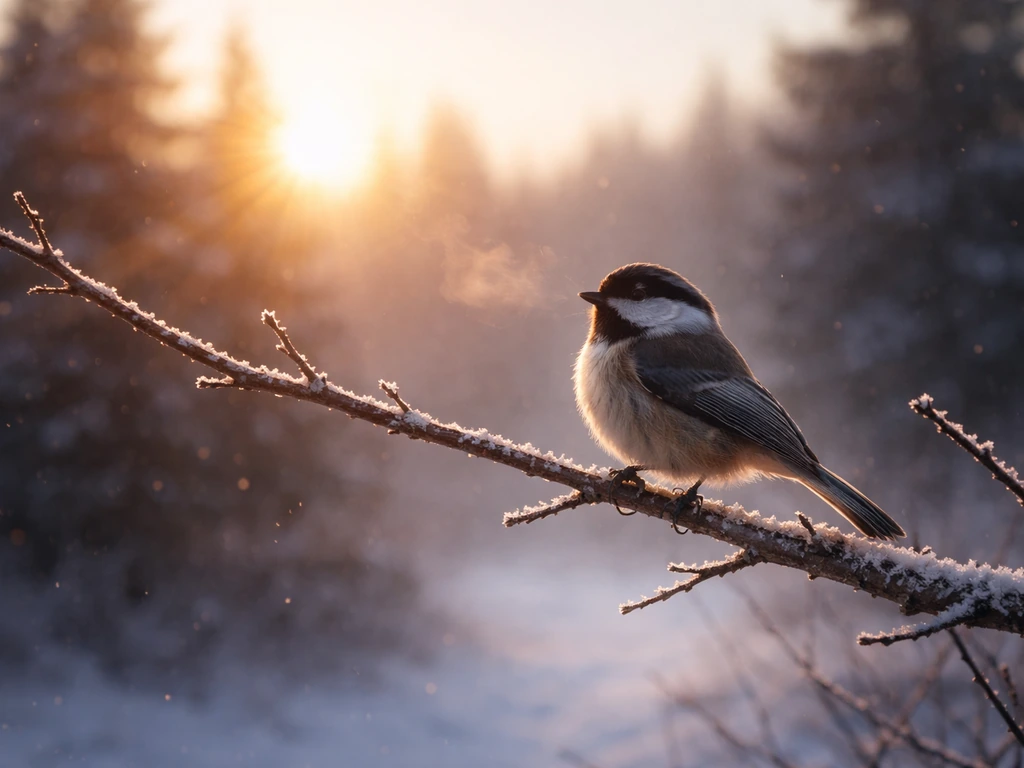
The phrase 'first bird of the year' means exactly what it sounds like: the first bird you see or hear at the start of a new year, typically on January 1st. But there are two layers to what people usually mean when they use it. In birding culture, it's a personal milestone record, sometimes called an FOY (first of year) bird, that kicks off your year list. In a broader symbolic or folkloric sense, it's treated as a kind of omen or theme-setter for the months ahead. Most of the time when someone uses the phrase, they mean both things simultaneously, which is why it shows up in conversations ranging from wildlife apps to New Year's Instagram posts.
First Bird of the Year Meaning: What It Really Means

Marcus Whitmore
19 Apr 2026
What the phrase usually means
At its core, 'first bird of the year' is an observation milestone. Birders have used the shorthand FOY, or 'first of year,' for decades to mark the first time they spot or hear a given species within a calendar year. The 'first bird of the year' is simply the FOY bird that starts the whole list: the very first species you encounter after midnight on January 1st. It's tracked personally, not officially, and there's no governing body handing out awards for it. The tradition is entirely self-directed and self-reported.
That said, the phrase carries symbolic weight beyond just a checklist entry. Audubon members describe logging their first bird of the year as a ritual tied to 'theme and fortune' for the year ahead. The same way some people track what song played first on New Year's Day or what the weather was like on January 1st, birders and bird-curious people use the first bird as a personal sign or symbol. So if someone says 'my first bird of the year was a red-tailed hawk,' they're often telling you both a fact (they saw a hawk first) and a feeling (they think this means something).
Is it a specific tradition or just a symbolic saying
It's genuinely both, and the two blend together more than you'd expect. The FOY birding tradition is a real, community-recognized practice. Birders at every level, from casual backyard watchers to serious listers, note their first bird of the year as a kind of opening move in their annual birding life. Some plan it deliberately, stepping outside at first light on January 1st to see what turns up. Others just happen to notice the first bird they encounter and note it after the fact.
The symbolic or superstitious layer comes from much older traditions. Bird augury, the practice of reading omens from bird behavior and sightings, goes back thousands of years across cultures in Europe, Asia, and the Americas. Cultures as different as ancient Rome and pre-colonial North America developed systems for interpreting what a bird's appearance, direction of flight, or species meant for the people who saw it. The 'first bird of the year' phrase taps into that same instinct, even when the person using it has never heard of augury. It's a modern, informal version of an ancient habit.
So to answer the question directly: there is no single codified tradition with fixed rules about what counts, who it applies to, or what the outcome means. It's a blend of participatory birding culture and personal folklore, and that's actually what makes it interesting. You get to define what it means to you.
Interpreting the 'first bird' by species and behavior
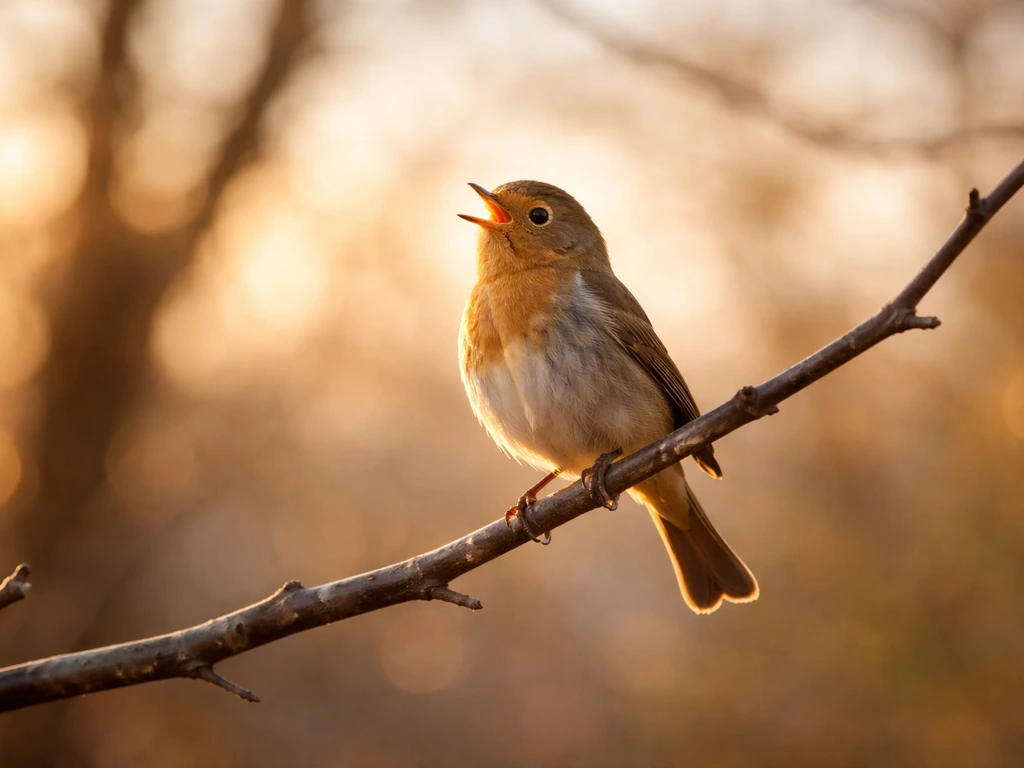
Once you know which bird showed up first, the natural next question is what that specific bird symbolizes. This is where the site's broader reference work becomes useful. Different species carry very different meanings across cultures, and those meanings often vary by region and tradition. There's rarely one universal answer, but there are consistent patterns worth knowing.
Behavior matters as much as species, too. A bird that appears and sings loudly is read differently than one that flies silently overhead. A bird that lands near you versus one spotted far in the distance carries different weight in folkloric interpretation. Historically, augury considered direction of flight, whether a bird was perched or moving, whether it called or stayed silent, and even the time of day. You don't need to follow all of that to find meaning, but paying attention to behavior gives you more to work with.
Here are some of the most commonly encountered 'first bird' species in North America and Europe, along with their most widely recognized symbolic associations:
| Species | Common Symbolic Associations | Cultural Context |
|---|---|---|
| Northern Cardinal | Good luck, protection, connection to loved ones | Cherokee mythology links it to the sun and good fortune; widely associated in North American folk belief with messages from deceased relatives |
| American Robin | Renewal, spring, hope, new beginnings | One of the most recognized 'harbinger of spring' birds in North America; a first-of-year robin feels particularly auspicious |
| Magpie | Mixed luck; depends on count and culture | British/Irish 'One for Sorrow' rhyme tradition; in East Asian cultures often seen as a symbol of good fortune |
| Crow or Raven | Transformation, intelligence, change, prophecy | Widely associated with omens across European and Indigenous North American traditions; not inherently bad luck despite reputation |
| Hawk or Eagle | Vision, power, clarity, messages from above | Broadly treated as powerful signs across many traditions; hawks in particular are associated with focus and decisiveness |
| Dove | Peace, love, spiritual messages, new beginnings | Cross-cultural symbol of peace; appearing first in the year is generally read as a gentle, positive sign |
| Owl | Wisdom, transition, the unseen | Frequently associated with change and the passage between states; culturally varied, sometimes cautionary, sometimes reverential |
Keep in mind that symbolism is layered and culturally specific. A magpie means something very different to someone in rural England steeped in the 'One for Sorrow' rhyme than it does to someone in China, where the magpie is a popular symbol of joy and good fortune. If you want to find a meaning that actually resonates, it helps to look up the specific species and see which cultural tradition feels relevant to you.
Common meanings people attach to it: omens, luck, and messages
The most common interpretation people bring to 'first bird of the year' is that it sets a tone or theme for the months ahead. This is personal and intuitive rather than rule-based. Someone who sees a hawk first might feel the year will demand sharp focus. Someone whose first bird is a cardinal might take it as a message from a family member who has passed. Someone who hears an owl before they see any other bird might feel a year of hidden knowledge or change is ahead.
A second common framing is pure luck: the bird is either a good or bad omen for the year. This is the more superstitious reading, and it tends to lean heavily on species reputation rather than personal meaning-making. The magpie counting tradition from Britain is a classic example of this: see one magpie and it's sorrow, see two and it's joy. Mapped onto 'first bird of the year,' seeing a single magpie first could be read as a cautionary start while seeing a pair might feel auspicious.
A third interpretation is that the bird is carrying a message rather than setting a general theme. This reading tends to be more spiritually oriented, often connected to beliefs about animal totems, spirit guides, or deceased loved ones communicating through wildlife. In this framework, the specific bird species is less about luck and more about what that bird traditionally carries as its meaning: protection, change, clarity, and so on.
None of these interpretations are more 'correct' than the others. They reflect different cultural backgrounds, different levels of belief, and different personal relationships with nature. The useful thing is knowing which framework someone is using when they bring up their first bird of the year, because that tells you what kind of conversation you're in.
How to identify and track the first bird of the year today
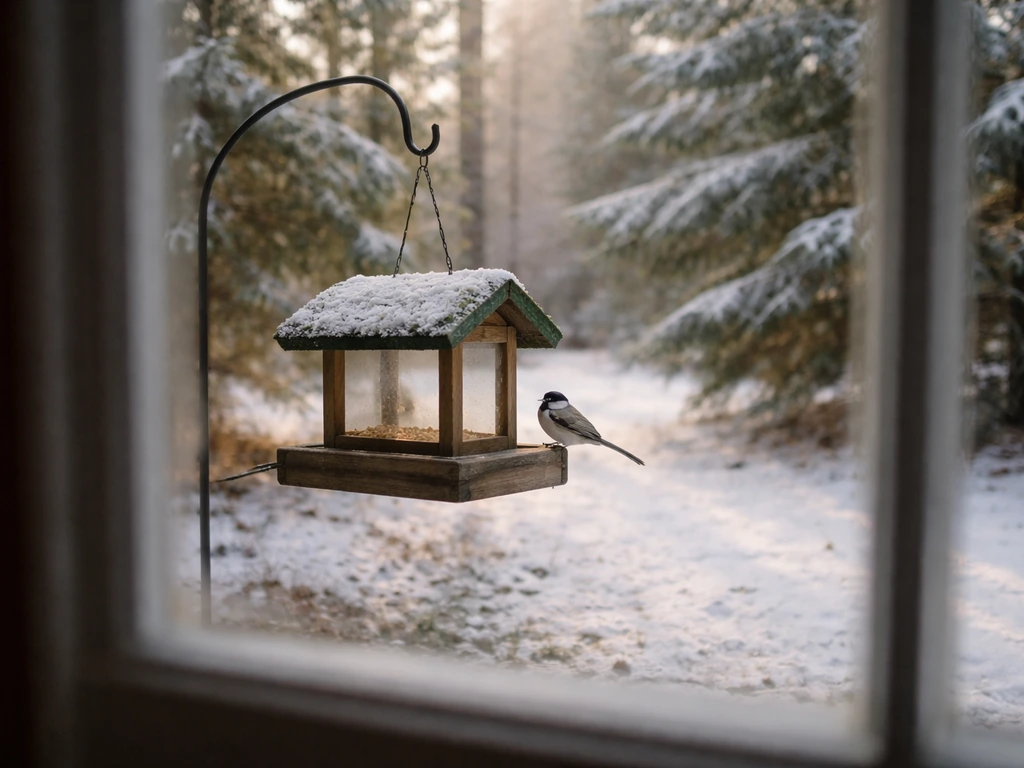
If you want to take the tradition seriously, the practical steps are straightforward. You don't need any special equipment, though a pair of binoculars helps and a birding app like eBird makes logging the sighting easy and useful. When you add media like photos or audio to an eBird checklist, it enters the Macaulay Library archival system and helps document the specific bird record you’re reporting eBird makes logging the sighting easy and useful.
- Define your start point. Most people use midnight on January 1st as the cutoff, but if you're asleep at midnight, the first bird you see or hear after waking is a perfectly reasonable starting point. Pick a rule and stick to it.
- Count heard birds too. In birding culture, a bird you hear and can confidently identify counts just as much as one you see. Cornell Lab's eBird explicitly includes birds you heard as valid observations. An owl calling in the dark at 12:01 AM counts.
- Note the specifics. Record the species, time, location, and what the bird was doing. Even a quick mental note or phone memo helps. If you're using eBird, you can add comments about what you heard or saw, which makes the record genuinely useful later.
- Take a photo or recording if you can. eBird supports uploading audio and photos, and these help you confirm the ID if you're uncertain. For edge cases, documentation matters.
- Identify confidently before assigning symbolism. The symbolic layer only works if you know what bird you're dealing with. A silhouette at dawn could be a crow or a raven, and those carry different associations. If you're not sure, use a field guide, Merlin Bird ID, or eBird to confirm before you run with the meaning.
- Look up the species symbolism separately. Once you have a confirmed ID, search for that species by name along with 'symbolism,' 'folklore,' or 'omen' to find what different cultures make of it. Cross-reference with your own background and what feels meaningful to you.
eBird is particularly useful here because it's free, covers the whole world, and has one of the largest community-verified bird observation databases available. You can submit your first-of-year sighting and it becomes part of a dataset that scientists actually use, which adds a practical value on top of the personal or symbolic one.
Ambiguities and edge cases: multiple birds, no clear 'first'
Real life is messy, and first-bird-of-the-year situations come with some genuinely tricky edge cases. Here's how to handle the most common ones.
What if multiple birds appear at the same time
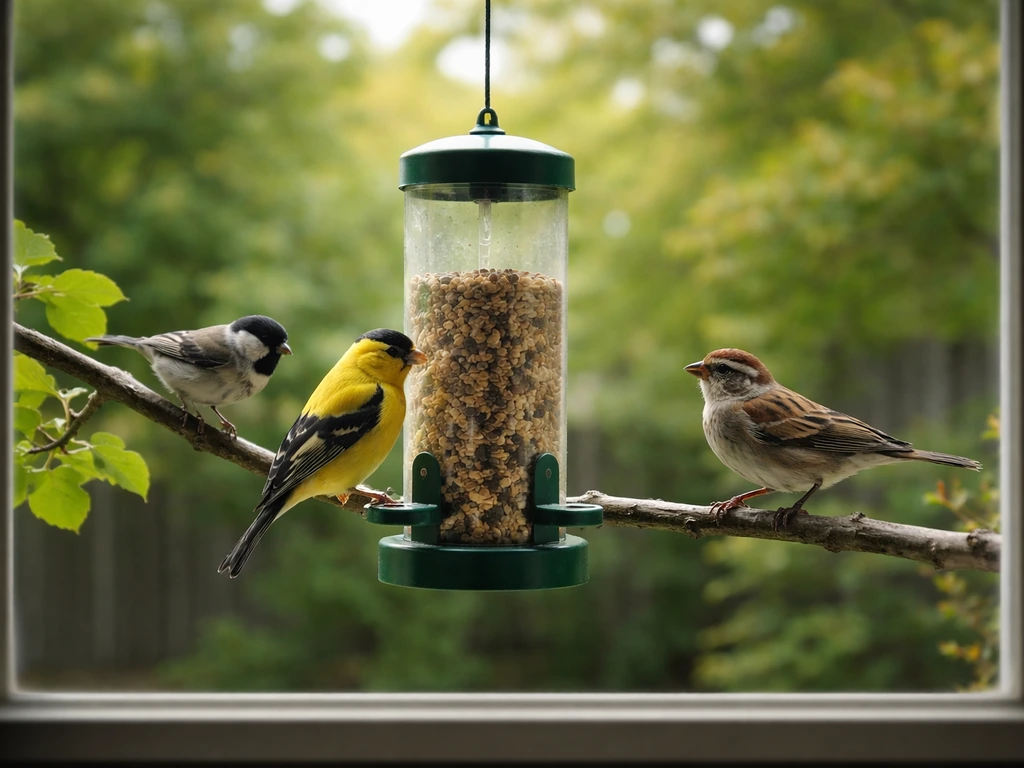
This is probably the most common complication. You look out the window and there are three different species at your feeder simultaneously. The simplest approach: note whichever species you actually noticed first, even if by a second. If you genuinely have no sense of which one registered first, pick the most prominent or the one closest to you. In birding culture, the 'first' is a personal record, so your honest recollection is the rule. If you're leaning into symbolism, you can also interpret a cluster of species as a compound message rather than forcing a single 'winner.'
What if you hear a bird but can't identify it
eBird's standard is that you can count a bird you heard as long as you can confidently identify it. If you hear something but genuinely can't ID it, it doesn't count as your first bird for listing purposes. For symbolic purposes, an unidentified bird is hard to interpret meaningfully. Your practical options are to try to locate the bird visually, use the Merlin Bird ID app's sound ID feature to help identify it in the moment, or simply wait for the next clearly identifiable bird.
What if you're somewhere unusual on New Year's
Location shapes everything about this tradition. If you're traveling internationally, the species available to you are completely different, which can actually make the whole exercise more interesting. The first bird of the year in a place you don't usually live carries its own resonance. Just make sure you're working from that location's regional symbolism if you want an interpretation that holds together.
What if no bird shows up for hours
Particularly in winter, in urban environments, or in bad weather, you might go a significant stretch of January 1st without seeing or hearing a single identifiable bird. This isn't a bad omen; it's just geography and season. The tradition doesn't require that you see something immediately. Some birders deliberately wait and make an outing of finding their first bird. Others accept whatever shows up whenever it does. There's no wrong answer here.
What if the sighting is near midnight
If a bird appears just before or just after midnight, you're in genuinely ambiguous territory. eBird's guidance leans on accurate date-and-time logging: checklists correspond to a single calendar date, and a sighting at 11:59 PM on December 31st is technically last year's. If you want to be precise, note the time and use it honestly. If you're approaching it more casually, a bird seen at 12:02 AM is about as good a start as you'll get.
Quick next steps: how to look up your bird and use the symbolism

Once you've identified your first bird of the year, here's the most practical path to getting something useful out of it.
- Search by species name on this site. Most common bird species have their own entries covering symbolic meanings, cultural associations, and folkloric history. Start there rather than with a general web search, which tends to surface generic or contradictory information.
- Note which cultural tradition the symbolism comes from. Cherokee associations with the cardinal are different from European ones. East Asian magpie symbolism is the opposite of British magpie superstition. Know which lens you're applying.
- Consider the behavior, not just the species. A singing bird, a perched bird, a bird flying toward you versus away: these details add texture. If you noted what the bird was doing, factor that in.
- Don't force a meaning that doesn't resonate. Symbolism works because it connects to something personal. If the cardinal-as-loved-one framework doesn't speak to you, you're not obligated to use it. Take what fits.
- If you're interested in the broader idea of a 'bird year' as a longer theme, the concept of the year of the bird meaning takes this in a different direction worth exploring separately.
- Log your sighting in eBird even if you're approaching this symbolically. It takes two minutes, it contributes to real science, and it gives you a permanent record of your first bird of the year that you can look back on.
The phrase 'first bird of the year' sits at an interesting crossroads: part community birding tradition, part personal omen-making, part genuine curiosity about the natural world. You don't have to pick just one of those threads. The most satisfying approach is usually to do the observational work honestly, identify the species carefully, and then bring in symbolism as a layer of meaning on top of a real encounter rather than as a replacement for one. The year of the bird meaning is often what people are trying to capture when they talk about their first bird.
FAQ
Does “first bird of the year” mean after midnight in your time zone, or after midnight where the bird was seen?
For personal FOY tracking, use the local date and time where you were standing when you noticed the bird, since that matches the calendar day you experienced. If you travel, log the time with your checklist, then interpret symbolism (if you use it) based on the place you actually observed the bird, not your home location’s date.
If I see a bird at 11:58 PM on Dec 31 and then another at 12:01 AM on Jan 1, which one counts?
The Jan 1 record is the one that counts for “first bird of the year,” because the cutoff is midnight for your checklist date. To avoid argument with yourself later, write down the exact time for both sightings, then keep the Jan 1 one as the start of your year list.
What if the first sound I hear is a bird, but I cannot identify the species until later?
For listing purposes, the “first” usually needs to be confidently identifiable at the time of the sighting. If you can only identify it later, make the first-of-year entry only when you have identification you trust, otherwise treat the unidentified call as “heard, not counted” and record the first clearly ID’d bird instead.
How do I handle a flock where multiple species are obvious right away at the same feeder?
Use your best recollection of what arrived first, even if it was within seconds. If you truly cannot distinguish order, you can either (a) choose the one you noticed most clearly first, or (b) record a group note for symbolism and still log the first individually identifiable species for your FOY list.
Can I count birds that visit my yard only, even if I never do a New Year’s outing?
Yes. FOY is primarily a personal milestone, so there is no requirement to go out at first light. Just be consistent about your method (yard-only versus broader walks), since your “first bird” experience will differ by approach.
If I miss January 1 completely, can I still do a “first bird of the year” later in the month?
Some people still talk about “first bird of the year” even if they are late, but it becomes a “first bird you recorded” rather than literally the first bird of the calendar year. If you do this, label it clearly in your notes so you do not confuse it with a true midnight-based FOY record.
How should I interpret symbolism if I do not believe in omens?
You can treat symbolism as a reflection tool rather than a prediction. For example, pick the framework that feels least superstitious to you, theme and mood-setting, message and connection, or luck, and then use it to shape a personal intention for January rather than to forecast outcomes.
Do I need to count only visual sightings, or are vocalizations valid?
Vocalizations can count when you can identify the bird with confidence, such as a distinctive call. If you hear something but cannot place it to species, it is safer to wait for a clearly identifiable bird rather than forcing an ID that you might regret later.
Is it “wrong” if it’s quiet for hours on January 1?
Not at all. In winter, dense urban areas, and bad weather, it is normal to have delays before any identifiable birds show up. You can either follow a strict midnight-to-midnight rule or do an outing after midnight, the key is being honest about your chosen approach in your notes.
How do I log FOY accurately in a birding app without messing up the date?
Use the checklist date that matches the calendar day you are recording, and double-check time stamps around midnight. If your app supports it, enter time-of-day and any identification certainty, this helps prevent a Dec 31 sighting from accidentally becoming your Jan 1 first.
Next Article
War Bird Meaning: Literal, Slang, and Historical Uses
Understand war bird meaning: literal, slang metaphor for fighters, and historical bird symbolism, plus close phrase comp