
When someone says they had a "fever dream" featuring a bird, they usually mean one of two things: either they were literally ill with a fever and had a strange, vivid dream that happened to include a bird, or they're using "fever dream" as common slang for any experience that felt surreal, overwhelming, and hard to explain afterward. Both are worth unpacking, because the bird showing up in that context carries real symbolic weight regardless of which camp you're in.
Fever Dream Bird Meaning Explained and Real-Life Causes

Marcus Whitmore
10 Apr 2026

What people usually mean by a "fever dream"
A literal fever dream happens when your body temperature is elevated during illness and your brain enters sleep in an altered state. Research published in Frontiers in Psychology confirmed that fever dreams are measurably different from normal dreams: they're more bizarre, more negatively toned, and more likely to include explicit awareness of heat or physical discomfort within the dream itself. The Sleep Foundation describes them as vivid, sometimes hallucinatory experiences that can blur into the delirium-adjacent territory that Johns Hopkins Medicine associates with altered consciousness, confusion, and sensory distortion. In other words, your brain is running hot, literally, and it shows in the imagery it produces.
The slang use of "fever dream" is just as common now. People describe anything that felt intensely weird, emotionally overwhelming, or impossible to fully describe as a "fever dream," even when no actual fever was involved. If you're using the phrase that way and a bird keeps surfacing in the memory of that experience, the symbolic reading still applies. The brain (and human language) tends to reach for birds when it wants to represent something that can't quite be pinned down.
Common reasons a "bird" shows up in fever dreams
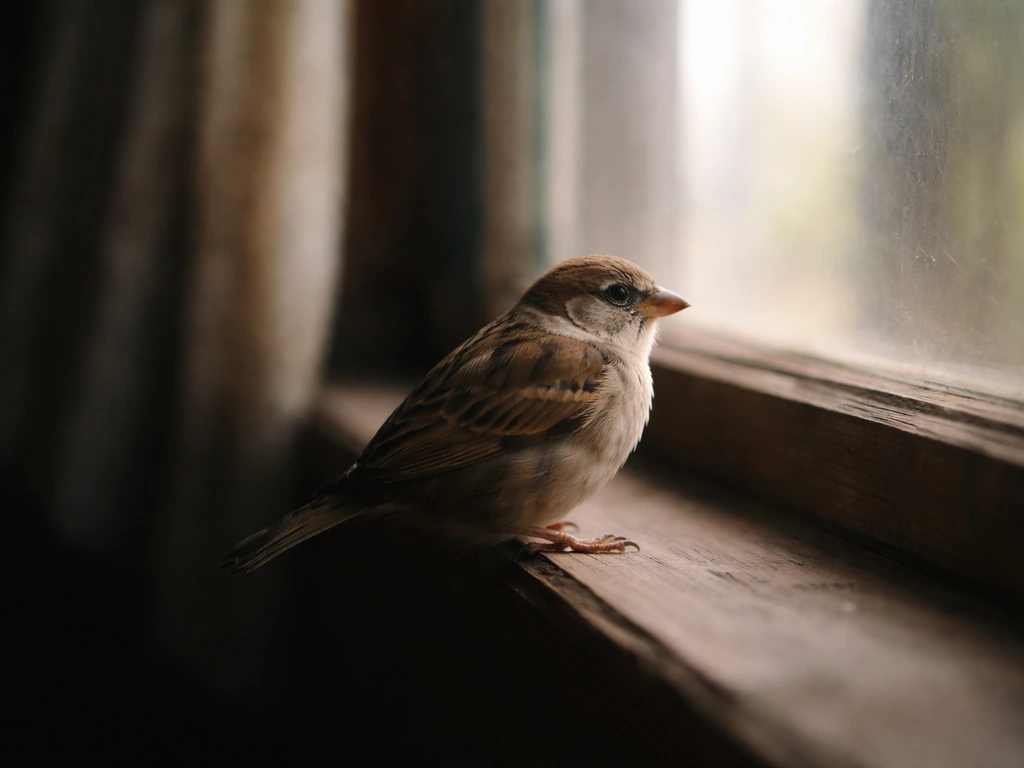
Birds are among the most common animal images in dreams generally, and there's a fairly practical reason for that. You encounter birds constantly in daily life: sounds, glimpses out windows, images in media. The continuity hypothesis of dreaming, cited in TIME's coverage of sleep research, suggests that dreams tend to mirror whatever your waking mind has been processing. Birds are ambient background information for almost everyone, so they have a strong foothold in the dream library your brain pulls from when it starts improvising under fever conditions.
Beyond mere familiarity, birds carry a specific quality that makes them particularly useful to a fevered or stressed brain: they exist at the boundary between here and somewhere else. They can leave. They can see from above. They sing things you can't always decode. A dream brain working through fear, confusion, or physical distress will often reach for imagery that captures that in-between feeling, and few things do it better than a bird mid-flight or perched just out of reach. Research on REM sleep behavior also shows that animal characters appear more frequently in highly emotional or physiologically disrupted sleep states, which further explains the bird's recurring role.
Interpreting the bird: species-neutral symbolism
Even if you couldn't identify the exact species in your dream, birds as a category carry consistent symbolic associations across most cultures and literary traditions. At the broadest level, a bird in a dream tends to represent one or more of these core ideas:
- Freedom and the desire to escape a situation, relationship, or feeling
- Communication: something being said (or needing to be said) that hasn't landed yet
- Transition or change, especially a shift between life phases or emotional states
- Intuition and the parts of your mind that know something before you consciously acknowledge it
- The soul or spirit in many folk and religious traditions, representing something that outlasts the body
- Omen or warning in cultures that historically read bird behavior as messages from the divine
In the context of a fever dream specifically, the emotional tone of the dream shapes which of these applies most. If the bird felt reassuring or beautiful, your mind may have been reaching toward comfort or hope during a stressful physical experience. If it felt threatening or chaotic, that aligns with what the Frontiers study found: fever dreams skew negative and more aggressive in their emotional content, so a menacing bird may simply be your brain's fever-amplified version of ordinary anxiety. This is also explored in fever bird meaning, which digs into why birds and elevated states of consciousness keep showing up together in both dreaming and symbolic language.
If the dream includes recognizable bird details (color, behavior, setting)
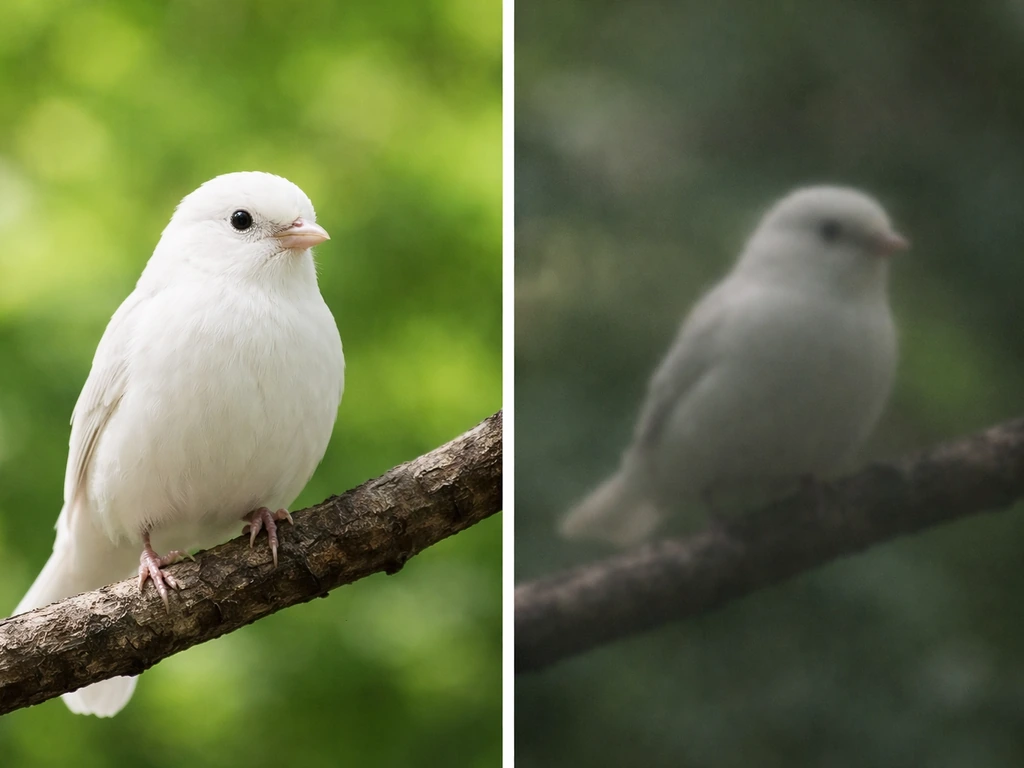
Details matter. A bird dream that sticks with you usually does so because of a specific quality: the color, what the bird was doing, where it was, and how you felt watching it. These are the levers you can pull when you try to interpret it more precisely.
Color
White birds almost universally suggest purity, peace, or a message of hope across Western and many Eastern traditions. Red or orange birds carry energy, urgency, or passion, and in some traditions signal a warning or heightened emotion. Black birds are complex: they can mean mystery, wisdom, or transition rather than straightforwardly negative omens, depending on the cultural lens you apply. A brilliantly colored bird like a flamingo tends to be read as a symbol of vibrancy, balance, and attention to beauty, which in a fever dream might reflect a longing for normalcy or joy during a period of illness.
Behavior
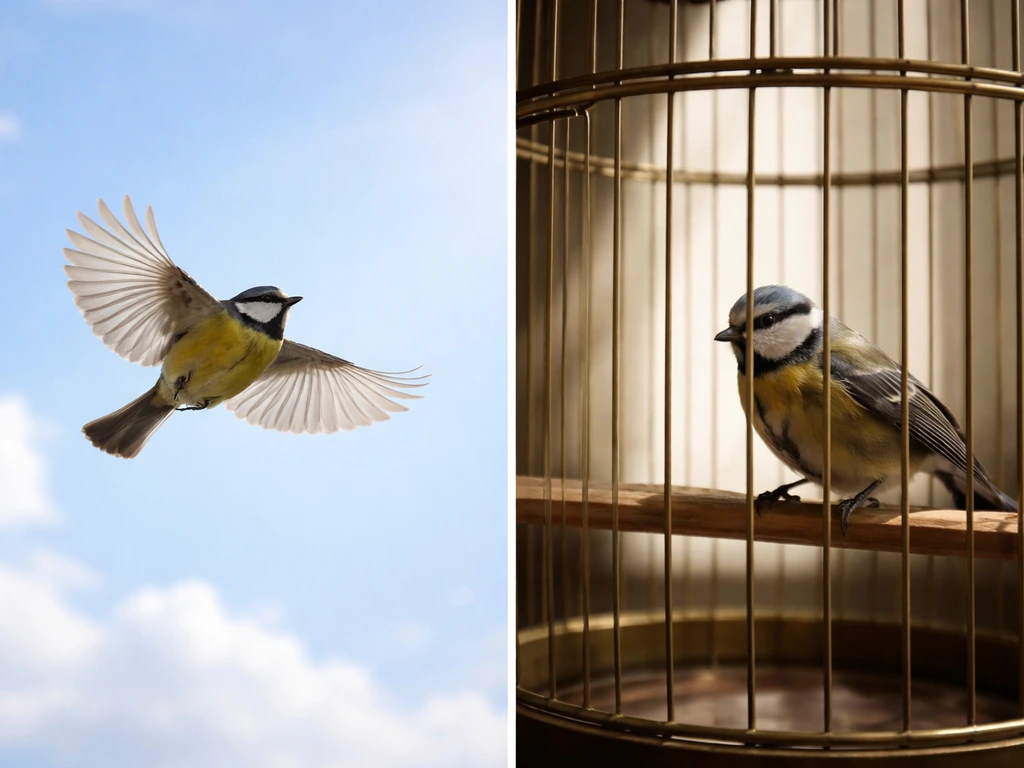
A bird that's flying freely usually points to relief, liberation, or aspiration. A bird that's caged, injured, or struggling to fly often reflects feelings of being trapped or overwhelmed, which fits naturally into a feverish state where the body literally cannot function normally. A bird that's singing is a classic communication symbol: something is trying to be heard.
A bird that's attacking is worth paying attention to emotionally, not because it predicts anything, but because aggressive imagery in dreams has been linked in research to underlying emotional arousal, especially when REM sleep is disrupted by illness or stress.
And if you dreamed of a bird surrounded by fire or light, the symbolism connects directly to the idea of transformation: you can explore that thread in the article on what does a bird on fire mean, which covers the phoenix tradition and related imagery across cultures.
Setting
Where the bird appeared in the dream adds another layer. A bird in a dark or enclosed space suggests something being held back or hidden. A bird at the edge of a window or doorway is a classic threshold symbol. A bird in wide open sky usually signals hope, possibility, or the desire for clarity. If the dream had a disorienting quality where you couldn't quite tell where you were, that's consistent with how fever dreams work physically: the brain receives temperature signals and mixes them into the spatial and emotional content of whatever scenario it's constructing.
Cultural and language references for birds in symbolism
Birds have been doing symbolic heavy lifting in human culture for thousands of years, and that history is worth knowing when you're trying to make sense of a dream image. The dove is probably the most loaded bird symbol in Western tradition: its connection to peace comes largely from the biblical story of Noah's Ark, where a dove returns with an olive leaf to signal that the flood has receded. That image became so embedded in Christian iconography that the dove-and-olive-branch pairing is still the universal shorthand for reconciliation and new beginnings. If your dream bird felt gentle, communicative, or reassuring, that dove-like energy is worth considering even if the bird wasn't literally a dove.
In many Indigenous North American traditions, birds are messengers between the human world and the spiritual one. In ancient Egyptian belief, the soul itself (the "ba") was depicted as a human-headed bird. In Norse mythology, Odin's ravens Huginn and Muninn (thought and memory) flew across the world each day and returned with knowledge.
In parts of Europe, storks became entangled with ideas of birth and new life, a folk belief that research published in the Journal of Ethnobiology and Ethnomedicine traces through multiple European cultures and into modern pop culture.
The point is that almost every culture has used birds to represent messages, transitions, and things that can't be fully captured in words, which is exactly why a bird appears so naturally in the dream space your mind creates during a fever or a surreal experience.
It's also worth noting what researchers have found about birds and dreaming from the other direction. Scientists at Cornell Lab have studied whether birds themselves dream, inferring dream-like neural processing from brain activity patterns during sleep rather than from anything the bird reports. The takeaway for our purposes: bird imagery in your dream comes from your own memory and symbolic language, not from any external bird-specific message. Your brain chose that image from its own library, which means the interpretation belongs to you.
Sometimes a dream bird carries a very specific emotional quality that doesn't map cleanly onto any single cultural tradition. If you've ever wondered whether the bird in a dream was expressing something on your behalf rather than presenting itself as a symbol, the piece on what a bird thought meaning explores exactly that idea: how birds in language and dreams can function as stand-ins for thoughts or feelings that the dreamer hasn't yet put into words.
How to respond: journaling, emotional takeaways, and when to seek help
The most useful thing you can do immediately after a vivid fever dream is write it down. Memory of dreams fades fast, especially when you've been ill. Capture the bird's color, behavior, what you felt watching it, and any setting details. Then sit with the emotional texture of the dream rather than hunting for a literal prediction. Fever dreams are not omens or prophecies; they're a byproduct of your brain working through physical stress in an altered state. Use the imagery as an emotional signal, something worth noticing, rather than a message about the future.
Ask yourself what's been weighing on you in waking life. The continuity hypothesis tells us that dreams reflect recent concerns, and a fever tends to amplify whatever emotional material is already sitting near the surface. If the bird felt like freedom, ask what in your life you've been wanting to escape or move toward. If it felt menacing, check in with what's been generating the most anxiety lately. These aren't diagnostic tools, they're prompts for honest self-reflection.
Now for the part that matters most if your fever dream was actually accompanied by a real fever: please take the medical side seriously. Harvard Health notes that high fever can cause confusion, excessive sleepiness, and in severe cases seizures. blank" rel="noopener noreferrer">Mayo Clinic advises seeking immediate medical attention if fever is accompanied by mental confusion, strange behavior, or altered speech. Healthline points out that hallucinations during fever often resolve as the fever comes down, but blank" rel="noopener noreferrer">if confusion, disorientation, or hallucinations persist after your temperature normalizes, that's the moment to stop interpreting dreams and call a doctor or go to an emergency room.
Here's a simple framework for deciding what to do next:
| Your situation | What it likely means | What to do |
|---|---|---|
| Fever has resolved, dream was weird but you feel fine now | Normal fever dream experience | Journal the imagery, use it as an emotional prompt, no medical action needed |
| Still running a fever above 103°F (39.4°C) with vivid dreams or hallucinations | Fever may be affecting brain function | Monitor closely; call a doctor if symptoms worsen or don't improve |
| Confusion, disorientation, or hallucinations not resolving as fever drops | Possible delirium or more serious cause | Seek medical evaluation promptly |
| Confusion, difficulty staying awake, seizures, or extreme behavioral changes with fever | Medical emergency | Go to the emergency room immediately |
| No fever, just a surreal dream with a bird | Ordinary vivid or stress-related dream | Reflect on the emotional content; no medical concern |
Dreams are worth taking seriously as emotional data, and bird imagery is rich enough that there's almost always something useful to find in it. But a fever dream is first and foremost a physical event: your brain doing its best under difficult conditions. Treat the symbolism as a starting point for self-reflection, handle any lingering medical concerns with actual medical care, and let the bird mean what it means to you, not what anyone else insists it must.
FAQ
Does a fever dream bird mean something spiritual or a warning, even if I was never seriously sick?
Not necessarily. If it happened during mild illness or stress, the most practical interpretation is that your brain is processing discomfort and emotions in a surreal way. Use the bird as an “emotional signal” (for example, hope versus threat) rather than a literal forecast, unless you also have persistent medical symptoms.
What if I dreamed the bird, but I did not notice a fever at the time?
You might have had a low-grade fever or a spike you did not check. If the dream came with heat sensations, unusual sweating, chills, or feeling unusually out of it, consider checking your temperature later in the day and remember that delirium-like effects can occur even when illness feels “minor.”
How can I tell whether the bird dream was from the fever itself versus my normal stress dreams?
Fever-linked dreams usually feel more vivid, harsher in tone, and more entangled with bodily sensations like heat, throbbing, or confusion. Stress dreams tend to be clearer about the emotional theme but less directly tied to physical discomfort and altered awareness.
Is it normal to remember the bird clearly but not remember other parts of the dream?
Yes. One image often “sticks” because it carries the strongest emotional charge. Focus on what the bird specifically did (flying, singing, attacking) and how you felt, instead of trying to reconstruct every scene.
What should I do if the dream bird showed up during confusion, not just a normal vivid dream?
Treat it as a medical red flag. If you were confused, acting unlike yourself, had slurred speech, or were difficult to wake or orient to time and place, seek urgent medical advice and do not rely on symbolism for interpretation.
Can bird symbolism mean something different depending on the species, like a dove versus a raven?
Often, yes. Even though the article emphasizes that you should not force a universal rule, species-specific associations can help narrow meaning: dove-like gentleness often connects to peace and reconciliation, while corvids like ravens can align with mystery or transition in many cultural readings. Still, your emotional reaction in the dream should override generic symbolism.
What does a caged or injured bird mean if I already feel “trapped” in waking life?
It can reflect that emotional captivity is active in your mind, but it can also point to a specific constraint, such as burnout, a health limitation, or a relationship boundary. A useful next step is to name the “cage” in one sentence, then identify one controllable change you can try within the next week.
Do color meanings like white, black, or red always apply in a fever dream bird interpretation?
No. Color themes are common cultural shorthand, but individual context matters (for example, if you associate black birds with a personal memory, that personal meaning may dominate). Use color as a prompt, then check whether the dream’s overall emotion matches that prompt.
How long should I wait before concluding that the bird dream has “lessened,” and when should I get help?
If the dream-related confusion or hallucinations persist after your temperature returns to normal, do not wait. Seek medical care promptly. If it is only vivid memory without lingering confusion, it often improves as you recover.
Is writing down the dream enough, or should I also track anything else?
Track two extra things: your temperature (if you checked it) and your sleep timing (when you went to bed and whether you woke up during the illness). Those details help you separate fever-dream patterns from ordinary REM dreams and can guide you when speaking with a clinician.
Can interpreting a fever dream make anxiety worse, and what’s a safer way to approach it?
Yes. If you notice you are spiraling into doom-oriented meanings, switch from prediction to processing: ask what emotion the bird embodied (comfort, urgency, fear) and what waking-life situation is most connected. Limit “doom checking” and, if anxiety is intense or persistent, consider talking with a mental health professional.
What if the bird attacked me in the dream, does that predict danger in real life?
Not in a predictive sense. Dream aggression is more often linked to internal arousal, stress, or fear reactions during disrupted sleep. If the dream coincided with severe illness or confusion, prioritize medical evaluation over interpretation.
Next Article
War Bird Meaning: Literal, Slang, and Historical Uses
Understand war bird meaning: literal, slang metaphor for fighters, and historical bird symbolism, plus close phrase comp