When most people search for 'bird in space sculpture meaning,' they're almost certainly looking at Constantin Brâncuși's iconic series called 'Bird in Space' (original French title: 'L'Oiseau dans l'espace'). Brâncuși created seventeen versions of this sculpture between 1923 and 1945, in materials ranging from white and black marble to polished bronze, and they now live in major collections including the Metropolitan Museum of Art, the National Gallery of Art, and the National Gallery of Australia.
Bird in Space Sculpture Meaning: How to Identify Symbolism

Marcus Whitmore
14 May 2026
The core meaning is this: the sculpture doesn't depict a literal bird but instead captures the pure essence of flight itself, a soaring, upward force that suggests freedom, spiritual ascent, and the boundless potential of the human imagination. If you want the specific Brâncuși bird-in-space meaning, it also helps to focus on how the form suggests flight and spiritual ascent rather than a literal animal bird in space sculpture meaning.
Which sculpture are you actually looking at?
Before diving into symbolism, it helps to pin down exactly what you're dealing with. 'Bird in Space' is a phrase that artists, installers, and public art commissioners have used for decades, so not every sculpture with that name is a Brâncuși. If you're standing in front of one (or looking at a photo of one), here are the fastest ways to figure out what you've got.
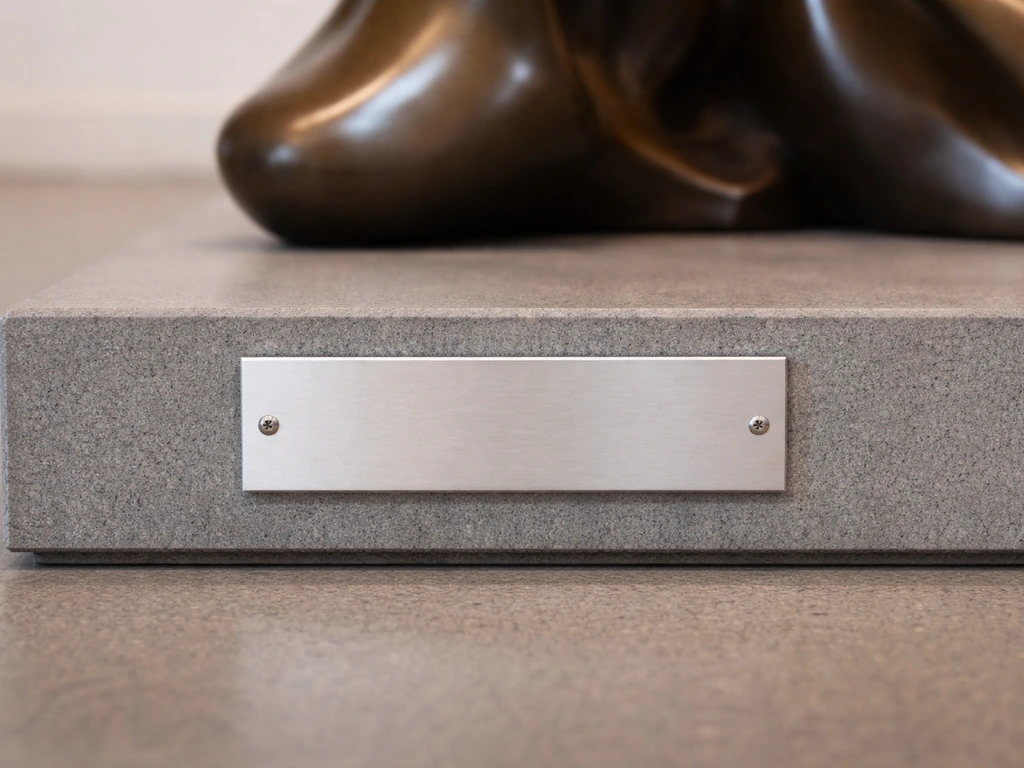
- Check for a plaque or label: most public installations and museum pieces have a title, artist name, date, and material listed nearby.
- Look at the form: Brâncuși's versions are tall, tapered, highly polished, and almost featureless. No wings, no beak, no feet. Just a single elongated teardrop shape rising to a point.
- Note the material: Brâncuși used white marble, black marble, and bronze. The bronze versions are mirror-bright. Other artists' bird sculptures may use steel, resin, stone, or mixed media.
- Consider the location context: a corporate plaza sculpture, a memorial garden piece, and a museum acquisition are likely by completely different artists even if the name is similar.
- Search the artist name plus title together: once you have both, images and museum pages come up quickly and you can confirm the match visually.
If the sculpture you're looking at is abstract, polished, and rising upward on a cylindrical or conical pedestal, there's a very strong chance it's either a Brâncuși original or a work heavily influenced by him. If it's a more literal, figurative bird with visible anatomy, you're probably looking at a different artist's interpretation of the same theme, and the symbolic reading will be shaped more by that artist's stated intent.
What 'bird' and 'space' each bring to the meaning
The power of the phrase 'bird in space' comes from what both words carry symbolically before you even add a specific sculpture to the mix. Birds, across almost every culture, represent the soul, freedom, transcendence, communication, and the transition between worlds. In Romanian folklore, which directly influenced Brâncuși, there is a magical golden bird called the Maïastra, a spirit creature associated with perfection and divine song.
The National Gallery of Art connects Brâncuși’s “Bird in Space” to the Romanian folklore bird Maïastra, noting that it inspired the work the Romanian folklore bird Maïastra, stating that it inspired the work. The National Gallery of Art notes that the Maïastra was Brâncuși's starting point before he progressively stripped the form down to its essence over many years.
'Space' does its own heavy lifting. In the context of these sculptures, 'space' doesn't just mean outer space (though that reading is perfectly valid and has become more resonant since the mid-20th century). It means the open expanse into which something moves: undefined, limitless, and full of possibility. Think of 'giving someone space,' 'a space to breathe,' or the architectural idea of negative space. When you combine a bird with that kind of boundless openness, the meaning almost writes itself: something alive, spirited, and striving, launched into everything unknown.
The main themes and how to read them
Most interpretations of 'Bird in Space' type sculptures cluster around a handful of recurring themes. None of them are wrong, and a good sculpture usually supports several at once.
Freedom and aspiration
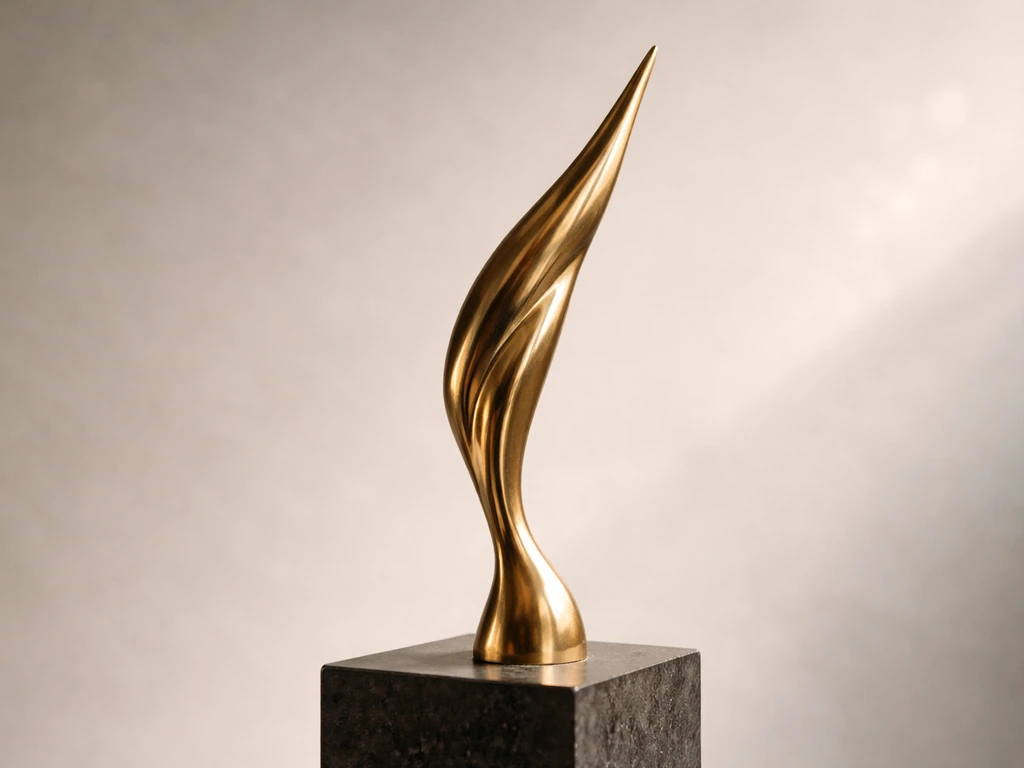
This is the most immediate read. The upward trajectory of the form, whether it's a Brâncuși or another artist's version, almost always suggests movement away from constraint. The bird isn't perched or grounded. It's going somewhere. That visual grammar taps into a deep human longing: to rise above limits, whether those limits are physical, social, emotional, or existential.
Nature vs. the modern world
Brâncuși's decision to use industrial materials like polished bronze to represent a natural creature creates productive tension. The bird is organic in concept but machine-smooth in surface. Some critics read that as a hopeful synthesis: nature and human ingenuity moving forward together. Others read it as melancholy: nature reduced to an abstraction, beautiful but no longer alive. Which reading resonates for you often says something about how you feel about modernity in general.
Discovery and the explorer's mindset
Especially in contemporary contexts where 'space' carries its astronomical meaning, bird-in-space sculptures are sometimes read through a lens of exploration and mission: the lone voyager venturing into the unknown. This is why you'll find similar bird imagery associated with aerospace institutions, science museums, and memorial installations for explorers or astronauts. The bird becomes a stand-in for human ambition pointed outward.
Spirit, soul, and the afterlife
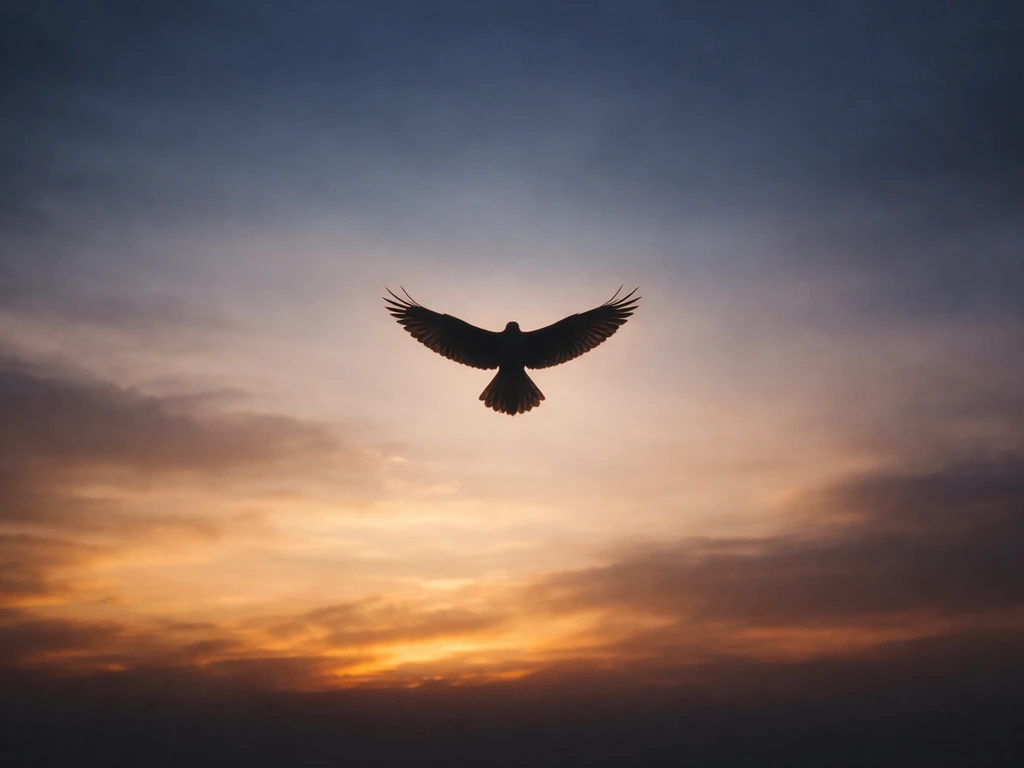
In many spiritual traditions, birds are psychopomps: guides that carry the soul between the living world and whatever comes next. A bird rising into open space evokes that transition without specifying a religion or creed, which is one reason this kind of sculpture appears in memorial contexts, hospitals, and places of reflection. If the sculpture you're looking at is in a cemetery, a hospital garden, or a place of remembrance, this is almost certainly one of the intended readings.
How meaning shifts depending on artist and cultural context
Brâncuși was Romanian, and his folk heritage runs through the work even when it looks completely abstract. The Maïastra of Romanian mythology was a bird of perfection and spiritual power, not just a decorative motif, and that origin story gives the Brâncuși series a very specific spiritual charge that a casual viewer might not pick up on. Knowing that context changes the sculpture from 'pretty abstract art' to 'a meditation on what perfection looks like when you strip away everything unnecessary.'
Context of placement matters enormously too. The National Gallery of Australia holds versions of 'Bird in Space' that were connected to commissions involving a Maharaja's temple complex, which adds Hindu spiritual resonance around birds as sacred messengers. A version in a contemporary corporate plaza might be framed entirely around innovation and forward momentum. The same basic form, in different hands and locations, can carry wildly different cultural weight. If you're trying to get the definitive meaning for a specific piece, the artist's stated intent (usually in catalog notes, plaques, or museum descriptions) is the most reliable guide you have.
It's also worth knowing that Brâncuși's 'Bird in Space' once famously became the subject of a US customs dispute in 1926, when American customs officials refused to classify it as art and tried to tax it as a metal object. Brâncuși (and eventually the courts) won that argument, and the case became a landmark moment in how modern art was legally defined. That history adds yet another layer: the sculpture has literally fought for recognition as something more than its raw material, which is not a bad metaphor for aspiration in general.
How to figure out what a specific sculpture means
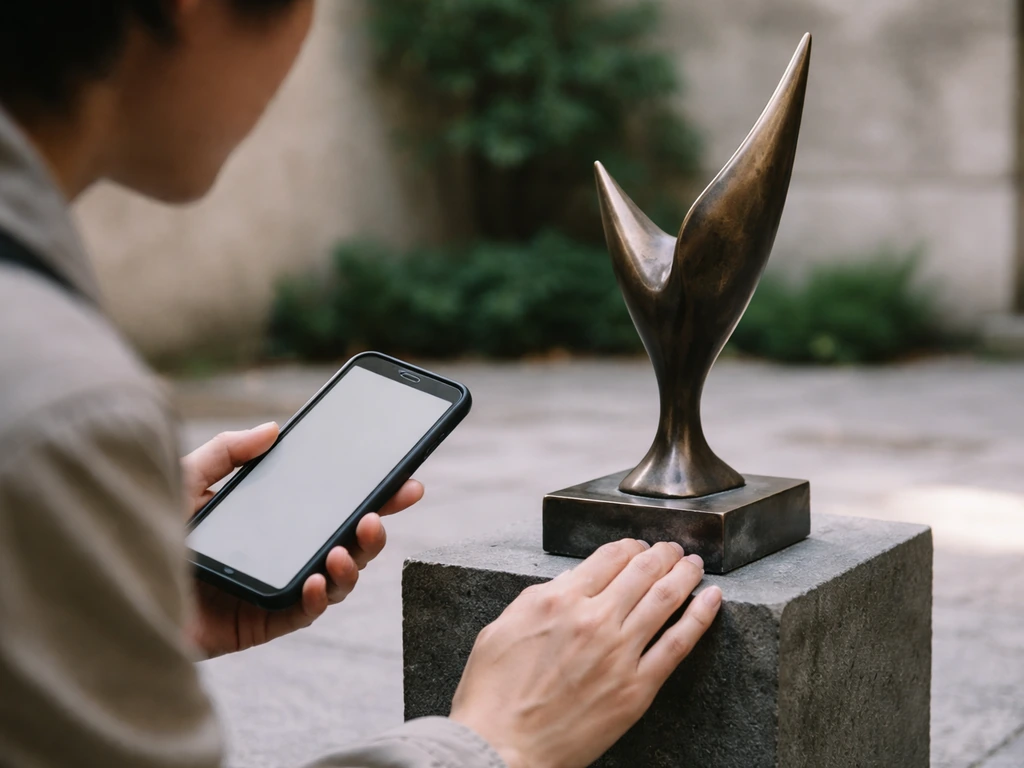
If you want to interpret a bird-in-space sculpture you've encountered, here's a practical method. Work through these questions and the meaning usually becomes clear fairly quickly.
- What is the bird's posture? Rising and pointed upward suggests aspiration or departure. Hovering or still suggests contemplation or watchfulness. Grounded or perched shifts the reading toward rootedness or waiting.
- Is the bird abstracted or literal? Highly abstracted forms (like Brâncuși's) emphasize the idea of flight over a specific creature. Realistic birds tend to carry species-specific symbolism (eagles for power, doves for peace, etc.).
- What material is it made from? Natural stone or wood often points toward a nature or spirit reading. Polished metal or industrial materials add a modern, technological layer. Rusted or weathered materials may suggest the passage of time or vulnerability.
- Are there cosmic or astronomical elements? Stars, orbital shapes, planetary rings, or trajectory lines in the surrounding design signal that 'space' is being used in its astronomical sense.
- What is the surrounding environment? Memorial space, religious site, civic plaza, science institution, and natural park each prime a different reading before you even look at the sculpture itself.
- Is there text anywhere? A title plaque, dedication, or artist statement is always the most direct route to intended meaning. Even a partial phrase can unlock the whole interpretation.
- How large is it? Monumental scale creates awe and a sense of the cosmic or communal. Intimate scale invites a personal, inward reading.
What bird symbolism looks like across cultures and storytelling
The reason 'bird in space' resonates so broadly is that bird symbolism is nearly universal, even if the specific meanings shift from culture to culture. Here's a quick map of how birds tend to function across traditions, which helps explain why a sculpture with a bird at its center can speak to such a wide audience.
| Cultural context | What birds tend to represent |
|---|---|
| Ancient Egyptian | The soul (ba) depicted as a bird with a human head; associated with the afterlife and divine protection |
| Ancient Greek and Roman | Omens and divine messengers; augury (reading bird behavior for signs) was a formal practice |
| Celtic | Shape-shifting, otherworldly beings, and the boundary between the mortal and spirit worlds |
| Hindu | Garuda (divine eagle) symbolizes power, loyalty, and liberation; birds as vahanas (vehicles) for deities |
| Romanian (Brâncuși's heritage) | Maïastra: a magical golden bird representing perfection, divine song, and spiritual truth |
| Christian | The dove as the Holy Spirit; birds as symbols of the soul ascending to heaven |
| Indigenous American (varies widely by nation) | Birds as spiritual messengers, clan totems, and carriers of prayers to creator figures |
| Modern Western | Freedom, aspiration, and escape; birds in art and literature frequently signal longing or transcendence |
This breadth is exactly why a sculptor reaching for a 'universal' symbol so often lands on a bird. It's one of the few images that carries spiritual weight almost everywhere on earth without needing a translation.
How bird language and idioms shape the way we read these sculptures
Something interesting happens when people interpret visual art: the language they already know about birds bleeds into what they see. If you've grown up hearing 'free as a bird,' you walk up to a bird-in-flight sculpture already primed to read it as freedom. If 'a bird's-eye view' is part of your vocabulary, you may read the elevated, soaring form as a symbol of perspective and clarity, the ability to see the big picture. These aren't wrong readings; they're the linguistic layer that sits underneath the visual one.
A few common bird idioms and phrases that tend to shape how people interpret bird sculptures, even unconsciously: 'free as a bird' (liberation from constraint), 'birds of a feather' (community and shared identity), 'a bird in the hand' (the tension between security and risk, relevant to any sculpture about venturing into the unknown), and 'early bird' (ambition and readiness). When a sculpture is placed in a context that activates one of these phrases, the whole piece can take on a very specific narrative flavor without a single word being spoken.
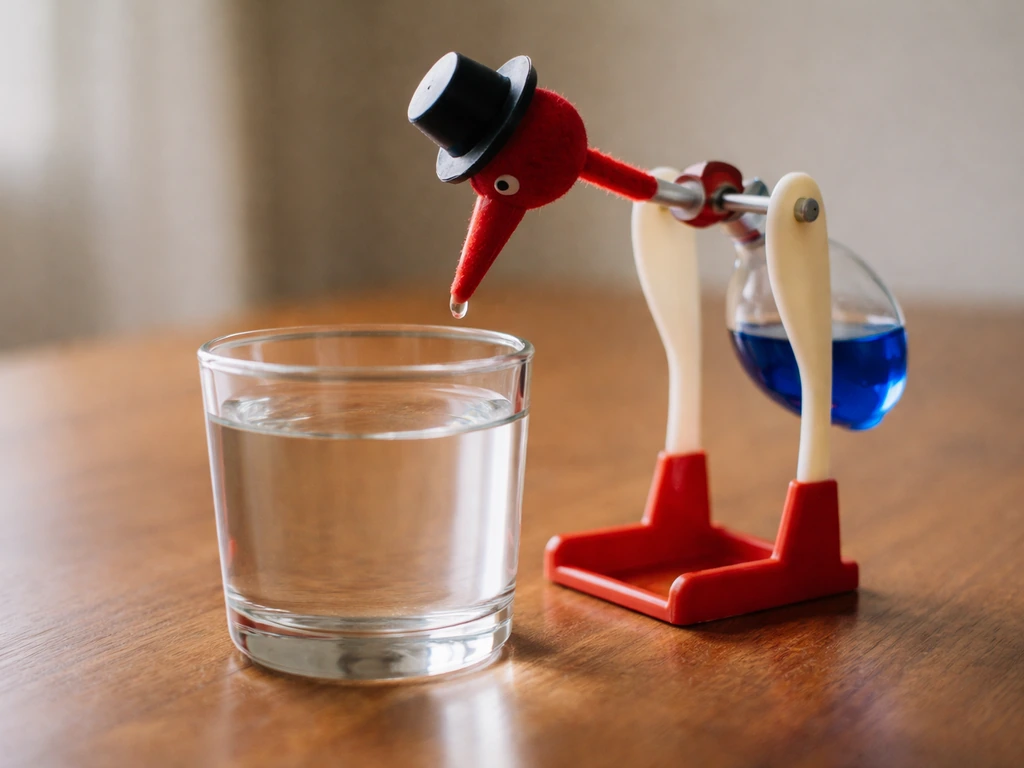
It's also worth noting that in British and Australian slang, 'bird' has historically been used as informal language for a person (often a woman), which occasionally surfaces in how people describe or nickname sculptures informally. That layer of meaning is almost never the artist's intent in a 'bird in space' context, but it's a reminder that words carry multiple lives simultaneously. If you're also curious about how bird language works in idioms and everyday expressions more broadly, the way birds function in phrases like 'bird in a room' or the 'drinking bird' toy metaphor are fascinating companion threads that show just how deeply bird imagery runs through the way we talk about life, movement, and meaning.
Putting it all together
If you encountered a 'bird in space' sculpture and wanted to nail down its meaning, here's the short version: start with the assumption that it's probably referencing Brâncuși's series or inspired by it, then check the artist name and date to confirm. The core symbolic reading, regardless of who made it, is almost always about the aspiration to transcend limits, whether those limits are physical, spiritual, or psychological. The 'bird' brings life, soul, and freedom.
The 'space' brings the unknown, the infinite, and the open invitation to go further. Together, they make one of the most resonant images in modern sculpture, which is why so many artists have returned to the same concept across a hundred years. This is also often discussed in terms of bird in room meaning, where the same symbolism shifts based on the setting bird in space. Once you know what to look for, you'll start noticing it everywhere.
FAQ
How can I tell if a “Bird in Space” sculpture is Brâncuși or just inspired by him from a photo?
Look for a highly polished, simplified upward silhouette on a stepped, cylindrical, or conical support, and check whether the surface looks intentionally smooth and machine-finished. If the photo shows clear anatomical details like a beak, wings, and feathers rendered in a realistic way, it is more likely a different artist’s figurative interpretation.
What if the sculpture is titled something else, like “Bird” or “Flight,” but looks like it could be “Bird in Space”?
Title alone is unreliable. Use the combination of form and context: the signature theme is the sense of ascent into an undefined open void, often with a minimal, bird-like profile. Then try to match the location, plaque text, or museum/catalog attribution to the artist and date.
Does “space” in bird-in-space sculpture meaning always refer to outer space?
Not always. “Space” more fundamentally points to openness, negative space, and the unknown expanse the form moves into. A later outer-space reading can still be valid depending on when and why the piece was commissioned, but it should not override the visual idea of boundless openness.
If I see one in a cemetery or hospital, am I supposed to read it as spiritual or memorial meaning?
Often, yes, but confirm by setting-specific clues. Look for nearby inscriptions, dedication plaques, or the commissioning body, since memorial intent can be overt in naming and program notes. Without those, readings can stay general (transition, hope, ascent) rather than tied to a specific faith.
How does material (marble vs bronze) change the interpretation?
Material shifts emotional temperature. Polished bronze can feel sleek, industrial, and “modern,” which some people read as a hopeful fusion of nature and technology, while others read as a loss of living immediacy. Marble can feel more timeless or contemplative, nudging the tone toward serenity and permanence.
What is a common mistake people make when interpreting these sculptures?
Treating any abstract bird sculpture as if it must share Brâncuși’s exact symbolism. A good next step is to verify artist attribution first, then interpret using both form (ascent into openness) and stated intent (museum notes, plaques, catalog entries).
Can personal associations override the “correct” meaning?
Yes, and they can be part of the artwork’s effect. The sculpture can support several themes at once, so your lived associations with freedom, perspective, or transition can shape your reading. The only caveat is to distinguish between what the work is inviting (often aspiration and ascent) and what is unsupported by attribution or context.
Is there a reliable way to interpret a specific piece without overthinking?
Use a quick three-check method: (1) confirm the artist or nearest attribution (or clearly classify it as “inspired by”), (2) identify the dominant visual cue (upward trajectory into open/negative space), and (3) match the context (memorial site, corporate plaza, museum setting) to the most plausible theme among freedom, spiritual ascent, exploration, or transition.
What if the sculpture is placed indoors and I can’t easily see the “space” around it?
You still can. “Space” can be represented by the sculpture’s silhouette against the background and by the way the form reads as moving into an empty field, not only by literal outdoor openness. Step back to see whether the profile floats visually rather than visually attaching to surrounding objects.
Next Article
Drinking Bird Explained: How It Works, Troubleshooting, Symbolism
Step-by-step drinking bird explained: setup, how the siphon cycle works, troubleshooting fixes, and bird symbolism.