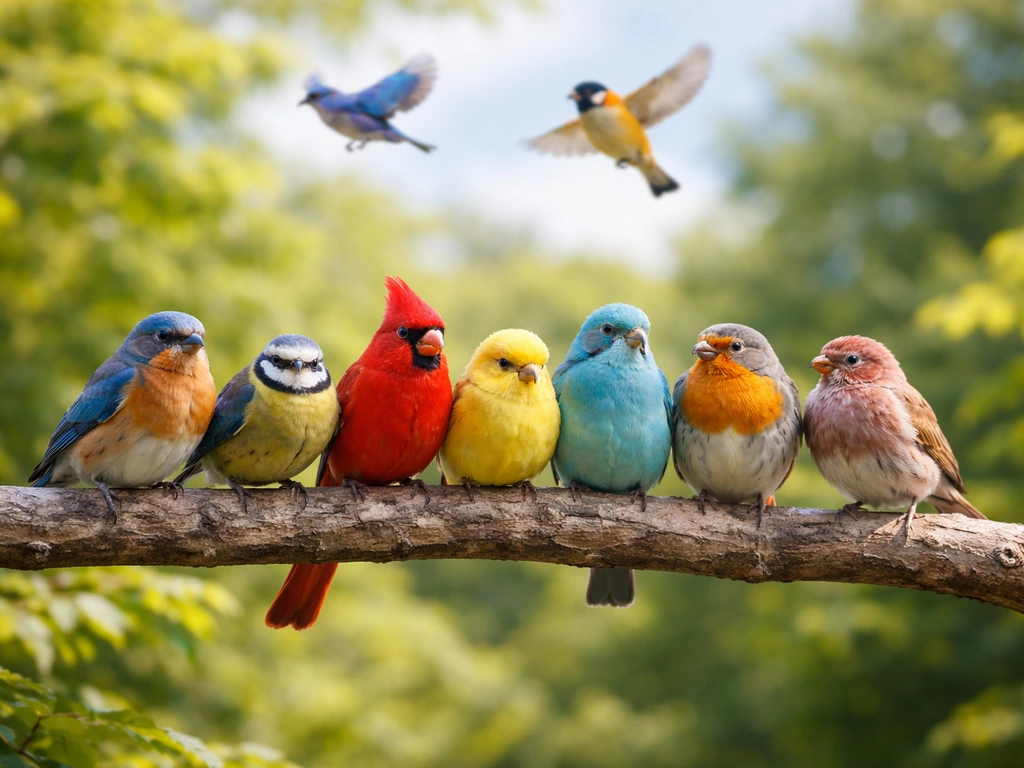
"Happy as a bird" means genuinely, freely, effortlessly happy, the kind of contentment that looks easy and natural rather than forced. The bird of happiness meaning is about effortless joy and a light, upbeat mood. It's a simile that uses birds as a stand-in for uncomplicated joy, drawing on the image of a bird going about its day, singing, flying, and eating, without any apparent worries. When someone says a person is "happy as a bird," they mean that person is in high spirits, often in reaction to something good that just happened. Happy Bird Day meaning is usually used to describe the same idea of playful, carefree joy that “happy as a bird” conveys.
Happy as a Bird Meaning: Idiom Use and Variants

Marcus Whitmore
11 Jun 2026
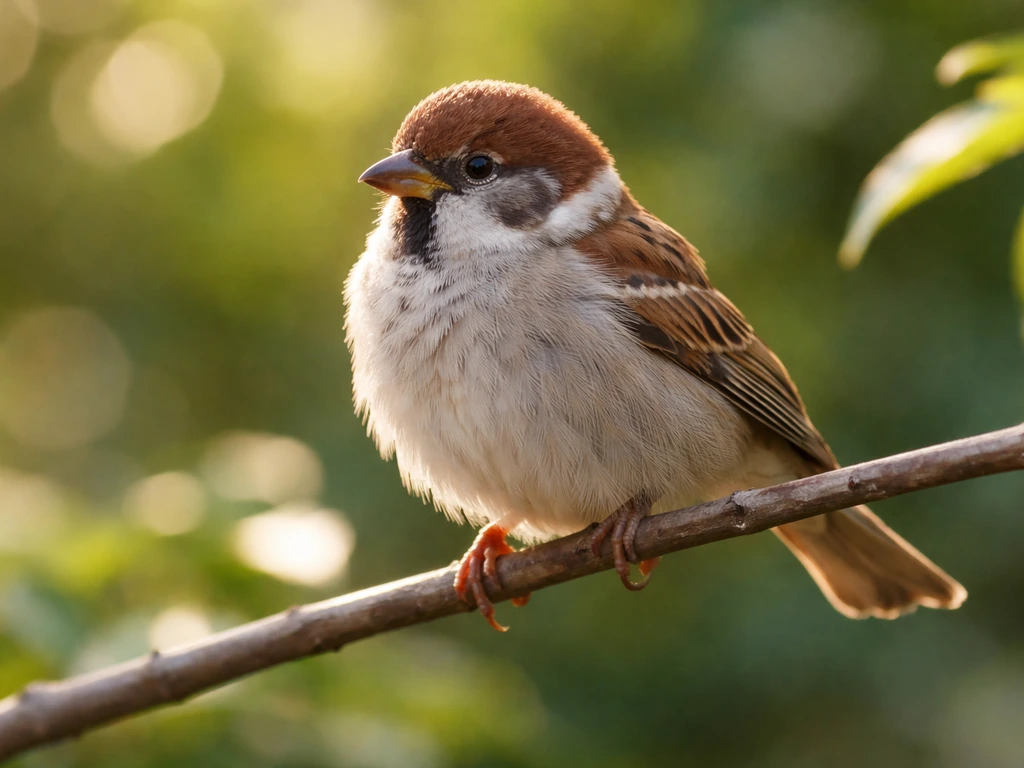
What "happy as a bird" actually means
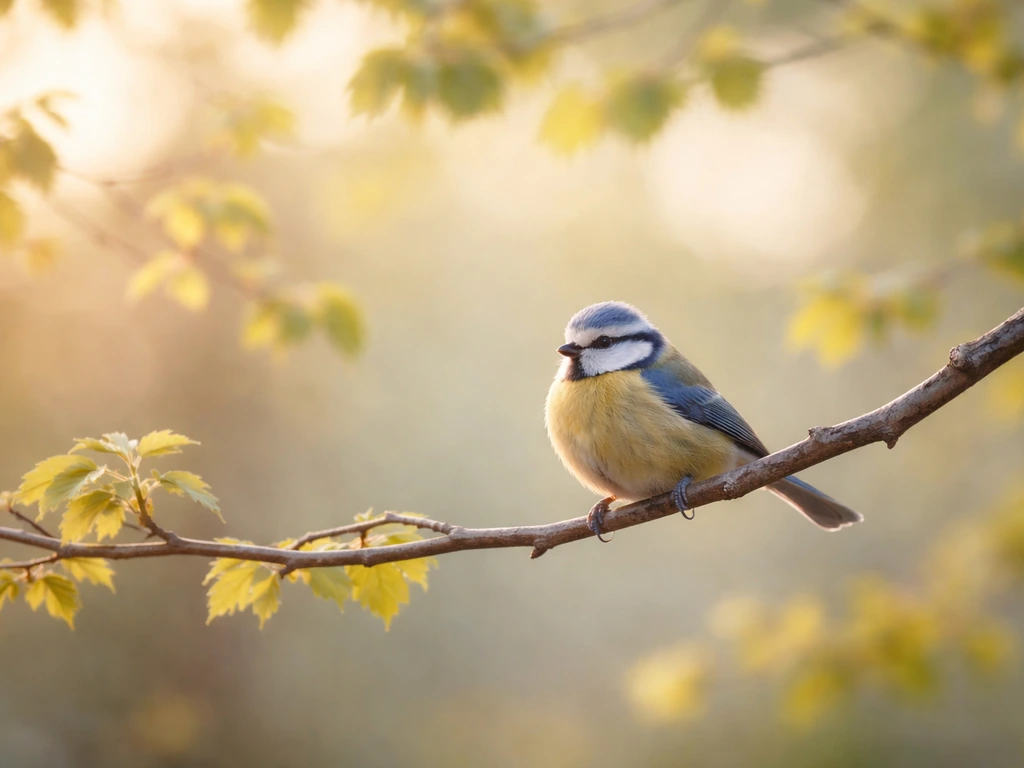
The phrase is a simile, which means it works by direct comparison: you're saying someone's happiness looks or feels as natural and obvious as a bird's. That's the nuance worth paying attention to. It isn't just "happy" in a polite or mild sense. The bird image pushes the meaning toward effortless, carefree happiness, the kind that spills out visibly. Think of the phrase as an intensifier. You're not saying someone is content or satisfied; you're saying their mood is light, bright, and singing.
There's also a tone of innocence to it. Birds don't overthink things (as far as we know), so calling someone "happy as a bird" gently implies their happiness is uncomplicated. It's a warm, friendly expression, not clinical or formal. You'd hear it in casual speech, personal writing, or storytelling, rarely in a business report or legal document.
Where the idiom comes from
The "as [adjective] as [noun]" pattern is one of the oldest and most productive structures in English. It's how you get "as cool as a cucumber," "as quiet as a mouse," and dozens of other expressions. The "happy as a bird" form slots neatly into that tradition. Birds have been tied to cheerfulness, song, and liveliness in English writing for centuries. Public-domain literature is full of lines linking birdsong with emotion, a blackbird's note described as joyful, a robin's call framed as cheerful. That accumulated cultural meaning is exactly what the simile borrows from.
The extended form "happy as a bird in a box of birdseed" appears in print at least as far back as 1947, in an Australian newspaper. That longer version makes the logic explicit: the bird has everything it needs, so of course it's happy. The core phrase "happy as a bird" strips that context down to just the bird, trusting that the listener already makes the association. This kind of shortening is very common as idioms mature.
It's also worth noting that English has never settled on one single bird for this role. "Happy as a lark" is perhaps the most widely taught version of the same idea, and it shows up in ESL teaching materials and bird-simile reference lists alike. The lark variant has the same meaning and tone as "happy as a bird." The lark just adds a slightly more poetic, literary flavor, while "bird" stays more general and casual.
How to use the phrase in everyday English
The phrase works best when it follows some kind of event or context, just like you'd use "happy as a lark" after describing good news. You're not usually opening a conversation with it cold; you're capping off a description of why someone is in such a good mood.
- After good news: "She got the job offer this morning and she's been happy as a bird all day."
- After relief: "Once the vet said the dog was fine, the kids were happy as birds."
- In storytelling: "He moved to the countryside, started a garden, and was happy as a bird from that point on."
- In casual writing: "I finally fixed the leaky faucet. Happy as a bird over here."
Notice that the phrase is flexible about singular and plural. "Happy as a bird" and "happy as birds" both work depending on whether you're describing one person or several. The tone stays consistently warm, informal, and positive across all uses.
One thing to watch: because "bird" is so general, the phrase can occasionally feel a little vague compared to "happy as a lark" (more poetic) or "happy as a clam" (more American-colloquial). If you want extra color, go with a specific bird variant. If you want clean, universally understood warmth, "happy as a bird" does the job without fuss.
Common variations and related bird expressions you might mix up
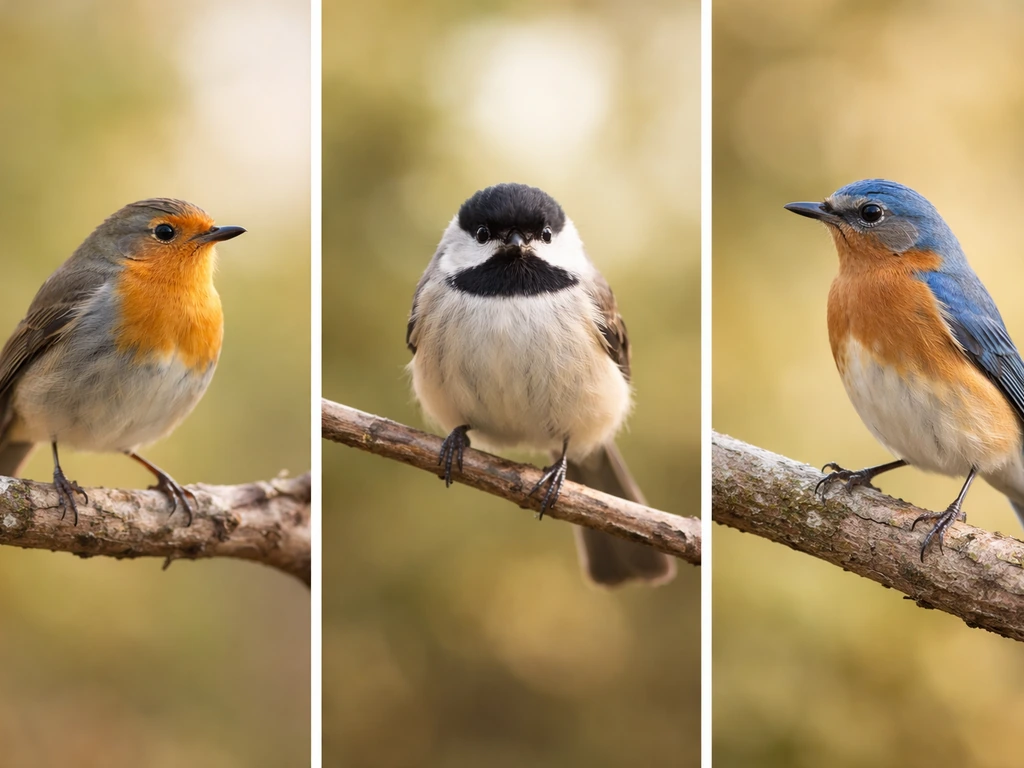
Because English uses so many "as happy as + animal" phrases, it's easy to accidentally conflate them or wonder whether they're interchangeable. Wikiquote's entry for “as happy as a clam” collects how “happy as a [animal]” works as a broader simile pattern and notes that “clam” is not interchangeable with “bird” versions happy as + animal. Here's a quick breakdown of the ones that come up most often alongside "happy as a bird."
| Expression | Core meaning | Tone / register | Worth swapping with 'happy as a bird'? |
|---|---|---|---|
| Happy as a bird | Carefree, effortless happiness | Casual, warm, universal | It's the base version |
| Happy as a lark | Very happy and cheerful, often after an event | Slightly more poetic, still informal | Yes, nearly identical in practice |
| Happy as a bird in a box of birdseed | Deliriously content, everything going right | Playful, extended, colorful | Use when you want extra emphasis |
| Happy as a bird with a French fry | Gleefully, almost comically happy | Humorous, playful, informal | Only when you want a laugh |
| Happy as a clam | Perfectly content, satisfied | American-colloquial | Not a bird phrase; different flavor |
| Free as a bird | Unconstrained, unrestricted | About freedom, not mood | No, this is about liberty not happiness |
| Box of birds (feel like a box of birds) | In good spirits, chirpy | British/Australian informal | Related meaning, different structure |
The most important disambiguation here is between "happy as a bird" and "free as a bird. " They sound similar but express different things. "Free as a bird" is about freedom and lack of constraint, not emotional happiness. Some people also associate a specific “bird with a French fry” image with a humorous meaning that shows up online, so it can be worth checking the exact context when you see it bird with a french fry meaning.
Don't swap them if you mean mood specifically. Also, "happy as a clam" is a completely separate established idiom with its own history. It's not a bird phrase at all, even though it lives in the same family of "as happy as + [creature]" comparisons.
The playful variant "happy as a bird with a French fry" is more of a humorous, customized simile than a fixed idiom. It circulates online and in casual speech as a funny image rather than a standardized phrase with its own entry in dictionaries. In an interview segment from WBEZ Chicago’s “Afternoon Shift,” the phrase [“happy as a bird”](https://www. wbez.
org/afternoon-shift/2012/09/19/afternoon-shift-151-happy-as-a-bird) is used in a mainstream American media context, showing it as a recognizable everyday simile. Cheeseburger bird meaning is one of those playful internet phrases that can sound unclear until you know the context people will understand it. If you use it, people will understand it, but they'll read it as a joke or a creative flourish, not a traditional expression.
Why birds became the symbol for happiness in the first place
Birds carry a specific set of associations in English-language culture that make them natural vessels for happiness. They sing, which is directly tied to positive emotion in literature and everyday speech. They move freely, which connects to feelings of lightness and ease. They're visually conspicuous when they're active, which mirrors how happiness tends to show outwardly. And they're generally perceived as small, harmless creatures going about uncomplicated lives, which feeds into the "innocent joy" angle the phrase carries.
Across English poetry and literature, birdsong has consistently been used as shorthand for a cheerful mood. A character who hums or sings is coded as happy; birds, who literally do this, become a living symbol of that state. When the idiom borrows from that tradition, it's drawing on hundreds of years of accumulated cultural meaning, not just a random comparison.
It's worth distinguishing this from bird symbolism in other contexts. Birds also symbolize freedom (as in "free as a bird"), messengers, transitions, and even omens depending on the culture and the species. The happiness association is specific to birds in an active, singing, foraging state, not birds in flight away from something or birds appearing at a significant moment. Context always shapes what the bird metaphor is doing.
Examples in context and quick troubleshooting
If you're unsure whether "happy as a bird" fits what you're trying to say, run through these quick checks. They cover the most common stumbles people have with this phrase and similar bird expressions.
- Are you describing a mood, not a circumstance? If you mean someone is literally unrestrained or unrestricted, use "free as a bird" instead.
- Is the happiness carefree and visible, not just mild satisfaction? If someone is quietly content, "happy as a bird" might be too upbeat. Try "content" or "at ease" for subtler feelings.
- Do you want a humorous effect? The extended "happy as a bird with a French fry" version signals playfulness. Stick with plain "happy as a bird" for sincere, warm descriptions.
- Is the context casual or personal? This phrase belongs in speech, personal essays, stories, and informal writing. It's out of place in formal or professional documents.
- Are you describing happiness after an event? The phrase works best as a reaction ("after the news, she was happy as a bird") rather than a general personality trait.
- Do you want a more poetic touch? Swap in "happy as a lark" for the same meaning with a slightly more literary flavor.
One last practical note: because "happy as a bird" is a general simile rather than a locked-down fixed idiom, you have some flexibility with it. Writers and speakers have been stretching it into forms like "happy as a bird in a box of birdseed" for decades. That creative freedom is part of the phrase's personality. As long as the bird imagery and the happiness meaning are both clear, your variation will land the way you intend it to.
FAQ
Can I use “happy as a bird” to describe happiness that is private or calm, not outwardly visible?
Yes, but it will sound slightly more upbeat if you add a hint of “lightness” in the surrounding words. The simile usually suggests joy that comes through naturally, so if the mood is quiet and reserved, consider using “content” or “glad” instead, or pair it with a phrase like “trying to look/feel” rather than “as” if the visibility is the whole point.
Is “happy as a bird” appropriate for formal writing or professional emails?
Generally no. The tone is warm and informal, so in professional contexts it can feel too casual unless you are writing in a friendly, human-voiced setting (for example, a personal note). For formal work, switch to plain “genuinely pleased” or “in high spirits,” which match the meaning without the idiom’s casual flavor.
What’s the correct way to match tense when using the phrase?
Use the tense of the main clause, not the simile. For example, “She was happy as a bird after the interview” (past) and “She is happy as a bird today” (present). Avoid constructions like “She happy as a bird,” which breaks the typical subject-verb structure.
Do I need “as” twice, or can I shorten it to “happy like a bird”?
Keep “as” in the classic form, “happy as a bird,” if you want the idiom-like punch. “Happy like a bird” is understandable and often fine in casual speech, but it can sound less traditional and slightly more conversational. If you are aiming for the established simile, stick with “happy as a bird.”
Can I use “happy as a bird” for someone who is drunk or euphoric?
It might read the wrong way. “Happy as a bird” usually points to uncomplicated, wholesome joy. If the situation is likely to be interpreted as intoxication or manic energy, better choose “ecstatic,” “giddy,” or describe the behavior directly (for example, “talking non-stop,” “laughing,” or “feeling euphoric”) so the meaning is clear.
Is it ever negative or sarcastic?
By default, no. It is typically positive and sincere, so if you want sarcasm, you need strong context cues (like a contrasting detail or a clearly ironic tone). Without that, readers will assume real, uncomplicated happiness.
How do I respond if someone else uses the phrase incorrectly, like confusing it with “free as a bird”?
If you want to clarify, correct the intended meaning explicitly: “That’s ‘free as a bird,’ meaning unrestrained, not ‘happy as a bird,’ meaning in great spirits.” This is especially useful in teaching, editing, or bilingual situations where “bird” similes can blur together.
What’s a safe way to add a bit more specificity without creating confusion?
Attach a simple cause or circumstance right after it, for example, “happy as a bird after the surprise call” or “happy as a bird when the project finally went through.” This keeps the simile’s original intent (effortless high spirits) while making the “why” unmistakable.
Does the phrase work with “look” and “feel,” and what’s the difference?
Yes. “He looks happy as a bird” emphasizes visible outward mood. “He feels happy as a bird” emphasizes internal experience. If your description centers on one, match the verb to that emphasis so readers do not assume the other.
Next Article
Happy Bird Day Meaning: What It Refers To and More
Explains Happy Bird Day meaning, what Bird Day celebrates, symbolism, and how to respond when someone says it.