When people search for 'snake and bird meaning,' they're almost never asking a wildlife question. They've stumbled across the pairing in a dream, a piece of art, a quote, a tattoo, or a caption, and they want to know what the combination is pointing at. The short version: birds tend to represent freedom, spiritual aspiration, and hope, while snakes carry themes of transformation, hidden fear, temptation, and healing. Together, the two symbols create a dynamic tension, something like the earthly versus the transcendent, or instinct versus aspiration. But the specific meaning always depends on context and, interestingly, on which symbol comes first.
Snake and Bird Meaning: Symbols, Myths, and Context

Marcus Whitmore
18 May 2026
What snake and bird symbols usually mean on their own
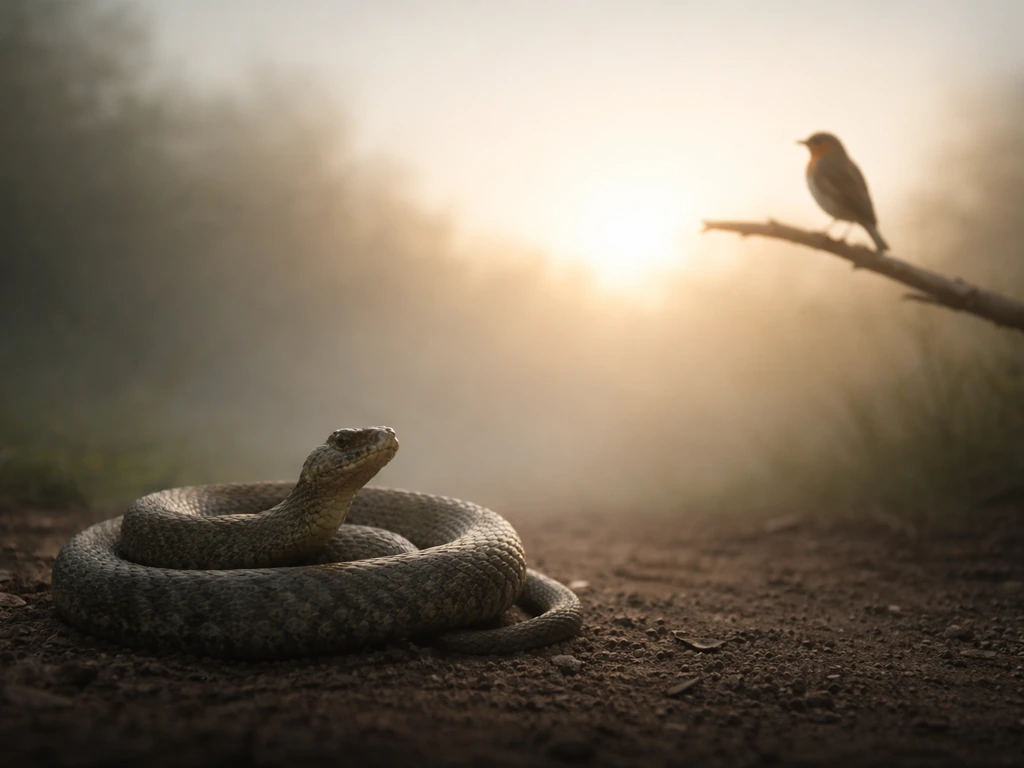
Birds carry a surprisingly consistent symbolic weight across cultures. They're messengers between the human and divine worlds, stand-ins for the soul, and signals of freedom and perspective. Dream dictionaries tend to agree on this: birds in dreams symbolize 'freedom, aspirations, or spiritual messages,' and across many cultures they act as intermediaries between the earthly and divine realms.
Dream dictionaries commonly interpret birds as intermediaries between earthly and divine realms and as soul or spirit symbols, with interpretation shaped by the dream’s context and feelings intermediaries between the earthly and divine realms. The type of bird shifts the reading considerably (an eagle reads as power and vision; a dove as peace; a raven as transformation), but the general territory is upward, outward, hopeful.
Snakes are more complex and far more context-dependent. The same creature that represents Satan and temptation in the Genesis story is also, in Greek mythology, the companion of Asclepius, the god of medicine, which is why a snake-wrapped staff still appears on medical symbols today. The Hopi view snakes as symbols of healing, transformation, and fertility. In many traditions, the snake's ability to shed its skin links it directly to rebirth and immortality. So the snake is not simply 'evil' or 'dangerous,' even if that's the instinctive Western reading. It holds danger AND healing, fear AND transformation, simultaneously.
| Symbol | Positive associations | Negative or shadow associations |
|---|---|---|
| Bird | Freedom, spiritual connection, hope, messages from beyond, new beginnings | Fleeting thoughts, escapism, vulnerability |
| Snake | Transformation, rebirth, healing, hidden wisdom, fertility | Temptation, danger, deception, hidden fears, death |
How the order changes the interpretation
This is one of the more practical points and one that most interpretive sources skip over. 'Bird and snake' versus 'snake and bird' aren't just stylistic variations. The word that leads tends to establish the frame for the whole image.
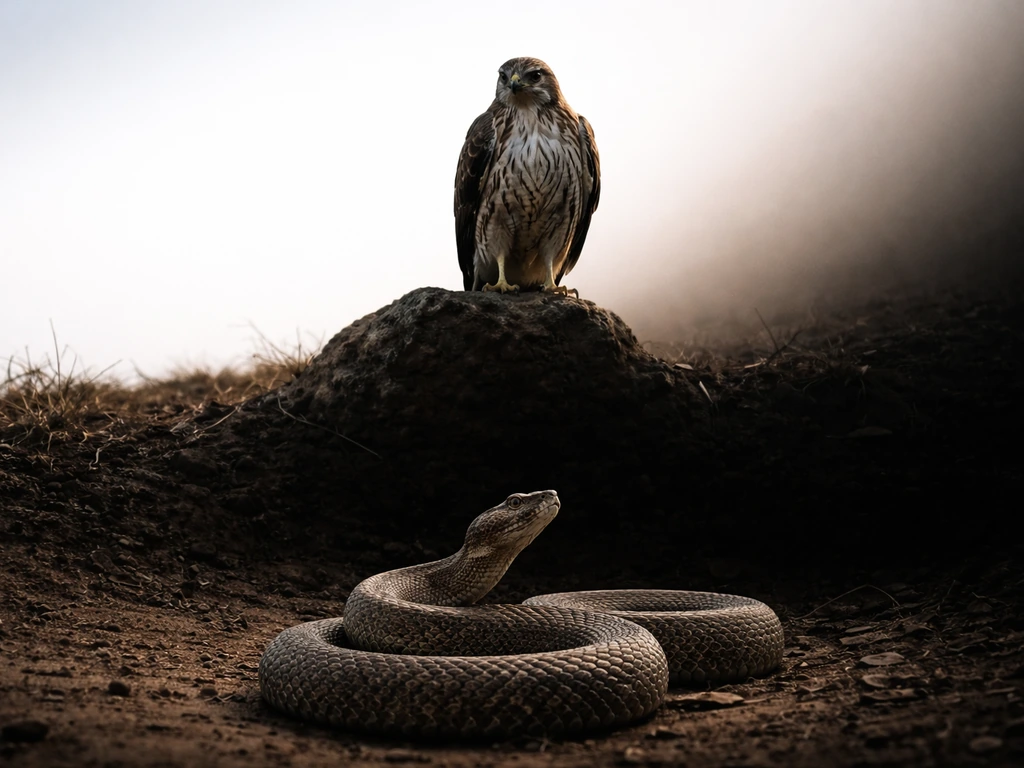
When bird comes first, the reading usually centers on freedom or aspiration being threatened or tested. You get the sense of something light and hopeful in a confrontation with something darker or more primal. Think of a dream where a bird is trying to take flight while a snake pursues it, which maps almost perfectly onto 'aspiration under threat.' That framing is more about what might be lost.
When snake comes first, the reading often shifts toward transformation or hidden forces as the dominant theme, with the bird as the resolution or the goal. The snake is the thing you're moving through or dealing with, and the bird is where you're headed. Snake-and-bird, in this order, can read more like a journey narrative: from the earthly, dangerous, instinctive level up toward freedom or spiritual clarity.
In action-based scenes (which you'll most often see in dreams or visual art), the direction of predation matters even more. A snake eating a bird and a bird eating a snake produce almost opposite interpretive tones. One signals that instinct or fear is consuming aspiration; the other suggests that hope or higher perspective is overcoming what threatened it.
The pairing in culture, myth, and literature
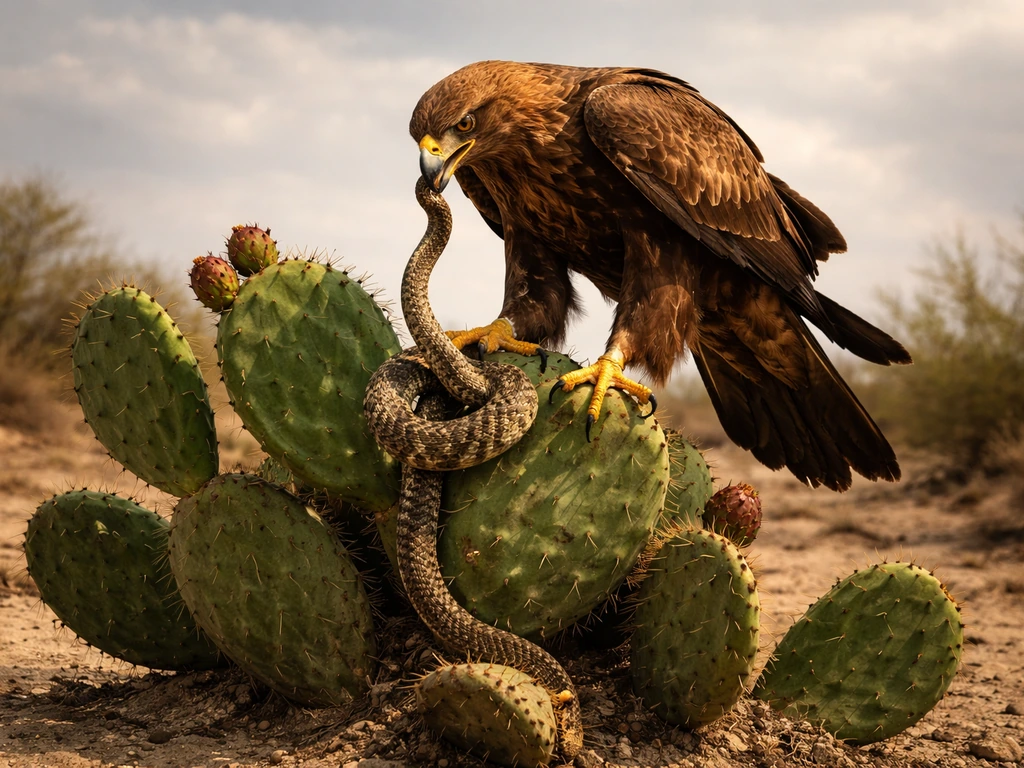
One of the most enduring and globally visible examples of this pairing is Mexico's coat of arms: a golden eagle perched on a cactus, devouring a rattlesnake. The image comes from a Mexica founding myth in which the god Huitzilopochtli instructed the people to build their city where they saw this exact sign. The eagle defeating the serpent became the founding omen of Tenochtitlan, the site of modern-day Mexico City. It's one of the most striking real-world examples of bird-over-snake imagery cementing a cultural identity, where the bird represents divine sanction and the snake represents the forces being overcome.
The 'bird versus serpent' tension is actually documented as a recurring mythological motif across cultures: giant bird-like creatures fighting serpents or reptilian monsters. It shows up in ancient Mesopotamian iconography, in Hindu mythology with the Garuda (a divine eagle-like creature) perpetually in conflict with the Nagas (serpent beings), and in Greek myth. The motif is old enough and widespread enough that scholars treat it as a near-universal narrative pattern, pitting sky forces against earth or underworld forces.
There's also a subtler mythological fusion worth knowing about. In Chinese mythology, the fenghuang, often described as a divine or phoenix-like bird, is sometimes described with composite features that include the neck of a snake. This blurs the line between opposition and integration, the bird and snake not as enemies but as components of a single transcendent creature. That's a meaningfully different cultural direction: instead of conflict, you get synthesis.
In Western literature and art, the pairing tends to lean into the conflict reading. In a relationship, people often use the "bird and bees" idea to talk about attraction, intimacy, and what makes the dynamic feel safe or risky bird versus serpent. Serpents in the Bible range from symbols of 'evil power and chaos' to agents of healing (the brass serpent of Moses), and birds carry overwhelmingly spiritual or hopeful associations. When they appear together in a story or image, the tension between those poles is usually the whole point.
Where you'll actually encounter this pairing
People search this phrase for a pretty specific range of reasons, and knowing which one applies to you is most of the interpretive work. This is also why people often search “honey bird meaning” when they are trying to decode a specific version of the bird and snake symbol set.
- Dreams: This is the most common trigger for the search. Dreaming of both a snake and a bird together is flagged by some sources as an 'alert' about psychological disturbance or inner conflict. Others frame it as transformation in progress. The specific action in the dream (are they chasing each other? coexisting? is one eating the other?) matters enormously and is more diagnostic than the pairing alone.
- Tattoos and visual art: Snake-and-bird tattoos are a popular design partly because of their visual contrast (coiled earthbound creature versus winged creature in flight) and partly because the wearer can load personal meaning into which symbol dominates or what the scene shows. There's no single fixed meaning in tattoo culture; it's chosen symbolism.
- Quotes, captions, and social media: Someone posting 'the bird and the snake' as a caption is likely referencing a personal narrative about freedom versus constraint, hope versus fear, or a relationship dynamic where one party represents aspiration and the other represents something harder or more threatening. The phrasing is evocative enough to carry that weight without explanation.
- Mythology and literature references: If you've encountered the phrase in a story, poem, or piece of visual art, the cultural origin of that work shapes everything. A Mexican context, a Hindu context, a Christian context, and a Chinese context will all land differently.
- Signs and symbols (flags, emblems, logos): These almost always have a documented meaning you can look up directly. Mexico's coat of arms is the clearest example, but similar eagle-and-serpent imagery appears across heraldry worldwide.
How to figure out what it means in your specific situation
Rather than reaching for a single fixed meaning, ask yourself a set of diagnostic questions. The answers will narrow it down fast.
- Where did you encounter it? A dream, a piece of art, a cultural symbol, and a social media caption each require a different interpretive lens. Start there.
- Which symbol is dominant or active? Is the bird flying free, or is it being threatened? Is the snake pursuing, retreating, or just present? The role each creature plays in the scene is more telling than the pairing itself.
- What is the action, if any? A snake eating a bird, a bird eating a snake, two animals coexisting, and two animals in standoff all point in different directions.
- What cultural tradition is the source embedded in? A Mesoamerican image, a Chinese poem, a Western dream dictionary, and a Hindu narrative will interpret the same visual very differently.
- What was the emotional tone when you encountered it? In dreams especially, the feeling you had during the scene (dread, excitement, peace, urgency) is considered one of the most reliable guides to meaning. A frightening snake-and-bird dream and a serene one are functionally different symbols.
- Is this two separate symbols or one combined image? Sometimes a snake and a bird appear together simply as a pair of unrelated symbols, each carrying its own meaning independently rather than forming a unified metaphor.
Common misconceptions and how culture shifts the meaning
The biggest misconception is that the pairing has a single fixed meaning you can look up and apply. It doesn't. Birds are described by some symbolic sources as 'among the most semantically dense images' in dream and cultural interpretation, and snakes aren't far behind. When you combine two of the most symbolically loaded creatures in human mythology, the result is a field of possible meanings, not a single answer.
A second misconception is that snake equals bad and bird equals good. That binary is a Western, and specifically Christian, export. Plenty of traditions, including Greek, Hopi, and Hindu ones, treat the snake as sacred or healing. And birds aren't universally positive either; ravens and owls carry dark or ominous associations in many cultures. The valence of each symbol depends heavily on which cultural tradition you're reading through.
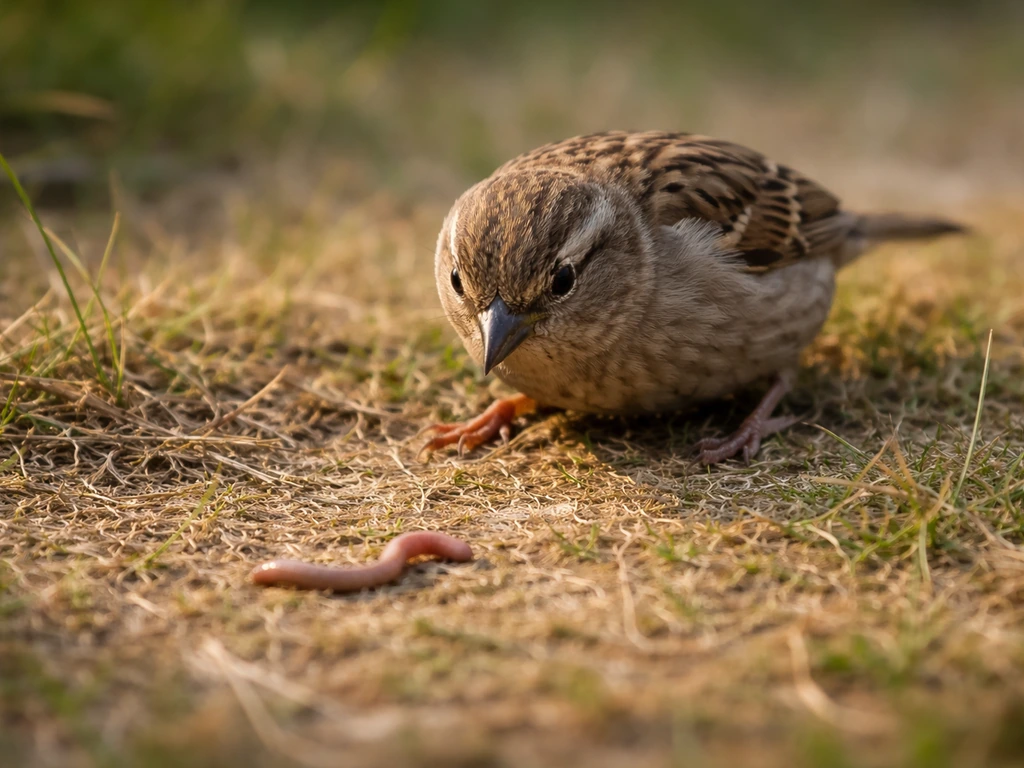
A third issue is conflating the pairing with a fixed idiom. The phrase “bird and the worm” often points to how effort, patience, and daily reality intersect with bigger hopes. Unlike 'the birds and the bees' (which is a specific idiom with a recognized meaning in relationship and sexual education contexts) or phrases like 'the early bird gets the worm,' the phrase 'snake and bird' is not a standardized idiom in English.
If you're actually searching for a phrase like 'shagging me bird meaning,' it's often the same idea of looking for a context-specific interpretation rather than treating it like a fixed idiom 'the birds and the bees'. If you’re wondering what “bird and bees” means in a relationship, it usually refers to basic talk about sex, attraction, and reproduction the birds and the bees. It's a symbolic pairing that people interpret, not a fixed expression they decode.
That distinction matters: you're doing symbolic interpretation, not phrase lookup.
Finally, don't assume the two animals are in conflict just because they often appear that way in Western sources. The fenghuang example from Chinese myth, and various traditions of integrated or composite serpent-bird deities across Mesoamerica and Asia, show that the pairing can represent wholeness or transcendence just as easily as opposition. The culture of origin really does change everything here.
FAQ
How do I tell whether “snake and bird meaning” is about my dream or about a cultural artwork?
Start by locating the source context. If it appears in your own sleep imagery, focus on emotions (fear, awe, calm) and what you did (chased, hid, watched). If it’s on a public symbol, tattoo, or flag, prioritize the culture, era, and whether the animals are stylized or depicted in a specific act (pursuit, eating, hovering). Those details usually narrow the reading more than generic symbol definitions.
In a dream, what details matter most besides the order (snake first vs bird first)?
The action and your role matter. A snake attacking a bird often reads as aspiration under threat, while a snake shedding skin next to a bird can emphasize healing or rebirth. Also note whether you feel agency (you act) or helplessness (you watch), since helpless watching tends to feel more like “hidden forces operating,” while active participation leans toward transformation you are driving.
Does “snake eating a bird” always mean fear consuming hope?
Not always. Predation is a strong clue, but the emotional tone and outcome change the message. If the bird is being eaten and the dream feels tragic, it leans toward aspiration being consumed. If it’s more matter-of-fact or even cleansing-like, it can indicate a transition where the “old hope” is being dismantled to make room for a new spiritual direction.
What if the bird is a raven or owl instead of an eagle or dove?
Switching bird type can flip the “uplift” assumption. Ravens and owls often carry ominous or mystery-linked associations in many traditions, so the pairing may emphasize prophecy, shadow knowledge, or warning rather than straightforward hope. The snake then can become either the danger being decoded or the healing force doing the “work” behind the scenes.
How should I interpret it if the snake and bird are not fighting, but coexisting?
Coexistence often points to integration or wholeness rather than conflict. This is especially plausible when they are touching, forming a loop, perched together, or part of one composite motif. In that case, treat the message less as “aspiration vs threat” and more as “instinct and vision becoming aligned,” with transformation as the connective theme.
Can the meaning change if the snake is coiled, crawling, or shedding its skin?
Yes. A coiled snake can suggest tension, readiness, or something held in reserve. A crawling snake often reads as gradual influence, creeping thoughts, or ongoing pressure. Skin-shedding strongly leans toward rebirth, recovery, and shedding fear, especially when the bird is watching calmly or flying.
Is it wrong to assume snake equals evil and bird equals good?
In many traditions it’s too simplistic. Some cultures treat snakes as sacred, medicinal, or fertility-linked, and birds can also be ominous or morally ambivalent depending on species and context. A practical test is to map the symbol to the scene’s emotional reality: if the snake appears in a healing-like setting, reading it as “evil” will usually feel forced.
How do I interpret a tattoo of “snake and bird,” where I don’t know the artist’s reference?
Look for the composition details. Is the bird devouring the snake, is the snake devouring the bird, or are they intertwined? Also note color and style: medical imagery often signals healing, while mythic or heraldic styles often signal conflict, sanction, or identity. If you can’t confirm intent, start with the order and action, then choose the closest cultural lens based on the overall aesthetic (heraldic, religious, neo-traditional).
What’s the fastest way to narrow meaning if I have a specific version in mind?
Use three filters: (1) the order of appearance, (2) the specific action (pursuit, eating, hovering, shedding, coexistence), and (3) your emotional reaction or the tone of the source image (heroic, ominous, celebratory). Then compare bird type and snake condition (serpent, serpent-like monster, composite form) to see whether the reading is conflict, transformation journey, or synthesis.
Could “snake and bird meaning” refer to a specific phrase or idiom, not symbolism?
Usually it’s symbolism, not a standardized English idiom. If the text you saw is actually tied to a known phrase in another context, it will typically be named or quoted explicitly. Otherwise, treat it like an interpretive combination, where you read the scene and cultural cues rather than trying to find a single fixed dictionary answer.
What if the bird is shown flying while the snake is underground or restrained?
That visual split often points to aspiration or spiritual ascent with blocked or contained fear. Flying birds are a strong upward signal, and snakes that are trapped, dormant, or below the surface can indicate that transformation is happening without active threat, meaning you’re “lifting above” a cycle rather than wrestling it directly.
Next Article
The Bird and the Worm Meaning: Origins, Symbolism, and Use
Meaning of the bird and the worm: origins, symbolism, common uses, and how to spot the right message by context.