
When someone says 'the bird and the worm,' they're almost always invoking the logic of the old proverb 'the early bird catches the worm': the bird that moves first gets the prize, and the worm that stays hidden loses. It's shorthand for the idea that timing, initiative, and showing up before everyone else gives you a real advantage. Strip away the 'early' and you're left with the core image: a predator, a prey, and the gap between who acts first and who doesn't.
The Bird and the Worm Meaning: Origins, Symbolism, and Use

Marcus Whitmore
17 May 2026
Where the phrase actually comes from
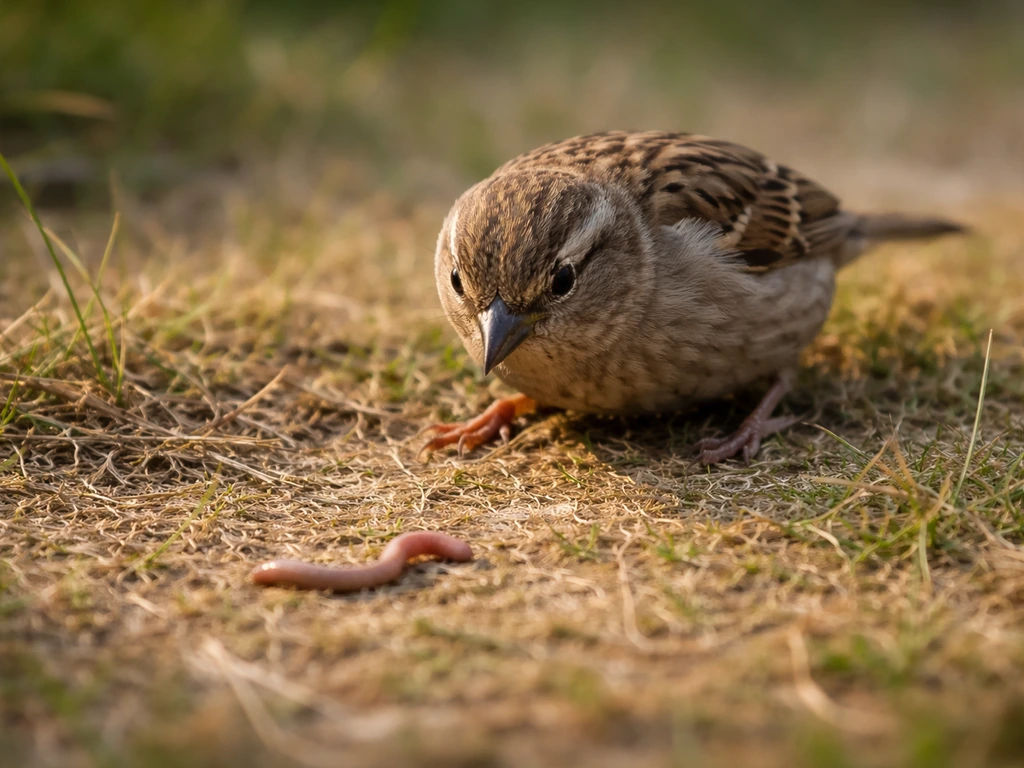
The phrase traces back to one of the most durable proverbs in English: 'the early bird catches the worm.' Printed records of it go back at least to the early 1600s. One frequently cited version appears as 'The early bird catcheth the Worm,' with documented references dated to around 1636 and again in 1659, before John Ray included it in his well-known A Collection of English Proverbs around 1670. Some writers point to William Camden's 1605 proverb work as an even earlier source, though not everyone counts that as the definitive first printed record. Either way, this has been circulating in written English for over 400 years.
The phrase 'the bird and the worm' as a standalone fragment is a natural shortening of that longer proverb. Over time, people started dropping 'early' and 'catches' and simply referencing the two central figures: the bird and the worm. The meaning travels with the image because the pairing is so culturally embedded. Anyone who hears those two words together in the right context immediately knows what logic is being implied, even without the full proverb spelled out.
The moral most people attach to it
The core lesson is about first-mover advantage: the person who acts early, acts promptly, or prepares in advance gets the best outcome. Latecomers find the opportunity already taken. But there's some nuance worth knowing, because different people emphasize slightly different lessons depending on how they frame it.
- Timing and initiative: Being first to act gives you an edge that effort alone can't always recover later.
- Proactivity and work ethic: The bird didn't get lucky, it showed up when others didn't. The emphasis is on diligence and not procrastinating.
- Opportunity is finite: The worm isn't waiting around forever. Resources, chances, and openings close when someone else takes them.
- Preparation pays off: 'Early' implies readiness, not just literal clock time. Being ready before others gives the same advantage as being physically first.
One thing worth flagging: this proverb is about 'first leads to best outcome,' not 'effort always guarantees success.' Some people use it to mean hard work will always win, which slightly misreads the original intent. The structure is competitive and situational: the bird wins because it moved first, and the worm loses because it was findable at the wrong time, not necessarily because either party was more or less capable.
How 'the bird and the worm' connects to 'early bird gets the worm'
The connection is direct: 'the bird and the worm' is the image at the center of 'the early bird gets the worm.' When you include 'early,' the lesson zooms specifically onto timing. When you drop it and just say 'the bird and the worm,' the lesson broadens slightly. It might still mean timing, but it can also just mean the relationship between the pursuer and the pursued: who has the advantage, who is vulnerable, who acts and who waits.
In everyday usage, the modern shortened form 'early bird' is so familiar that even the compressed version carries the same weight. Cambridge Dictionary notes that an 'early bird' is someone who does something early, especially to gain an advantage like a cheaper price or a better seat. Merriam-Webster ties the 'early bird' entry directly back to the proverb. So culturally, the two phrasings have become nearly interchangeable when the context makes it obvious you're talking about timing and advantage.
What birds and worms symbolize separately
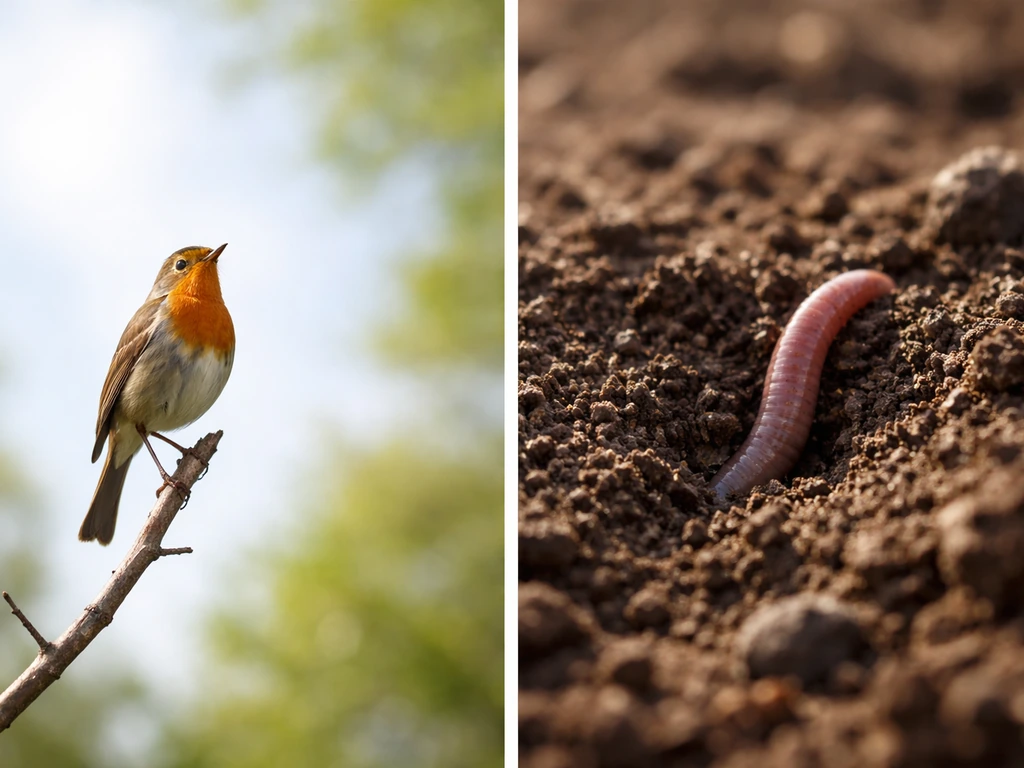
Understanding the symbolism of each figure helps you see why this pairing works so well as a metaphor. They represent genuinely different things, and putting them together creates a natural tension.
Bird symbolism
Birds have long been associated with freedom, aspiration, and a higher perspective. Their ability to fly puts them above the ordinary ground-level world, which is why so many cultures treat birds as messengers or omens. In literary symbolism, birds frequently appear as emblems of hope, spiritual reach, and forward motion. In the context of the proverb, the bird represents the active agent: the one who moves, seeks, and takes. It's a positive figure in the proverb's moral framework, even if bird symbolism in other contexts (like the snake-and-bird imagery in some traditions) can carry more ambiguous meanings.
Worm symbolism

Worms operate with a different symbolic register. They live underground, hidden in the soil, doing work that's invisible until you dig. Symbolically, worms are tied to the earth, to transformation, to the breakdown of old things into nourishment for new ones. In some interpretive traditions (like dream symbolism), worms can evoke disgust or decay. In others, they represent renewal and fertility because of their ecological role in regenerating soil. In the proverb, the worm is the passive figure: the prize, the opportunity, the thing that gets taken if it's not careful or if it emerges at the wrong time.
| Symbol | Common associations | Role in the proverb |
|---|---|---|
| Bird | Freedom, aspiration, initiative, higher perspective, messenger | Active agent, seeker, reward-taker |
| Worm | Earth, transformation, renewal, hiddenness, vulnerability | Passive prize, the opportunity at stake |
Where you'll actually hear or see it used
The phrase turns up in a pretty wide range of contexts, and which one you're dealing with changes how you should read it.
Everyday conversation and business
In casual talk, the proverb is most often dropped into conversations about scheduling, competition, and getting ahead. Someone who scores a good deal by arriving first at a sale, or who lands a job interview by applying on day one, might invoke it. In business and recruiting, you'll hear it used to encourage proactivity: apply early, respond first, don't sit on opportunities. Early bird discounts in retail and travel are the commercial version of the same idea: reward prompt action, penalize hesitation.
Song titles and lyrics
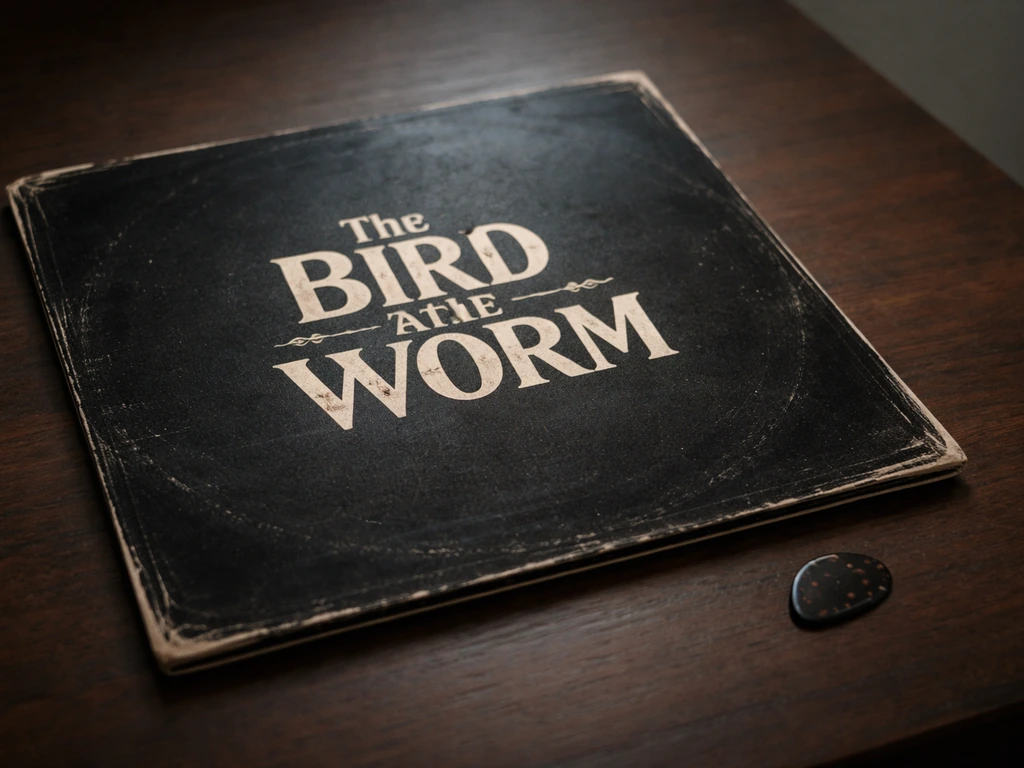
Here's where you need to slow down and check context, because 'The Bird and the Worm' is also the title of well-known songs. The Used released a track called 'The Bird and the Worm' in 2007, and Owl City has a song of the same name. These don't necessarily carry the proverb's meaning at all. Song titles with this phrase tend to use the bird-and-worm image more poetically: as a metaphor for relationships, power dynamics, or cycles of predator and prey in an emotional sense. If you heard the phrase in a lyric or saw it as a song title, the speaker may be drawing on the image's tension (pursuer versus pursued) rather than the specific timing lesson of the proverb.
Stories, poems, and metaphorical writing
In storytelling and poetry, 'the bird and the worm' often functions as a compressed symbol for broader themes: vulnerability versus predation, patience versus urgency, the natural order of things. A writer might use it to frame a story about someone who waits too long and loses, or about the cost of being too visible at the wrong moment. The bird-and-worm image works as shorthand for any situation where two parties are in an asymmetric relationship and timing determines who wins.
Variations, related phrases, and how to tell them apart
There are a few phrases that sound similar or get used in overlapping situations, and applying the wrong one muddies the meaning. Here's how to sort them out.
'Early bird catches the worm' vs 'early bird gets the worm'
'Catches' and 'gets' are the most common wording swap, and they mean the same thing. Some older printed versions use 'catcheth' (the archaic form). Don't read significance into the verb choice: both versions carry the same timing-and-advantage lesson.
'A bird in the hand is worth two in the bush'
This one gets confused with the early-bird proverb because it also involves birds and a sense of opportunity. But it's a completely different lesson. 'A bird in the hand' is about certainty versus risk: value what you already have rather than gambling it for something potentially better. There's no timing element, no first-mover logic. If someone uses it to mean 'be grateful for what you have,' they're in 'bird in the hand' territory, not 'bird and worm' territory.
The bird-and-worm image in relational or emotional contexts
When the phrase appears in song lyrics, personal writing, or emotional conversations (especially ones about relationships or power), it's often being used more loosely to describe a dynamic where one person is the pursuer and the other is the one being pursued or consumed. This is metaphorically closer to the snake-and-bird symbolism explored in other cultural traditions: the relationship between two unequal parties where one has power over the other. In that context, the phrase is about dynamic, not timing.
The 'birds and bees' comparison
Occasionally people confuse 'the bird and the worm' with 'the birds and the bees,' which is entirely unrelated. 'The birds and the bees' is a well-known euphemism for explaining reproduction and relationships to children. The two phrases share the word 'bird' and nothing else. If someone seems to be talking about relationships or sexuality, they're almost certainly in 'birds and bees' territory, not 'bird and worm. If you came across “shagging me bird meaning” in a relationship context, it’s a different usage than the proverb meaning of the bird and the worm as a timing metaphor. '
How to tell what someone means from context

When you hear or read 'the bird and the worm' and you're not sure which meaning is intended, run through these quick checks.
- Is 'early' attached, or is the broader proverb being quoted? If yes, it's almost certainly about timing and first-mover advantage.
- Is the context competitive or practical (jobs, deals, scheduling, business)? That's the proverb's lesson: act first, win more.
- Is the context a song title, lyric, or emotional story? Check whether the speaker seems to be describing a power dynamic or relationship tension rather than giving advice about timing.
- Is the tone instructive or cautionary? If someone says it as advice ('you know what they say about the bird and the worm'), they're invoking the proverb's lesson about initiative.
- Is the theme about work ethic and not procrastinating? Then the emphasis is on proactivity and diligence, a slightly different angle on the same proverb.
- If 'luck' is the dominant theme rather than effort or timing, they may be misapplying the proverb slightly, or using it loosely to mean 'some people just happen to be in the right place at the right time.'
The phrase is flexible enough that it can carry several related lessons at once: be early, be prepared, be active rather than passive, don't wait for opportunity to find you. Which of those is in focus depends almost entirely on what the speaker is responding to in the moment. Once you know the proverb's history and the symbolism behind both the bird and the worm, you'll rarely misread it. If you have also come across the term honey bird, its meaning can be quite different, so it helps to confirm the context before assuming it follows the same bird-and-worm symbolism honey bird meaning.
FAQ
Does “the bird and the worm” always mean “work hard and you will succeed”?
Often, yes, but only when the context makes it about access and opportunity. If someone is talking about timing, deadlines, bidding, interviews, or “act before it’s gone,” the proverb logic fits. If they are talking about effort in general, training, or long-term skill, “bird and worm” is usually a misfit.
When should I interpret it as literal timing versus a general metaphor?
It can, but the key is whether the “worm” is being described as a limited opening. If the situation is competitive and the early mover gains access (a sale, a booking window, a job application slot), then it implies first-mover advantage. If both sides have equal timing and the outcome is not about who acts first, the phrase is probably being used metaphorically rather than literally.
Is it okay to use the phrase as a moral justification for being aggressive?
The proverb can support ethical reading, but it is not automatically moral. A common misuse is treating it as justification for predatory behavior, cutting in lines, or taking advantage of someone who cannot act early. A more faithful read is about recognizing time-sensitive chances, then acting responsibly before the window closes.
In “the bird and the worm,” who is usually the “bird” and who is the “worm”?
Yes, and it often changes the “who” in the metaphor. “Bird” can be the person who initiates, proposes, applies, or reaches out first. “Worm” can be the opportunity, the prize, or the person who is vulnerable at that moment. If you swap them in your interpretation, you may flip the intended advice.
How can I tell if “the bird and the worm” is about relationships or about scheduling?
Watch for indicators that it is not about timing. Song lyrics, romantic arguments, and emotional power-dynamics talk often use the bird-and-worm imagery for pursuit versus being pursued. In those settings, the “lesson” is usually about imbalance and roles, not about getting a better deal by arriving first.
Is there a modern way to rephrase “the bird and the worm” without changing the meaning?
It can be phrased differently in casual speech without changing the core idea. If someone says “whoever goes first wins,” “act early,” or “opportunity favors the proactive,” they are typically expressing the same first-mover logic as “the bird and the worm,” even if the exact imagery is altered.
Does being early guarantee success in every situation?
Not always. The original logic is competitive and situational, so being early does not guarantee the best outcome if the plan is flawed. For example, arriving early to a wrong location, applying to the wrong role, or responding with the wrong materials still loses. “Early” helps, but it does not replace competence or fit.
Can the phrase be used to talk about strategy, not just speed?
Yes, especially when the speaker is emphasizing visibility and risk. If the “worm” is said to be “too exposed” or the “bird” is said to “move too soon,” the focus may shift toward strategy, preparation, and not revealing yourself at the wrong moment. That reading is close to the broader “vulnerability versus timing” theme rather than pure speed.
Citations
Modern English meaning of the *proverb* “the early bird gets/catches the worm” is that acting first or being prompt gives an advantage (i.e., arriving early often leads to the best chance/success).
https://dictionary.cambridge.org/us/dictionary/english/early-bird-catches-the-worm
Merriam-Webster’s entry for **early bird** explicitly ties the phrase to the proverb “the early bird catches the worm.”
https://www.merriam-webster.com/dictionary/early%20bird
In UK modern usage, the same idea often appears in the shorter form **“early bird”**, used to mean someone who does something early—especially to get an advantage such as a cheaper price.
https://dictionary.cambridge.org/us/dictionary/english/early-bird
The proverb’s “early” component is commonly interpreted as timing/initiative: you’re rewarded for being first, prompt, or prepared (as opposed to waiting).
https://www.collinsdictionary.com/us/dictionary/english/the-early-bird-catches-the-worm
The earliest documented printed appearance often attributed to English proverb collections places the wording in the 1600s; one frequently cited early printed record is associated with John Ray’s proverb collection (commonly dated to 1670).
https://folklore.usc.edu/the-early-bird-catches-the-worm/
A commonly repeated origin claim is that the proverb appears in John Ray’s collection **A Collection of English Proverbs** (with the “first recorded” date given as 1670 by at least some folklore reference sites).
https://folklore.usc.edu/early-bird-gets-the-worm/
Some usage/phrase explainers claim even earlier attribution to William Camden (e.g., Camden’s 1605 proverb work), while others emphasize John Ray (1670) as the earliest printed record—so the “earliest” depends on what an author counts as first documented evidence.
https://www.apadvisors.com/blogs/financial-wellness/first-doesnt-always-mean-winning/
A widely stated earliest printed variant appears as **“The early bird catcheth the Worm”** (spelling/wording variant) in printed proverb tradition; one reference lists a series of dated citations including **1636 (CAM.)**, **1659 (N.R.)**, and **1670 (RAY)**.
https://tilleyproverbs.com/proverbs/B368
What lesson people most commonly attach: seize opportunity / act promptly so you can get the best reward because someone who acts first has the advantage over latecomers.
https://dictionary.cambridge.org/us/dictionary/english/early-bird-catches-the-worm
Another common emphasis: proactivity/work ethic—being diligent and not procrastinating increases your odds of success (often presented as a general moral about initiative).
https://folklore.usc.edu/the-early-bird-catches-the-worm/
Different sources can frame the lesson with more “timing/advantage” language versus “luck”—but the core structure is consistently “first → best outcome,” not “effort always guarantees success.”
https://dictionary.cambridge.org/us/dictionary/english/early-bird-catches-the-worm
Experts/etymology writers typically treat “the bird and the worm” as a shorter fragment of the broader proverb; meaning is carried by the proverb’s logic (bird acting first/prey available first).
https://www.merriam-webster.com/dictionary/early%20bird
Relationship to ‘early bird’ phrasing: when **“early”** is included, the lesson is specifically about timing; when omitted and only **“bird and worm”** is quoted, listeners often infer the same general ‘first advantage’ idea from context (being the one who gets to the opportunity first).
https://www.collinsdictionary.com/us/dictionary/english/the-early-bird-catches-the-worm
Birds in many symbolic traditions are associated with freedom/aspiration and messages/omens; scholarship on “bird imagery” notes birds as winged, sometimes heaven-sent messengers in various regional mythic traditions.
https://www.cambridge.org/core/journals/iranian-studies/article/signs-from-above-towards-a-comparative-symbology-of-bird-imagery-in-medieval-near-eastern-popular-prose/1718F87D9E0353D47F0FD80CB5567D19
Bird symbolism in literature/culture is frequently linked to freedom/hope (including the idea that birds’ flight and presence represent aspiration or a ‘higher perspective’).
https://literarydevices.net/bird-symbolism/
Worms are often associated with hidden life, the earth/groundedness, renewal/transformation (because they live in or transform organic matter in soil).
https://www.astrology.com/spiritual-meaning-animals/earthworm
Across cultural/interpretive traditions, worms can have a dual symbolic potential: in some dream/symbolism systems they can signify disgust/decay, while in others they signify nourishment/renewal because of their ecological role in breakdown and regrowth.
https://www.dreamspoken.com/en/dream-meaning/worm
Common everyday/pop-culture contexts: the proverb is used in business/recruiting/shopping situations to encourage being first to secure advantages; Merriam-Webster provides sentence examples using that “early bird” logic.
https://www.merriam-webster.com/sentences/early%20bird
Pop-culture overlap note: “The Bird and the Worm” is also the title of major songs (not the proverb), especially The Used’s track (2007) and Owl City’s song (appearing on the album Ocean Eyes era), so surrounding context in lyrics/entertainment may mean something entirely different from the timing/proverb lesson.
https://en.wikipedia.org/wiki/The_Bird_and_the_Worm
For the proverb-related meaning, “early bird” is often also packaged in commercial contexts like ‘early bird specials’—the advantage is about prompt access (e.g., cheaper price).
https://dictionary.cambridge.org/us/dictionary/english/early-bird
Close “look-alike” proverb variants: “early bird catches the worm” vs “early bird gets the worm” are common wording substitutions; the meaning stays the same (first/early → better chance).
https://www.bookbrowse.com/expressions/detail/index.cfm/expression_number/542/the-early-bird-catches-the-worm
Other confusing but different proverbs: **“A bird in the hand is worth two in the bush”** is about valuing what you already have (certainty), not about timing/opportunity competition like “early bird gets the worm.”
https://www.dictionary.com/browse/bird-in-the-hand
Next Article
War Bird Meaning: Literal, Slang, and Historical Uses
Understand war bird meaning: literal, slang metaphor for fighters, and historical bird symbolism, plus close phrase comp