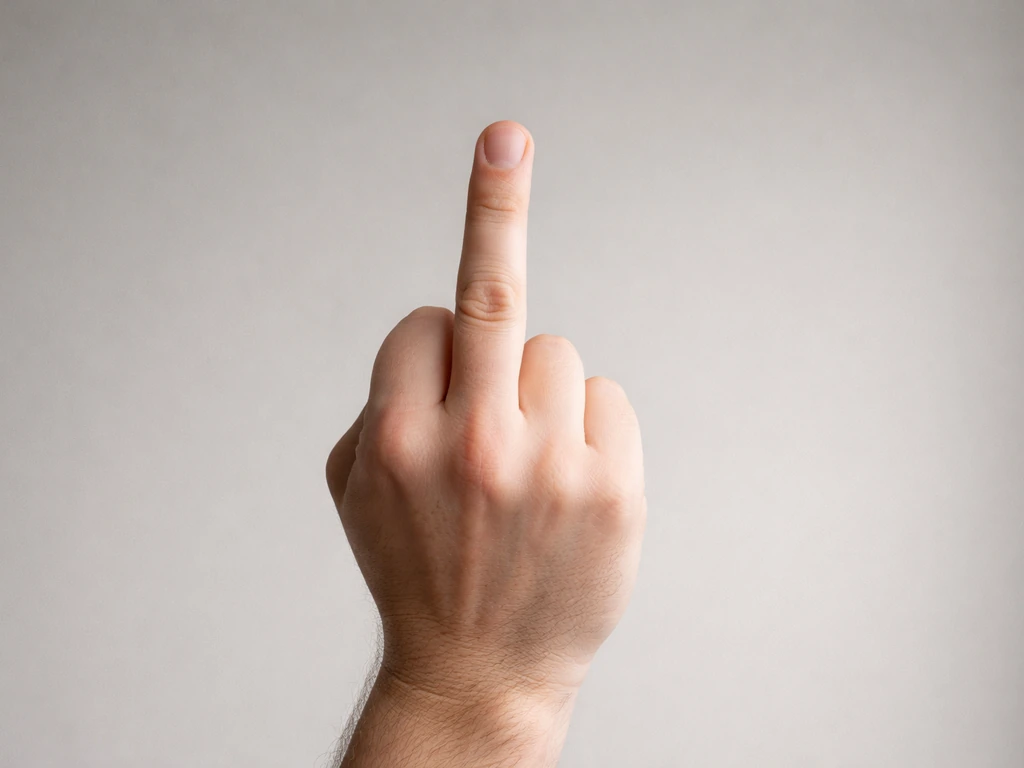
"Flip the bird" means to make an offensive hand gesture at someone, specifically extending the middle finger upward while keeping the other fingers folded down. It has nothing to do with an actual bird. The "bird" here is pure slang for the gesture itself, and the phrase is used to communicate contempt, anger, or dismissal directed at a specific person. If someone says they want to "flip you the bird," or you watched someone do it in traffic, the message being sent is roughly equivalent to "fuck you" or "up yours."
What Does Flip the Bird Mean? Gesture and Usage Explained

Marcus Whitmore
7 Apr 2026
What "flip the bird" (and "flip a bird") actually means
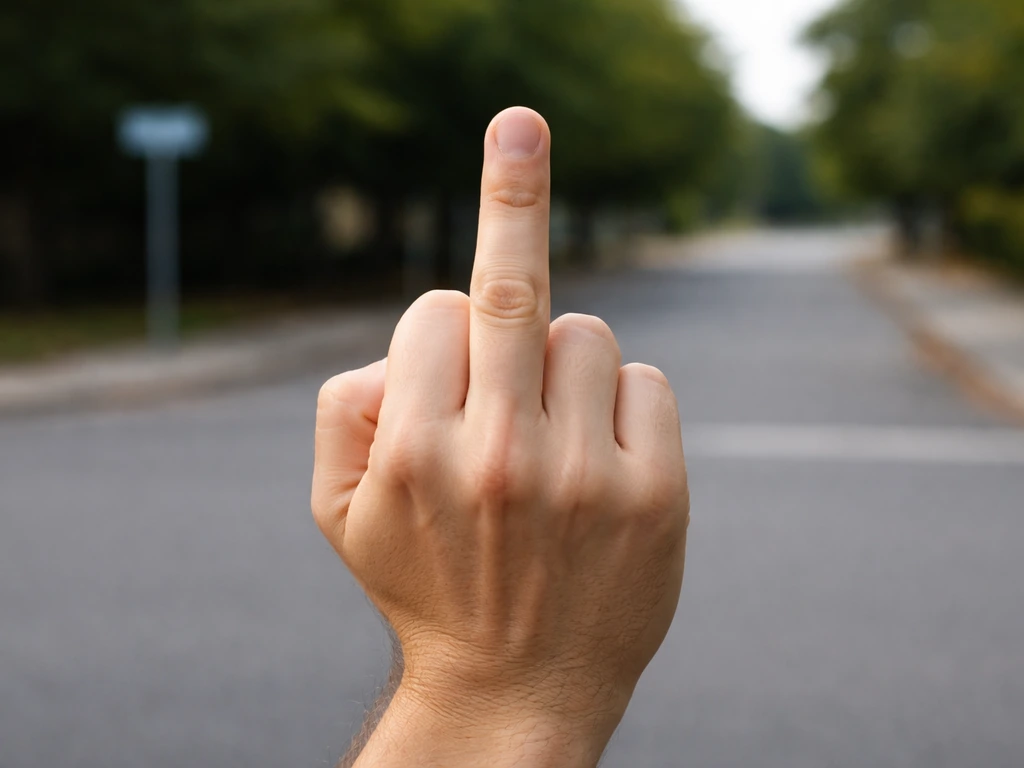
Merriam-Webster defines the idiom "flip (someone) the bird" as making an offensive gesture at someone by pointing the middle finger upward while keeping the other fingers folded down. Cambridge Dictionary extends that slightly, noting that it involves turning the back of your hand toward the other person and putting your middle finger up. Both definitions land on the same basic point: this is a directed insult, aimed at a specific person, meant to express anger or extreme displeasure.
You may also see the phrase written as "flip a bird," which carries the same meaning as "flip the bird." Neither version is more correct than the other in everyday speech. The key thing to understand is that "bird" in this context is a slang stand-in for the gesture, not a reference to any animal. If you landed here because you were curious about bird symbolism or bird-related idioms and this phrase confused you, that makes complete sense. This site covers both the literal and figurative world of birds, and this particular phrase belongs firmly in the figurative camp.
The gesture itself: what it looks like and what it communicates
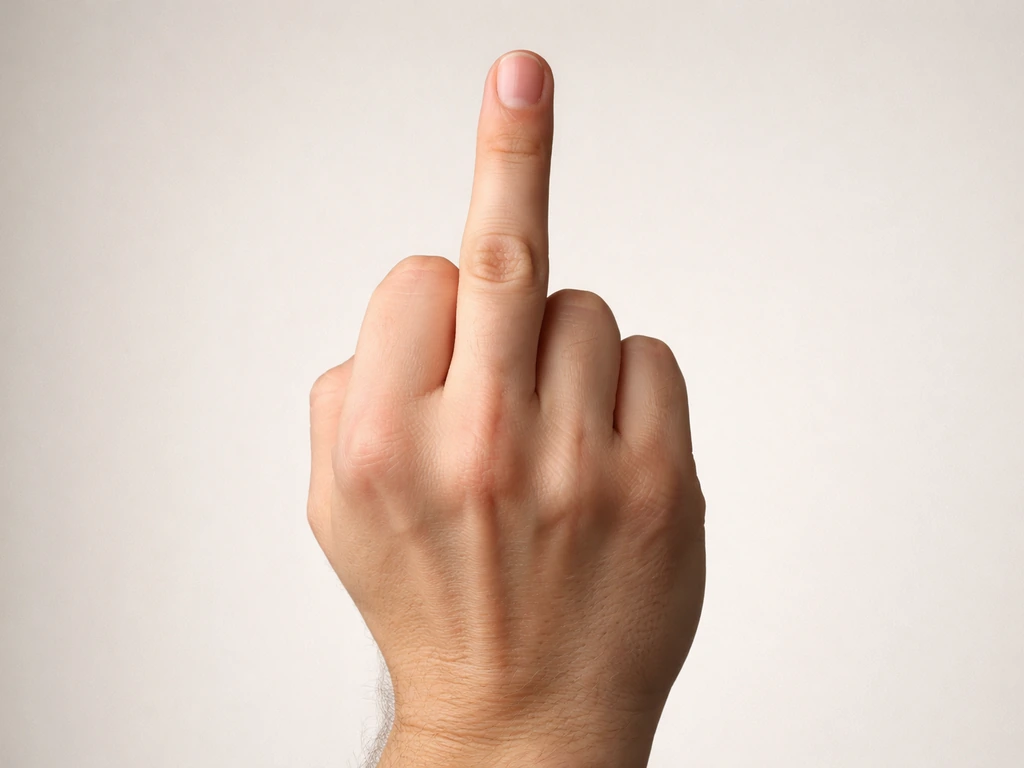
The physical gesture is straightforward: make a fist, then extend the middle finger straight up while keeping all other fingers folded. The back of the hand typically faces the person you're directing it at. That's it. In Western countries, this gesture is widely recognized as an offensive insult. blank" rel="noopener noreferrer">Collins Dictionary describes it as a vulgar gesture performed as an act of contempt and anger. Wikipedia characterizes it as communicating "moderate to extreme contempt," and notes its association with phrases like "fuck you" or "fuck off."
The gesture is so culturally embedded in English-speaking countries that most people understand it immediately, even without any spoken words. That's part of what makes it powerful and also what makes it escalate situations quickly. It's not ambiguous. When someone flips you the bird, there's no polite interpretation available.
Where the phrase came from
The linguistic history here is genuinely interesting. In the late 1800s, "give the big bird" meant something closer to hissing like a goose, used to show disapproval of a performer or public figure, the way an audience might boo. By the 1940s, "give the bird" had shifted to refer more specifically to raising the middle finger as a show of extreme displeasure. The "bird" in the phrase appears to have evolved from that earlier association with a hissing, dismissive sound into a shorthand for the gesture itself.
The phrase "flipping the bird" as we use it today became more explicit and unambiguous over time, with linguists noting that earlier versions like "give somebody the bird" were in circulation before the phrase locked into its current form. The underlying gesture itself is ancient, documented in classical texts and associated across cultures with an obscene or insulting meaning, largely due to the phallic symbolism of the extended middle finger. Internationally, similar gestures exist but the specific performance varies. In France, for example, an analogous insult involves a forearm jerk rather than the isolated finger. The English-language phrase "flip the bird" is specifically Western and predominantly American in its modern usage.
When and where people use it
Context matters a lot with this phrase and gesture. Among very close friends, it can be used humorously, almost affectionately, as a joking response to light ribbing. That said, this is a narrow context, and it requires a high level of established trust and shared understanding between the people involved. Even then, reading the room matters.
In most settings, "flip the bird" signals genuine hostility. You'll see it in road rage incidents, heated arguments, online comment sections (where someone might write "I'd flip them the bird" as verbal shorthand for total dismissal), or any situation where someone has reached the end of their patience. It is absolutely not appropriate in professional, formal, or public-facing contexts. Using it toward a stranger, a coworker, or in a crowded space can quickly turn a minor conflict into something much bigger.
Online, the phrase gets used as descriptive language, too. Someone might say "I just want to flip them the bird" as an expression of frustration without physically performing the gesture. Understanding that distinction, between describing the feeling versus actually doing the gesture, matters when you're trying to figure out what someone means. If you want a deeper breakdown of how the phrase functions in different conversational situations, the article on flipping them the bird covers that in more detail.
Why it escalates: tone, intent, and perception
The reason "flipping the bird" tends to escalate situations is precisely because it's unambiguous. Unlike a verbal insult that can be softened, misheard, or plausibly denied, the middle-finger gesture is designed to provoke an emotional reaction. Merriam-Webster frames it as offensive and directed, and that directedness is the whole point. It removes any possibility of polite retreat. The person doing it has made a deliberate choice to communicate contempt, and the person receiving it almost always registers it that way.
This is also why it's perceived differently depending on who delivers it and to whom. Between two people who are genuinely joking around, it might land as playful. But between strangers, or in a work context, or when one person is genuinely angry, the gesture reads as aggressive and disrespectful, full stop. The meaning shifts less than you might think, though. The humorous version is still borrowing its energy from the insult version. That's where the humor comes from in the first place.
It's worth noting that the meaning of flipping the bird has stayed remarkably stable over time. Unlike a lot of slang that softens or shifts meaning across generations, this gesture and its verbal equivalent have remained squarely in the "offensive" category, which is part of why dictionaries like Merriam-Webster and Cambridge both label it explicitly as offensive rather than merely informal.
How to respond if someone says it or does it

If someone flips you the bird in person, the most effective response is almost always to disengage. Responding with equal aggression, whether that means doing it back or verbally escalating, tends to prolong the conflict rather than end it. This is especially true in road rage situations, where a moment of mutual escalation can turn genuinely dangerous. Walking away or ignoring it is less satisfying in the moment but consistently more effective.
If it happens online, the guidance from safety organizations is consistent: don't respond, don't forward, and document what happened. Responding to online hostility tends to escalate things and can give the other person more material to work with. Taking a screenshot before blocking is practical advice, in case you need to report the behavior later. Muting or blocking the person is a clean, low-drama way to remove yourself from the situation without giving them the reaction they may be looking for.
What you shouldn't do is assume the phrase is harmless or try to talk someone down who has just directed it at you in anger. It's designed to signal that the person is past the point of wanting a calm conversation. Give them space and give yourself space. If the situation involves a pattern of hostility rather than a single outburst, that's when documentation and reporting to relevant authorities (a manager, platform moderators, or if necessary, law enforcement) becomes the right move.
Alternatives when you're frustrated but want to keep it civil
If you're feeling the urge to flip someone the bird, it's worth knowing there are ways to express strong frustration that don't carry the same escalation risk. Verbal expressions like "I'm done with this conversation" or "that's completely unacceptable" communicate displeasure clearly without triggering an automatic defensive reaction in the other person. In writing, saying "I strongly disagree" or "I find that disrespectful" is direct without being inflammatory.
If you're venting privately or among trusted people, using the phrase "I wanted to flip them the bird" works as an expression of frustration without directing actual hostility at anyone. There's also something to be said for humor: bird-related idioms are full of colorful ways to express exasperation, from "that's a real cuckoo idea" to anything involving a turkey. The flicker bird is a good reminder of how richly expressive bird language can be, even when you're nowhere near talking about actual birds.
The bottom line: "flip the bird" is a direct, recognized, universally understood insult in Western culture. It means contempt, it's designed to provoke, and it almost always makes things worse when used in earnest. Understanding that, and having a few alternatives ready, puts you in a much better position whether you're on the receiving end or you're the one who's tempted to use it.
FAQ
Is “flip the bird” ever meant playfully, or is it always serious?
It can be used jokingly only in a very specific, established close-relationship context (mutual humor, prior history, and clear non-hostility). In most other situations, especially with strangers or in conflict, it is read as genuine contempt and tends to escalate because it is intentionally unmistakable.
What if I see the gesture but the person never says the words, what does it usually mean?
In Western contexts it still generally means the same thing as the spoken phrase, because the gesture itself is the message. Even without any words, people typically interpret it as a directed insult rather than an ambiguous “disapproval” signal.
Does “flip the bird” apply to every obscene middle-finger gesture, or only this exact hand shape?
The common meaning is tied to extending the middle finger with the other fingers folded (and usually with the back of the hand facing the recipient). Variations that still clearly show the middle finger in a directed way will usually be understood the same way, but context and clarity matter.
Is it okay to say “I’d flip them the bird” online if I never physically do it?
It can still be offensive even as “verbal shorthand” because it communicates hostile intent. Many platforms and workplaces treat it as harassment or hostile language if it is directed at a person, even when no gesture occurs.
What’s the safest response if someone flips me the bird in public or at work?
Disengage first, then de-escalate. Avoid repeating the gesture or trading verbal insults. If it happens at work or involves repeated behavior, document dates and details and report it through the proper channel rather than trying to “win” the moment.
If I already responded angrily, can I fix it?
Yes, but quickly and without further insults. A short, neutral boundary like “Let’s stop. We can talk calmly later” can help, but if the other person seems intent on escalation, further engagement can worsen things.
What does it mean when someone says “give me the bird” or “give them the bird”?
Those phrases are older and still understood, they refer to making the same middle-finger insult. Don’t treat the wording as softer, the meaning is still offensive and directed.
Are there similar gestures in other countries, and should I assume the same meaning everywhere?
Similar obscene gestures exist worldwide, but the exact performance and cultural interpretation can differ. If you are traveling or working internationally, treat any directed middle-finger gesture as offensive until you know local norms, and avoid assuming it maps one-to-one.
Could it ever mean something non-insulting, like a literal bird reference?
In everyday English, “flip the bird” is overwhelmingly used as slang for the insult gesture. If someone claims a literal bird meaning, ask for clarification, but in practice it is almost always contempt or anger directed at a person.
Next Article
Flipping the Bird Meaning: Why It Means Insult or Contempt
Meaning of flipping the bird: middle-finger insult, why it’s called a bird, and safer alternatives for everyday use.