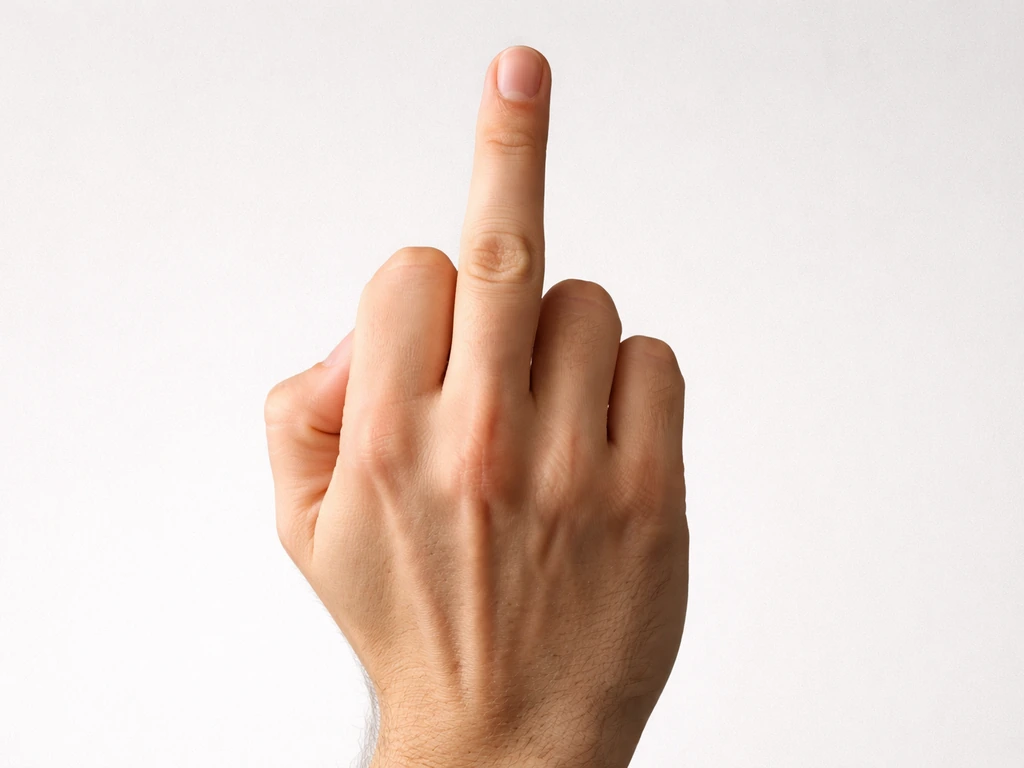
"Flipping the bird" means extending your middle finger at someone as a deliberate insult. Merriam-Webster similarly describes the “flip the bird” gesture as angry and offensive, commonly involving the extension of the middle finger angry, offensive gesture (commonly by extending the middle finger).
Flipping the Bird Meaning: Why It Means Insult or Contempt

Marcus Whitmore
4 Apr 2026
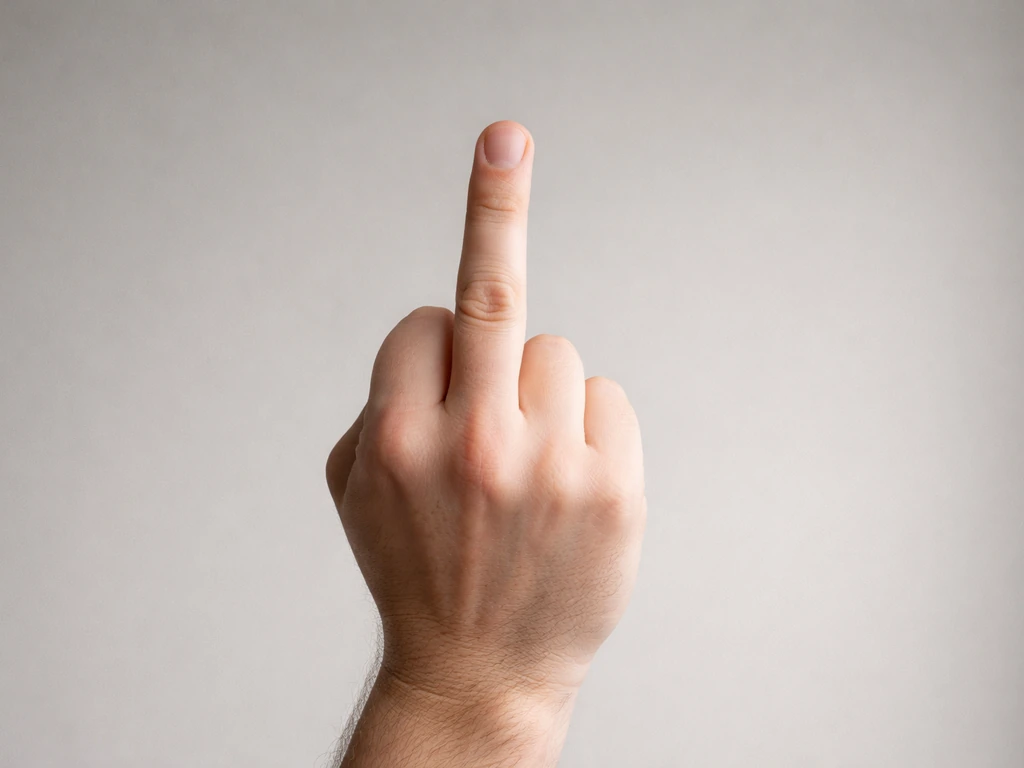
It's a vulgar gesture that communicates contempt, anger, or dismissal, basically a nonverbal way of telling someone off without saying a word. Cambridge Dictionary puts it plainly: you turn the back of your hand toward the other person and raise your middle finger to show, in an offensive way, that you're annoyed with them. Collins frames it the same way: a vulgar gesture of contempt and anger directed at another person.
So if you've ever wondered what "flipping the bird" means, that's the short answer. The rest is context, history, and a surprising amount of cultural baggage. Ginger Software's explainer on “flip the bird” provides additional context on the phrase’s origin and how it’s used [context, history, and a surprising amount of cultural baggage](https://www. gingersoftware.
com/content/phrases/flip-the-bird).
What "Flipping the Bird" Actually Means
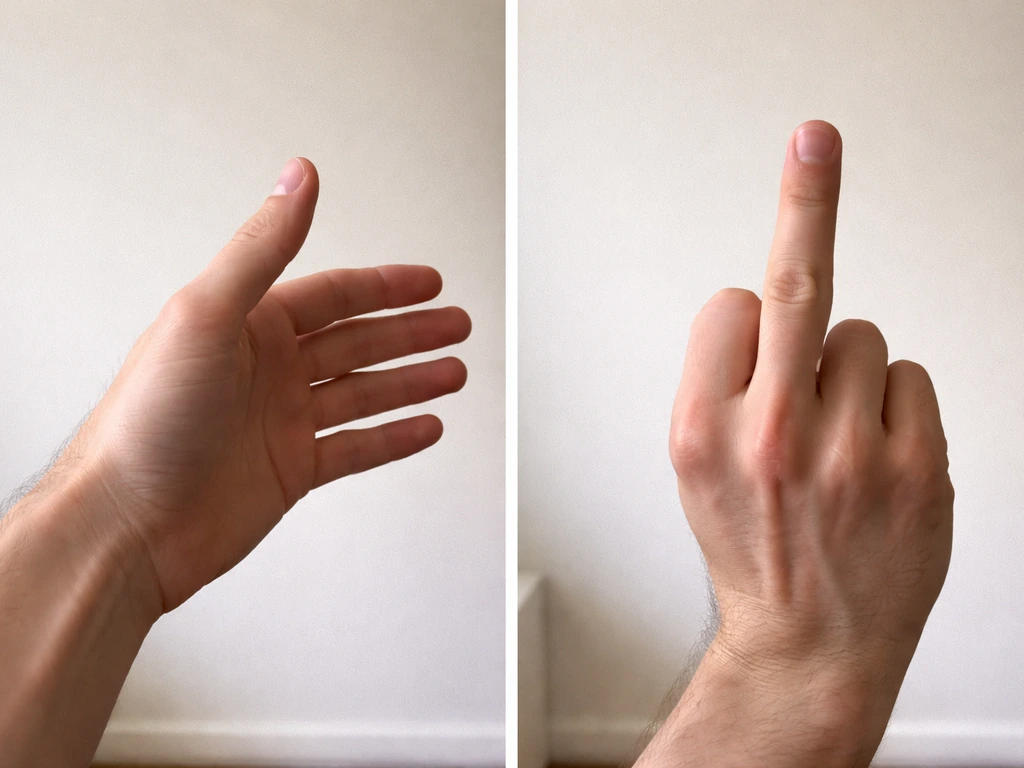
At its core, flipping the bird is an act of interpersonal hostility. It's not a neutral description of a hand movement, it's a deliberate, directed insult aimed at a specific person. When someone flips you the bird, they're signaling contempt, frustration, or outright anger. It almost always means "I'm furious with you" or "I have no respect for you right now." This is why dictionaries consistently frame the gesture as offensive rather than merely expressive.
The gesture itself involves extending the middle finger upward while the other fingers are curled down. It can be delivered quickly (a fast "flip") or held for emphasis. Either way, the message lands the same. It's one of the most widely recognized hand gestures in English-speaking countries and across much of the world, which is part of what makes it such an effective insult, no translation required.
How It Gets Used in Different Situations
Context changes exactly how the gesture is read, even if the underlying meaning stays the same. In traffic, it's the go-to response when someone cuts you off or runs a red light. Between friends who are comfortable with crude humor, flipping a bird can even be playful, a joking mock-insult with no real venom behind it. In a heated argument, it signals that the conversation is over and the person has no interest in being civil. In public or professional settings, the stakes are much higher.
The phrase also covers a few grammatical variations depending on how it's used in a sentence. You might hear "he flipped me the bird," "she flipped them the bird," or just "stop flipping people off", and all of these mean the same thing. The target of the gesture changes, but the gesture itself and its meaning stay consistent. "Flip me the bird" is probably the most direct phrasing, used when someone recounts the moment the insult was directed personally at them.
Why Is the Middle Finger Called "the Bird"?
This is the part people are most curious about, and honestly the naming logic is more layered than most people expect. The connection between the middle finger and "the bird" most likely comes from an older, less polite term: "the bird" was slang in British English for a hissing or booing sound, the kind of noise a crowd makes to express contempt and rejection. Think of "getting the bird" as being booed off stage. That association between "bird" and public contempt eventually stuck to the gesture that communicated the same feeling.
Another explanation focuses on the visual shape of the gesture itself. When you extend only your middle finger, the hand vaguely resembles a bird in flight, the raised finger acting like a wing or beak. It's a loose visual metaphor, but slang often works on exactly that kind of loose, playful logic. Either way, somewhere along the line, the middle finger became shorthand for a very specific kind of "bird," and the phrase stuck.
It's also worth noting that the word "bird" has a long history in English slang for carrying meanings related to people, attitudes, and social signals, so the jump from "contemptuous noise" to "contemptuous gesture" fits a natural pattern in how slang evolves. If you're curious about how other birds carry symbolic weight in English idioms, reading about the flicker bird's meaning is a good example of how specific birds accumulate layered cultural significance over time.
Where the Gesture and Phrase Come From
The gesture of raising the middle finger is ancient. Ancient Greek and Roman texts reference it as an obscene or insulting gesture (the Romans called it the "digitus impudicus", the shameless finger). Wikipedia describes the middle-finger gesture as an obscene, insulting sign and notes the Latin name “digitus impudicus” (the shameless finger) blank" rel="noopener noreferrer">the Romans called it the “digitus impudicus”. So the physical act of flipping someone off has been around for over two thousand years. What's more recent is the specific English slang that combined the gesture with the word "bird."
The modern phrase "flip the bird" or "flip someone the bird" gained traction in American English primarily during the 20th century. By the mid-1900s, the phrase was in common informal use, and by the latter half of the century it had become firmly embedded in everyday slang. Its spread accelerated alongside pop culture, film, television, and eventually the internet all gave the gesture and its nickname massive visibility. Today it's one of the most recognizable pieces of English slang globally, even in countries where the specific phrasing isn't native.
All the Ways People Say the Same Thing
The phrase has a lot of close relatives, and they all mean essentially the same thing. Understanding which phrasing is being used just tells you who the gesture is aimed at or who's describing it.
- "Flip the bird" — the base phrase; general usage for the action itself
- "Flip someone the bird" — specifies that it's directed at a person
- "Flip them the bird" — used when describing the gesture aimed at a third party (learn more about how this phrasing is used in "flip them the bird")
- "Give someone the bird" — a softer-sounding but equally rude alternative phrasing
- "Flipping someone off" — focuses on the act of dismissing or insulting someone
- "Giving someone the finger" — describes the same gesture, emphasizing the body part
- "Flipped the bird" — past tense, used when recounting the moment it happened
If you're trying to understand any of these variations, the meaning is always the same: one person is communicating hostility, contempt, or dismissal toward another using the middle finger gesture. The full breakdown of what "flip the bird" means covers the phrase from multiple angles if you want to go deeper on the exact wording.
When It's a Problem and What to Use Instead

The short answer on etiquette: flipping the bird is almost never appropriate in professional or formal settings. If a coworker, client, manager, or stranger on the street sees it directed at them (or even just sees you do it nearby), the social and professional fallout can be real. In some workplaces it could constitute a hostile work environment. In traffic, depending on where you are, it can escalate situations dangerously. The gesture reads as aggressive, not just rude, and that matters.
Between close friends who've established that kind of irreverent dynamic, it can be harmless, but even then, reading the room matters. The gesture carries a lot of weight, and it's hard to walk back once it's out there.
If you want to communicate frustration or contempt without the vulgar gesture, here are some alternatives that land differently depending on the situation:
| Situation | Gesture/Phrase to Avoid | Better Alternative |
|---|---|---|
| Traffic frustration | Flipping the bird | A firm honk or simply ignoring the other driver |
| Workplace conflict | Any rude gesture | Direct verbal feedback or escalating to HR |
| Casual friend joking | Flipping the bird (if uncertain) | A playful eye roll or a sarcastic verbal comeback |
| Expressing strong disagreement | Flipping the bird | "I completely disagree" or a pointed verbal response |
| Venting frustration privately | Acting it out toward someone | Venting to a trusted friend in words instead |
The underlying impulse, to signal contempt or frustration, is understandable. The gesture itself is just a high-risk way to express it. In most situations, a sharp verbal response or simply walking away communicates the same message without the social, professional, or (occasionally) legal consequences.
The Bigger Picture of Bird Language
It's kind of remarkable that one of the most universally understood pieces of body language in the English-speaking world gets its name from a bird. But that's the nature of slang: it borrows from wherever it can find a memorable hook, and "the bird" stuck because the older associations with contempt and rejection were already there in the language. The gesture just needed a name, and "the bird" was already doing that cultural work. It's a small but vivid example of how bird imagery keeps showing up in the most unexpected corners of everyday English.
FAQ
Is flipping the bird always meant seriously, or can it be playful?
Not always. Some people use it as a crude joke among friends, but in most public, professional, or stranger-to-stranger situations it is treated as a deliberate insult. If the context includes hostility, the safest assumption is that it is meant offensively, even if the person claims it was “just kidding.”
Does “flipping the bird meaning” always refer to the literal middle-finger gesture?
Yes. Saying “flip the bird” usually refers to the middle-finger gesture, but the phrase can also be used metaphorically in speech or writing to mean “a harsh retort” or “dismissive reaction.” If you are reading it in a story, look for accompanying details about the hand, the target, or the tone to confirm which meaning is intended.
What if the gesture was not intended for a specific person, will it still be read as an insult?
The meaning is aimed at a person, but it can be triggered even when there is no direct target. If someone sees you do it near them, at them, or in their direction (for example, in a car while passing), it often still reads as directed contempt and can escalate conflict.
Does how long you hold the gesture change flipping the bird meaning?
Yes. Holding the middle finger higher, keeping it pointed toward someone, or repeating the gesture tends to intensify how aggressive it is perceived. A quick flash can still be offensive, but prolonged or repeated displays are more likely to be treated as threatening or harassment.
Can flipping the bird have consequences at work even without any words?
It can. In many workplaces, repeated rude gestures can be treated as misconduct or harassment even if you never speak. Some policies also cover behavior that creates intimidation or a hostile environment, so even “informal slang” can become a disciplinary issue.
What should I do if I accidentally flip someone off?
If you accidentally gesture it (for example, while you are gesturing in conversation), the quickest repair is to stop immediately and clearly de-escalate. A brief apology like “Sorry, I didn’t mean that” plus changing the topic helps. If the person is visibly upset, do not repeat the explanation, just disengage.
What does flipping the bird meaning typically communicate in traffic?
In traffic, it is commonly interpreted as anger and can signal “you cut me off” or “you’re in the wrong.” Because it can provoke retaliation, the practical etiquette advice is to avoid eye contact, keep your movements calm, and let the car situation pass rather than “answering” the gesture.
Are there gestures that people mistakenly call “flipping the bird”?
Yes, people sometimes describe other gestures as “bird” in slang, but the phrase most specifically points to the middle finger. If the article or conversation lacks mention of the middle finger, it may be loose slang, so confirm the actual finger used before assuming the insult level.
What are safer nonverbal alternatives to show contempt or frustration?
If you want to express frustration without the vulgarity, opt for nonverbal alternatives like pointing at the road to signal “slow down,” using open-hand palm gestures to indicate “wait,” or simply changing lanes and keeping distance. In many cases, walking away or ending the exchange communicates “no further discussion” more safely than a gesture.
Why does “flip me the bird” sound more personal than general slang like “flip the bird”?
The phrase “flip me the bird” (and similar wording) typically implies a recounting of a specific moment where the target feels personally insulted. If you are using it casually, it will likely sound personal or confrontational, so it can escalate arguments even when it is meant as a story-telling line.
Next Article
War Bird Meaning: Literal, Slang, and Historical Uses
Understand war bird meaning: literal, slang metaphor for fighters, and historical bird symbolism, plus close phrase comp