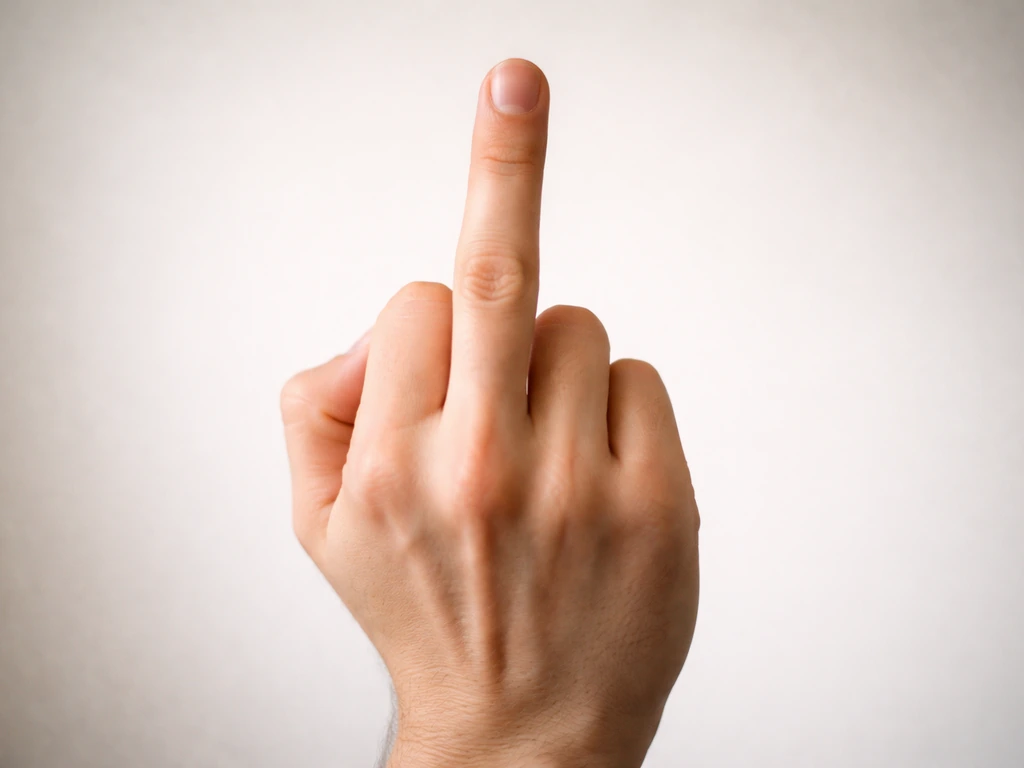
When someone says "flip me the bird," they're asking you to make an obscene gesture at them, specifically raising your middle finger in their direction. More often, though, you'll hear it used to describe what someone else did: "He flipped me the bird" means someone extended their middle finger at the speaker as an insult. Either way, this phrase is squarely about the middle-finger gesture and everything it communicates: contempt, dismissal, anger, or just plain rudeness.
Flip Me the Bird Meaning: What It Says and How to Respond

Marcus Whitmore
2 May 2026
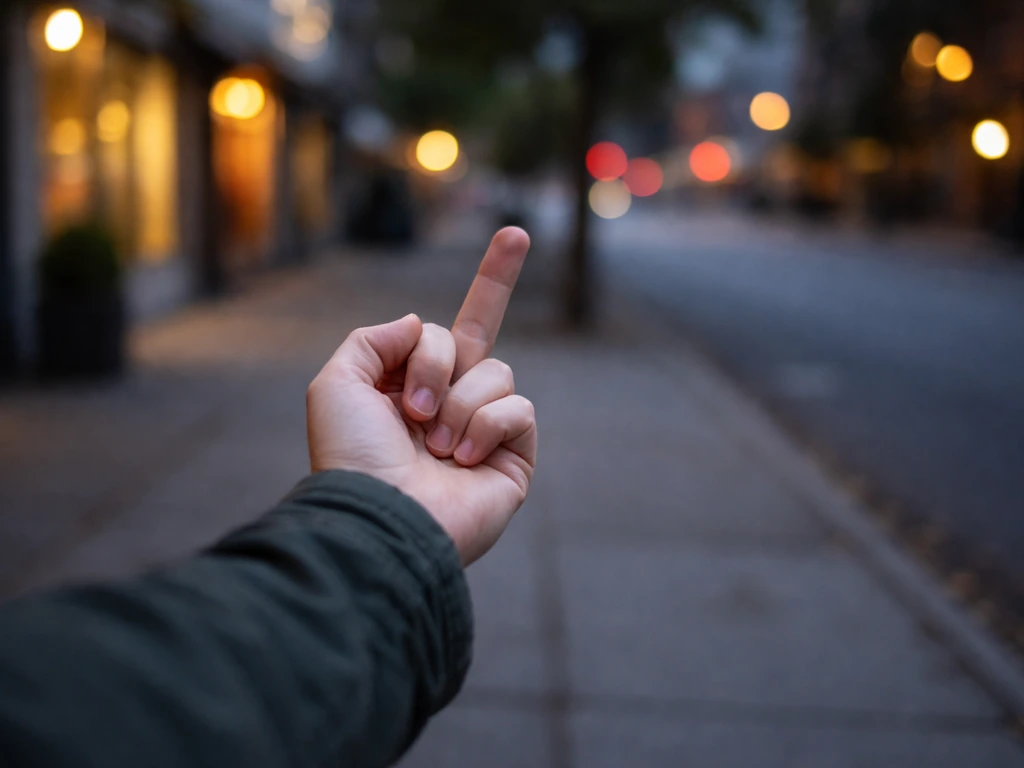
What "flip me the bird" actually means
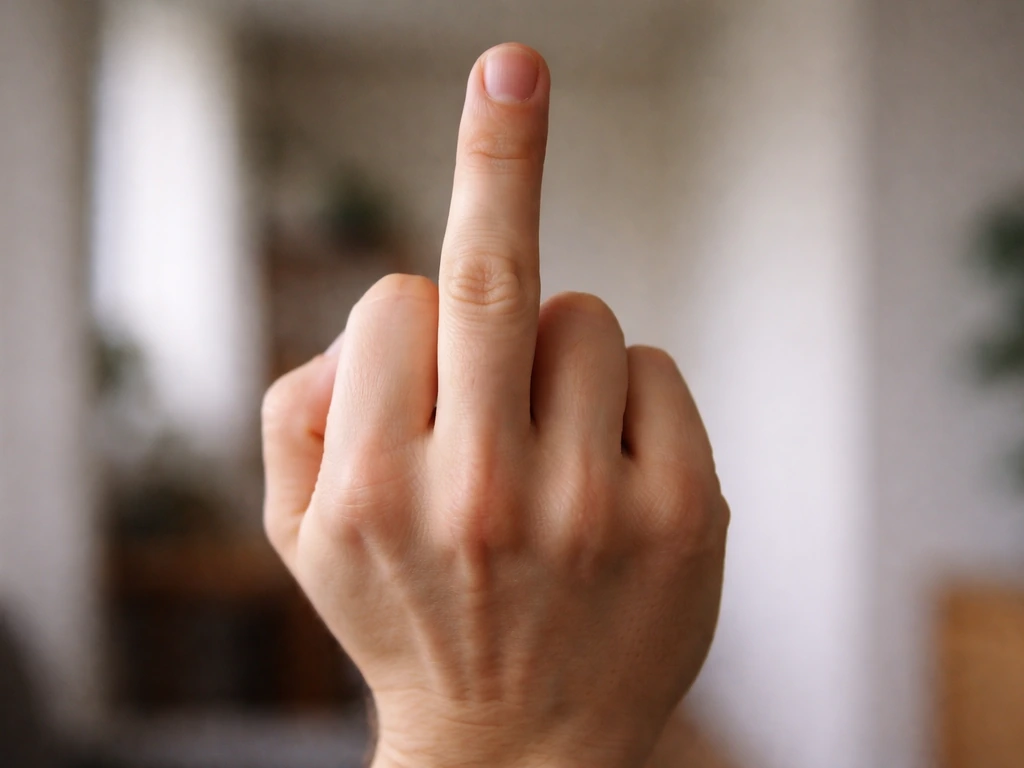
At its most literal, "flip me the bird" means "give me the middle finger." Cambridge Dictionary defines it as making a rude, obscene gesture by pointing the middle finger upward at someone, and Merriam-Webster backs that up exactly, glossing it as doing the obscene middle-finger gesture at a person. The phrase is a command or invitation ("flip me the bird"), but in practice you're far more likely to see it in the past tense: "She flipped me the bird" or "He flipped them the bird." That's the Merriam-Webster example almost word for word.
The "bird" in this idiom is the middle finger itself. It's a slang term for the gesture, not for any actual bird species. So when the phrase shows up on a site like this one, which is usually talking about robins, ravens, and bird symbolism, it's worth being clear: this is pure slang. The connection to birds is linguistic history, not ornithology.
Flipped, flipping, flip: which form to use
The grammar here is simpler than it might seem. Wiktionary lays out all the standard verb forms cleanly: the base form is "flip the bird," present singular is "flips the bird," the present participle is "flipping the bird," and both the simple past and past participle are "flipped the bird." You just conjugate "flip" like any regular verb.
| Tense / Form | Example sentence |
|---|---|
| Base / imperative | "Just flip me the bird and get it over with." |
| Present (third person) | "She flips me the bird every time I see her." |
| Present participle | "He was flipping me the bird from across the parking lot." |
| Simple past | "She flipped me the bird and drove off." |
| Past participle | "I can't believe he's flipped me the bird twice this week." |
The variants "flipping me the bird meaning" and "flipped me the bird meaning" that people search for are just people trying to pin down the meaning of a phrase they heard in a specific tense. If you're trying to nail down the exact message behind flipping the bird meaning in a specific tense, it's helpful to focus on the gesture rather than the wording flipping me the bird meaning. The meaning doesn't change between tenses. "Flipping me the bird" describes the action in progress; "flipped me the bird" describes a completed act. Both are the same insult.
What the gesture is really communicating
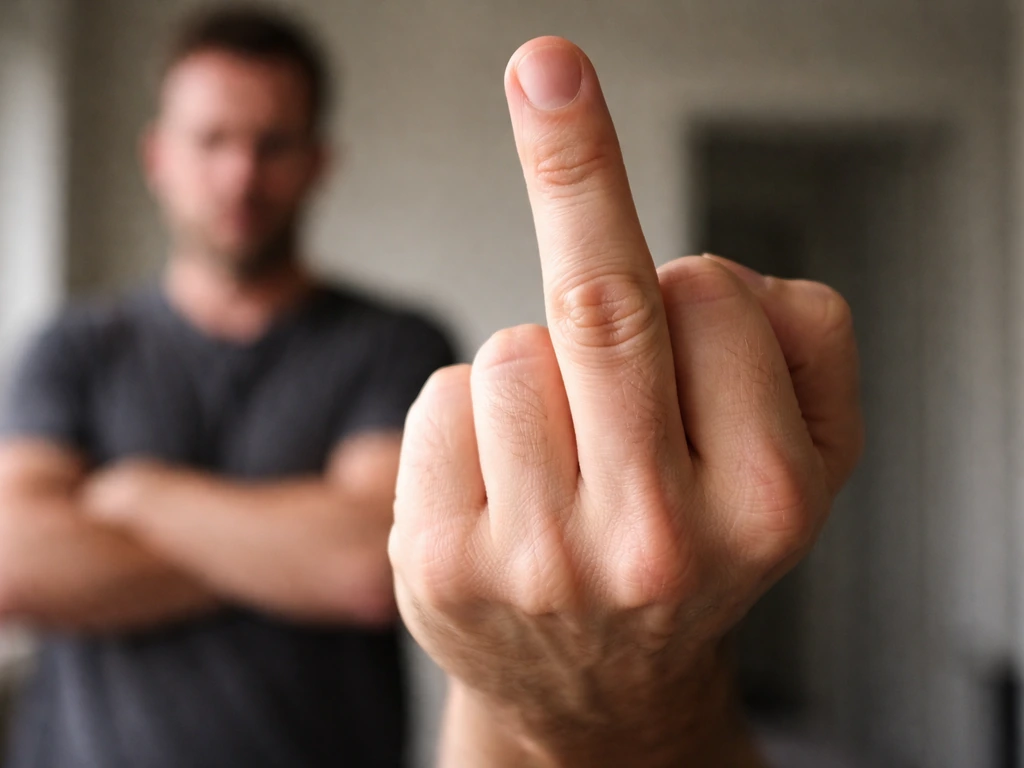
The middle finger is one of the most universally understood gestures in Western culture, and it is not a subtle one. Wikipedia puts it plainly: in meaning, flipping the bird is roughly equivalent to saying "fuck you," "fuck off," or "up yours. Dictionary.com explains that the middle-finger emoji represents raising the middle finger and is used for offensive or humorous effect, with a contemporary meaning close to “fuck you” or “go fuck yourself.” roughly equivalent to saying "fuck you". " It conveys contempt, sometimes moderate, sometimes extreme, depending on the delivery and the relationship between the people involved.
What makes it particularly loaded is that it combines two things at once: a physical action and an emotional message. The person doing it is not just being rude in the abstract. They're directing something at you, personally, in the moment. That directness is a big part of why it stings more than a verbal insult. It's also why it so often appears in road-rage situations, where strangers who would never confront each other face to face feel free to escalate through gesture.
Where the phrase came from
The gesture itself is ancient. The comedian Aristophanes referenced the middle finger in his play "The Clouds" around 423 BC, and the Romans had a name for it: "digitus impudicus," which translates roughly to the impudent or obscene finger. So the gesture predates the English language by a considerable margin.
The specific phrase "flip the bird" is much more recent. The earliest traceable appearance in print seems to be from a 1967 issue of Broadside magazine (Volume 6, Issues 17 to 26), which puts the idiom firmly in mid-20th century American slang. From there it spread into everyday speech and eventually into mainstream written English. Today it shows up in dictionaries from Cambridge to Merriam-Webster, which is about as official as slang gets.
One thing worth knowing: in British English, "give someone the bird" historically meant something quite different. Merriam-Webster specifically flags this: in the UK, "give the bird" can mean to boo, jeer, or laugh at a performer. So if you're reading something with a British setting and someone "gives the bird" to a stage act, they're probably heckling, not flipping anyone off. That distinction matters for interpreting older texts or British media.
Tone and context: joke, insult, or genuine hostility?
Like a lot of profane language, "flip the bird" exists on a spectrum. Between close friends, someone saying "oh, flip me the bird, will you" might be part of a running joke. In that context, the gesture itself is probably delivered with a grin, not a snarl. Nobody is actually offended. It's playful provocation.
On the other end of the spectrum, someone flipping you the bird after a tense argument or during a road-rage moment is communicating something closer to its dictionary meaning: intense contempt, a desire to end civility, and sometimes an implicit challenge. The gesture doesn't change; the context changes everything about how it lands.
A middle-ground case is frustration without real hostility. Someone who's just had their code deleted or lost a game might flip off the screen and mutter about it. Nobody takes it personally because there's no target. The emotional content (frustration, exasperation) is real, but the social threat is minimal.
- Between friends or in a clearly jokey context: usually harmless, treat it like a casual expletive
- From a stranger during a brief conflict (traffic, line at a store): contemptuous dismissal, typically not worth engaging
- From someone in a heated argument with you: signals they've moved past words and want to provoke a reaction
- Directed at a public figure or institution ("flip the government the bird"): metaphorical, meaning defiance or protest
Other bird-based insults and idioms you might run into
"Flip me the bird" is part of a whole cluster of related phrases. Understanding where it sits helps you parse related expressions quickly. You'll see the same sibling phrases showing up constantly, including "flipping the bird," "what does flip the bird mean," and "flip a bird meaning," all of which are asking the same core question with slightly different phrasing.
The term "flip a bird meaning" is essentially the same idea: a gesture with the middle finger used to insult or express intense contempt. If you’re wondering what does flip the bird mean, it’s essentially the same middle-finger gesture, used to convey contempt or frustration flip me the bird. There's also "flip them the bird," which just changes the target of the gesture from "me" to a third party.
Beyond the middle-finger cluster, there are other bird-based idioms in English that sound vaguely similar but mean completely different things. Knowing the difference matters:
| Phrase | What it actually means | Bird connection |
|---|---|---|
| Flip (someone) the bird | Give the middle finger; express contempt | "Bird" = slang for the middle-finger gesture |
| Give (someone) the bird (UK) | Boo or jeer at a performer | "Bird" = audience disapproval noise |
| Flip off | Same as flip the bird (US); extend the middle finger | No bird reference, same gesture |
| For the birds | Worthless, not worth anyone's time | Literal birds eating scraps nobody else wants |
| Rare bird | An unusual or exceptional person or thing | From the rarity of certain bird species |
| Flip a bird / flip them the bird | Same as flip the bird; just varies the object pronoun | Same slang origin |
There's also a completely unrelated bird in the mix: the Northern Flicker, a woodpecker species, sometimes called a flicker bird. If you've landed here after searching "flicker bird meaning" expecting slang, that's a different trail entirely and leads to actual ornithology rather than gesture-based insults. That’s why “flicker bird meaning” often points people to the Northern Flicker’s real-world definition rather than the middle-finger insult described elsewhere in this article.
How to respond if someone says it to you

The practical question behind most searches for this phrase is: someone did or said this, what now? The answer depends almost entirely on context and your relationship with the person.
If it was clearly a joke between people who know each other well, you can laugh it off or return the banter. The intent wasn't hostile, and treating it like it was will just be awkward. Read the room.
If it came from a stranger in a low-stakes situation (someone annoyed in traffic, a brief moment of frustration), the best practical move is to disengage. Psychology Today and conflict-resolution experts consistently recommend this for good reason: responding to a stranger's middle finger with anger or a return gesture almost always escalates the situation without any benefit to you. You don't know what that person's day has been like or what they're capable of. Let it go and drive on.
If it came from someone you have an ongoing relationship with (a coworker, a neighbor, a family member) and it was clearly hostile rather than jokey, that's worth addressing calmly and directly. Something like "That gesture was rude and I'd like to understand what's actually bothering you" keeps the conversation open without mirroring the hostility. Matching aggression for aggression almost never resolves anything.
- Identify the context first: joke, frustration, or genuine hostility?
- If it's a joke between people who know each other: treat it as banter and move on
- If it's from a stranger: disengage, don't respond in kind, and remove yourself from the situation if possible
- If it's from someone in your life and it felt genuinely hostile: address it calmly and directly once things have cooled down
- Never escalate physically or with a retaliatory gesture in a road-rage or stranger scenario: that's how low-level conflicts become serious ones
The bottom line: "flip me the bird" means give me the middle finger, and in most real-world uses it signals contempt or frustration directed at a specific person. It's been around in its current form since at least the late 1960s, rooted in a gesture that's far older. Whether you just heard it from a coworker, saw it in a movie, or got it thrown at you on the highway, the meaning is consistent: someone is expressing serious displeasure. What you do with that information is where the real judgment call comes in.
FAQ
How can I tell if “flip me the bird” is a joke versus something genuinely threatening?
In most Western contexts, “flip me the bird” signals contempt or frustration directed at you, but the level of threat depends on delivery. If the person is close, keeps following you, or repeats the gesture while threatening words are used, treat it as serious and de-escalate or seek distance. If it was a one-off comment with no follow-up, it’s often safer to assume low risk and move on.
What’s the best response if someone flips me the bird?
Don’t mirror it. If you respond with the same gesture, you usually turn a single rude moment into a face-saving conflict, especially with strangers. A safer alternative is to stay neutral, keep your distance, and either ignore it or use a calm phrase like, “I’m not going to argue,” then disengage.
If someone says “flipped me the bird” but I never saw a gesture, what does it usually mean?
It can be used in speech without a gesture, especially in writing or on-screen dialogue, but the meaning stays tied to the middle-finger insult. If someone says it as reported speech (for example, “He flipped me the bird”), it typically means they gestured, not that you should imagine birds.
How should I respond in the moment if we’re already in an argument?
In the middle of an argument, assume the intent is communication, not confusion. If you need to respond, focus on the underlying issue rather than the gesture, for example, “You seem really upset. What specifically is the problem?” This avoids validating the insult while still giving the other person a path to talk.
Is “flip me the bird” ever harmless?
Yes, tone and relationship matter. Between close friends, it might be playful provocation, but that only holds if there is a clear history of similar banter. If you’re unsure, default to “rude and directed at me” and handle it with caution.
How should I interpret or moderate the phrase in text, not just in real life?
If you’re the one typing it or writing dialogue, it helps to keep it clear that it refers to the gesture, not a literal bird. If you are moderating user content, remove or flag because it’s an explicit obscene gesture term, even when used metaphorically, since many readers will interpret it as the insult.
Does “give the bird” mean the same thing in British English?
If you’re in the UK reading older or regional usage, “give the bird” may refer to booing or heckling a performer, not the middle finger. For the specific phrase “flip me the bird,” the intended meaning is still the obscene finger, but always check surrounding context and location cues.
What changes in meaning with variants like “flip them the bird” or “flip the bird”?
Sometimes people use a variant like “flip them the bird,” targeting someone else, or they describe it indirectly (for example, “He went off on me with the middle finger”). The core message is the same, directed contempt, only the recipient changes.
What should I do if it happens at work, with a coworker?
If you receive it in workplace contexts, document what happened (date, time, what was said, any witnesses) and report through the appropriate channel instead of confronting directly. Even if you think it was “just frustration,” repeat behavior or hostile delivery can become a policy and safety issue.
Next Article
Flip a Bird Meaning: Rude Gesture Explained and Context
Meaning of flip a bird: rude hand gesture slang, why birds are used, how offensive it is, and how to respond safely.