"Free bird" means a person who is free from obligations, restrictions, or ties, someone who goes where they want, answers to no one, and lives on their own terms. That core idea holds whether you hear it as "free bird," "free as a bird," or "free the bird." The small variants do shift the nuance a little, though, and the phrase also carries a massive pop-culture shadow from a certain Lynyrd Skynyrd song that changed how people actually use it in conversation. Here's everything you need to know.
Free Bird Meaning: Definition, Variants, and Examples

Marcus Whitmore
3 Apr 2026
What "free bird" actually means
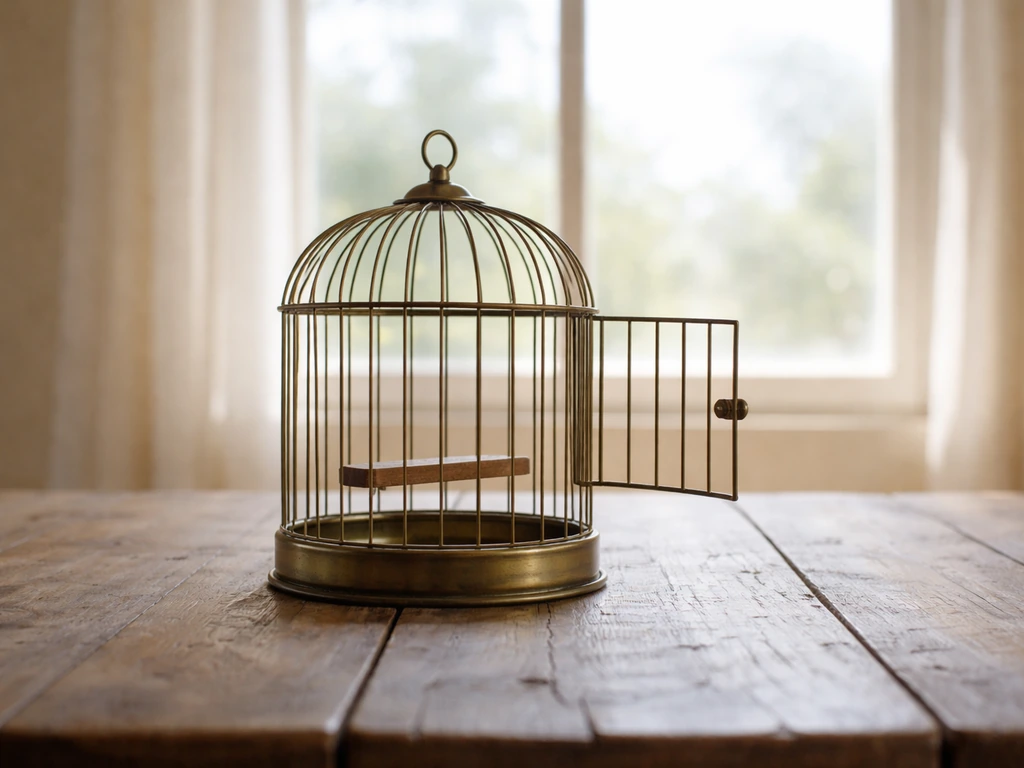
At its most basic, a "free bird" is someone (or something) that is completely at liberty. No cage, no leash, no boss, no commitment holding them back. Cambridge Dictionary defines "free as a bird" as being at liberty to do what you want, and Dictionary.com reinforces that with a simple gloss: "at liberty, without obligations", think of someone who can travel wherever they choose with nothing tying them down.
The phrase is almost always a compliment or a statement of envy. When someone calls another person a "free bird," they're usually saying: that person isn't stuck. They've escaped the normal web of responsibilities, relationships, or routines that most people can't shake. Whether that's admirable or slightly sad depends entirely on context, which is part of what makes the expression interesting.
"Free as a bird" vs. "free bird" vs. "free the bird", same idea or different?
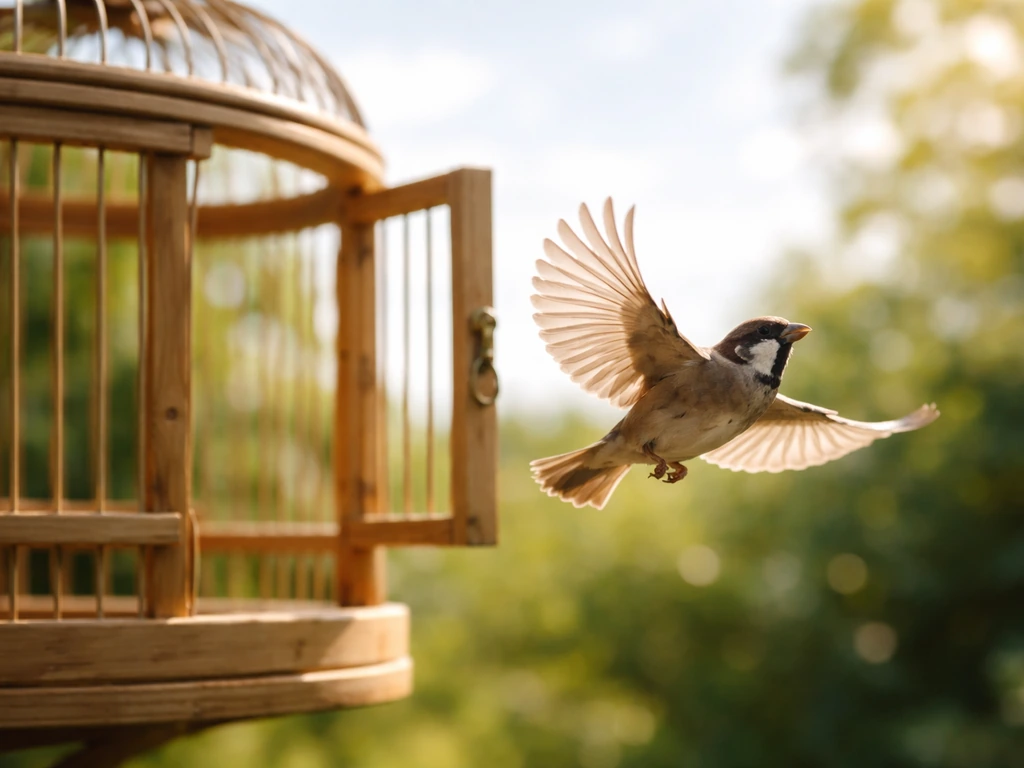
These three constructions are close cousins, but they do slightly different jobs. "Free as a bird" is a simile, it compares a person's state to a bird's freedom. "Free bird" is a noun phrase, it labels a person as that thing. And "free the bird" is a command or an aspiration, it suggests something is currently caged and should be released. Think of the difference this way:
| Phrase | Grammatical role | What it implies | Typical use |
|---|---|---|---|
| Free as a bird | Simile / adjective phrase | Someone IS currently free | Describing a person's present state |
| Free bird | Noun phrase | Someone IS that type of person | Labeling a personality or lifestyle |
| Free the bird | Imperative / verb phrase | Something is caged and should be released | Urging liberation, literal or metaphorical |
Collins English Dictionary treats "free as a bird" as an established idiomatic unit explicitly linked to liberty, while idiom databases list "free-bird" as its own entry, suggesting the noun form has earned standalone status. "Free the bird" is less standardized as a set phrase, but its meaning is obvious from the parts: remove whatever is constraining something. You might see it used in motivational writing, in discussions about what "the bird is freed" really signals, or in literal contexts like wildlife rehabilitation.
The good news is that all three variants point to the same underlying symbolism. You're not going to misread a sentence by knowing the core meaning. The variant just tells you the angle: is the person already free, are they the type who is always free, or is the freedom something that needs to happen?
Where you'll actually hear this phrase used
Everyday conversation

In casual talk, "free bird" most often describes someone who resists settling down, romantically, geographically, or professionally. "She's a real free bird; she's been living out of a backpack for three years" is a perfectly natural sentence. It can be affectionate, envious, or gently critical depending on tone. Someone might also use it to describe their own situation: "I quit my job and now I'm a free bird" signals relief, liberation, maybe a little recklessness.
Pop culture: Lynyrd Skynyrd's "Free Bird" and the meme that followed
You cannot talk about "free bird" in modern English without addressing the song. blank" rel="noopener noreferrer">"Free Bird" was written by Allen Collins and Ronnie Van Zant and released in 1974. The central lyric, "'Cause I'm as free as a bird now", directly ties the idiom to the song's theme: a man who can't commit to a relationship because wandering is simply who he is. The freedom is framed as an identity, not just a temporary situation, and the song's legendary guitar outro sounds like something being let loose. An oral history of the song described how that ending contributes to the feeling that the piece ultimately releases the listener.
From there, "Free Bird!" evolved into one of the most recognizable crowd requests in live music history. Dictionary.com has tracked it as a genuine pop-culture meme, people shout it at concerts (sometimes sincerely, often ironically) as a running joke, a way of heckling, or just a reflex. Dictionary.com’s pop-culture page describes how “Free Bird!” is a classic rock song tradition where people shout the request at live shows people shout it at concerts. One notable documented example: at Nirvana's 1993 MTV Unplugged performance, someone in the crowd shouted "Free Bird!", which gives you a sense of how embedded the call had become by that point. Social media kept the joke alive: "Morning routine: 1. Play the air guitar to Free Bird. 2. That's it." If you've ever been at a live show and heard the shout, now you know the full lineage.
Literary and motivational usage
Outside of music, "free bird" shows up in motivational quotes, self-help writing, and storytelling whenever someone wants to describe a character breaking free from circumstances. It fits naturally into breakup narratives, travel writing, and coming-of-age stories. The phrase also connects to a broader family of bird-freedom metaphors: the idea of letting the bird out of the cage is essentially the same image, something constrained finally being released into open air.
Why birds became the symbol for freedom in the first place
Birds fly. Humans don't. That gap has made birds a natural symbol for freedom across virtually every culture that has ever observed the sky. In storytelling, flight represents transcendence, going above the ordinary limits of life. A caged bird is one of the oldest and most universal images of captivity and longing; a free bird is its logical opposite. Think of Maya Angelou's "I Know Why the Caged Bird Sings," which uses exactly that contrast to talk about oppression and the desire for liberty. The bird as freedom symbol carries that kind of weight.
From a purely practical angle, birds are also genuinely hard to keep track of. They don't follow roads or respect borders. They migrate thousands of miles based on instinct alone. So when someone calls a person a "free bird," they're invoking all of that: lightness, self-determination, the ability to just go. The freedom bird meaning taps into the same well of symbolism, and you can see it surface in military slang too, where the aircraft that carried troops home from overseas was nicknamed the "Freedom Bird", a deeply felt usage that has nothing to do with the idiom but everything to do with the same emotional core.
The military connection is worth a brief note, because if you're researching "free bird meaning" and land on military sources, it can feel like a different universe. For Vietnam-era veterans, the "Freedom Bird" was the plane that brought them home at the end of their tour of duty. It's a specific, powerful piece of slang with its own history, covered in detail if you want to understand what freedom bird means in military contexts. The emotional resonance is related to the idiom, both are about finally being free, but the usage is its own thing.
Bird idioms that share the same territory (and some that don't)
"Free bird" belongs to a cluster of bird idioms that use birds as stand-ins for human qualities and situations. Some are close neighbors; others are easy to mix up. Knowing the difference helps you understand why "free bird" carries the specific weight it does.
- "Free as a bird" — the simile version of the same idea, meaning completely at liberty with no obligations.
- "The early bird gets the worm" — about proactivity and being first to act; shares the bird metaphor but has nothing to do with freedom, just timing and effort.
- "A bird's-eye view" — a top-down perspective or overview of a situation; completely unrelated to freedom, this is about vantage point, not liberty.
- "Fly the coop" — to escape a constraining situation; close in spirit to "free bird" but emphasizes the act of escaping rather than the state of being free.
- "Spread your wings" — to try new things or assert independence; overlaps thematically with "free bird" but focuses on growth rather than just freedom.
The comparison matters because bird idioms are not interchangeable. If someone says a new graduate should "spread their wings," they're talking about growth and trying things. If they call that same graduate a "free bird," they're talking about independence and lack of ties. The feeling is related but the emphasis is different. And if you're curious about what "the bird has landed" means, that's another phrase entirely, one that signals arrival or completion rather than freedom.
How to figure out what "free bird" means in a specific sentence

If you're reading a sentence and not sure whether "free bird" is being used as the idiom, as a song reference, or in some other way, here's a quick method that works almost every time.
- Check what's being described. Is it a person, a situation, or an aircraft? If it's a person's lifestyle or emotional state, you're almost certainly looking at the idiom (freedom, no obligations). If it's a military context, check whether "freedom bird" is in play instead.
- Look for song or concert context. If the sentence is about a live performance, a setlist, a crowd request, or a meme about guitar solos, it's almost certainly referring to Lynyrd Skynyrd's song and its cultural afterlife — not the idiom.
- Check the verb form. "He's a free bird" (noun) = the person has that identity. "She's free as a bird" (simile) = she's currently in that state. "Free the bird" (imperative) = something needs to be released. Each form tells you the angle.
- Look at the emotional tone. Is the writer romanticizing independence? The idiom. Is the writer being ironic or joking about shouting at a concert? The meme. Is the context solemn, about military service or homecoming? The military slang.
- If still unclear, default to the core meaning: freedom and lack of constraint. That's the root of every variant, and you won't be far off.
The short version if you need it fast
"Free bird" means a person who is unbound, independent, and free from obligations, someone living entirely on their own terms. "Free as a bird" is the simile form of the same idea. "Free the bird" pushes for that liberation to happen. All three share a root in the universal symbolic link between birds and freedom: they fly, they migrate, they don't answer to fences. The Lynyrd Skynyrd song amplified that meaning enormously and turned the phrase into a cultural touchstone that now operates on multiple levels at once, serious idiom, beloved rock lyric, and crowd-shouted joke all at the same time. Understanding which layer is active in any given sentence is just a matter of reading context, and the five-step check above will get you there every time.
FAQ
If someone says “free bird” in a breakup or dating conversation, is it flattering or critical?
It’s often a little of both. If the speaker contrasts you with “settling down” or suggests you avoid commitment, it leans critical or envious. If they emphasize relief after escaping pressure (for example, “no more chasing what I didn’t want”), it reads more as admiration.
Can “free bird” describe something non-human, like a job or a schedule?
Yes, indirectly. You can treat it as a label for a situation that isn’t constrained by rules, like a flexible contract or an unstructured role, but native-sounding usage is usually for people, pets, or characters. For objects or events, “unrestricted” or “on-demand” will often be clearer.
What’s the difference between “free bird” and “free as a bird” in tone?
“Free as a bird” usually sounds more conversational and rhythmic, like it’s comparing a person’s state to birds. “Free bird” sounds more like a character description or identity statement, it can feel stronger and more permanent, especially in lines like “she’s a free bird.”
Is “free the bird” always about literal captivity?
Not always. It can be metaphorical, for example “free the bird” can mean remove constraints, let someone pursue independence, or support a person’s creative or personal liberation. If the surrounding text mentions literal cages, wildlife, or confinement, expect it to be literal; otherwise, read it as figurative.
Can the Lynyrd Skynyrd song reference be the real meaning even if the context is not about romance?
Yes. Because the crowd-request meme (“Free Bird!”) is widely known, people may reference it for mood, irony, or hype even when the sentence is not about commitment. Clues include concert settings, jokes about “air guitar,” or talking about “that song” or “the outro.”
How do I tell whether “free bird” is an idiom or just a meme reference?
Look for indicators of a music setting (concert, crowd, MTV, “request”) versus a personal description (commitment, moving, job quitting, responsibilities). Idiom usage usually talks about obligations and routines, meme usage often depends on shared knowledge of the song.
Is it ever used sarcastically?
Frequently, especially in dating and social media. If someone says it while implying the person is “always running away” or “never stays,” it can mean the same freedom but with a negative judgment about reliability or commitment.
What’s a common mistake when using it in writing?
Using it in a way that implies someone is literally escaping every responsibility without clarifying the kind of freedom. If you want the positive independence meaning, add what they’re unbound from (job ties, relationship commitments, location). If you mean reckless or detached, add hints like “never plans,” “won’t commit,” or “won’t settle.”
Are there similar phrases that could be confused with “free bird” in meaning?
Yes. “Spread your wings” typically emphasizes growth and trying new experiences, not necessarily lack of obligation. “The bird has landed” signals completion or arrival, not freedom. If you’re unsure, replace the phrase with “unbound” or “unrestricted” in a draft and see if the sentence still makes sense.
Does “Freedom Bird” in military contexts mean the same thing as the idiom?
No. “Freedom Bird” can refer to a specific nickname for planes used to bring troops home, especially associated with Vietnam-era slang. It shares an emotional theme of returning home or being relieved from duty, but it is not an idiomatic description of a “free person.”
Next Article
War Bird Meaning: Literal, Slang, and Historical Uses
Understand war bird meaning: literal, slang metaphor for fighters, and historical bird symbolism, plus close phrase comp