Title: Brancusi Bird in Space Meaning: What the Sculpture Represents and Why It Still Matters
Brancusi Bird in Space Meaning: Flight, Form, and Law

Marcus Whitmore
16 Jul 2026
Meta description: Discover what Brancusi's Bird in Space means, its symbolism, versions, materials, the famous customs trial, and why it changed how we define art.
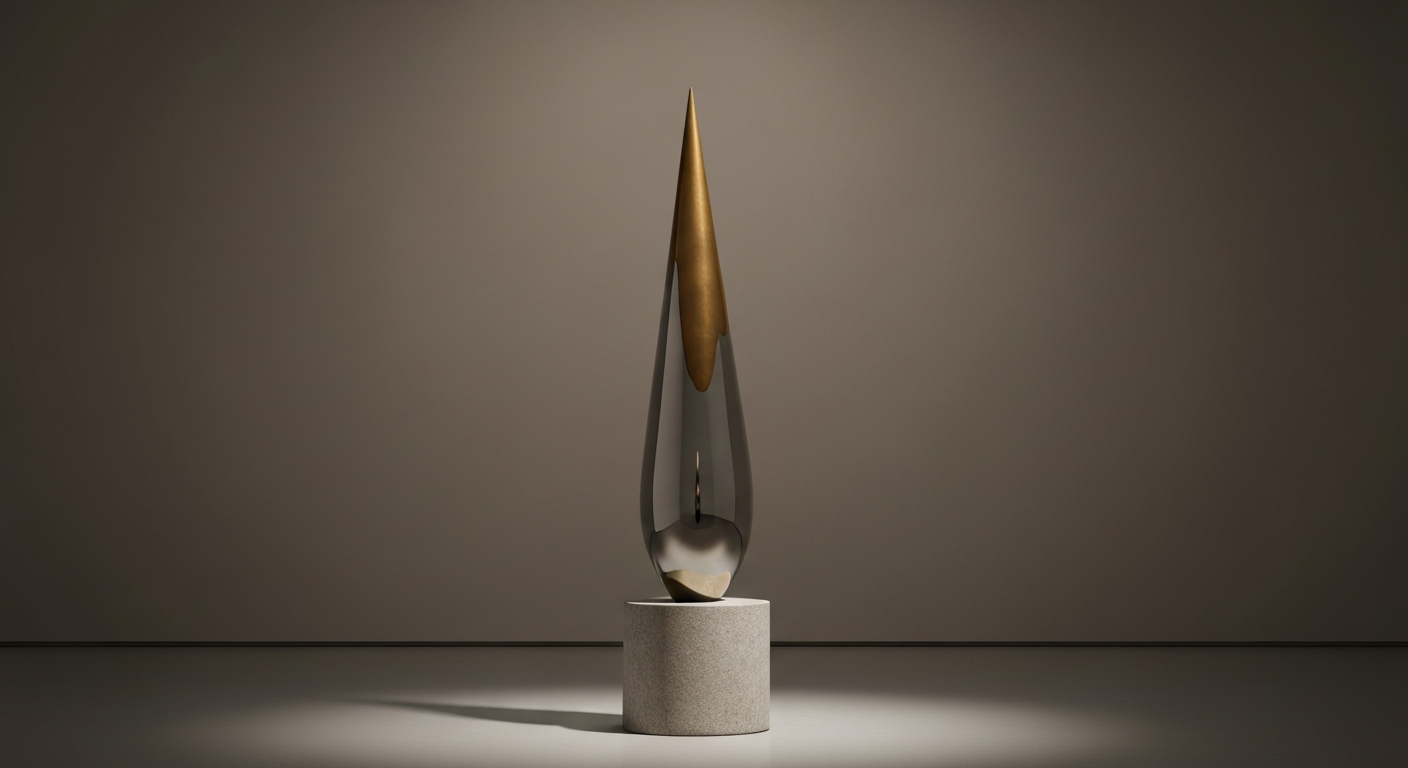
Constantin Brancusi's Bird in Space is not a portrait of a bird. It is a polished, tapering column of bronze or marble that distills the feeling of flight itself, no wings, no beak, no feathers, just a single upward-sweeping form that your eye follows instinctively toward the sky. Brancusi wanted to capture the essence of flight rather than its anatomy, and that is the core of what the work means: pure upward motion, freedom, and spiritual ascension, expressed through almost total abstraction.
Why Bird in Space Has a Place in a Bird Reference Guide
This site usually deals with birds in language: what 'early bird' means, what a raven symbolizes, why we say someone is 'free as a bird.' Bird in Space fits here because it asks the same foundational question from a visual angle: what do we actually mean when we say 'bird'? Brancusi forced the world to confront that question, and the answer he gave, that a bird is fundamentally an idea of flight, not a creature with a specific silhouette, resonates with the same symbolic and metaphorical territory that bird idioms occupy every day. The sculpture also connects to questions covered elsewhere on this site about what birds represent as symbols of freedom, transcendence, and the soul, and it illuminates why those associations are so persistent and cross-cultural.
What the Sculpture Actually Is
Bird in Space (French: L'Oiseau dans l'espace) is a series of related sculptures made by Romanian-French artist Constantin Brancusi (1876–1957) between approximately 1923 and the early 1940s. Each version is an elongated, ovoid form that tapers at both ends, widens in the middle like a tensed muscle, and tilts at a slight angle that implies upward movement. There is no representational detail: no implied wings, no recognizable bird anatomy. The piece stands on a simple geometric base, usually a cylindrical stone or wooden plinth, and the whole composition reads as a single gesture upward.
Brancusi produced at least a dozen versions across three materials: white marble, polished bronze, and plaster (plaster versions were primarily working models or preparatory studies). The polished bronze casts are the most iconic because the mirror finish amplifies the sense of light and movement, the surface catches and warps reflections as you move around it, giving the object a kinetic quality even when it is perfectly still. The marble versions are quieter and more meditative, their matte translucency evoking something more ancient and spiritual.
Versions, Materials, and Dates at a Glance
| Version / Cast Date | Material | Current Collection |
|---|---|---|
| c. 1923 (first in series) | White marble | Various; early versions in private collections and Brancusi studio archive |
| 1926 bronze | Polished bronze | Seattle Art Museum |
| 1927 bronze | Polished bronze | LACMA (Los Angeles County Museum of Art) |
| 1928 bronze | Polished bronze | Museum of Modern Art (MoMA), New York |
| 1931 bronze | Polished bronze | Norton Simon Museum, Pasadena |
| Undated bronze | Polished bronze | Peggy Guggenheim Collection, Venice |
| Multiple versions | Marble and bronze | National Gallery of Art, Washington, DC |
| c. 1941 (late version) | Polished bronze | MoMA, New York (separate work in collection) |
Where to See Originals
Several major museums hold verified Bird in Space works on permanent display or in accessible study collections. The Museum of Modern Art in New York is the most accessible starting point for most English-speaking visitors: MoMA holds at least two casts (a 1928 and a c. 1941 bronze) and its online collection records include high-resolution images and curatorial notes. The National Gallery of Art in Washington, DC holds both marble and bronze examples and provides a free audio guide that is genuinely useful for first-time viewers. The Seattle Art Museum has its 1926 cast, and LACMA's version is documented in its online collection. For those traveling in Europe, the Peggy Guggenheim Collection in Venice displays its polished bronze in the outdoor Nasher Sculpture Garden on the Grand Canal, one of the more atmospheric settings in which to encounter the work. The Peggy Guggenheim Collection’s object page 'Bird in Space | Peggy Guggenheim Collection (object page)' notes it holds a polished bronze cast and describes the series as an abstraction of a bird’s motion rather than its anatomy The Peggy Guggenheim Collection’s object page 'Bird in Space | Peggy Guggenheim Collection (object page)' notes it holds a polished bronze cast and describes the series as an abstraction of a bird’s motion rather than its anatomy.. The Centre Georges Pompidou in Paris holds the Brancusi archive ('La Dation Brancusi') and has a reconstructed version of Brancusi's studio adjacent to the museum, which shows how he arranged his Bird series together with other works in a total sculptural environment.
Why Brancusi Called It 'Bird in Space'
Brancusi himself was a careful and sometimes cryptic talker about his own work, so we should be cautious about putting exact words in his mouth. That said, the scholarly record, drawing on Carola Giedion-Welcker's monograph Constantin Brancusi (1959) and archival material in the Pompidou's Brancusi archives, does give us a clear sense of his intention. The statement most often attributed to him, 'All my life I have only sought the essence of flight. Flight! What bliss!', appears in early interviews and is cited repeatedly in the scholarly literature. Whether the precise wording is verbatim or paraphrased from a translator, the idea it expresses is consistent with everything else he said about the series.
Brancusi was not trying to make a recognizable bird. He was trying to isolate and make physical the single quality that makes a bird meaningful as a symbol: its capacity to leave the ground. The title 'Bird in Space' is almost a description of a concept rather than an object, it says: here is a bird, and here is space, and the two are fused. The word 'in' does real work there. The bird is not beside space, not near space; it is embedded in and inseparable from the dimension it inhabits. Brancusi's series evolved from earlier, more recognizable bird sculptures (including his Maiastra series, drawn from Romanian folklore, and his Yellow Bird works), gradually shedding representational detail until only the upward impulse remained.
Shape, Motion, and What the Form Is Doing
Look at a Bird in Space from the side and you see a form that behaves like a compressed spring just before release. It widens from a narrow foot, swells to its broadest point roughly two-thirds of the way up, then tapers back to a point. That widest section reads visually as stored energy, like the held breath before a leap. The slight forward tilt reinforces the sense that the object is already moving. Brancusi placed these works on carefully chosen bases (cylinders of limestone, wood, or stone) that raise the sculpture off the floor and eliminate its relationship to the ground, which is exactly the point: this object has already left the earth.
The polished bronze surface adds another dimension. The high mirror finish means the sculpture reflects its surroundings in a distorted, elongated way, so the object seems to dissolve into light rather than occupying solid space. That quality connects to longstanding symbolic associations with birds and transcendence: in many cultures, birds are messengers between the earthly and the divine precisely because they move in the medium (air, light) that the human body cannot reach. Brancusi's choice of material reinforces the symbolic content without stating it literally.
Symbolic Themes: Flight, Ascension, Purity, and Modernity
Bird in Space operates on several symbolic registers at once. At its most straightforward, it is about physical flight: the aerodynamic sensation of moving through air at speed, which Brancusi captures in form the same way a wing profile captures it in engineering. At a deeper level, the work is about spiritual ascension, the bird as soul, as the part of human experience that seeks to transcend the material world. This is not a new association; it runs through Egyptian mythology, Greek poetry, medieval Christian iconography, and Romanian folk tradition (which influenced Brancusi directly through the Maiastra, a magical golden bird in Romanian folklore). What Brancusi did was strip all those layers of specific cultural detail away and find the shape underneath them all.
There is also a strong argument that Bird in Space is a statement about modernity and what art can be. The early twentieth century was obsessed with speed, aerodynamics, and the newly conquered sky, Brancusi was making his first Bird in Space just a few years after the Wright Brothers, and in the same decade that Charles Lindbergh crossed the Atlantic. The streamlined form of Bird in Space looks like something that belongs in a wind tunnel. Brancusi was, in that sense, making a sculpture about the modern world's new relationship with flight, not just the ancient symbolic one.
Purity of concept, what gets stripped away
One useful way to understand Bird in Space is to track what Brancusi removed. His earlier bird sculptures (the Maiastra series, starting around 1910) have a recognizable head, a puffed chest, a slightly open beak. By the time he reached the Bird in Space series in 1923, all of that was gone. What remained was the single quality that makes a bird a bird in the symbolic imagination: the capacity for vertical, upward, free movement. This progressive stripping-away is itself a kind of argument, that the meaning of a symbol lives in its essence, not its surface detail. That is actually a useful principle for thinking about bird symbolism more broadly, which is something this site explores in many other contexts.
The Customs Trial That Changed Art Law
In 1926, photographer Edward Steichen purchased a bronze Bird in Space from Brancusi in Paris and brought it to the United States for exhibition. U.S. Customs officials refused to classify it as a work of art (which would have entered duty-free under an 1897 tariff act) and instead taxed it as a manufactured metal utensil, specifically, at the rate applied to kitchen and hospital supplies. The duty came to about $600, which was substantial at the time. Steichen and the art community protested, and the case went to the U.S. Customs Court.
The trial, reported as Brancusi v. United States, 54 Treas. Dec. 428 (Cust. Ct. 1928), became a pivotal moment in art law and cultural history. Witnesses including Marcel Duchamp and other prominent art-world figures testified on behalf of the work's status as sculpture. The court ultimately ruled in Brancusi's favor, finding that Bird in Space was a work of art entitled to duty-free entry. Legal historian Thomas L. Hartshorne, writing in the Journal of American Studies in 1986, analyzed the case in detail, noting that the court had to grapple seriously with what 'sculpture' meant in an age of abstraction. Judge Waite's opinion acknowledged a 'so-called new school of art' and accepted that non-representational work could qualify for legal protection as fine art.
Contemporary coverage in the New York Times (including a February 27, 1927 piece titled 'Brancusi Bronzes Defended by Cubist') shows how publicly the case was fought and how much it agitated the art world. Legal affairs writer Stéphanie Giry, in a 2002 essay titled 'An Odd Bird' in Legal Affairs magazine, argued that the case was the first time an American court was forced to define abstract art, and that the Bird in Space decision effectively expanded the legal meaning of 'sculpture' to include non-representational work. That is not a small thing: the ruling helped establish a legal framework that still shapes how courts and customs agencies handle contemporary art today.
What the Trial Tells Us About Defining Art (and Birds)
The customs controversy is philosophically interesting for the same reason Brancusi's formal choices are: both force you to ask what makes something what it is. The customs officials were not being obtuse, they were applying a genuine definition. Under their reading, a sculpture looks like a person, an animal, or a scene. Brancusi's object did not look like any of those things to an untrained eye, so it must be a metal object. The court's decision to override that literal reading and accept the artist's and critics' testimony was a quiet revolution in how institutions define categories.
This connects neatly to something this site thinks about constantly: how do we define what a 'bird' is in language and culture? A robin is obviously a bird. What about the phoenix? The Maiastra? The Bird in Space? At what point does the word 'bird' stop being a biological category and start being a symbol, a feeling, an abstraction? Brancusi's work sits exactly at that boundary, and the customs trial made that boundary legally and culturally visible.
How Bird in Space Fits Into Broader Bird Symbolism
Birds carry a remarkably consistent symbolic load across very different cultures. They appear as messengers, as souls of the dead, as symbols of freedom, as omens, as divine intermediaries. What nearly all these roles have in common is the idea of movement between worlds, between earth and sky, between the human and the divine, between the present moment and some other state. Brancusi's Bird in Space distills exactly that transitional quality. It is not a bird resting on a branch or eating from the ground; it is a bird in the act of crossing over.
If you are trying to understand why birds appear so persistently in language and idiom, in phrases like 'free as a bird,' 'a bird never flew on one wing,' or the idea of the soul departing the body 'like a bird', the Bird in Space gives you a visual anchor for the underlying concept. Brancusi found the shape of that concept. Linguists and folklorists found the words for it. They are working on the same material.
Connections to Related Entries on This Site
The sibling topic 'bird in space sculpture meaning' covers the formal and art-historical aspects of the work in more detail, and is worth reading alongside this entry if you want a deeper dive into Brancusi's sculptural technique and how different versions of the piece compare visually. The entry on 'bird in room meaning' takes a completely different angle, it explores what it means, symbolically and in folklore, when an actual bird enters a domestic space, but it shares this article's interest in birds as carriers of meaning beyond their literal biological identity. The 'drinking bird' entry is a more playful neighbor: it covers the novelty thermodynamic toy that mimics a bird drinking, and it raises its own interesting questions about imitation, symbol, and the cultural persistence of bird imagery in popular objects.
How to Talk About Bird in Space in Writing, Conversation, or Teaching
If you are writing about the piece and want to convey its meaning efficiently, the most accurate shorthand is: 'an abstraction of flight rather than a depiction of a bird.' That captures both what it is formally and what it means symbolically. Avoid calling it 'abstract art' without context, because that phrase sometimes implies arbitrary or meaningless form, Bird in Space is exactly the opposite, a form that is highly specific in its meaning even though it is non-representational.
In conversation, you can use the sculpture as a useful example any time the question is about the difference between a symbol and a literal image. Brancusi was not showing you a bird; he was showing you what a bird means. That distinction is useful in discussions of poetry, iconography, graphic design, branding, and anywhere else images carry associative weight beyond their surface appearance.
In a teaching context, the customs trial is particularly valuable because it makes an abstract philosophical argument about the nature of art concrete and historically specific. Students can look at the same object that baffled U.S. Customs officers in 1926 and work out for themselves what they think: is this a bird? Is this art? The fact that a court had to weigh in, and that Marcel Duchamp had to testify, and that the whole episode ended up shaping art law, that is genuinely gripping, and it makes the formal and symbolic analysis feel urgent rather than academic.
Key Takeaways
- Bird in Space is not a portrait of a bird: it is a sculpture of the concept of flight, abstracted into a single upward-sweeping form.
- Brancusi created at least a dozen versions in white marble, polished bronze, and plaster between approximately 1923 and the early 1940s.
- Major originals are held at MoMA (New York), the National Gallery of Art (Washington, DC), LACMA, Seattle Art Museum, Norton Simon Museum, and the Peggy Guggenheim Collection (Venice).
- Brancusi's own reported statements and the Pompidou archival record consistently describe his goal as capturing the 'essence of flight' rather than the anatomy of a bird.
- The 1926–28 U.S. Customs case (Brancusi v. United States, 54 Treas. Dec. 428) forced a court to legally define abstract sculpture and expanded the legal category of fine art.
- The symbolic themes—flight, ascension, freedom, transcendence, the soul—connect the work directly to the cross-cultural bird symbolism that underlies bird idioms and metaphors in everyday language.
- The standard scholarly catalogue for the series is Athena T. Spear's Brancusi's Birds (1969); the Centre Pompidou's archives and exhibition catalogues are the primary archival resource.
Further Reading and Where to Go Next
- MoMA collection online (moma.org): search 'Bird in Space Brancusi' for high-resolution images, curatorial notes, and two separate collection entries.
- National Gallery of Art online (nga.gov): the NGA's object pages for Bird in Space include a free audio guide.
- Centre Pompidou, Paris: the reconstructed Brancusi studio (Atelier Brancusi) is adjacent to the main building and is free to enter; it shows the full context of the artist's studio practice.
- Athena T. Spear, Brancusi's Birds (1969): the standard catalogue raisonné for the series; available through major research libraries.
- Carola Giedion-Welcker, Constantin Brancusi (1959): the primary source for Brancusi's documented statements about his own work, including the 'essence of flight' passages.
- Thomas L. Hartshorne, 'Modernism on Trial: C. Brancusi v. United States (1928)', Journal of American Studies (1986): the most thorough legal-historical account of the customs case.
- Stéphanie Giry, 'An Odd Bird', Legal Affairs (Sept/Oct 2002): a readable, non-specialist account of the customs trial and its legal legacy.
FAQ
Search‑oriented title and concise meta description
Title: What Constantin Brancusi’s Bird in Space Means — Form, Symbol, and History Meta description: Brancusi’s Bird in Space: meaning, versions, symbolism, the 1927 Customs case, and where to see originals (≤160 chars).
Quick answer: What does Bird in Space mean in a sentence?
Quick answer: Brancusi’s Bird in Space is an abstracted sculpture that literalizes the idea of flight—reducing a bird to a polished, vertical form that evokes motion, ascension, purity, and modernist ideas about essence rather than physical anatomy (see museum records and Brancusi’s statements). Sources: MoMA, NGA, Pompidou.
What physically is Bird in Space (versions, materials, dates, where to see originals)?
What it is: Brancusi produced multiple versions of L’Oiseau dans l’espace from about 1923 into the 1940s in carved marble, polished bronze casts, and plaster. Major public holdings include MoMA (bronze 1928), National Gallery of Art, Peggy Guggenheim (Venice), LACMA, Seattle Art Museum, Norton Simon, and Centre Pompidou. A simple table of representative versions: - Version table (concise): • Material: Polished bronze — Typical dates: 1926–1931 — Examples: MoMA (1928), Norton Simon (1931), Seattle (1926 cast) • Material: Carved marble — Typical dates: c.1923–1930s — Examples: early studio marbles (catalogue raisonné) • Material: Plaster/other casts — Dates vary — held in archives/exhibition records Sources: MoMA, NGA, LACMA, Guggenheim, Norton Simon, Athena T. Spear catalogue.
Why did Brancusi call it Bird in Space and what did he likely mean?
Artist intent (cautious): Brancusi repeatedly described his project as seeking the ‘essence of flight’ rather than depicting feathers or beaks. He said variations of ‘All my life I have only sought the essence of flight. Flight! What bliss!’ and framed the series as a distillation of movement and spirit. That language and studio notes (Pompidou archives, Giedion‑Welcker) support reading the title as metaphoric: the ‘bird’ is a name that points to motion and transcendence rather than zoological representation. Avoid claiming definitive psychic motives—use Brancusi’s own words and curators’ descriptions.
How does the sculpture’s form visually and formally communicate flight, motion, and abstraction?
Visual/formal analysis: The work simplifies vertical thrust into a tapered, elongated ovoid or spindle that suggests upward acceleration. Polished surfaces and reflective bronze emphasize continuity of plane and light, making the piece read as a streak or trajectory. Abstraction reduces anatomy to an axis of motion; the viewer perceives implied speed, lift and purity. Formal elements linking meaning: - Shape: tapered, aerodynamic silhouette → suggests lift and streamline - Surface: highly polished → emphasizes light and motion - Orientation: vertical or slightly tilted axis → ascent/trajectory Curatorial and scholarship sources (MoMA, Pompidou, NGA) describe the series as an abstraction of motion rather than literal bird form.
What was the 1926–28 U.S. Customs controversy and why does it matter for defining art?
Customs controversy (concise): When Edward Steichen shipped a Bird in Space cast to New York for exhibition, U.S. Customs classified it as a taxable industrial object rather than duty‑free ‘sculpture.’ The subsequent court proceedings (Treasury Decision 54, 1928; Brancusi v. United States) relied on testimony from artists and critics and ultimately recognized the work as sculpture, setting a legal precedent about how non‑representational art is judged by institutions. The case is widely cited in art‑law scholarship as a moment when law confronted modernist abstraction. Sources: Treasury Decision 54 (1928), Hartshorne, contemporary press.
Next Article
Bird in Space Sculpture Meaning: How to Identify Symbolism
Guide to bird in space sculpture meaning: identify the artwork, then read symbolism of freedom and exploration cues.