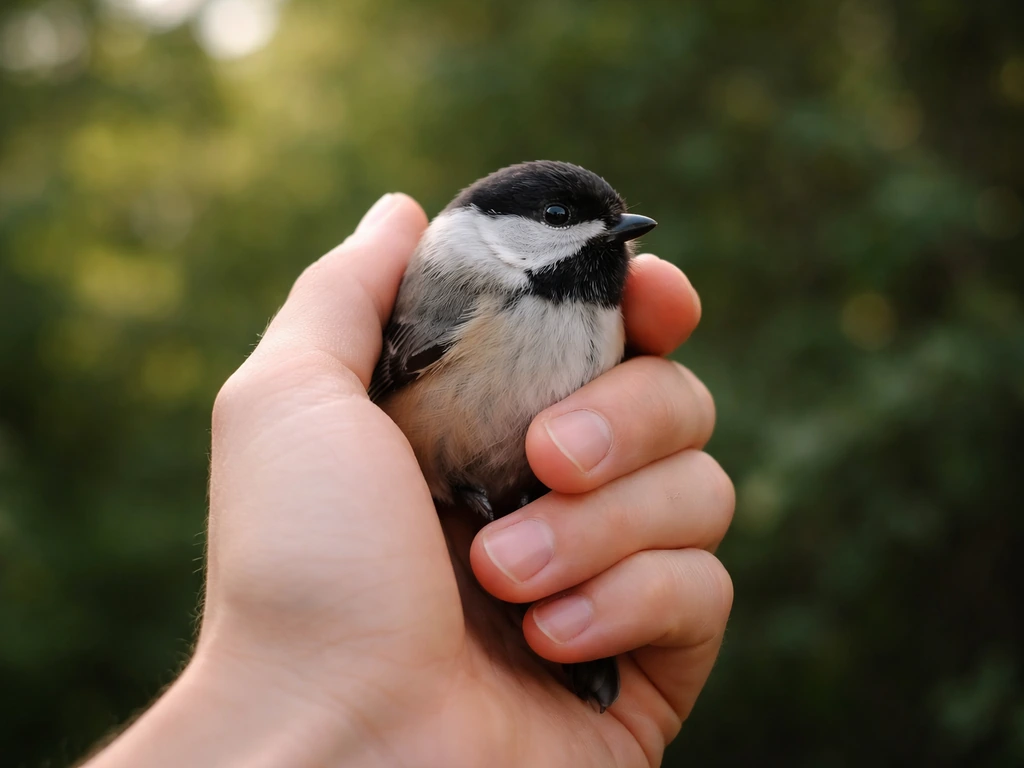
If you searched 'a bird in the hand ice cube' and landed here, you probably ran into a phrase that looks like a familiar idiom but has something unexpected tacked onto it. Let's sort it out quickly. 'A bird in the hand' is the opening of a classic English proverb: 'a bird in the hand is worth two in the bush.' It means a guaranteed thing you already have is more valuable than two uncertain things you might get. The 'ice cube' part is almost certainly a separate layer on top of that, and there are a few good explanations for what it might be. Here's how to figure out exactly which one you're looking at.
A Bird in the Hand Ice Cube Meaning: Explained

Marcus Whitmore
20 Apr 2026
The core idiom: what 'a bird in the hand' really means
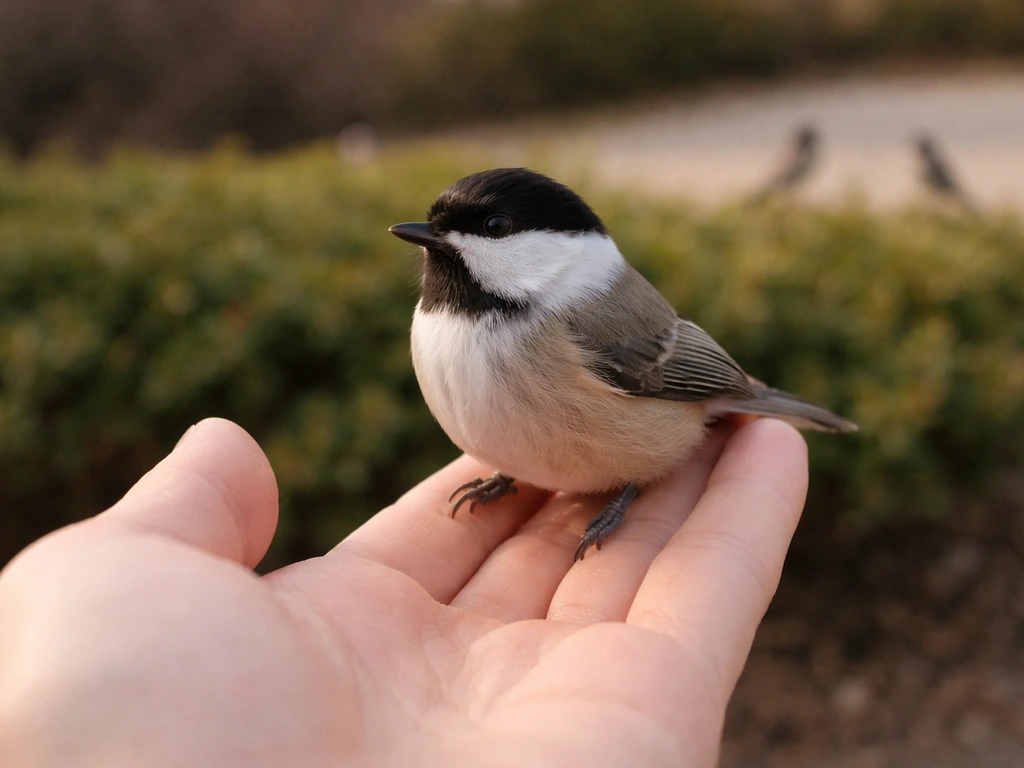
The full proverb is 'a bird in the hand is worth two in the bush.' Merriam-Webster defines it as the idea that it is better to have a guaranteed benefit than to risk losing it by seeking something better. Cambridge puts it this way: something good you already have is more valuable than something better that you don't have yet. Cambridge Dictionary similarly defines the proverb as blank" rel="noopener noreferrer">preferring something good you already have to trying to get a better thing you might not get. blank" rel="noopener noreferrer">Collins and Oxford both treat it as an established proverb, which means it has been used consistently enough across centuries that major dictionaries formally track it.
The imagery is literal and vivid. A bird sitting in your hand is real, tangible, and yours right now. Two birds in the bush? They're nearby, maybe, but they could fly away the second you move. The proverb is asking you to weigh the certainty of the present against the uncertainty of the possible. In everyday life that translates to: take the sure deal, don't gamble what you have chasing what you might get.
So where does 'ice cube' fit in?
This is the part that takes a little detective work. 'Ice cube' doesn't appear in the original proverb at all, so when you see 'a bird in the hand ice cube' together, it's almost certainly one of four things. The good news is that context usually makes it clear which one you're dealing with.
The most likely interpretations
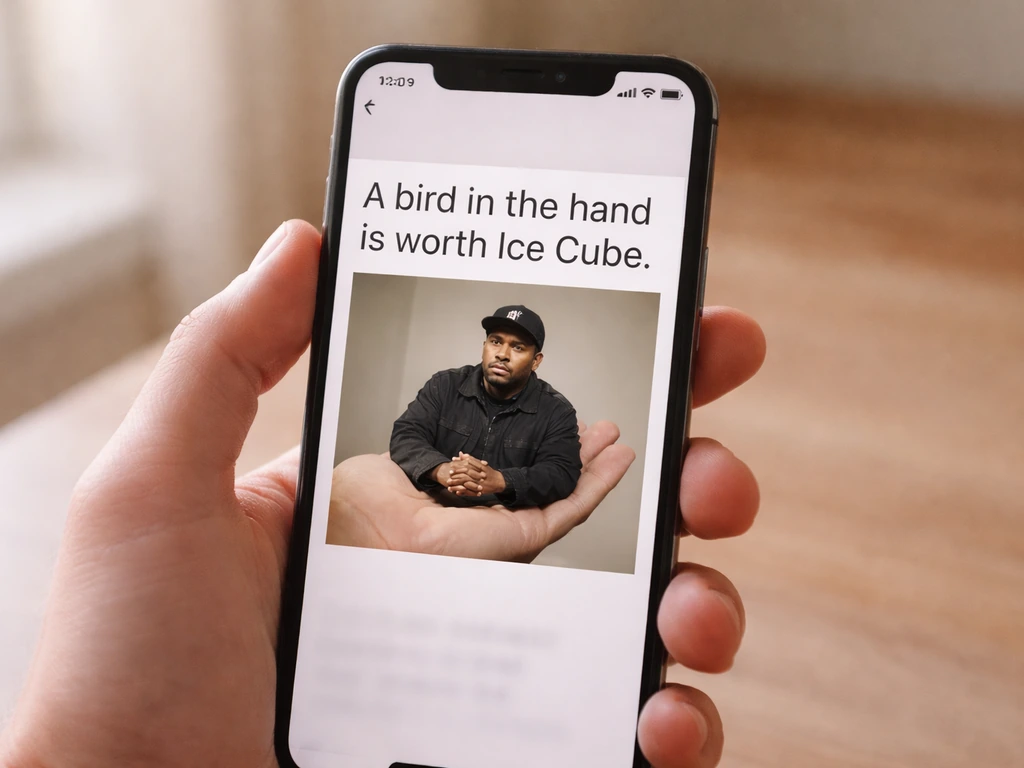
- A meme or joke format: Someone has combined the idiom with 'ice cube' as a punchline, a play on words, or a visual gag. The Internet loves taking a straight proverb and attaching something absurd to it. In this case the humor usually comes from the image of an ice cube being 'in the hand' (melting, fleeting, slippery, literally disappearing the longer you hold it), which is actually a clever twist on the proverb's meaning about holding onto something valuable before it's gone.
- A product, brand, or business name: 'A Bird in the Hand' is a fairly common name for bars, restaurants, and boutique shops. If a business called 'A Bird in the Hand' sells something involving ice (a cocktail bar, a craft ice company, a drink product), a search combining the two could surface results for that specific place or item. Check whether you saw this in a commercial context.
- A misheard or misremembered version: Sometimes people reconstruct a phrase they half-remember and search it as they think they heard it. If someone heard the proverb in a song, podcast, or conversation and mentally filled in 'ice cube' for a word they missed, that search would look exactly like this.
- A reference to the rapper Ice Cube: This one is less likely but worth noting. If a song, lyric, or social media post by or about Ice Cube (the artist) used the phrase 'a bird in the hand,' the search pairing the two makes sense. Ice Cube's 1992 track 'A Bird in the Hand' is a real song with real thematic weight about economic survival, and it directly uses the proverb's logic in its lyrics. This is actually the most culturally significant 'ice cube' connection to the phrase and worth knowing about.
How to tell which one you're seeing
Look at the context where you first encountered the phrase. Was it a social media image with a caption? It's probably a meme or joke. Was it on a menu, sign, or product label? It's likely a business name. Was it in a music playlist or lyric search? Almost certainly the Ice Cube song. Did someone say it aloud and you're trying to verify what they meant? That's probably the misheard version, and the answer is simply the original proverb. Once you know the context, the meaning snaps into place.
The full proverb and its common variants
The complete saying is 'a bird in the hand is worth two in the bush.' That's the standard form you'll find in every major English dictionary. But people adapt proverbs constantly, and this one is no exception. Here are the versions you'll run into most often:
- 'A bird in the hand is worth two in the bush' (the classic, full form)
- 'A bird in the hand' (used as shorthand when the full meaning is already understood by both speakers)
- 'Better a bird in the hand than two in the bush' (a structural variation that leads with 'better,' which is common in translated versions from other languages)
- 'A bird in the hand is worth two in the tree' (a regional or informal swap that keeps the same logic)
- Parody or subverted versions, often used in comedy or advertising, where the second half is replaced for comedic or ironic effect
All of these variants point to the same core idea: certainty beats potential. The proverb is flexible enough that people remix it constantly, which is partly why search queries like 'a bird in the hand ice cube' emerge in the first place. Someone encountered a version of the phrase in an unexpected context and wanted to track down the meaning.
Using this thinking in real decisions
The reason this proverb has lasted centuries is that it applies to almost every domain of real life. Here's how the logic plays out in practical situations:
Money and work
You have a solid job offer on the table paying $75,000 a year. You're also in early-stage talks with a startup that might pay $120,000, but the role isn't confirmed and the company is six months old. 'A bird in the hand' says: take the $75,000 unless you can afford to wait and risk the startup falling through. The same logic applies to investment: a guaranteed 4% return versus a speculative 18% that may or may not materialize. The proverb isn't saying never take risks. It's asking you to honestly weigh what you'd lose if the uncertain thing doesn't come through.
Relationships
In relationship decisions, the proverb gets complicated fast, and that's actually where the 'bird in hand' meaning in entrepreneurship and other specialized contexts get interesting (those topics are covered in related pieces on this site). In relationship decisions, the proverb gets complicated fast, and that's actually where the bird-in-hand meaning in entrepreneurship can offer a useful comparison to how certainty vs risk plays out in ventures (those topics are covered in related pieces on this site). In short, the bird in hand meaning is that a certain benefit you already have usually outweighs an uncertain opportunity you might gain. If you're specifically wondering what “bird in hand” means in a general sense, the core idea is a sure benefit you already have bird in hand meaning. People also search for what “bird in hand” means sexually, usually asking whether it hints at having a guaranteed partner or keeping things safe instead of chasing something uncertain bird in hand meaning. For the full meaning, a bird in the hand refers to a sure thing you already have that is more valuable than uncertain possibilities what does a bird in the hand mean. In everyday terms: if you have a reliable, committed partner and you're tempted to leave for something uncertain, the proverb is a nudge to consider what you're actually holding before you open your hand.
Everyday trade-offs
The mechanic has your car and can fix the current problem for $400 today. You could wait two weeks for a specialist who might fix it better or might charge twice as much. You need the car this week. The bird in the hand is the $400 fix right now. The proverb isn't telling you what to do, but it is telling you to weight the present certainty seriously before chasing the maybe.
Why 'bird' is such a powerful metaphor in language
Birds show up in idioms constantly, and it's not random. Birds are tangible creatures that can also vanish instantly. You can hold one in your hand, watch it, feel its weight, and the next second it's gone. That physical quality, present and then gone, makes them a perfect metaphor for opportunity, luck, and fleeting value. A bird in your hand is something real you've already captured. Birds in the bush are possibilities that haven't materialized yet and require effort and risk to pursue.
Across cultures, birds frequently represent the soul, freedom, messages from beyond, or the spirit of something hard to pin down. In the context of this proverb, the bird is more grounded than that: it's simply a wild creature that you've managed to hold. That act of holding something wild and alive is what gives the image its force. The moment you let go or reach for more, you might end up with nothing.
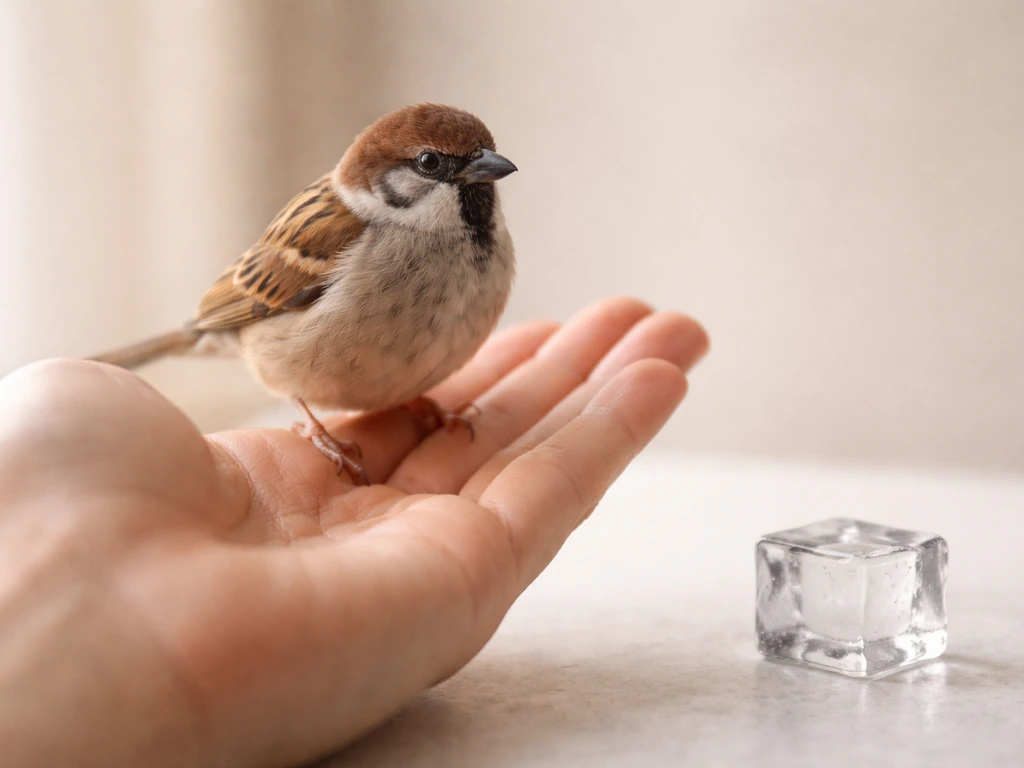
The 'ice cube' meme twist, if that's what you encountered, actually plays with this symbolism pretty cleverly. An ice cube in your hand is also real and tangible, but it's melting. It's diminishing the longer you hold it. That's a darker reading of the original proverb: even the bird you have may not last if you wait too long to act on it. Whether that was intentional or accidental, it's a layered image.
Where the proverb comes from
The phrase has roots going back at least to the 15th century in English, and similar expressions appear in Latin ('plus valet in manibus avis unica quam dupla silvis,' roughly 'one bird in the hand is worth more than two in the woods') and in various European traditions. The earliest confirmed English uses appear in texts from the 1400s and 1500s. By the time Shakespeare's contemporaries were writing, it was already common enough to be used as a recognized saying rather than a new idea.
The proverb likely spread through the culture of falconry, where trained birds were genuinely valuable property. A falconer's bird was worth real money and real status. Losing a trained hawk to the wild was a serious loss, which means 'a bird in the hand' originally referred to something with very concrete economic value, not just a poetic image. That grounding in real-world stakes is part of why the phrase has survived so long: it was never purely abstract.
Ice Cube's 1992 use of the phrase as a song title brought the proverb into a very different context, applying the same logic to systemic economic constraints faced by young Black men in America. That's the proverb doing exactly what good proverbs do: traveling across centuries and cultures and still landing with force in a new context.
What to do when you see 'a bird in the hand ice cube' in the wild
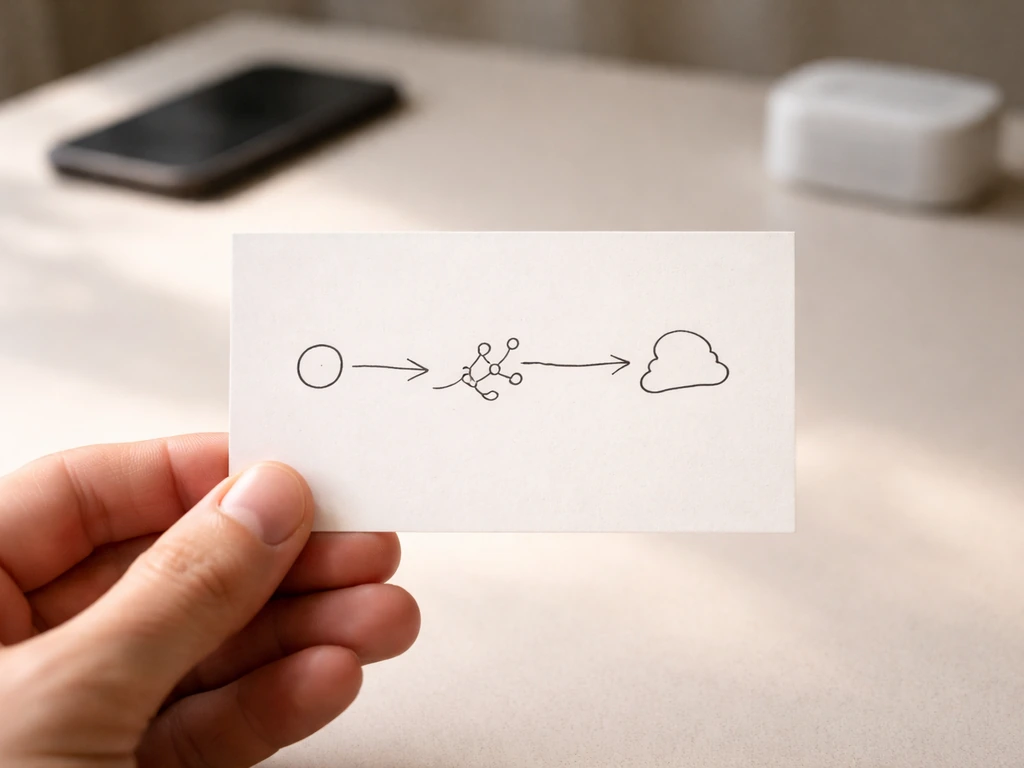
Here's a quick decision tree for handling this phrase wherever you encounter it:
- Check the source first: Is it social media, a music platform, a business sign, or a conversation? That single clue narrows it down dramatically.
- If it looks like a joke or meme: The humor is probably built on the melting/fleeting quality of an ice cube versus the warmth and life of a bird. Appreciate the wordplay and read it as a commentary on the proverb itself.
- If it looks like a music reference: Look up Ice Cube's 1992 song 'A Bird in the Hand' from the album 'Death Certificate.' The song applies the proverb's logic in a specific social context and is worth understanding on its own terms.
- If it looks like a product or business: Search the business name directly to confirm, since 'A Bird in the Hand' is a real name used by multiple establishments, some of which may involve ice (cocktails, specialty drinks, etc.).
- If you're just trying to use the phrase correctly yourself: Stick to the standard form, 'a bird in the hand is worth two in the bush,' when you want to make the point that a certain option today beats an uncertain option tomorrow. You don't need the 'ice cube' variant for that.
The core meaning of the proverb is stable and clear regardless of what gets attached to it. If you understand that 'a bird in the hand' means a sure thing you already possess, you can interpret almost any variant or riff on it without getting lost. The rest is just context-reading, which is true of most idioms that travel far from their original form.
FAQ
What does “a bird in the hand ice cube meaning” usually point to in real life, a proverb or Ice Cube the artist?
Most often it is a mashup of the proverb with a search for Ice Cube, so the intended meaning is still the sure-thing idea. If the phrase appears near music terms, “Ice Cube” is usually the artist reference rather than a separate idiom layer.
Is “ice cube” part of the original proverb, and is there a single official meaning for that twist?
No, the original proverb does not include “ice cube,” so there is no single dictionary-approved “ice cube meaning.” In practice it is either a meme/joke addition, a brand or artist reference, or a creative reinterpretation (for example, implying the “sure thing” can melt away if you wait).
If I see it on a product label or business name, how should I interpret it?
Treat it as branding built on the proverb’s theme, meaning customers are promised something concrete, immediate, or already available. Look for accompanying wording like “guaranteed,” “in stock,” “today,” or “no risk,” because those clues usually confirm the “certainty over uncertainty” angle.
What is the most common misunderstanding people have about “bird in the hand”?
People sometimes treat it as “never take risks.” The more accurate interpretation is, weigh known value against uncertain potential, especially when delay or pursuit could cause you to lose the current benefit.
Does the proverb change meaning for career choices when there is a time limit on the offer?
Yes, timing makes it stronger. If the “bird in hand” offer expires soon or has conditions (start date, nonrefundable deposits, signing bonuses that disappear), then the uncertainty of losing it becomes part of the decision, not just the uncertainty of the alternative.
How do I decide when it is smarter to hold the “bird” versus pursue the “bush”?
Use an impact test: estimate what you lose if the uncertain option fails, then compare it to what you gain if it succeeds. If the downside is severe and the upside is speculative, the proverb argues for acting on the sure deal, or negotiating to reduce uncertainty before switching.
Can “a bird in the hand” be used in relationships without sounding controlling?
It can, but it works best as a prompt to clarify what is already real and reliable, not to shame someone for exploring. A helpful approach is to ask, “What do we already have that’s working,” then discuss whether the uncertain option has verifiable factors (compatibility, plans, stability) rather than hopes.
Is the proverb always about money, or can it apply to emotions and health decisions?
It applies broadly. For example, a known therapy plan that works, a stable living situation, or a health routine you can maintain now can be the “bird in hand,” while an experimental change can be the “bush.” The same rule applies, certainty versus uncertainty, especially when your health has limited tolerance for trial and error.
When “ice cube” appears online, what clues can tell me which interpretation is intended?
Check surrounding context. If you see references to memes, jokes, or images of melting ice, it likely uses the literal “melting” metaphor. If you see the name “Ice Cube,” playlist tracks, or rapper-related wording, it is likely an artist/search reference layered on top of the proverb.
What’s a quick way to sanity-check the meaning if I’m not sure what variant I found?
Strip off the extra words and ask: “Is someone telling me to prioritize what I already have over something uncertain?” If the answer is yes, you are reading the proverb’s core idea. If the variant adds urgency or fading (like melting ice), interpret it as a warning about delay, not a change in the proverb’s baseline message.
Next Article
What Does a Bird in the Hand Mean? Idiom Guide
Explains what bird in the hand means: choose sure things over risky possibilities in career, relationships, and money.