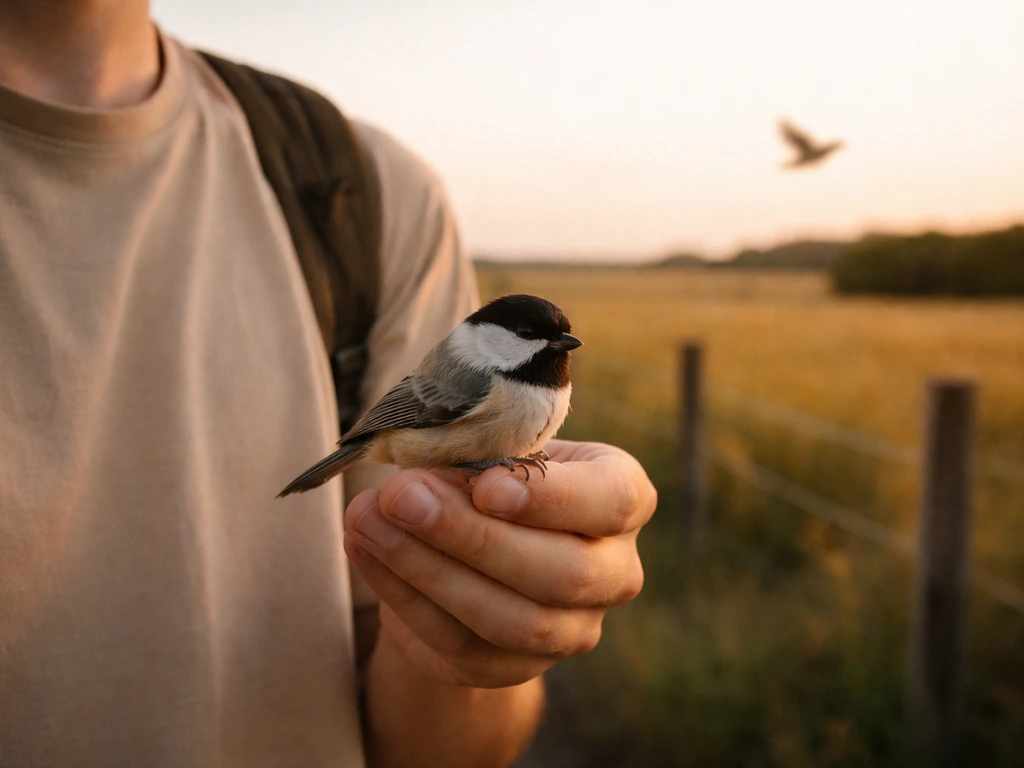
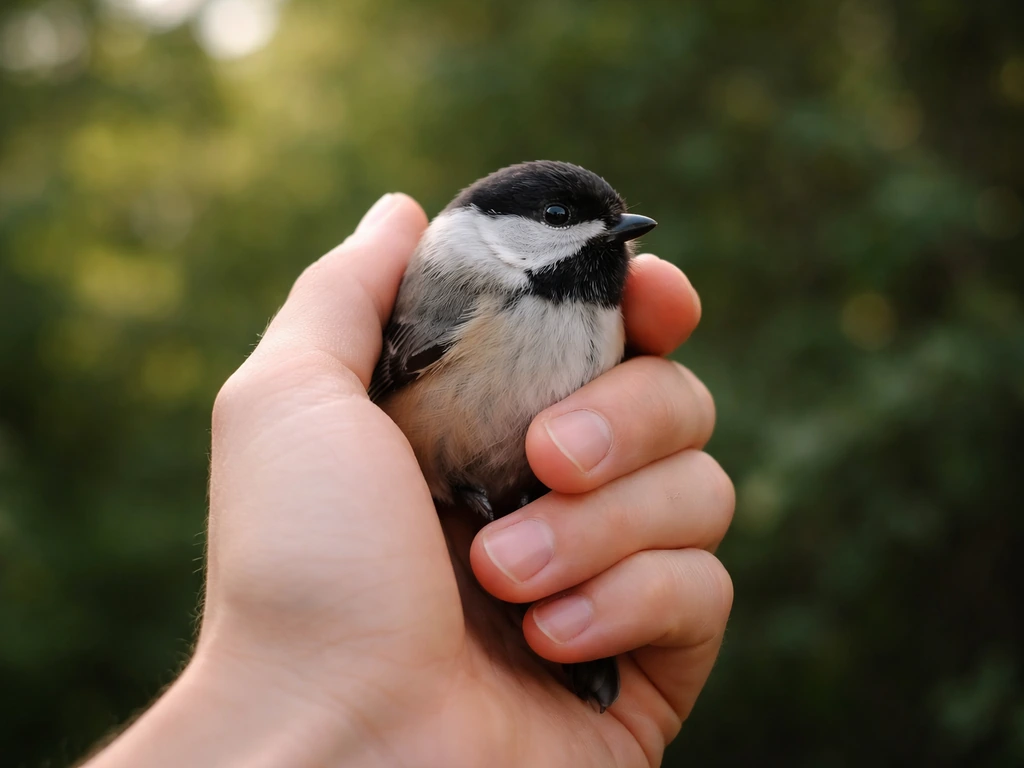
"A bird in the hand" means you should value what you already have over something bigger or better that you might get later but aren't guaranteed. It's shorthand for the full proverb "a bird in the hand is worth two in the bush," and the core message is simple: a certain, real advantage you hold right now beats a larger but uncertain reward you're chasing. If you're weighing a sure thing against a gamble, this saying is telling you to think carefully before you let go of what's already yours.
What Does a Bird in the Hand Mean? Idiom Guide

Marcus Whitmore
6 Apr 2026
What the idiom actually means
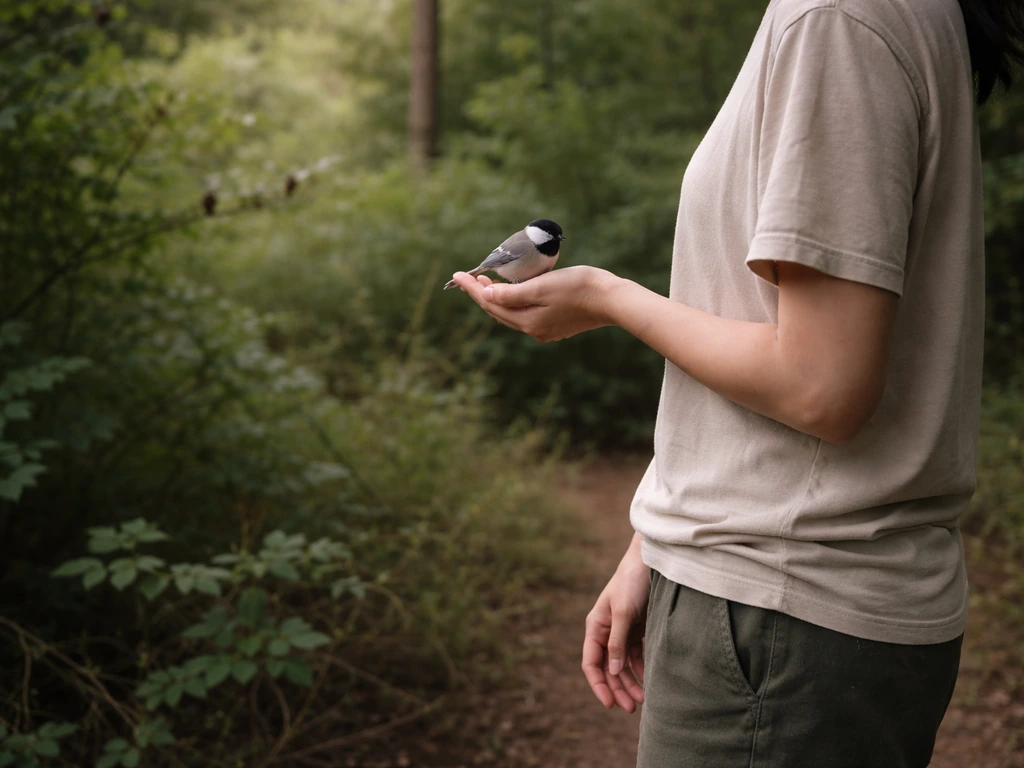
The full proverb is "a bird in the hand is worth two in the bush." Cambridge defines it as the idea that something you already have is more valuable than something you might get later. Merriam-Webster puts it slightly differently: it's better to keep a sure, present advantage than to risk it for a possibly larger but uncertain one. Both definitions point to the same thing: certainty has real value, and the potential for more doesn't automatically outweigh what you've already secured.
When people say "bird in the hand" in casual conversation without finishing the proverb, they're using a recognized shorthand. The second half ("is worth two in the bush") is often just dropped because most English speakers already know how it ends. If you want to dig into what is bird in hand as a standalone phrase, it functions as a compressed version of the whole proverb, carrying the same weight.
The "bush" in the proverb represents uncertainty. Whatever's out there in the metaphorical bush might be twice as good, but you don't have it. You might never get it. The bird in your hand is real, it's confirmed, and walking away from it to chase the two in the bush means you could end up with nothing. That's the risk the saying is warning you about.
Where it comes from and why it feels a little paradoxical
The proverb's roots go back further than most people expect. By the Middle Ages, the sentiment was already circulating in Latin as "Plus valet in manibus avis unica quam dupla silvis" (roughly: one bird in the hand is worth more than two in the woods). An early English version appears in a 13th-century Latin work dealing with proverbs, phrased as "a bird in the hand is worth two in the woods." The wording we use today solidified in John Ray's collection of proverbs around 1670, and it's been stable ever since. Psychology Today notes that the proverb’s current form first appears in John Ray’s “Hand-book of Proverbs” (1670) John Ray's collection of proverbs around 1670.
The reason the proverb feels slightly paradoxical is that it compares quantities in a way that looks like basic math. Two birds sound objectively better than one, so why would you choose one? The answer is that the proverb isn't doing arithmetic, it's doing probability. The one bird is certain. The two birds are not. Once you realize the proverb is about risk and uncertainty rather than a count of birds, the logic clicks immediately. The fact that this same structure appears across Germanic languages and medieval Latin suggests the "certainty vs. uncertainty" reasoning it captures is genuinely universal.
Applying it to real life: work, relationships, and money

This is where the proverb earns its place in everyday language. It's not just a cute old saying; it's a decision-making shortcut that maps onto real situations with surprising precision.
At work and in your career
You have a stable job with a decent salary. A recruiter approaches you with a role that sounds more exciting and pays potentially more, but the company is a startup with unclear funding. The bird in your hand is the secure job. The two in the bush are the higher ceiling at the new place, which may or may not materialize.
The proverb isn't telling you never to take the leap; it's telling you to be clear-eyed about what you're giving up and what you're gambling on. Interestingly, bird-in hand meaning in entrepreneurship takes this further, applying the concept to how founders decide whether to pursue a sure, smaller outcome versus hold out for a bigger exit that may never come.
In relationships

People invoke this proverb in relationship contexts more than you might expect. Someone in a good but imperfect relationship who keeps wondering if something better is out there is essentially choosing to ignore the bird in their hand while chasing hypothetical birds in the bush. The saying works as a gentle reality check: the "perfect" option you're imagining doesn't exist yet, and may never arrive in the form you're picturing.
With money and financial decisions
This is probably the most common modern application. A guaranteed return on a conservative investment versus a potentially massive return on a speculative one is the textbook bird-in-hand scenario. Taking a cash offer on your house now versus waiting for a higher bid that might not come, accepting a settlement instead of pursuing a lawsuit with uncertain outcomes, locking in a salary offer rather than waiting for a better one that may not materialize. All of these are the same proverb in practice. The meaning of a bird in the hand is worth two in financial settings comes down to one question: is the upside of the uncertain option actually worth the risk of losing what you already have?
What "worth" really means here: risk, reward, and tradeoffs
The word "worth" in the proverb does a lot of heavy lifting, and it's worth unpacking (pun intended). It's not saying one bird is literally equivalent in value to two birds; it's saying that the certainty of having one bird makes it more valuable than the mere possibility of two. This is the same logic behind risk-adjusted returns in finance, or why people buy insurance even when they probably won't need it. You're paying for certainty, and certainty has real worth.
An old variant of the proverb captures this well: "He is a fool who lets slip a bird in the hand for a bird in the bush." That version frames the same tradeoff as a failure of judgment, not just a neutral choice. The Oxford Dictionary of Proverbs frames it similarly, as being content with what one has rather than risking everything by reaching for more. The implicit warning is that people consistently overestimate the value of uncertain potential and underestimate the value of what they already hold.
This connects to a well-documented tendency in human decision-making. The proverb has been studied as a "risk/certainty" principle precisely because people often do the opposite of what it advises. They abandon secure advantages for speculative ones, and end up with nothing. The saying isn't arguing that you should never take risks. It's arguing that you should understand what you're giving up before you do.
Variations and related phrases worth knowing
The proverb has a few close relatives in English that express similar ideas, and a couple of variants of its own wording that are worth recognizing.
| Phrase | Core meaning | How it differs |
|---|---|---|
| A bird in the hand is worth two in the bush | Value certainty over potential | The original full proverb |
| A bird in the hand is worth two in the wood | Same as above | Older English variant; "wood" instead of "bush" |
| Better one bird in the hand than ten in the wood | Same certainty-over-quantity logic | Earlier form; amplifies the numbers to make the point stronger |
| Don't count your chickens before they hatch | Don't rely on something you don't have yet | Focuses on premature optimism rather than active risk |
| Better safe than sorry | Caution over risk | Broader; applies to safety/precaution, not just value tradeoffs |
| Take what you can get | Accept the certain option | More pragmatic and less poetic; implies compromise |
It's also worth knowing that what are sayings like a bird in the hand called has a specific answer: they're proverbs, a subset of idioms. Proverbs are traditional sayings that express a general truth or piece of advice. Knowing the category helps when you encounter other proverbs with similar structures and want to understand how they work.
Examples in sentences (so you can hear how it sounds)
Seeing the phrase in context is the fastest way to lock in how to use it naturally. Here are several examples that reflect how people actually drop this into real conversations.
- "They offered me the job on Friday, and I'm taking it. A bird in the hand, you know? I can't keep waiting for something perfect."
- "She keeps turning down decent guys hoping someone better will come along. A bird in the hand is worth two in the bush, but she hasn't figured that out yet."
- "The investor offered us a fair acquisition price. We could hold out for more, but a bird in the hand is worth two in the bush, and we've got bills to pay."
- "I told him to take the settlement. It's not everything he wanted, but a bird in the hand is worth two in the bush when you're looking at years of litigation."
- "We could renovate and try to get a higher sale price, or we sell now at this price. I keep coming back to bird in the hand."
- "Don't walk away from that contract chasing a bigger one that might not come through. A bird in the hand, remember?"
Notice how the phrase works equally well in full ("a bird in the hand is worth two in the bush") or abbreviated ("a bird in the hand") or just referenced as a concept ("bird in the hand"). In informal speech the truncated version is very common, especially when the listener clearly already knows the proverb. For a more complete breakdown of the bird in hand meaning with additional usage context, that's worth a look too.
A couple of specific uses that might surprise you
The phrase has traveled into some unexpected corners of culture. In hip-hop, for instance, a bird in the hand Ice Cube meaning refers to Ice Cube's 1991 track of the same name, where "bird" carries a double meaning, both the idiomatic sense of something valuable in your possession and street slang for a kilogram of cocaine. That layered use shows how idioms don't stay frozen; they get picked up and reloaded with new meaning depending on context.
There's also a sexual slang interpretation that comes up occasionally. What does bird in hand mean sexually is a legitimate search that reflects how double entendres around "bird" (British slang for a woman or attractive person) blend with the proverb's structure. In that context the phrase takes on a pretty different connotation, though it's still trading on the same basic idea of valuing what's right in front of you. Context, as always, does the heavy lifting.
The proverb's durability across centuries, languages, and cultures comes down to how cleanly it captures something true about human decision-making: we tend to undervalue what we have and overvalue what we might get. Every time you hear "a bird in the hand," that's the reminder it's quietly delivering.
FAQ
Does “what does a bird in the hand mean” imply I should never take risks?
Not necessarily. The idiom is about comparing a sure, current benefit to an uncertain future one. If the “bush” option is genuinely likely and the terms are clear (for example, a signed contract, guaranteed timeline, or predictable outcome), it may be reasonable to choose it.
Is the saying saying one bird is always better than two, no matter what?
A common mistake is treating it like “choose the smaller offer.” The real focus is certainty and risk, so “two in the bush” can still be worth it if the probability of getting it is high enough or if you are not giving up the bird (for example, keeping your current job while interviewing).
What if both my current situation and the future opportunity are uncertain?
Yes. If you’re deciding between options that are both uncertain, ask what is actually guaranteed now (money in hand, a signed offer, a fixed schedule) versus what is merely hoped for. If neither is guaranteed, the idiom offers less guidance, and you’ll need additional tools like probability, terms, and risk limits.
How should I use the proverb in negotiations?
It can be a nudge to negotiate carefully. For example, if someone pressures you to accept a “bird in the bush” promise, ask for written terms, timelines, and contingencies. The idiom supports valuing what is concrete, not the salesperson’s version of the future.
Can I follow the advice and still work toward bigger goals?
It is not a comment on your long-term ambitions, it is a warning about losing a confirmed advantage for an unconfirmed one. A practical way to apply it is to separate “taking action now” from “walking away now,” so you can pursue upside without abandoning the sure thing prematurely.
How does “bird in the hand” apply to investments and savings?
Financially, the idiom often breaks down when the risk is hidden. Before choosing the sure return, check for opportunity cost and inflation, and confirm that fees, taxes, and deadlines don’t quietly erode the “sure” value.
Should I accept a job offer immediately if it’s only partially guaranteed?
In offers, it typically points to accepting terms that are already agreed (salary amount, start date, role scope) rather than relying on future adjustments. If only part is firm, you can treat the fixed portion as the “bird” and the rest as “bush” until it is locked in.
Does the proverb mean I should tolerate an imperfect relationship?
In relationships, it’s easy to misread as “stay with what you have even if it’s unhealthy.” The idiom means do not ignore what is real today while chasing an imagined perfect partner, but it does not justify tolerating abuse, disrespect, or unwillingness to change.
Why does someone say “bird in the hand” in a way that sounds harsh or controlling?
Yes. The phrase can show up as “contentment,” “risk aversion,” or “probability-based thinking,” so it can sound judgmental. You can reframe it as “let’s compare certainty and risk,” which keeps the focus on decision quality rather than character.
Next Article
Bird in Hand Meaning: Definition, Examples, and Principle
Bird in hand meaning explained with definition, examples, and the bird-in-hand principle for real risk vs certainty deci