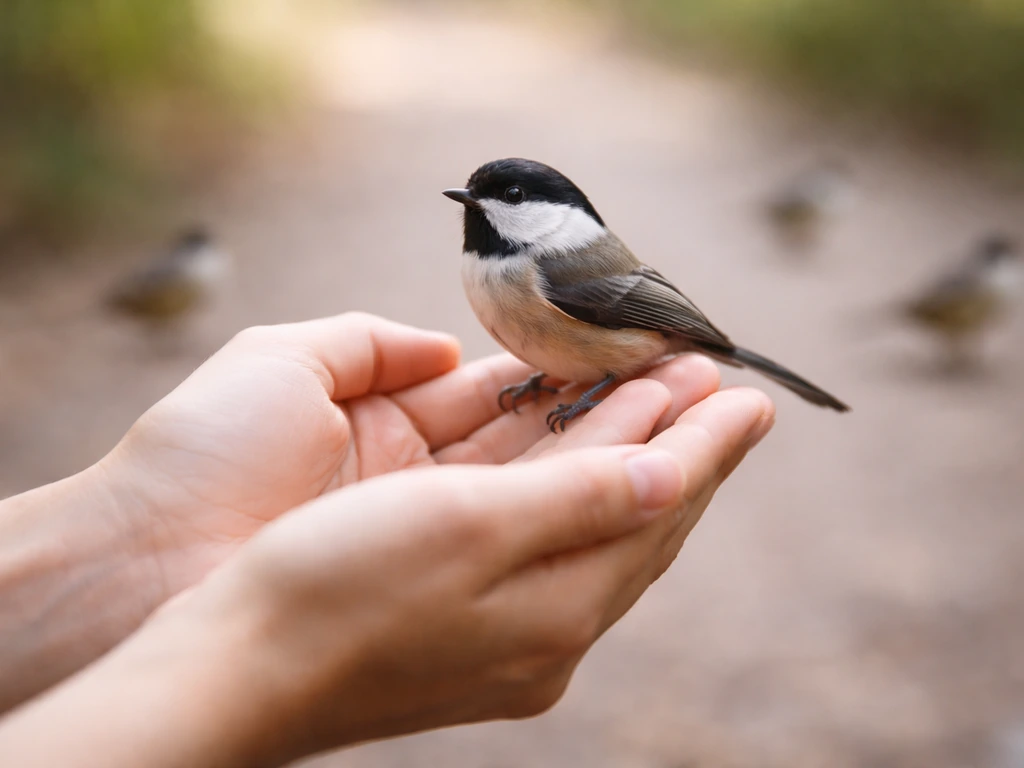
The saying "a bird in the hand is worth two in the bush" is called a proverb, and sometimes an idiom or fixed expression depending on who you ask. It means that what you already have, even if it seems modest, is more valuable than a larger reward you might get by taking a risk, blank" rel="noopener noreferrer">because that bigger prize might never materialize. If someone paraphrases it to you as "just take what you've got" or "don't risk what you have for something you're not sure of," they're drawing on the same idea. If you’re wondering about the “a bird in the hand” ice cube meaning, it still points to the same idea of valuing what’s certain over what’s merely possible.
What Are Sayings Like a Bird in the Hand Called?

Marcus Whitmore
19 May 2026
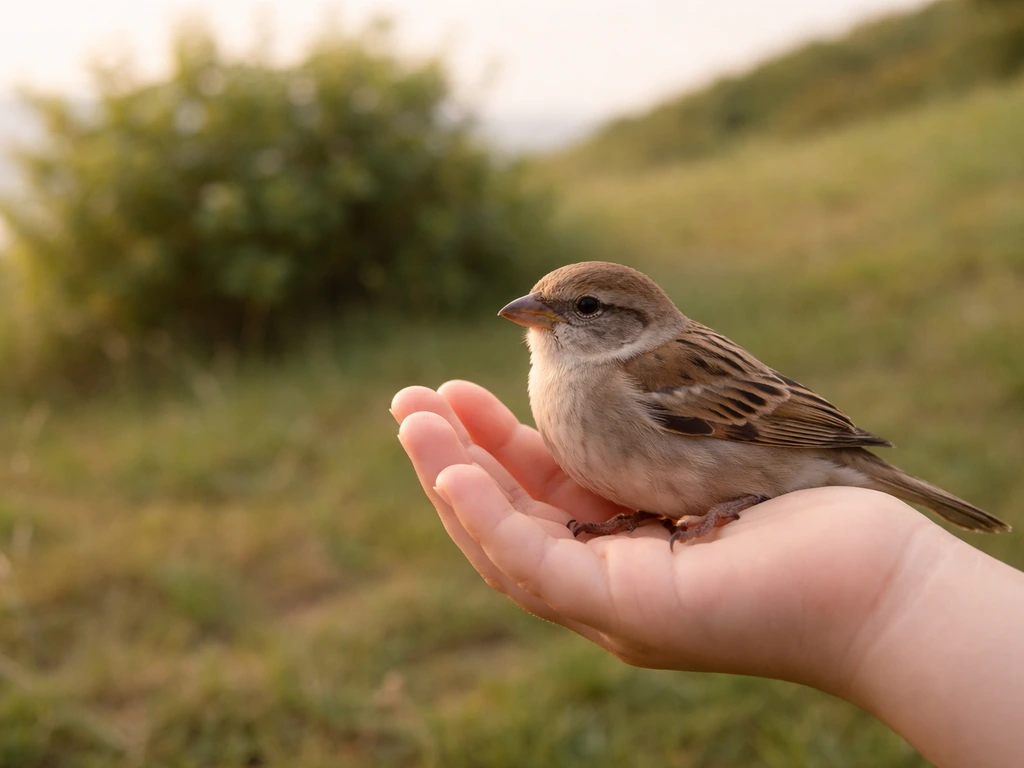
What kind of saying is "a bird in the hand"?
"A bird in the hand is worth two in the bush" is classified as a proverb. Merriam-Webster treats it as exactly that, listing it under its own dedicated dictionary entry and using it as a textbook example of what a proverb looks like in practice (as in: "As the old proverb goes..."). Cambridge Dictionary calls it a fixed expression, which is the broader linguistic umbrella that covers proverbs, idioms, and set phrases that don't get reshuffled or paraphrased without losing their punch.
So what's the difference between a proverb and an idiom? A proverb is a complete, self-contained piece of folk wisdom that usually sounds like a mini-lesson. An idiom is a phrase whose figurative meaning differs from its literal one. "A bird in the hand" qualifies as both, honestly, but most linguists and dictionary editors file it under proverb because it expresses a moral or practical truth in a complete sentence rather than functioning as a building block inside other sentences.
If someone asks you "what category does that saying fall into," you can confidently say: proverb. If you want to be more casual about it, calling it an idiom or a fixed expression is also widely understood and not wrong.
Where the saying comes from and what it actually means
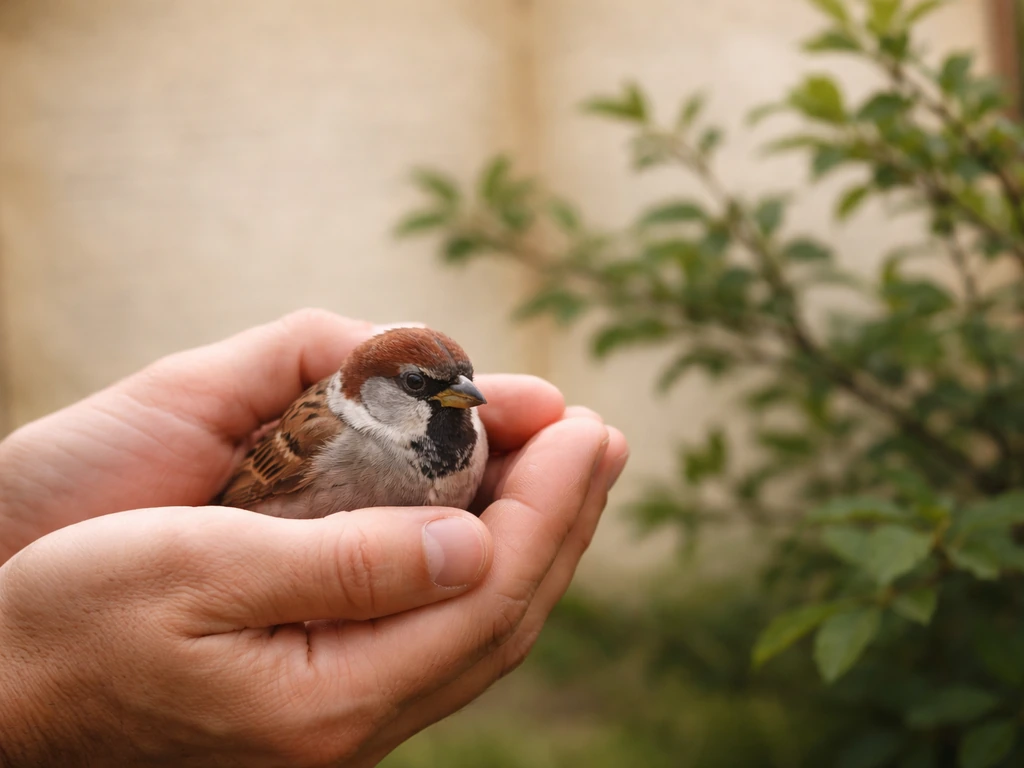
The proverb has been circulating in English for centuries. The modern wording, "a bird in the hand is worth two in the bush," is commonly traced to John Ray's 1670 collection called the "Hand-book of Proverbs." But the idea is even older than that. A 16th-century version recorded by John Heywood goes: "Better one byrde in hande, than ten in the wood(s)." The bird and the bush changed, the number changed, but the core logic stayed exactly the same.
The meaning is pretty intuitive once you picture it literally. In practice, it is a shorthand for choosing the sure reward you can already count on. If you're a falconer or a hunter, a bird you're already holding is a guaranteed meal. Two birds sitting in a bush might fly away the second you go after them. You could end up with nothing. The proverb takes that physical reality and turns it into a general life principle: value what you have over what you might get. In entrepreneurship, the bird-in-hand meaning encourages you to lean on validated traction and cash flow rather than chase an uncertain promise bird-in-hand meaning in entrepreneurship. Certainty over speculation. Security over gamble.
In modern usage, the proverb almost always comes up when someone is weighing a sure thing against a potentially better but uncertain outcome. Keep the job offer you have or hold out for the one that might come through? Accept a settlement or go to court for more? Take the deal on the table or keep negotiating? That's the territory this proverb lives in.
Other ways to say it (variants and equivalents)
The proverb shows up in several close variants, and there are also functionally equivalent sayings that carry the same advice. Here are the most useful ones to know:
| Expression | Theme | Tone |
|---|---|---|
| A bird in the hand is worth two in the bush | Certainty vs risk | Advisory, cautionary |
| Better one bird in hand than ten in the wood(s) | Certainty vs risk | Older/historical variant, same meaning |
| Better safe than sorry | Caution over risk | Casual, everyday advice |
| Don't count your chickens before they hatch | Certainty vs assumption | Cautionary, slightly humorous |
| A sure thing beats a maybe every time | Certainty vs risk | Modern paraphrase, informal |
"Better safe than sorry" is probably the most common functional substitute in everyday conversation. “Better safe than sorry” is a close substitute that can be functionally similar advice when you are being urged to avoid risk for an uncertain upside. It doesn't involve birds at all, but it advises the same thing: don't take an unnecessary risk when you already have something secure. "Don't count your chickens before they hatch" is a bird-adjacent cousin that overlaps in flavor, though it's really more about not assuming an outcome before it happens, whereas "bird in the hand" is specifically about choosing between what's certain and what's not.
You'll also occasionally see the proverb quoted with "one" instead of "two" ("a bird in the hand is worth one in the bush"), which some writers have noted as a common slip or simplified paraphrase. Both versions communicate the same idea, though the classic form uses "two" to make the contrast feel even more dramatic: you're giving up a 2-to-1 advantage by sticking with the sure thing, and still, it's the smarter call.
How people actually use it in conversation

This proverb shows up most often as advice or gentle pushback. Someone is dithering over whether to accept a deal, keep a relationship, take a job, or hold out for something better. The person they're talking to drops the proverb to nudge them toward the certain option. It's cautionary by nature, not a cheerleader for bold moves.
The tone is usually measured and a little old-fashioned, which is part of why quoting it works. It signals that this isn't just your personal opinion, it's accumulated folk wisdom. People sometimes say "as the old proverb goes..." before it to lean into that quality. Other times they drop just the first half, "a bird in the hand," and the listener fills in the rest, because it's that well-known. People sometimes also search this proverb when asking, more specifically, what “bird in hand” means sexually a bird in the hand.
Here are a few realistic example sentences showing how it gets used:
- "You already have a solid job offer. Don't turn it down waiting on something that might not come through. A bird in the hand is worth two in the bush."
- "She kept holding out for a better apartment, but I reminded her: a bird in the hand. The one she'd already found was great."
- "In negotiations, he was tempted to push for more, but his lawyer quoted the old proverb and told him to take the settlement."
- "The startup had a small but loyal user base. The founder kept chasing growth at the expense of those core users, forgetting the bird in the hand."
Notice that the proverb fits naturally into advice-giving, negotiation contexts, and even business strategy conversations. It works in formal and casual registers, which is part of why it has lasted so long.
Common confusion: similar sayings that aren't quite the same
Because the phrase involves a bird, some people mix it up with other bird proverbs that have a completely different message. The most common one is "the early bird catches the worm" (or "gets the worm," both forms are standard). That proverb is about timing and initiative, not certainty versus risk. It means that starting early, acting first, or being proactive gives you an advantage. There's no element of holding on to something certain versus gambling on something better. It's a different life lesson wearing the same feathery clothing.
Another phrase that sometimes gets tangled up in this space is "birds of a feather," which is short for "birds of a feather flock together." That one is about shared identity and affinity, the idea that people with similar traits or interests tend to group together. Again, completely different from the risk-versus-certainty theme of "a bird in the hand."
A subtler near-miss is "don't put all your eggs in one basket," which does involve risk but from the opposite angle. That expression warns against concentrating all your resources in one place, whereas "a bird in the hand" warns against abandoning what you have for a speculative gain. They're related in spirit but point in different directions.
How this proverb compares to other bird idioms in English

Bird idioms in English are surprisingly varied in what they actually mean. "A bird in the hand" is about risk and certainty. "The early bird gets the worm" is about timing and effort. "Birds of a feather" is about identity and social grouping. "Kill two birds with one stone" is about efficiency. "A little bird told me" is about anonymous information or gossip. They use birds as a shared metaphorical medium, but they map onto completely different human concerns.
What makes "a bird in the hand" distinctive among these is that it's one of the few bird proverbs that explicitly involves a trade-off between two options. Most bird idioms describe a single situation or behavior. "Bird in the hand" sets up a comparison, which is why it's so useful in negotiation, advice-giving, and decision-making contexts. The structure of the saying does a lot of the argumentative work for you.
If you're exploring the broader family of bird idioms and what they reveal about how English speakers think about the natural world, you'll find that birds consistently appear as symbols of opportunity, freedom, information, and in this case, tangible value. The proverb works precisely because holding a real bird in your hand is an extraordinarily concrete image. You can feel it. Two birds in a bush, by contrast, are potential. And English folk wisdom, at least in this corner of it, is pretty skeptical of potential.
Quick reference: the key terms to know
If you want to talk about sayings like "a bird in the hand" with any precision, here are the terms that will serve you best. A proverb is a short, widely known saying that expresses a general truth or piece of practical wisdom, often passed down through generations. If you’re curious about how proverbs work in context, the meaning of a bird in the hand is worth two is a good example of practical folk wisdom applied to real decisions. An idiom is a phrase whose meaning isn't predictable from its literal parts. A fixed expression is a broader term covering both, plus other set phrases that function as single units of meaning. And a maxim is a slightly more formal word for a guiding principle expressed as a saying. All four of these terms could reasonably be applied to "a bird in the hand is worth two in the bush," but proverb is the most precise and the most commonly used in dictionaries and style guides.
FAQ
Is “a bird in the hand” the same as “better safe than sorry,” or are they used differently?
They overlap in meaning, but “better safe than sorry” often justifies caution to avoid regret from uncertainty, while “a bird in the hand” specifically weighs what you already have against a potentially better outcome that may never arrive. Use the bird proverb when the decision is trade-off based, not just risk-avoidance.
Can I say it to encourage taking a bold opportunity, or does it always mean “don’t risk anything”?
It is not an anti-growth slogan. The point is to avoid giving up a known benefit for an uncertain one without a contingency plan. In practice, you can still take calculated risks if you keep at least one “sure bird” (for example, keep the job while freelancing, or negotiate while protecting baseline terms).
What’s the safest way to interpret “in the bush” if the context is not literal, like in business or relationships?
“In the bush” stands for the unknown, hard-to-capture alternative, not “some distant place.” So in a negotiation, it maps to an outcome that is plausible but not guaranteed, like a better offer that depends on approvals or timing beyond your control.
If someone says “a bird in the hand is worth one in the bush,” is that wrong?
It is usually treated as a simplified paraphrase or a common slip. Many people understand it as the same core idea (the sure thing beats the uncertain option), but the classic wording uses “two” because it makes the trade-off feel sharper.
Is it acceptable to shorten the proverb to just “a bird in the hand” in conversation?
Yes, in casual dialogue people often drop the rest and the listener infers the full saying. In more formal writing, though, it is better to include the complete proverb at least once, so readers do not have to guess what contrast you mean.
What’s the difference between “don’t count your chickens before they hatch” and “a bird in the hand”?
“Chickens” focuses on not assuming a future outcome is real until it happens. “Bird in the hand” focuses on not abandoning what is already real for something that might happen. You would choose chickens for forecast-making errors, and bird-in-hand for over-trading the current asset.
How do I respond if someone uses the proverb to shut down negotiation or discussion?
You can ask a clarifying question that tests certainty, for example, “What part is guaranteed versus what part depends on approvals or timing?” If the alternative has verifiable terms, conditions, or milestones, you can argue the “bush” is not purely speculative.
Is “a bird in the hand” ever used in a sexual context, and does it mean the same thing?
Some people search it for a different, slang-like meaning, but in standard English usage the widely understood interpretation is the proverb about valuing what you have. If the context sounds romantic or sexual, treat it as potentially different slang rather than automatically applying the risk-versus-certainty definition.
Which situations fit best, and which are poor fits for using the proverb?
Best fits are decisions with a clear known option and a conditional alternative, like accepting a settlement, choosing a job offer, or signing a contract with measurable deliverables. Poor fits are situations where the comparison is not actually a trade-off, like when you are improving something that you can do without giving up the current benefit.
What other bird sayings are commonly confused with it, and how can I tell quickly?
Two common confusions are “the early bird gets the worm,” which is about acting first, and “birds of a feather,” which is about shared traits and grouping. If the sentence talks about timing or initiative, it is not the bird-in-hand proverb. If it talks about identity or similarity, it is likely “birds of a feather.”
Next Article
What Is Bird in Hand Meaning, Slang, and Usage Guide
Meaning of bird in hand, including slang usage and how it differs from early bird and other bird phrases.