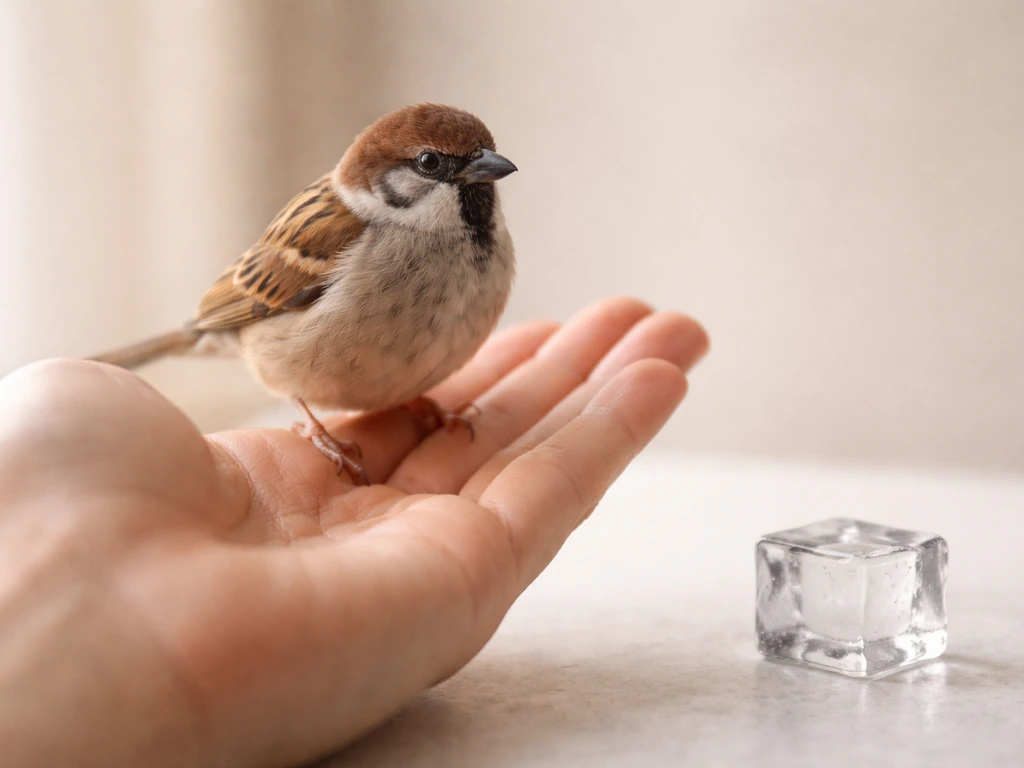
"Bird in hand" is a shorthand version of the proverb "a bird in the hand is worth two in the bush," and it means that something you already have is more valuable than something better you might get later but aren't sure about. It's an argument for keeping what's certain over chasing what's possible. That's the core meaning, and it's been that way for centuries.
What Is Bird in Hand Meaning, Slang, and Usage Guide

Marcus Whitmore
1 May 2026
What "bird in hand" means as an idiom
The idiom is built on a simple image: if you're holding a bird, you have it. If two more birds are sitting in a bush nearby, you might catch them or you might not. The one in your hand is a sure thing. Cambridge puts it plainly: "If you have something that is certain, it is better than something that may be better but is uncertain." Merriam-Webster treats the full form as a proverb, labeling it with "as the old proverb goes" in its example sentences. Collins and Wiktionary both treat "bird in hand" as an established shorthand for the full proverb, not a separate phrase with its own distinct meaning.
In practice, the idiom is advice about risk. It tells you to think twice before giving up something real and reliable in exchange for something potentially better but not guaranteed. You'll hear it most often when someone is weighing a decision: accepting a job offer versus waiting for a better one, selling a house at a fair price versus holding out for a higher bid, or keeping a reliable client versus gambling on a bigger contract. The bird in hand is whatever you'd be walking away from.
What "bird in hand" means in slang contexts
If you found this page because you saw a sexually charged or Urban Dictionary-style definition, here's the honest answer: yes, those entries exist, but they're reinterpretations built as wordplay on the original proverb, not a separate established slang term with its own cultural life.
blank" rel="noopener noreferrer">Urban Dictionary's top entry for "Bird in the Hand" maps "bird" to male anatomy and "bush" to female anatomy, framing the proverb as an argument for masturbation over intercourse. A second entry on the same site claims the phrase has the "opposite meaning" of the original proverb. These entries are playful and provocative, which is exactly what Urban Dictionary is for, but they don't represent how the phrase is actually used in everyday conversation. They're jokes built on puns, not genuine slang definitions that circulate independently. If someone in a conversation says "a bird in the hand," they almost certainly mean the classic proverb sense, not a sexual one. If you’re specifically asking what it can imply sexually, that’s usually referring to the Urban Dictionary-style wordplay rather than the proverb’s real meaning what does bird in hand mean sexually.
So if you're trying to figure out what someone meant when they used this phrase, go with the standard idiom meaning. The slang versions are internet humor, not a parallel meaning you need to carry around. The one exception might be a very specific comedic or ironic context where the speaker is clearly riffing on the wordplay, in which case the pun is the whole point.
Where this phrase comes from and how it got into everyday English
The idea behind this proverb is genuinely ancient. Wiktionary traces the sentiment back to the Proverbs of Ahiqar from around the 6th century BCE, which included the idea that a bird held tightly in the hand is worth more than birds still flying free. A Latin version of the same logic exists: "Plus valet in manibus avis unica quam dupla silvis," which translates roughly to "one bird in the hand is worth more than two in the woods." The BookBrowse entry on the phrase also points to Aramaic sources and Latin tradition as the philosophical backbone of the proverb.
The modern English form most people recognize was recorded by John Ray in his Hand-book of Proverbs in 1670. That's the version that stuck. From there, it moved into everyday English as both the full form and a shortened version. Today, native speakers will often trail off mid-proverb and let the listener finish it mentally. Reddit threads on English learning confirm this: if someone says "well, a bird in the hand, right?" in conversation, people immediately understand the full meaning without needing to hear "is worth two in the bush." The phrase has that kind of cultural saturation.
How to use it naturally in a sentence
The phrase works best when you're describing a moment of decision between keeping something reliable and gambling on something better. You can use the full proverb or the shortened form depending on how formal the moment is.
- "She had an offer on the table, but she was holding out for more money. I told her, a bird in the hand is worth two in the bush."
- "He's already got a solid freelance client. Dropping them to chase a bigger deal feels risky. Bird in hand, you know?"
- "As the old proverb goes, a bird in the hand is worth two in the bush, and right now we have a deal that works."
- "I know the other apartment might be nicer, but this one is available now. Bird in hand."
- "They passed on the acquisition offer, which turned out to be a mistake. Bird in hand was the right call there."
Notice that the shortened form "bird in hand" works fine in casual speech as long as the context makes the decision-making situation clear. You don't need to say the whole thing every time. Just make sure the reader or listener can tell you're talking about choosing certainty over risk, otherwise the reference might land flat.
How it compares to other bird phrases you might mix it up with
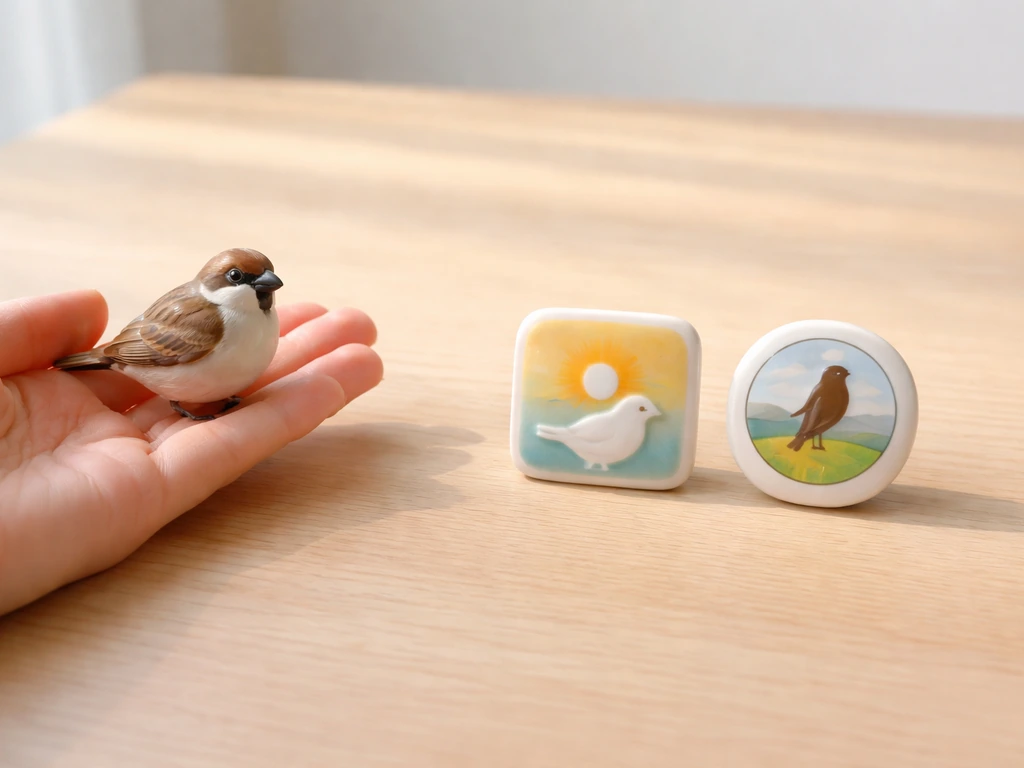
It's easy to blur bird idioms together, especially since they all share a kind of practical, folk-wisdom tone. But the different phrases are making very different points, and using the wrong one in conversation can change your meaning entirely.
| Phrase | Core message | When to use it |
|---|---|---|
| A bird in the hand is worth two in the bush | Keep what you have; certainty beats possibility | When advising someone not to risk a sure thing for a speculative gain |
| The early bird catches the worm | Starting earlier improves your chances of success | When encouraging someone to act quickly or get ahead of others |
| Kill two birds with one stone | Accomplish two things with a single action | When noting efficiency or a solution that solves multiple problems at once |
| A little bird told me | I heard something through an informal or unnamed source | When sharing gossip or information without revealing where it came from |
The most common mix-up is between "bird in the hand" and "early bird catches the worm. If you're looking for what are sayings like a bird in the hand called, it's usually a cluster of related proverb-style bird idioms and similarly themed expressions about choosing what is certain. " Both sound like practical advice, but they're pointing in opposite directions. "Early bird" is about taking initiative and moving fast to get an opportunity before someone else does. "Bird in the hand" is about the opposite impulse: don't move too fast, don't reach for something uncertain when you already have something good. If you want the short definition, see bird in hand meaning for a quick takeaway on the sure-thing vs uncertain-upside idea Bird in the hand. If you're telling someone to go for it, use "early bird." If you're telling someone to be careful about giving up what they have, use "bird in the hand."
There's also a broader family of related expressions and contexts worth knowing. The phrase turns up in entrepreneurship as a metaphor for exploiting existing resources rather than chasing new markets, which gives it a slightly different flavor in business writing. In entrepreneurship, the bird-in-hand meaning in business is about valuing what you already control more than speculative opportunities bird in hand. It also appears in Ice Cube's music as a reference to holding onto real, tangible value, which stays true to the proverb's spirit even if the subject matter is different. And depending on where you look, you'll find the phrase carrying a faint sexual double meaning that circles back to the Urban Dictionary entries mentioned earlier. None of those alternate uses change the core meaning, but they do show how deeply the proverb has embedded itself in the language.
The quick version if you just need the answer
"Bird in hand" means: don't risk something certain for something better but unsure. The slang and Urban Dictionary entries are puns built on the proverb, not real competing definitions. The proverb itself is thousands of years old, entered standard English in 1670, and is still in active everyday use. Use it when someone is about to gamble away a sure thing, and use the full form or the shortened version depending on how formal the moment is. If you see it in text and aren't sure whether it's the classic meaning or a joke, context will almost always tell you which one you're looking at.
FAQ
Is “bird in hand” ever used to mean the opposite of the proverb?
Yes, but mostly as internet or comedic wordplay. In normal conversation, it almost always points to the sure thing versus an uncertain upside. If someone claims “opposite meaning” online, treat it as a pun unless the surrounding context clearly frames it as irony or a joke.
What does “bird in hand” imply if someone uses it in a job offer or negotiation?
It usually means the person is urging you not to walk away from a guaranteed offer (or a stable role) while waiting for a possibly better but unconfirmed alternative. A practical takeaway is to ask what you are giving up, what you are waiting for, and what the timeline uncertainty is before making the move.
Can “bird in hand” be used positively, or is it always cautionary?
It can be positive. Sometimes it’s a way of highlighting that value you already control is real and should not be dismissed. For example, investing in existing customers or keeping a reliable vendor is “bird in hand” thinking, not just a warning.
Does it matter whether I say the full proverb or the shortened phrase?
Not much, as long as the decision context is clear. In more formal writing, the full “a bird in the hand is worth two in the bush” reads smoother. In casual speech, “bird in hand” works well, especially when you immediately mention the tradeoff (certainty now versus possibility later).
What’s a common mistake when using “bird in hand”?
Mixing it up with “early bird catches the worm.” Those two express different instincts, one is about moving fast for opportunity, the other is about not risking a sure value for an unconfirmed one. If your sentence encourages rushing, “early bird” is the better fit.
How can I tell whether “bird in hand” is being used sexually?
If it’s sexual, it will usually come with obvious context cues (crude tone, explicit anatomy references, or an ongoing joke that matches Urban Dictionary-style wordplay). Without those cues, assume the classic proverb meaning, especially in workplace, news, or everyday discussion.
Is it okay to use “bird in hand” when the stakes are not money?
Yes. The underlying logic is about risk and uncertainty, so it applies to health decisions, relationships, or time commitments. Just be sure you are comparing what is currently reliable to what is only potentially better later, not comparing two already-certain outcomes.
How do I respond if someone tells me “bird in hand” but I think the risk is worth it?
Ask for specifics: what exactly is the “bird” they want you to keep, what uncertainty they’re worried about, and what evidence supports the “two in the bush” outcome. You can also negotiate terms that reduce uncertainty (trial periods, written milestones, or contingencies) so you are not choosing blindly.
Next Article
A Bird in the Hand Ice Cube Meaning: Explained
Learn the bird in the hand idiom meaning and how the added ice cube likely signals a meme, joke, or typo variant.