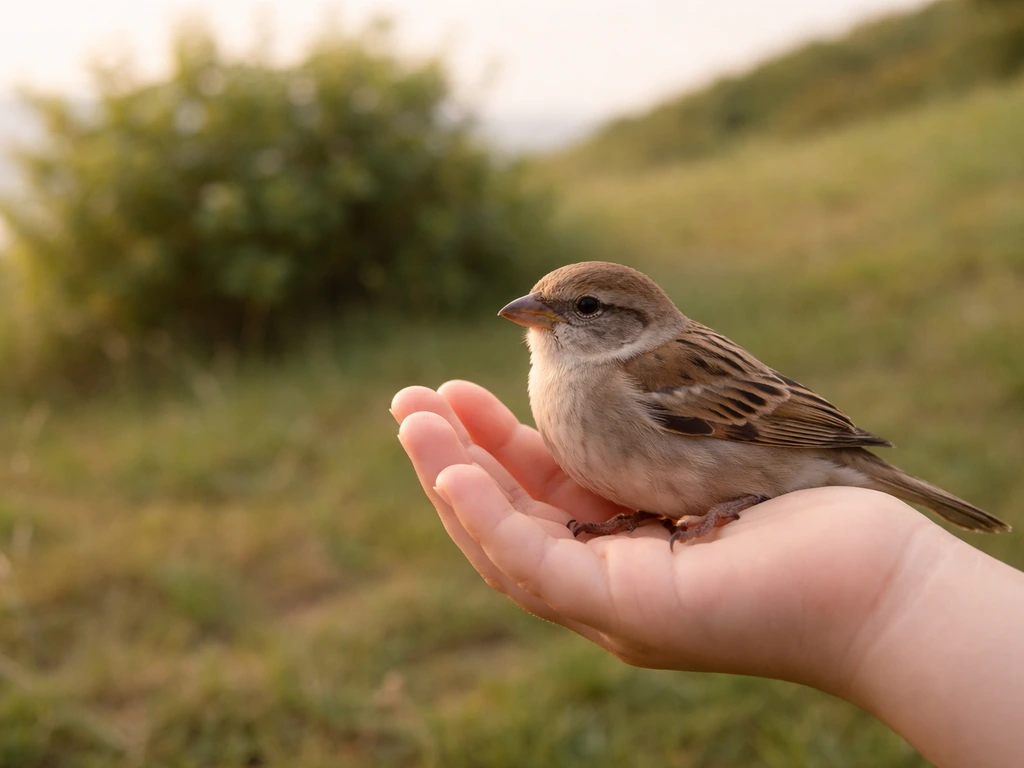
"A bird in the hand is worth two in the bush" means that something you already have is more valuable than something better you might get, because the thing you have is certain and the thing you might get is not. The full idiom is often shortened to "a bird in the hand is worth two" or just "a bird in the hand," but the meaning stays the same: take the sure thing over the uncertain one. In some online contexts, people use the phrase to ask about sexual meaning, usually referring to “a current partner” rather than an uncertain prospect.
Meaning of a Bird in the Hand Is Worth Two

Marcus Whitmore
20 May 2026
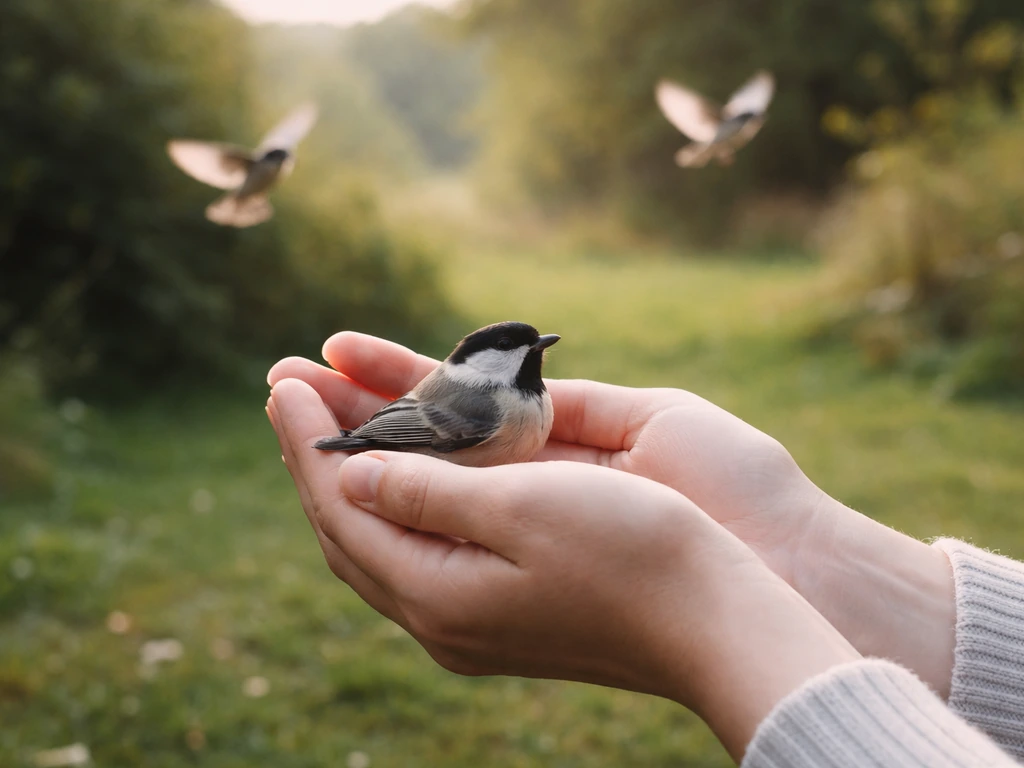
Meaning in plain English
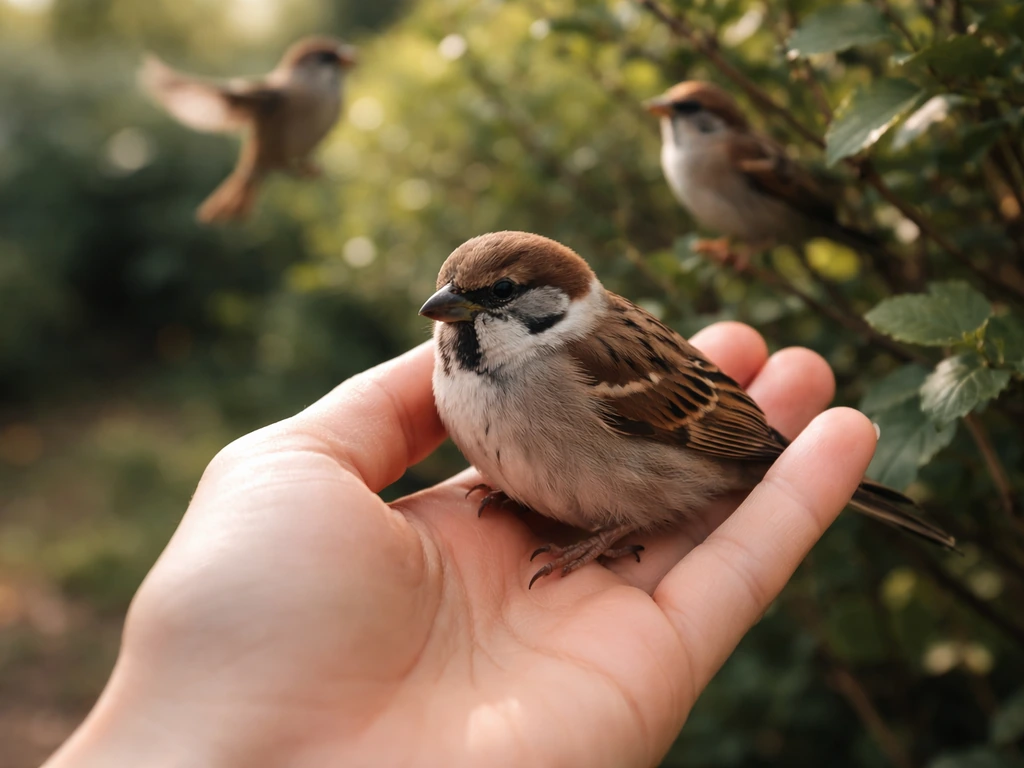
Imagine you're holding a live bird. In the nearby bushes, you can see two more birds, but they're fluttering around and might fly off any second. Is it worth releasing the one you have to try to catch both of the others? Probably not. That's the whole metaphor, and it's been around since at least the 15th century in English. The first recorded appearance close to the modern wording shows up in Hugh Rhodes' Boke of Nature or School of Manners in 1530, and the exact phrase we use today is first confirmed in John Ray's Hand-book of Proverbs in 1670. A Latin version of the same idea, "Plus valet in manibus avis unica quam dupla silvis" (one bird in the hand is worth more than two in the forest), is even older, and a related sentiment appears in the 6th-century BCE Proverbs of Ahiqar. Humans have been cautioning each other about risky bets versus sure things for a very long time.
Cambridge Dictionary defines it as: it is better to appreciate what you actually have than to risk losing it in the pursuit of something greater that may never happen. In short, the phrase “a bird in the hand” is a reminder of its own meaning: choose the sure thing over the uncertain one. Merriam-Webster frames it as choosing a sure benefit now over a possible but uncertain gain later. Both are accurate, and both point to the same practical truth: certainty has real value, and that value is often underestimated when something shinier is dangled in front of you.
What the "bird in hand" vs "bird in the bush" implies
The imagery here comes directly from falconry and hunting culture. In medieval Europe, a falcon or hawk trained for the hunt was an enormously valuable animal, worth real money and years of effort. A bird you were physically holding was yours, secured, reliable. Birds still loose in the bush were prospects, not possessions. That's why the contrast lands so hard: the "hand" represents what is tangible, present, and guaranteed, while the "bush" represents what is possible but unconfirmed.
The idiom's structure sets up a ratio on purpose. Two birds in the bush sounds like more than one bird in your hand, right? And yet the proverb says the single bird you hold is worth both of those uncertain ones. That's the point. The certain option wins not because it's bigger or better, but because it's real. You can count on it. The two in the bush might never be caught at all.
This maps neatly onto what behavioral economists call risk aversion: people (and the proverb) tend to assign extra weight to guaranteed outcomes compared to uncertain ones of equal or even higher expected value. Ambiguity-sensitive behavior and other expected-utility violations motivate contextual risk models like the one discussed by A Contextual Risk Model for the Ellsberg Paradox on arXiv blank" rel="noopener noreferrer">behavioral economists call risk aversion. This is often summarized as a lesson about what does a bird in the hand mean: choosing the sure thing over the uncertain one risk aversion. A sure gain of $100 feels more valuable than a 50 percent chance of gaining $250, even though the math says the gamble has higher expected value. The proverb isn't naively anti-risk. It's acknowledging that certainty itself has worth.
How people use it in real decisions

You'll hear this proverb in a surprisingly wide range of everyday situations, and knowing those contexts helps you use it naturally rather than awkwardly.
- Job offers: You have a solid offer from Company A on the table. You're waiting to hear from Company B, your dream company. "A bird in the hand" is the argument for accepting Company A before it expires rather than gambling on Company B coming through.
- Negotiations: A buyer or seller makes you an offer that's decent but not perfect. The idiom cautions against walking away hoping a better offer materializes, especially in a cooling market.
- Investing: Locking in a real, modest gain on an investment versus holding out for a bigger return that may never come. The proverb is often quoted when discussing the temptation to hold too long.
- Relationships: Someone uses it to argue for appreciating a committed, loving partner rather than leaving for a vague or unlikely romantic prospect.
- Everyday promises and plans: A friend offers to help you move this weekend. You're hoping someone else might offer to hire movers. The bird in your hand is the help you already have.
- Entrepreneurship: Startup culture actually has a specific concept called "bird-in-hand" thinking (sometimes called effectuation), where founders build with the resources and customers they already have rather than waiting for perfect conditions.
The common thread in all of these is the temptation to reject something real and present in favor of something potentially better but unconfirmed. The proverb is a gentle but firm nudge to think carefully before doing that. In entrepreneurship, this idea is often summarized as taking the secure, tested customer or revenue source now rather than betting everything on a future outcome you cannot yet verify bird-in hand meaning in entrepreneurship.
Practical checklist to apply the advice today
If you're facing a decision right now and wondering whether the proverb applies to you, run through this quick framework:
- Identify what's in your hand. What is the certain, available, confirmed option? Write it down or say it out loud. Be honest about whether it's actually guaranteed or just probable.
- Identify what's in the bush. What is the better-but-uncertain option you're tempted by? What would need to happen for it to become real?
- Estimate the probability honestly. Not optimistically. If the better option depends on factors outside your control, give it a realistic percentage chance of coming through.
- Calculate what you'd lose if the bush option fails. If you pass on the bird in hand and the bush birds fly away, what is the actual cost? Lost income, lost time, a missed opportunity window, emotional cost?
- Ask whether the upside justifies the risk. If the bush option is only marginally better than your hand option, and the probability is uncertain, the proverb's math usually wins: hold the bird.
- Set a deadline for the bush option. If you decide to wait, put a specific time limit on it. Open-ended waiting is where people get burned. Give yourself a date by which you'll either have the better option or accept the one in hand.
- Make the call. Once you've done this honestly, commit to a decision. The proverb's whole point is that indecision is itself a form of risking the bird you have.
Common mistakes and how not to misread it
The most frequent misreading is treating this proverb as a blanket rule against taking any risk. That's not what it says. It says a certain option is worth more than an uncertain one of even twice the apparent value. It's a caution about undervaluing certainty, not a command to never pursue anything better.
- Mistake 1 - Thinking it means "never take chances": The proverb is context-specific advice about when you already have something real to lose. It doesn't apply to situations where you have nothing in hand to begin with and must take some risk to gain anything.
- Mistake 2 - Using it to justify settling for too little: If the option in your hand is genuinely bad and the bush option is highly probable, this proverb doesn't apply. It's about uncertain vs certain, not about forcing yourself to accept poor terms because they're available.
- Mistake 3 - Ignoring the ratio: The proverb specifies two in the bush, not ten or a hundred. If the potential upside is enormous and the probability is reasonable, expected value might genuinely favor the gamble. The proverb isn't a substitute for thinking.
- Mistake 4 - Confusing it with pessimism: This isn't a cynical saying. It doesn't claim the world is stingy or that you'll never catch the birds in the bush. It simply values certainty appropriately, which is a form of clear thinking, not negativity.
- Mistake 5 - Forgetting that holding too tight can cost you too: If you clutch every bird in hand so tightly you never explore options, you miss legitimate opportunities. The proverb counsels caution, not paralysis.
Related bird idioms and how they differ
Bird idioms tend to cluster around a few themes: opportunity, timing, freedom, and risk. "A bird in the hand" sits squarely in the risk-and-certainty category, but it's useful to see how it compares with its neighbors.
| Idiom | Core message | How it differs from "bird in the hand" |
|---|---|---|
| The early bird catches the worm | Act promptly to secure an advantage | About timing and initiative, not about choosing certainty over risk |
| Kill two birds with one stone | Accomplish two things with a single action | About efficiency, not about holding a guaranteed option |
| Free as a bird | Complete freedom or lack of constraint | Descriptive rather than advisory; no risk-reward logic |
| Rare bird (rara avis) | Something or someone exceptionally unusual | About uniqueness, not about decision-making under uncertainty |
| The bird has flown | The opportunity or person is already gone | Describes the consequence of not acting; almost the opposite lesson — a warning that the bird in hand can escape if you hesitate too long |
There's also a category of sayings that are structurally similar to "a bird in the hand" in that they contrast something real with something uncertain or better-seeming. These types of expressions are sometimes called proverbial contrasts or antithetical proverbs. "Don't count your chickens before they hatch" is the closest cousin: it warns against assuming an uncertain outcome will come through, which is essentially the same caution from a slightly different angle. Where "bird in the hand" says "value what you have," "don't count your chickens" says "don't spend what you don't have yet. This is also why you might compare it with the bird in hand meaning, where the core idea is choosing certainty over a possible upside. It also pairs naturally with the idea of “don’t put all your hope in a maybe,” which is where the phrase “bird in hand” often comes up. "
The bird imagery in these phrases isn't accidental. Birds have symbolized freedom, prospect, and the untameable since ancient literature. A bird in flight is possibility itself, beautiful and ungraspable. A bird in your hand is something else entirely: a real, breathing, present thing. That contrast between the soaring and the held, the wild and the tame, is exactly what makes the metaphor stick after more than five centuries of use.
FAQ
Does “a bird in the hand is worth two” mean I should never take risks?
Not necessarily. The proverb supports choosing a sure option when the uncertain one could fail, but it does not forbid risk. A practical test is to compare outcomes on certainty and downside: if the “bush” option has a realistic chance of loss that would erase your current gain, then “bird in hand” is the warning.
What if the “two in the bush” option is very likely, is the proverb still valid?
Yes. If the “two in the bush” are truly guaranteed to happen, or if you can make the uncertain option reliably probable through contracts, trials, or verification, then the main advantage of the sure thing disappears. Many decisions become “bird in hand” once uncertainty is reduced to something you can measure.
Is “worth two” meant literally (like a 2x payoff), or is it just an exaggeration?
Treat it as guidance about how you weigh certainty, not a mathematical claim that one option is always twice as good. The “two” is rhetorical, it signals that even a seemingly larger upside can lose to the value of what is already secured.
How should I apply it when I can pursue the opportunity without risking my current benefit?
The idiom fits best when you would have to give up the sure thing to pursue the uncertain one. If you can keep the current benefit while running a low-cost experiment toward the bigger outcome, that is more like parallel testing than “trading the hand for the bush.”
What if the “bird in the hand” is not really stable, for example it can expire or decline?
A common mistake is using it to justify inertia even when the “sure” option is actually eroding. If your current offer includes hidden costs or a deadline that will expire, then what feels certain may be temporary, and you should evaluate whether the “hand” will still be there tomorrow.
How can I use the proverb in negotiations without sounding dismissive of new ideas?
In business or negotiations, phrase it as a question rather than a refusal: “What value is guaranteed now, and what would I lose if this slips?” That keeps the focus on verified terms, like signed revenue, confirmed delivery dates, or nonrefundable deposits, instead of vague hopes.
The article notes a “sexual meaning” online. How should I interpret it responsibly?
Yes, especially in relationship contexts where people use the phrase to mean choosing a current partner over an uncertain prospect. A safer decision rule is to distinguish between compatibility, actual behavior, and uncertainty, then avoid applying “bird in hand” to justify ignoring red flags or settling for less than you need.
Is there a quick framework to decide whether to keep the sure thing or chase the bigger upside?
Consider substituting a concrete version of the saying in your own thinking: “Would I still choose option B if option A stayed fixed, and how bad is it if the bush option fails?” This converts the proverb into a decision aid for expected value plus downside risk.
Does the proverb also apply when I can secure multiple benefits at once?
It can. If you have multiple “birds in the hand,” combining them may beat gambling for one potentially massive “bush” outcome. In other words, the proverb can support diversification and phased commitments, not just choosing one or the other.
How is this proverb different from “don’t count your chickens before they hatch”?
It pairs closely with “don’t count your chickens before they hatch,” which warns against assuming an uncertain outcome is coming. Use that cousin when your problem is future projection, while use “bird in hand” when your problem is undervaluing what you already have today.
Next Article
What Are Sayings Like a Bird in the Hand Called?
Learn what “a bird in the hand” is called, its meaning, and similar sayings with examples and context.