A drake is simply a male duck. Every major dictionary agrees on this: Cambridge, Oxford, Collins, Merriam-Webster. If someone uses "drake" in a bird context, that's the core meaning you're working with. The word has nothing to do with dragons or celebrity rappers when it comes to bird terminology. Where it gets interesting is that "drake" also shows up in idioms, captions, poetry, and symbolism, so the exact meaning you're looking for depends on where you saw or heard the word. This guide will walk you through all of it.
Drake Bird Meaning: Literal and Symbolic Interpretation Guide

Marcus Whitmore
27 Apr 2026
What "Drake" Actually Means (Literal vs. Slang)
The literal meaning is straightforward: a drake is an adult male duck. In ornithology, the standard terminology is that a male is a drake and a female is a hen (or simply a "duck" in everyday speech). This naming convention applies broadly across duck species, not just mallards, though the mallard is the bird most people picture when they hear "drake." Think of it the same way you'd say "gander" for a male goose or "tom" for a male turkey. It's a sex-specific term for a bird, full stop.
There is one secondary meaning worth knowing: in fly fishing, a "drake" also refers to a large mayfly, which is used as a lure pattern. If the context involves fishing, that's the sense in play. But on a bird-focused reference, you can safely set that aside. The bird meaning dominates in almost every other setting.
As for slang, "drake" doesn't carry a strong standalone slang meaning the way some bird-related words do. It's not bird slang the way "jay" or "dodo" have picked up casual meanings in everyday speech. When people search for "drake bird meaning," they're almost always genuinely curious about the male duck definition, the symbolism behind it, or a specific phrase where the word appeared. If you’re specifically asking “bill bird meaning,” the key is still the surrounding context to decide whether you mean a literal bird term or a metaphorical usage. If you came here looking up the "jay bird meaning," the same idea applies: context tells you whether you mean the literal bird reference or a slang implication.
How to Tell Which "Drake" Someone Means
Context is everything here. A few reliable clues will tell you instantly which meaning is in play. Look at the words surrounding "drake" in whatever you read or heard, and you'll usually have your answer within seconds.
- Words like pond, duck, quack, mallard, hen, nest, or waterfowl nearby? You're in literal male-duck territory.
- Words like stone skipping, flat water, or making ducks and drakes? That's the old idiom for skipping stones (more on that below).
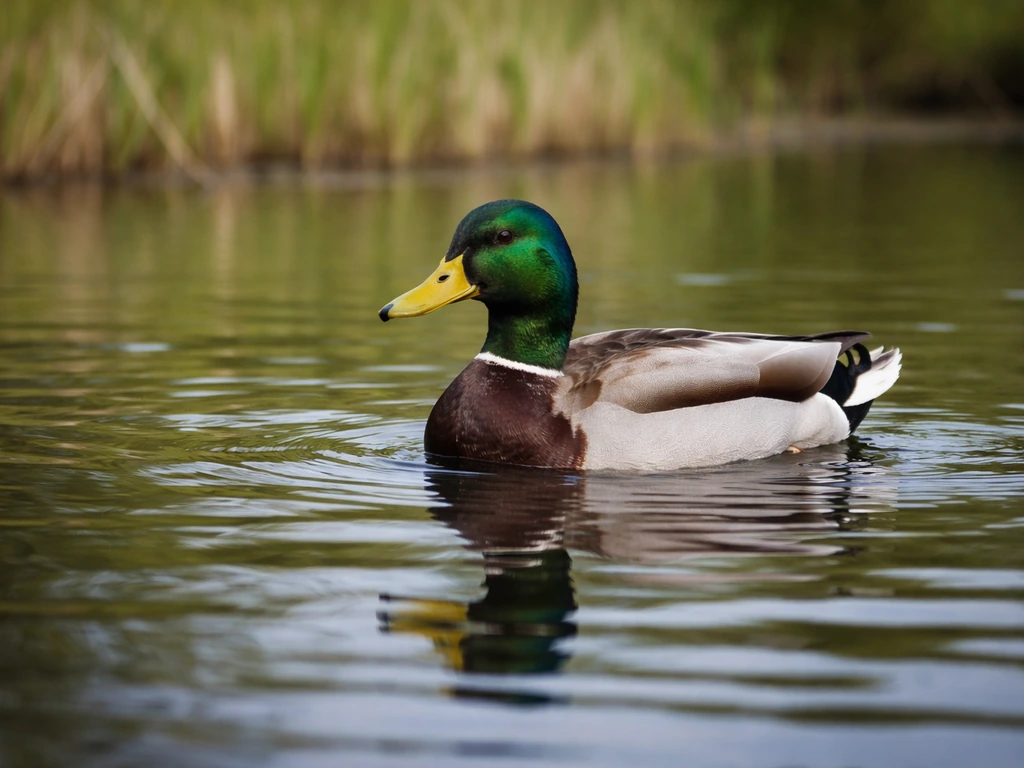
- A nature caption or wildlife photo with a colorful duck showing a green head and reddish chest? That's a drake mallard — the most commonly photographed drake in North America.
- Poetry, fiction, or metaphor language where drake seems to represent boldness, display, or male energy? That's symbolic usage drawing on the bird's natural behavior.
- A fishing forum or fly-tying context? Probably the mayfly lure, not a duck at all.
The surrounding words are your fastest decoder. If you saw "drake" in a wildlife caption or nature article, it's almost certainly a male duck. If it's in a poem or symbolic writing, the writer is probably leaning on the visual drama of a drake's plumage or behavior as a metaphor for confidence, display, or vitality.
What a Drake Actually Looks Like (So You Can Spot One)
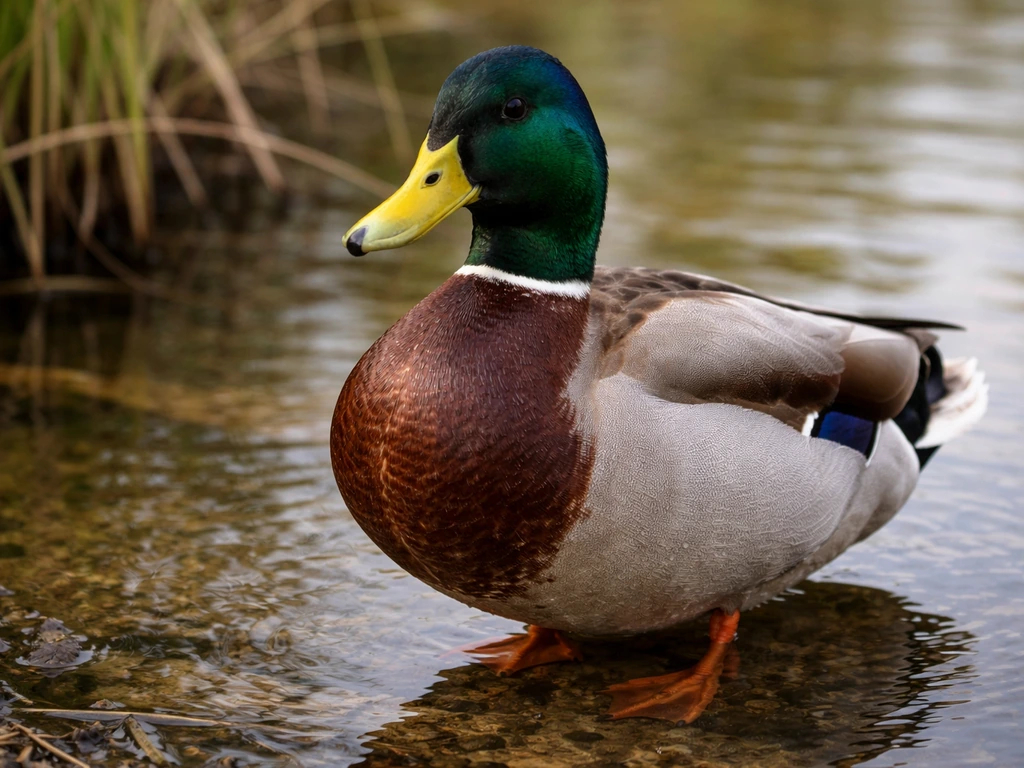
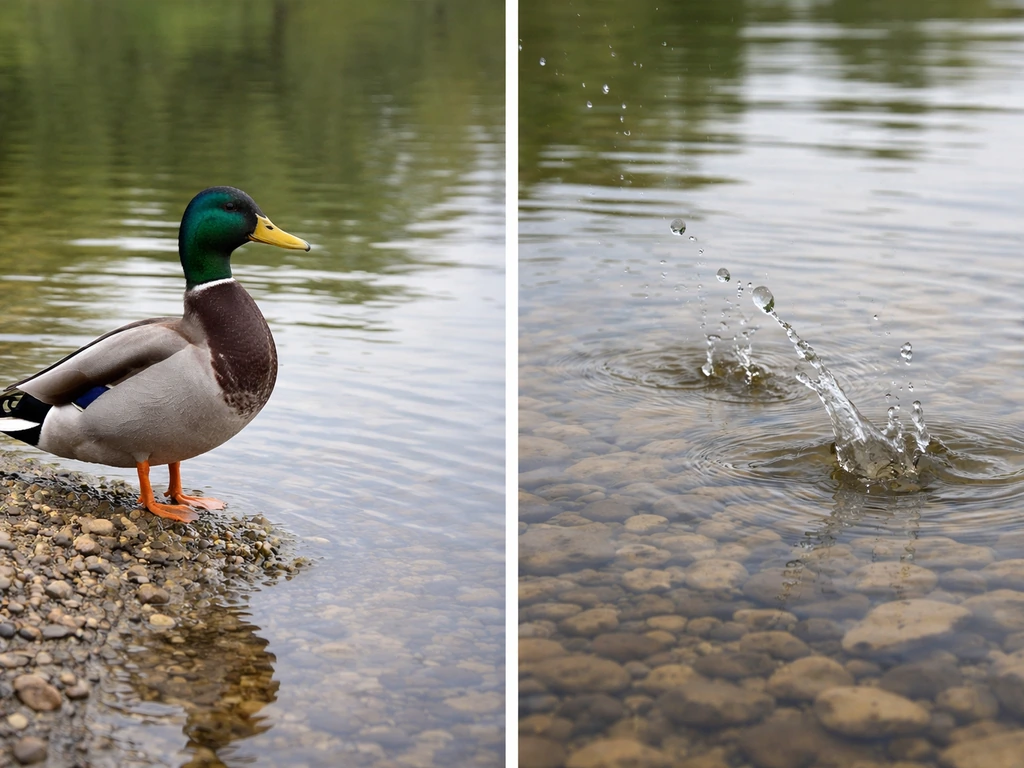
The mallard drake is the reference image for most people. The male mallard has a glossy green head, a yellow bill, a reddish-brown chest, a gray body, and a black back. One of the most reliable ID markers is the "drake feather," a small curl on the center tail feathers that's unique to males. The female (hen) mallard is mottled brown with an orange bill that has black smudges, and her tail feathers are straight.
One thing that trips people up: drakes go through what's called eclipse plumage, usually in late summer, when they temporarily molt and look surprisingly drab and hen-like. During this period, the green head and bright chest fade significantly, and a drake can be hard to identify by color alone. If you're trying to ID a drake during late summer and the colors seem off, look for bill color (yellow in males vs. orange-black in females) and the tail feather curl. The U.S. Fish and Wildlife Service actually trains people to use wing characteristics to tell drakes from hens even when breeding plumage is absent. The U.S. Fish & Wildlife Service provides duck wing-identification guidance and trains people to use wing characteristics to distinguish female hens from male drakes even when the male has not developed bright breeding plumage (isn’t “colored up”).
Symbolism and Cultural Meanings Tied to Drakes
Because drake refers specifically to a male duck, its symbolic associations tend to cluster around male energy, display behavior, and vitality. These aren't arbitrary, they come directly from how drakes actually behave. During breeding season, male ducks are conspicuously colorful, active, and competitive. That visual drama has made the drake a natural symbol in various cultural and literary contexts.
A few symbolic threads that recur when drakes appear in poetry, folklore, or metaphorical writing:
- Display and confidence: A drake's breeding plumage is among the most visually striking in common birds, which makes it a natural shorthand for showiness, self-presentation, or pride.
- Vitality and seasonal energy: Because drakes are most vibrant and active in spring breeding season, they've been used as symbols of renewal, fertility, and natural energy cycles.
- Pairing and courtship: Drake behavior in courtship is highly visible and ritualized, which some poets and storytellers use as a symbol for pursuit, desire, or the performance of attraction.
- Seasonal change: The eclipse plumage molt gives drakes a metaphorical connection to cycles of change, retreat, and renewal — the idea that even the showiest creatures have quieter, less visible seasons.
- Leadership or protection: In some folklore and symbolic writing, the drake as the male head of a duck pair carries loose associations with guardianship, though in reality male mallards typically leave the female during incubation.
It's worth being honest about the limits here. The drake isn't a globally heavy-loaded symbol the way the crane, raven, or owl is across world mythologies. Its symbolic weight is more subtle and tends to emerge from context rather than established tradition. When you see a drake used symbolically, the writer is usually drawing on the bird's obvious visual qualities rather than invoking a deep cultural archetype.
Phrases and Idioms Where "Drake" Shows Up

The most well-documented phrase is "ducks and drakes," which Merriam-Webster defines as a pastime of skimming flat stones or shells along the surface of calm water. This is the classic stone-skipping game, and the phrase has been in documented use since at least 1585. The name comes from the way a skipping stone bounces across the water, resembling the dabbling motion of ducks and drakes on a pond's surface. You might also hear "play ducks and drakes" used figuratively to mean squandering something carelessly, as in tossing it around like a skipped stone.
Outside that specific idiom, "drake" doesn't populate a long list of set phrases the way "duck" does. (Duck has a rich idiom life: "duck out," "dead duck," "sitting duck," "if it looks like a duck," and so on.) Drake tends to appear in nature writing, field guides, wildlife captions, and occasionally in poetry or literary fiction as a descriptive or metaphorical noun, rather than as part of a frozen idiomatic phrase.
In social media captions and nature photography communities, "drake" often appears as a precise label: "drake mallard spotted at Centennial Park" or "spring drake showing full breeding plumage." In those contexts it's purely technical, functioning as a respectful nod to correct bird terminology rather than any deeper meaning.
Quick Glossary: Drake and Related Terms
If you're building out your bird-vocabulary toolkit, here are the key terms that orbit "drake" in bird language:
| Term | Meaning | Notes |
|---|---|---|
| Drake | Adult male duck | Applies broadly to male ducks of most species |
| Hen | Female bird of any kind (in duck context, the female duck) | Hen is used for female ducks, female chickens, and female birds generally |
| Duck | Waterfowl in general, or specifically a female duck | Confusingly, 'duck' can mean the whole species or just the female — context tells you which |
| Mallard | The most common wild duck species in the Northern Hemisphere | The male mallard (drake) is the classic image with the green head and yellow bill |
| Eclipse plumage | The dull, hen-like feathers a drake grows after breeding season | Drakes in eclipse plumage can look surprisingly similar to females |
| Drake feather | The curled center tail feather found only on male ducks | One of the most reliable visual ID markers for a drake, even outside breeding season |
| Gander | A male goose | The goose equivalent of 'drake' — same concept, different species |
| Speculum | A colored wing patch visible on many duck species | In mallards, it's a white-bordered blue patch visible on both sexes but brighter on drakes |
How to Nail Down the Exact Meaning Fast
If you're still not sure which sense of "drake" fits what you saw or heard, here's a practical verification process that takes about two minutes.
- Copy the exact phrase or sentence where you saw "drake" and search it directly. If it's a specific idiom or caption, searching the full phrase will surface the intended meaning far faster than searching just "drake."
- Check the surrounding context for species signals. If any duck species name (mallard, teal, pintail, widgeon) appears nearby, you're in ornithology territory and drake means male of that species.
- If you're looking at a photo, check for the visual markers: green head, yellow bill, curled tail feather, or reddish-brown chest. Even partial matches confirm you're looking at a drake.
- If the drake reference is in a poem, caption, or metaphorical passage with no bird species mentioned, look at what qualities the writer emphasizes — display, color, motion, or seasonal change. That will tell you which symbolic thread they're pulling.
- For the stone-skipping idiom specifically, if "ducks and drakes" appears together as a phrase (especially with words like play, make, or stones nearby), treat it as the idiomatic meaning, not a reference to actual birds.
- When in doubt, the literal definition (male duck) is the safe default. Drake almost never means anything radically different from that in a bird context.
How Drake Compares to Similar Bird-Name Terms
Drake is interesting to compare to other bird-name terms because it's primarily a sex-specific identifier rather than a metaphorical or slang-heavy word. If you’re comparing how different bird names or terms work, the g bird meaning page is a related option worth checking. If you landed on this article because you wondered about jian bird meaning, it helps to use the same context-first method to separate literal bird usage from metaphor or symbolism. Terms like "jay" (as in jaybird) carry a lot of cultural and slang baggage, and words like "bill" as a bird term get complicated because they overlap with human names and non-bird meanings. If you also meant the term "jaybird meaning," that’s a different bird-name entry, but it’s the same idea of checking the surrounding context to pin down the exact sense. Drake is relatively clean: its primary job is to tell you the sex of a duck, and its symbolic or idiomatic uses are secondary extensions of that core meaning. That's actually what makes it useful as a reference word. It's precise in a way that broader duck-related language often isn't.
If you're exploring related bird-vocabulary rabbit holes, the hen/drake pairing in duck language parallels the gander/goose pairing in geese, and both reflect how English developed distinct sex-specific names for domestically familiar birds. It's the same impulse behind terms like "doctor bird" (a species nickname) or the layered meanings you find in other bird-name entries, where a single word carries literal, cultural, and sometimes slang weight simultaneously. It’s the same impulse behind terms like doctor bird (a species nickname) and the doctor bird meaning people often search for, or the layered meanings you find in other bird-name entries, where a single word carries literal, cultural, and sometimes slang weight simultaneously.
FAQ
If the bird looks “female” but the post says drake, how can that be possible?
It is still a male duck, but you may be looking at a drake in eclipse plumage (late-summer molt), where the colors look closer to a hen. In that case, use the bill (male yellow vs. hen orange-black with darker smudges) and the center tail-feather curl to confirm, since color alone can mislead.
Does “drake” tell me the species, or only that it is a male duck?
With ducks, “drake” is sex, not species. So “drake mallard” means the male of the mallard species. If you only see “drake” by itself, assume the writer is referring to any adult male duck unless they name a specific species or add a location tied to a known species.
How do I quickly tell whether “drake” is literal or metaphorical in a caption or quote?
In most natural history and wildlife photography contexts, “drake” should be treated as literal bird terminology. A practical test: if the sentence also includes identification details (bill color, tail shape, plumage, species name), it is technical. If it is mostly about emotion or character traits without any ID clues, it is probably symbolic.
What clue would confirm the “drake” meaning is the fly-fishing mayfly rather than the male duck?
The usual fishing “drake” sense is a large mayfly used as a lure pattern, and it will usually appear alongside words like fly-fishing, nymph, fly pattern, or mayfly. If those terms are absent and the text is about ducks, weather, ponds, or bird ID, the male-duck meaning is overwhelmingly more likely.
Does “drake” always mean a bird with bright breeding colors?
Yes. The same bird can be male (a drake) and still look plain during molt, so the word does not guarantee “bright breeding colors.” When a post says “spring drake” versus “late-summer drake,” it is often hinting at whether the bird is likely in breeding plumage or eclipse plumage.
When someone uses “hen” and “drake” together, is that always about duck sex identification?
A “hen” in duck language is the female. If you see “hen” paired with “drake” in an article, that is a strong signal the writer is using standard sex-specific terminology for ducks, not slang.
Why does “drake” feel common in one phrase but rare everywhere else?
“Ducks and drakes” is the main fixed phrase where “drake” is commonly encountered in everyday English. Outside that idiom, “drake” usually shows up as a descriptive term in nature writing or field-guide style descriptions, rather than as a widely used casual expression.
What is the most common mistake people make when looking up “drake bird meaning”?
For readers writing or searching, the most common mistake is assuming “drake” has the same kind of slang baggage as other bird terms (or that it relates to dragons or celebrity references). If you keep the search terms grounded in bird-ID context (mallard, bill color, tail curl, eclipse plumage), you will usually find the right meaning faster.
Next Article
J Bird Meaning: What It Refers to and How to Tell
Clear j-bird meaning explained: what it refers to in bird symbolism or slang, plus how to confirm the context fast.