"Jury bird" is not a single fixed idiom with one dictionary definition. When someone says it or searches for it, they are most likely describing a bird (or person acting like one) that watches, evaluates, and delivers a verdict, drawing on the mental image of a jury as a group of observers who judge what they see. The phrase pulls together two powerful cultural shorthand concepts: birds as symbolic witnesses or messengers, and juries as the embodiment of collective judgment. Once you know the context it appeared in, the meaning becomes pretty clear.
Jury Bird Meaning: Symbolism, Origins, and How to Tell

Marcus Whitmore
8 Jun 2026
What "jury bird" actually means (literal vs. metaphorical)
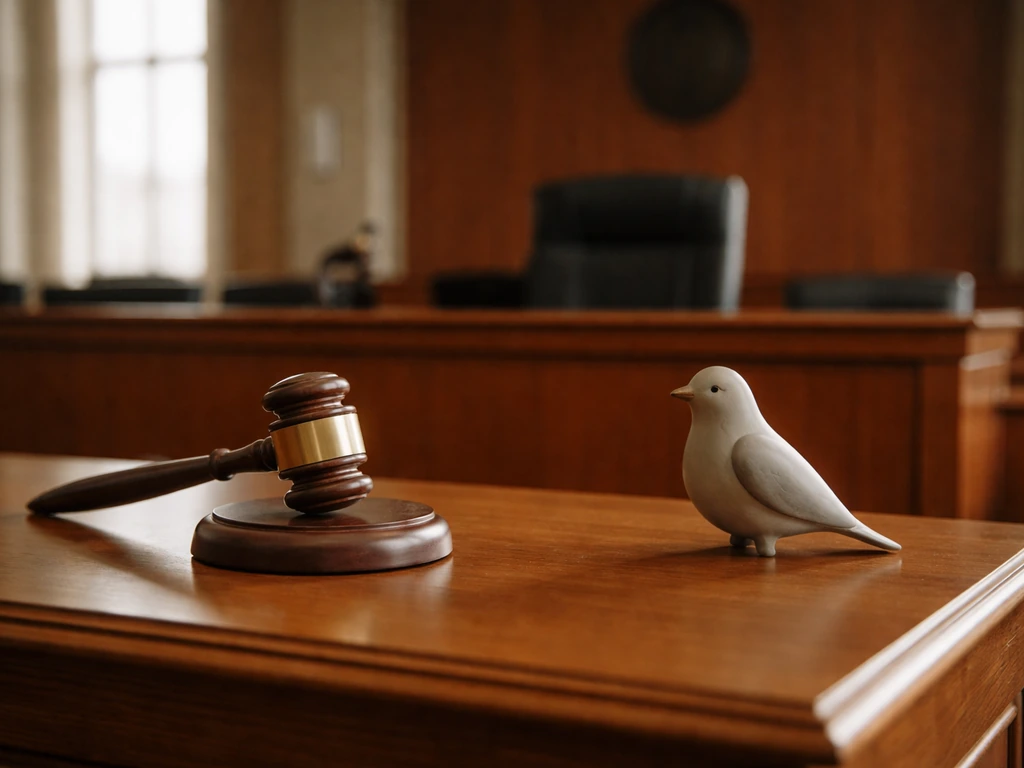
On the literal side, you might genuinely encounter the words "jury" and "bird" sitting next to each other with no metaphor involved at all. A court case involving someone whose last name happens to be Bird will produce headlines like "A jury today convicted Bird..." and those two words land side by side with zero symbolic weight. Similarly, legal writing sometimes uses bird-adjacent language in technical court instructions, like the famous "ostrich instruction," which led one writer to run the headline "District Court Gives Jury the Bird" as a pun. That is a clever wordplay construction, not a stand-alone idiom.
The metaphorical reading is where it gets interesting. In that frame, a "jury bird" is a creature, a character, or a person positioned as a judge or evaluator, watching a situation closely and building toward a decision. Birds that observe from above, that gather in groups, or that call out loudly are natural fits for this framing. Owls are probably the most culturally obvious candidate: a group of owls is actually called a "parliament" or sometimes a "jury," which means the phrase "jury bird" maps directly onto owl imagery in a way that feels almost destined.
Where you are most likely to see it used
The phrase shows up in a few distinct settings, and recognizing which one you are in will help you interpret it correctly. On social media and in meme culture, courtroom-style bird framing is genuinely popular. Posts captioned with things like "The jury finds this sandwich theft guilty" paired with a photo of a bird are common, playful constructions. In that world, the bird is the jury, and the caption is the joke. It is humor built on the same cultural logic as the "jury bird" concept.
In creative writing and storytelling, a "jury bird" might appear as a named motif or character archetype: the bird who witnesses everything and whose behavior signals a kind of verdict on what the human characters are doing. This goes back a long way in literature. Susan Glaspell's 1917 story "A Jury of Her Peers" famously centers on a dead canary as the key piece of evidence and moral compass of the entire narrative. Wikipedia’s entry for Susan Glaspell’s 1917 story “A Jury of Her Peers” describes the “dead bird in a box” as usable evidence, tying “jury” and “bird” to the story’s legal and moral logic. The bird in that story essentially serves as the jury's deciding exhibit, its death the silent verdict. That story is one of the most enduring cultural pairings of jury and bird imagery in American literature.
In casual conversation or workplace banter, someone might call a colleague or a pet bird a "jury bird" to mean they are the critical observer in the room, the one whose reaction you are waiting on before you commit to a decision. It is light, humorous, and affectionate rather than formal.
What a "jury bird" symbolizes
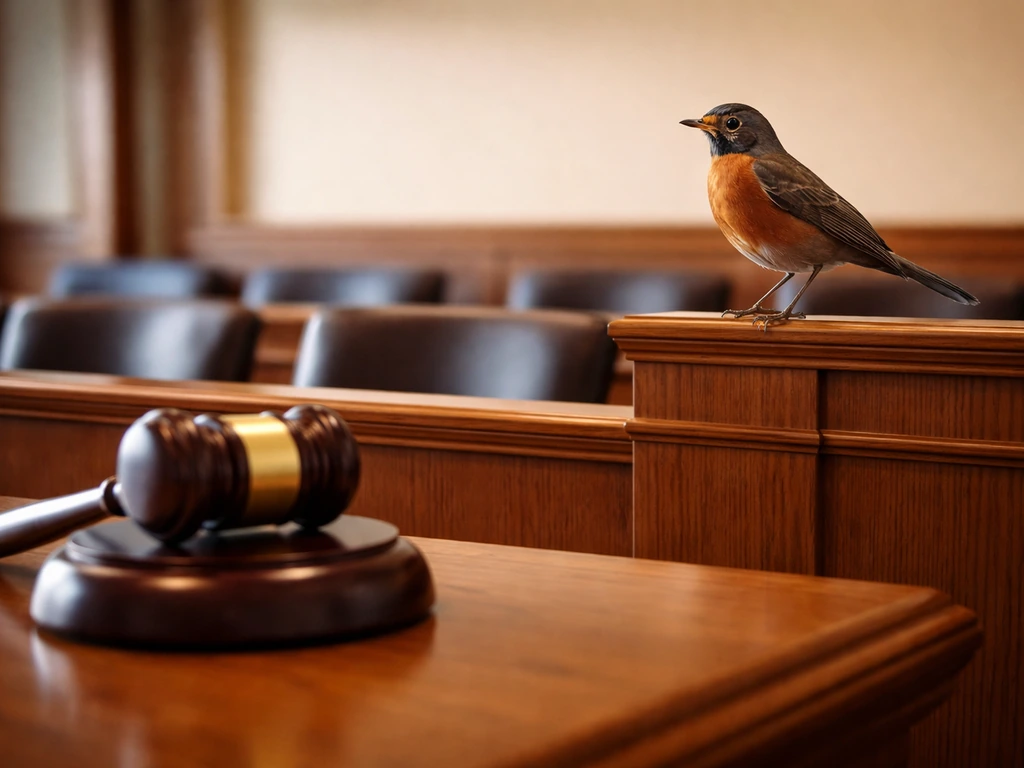
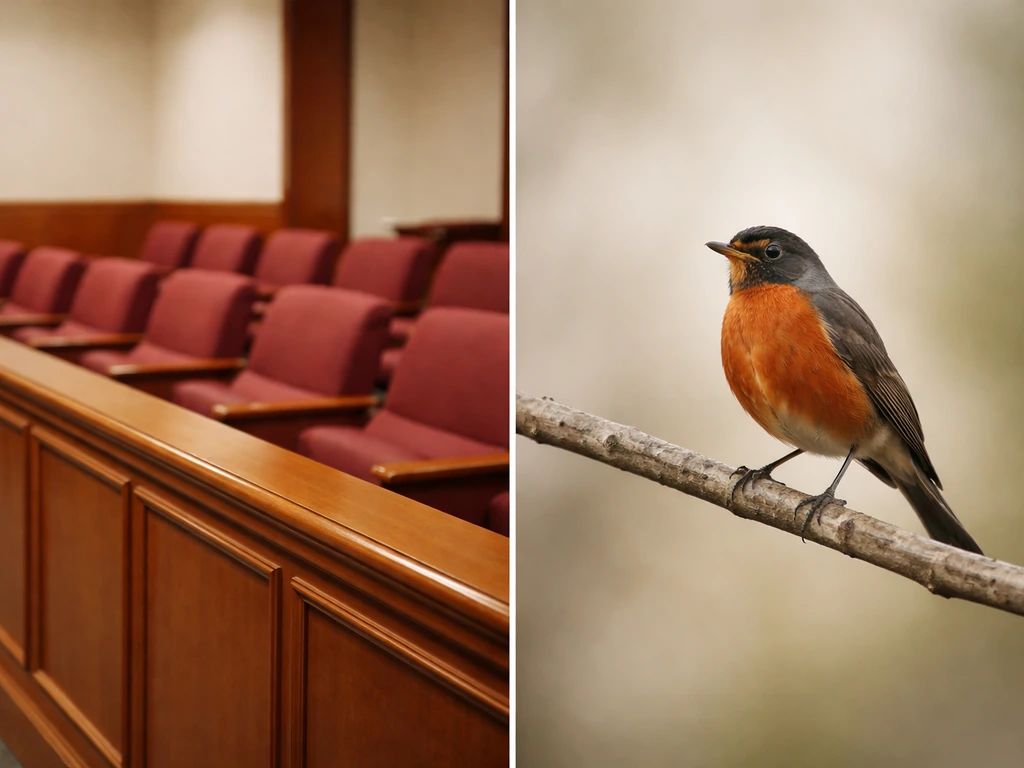
When you strip it back to its symbolic core, the jury bird represents collective judgment, watchful evaluation, and the weight of a verdict that has not yet landed. It carries the tension of being observed and assessed. Birds already carry strong symbolic associations with perspective (they see from above), wisdom (especially owls and ravens), and communication (they call, they signal, they announce). Layer on the jury concept and you get something specific: not just a wise observer, but one whose opinion carries consequence.
- Judgment without personal bias: a jury is meant to be impartial, so a jury bird symbolizes fair, honest assessment rather than a subjective grudge
- Collective decision-making: juries work in groups, and many birds (starlings murmurating, owls gathering, crows mobbing) embody communal behavior, making the pairing feel natural
- The verdict moment: birds often signal transitions in folklore (a bird call at dawn, a raven appearing before a death), so a jury bird can symbolize the moment when deliberation ends and a decision arrives
- Witnessing and accountability: the bird sees what humans do when they think no one is watching, making it a symbol of honest testimony
Where the phrase comes from linguistically and culturally
"Jury bird" as a phrase probably did not emerge from a single coinage event. It is most likely a compound that people construct situationally, pulling together two culturally loaded concepts. The word "jury" has been used as an informal collective noun for groups of owls alongside "parliament" and "wisdom," which creates a natural linguistic bridge. If a group of owls is a jury, then an owl is, in a loose but intuitive sense, a jury bird.
The broader tradition of pairing courtroom language with birds is old and runs through literature, folklore, and legal humor. The "ostrich instruction" in American law is a real legal doctrine (it addresses willful blindness, the idea that you cannot deliberately ignore obvious facts to avoid legal knowledge of them), and its bird-based nickname is not accidental. Birds and judgment have a long shared cultural history. From the augury traditions of ancient Rome, where bird flight and behavior were read as divine verdicts on human decisions, to the symbolism of the scales and the feather in Egyptian mythology, the idea of birds as arbiters and judges is genuinely ancient.
In more modern English, "give someone the bird" is slang for a rude dismissal gesture, which means courtroom + bird combinations carry a secondary layer of irreverence. When legal writers or humorists play with "jury" and "bird" together, they are often drawing on both the solemn (birds as wise judges) and the irreverent (birds as chaotic, rude, or dismissive) registers at once.
How to figure out what it means in your specific situation

The meaning of "jury bird" shifts depending almost entirely on the context around it. Here is a simple way to work out which reading applies to what you saw.
- Check whether it is literal first: Is someone named Bird involved in actual legal proceedings? If so, "jury" and "bird" are just two unrelated words that happen to be near each other.
- Look for humor or meme framing: If the phrase appears with an image of an animal, a caption styled like a court verdict, or a jokey tone, it is almost certainly the playful "bird as judge" construction.
- Consider the literary context: If it appears in an essay, analysis, or discussion of fiction, especially anything touching on justice, crime, or women's experience, the reference may trace back to Glaspell's "A Jury of Her Peers" and the symbolism of the dead canary.
- Ask whether the bird is doing the judging or being judged: In most metaphorical uses, the jury bird is the evaluator, not the subject. If the bird is the one being scrutinized, the phrase is probably being used ironically or in reverse.
- Notice the species if one is named: An owl is the most culturally resonant jury bird because of the "jury of owls" collective noun. A parrot or magpie in the same construction leans more toward comic or chaotic judgment rather than solemn deliberation.
Similar phrases that often get mixed up with it
A few related terms and phrases come up alongside "jury bird" often enough that it is worth knowing how they differ.
| Term | What it actually means | How it differs from "jury bird" |
|---|---|---|
| Jaybird | An established slang word (as in "naked as a jaybird") with multiple meanings related to blue jays and informal speech | A fixed, dictionary-recognized word with its own independent meanings; not about judgment or evaluation |
| Give someone the bird | A slang phrase meaning to make a rude dismissal gesture | About disrespect or rejection, not evaluation or collective judgment |
| Ostrich instruction | A legal doctrine about willful blindness; sometimes called "giving the jury the bird" as a pun | A real legal term using bird imagery humorously; not a metaphor about birds as judges |
| A jury of her peers | A phrase from law and literature meaning to be judged by people like yourself; also a famous short story | "Bird" here is a symbol within the story, not part of the phrase itself |
| Lek bird | A scientific and ornithological term for a bird that performs at a display ground called a lek | Entirely unrelated to judgment or courtroom imagery; a behavioral classification |
Jaybird is probably the most common search-confusion candidate. For example, people searching for “LBJ bird meaning” are usually trying to connect a specific reference to the same courtroom-and-judgment bird idea jury bird. People sometimes type or mishear "jury bird" when they actually mean "jaybird," or vice versa, since both have a similar rhythm and both involve birds in figurative language. Merriam-Webster defines “blank" rel="noopener noreferrer">jaybird” and provides a sense history, showing that “jaybird” is an established word with multiple meanings that can be confused with “jury bird.”. If the phrase you encountered is about nakedness, bold speech, or cheeky behavior, you are almost certainly looking at a jaybird reference rather than a jury bird one. Similarly, if you came across a phrase that sounds like "jury bird" but seems to be about displaying or performing, it could be a reference to a lek bird, which describes a very specific mating behavior in ornithology and has nothing to do with judgment or verdicts. Because a lek bird refers to a specific mating display in ornithology, its meaning is unrelated to the “jury” and “verdict” vibe of “jury bird.”.
The yahoo bird is another one that occasionally comes up in the same breath as unusual bird phrase searches, referring to a real Australian bird known for its raucous call rather than any courtroom metaphor. Knowing these neighboring terms makes it a lot easier to self-correct when the phrase you are trying to decode turns out to be one of its close cousins rather than a jury bird proper.
FAQ
Is “jury bird” a fixed idiom, or does it mean something different depending on context?
In most cases, yes, it is metaphorical rather than a fixed idiom, so the most reliable way to pin it down is to look at the surrounding sentence. If the bird is described as watching, deciding, judging, or signaling a verdict, it is the “observer who evaluates” meaning. If it is used in a headline or news-like sentence where “jury” and “bird” could be two separate words, it may be plain coincidence (someone named Bird, or literal “jury” plus unrelated “bird”).
How can I tell if “jury bird” is being used as a joke versus a serious reference?
People often use it as a playful courtroom caption device, where the bird is treated like a “jury” member even though no real legal process is happening. If you see it paired with food, pets, workplace situations, or a goofy “guilty” or “not guilty” caption style, it is almost certainly social-media humor rather than a serious reference to a jury or legal decision.
Could “jury bird” be confused with legal doctrines that use bird nicknames?
Yes, the phrase can feel similar to legal-sounding “bird” references, but many are unrelated. For example, “ostrich instruction” is a specific willful-blindness doctrine nickname, it is not the same thing as calling a particular bird the jury. If the passage discusses ignoring obvious facts, deliberate ignorance, or knowledge of facts, it is likely that specific doctrine theme, not the “verdict bird” metaphor.
Does “jury bird” usually point to owls, or can it be any bird?
If the text is talking about owls specifically, the “jury bird” idea becomes more directly linked to owl imagery. A “jury” can be a group noun for owls in some cultural usage, so “owl as juror” reads more naturally than, say, a songbird as a juror. When you see multiple owls together, or words like wisdom or parliament-like gathering, expect the owl-based mapping.
If I see “jury bird” in a story, how do I know whether it is a motif/character idea?
In creative writing, authors may use it as a motif, meaning the bird’s behavior foreshadows or judges the humans’ actions, even if the bird is never literally a juror. Look for narrative cues like the bird arriving at key moments, reacting before decisions, or being described with evaluative language (watching, weighing evidence, approving, condemning). That pattern signals motif use rather than literal “jury” language.
What are the most common spelling or mishearing mistakes people make with this term?
If you encounter “jury bird” in a phrase that is about nudity, bold speech, or cheeky behavior, it may be a misread of “jaybird,” which the article explains is a common confusion. Practical tip: check whether the surrounding words match the slang meaning you associate with “jaybird.” If yes, treat “jury bird” as an error, not a true reference.
How can I recognize when “jury bird” is actually being mistaken for something ornithology-related?
Also watch for “lek bird.” If the surrounding text is about mating displays, courtship behavior, or ornithology specifics, then “jury bird” is probably not the intended phrase. “Leks” are specialized mating grounds and displays, so any technical bird-biology context should push you away from the “verdict” interpretation.
Can the meaning shift from “jury that judges” to “bird as messenger/omen”?
Yes. The meaning can flip if the bird is assigned human roles (judge, witness, juror) versus natural roles (messenger, omen, predator, chatter). If the passage emphasizes perspective, observation from above, or “signaling” to humans, it leans toward the evaluative verdict framing. If it emphasizes omen-like “message” properties, it may be using birds more generally for fate or warning rather than judgment-by-group.
What quick checklist can I use to interpret “jury bird” correctly when I see it in a sentence?
If you want to self-check quickly, do this: (1) Identify whether “jury” is literal legal language or just a metaphor. (2) Identify whether “bird” is literal (a species shown in the scene) or figurative (used like a person). (3) Confirm whether the sentence includes decision language (guilty, verdict, evidence, verdict-in-the-making). If you get decision language, you are in the jury-bird meaning zone.
Next Article
War Bird Meaning: Literal, Slang, and Historical Uses
Understand war bird meaning: literal, slang metaphor for fighters, and historical bird symbolism, plus close phrase comp