
A "lek" is not a bird species. A blank" rel="noopener noreferrer">genetic-markers study summarized in PubMed examined female mating behaviour in lek-breeding sage grouse, including how territorial males and females visited the study lek. It is a behavior, specifically a communal mating display ground where male birds of the same species gather to compete and show off for visiting females. If you searched "lek bird meaning" and expected a particular species to pop up, that confusion is completely understandable, but the word describes what certain birds do rather than what they are. Think of it as the bird world's equivalent of a competitive dance floor, one the males return to season after season, each defending a small patch of ground, trying to out-display every other male nearby.
Lek Bird Meaning: What Lek Means in Birds and Symbolism

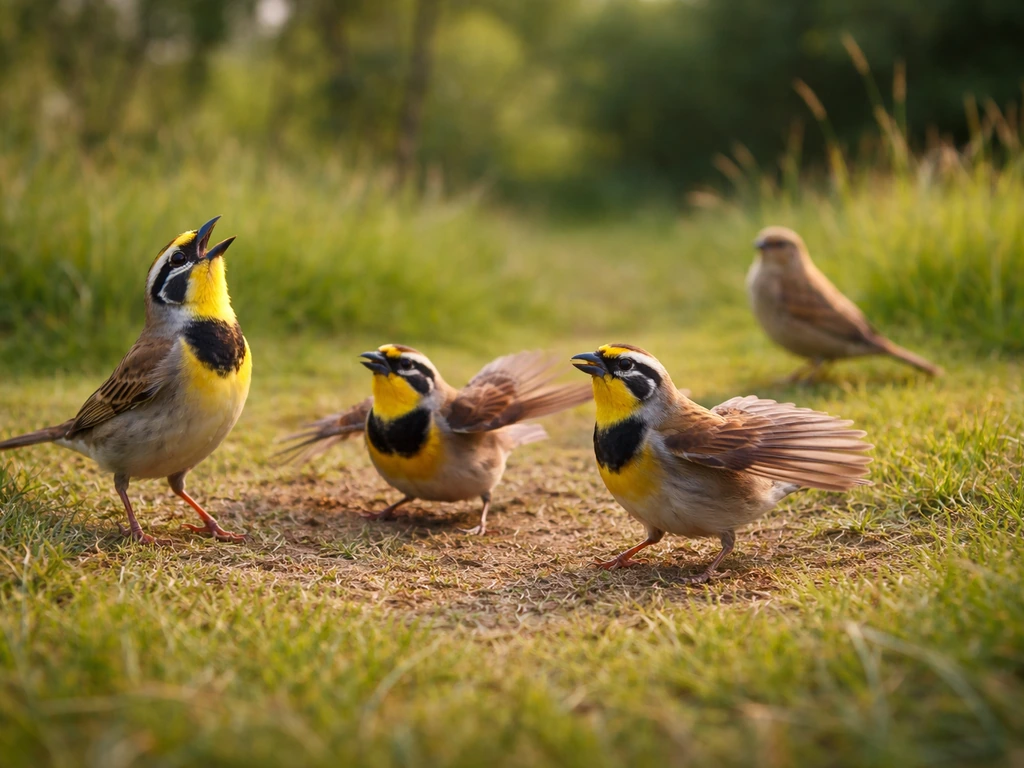
What "lek" actually means in bird behavior
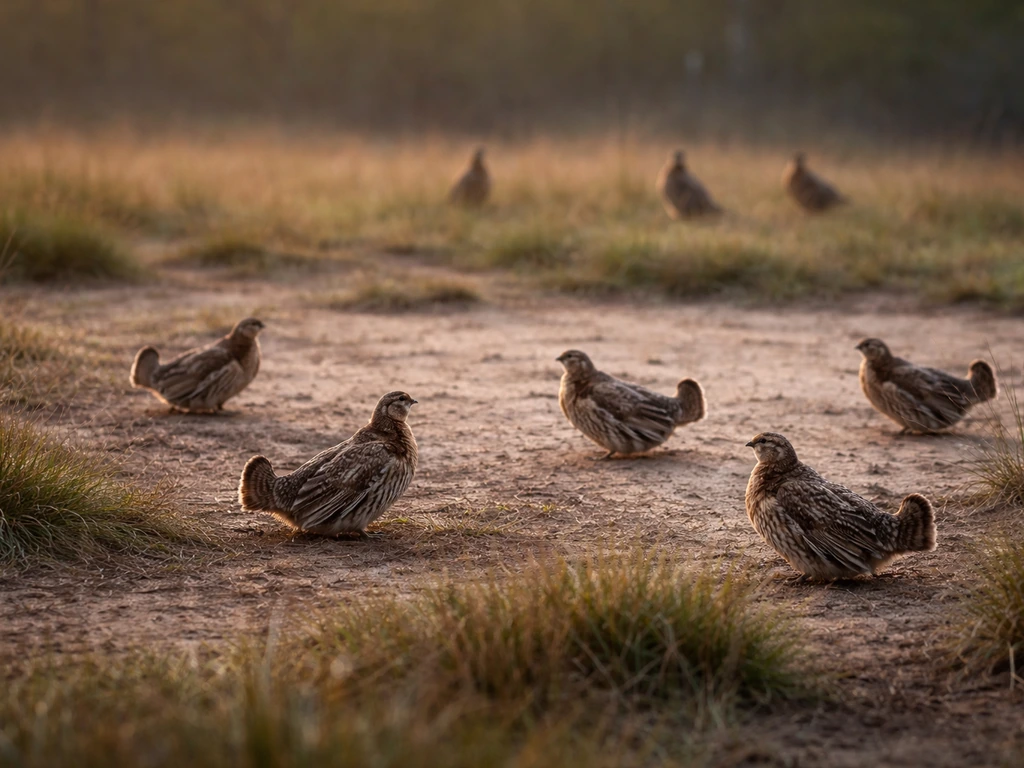
The Cornell Lab of Ornithology defines a lek as a traditional courtship area where many males of the same species gather to attract females for mating. Each male spends the bulk of his time defending a small personal territory within the lek, competing with the males around him. What makes a lek ecologically interesting is what it does not contain: no nesting sites, no food resources, nothing practically useful to the female. The only thing on offer is the males themselves, doing their utmost to impress.
Cambridge Dictionary describes it straightforwardly as a small area where particular birds come together to show mating behavior intended to attract a mate. The U.S. Fish and Wildlife Service adds that males deliberately choose sparsely vegetated areas so females can actually see the courtship displays without obstruction. A lek is essentially a stage, cleared and optimized for spectacle. The males arrive at the same location year after year, sometimes before dawn, and they do not leave until the display is finished.
One subtlety worth knowing: being at a lek and actively lekking are not the same thing. Cambridge's usage examples include a case where a male and female were both present at the lek site but no mating display actually occurred. So the lek is the place, while lekking is the activity. You can have the arena without the performance, which matters when you are trying to interpret what you saw in a photo caption or a documentary.
Which birds use leks and what their displays look like
Lekking behavior shows up across a surprisingly wide range of bird families. The most iconic examples in North America are the grouse, but the behavior spans continents and includes some of the world's most bizarre-looking courtship rituals.
Grouse: the classic lek birds of North America
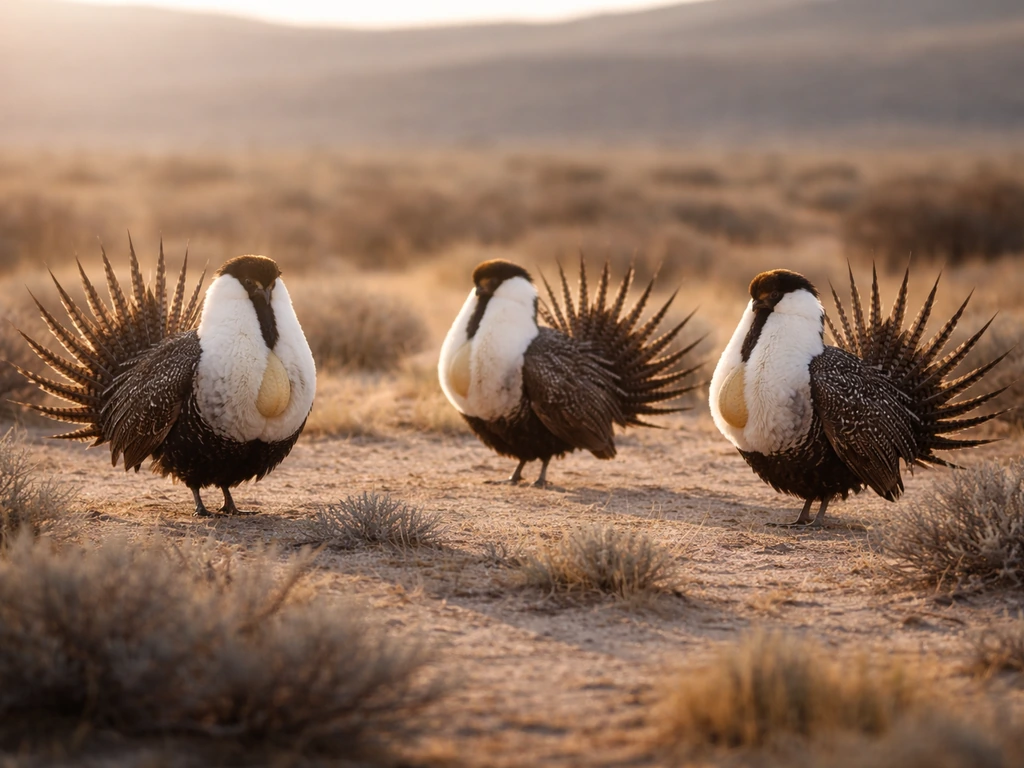
Greater sage-grouse are probably the most photographed lekking species in the U.S. Males strut across open, relatively flat ground from late February through May, inflating large yellow air sacs on their chests and producing a popping sound that can carry over a mile. Cornell Lab recommends arriving at a lek before dawn between March and May for the best chance of seeing the display. The reality of sage-grouse leks is ruthlessly competitive: many males may display simultaneously, but only one or two dominant males end up chosen by the majority of females.
Greater prairie-chickens have their own version, sometimes called a "booming ground" rather than a lek, though the terms are used interchangeably. Males produce a deep, resonant three-noted whooo/whooo/whoooooo call along with whoops and cackles to signal territorial possession. The Wildlife Society describes the collective sound as a "boom chorus," and the recommended viewing window runs from late March to early May. Sharp-tailed grouse add tail-feather rattling and inflated neck sacs to the repertoire, with females visiting the display grounds specifically to mate. The North Dakota Game and Fish explains that in spring sharp-tailed grouse are found on leks, where males display to attract mates, with display timing tied to dawn and dusk and a defined lek structure sharp-tailed grouse add tail-feather rattling and inflated neck sacs.
Manakins: the tropical lek specialists
In tropical forests, manakins take lekking in a completely different direction. Golden-collared manakins clear elliptical arenas roughly 30 by 50 centimeters on the forest floor, removing leaf litter to create a clean stage, then produce loud wing-snaps by rapidly lifting their wings. Wire-tailed manakins use an "exploded lek" arrangement, where individual males maintain their own cleared dance floors spread across a wider area, but the sites together still function as a collective display zone. National Geographic describes male manakins congregating in these small groups to show off their footwork during mating season, which is a fair summary of something that looks genuinely choreographed.
Other notable lekking species
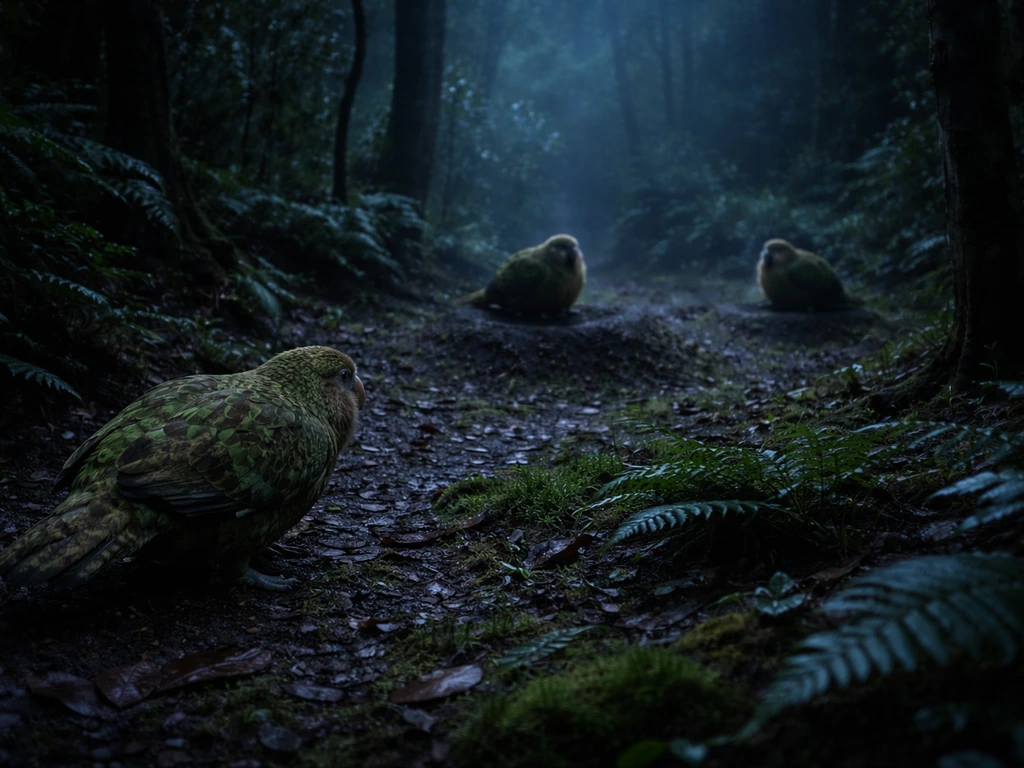
The kākāpō, the flightless parrot of New Zealand, uses a lek system in which males are spaced apart to signal with deep booming calls. When a female enters a male's court, he rocks side-to-side and produces clicking sounds with his beak. Ruffs, a shorebird species, display on leks where the arena often has a bare soil center and males may direct much of their display energy at rival males rather than directly at females. Birds-of-paradise, while not always classic lek species, use elaborate multi-trait displays evaluated by females across multiple visits, with Cornell researchers concluding that female preference actually drives the evolution of the most extravagant male traits.
How "lek" shows up in captions, articles, and searches (and why it's confusing)
A lot of the confusion around "lek bird meaning" comes from how the word appears in the wild. You might see it in a photo caption labeled "greater sage-grouse on a lek," in a nature documentary voiceover, in a wildlife agency report about "active lek sites," or in a birding forum post about going out to "watch the lek" before sunrise. In each of those contexts, lek is being used as a noun for the display location, but it can also appear as a verb ("the birds were lekking") or as an adjective ("lekking season"). That flexibility makes it easy to miss what it actually means on first encounter.
There is also a real spelling confusion problem. People searching for "lek bird" sometimes mean "lark" (as in the bird species or the phrase "a lark"), and occasionally "leak" or even "lark" have been typed as "lek" by accident. Others arrive at the term through birding slang searches. If you have been exploring bird-related jargon, you may have already run into terms like LBJ (little brown job, the nickname birders use for small, hard-to-identify brown passerines) or similar shorthand that populates birding communities. "Lek" looks like it could be that kind of abbreviation, but it is not. It is a standalone ecological term with its own etymology, borrowed into English from Scandinavian languages.
In conservation and regulatory documents, "lek" gets even more technical. The U.S. Fish and Wildlife Service uses formal criteria to confirm whether a site qualifies as an established or active lek over multiple years. A site with low observed strutting might not be officially counted as a lek until confirmed across seasons. That official definition rarely matches what a casual reader encounters in a magazine caption or a YouTube video title, which adds another layer of possible confusion about what the word is actually pointing to.
The symbolic and metaphorical meaning of leks in storytelling and bird symbolism
In bird symbolism, lekking behavior tends to represent themes of performance, competition, and the high stakes of desire. That same kind of word-meaning decoding comes up with “jaybird,” too, since its common usage can depend on context jaybird bird meaning. The lek is a space where nothing is hidden: every weakness and every strength is on public display in front of rivals and judges at the same time. That makes it a rich metaphor for any arena of open competition, from courtship to politics to artistic performance.
The specific symbolism that tends to attach to lekking birds follows a few consistent threads. Sage-grouse and prairie-chickens, with their dawn gatherings and boom choruses, carry associations with ritual, seasonal renewal, and the cyclical return to a sacred or traditional ground. Indigenous cultures in the Great Plains have long recognized prairie-chicken booming grounds as spiritually significant sites, and the dawn-dance timing connects the birds to themes of emergence and beginning. The male grouse's willingness to return, display, and endure rejection season after season carries a certain poignancy that storytellers and poets have found useful.
Manakins, with their cleared forest-floor stages and acrobatic choreography, tend to symbolize creative effort, skill, and the idea that artistry itself is a survival strategy. The image of a tiny bird meticulously sweeping its personal dance floor clean before performing is genuinely striking, and in narrative contexts it often stands for the lengths an individual will go to in order to be seen and chosen.
There is also a darker symbolic reading available: the lek as a space of radical inequality. In most lekking species, the top one or two males account for the vast majority of matings while the others display ceaselessly and gain almost nothing. That structure maps onto a range of cultural anxieties about competition, meritocracy, and the gap between effort and reward.
Sexual selection, competition, and why the lek evolved
The lek mating system is one of the most extreme products of sexual selection in the animal kingdom. Because the lek contains no resources females actually need for nesting, females visiting a lek are choosing purely on the basis of the male's qualities as a mate. That puts enormous selective pressure on male display traits, which is why lekking species tend to produce some of the most elaborate plumage, sounds, and behaviors in the bird world.
Research on female choice in lekking species consistently shows that mate selection is primarily female-driven and tends to be heavily skewed: a small number of dominant males win the majority of matings. A study of blue-crowned manakins found that lek size itself influences how biased that mating success becomes. For sage-grouse, research has suggested that females may prefer males who show greater display persistence, meaning the stamina and consistency of the strut matters as much as the visual spectacle.
Scientists have proposed several competing explanations for why leks form and persist. The "hotspot" model suggests males aggregate in areas females already pass through frequently. The "hotshot" model proposes that less competitive males cluster near dominant males (hotshots) to benefit from the females those hotshots attract, even at the cost of losing most contests. The "lek paradox" adds a deeper puzzle: if females consistently choose the same high-quality males, genetic variation in the population should erode over generations, yet it persists. That paradox is still an active area of research, and it is part of what makes the lek genuinely fascinating rather than just a mating curiosity.
What this means for the symbolism and metaphorical use of leks is that the lek is not just a spectacle of beauty. It is a high-stakes competition shaped by millions of years of female preference, a system where the rules are set by the choosers, not the performers.
How to figure out which "lek" you're looking at

If you came across the word "lek" somewhere specific and you are trying to work out exactly what it refers to, here is a practical way to narrow it down quickly.
- Check whether a species name is attached. "Lek" almost always appears alongside a specific bird in context ("sage-grouse lek," "prairie-chicken lek," "manakin lek"). If you see a species name, that is your anchor for looking up what the display actually looks like.
- Look for dawn or early-morning timing cues. Most classic lekking species display at or before sunrise. If a caption or article mentions arriving before dawn, a blind, or a very specific seasonal window (March through May is the most common for North American grouse), you are almost certainly dealing with a lek in the ornithological sense.
- Listen for words like "booming," "strutting," "dancing ground," or "display arena." These are the operational vocabulary of lekking behavior. "Booming ground" is functionally a synonym for lek when applied to prairie-chickens.
- If the context is metaphorical or literary, look for themes of public competition, performance before an audience, or cyclical ritual return to a traditional ground. Those are the symbolic fingerprints of lek imagery in storytelling.
- If you think you might be looking at a birding slang abbreviation rather than the ecological term, check whether the letters fit another birding shorthand. LBJ (little brown job) and similar terms are common enough to create confusion, but "lek" is never used as an abbreviation in standard birding usage.
- If you are looking at a conservation or wildlife agency document, "lek" is being used as a formal site designation. In that context, an "active lek" has a specific regulatory meaning confirmed over multiple observation seasons, which is narrower than how the term is used casually.
- When in doubt, search the species name plus "mating display" alongside "lek" to pull up the specific display behavior for that bird. Cornell Lab's All About Birds and Audubon's Field Guide are the fastest places to confirm what you are looking at.
If the "lek" you encountered was in a cultural, mythological, or indigenous storytelling context rather than a biology article, the species involved is usually the key. Prairie-chicken and sage-grouse leks have specific cultural significance in the Great Plains and the American West that differs from the tropical symbolism attached to manakin or bird-of-paradise displays. Identifying the bird first almost always unlocks the right cultural meaning.
One last thing worth knowing: if you ended up here because you were searching for a specific bird nickname or piece of birding slang that looked like "lek," it may be worth exploring other terms that live in similar territory. Birding culture has a long tradition of shorthand and informal labels for hard-to-identify birds, behaviors, and field conditions, and "lek" sits in an interesting overlap between technical ornithology and the kind of casual shorthand birders use every day.
FAQ
If I see birds “on a lek” in a caption, does that guarantee they were actually mating or that it was an active lek?
Not necessarily. A lek is best thought of as a display ground, but “active” usually requires evidence across a season (regular strutting or courtship behavior). Photos taken at the site can show attendance without the display happening at that moment, so captions can overstate what occurred at the exact time.
How can I tell the difference between a lek, a nesting colony, and a roost if I’m watching birds at dawn?
A lek typically lacks nesting sites and practical resources, so you often see repeated male display on open ground or cleared arenas, rather than birds carrying nesting material, frequent site-building, or sustained feeding. Roosts and nesting areas usually show different behavior patterns like congregation after dark, guard behavior around nests, or repeated food-related activity.
Why do some leks look like bare patches or cleared ground, especially in forests?
Male birds in several lekking species actively modify the immediate area to improve visibility and display performance. In some manakins, males clear leaf litter to create a clean stage, and in others, the arrangement spreads cleared dance floors across a wider zone, which can make the display look choreographed rather than random.
What does “lekking season” mean if the activity can happen only at certain times of day?
“Lekking season” usually refers to the breeding period when displays occur, not the full day. Many species display at specific windows, often before dawn or within a limited seasonal stretch, so seeing nothing at midday does not mean the site is inactive.
Can one bird be labeled as “the lek” in birding slang or storytelling, and how should I interpret it?
Yes. Some people use “the lek” to refer to the event, the location, or the whole breeding gathering. If the sentence mentions a place (where to go, watch, arrive before dawn), it is usually the display location. If it mentions action (were lekking, birds lekking), it refers to the display behavior.
Are leks always obvious and localized, or can they be spread out?
They can be both. Classic leks are focused on a small patch, but some systems are distributed, like “exploded” arrangements where individual males maintain their own cleared areas spread across a larger zone. That can make the “lek” harder to spot unless you scan over distance and watch for repeated arena use.
Do all lekking species rely on the same kinds of signals (sound versus visuals)?
No. Signals can be primarily visual (strutting, inflated sacs, feather display), primarily acoustic (booming calls, rattling), or mechanical (wing snaps, beak clicks). For example, manakins may rely heavily on wing-snaps, while ruffs can direct display energy more toward rival males, changing what you see as a viewer.
Why do scientists talk about “hotspot,” “hotshot,” and the “lek paradox,” and does that change what the behavior looks like?
Those terms explain hypotheses for how and why leks form and why certain mating patterns persist. They do not alter what you observe directly, but they can affect expectations about spacing, competition intensity, and how strongly mate success concentrates in a small number of males.
If I mistyped “lek” when I meant “lark” or “leak,” how can I quickly confirm which term I’m actually dealing with?
Check context cues. If the surrounding text discusses mating displays, courtship areas, or “leks” as arenas, it is the behavior. If it discusses a bird species named “lark,” songs, or taxonomy, it is the species. If it appears in legal or environmental contexts, “leak” is more likely. Spelling alone is unreliable because search results can cross-mix the terms.
Jury Bird Meaning: Symbolism, Origins, and How to Tell
Understand jury bird meaning, its symbolism for judgment or verdicts, possible origins, and how to confirm context.