
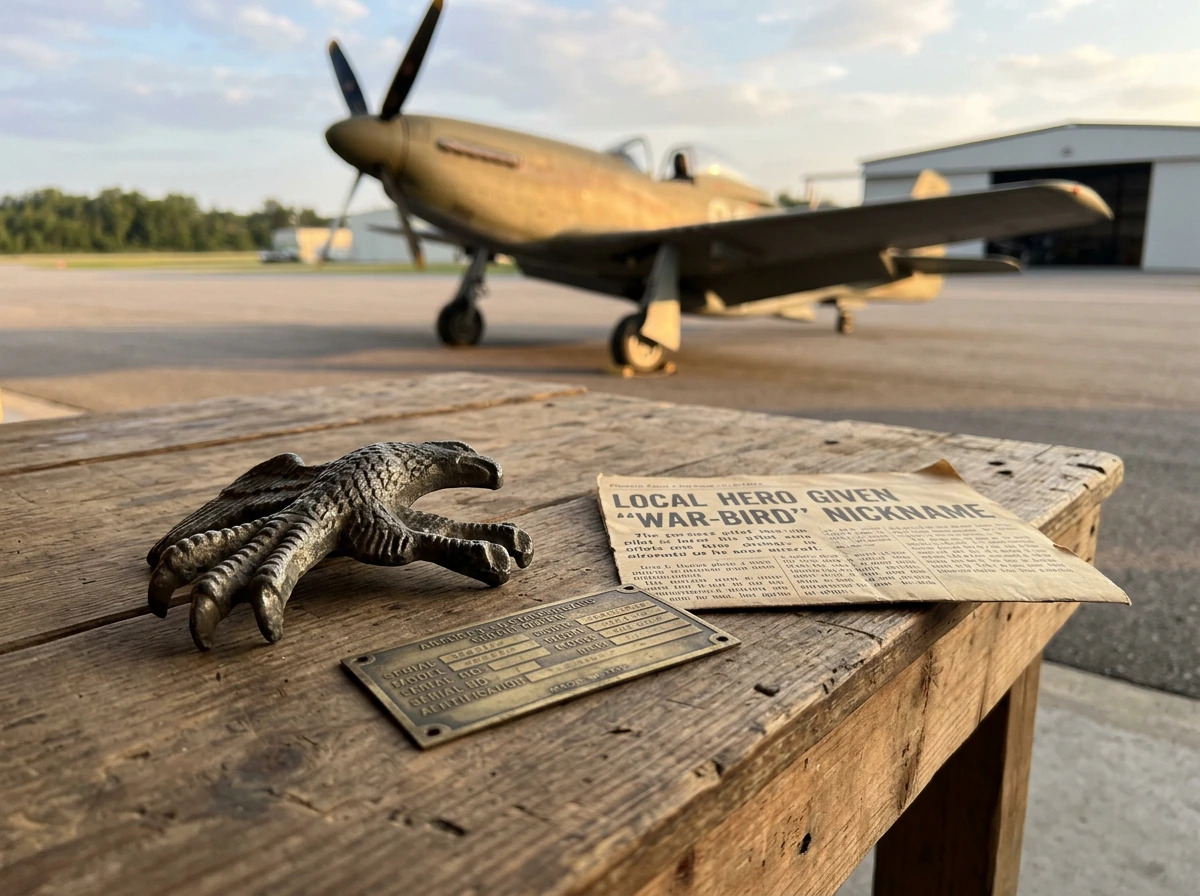
"“War bird” most commonly means one of two things: a vintage military aircraft restored and flown by civilians, or a metaphorical label for a fierce, battle-hardened fighter or warrior." most commonly means one of two things: a vintage military aircraft restored and flown by civilians, or a metaphorical label for a fierce, battle-hardened fighter or warrior. The one-word spelling "warbird" almost always points to the aviation world. The two-word "war bird" tends to show up in figurative, literary, or historical writing. Knowing which sense applies in a given sentence is simpler than it sounds once you know what to look for.
War Bird Meaning: Literal, Slang, and Historical Uses

Marcus Whitmore
23 Mar 2026
What "war bird" means in plain English
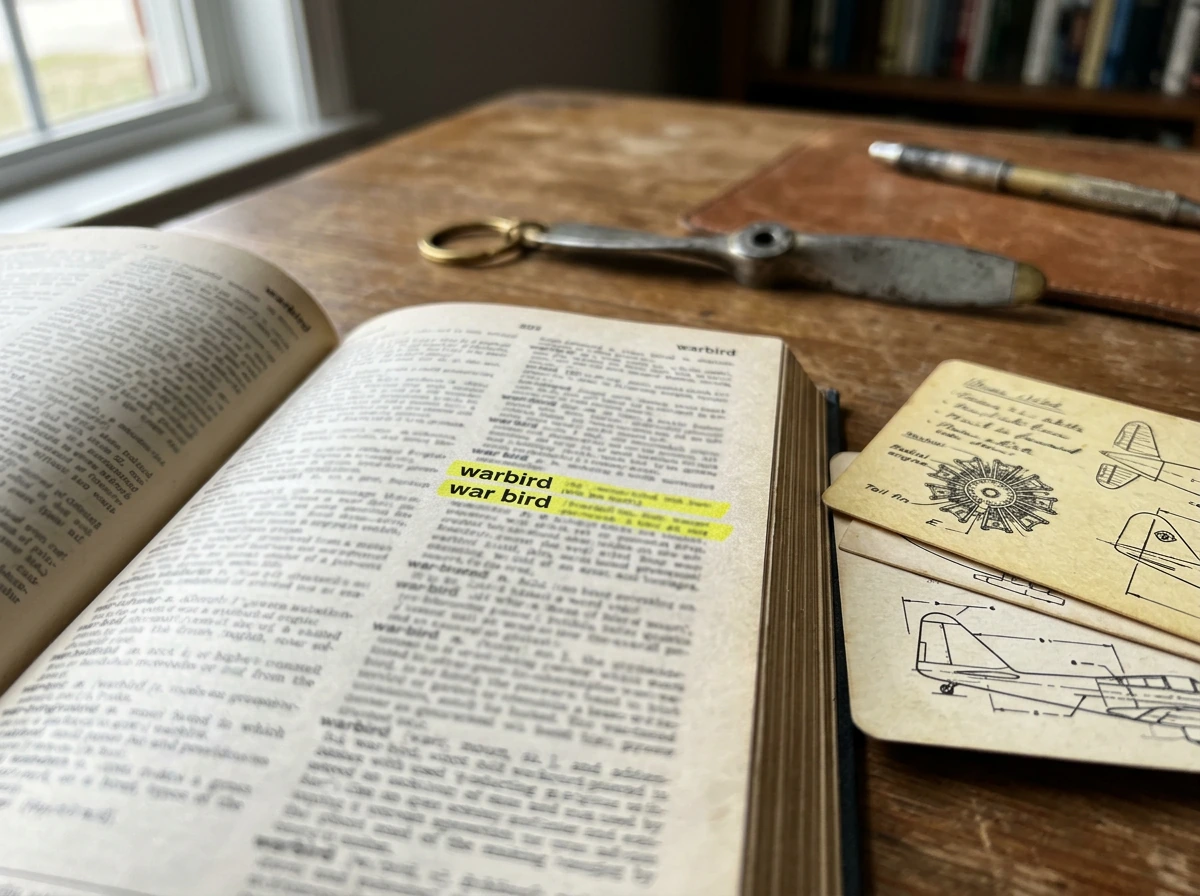
The most dictionary-official definition belongs to "warbird" (one word). Merriam-Webster gives it two aviation senses: a military airplane, and a crew member of a military airplane. Collins narrows it further to "a vintage military aeroplane," which is how most people use the word today, especially in the context of airshows and restoration projects. Wikipedia backs this up, describing warbirds as any vintage military aircraft now operated by civilian organizations and individuals, noting the term originally pointed specifically to piston-driven WWII-era planes but has since expanded to include jets and helicopters.
There is no single official governing definition, as Plane & Pilot magazine has pointed out directly, but the working consensus is clear: a warbird is a retired military aircraft that has been preserved, restored, and made airworthy by civilian owners. The Experimental Aircraft Association (EAA) adds a useful technical boundary, noting that the term applies to aircraft that actually saw military service, not civilian planes painted to look military. EAA’s working definition is that a warbird is an ex-military aircraft that is restored or original and operated for historical preservation or living history, and that non-military aircraft merely painted in military colors are not warbirds EAA adds a useful technical boundary, noting that the term applies to aircraft that actually saw military service, not civilian planes painted to look military.. A P-51 Mustang flying at an airshow is a warbird. A homebuilt replica painted to look like one is not.
Merriam-Webster also lists a third, more obscure sense: in some dialects, "warbird" is used as a name for the scarlet tanager.
War bird as slang: how people actually use it
Outside of aviation, "war bird" operates as an informal label for a person associated with fighting, aggression, or battle. Think of it as a close cousin to "war hawk" (a political metaphor for someone who favors military action) but applied more personally, often as a nickname or a compliment. but applied more personally, often as a nickname or a compliment. A journalist might call a seasoned boxer a war bird. A novelist might use it to describe a veteran soldier who has survived too many campaigns. It carries connotations of toughness, predatory instinct, and endurance rather than just violence.
The phrase has also shown up in media titles. The Grand Comics Database records a "War Bird" comics feature with a first publication date of 1940, which tells you something interesting: even before the modern aviation hobbyist sense fully solidified, "War Bird" was being used as a dramatic, evocative name. That pattern continues today in video games, military unit nicknames, sports team names, and superhero aliases. When you see it capitalized and used as a proper noun, it is almost certainly a title or name rather than a literal description.
The hyphenated or spaced form "war-bird" also appears in older texts, where it simply meant a bird associated with war in a poetic or symbolic sense, long before the aviation hobby existed. A digitized historical text about "Old Abe," the live war eagle mascot carried by a Wisconsin regiment during the Civil War, uses the phrasing "the war-Bird" in exactly this way. Context and spelling together are your biggest clues.
Birds and war: the cultural history behind the phrase

The connection between birds and warfare runs deep across nearly every human culture, which is part of why "war bird" resonates as a phrase even when people hear it for the first time. Birds of prey, especially eagles and hawks, have been linked to gods of war, military power, and victory across Greek, Roman, Celtic, and Norse traditions.
The Roman aquila (eagle) was carried as the sacred standard of every legion, functioning almost as a religious object. Losing the aquila in battle was considered catastrophic. In Greek mythology, the eagle was the bird of Zeus and appeared as an omen of divine favor in war. Encyclopedia.com notes that, as birds of prey, eagles and hawks were specifically identified with gods of war and supernatural power across classical cultures.
Crows and ravens bring a darker layer to the symbolism. In Irish mythology, Badb is a war goddess who takes the form of a crow. Her full name is sometimes given as Badb Catha, which translates directly as "battle crow." She would appear on battlefields as an omen of death or fly above armies to influence the outcome of fighting. European folklore more broadly ties crows and ravens to death, battle, and plague, though this varies significantly across cultures. In parts of East Asia, ravens carry entirely different symbolic weight.
What all of this history does is explain why birds feel like such natural stand-ins for warriors and military power in language. They move fast, they hunt, they are viewed as untameable, and many species are genuinely predatory. When someone calls a fighter a "war bird," they are borrowing from thousands of years of bird-as-warrior symbolism, whether they know it or not.
Bird phrases that get mixed up with "war bird"
A few related expressions come up in searches alongside "war bird" and are worth separating out clearly.
- War hawk: This is a political metaphor for a person or politician who favors aggressive military action. It uses the hawk's reputation as a predator to describe someone's ideological stance. It is not the same as warbird, which is about aircraft or personal toughness.
- Hawk (on its own): As covered in more detail in the site's article on hawk bird meaning, a hawk in everyday language often just means an actual bird of prey. The political "hawk" sense is a specific metaphor that requires context to confirm.
- Storm bird: This phrase points in a completely different direction. "Storm bird" shows up as a name for various species and as a proper noun in titles, but it does not carry war symbolism or aviation meaning. It is covered separately in the storm bird meaning article.
- Snow bird: Also unrelated to war. A snowbird in American slang refers to someone who migrates south for winter. There is no battle or aircraft connection. See the what does snow bird mean article for more.
- Loon: Another bird that attracts search confusion. The loon is simply an aquatic diving bird (genus Gavia). There is no war or combat meaning attached to it, though "loony" as a slang term for eccentric has a loose etymological connection to the bird's strange call.
The broader takeaway is that "war" + "bird" is a specific compound with a fairly stable meaning, while other bird phrases involving weather, geography, or behavior mean entirely different things. The confusion usually comes from assuming any dramatic-sounding bird phrase must be related.
How to figure out which meaning applies in a specific sentence
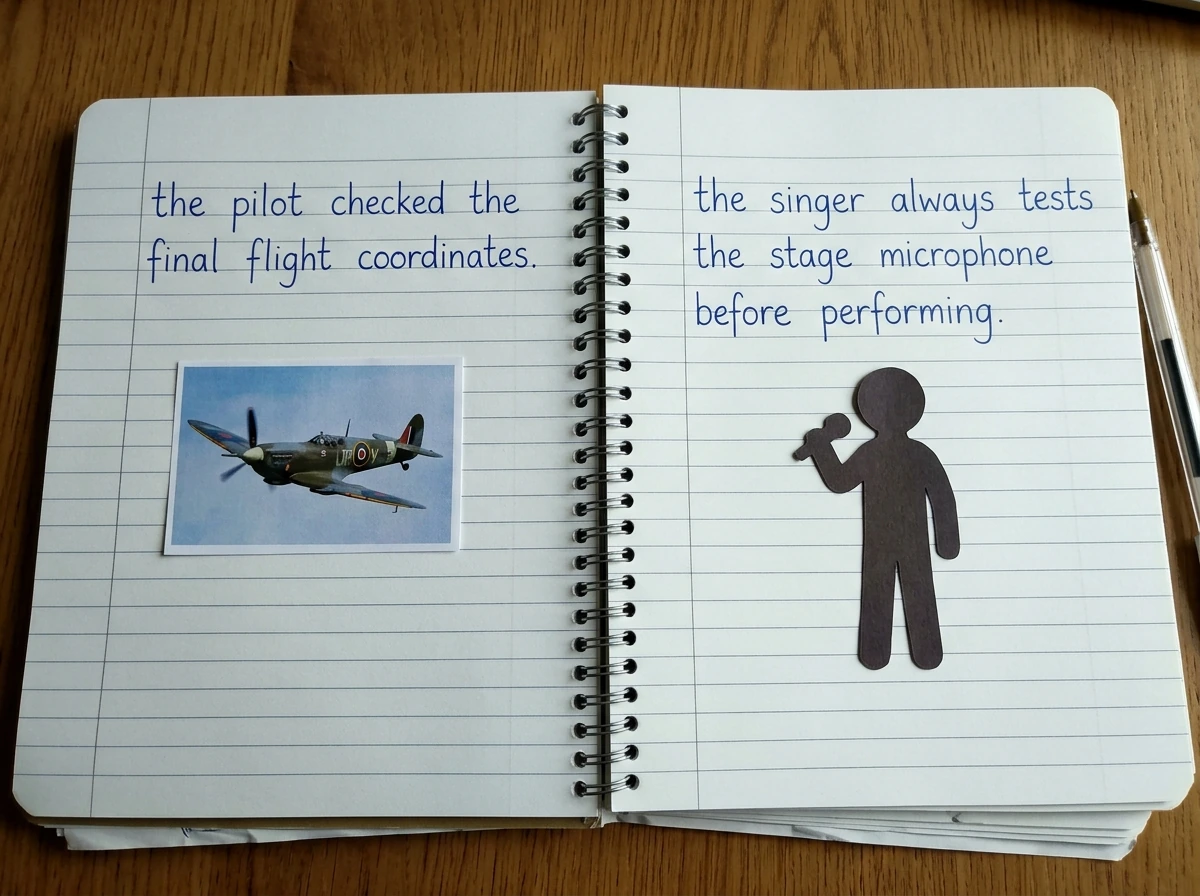
The good news is that context almost always gives the answer away. Here is how to read it.
- Check the spelling first. "Warbird" (one word) is almost always the aviation term: a vintage military aircraft. "War bird" (two words) is more likely to be metaphorical, poetic, or used as a nickname. The hyphenated form "war-bird" usually appears in older or literary texts.
- Look for aviation vocabulary nearby. Words like restored, flyable, airworthy, airshow, WWII, fighter plane, bomber, cockpit, or specific aircraft model names (P-51, Spitfire, B-17) are strong signals that the aviation sense is intended.
- Look for people-focused language. If the sentence is describing a person's personality, history, or reputation (especially in combat, sports, or competitive contexts), "war bird" is almost certainly being used metaphorically to mean a tough, battle-tested individual.
- Check if it is a proper noun. Capitalized "War Bird" used as a name, title, call sign, or brand is its own category. It borrows the emotional weight of the phrase without committing to either the aviation or metaphorical sense.
- Consider the historical period. Older texts (pre-1940s) using "war-bird" are usually invoking symbolic or poetic imagery, not the aviation hobbyist community that developed later. The EAA traces serious warbird preservation back through military aviation history, but the civilian hobby culture around collecting and flying restored military aircraft really grew after WWII.
- When in doubt, ask what job the phrase is doing in the sentence. Is it describing a machine? Use the aviation definition. Is it describing a person's character? Use the metaphorical definition. Is it a name? Treat it as a proper noun with borrowed symbolism.
Quick reference: warbird, combat bird, and related terms
These are the main variants and near-synonyms you will encounter, along with what each one typically means.
| Term | Most common meaning | Typical context |
|---|---|---|
| Warbird (one word) | Vintage military aircraft, restored and flown by civilians | Aviation, airshows, collectors, museums |
| War bird (two words) | A fierce warrior or fighter; also older poetic usage for a bird of war | Literature, sports, military nicknames, historical texts |
| War-bird (hyphenated) | Poetic or symbolic: a bird associated with battle | Historical texts, literary writing, 19th-century sources |
| War Bird (capitalized) | A title, name, call sign, or brand | Comics, media, military unit names, fictional characters |
| Combat bird | Informal variation meaning the same as warbird in aviation context | Casual aviation conversation, journalism |
| War hawk | A person who favors aggressive military or political action | Politics, foreign policy commentary |
| Battle crow / Badb Catha | A war deity in crow form from Irish mythology | Mythology, symbolism, cultural studies |
If you are researching the phrase for writing purposes, the safest move is to use "warbird" (one word) when referring to aircraft, and "war bird" or a more specific phrase when writing metaphorically about a person. A r/aviation thread about warbird ground crews also captures hobbyists debating what counts as “original,” including the difference between newly constructed aircraft and authenticity backed by historical logs and data blank" rel="noopener noreferrer">what counts as “original” in warbird restoration. That distinction alone will prevent the most common mix-ups. And if you run into any bird-related slang or symbolism that still feels murky, exploring how related terms like hawk and storm bird meaning are used in language are used in language can help you build a clearer picture of how birds function as cultural shorthand across all kinds of human experience.
FAQ
How can I tell quickly whether “war bird” is about an aircraft or a person in a sentence?
Check for aviation signals like aircraft names, airshows, restoration, crew, or flight status. If the sentence mentions fighting, age, experience in combat, boxing, or “veteran” traits, it is almost certainly the metaphorical “tough fighter” sense.
Is a replica or fictional “WWII-style” plane ever called a warbird?
Usually no. A key boundary is whether the aircraft actually saw military service, not just whether it is painted and styled to look like one. Many communities reserve “warbird” for preserved, airworthy ex-military aircraft.
Can “warbird” be used for any old military aircraft, like from the Cold War or Vietnam era?
Yes, in common civilian usage it can. The term began with WWII piston-era associations, but it has broadened to include later aircraft types, including jets and helicopters, as long as they are preserved and operated by civilians.
What does it mean if someone uses “warbird” to refer to a whole crew rather than the plane?
In some dictionary senses, “warbird” can label a crew member associated with a military aircraft. In everyday writing, that usage is less common than the “retired military aircraft preserved by civilians” meaning, so look for context like squadron roles or crew references.
Why do some texts write it as “warbird” and others as “war bird” or “war-bird”?
Spelling and hyphenation usually track the sense. One word, warbird, most often points to aviation. Two words, war bird, is more likely to be figurative or literary, while older hyphenated usage can be purely symbolic (a bird linked to war imagery).
Is “war bird” ever used as an insult or purely negative label?
It can be either, depending on tone. The underlying idea is toughness and battle experience, so in many contexts it is a compliment or character label, but in a conflict-heavy context it can function more like a taunt for someone seen as aggressive.
If I want to use the term in writing, what’s the safest choice of wording?
For aircraft, use “warbird” (one word) and specify the type if needed (for example, “P-51 warbird”). For people, use “war bird” (two words) or a more direct metaphor like “battle-hardened fighter,” especially if you want to avoid the aviation interpretation.
What if I’m dealing with a title, like “War Bird” in a game or comic?
Capitalization and proper-noun placement usually indicate a title. In that case, do not interpret it literally, and treat it as a branding choice unless the plot explicitly discusses aircraft or metaphorical fighters.
Are there any non-aviation or non-metaphor meanings I should watch for?
Yes. In some dialect contexts, “warbird” can be used as a name for the scarlet tanager. That is niche, but if the sentence is about birds, species, or nature watching, it is worth considering this sense.
Next Article
Loon Bird Definition and Meaning: Species ID and Symbolism
Learn the loon bird definition, how to identify loons by sight and sound, plus cultural symbolism and metaphor meanings.