The quick answer: what snowbird means

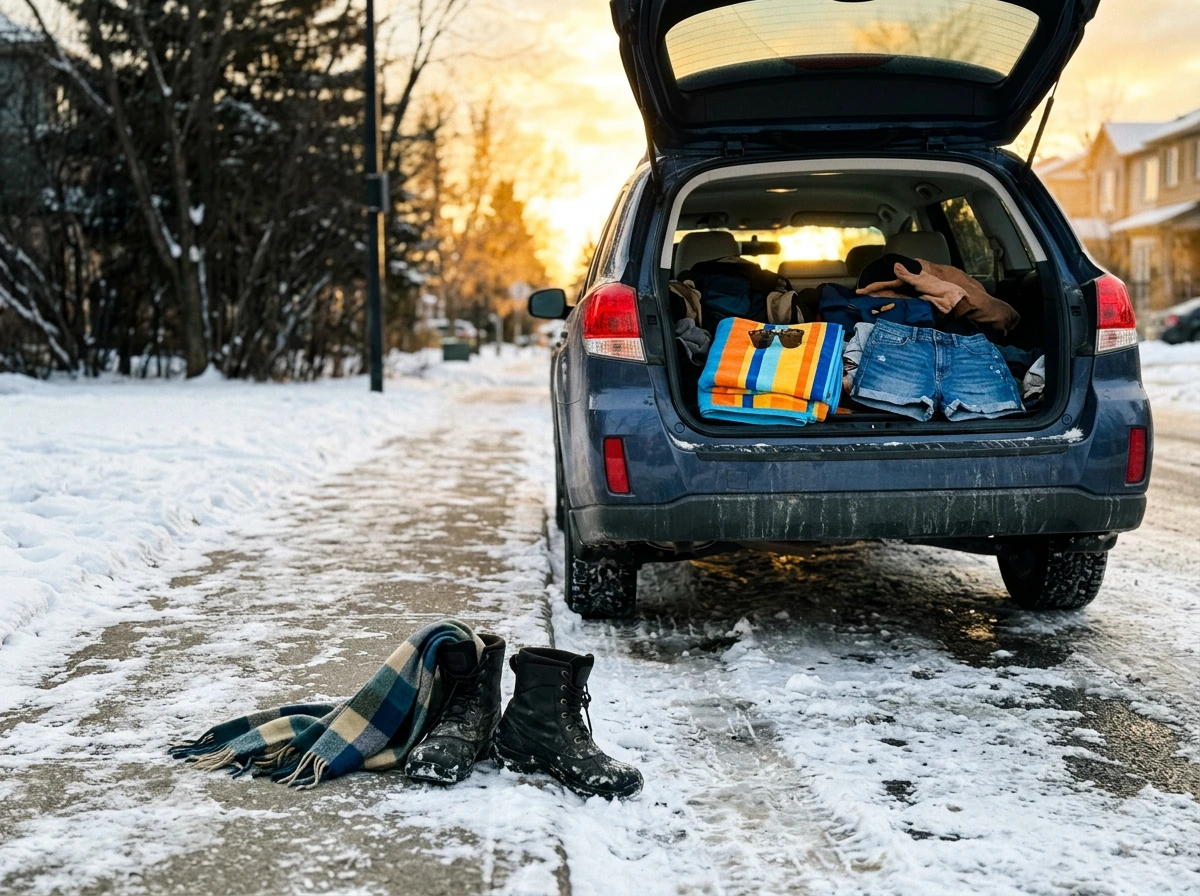
A snowbird is a person who leaves a cold northern region every winter and relocates, temporarily, to somewhere warm. That's the core meaning, and it's the one you'll run into most often in everyday conversation, news articles about housing markets, and travel features. Cambridge Dictionary puts it plainly: snowbirds are people (often retirees) who "flock" to warmer places in winter, forming whole communities in sunny southern destinations. The word works as both a noun ("She's a snowbird") and, increasingly, a verb ("They're snowbirding in Arizona this year"). It's casual, slightly affectionate, and widely understood across North America.
What it actually means to call someone a snowbird
When someone calls a person a snowbird in conversation, they mean that person follows a predictable seasonal pattern: they live in a colder northern state or Canada for part of the year, and then head south for the winter months. blank" rel="noopener noreferrer">Wikipedia defines the term exactly that way, describing a snowbird as someone who migrates from colder northern parts of North America to warmer southern locales during winter. The term carries almost no negative connotation. If anything, it's used with a bit of warmth and humor, nodding to the fact that yes, these folks are doing exactly what migratory birds do.
You'll hear it used in a few common conversational patterns. Someone might say "My parents are snowbirds, they leave for Florida every November" or "The town gets quiet in December when the snowbirds fly south." Local businesses in warm-weather destinations use it all the time: "snowbird specials," "snowbird parking permits," "the snowbirds are back." Kiplinger uses the term in real-estate and insurance coverage to describe a recognizable economic force. Forbes uses it to track seasonal travel trends. It's fully mainstream language at this point, not obscure slang.
What a snowbird person actually looks like day to day
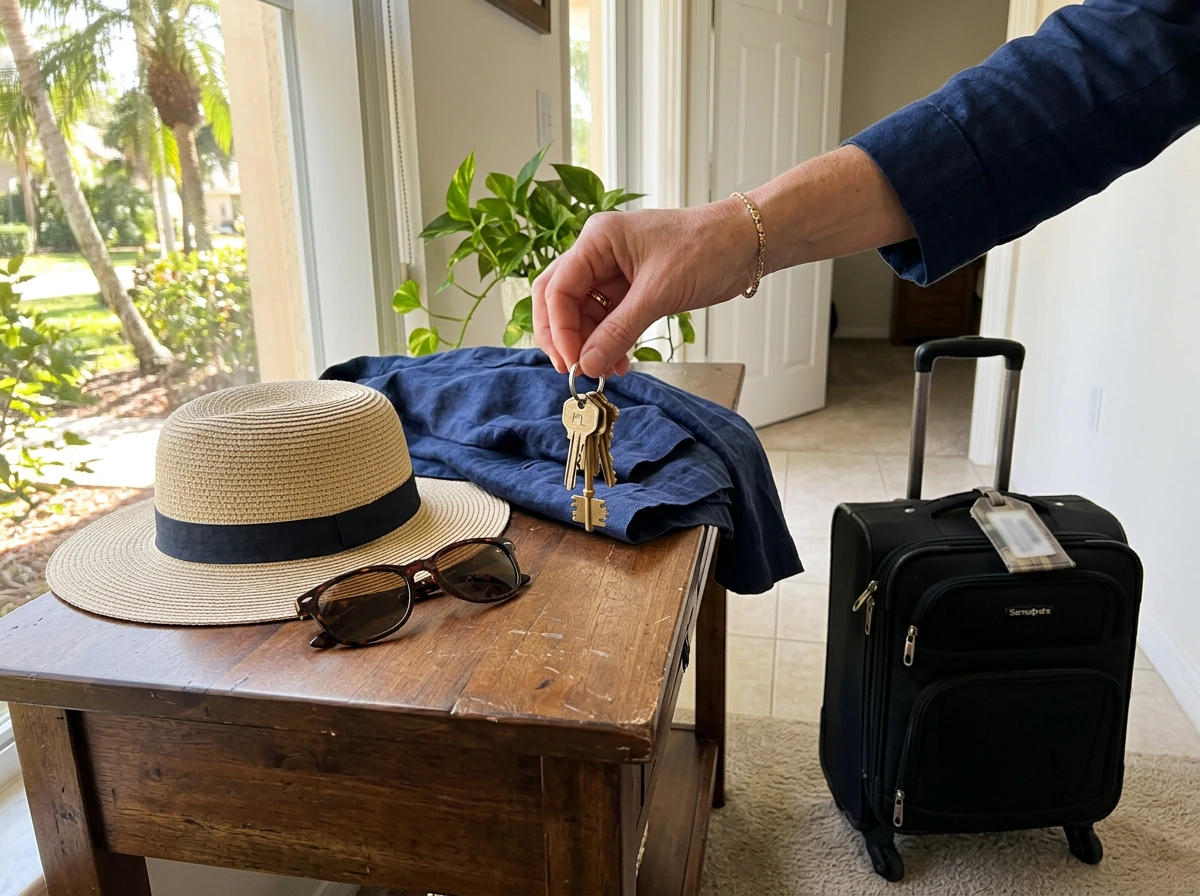
If you're trying to picture what the snowbird lifestyle looks like in practice, here are the hallmarks. Most snowbirds are retirees from colder northern states (think Minnesota, Michigan, New York, or Ohio) or from Canada. They typically head to the Sunbelt: Florida and Arizona are the two most popular destinations, with parts of Texas, California, and the Carolinas rounding out the list. The typical stay runs three to six months, according to Kiplinger, though some do shorter trips of a few weeks to a month.
In terms of housing, snowbirds usually either own a second home or condo in their winter destination, rent a seasonal apartment or house, or travel in an RV and stay at snowbird-friendly campgrounds and RV parks. That last option has grown significantly, with entire RV communities built around the annual arrival of seasonal travelers. The economic footprint is real: local rental markets, restaurants, healthcare providers, and event calendars in places like Naples, Florida all visibly shift around snowbird season.
The timing is fairly consistent. Departures from northern homes tend to cluster in late October through early November, according to the Tulsa Health Department's travel health guidance. Peak snowbird season at warm destinations runs December through February. Return trips north typically happen in March or April, once the threat of harsh weather fades. Campspot describes the arrival window as late October through early January, with the late-December holidays often drawing the biggest crowds.
- Typically retired or semi-retired, often 60s or older
- Comes from a colder northern U.S. state or Canada
- Winters in Florida, Arizona, or another Sunbelt destination
- Stays for roughly three to six months (sometimes less)
- Owns or rents a second home, condo, or uses an RV
- Leaves in late October or November, returns in March or April
- Follows the same pattern year after year, often for decades
Where the word comes from: the bird-migration analogy
The metaphor here is pretty on the nose, which is probably why it stuck. Many bird species migrate south each fall to escape cold northern winters, then return north in spring. Snowbirds, the human kind, do exactly the same thing on a predictable annual schedule. The word borrows that migratory pattern and applies it to people, and it works because the behavior is genuinely parallel: same timing, same directional logic, same return journey. It's the same imaginative leap that gives us other bird-based human labels, like the way "loon" gets applied to eccentric personalities, or how "hawk" gets used to describe aggressive political figures
The term's mainstream traction built slowly. UBC's Dictionary of Canadian English notes that the usage grew noticeably in the late 1970s and really took off in the 1990s and 2000s, in part through media coverage of the growing retiree migration trend and in part through cultural touchstones, including Anne Murray's famous song "Snowbird," which gave the word additional cultural visibility in Canada and beyond. By the time real-estate markets started catering specifically to seasonal residents, "snowbird" was already a settled, commonly understood term.
Other things called "snowbird" that can trip you up
Here's where it gets a little interesting, because "snowbird" and "snowbirds" show up in a few genuinely different contexts. If you see the word and the seasonal-traveler meaning doesn't quite fit, one of these is likely what's going on.
| What it refers to | Context clues | Quick tell |
|---|
| Seasonal winter traveler (the main slang meaning) | Housing, rentals, Florida/Arizona, winter travel, retirees | Travel timing, second homes, Sunbelt destinations |
| Dark-eyed junco (a real bird species) | Birdwatching, wildlife articles, backyard feeders | Scientific or species names mentioned nearby |
| Snowbird ski resort in Utah | Skiing, lift tickets, tram, mountain terrain, lodging | Words like "slopes," "powder," "tram," or "ski" |
| Canadian Forces Snowbirds (aerobatic team) | Airshows, military aviation, formation flying, RCAF | Words like "jets," "maneuvers," "airshow," "squadron" |
| Historic slang (Coney Island winter bathers) | Historical texts, slang dictionaries, early 20th century | Old newspaper context, coastal New York, cold-water swimming |
The bird-species meaning is worth a brief note on its own. "Snowbird" is a traditional folk name for the dark-eyed junco, a small sparrow-like bird common across North America that actually does appear in colder months (the reverse of the human snowbird, somewhat amusingly). Birdwatchers still use the nickname, and local newspapers in New England or the Pacific Northwest will occasionally run wildlife pieces about "snowbirds" arriving at feeders, meaning juncos, not retirees. UBC's dictionary specifically flags this, noting that the animal classification sense is older and largely distinct from the modern human-travel slang.
The Canadian Forces Snowbirds are perhaps the most prominent non-traveler use you'll encounter in headlines. The 431 Air Demonstration Squadron, officially known as the Snowbirds, is Canada's military aerobatic team and performs at airshows across North America. If you see "Snowbirds" in a headline alongside words like "formation," "jets," or "airshow," that's what's being referenced, not seasonal travelers. Similarly, Snowbird (one word, capitalized) is a well-known ski resort in Utah, and any context involving skiing, terrain, or mountain lodging points there.
In most cases, context does all the work for you. But if you want a reliable decision process for telling the seasonal-traveler slang apart from the other uses, here's how to read the situation.
- Check the surrounding geography: If Florida, Arizona, the Sunbelt, or Canada are mentioned, you're almost certainly looking at the winter-traveler meaning.
- Look for seasonal timing language: Phrases like "snowbird season," "winter months," "heading south for the winter," or specific months (November through March) lock in the seasonal-traveler sense.
- Spot the housing or travel context: Words like condos, second homes, RV parks, seasonal rentals, or winter leases are reliable markers of the lifestyle slang.
- Check for birdwatching language: If you see species names, feeders, field guides, or wildlife photography, the writer almost certainly means the dark-eyed junco, not a retiree.
- Look for aviation or military markers: "Snowbirds" next to airshow, squadron, RCAF, or formation instantly signals the Canadian Forces aerobatic team.
- Look for skiing or resort language: Snowbird next to ski runs, powder, tram, or Utah points to the ski resort.
- When in doubt, look up the surrounding article topic: A piece about real-estate markets, travel trends, or retiree finances will use "snowbird" in the seasonal-traveler sense every time.
If you want to use the term yourself, the safest, most natural way to do it is in the context of someone's seasonal travel pattern: "My aunt is a snowbird, she's already in Tucson until April." You can also use it as a loose adjective ("snowbird season," "snowbird crowd") or even as a verb in casual conversation ("They've been snowbirding for fifteen years"). The word is flexible, widely recognized, and carries a friendly, slightly playful tone that makes it easy to drop into everyday conversation without overthinking it.
It's a genuinely satisfying piece of language when you think about it. Like the expressions explored elsewhere on this site, Like the expressions explored elsewhere on this site, whether you're looking at how "storm bird" captures foreboding in folklore or how "hawk" got borrowed as a political metaphor, "snowbird" does exactly what the best bird-based language does: it borrows something observable from the natural world and maps it cleanly onto human behavior. or how "hawk" got borrowed as a political metaphor, "snowbird" does exactly what the best bird-based language does: it borrows something observable from the natural world and maps it cleanly onto human behavior. In this case, the fit is almost perfect. People really do migrate south in winter, really do return in spring, and really do form seasonal communities that shape the places they land, just like the birds that inspired the name.