When people search for 'hawk bird meaning,' they're usually after one of two things: what a hawk actually is as a bird, or what it represents symbolically in culture, language, and everyday life. Often, they want both at once. The short answer is that hawks symbolize sharp vision, focused awareness, power, and often a kind of watchful guardianship. But that summary barely scratches the surface, because hawks show up everywhere from ancient Egyptian mythology to modern political slang, and the word itself is slippery enough that people regularly confuse hawks with eagles, falcons, and other raptors entirely. Let's untangle all of it.
Hawk Bird Meaning: Literal Facts, Symbolism, and Idioms

Marcus Whitmore
23 Mar 2026
What a hawk actually is (and what it isn't)
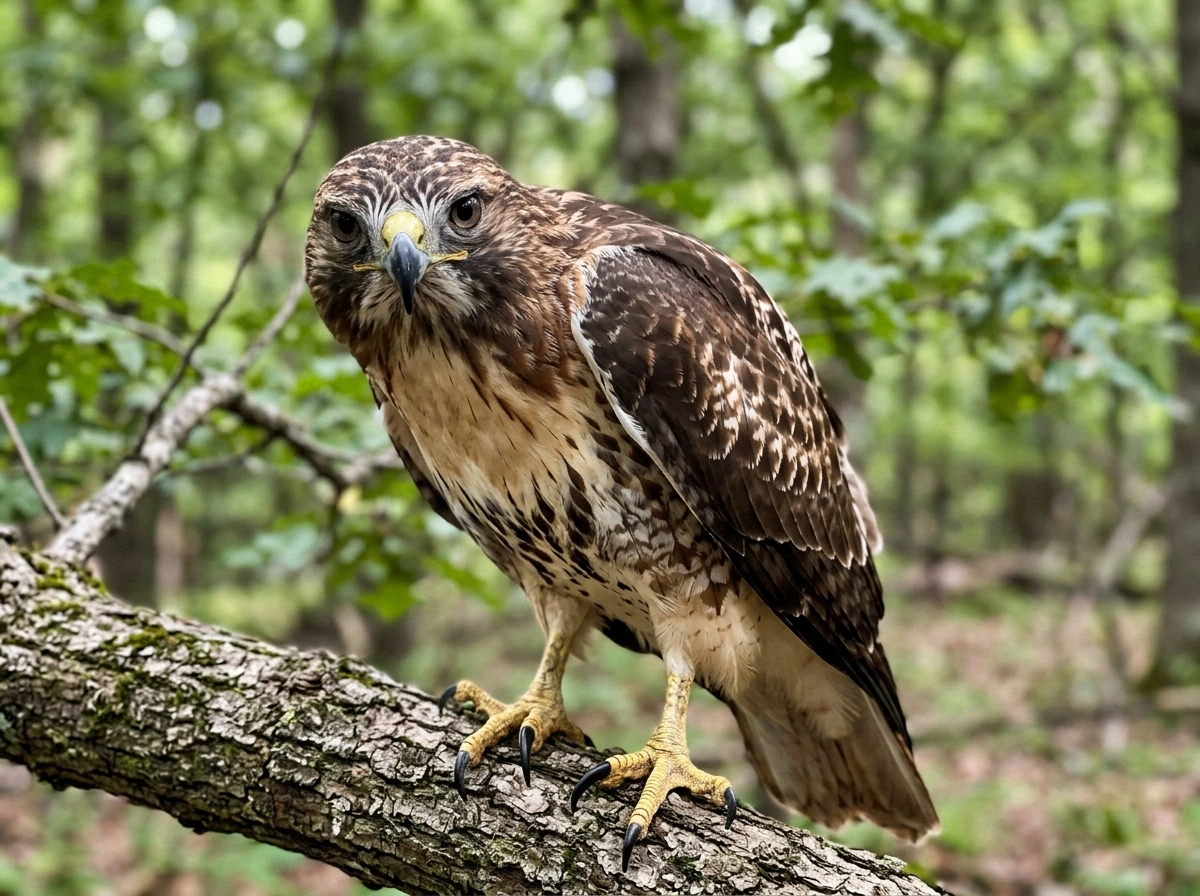
A hawk, in the strictest sense, refers to small to medium-sized birds of prey in the genus Accipiter, sometimes called 'true hawks' or 'bird hawks.' That group includes familiar species like the sharp-shinned hawk and Cooper's hawk. But in everyday usage, the word 'hawk' gets applied much more loosely across the broader family Accipitridae, which also includes kites, buzzards, and harriers. To make things even messier, some people casually call certain falcons 'hawks' too, even though falcons belong to a completely separate family, Falconidae, and are actually more closely related to parrots than to eagles.
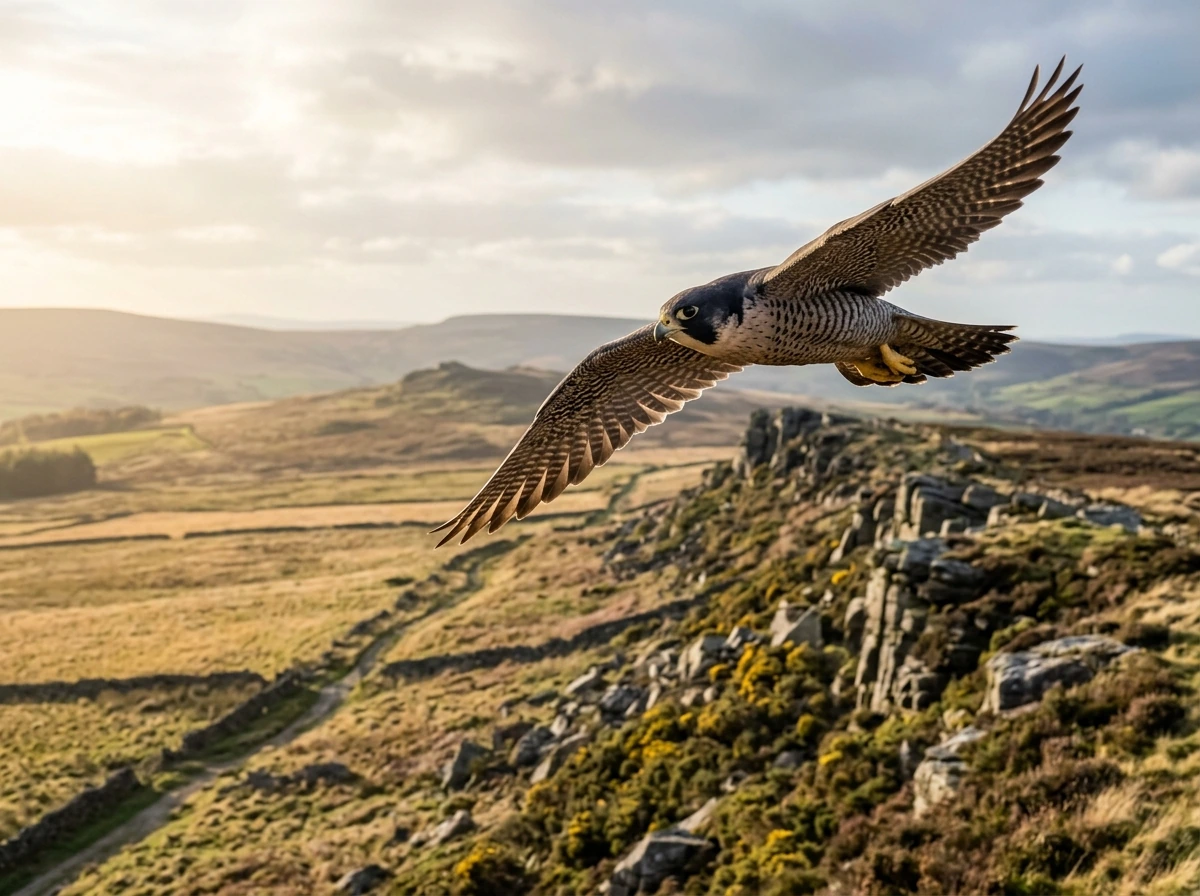
Why does that distinction matter for meaning? Because when you're trying to interpret the symbolism of a bird you saw, or understand what a saying really implies, you want to make sure you're talking about the same creature. Eagles are bigger and often carry different symbolic weight (majesty, nationhood) than a mid-sized accipiter hunting songbirds in a suburban backyard. Falcons, with their long tapered wings and shallow elastic wingbeats, have their own rich tradition of symbolism in falconry cultures. A hawk is generally the middle-ground bird of prey: agile, precise, a fast and focused hunter rather than a soaring icon.
Behaviorally, hawks tend to catch prey by swiftly pursuing an animal as it tries to escape, or by watching quietly from a hidden perch and then bursting out with sudden precision. Sharp-shinned hawks, for example, are known to sit well-concealed in cover before launching a quick, accurate strike. That hunting style, patient watching followed by explosive focused action, is exactly where so much of the hawk's symbolic meaning comes from.
What hawks symbolize in common culture
Across the cultures that have written or spoken about hawks, a few symbolic themes come up again and again. Vision is the biggest one. Hawks have genuinely exceptional eyesight, and that biological fact has made them a near-universal symbol of clarity, perception, and awareness. Beyond physical sight, hawks often represent what you might call inner vision: the ability to see situations clearly, to perceive what others miss, to cut through noise and focus on what matters.
Power and independence are also central. As hunters that answer to no one, hawks carry a strong sense of self-sufficiency. They don't flock. They don't scavenge as a primary strategy (unlike vultures). They're built for precise, independent action. That makes them a go-to symbol for focus, personal power, and decisiveness. You'll see this in modern motivational contexts where people invoke 'hawk-like focus' to mean eliminating distractions and zeroing in on a goal.
In many spiritual and New Age frameworks, hawks are also cast as messengers: creatures that bridge the everyday world and a higher plane of awareness. That idea isn't arbitrary; it connects to much older mythological roles hawks have played across multiple cultures (more on that below). The modern packaging of this is sometimes summarized as hawks being 'reminders to activate your inner vision' or to pay closer attention to what's happening around you.
- Sharp vision and perceptiveness (literal and metaphorical)
- Focused awareness and precision
- Power, independence, and self-sufficiency
- Guardianship and watchfulness
- Messenger symbolism across spiritual traditions
- Decisiveness and swift, purposeful action
Hawks in idioms, metaphors, and everyday speech

The most widely used hawk-related phrase in English is almost certainly 'watch someone like a hawk.' Merriam-Webster lists it as an established idiom meaning to observe someone very closely and carefully, often to make sure they don't do something wrong. If a teacher watches a student like a hawk during an exam, there's no ambiguity: that student is being monitored closely for cheating. The idiom pulls directly from the hawk's reputation for sharp, unblinking attention.
'Hawk-eyed' works the same way. Collins defines it as having exceptionally sharp observational skills. You might describe a proofreader, a detective, or a sharp-shooting athlete as hawk-eyed. It's a compliment, implying nothing gets past them. Both expressions are in active everyday use and you'll hear them in casual conversation, journalism, and professional settings without any sense of oddness.
Then there's 'hawk' as a verb and a political noun. When someone hawks goods on a street corner, they're selling aggressively (this is a different etymological root, probably from 'huckster,' not the bird). But in political language, 'hawk' is absolutely bird-related. A political hawk is someone who favors aggressive, military-forward policy approaches, while a dove favors negotiation and restraint.
The terms 'war hawk' and 'war dove' map directly onto the perceived natures of those birds: the predatory aggressor vs the peaceful symbol. In the same way, the term “war bird” is used to describe an aggressive, hawk-like stance rather than a peacetime or restraint-focused one war bird meaning.
If you're looking for a specific "war bird meaning," this is the same aggression-versus-restraint metaphor at its core. This hawk-vs-dove contrast also appears in blank" rel="noopener noreferrer">behavioral ecology and game theory, where it describes competing strategies of aggression versus cooperation. If you've come across that usage and wondered what it meant, it's the same metaphor at its core.
One more worth knowing: 'hawkish' is the adjectival form used widely in economics and finance. A hawkish central bank or monetary policy stance means one favoring tighter controls, higher interest rates, and a more aggressive approach to managing inflation. Again, the underlying idea is the same: a hawk acts decisively, assertively, and without hesitation.
What hawks mean across cultures and mythology
Ancient Egypt
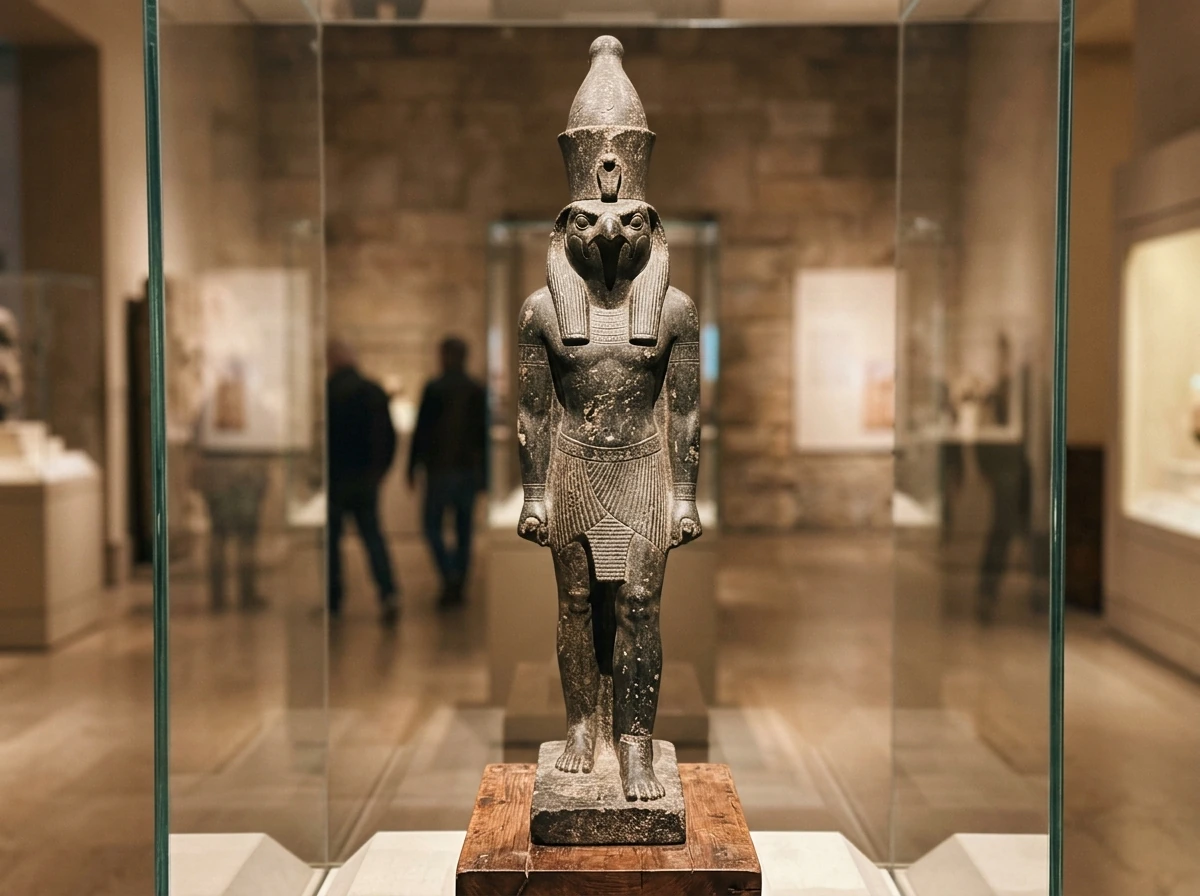
The most famous mythological hawk in the world is probably Horus, the ancient Egyptian god depicted with the head of a hawk (or sometimes a falcon, reflecting the classification overlap that still confuses people today). Horus was associated with the sky, sovereignty, and divine protection, and his hawk-headed form tied those qualities directly to the bird. The 'Eye of Horus' became one of the most iconic symbols in Egyptian religion, connecting the hawk's sharp sight to divine vision and protection. When you see hawk symbolism tied to royalty or guardianship, this lineage is often somewhere in the background.
Native American traditions
In many Indigenous North American traditions, the hawk is a messenger figure: a creature that carries communications between the human world and the spiritual world. The hawk totem is widely described as bringing clarity of vision (again, that recurring theme) and an ability to see the 'bigger picture.' It's important to note that Indigenous traditions are diverse, and generalizations about 'the Native American meaning' of any animal flatten real complexity. That said, the messenger and visionary roles appear repeatedly across different groups' hawk-related teachings, and they're what most modern writing on hawk totems draws from.
Norse mythology
Norse mythology features a hawk named Veðrfölnir sitting between the eyes of a great eagle perched at the top of Yggdrasil, the world tree. That placement, between the eyes of a creature already associated with wisdom and far-sight, connects the hawk once more to keen perception and knowledge. It's a subtler role than Horus's, but the theme is consistent: hawks in mythology tend to occupy positions associated with watching, knowing, and seeing across distances, both literal and symbolic.
Falconry cultures in the Middle East and Europe
In the long falconry traditions of the Arab world, Persia, and medieval Europe, hawks (and falcons) were status symbols of the highest order. Training a hawk required patience, skill, and a special kind of relationship between human and animal. A trained hawk represented mastery, nobility, and disciplined power. These cultural connotations still echo in language and literature: hawks appear in medieval poetry as symbols of aristocratic virtue, and in many heraldic traditions as emblems of an attentive, decisive ruler.
Seeing a hawk in real life: omen or just a hawk?
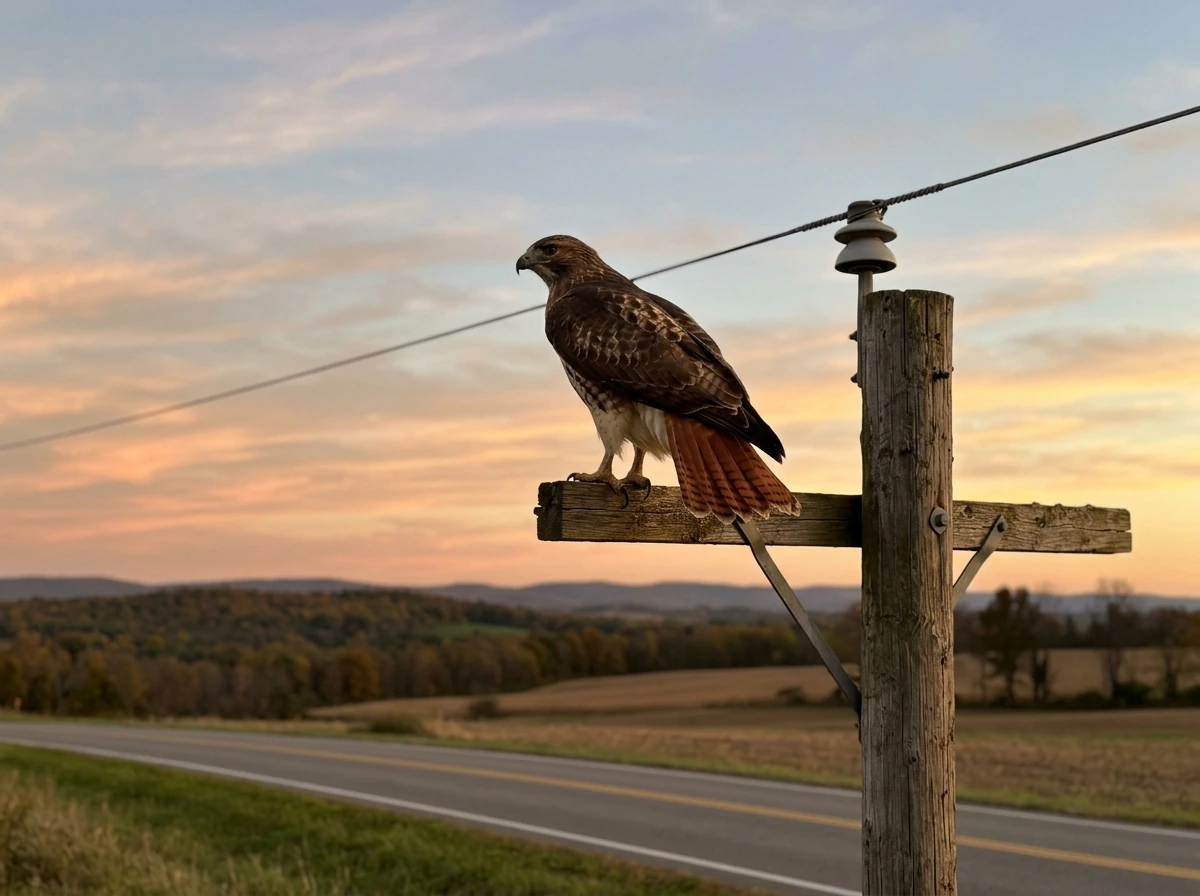
People notice hawks, and then they wonder what it means. That's completely natural, and there's a practical reason it happens: hawks are genuinely striking. A large bird of prey perched on a fence post or circling overhead commands attention in a way that a sparrow simply doesn't. Add to that the human tendency to find patterns and meaning in unusual experiences, and it's no surprise that a hawk sighting often feels significant.
Here's the grounded context that's worth knowing, though. blank" rel="noopener noreferrer">Red-tailed hawks, the most commonly spotted hawk in North America, begin their breeding season in March and can be aggressively territorial through May. If you're suddenly noticing hawks in late winter or spring (and today is March 23, 2026, smack in the middle of that window), that's at least partly explained by seasonal behavior, not cosmological timing. Hawks are also migratory, and hawkwatching is a recognized birding activity precisely because migration windows bring large numbers of raptors through specific routes. Seeing several hawks in a short period often aligns with those windows.
That said, if you're interested in what a hawk sighting means symbolically, the most commonly held interpretation is that it's an invitation to pay closer attention: to a situation, a relationship, a decision, or your own instincts. It's a prompt toward clarity and focus rather than a warning of specific doom. Whether you frame that spiritually or psychologically, the underlying message is about sharpening your perception.
One thing worth noting for anyone genuinely worried: hawks, even protective ones near a nest, rarely pose a serious threat to adult humans. Cooper's hawks and sharp-shinned hawks may dive near people who get too close to nests, but actual attacks on humans are uncommon. So if a hawk startled you or seemed to follow you, it's more likely defending a nearby nesting site than delivering a cosmic warning.
If you want to get more specific about what species you're seeing (which can add nuance to the symbolic meaning you're exploring), size, shape, color patterns, and wingbeat style are your best tools. Falcons have long, tapered wings and shallow, elastic wingbeats. Accipiters like sharp-shinned hawks are smaller with shorter rounded wings and rapid wingbeats. Large buteos like red-tailed hawks are broad-winged and tend to soar. At a distance they can all look confusingly similar, which is exactly why birding resources emphasize starting with those basic shape and behavior cues before reaching for a field guide.
Birds people confuse with hawks (and how their meanings differ)
Because 'hawk' is used so loosely in everyday language, it's genuinely common for someone to be looking up hawk symbolism when they actually saw a falcon, an eagle, or even an osprey. The meanings don't translate cleanly, so it's worth knowing the differences.
| Bird | Key literal traits | Common symbolic meaning | Typical confusion point |
|---|---|---|---|
| Hawk (Accipiter / buteo) | Small to medium raptor, varied wingshapes, agile hunter | Vision, focus, precision, messengers, guardianship | Broad common name applied loosely to many raptors |
| Falcon | Long tapered wings, very fast, shallow elastic wingbeats | Speed, ambition, nobility, precision in falconry tradition | Often called 'hawk' casually; different family (Falconidae) |
| Eagle | Large, powerful, broad wings, often soaring | Majesty, national power, divine authority, freedom | Eagles are larger and in some regions called 'big hawks' colloquially |
| Osprey | White underparts, hovering over water, hooked talons | Focus, adaptability, resourcefulness | Sometimes mistaken for a large hawk near water |
| Harrier | Low, coursing flight over open land, owl-like face | Alertness, stealth, patience | Belongs to Accipitridae but rarely called a hawk by name |
If the meaning you found for 'hawk' doesn't quite fit what you experienced or what you're reading, there's a good chance the bird in question is a falcon or an eagle. Eagles carry more of the grandeur and national-symbol weight. Falcons carry speed and aristocratic precision. Hawks sit in the middle: alert, focused, intensely aware, and intimately connected to the act of watching and seeing clearly.
You might also find yourself crossing into adjacent territory covered by related bird-meaning searches. The symbolic territory of Hawks are their own distinct cluster of meanings, and once you know what that cluster looks like, it becomes much easier to recognize it correctly, whether you spot it in a poem, a political headline, or in your backyard on a March morning. what does snow bird mean
What to do when the meaning still doesn't fit
If you searched 'hawk bird meaning' because you encountered the word or image in a specific context, and the vision-and-focus symbolism doesn't seem to match, here's a useful next step: look at whether 'hawk' is being used as a noun referring to the bird, a verb (to hawk goods), or a political/behavioral label.
If you also meant a different bird, like a loon, it helps to look up the loon bird definition so you can match the word to the right animal. Each of those has a different lineage. The political hawk and the hawkish economist are drawing on the bird's aggressive-predator quality, not its visionary side. The idiom 'watch like a hawk' is purely about sharp-eyed surveillance.
The spiritual hawk is the messenger and the symbol of inner clarity.
If you want to go deeper on the specific species you saw, Audubon's raptor identification resources are genuinely practical: they walk you through size, shape, wingbeat, and color in plain language. Once you've confirmed what bird you're actually looking at, the symbolism and meaning entries for that specific species will be far more relevant than the broad 'hawk' category. The distinction between a sharp-shinned hawk and a red-tailed hawk, for example, matters both scientifically and, for those who track such things, symbolically.
The through-line, across all the idioms, myths, political metaphors, and real-world sightings, is this: when people reach for the hawk as a symbol or a comparison, they're almost always reaching for the same core idea. Sharp eyes. Focused attention. Precise, purposeful action. If someone is calling you hawk-eyed or comparing your leadership style to a hawk's, that's what they mean. And if you're wondering what the hawk circling your neighborhood is trying to tell you, the most honest answer is: stay alert, pay attention, and trust what you can clearly see.
FAQ
If I saw a hawk and felt it meant something negative, how can I tell the difference between symbolism and a normal wildlife situation?
Start with context. Hawks usually show “message-like” behavior only in the sense of attention, not threat. If you were near a nest, hedgerow, or frequent hunting perch, defensive swoops are typical. If it was just circling at a distance with no diving or foot-on-ground harassment, the more grounded reading is “pay attention,” not “doom.”
Do hawk symbolism interpretations change if the bird was sitting still versus actively hunting or diving?
Yes, many people map behavior to tone. A stationary hawk on a perch often gets read as watchfulness and “observe carefully,” while a burst-hunt or sudden dive is more often read as decisive action or acting on a clear target. If you try this, keep it tied to what you actually saw, not to a personal bias about what you wanted the omen to mean.
What does “hawk” mean in a quote if it could be a verb or a political term, not the bird?
Check grammar. If “hawk” appears with goods, deals, or selling language, it is almost certainly the verb “to hawk” (sell aggressively). If it appears next to war, defense, interest rates, inflation, or “dove,” it is usually the political metaphor or “hawkish” policy stance. The bird meaning is most likely when the sentence includes watching, eyes, or raptor imagery.
Is “hawk-eyed” the same thing as “hawk bird meaning,” or is it a different layer?
They overlap but they are not identical. “Hawk-eyed” is specifically about exceptional observation and catching details, while “hawk bird meaning” generally includes the broader cluster (focus, independence, precision, sometimes messenger themes). So someone can be hawk-eyed without any other “hawk” symbolism being implied.
Why do people often confuse hawks with eagles or falcons, and how should I correct that for meaning?
Because everyday wording groups multiple raptors under “hawk,” but each has a different vibe in language. Eagles are commonly used for majesty and national-level symbolism, falcons for speed and falconry-style precision, and accipiters (“true hawks”) for agile, close-range watching and quick strikes. If you’re interpreting a story or image, identify the species cues (wing shape, size, hunting style) before assigning symbolism.
Can hawk meaning apply to finding feathers, a hawk call, or seeing one only briefly?
Yes, but treat them as weaker data. A feather can symbolize “presence and protection” in many traditions, yet the biological reality is you may find feathers near normal roosting or after seasonal shed. A single brief sighting often maps best to the generic “stay alert and notice details,” while repeated encounters around one location (and especially nesting season) add practical weight.
What time of year is it most likely to notice hawks, and does that affect the “meaning” people feel?
In much of North America, breeding season for common species like red-tailed hawks is roughly March through May, and territorial behavior can make sightings feel more frequent. Migration windows can also concentrate raptors along recognizable routes. If your sightings spike in spring, it may be explainable by seasonality even if you still choose a symbolic interpretation.
If a hawk was acting aggressively near me, should I take it as a warning?
Usually it’s about proximity, not prophecy. Hawks may dive or chase when defending a nest area, hunting territory, or a chosen perch. Keep a respectful distance, avoid going directly toward the nest or cover, and watch for patterns like repeated harassment from the same spot.
What is the real-world reason hawks symbolize “vision,” and why do idioms lean on eyes?
Biology plus behavior. Hawks have forward-facing, high-acuity eyesight and they often use patient scanning from concealment before striking. That combination makes “sharp eyes” feel literal and therefore becomes the most transferable part of the symbolism into idioms like “watch like a hawk” and descriptors like “hawk-eyed.”
How do I figure out hawk meaning for a specific species when I cannot identify it confidently?
Use the “big three” cues the article already points to: wing shape and beat pattern (tapered and shallow for falcons, rounded and rapid for accipiters, broad and soaring for buteos), plus size and color from a distance. If uncertainty remains, keep symbolism general (focus, awareness, attention) rather than forcing a species-specific story you cannot justify.
What’s a common mistake when searching hawk bird meaning online?
Mixing categories. People sometimes combine the bird symbolism with the political metaphor (“hawk” meaning aggressive policy) or the verb (“hawk goods”) without checking context. The quickest fix is to determine whether the word is being used as a noun (bird), a verb (selling), or a label (politics, economics, or behavior), then interpret accordingly.
Next Article
The Bird Is Freed Meaning: Literal, Symbolic & Military
Explore meanings of "the bird is freed", literal, idiomatic, symbolic, military "freedom bird", origins, examples, usage.