An 'untouchable bird' is a figurative expression for a bird (or a person/thing compared to a bird) that cannot be reached, challenged, harmed, or held accountable. It captures the idea that you cannot change the bird’s meaning once the symbolism is set by the context, tradition, and speaker cannot be reached, challenged, harmed, or held accountable. Depending on the context, it can mean the bird is sacred and protected, so powerful it operates above normal rules, so elusive it can never be caught, or so spiritually significant that touching it would be a kind of transgression. It is not a recognized species name. It is a symbolic phrase, and the exact meaning shifts depending on which bird is being referenced, which culture is speaking, and what the writer or speaker is trying to say.
Untouchable Bird Meaning: Symbolism, Origins, and Usage

What 'untouchable bird' actually means in plain English
Start with the word itself. 'Untouchable' has been in English since the 1560s, built from 'un-' (not) plus 'touchable,' and it originally meant 'immaterial, not capable of being touched.' Over time it branched into several distinct meanings: something literally beyond physical reach, something immune to consequences or criticism, something sacred or taboo, and (in a completely different cultural register) something defined by social exclusion. All of those senses can show up when 'untouchable' gets attached to a bird.
So when someone calls a bird 'untouchable,' they are almost always doing one of three things. They are saying the bird is protected (legally, spiritually, or culturally, and you cannot harm it without consequence). They are saying the bird represents something beyond ordinary reach, like freedom, the divine, or death. Or they are describing a person or idea using the bird as a metaphor, meaning that person operates at a level no one can touch. The phrase is expressive, not technical.
The many flavors of 'untouchable'
Because the word carries so many layers, it is worth slowing down on what 'untouchable' actually implies when paired with a bird. Each shade of meaning changes the emotional weight of the phrase.
- Sacred or taboo: The bird must not be touched because doing so would violate a religious or cultural prohibition. Think of species that appear in mythology as divine messengers or avatars of gods, where harming them brings bad luck or spiritual punishment.
- Physically unreachable: The bird lives at heights, speeds, or distances no human can match. Eagles soaring at 10,000 feet, albatrosses crossing open ocean for months, swifts that rarely land at all. The 'untouchable' here is about literal inaccessibility.
- Immune to consequences: Borrowed from the social use of the word, this sense means the bird (or the person the bird represents) is so powerful, so elite, or so well-connected that normal rules do not apply.
- Feared or avoided: Some birds carry associations with death, bad omens, or the supernatural, and people do not touch them out of fear rather than reverence. The line between sacred and feared is often blurry.
- Legally protected: In a very literal modern sense, many bird species are legally untouchable. In the United States, for example, the Migratory Bird Treaty Act makes it illegal to harm, capture, or possess dozens of native species.
Which birds get called 'untouchable' and why
There is no single bird universally called 'untouchable,' but certain species attract that label more than others because of the symbolic weight people have loaded onto them over centuries. Here is how those associations tend to cluster.
The eagle
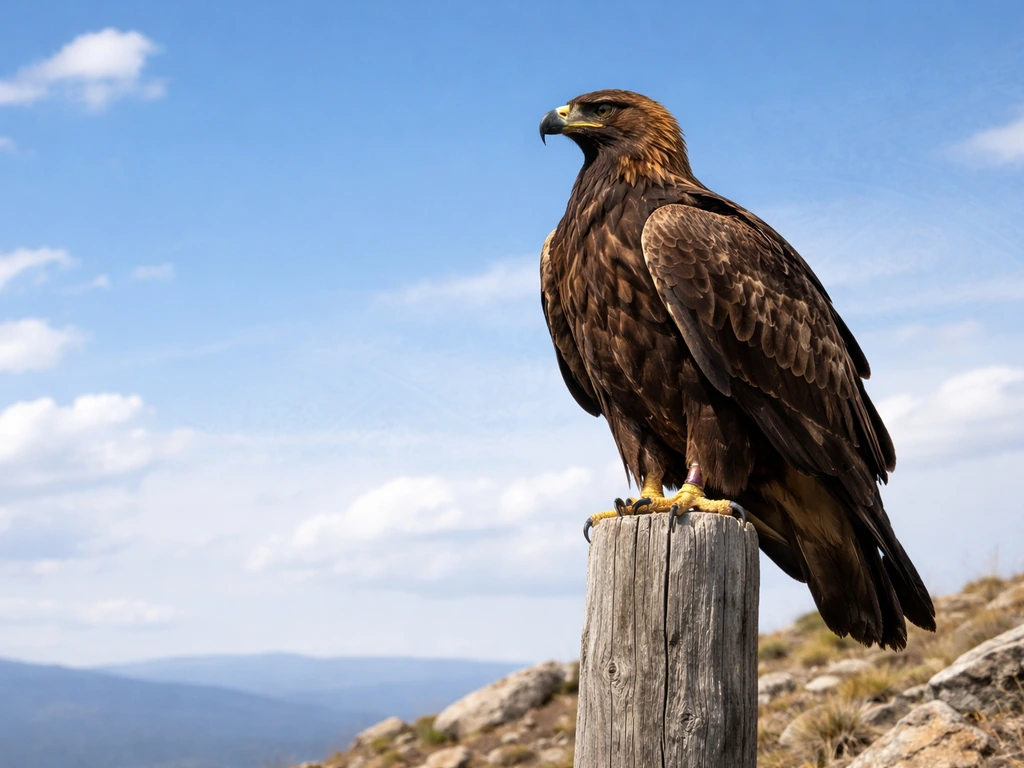
Eagles appear across Indigenous North American traditions, ancient Rome, and countless national symbols as birds that belong to the sky in a way that puts them above the human world. In many Native American traditions, eagle feathers are sacred objects handled only under specific ceremonial conditions. The bird itself is not touched lightly, and in the United States, possession of eagle feathers without tribal membership or a specific permit is a federal crime. That combination of spiritual reverence and legal protection makes the eagle one of the most literal 'untouchable birds' in the modern world.
The albatross
Sailors historically refused to harm albatrosses, believing they carried the souls of dead sailors and that killing one would bring catastrophe. Coleridge's 'The Rime of the Ancient Mariner' turned that superstition into literature. The bird became untouchable out of fear, not just reverence. It also lives most of its life over open ocean, genuinely unreachable by most people. Both senses of 'untouchable' apply at once.
The phoenix
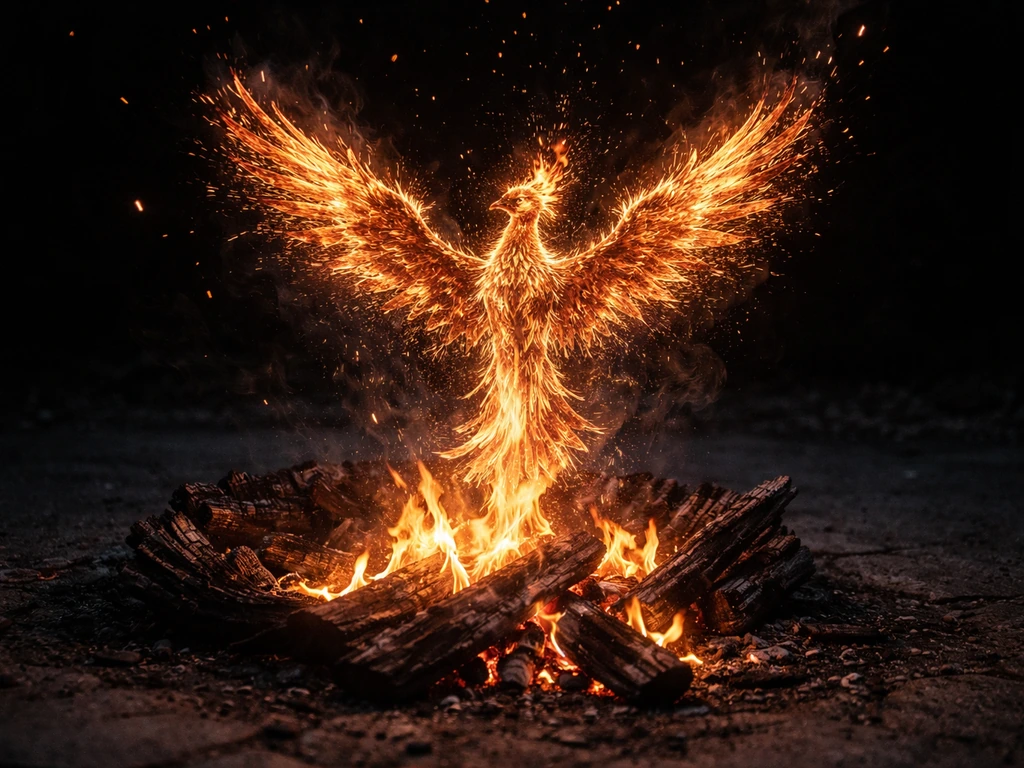
The phoenix is literally untouchable in the most extreme sense: you cannot catch or destroy it because it will simply rise again. As a mythological figure it represents things that transcend harm entirely. When someone calls a person 'an untouchable bird' and clearly means they keep coming back stronger, the phoenix is almost certainly the underlying image even if the word is not used.
The owl, the crow, and death-associated birds
In many cultures, owls and crows carry associations with the spirit world, death, or prophecy. People avoid handling them not because they are revered but because touching them feels like inviting bad luck or disturbing something that operates on a different plane. That avoidance is a form of 'untouchability' built on fear and superstition rather than legal protection or divine status.
Where the phrase shows up: sayings, captions, songs, and stories
You are most likely to encounter 'untouchable bird' in one of a handful of contexts, and knowing which context you are in helps enormously with interpretation.
| Context | What 'untouchable bird' usually means here | Common example |
|---|---|---|
| Social media caption | The person is describing themselves or someone else as elite, immune to criticism, or above the competition | A photo caption reading 'untouchable bird energy' next to someone in expensive clothes or at a peak life moment |
| Song lyrics | Often means freedom, transcendence, or being beyond the reach of pain/people who want to bring you down | Hip-hop and R&B frequently use bird imagery for freedom; adding 'untouchable' intensifies the elevation theme |
| Poem or literary quote | Usually symbolic: the bird represents the soul, an ideal, or something the speaker cannot possess or hold onto | Romantic poetry often frames longed-for things as birds that cannot be caught |
| Nature writing or conservation | Literally means a protected species or one associated with sacred/taboo status in a specific culture | An essay about raptor conservation might call the golden eagle 'the untouchable bird of the Great Plains' |
| Storytelling or mythology | The bird is a divine messenger, a trickster, or a figure of fate that operates outside human control | Folklore from many cultures features birds as agents of gods or the dead, not to be interfered with |
The phrase also appears in titles: books, albums, films, and songs sometimes use 'untouchable' paired with bird imagery to signal themes of liberation, invincibility, or the unattainable. If you have landed here because you saw 'untouchable bird' in a specific title or lyric, the context table above is your first sorting tool.
It is worth noting that some related bird expressions work on similar terrain. The idea that a bird 'you cannot change' (as in the famous Lynyrd Skynyrd lyric) is essentially a cousin of the untouchable bird concept: something wild and free that resists being controlled or transformed by outside forces. Other phrases, like catching a bird with bare hands, explore the flip side of that same dynamic, the human attempt to grasp what cannot easily be held. Other phrases, like catching a bird with bare hands, explore the flip side of that same dynamic, the human attempt to grasp what cannot easily be held.
Where does the phrase come from? Origins and how to verify
There is no single traceable origin for 'untouchable bird' as a fixed phrase. It is not a proverb with a known author or a recognized idiom that appears in standard dictionaries. What it is, is a combination of two older ideas: the long-standing use of birds as symbols of freedom, spirit, and the divine, and the figurative meaning of 'untouchable' that developed from the 1560s original sense of 'immaterial, beyond physical reach.' Those two threads have been weaving together in poetry, folk belief, and literature for centuries without producing one canonical phrase.
There is also a separate cultural history worth knowing: in South Asia, 'untouchable' historically referred to people from lower castes considered ritually polluting under the caste system, a practice that has been legally abolished but whose social legacy persists. That meaning is entirely unrelated to bird symbolism, but it is worth being aware of because the word carries that weight in some contexts. If you see 'untouchable bird' in writing that engages with South Asian culture or caste themes, check whether the metaphor is drawing on that specific history.
Because the phrase has no single origin, you cannot verify it the way you would verify a known idiom. What you can do is trace the specific usage in front of you back to its source: which bird, which culture, which tradition. That is where the meaning actually lives.
How to interpret 'untouchable bird' when you see it: a practical approach
When you encounter the phrase in the wild, work through these steps in order. Most of the time, you will have your answer by step three. In plain terms, “throw a bird meaning” usually refers to the phrase “untouchable bird,” which describes something that cannot be reached, challenged, harmed, or held accountable.
- Identify the specific bird, if one is named. 'Untouchable eagle' means something different from 'untouchable crow.' If no bird is named, look at surrounding imagery, context, or the author's cultural background for clues.
- Check the tone and register. Is this a boast (social media, hip-hop)? An elegy (poetry, memorial)? A nature observation? A myth or fairy tale? The emotional register tells you which flavor of 'untouchable' is in play.
- Look for the stakes. What happens in the text if someone does touch the bird? If the answer is spiritual punishment or bad luck, you are in sacred/taboo territory. If the answer is 'you simply can't,' you are in the freedom/transcendence register. If there is no consequence because the bird is just above everyone, you are in the power/elite register.
- Research the cultural source. If the phrase appears in a song, poem, or story with a known origin, search for the author's cultural background and any interviews or commentary on the work. Writers usually explain their own symbols somewhere.
- When the bird is unclear, default to the most common symbolic bird for the culture in question. In Western contexts, the eagle is the most common 'untouchable' bird by a wide margin. In Japanese contexts, consider the crane. In Celtic traditions, consider the wren or raven.
- If you genuinely cannot pin down the bird or tradition, treat the phrase as a general metaphor for something (or someone) that operates beyond normal reach, sacred, powerful, free, or simply not yours to control.
A quick disambiguation: what 'untouchable bird' is not
It is not a species name. No bird in any standard ornithological catalog is formally called the 'untouchable bird.' If you searched for this phrase hoping to identify a literal species you saw, you will need a different tool: a field guide, the Merlin Bird ID app, or a regional bird identification resource. The phrase exists in the world of language, symbolism, and culture, not taxonomy.
It is also not a fixed, universally agreed-upon idiom the way 'bird in the hand' or 'early bird gets the worm' are. Those phrases have traceable histories and broadly consistent meanings. 'Untouchable bird' is more open, a poetic construction that different writers and speakers use to mean different things, all orbiting the same cluster of ideas: elevation, freedom, protection, power, and the impossibility of capture or control. If you are comparing it to other sayings about birds and power, you might also look up what 'pull a bird meaning' refers to in its own context.
The bigger picture: why birds get called untouchable
Birds have served as symbols of the unreachable for as long as humans have been looking up. They occupy the sky, a space humans cannot naturally enter. They migrate across continents without maps. They appear and disappear with the seasons. They show up in dreams, in folk omens, at the moment of someone's death. That long history of sky-dwelling, of coming and going beyond human control, is exactly why 'untouchable' lands so naturally on them. In folk sayings, the idea can overlap with “ignore the bird, follow the river” as a way of steering toward the right direction rather than chasing a tempting target ignore the bird follow the river meaning.
When a poet calls a bird untouchable, they are tapping into something ancient: the human recognition that some things simply cannot be caught, held, or owned. Dictionary.com lists “untouchable” as an adjective meaning “that may not be touched,” which fits the figurative “out of reach, ungraspable” sense behind the phrase blank" rel="noopener noreferrer">“that may not be touched”. Whether the specific framing is sacred, powerful, elusive, or free, the emotional core is the same. Some things belong to a register that is not ours to control. The bird is just the most efficient shorthand for that idea that human language has ever found. The meaning can also be described as “catch a bird” in the sense of being unable to capture or control it, depending on the context catch a bird meaning.
FAQ
Is an “untouchable bird” a real species I can look up in a bird guide?
No. It is almost always figurative language, so if you are trying to identify a bird you saw outdoors, use local field guides or an app instead of treating “untouchable bird” as a literal name.
How can I tell whether “untouchable” means legal protection, taboo, or just being unreachable?
When “untouchable” sounds like legal or physical immunity, interpret it as “protected from harm or accountability,” for example in the eagle case. If it sounds like spiritual taboo, interpret it as “ritually improper to touch,” and avoid assuming it implies literal invulnerability.
If the phrase’s meaning changes, what clues should I look for in the surrounding text?
Treat it as a metaphor with shifting specifics: the bird mentioned (eagle, albatross, owl) is a clue, but the author’s intent comes from nearby lines (tone, theme, and what is being contrasted, such as freedom versus control).
What’s the difference between “untouchable” as power and “untouchable” as unreachable?
Look for whether the speaker assigns agency. If the bird is described as operating “above consequences” or “beyond rules,” it is a power claim. If the bird is described as impossible to catch or reach, it is a reach and control claim.
Could “untouchable bird meaning” be referring to caste or social exclusion rather than birds?
Be careful about the social-history baggage of the word “untouchable.” If the surrounding content discusses South Asian caste, pollution, or social exclusion, the phrase may be echoing that history, not bird symbolism.
Can “untouchable bird” be used to mean “stay away” or “don’t interfere,” not just “someone can’t be caught”?
Yes, you can see the phrase used to praise avoidance or distance, not only to claim someone is unreachable. For example, an author might frame a target as “untouchable” to justify staying away, refusing manipulation, or refusing harm.
Does “untouchable” always imply literal touching, or can it mean “cannot be controlled or changed”?
In figurative uses, “touch” often stands for control, ownership, or harm. So “untouchable” can imply the subject resists being changed by outside pressure, even if no physical touching is mentioned.
What if I only see “untouchable bird” in song or movie titles, how do I interpret it?
If you search the phrase and only find titles or lyrics, assume it is likely theme-driven rather than explanatory. Then map the theme (liberation, invincibility, unattainable desire) to the most likely bird cluster described in the article.
What are the most common misreadings of “untouchable bird”?
A common mistake is to ask, “Which bird is the untouchable bird?” The better approach is, “What does the speaker want me to feel or believe (freedom, sacredness, fear, or supremacy)?” The phrase is built to be poetic shorthand, not taxonomy.
When I can’t decide the meaning, what quick decision tool can I use?
Try a quick context check: is the writer describing a protective status, a supernatural fear, a sacred taboo, or an impossible pursuit? The first two usually create emotional distance, while sacred taboo often creates moral distance (what you must not do).
Throw a Bird Meaning: Slang, Mishearing, and How to Respond
Meaning of throw a bird in slang and mishearing, how to tell tone and respond in chat, texts, or games.