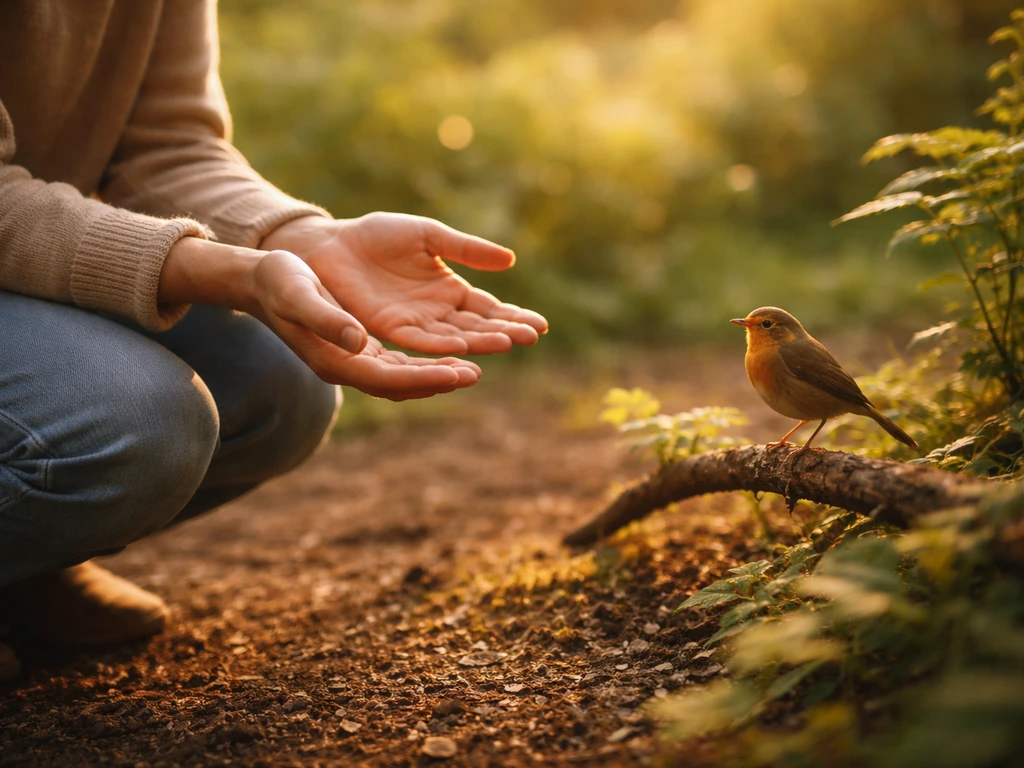
Catching a bird with bare hands means achieving something delicate and difficult through patience, gentleness, and personal skill rather than force or tools. Figuratively, it describes the kind of success you can only get by slowing down, earning trust, and handling a situation with care, the moment you rush or grab too hard, the opportunity vanishes. People use it to talk about winning someone's trust, seizing a fragile opportunity, or reaching a goal that requires finesse over brute effort.
Catching a Bird With Bare Hands Meaning and Usage

Marcus Whitmore
31 May 2026
What the phrase means in everyday language

When someone says they caught something "with bare hands," they mean they did it directly, no tools, no weapons, no assist. Collins English Dictionary defines "with your bare hands" as doing something without any weapons or tools, and Merriam-Webster lists "bare-handed" as acting without gloves or implements. So the "bare hands" part of the phrase is doing a lot of work: it signals raw human effort, directness, and a kind of personal vulnerability in the attempt.
Now layer a bird on top of that. Catching a bird, not a ball, not a fish, but a living, skittish creature that can simply fly away the second it senses danger, is treated in everyday conversation as a near-impossible feat. The phrase has a hyperbolic quality: it evokes that specific category of challenge where the harder you try, the worse your odds. Some popular writeups and discussions treat the specific bird-centered sequence as a hyperbolic challenge, as if it were seemingly difficult or impossible, while still focusing on the figurative idea of achievement through effort rather than literally catching a bird blank" rel="noopener noreferrer">The phrase has a hyperbolic quality. The image sticks because everyone intuitively knows that if you lunge at a bird, it's gone. The only way it works is if the bird comes to you, or if you move so carefully it doesn't feel threatened. In the same way, the expression “ignore the bird follow the river” points to a different kind of guidance, where you stop forcing outcomes and instead let events unfold naturally ignore the bird follow the river meaning.
The metaphorical angles: patience, skill, trust, and gentleness
Most of the time when people reach for this phrase, they're making a point about how you approach something, not just whether you succeed. There are a few distinct angles the metaphor can take depending on context.
- Patience: Some things can't be rushed. The phrase signals that the person understood timing — they waited for the right moment instead of forcing it.
- Gentleness over force: You can't strong-arm a bird into your hands. The phrase specifically implies that the method mattered — softness and calm worked where aggression would have failed.
- Earning trust: Birds don't land on people they fear. Figuratively, this maps directly onto relationships, negotiations, or any situation where the other party has to choose to come to you.
- Skill and intuition: Bare hands means no shortcuts. Whatever the speaker achieved, they did it through their own capability — nothing borrowed or mechanical.
- Fragile success: Even after you catch it, a bird in bare hands is still fragile. The phrase can also imply that success is won but still needs to be handled with care — it isn't locked down yet.
What birds symbolize, and why that matters here
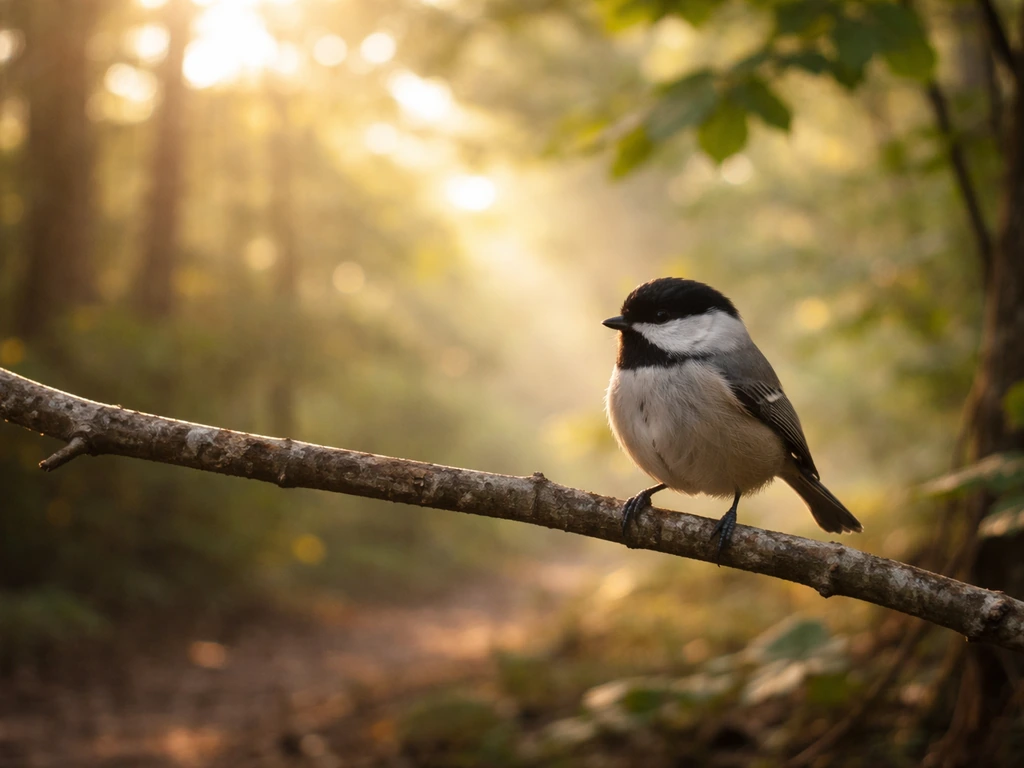
Birds carry a long history of symbolic meaning across cultures, and a lot of that symbolism feeds directly into how this phrase lands emotionally. In literature and folklore, birds typically represent freedom, the soul, fleeting opportunity, or messages from beyond the everyday world. They belong to the air, an element humans can't naturally inhabit, which gives them an inherent quality of being just out of reach. When you catch one with your bare hands, you're doing something that crosses a natural boundary. You're bridging the gap between the grounded human world and something freer and more elusive.
In many European folk traditions, the ability to call birds to your hand or catch them without harm was associated with wisdom, saintliness, or a special harmony with nature. Saints in Christian iconography were often depicted with birds landing on them willingly. In East Asian literary traditions, taming or befriending wild birds often appeared as a marker of a person's inner calm and spiritual cultivation. The point across these cultural threads is consistent: a bird coming to bare hands is a sign of something earned, not taken.
Why "bare hands" specifically shows up in these kinds of sayings
The phrase "with bare hands" has a long life in idioms precisely because it strips away everything except the person themselves. No gloves, no nets, no traps, just you and the challenge. That contrast is the point. When you add tools, you add distance between yourself and the thing you're trying to achieve. Bare hands collapses that distance. It makes the effort personal and the vulnerability real.
This is why the imagery works so well when applied to soft, high-stakes human situations. You can't manipulate your way into genuine trust with a technique or a trick, people sense that the same way a bird senses a sudden movement. The bare-hands framing implies the speaker showed up as themselves, without armor or instruments, and succeeded anyway. That's the respect the phrase confers on the achievement.
It's also worth noting how "bare hands" appears in other bird-related phrases. The term “untouchable bird meaning” is often used to describe something that feels reachable in theory but is protected, fragile, and resistant to being taken by force. The idea of capturing or connecting with something uncontrollable by sheer personal presence, without leverage or tools, shows up in expressions like "pull a bird" or even in the contrast with harder, more confrontational bird idioms. In the same way, the expression “pull a bird” points to the idea of coaxing or drawing something in carefully rather than forcing it. When you compare this phrase with something like "throw a bird" (which carries a more aggressive or dismissive tone) the difference is stark: bare hands signals intention to preserve and connect, not discard. It also shares the bird metaphor with darker alternatives, like the question of what throw a bird meaning implies in a more aggressive or dismissive way.
Situations where people actually use this phrase
The phrase gets applied most naturally in three kinds of situations, and knowing which one fits helps you interpret what the speaker is really saying.
| Situation | What the phrase implies | Quick example |
|---|---|---|
| Relationships and trust | You won someone over through patience and genuine presence, not manipulation or pressure | "Getting her to open up was like catching a bird with bare hands — I just had to stop trying so hard." |
| Opportunities and timing | You seized a fragile chance at exactly the right moment, without fumbling or overreaching | "That contract was a bare-hands catch — one wrong move and it was gone." |
| Personal goals requiring finesse | You achieved something difficult through skill and calm, not brute force or shortcuts | "Learning that skill felt like catching a bird with bare hands — all about stillness and practice." |
In relationships, the phrase maps well onto situations where trust is the thing being "caught." Trust behaves exactly like a bird, it can't be forced, it has to be given, and it disappears fast if it's mishandled. Trust behaves this way, and this bird you cannot change meaning fast if you try to force it. In conversations about opportunity, the phrase often emphasizes timing: the window was narrow, the conditions were precise, and the person read them correctly. In personal development or skill-building contexts, it tends to highlight that the process required sustained, gentle effort rather than a single dramatic push.
How to use the phrase correctly
The tone of this phrase is almost always admiring or reflective, it describes an achievement with a kind of quiet pride, not boasting. It's not a phrase you'd use for something easy or for something you muscled through. If you use it, you're signaling that the thing took real care and that the approach mattered as much as the outcome.
A few things to keep in mind when you reach for it:
- Use it when the method is the point. If you want to highlight that patience or gentleness made the difference, this phrase does that work well.
- Avoid it for physical feats of strength or speed — the phrase specifically implies delicacy, not power.
- It works in past tense for reflecting on something achieved, and in present tense as a warning or instruction: "You have to treat this like catching a bird with bare hands."
- The phrase carries a slightly poetic register. It fits well in personal conversations, writing, and storytelling — it might feel out of place in highly technical or formal professional contexts.
- Don't overclaim it. If the situation wasn't actually that delicate or hard-won, the phrase can come across as overly dramatic.
Example rewrites showing the range of use: "Negotiating that deal was like catching a bird with bare hands, any pressure and they'd have walked." Or more personally: "I finally got my kid to talk to me about it. Bare hands, slow moves, that's the only thing that worked." Or as advice: "If you want to get that client back, treat it like catching a bird with bare hands. Slow down, back off the pitch, and just listen."
The phrase is a genuinely useful one because it captures something that a lot of simpler idioms miss: the idea that restraint and care are themselves forms of effort and skill. Success without force is still success, and sometimes it's the harder kind.
FAQ
When does “catching a bird with bare hands” fit, and when does it not?
Use the phrase when the “bare hands” part is central to the point, meaning you succeeded through restraint, timing, and interpersonal skill rather than leverage. If you relied on tools, formal authority, shortcuts, or pressure tactics, “with bare hands” can feel misleading.
Is the phrase ever meant literally, or is it always metaphorical?
If your sentence needs to emphasize an actual physical act, the phrase is usually metaphorical, not literal. For literal catching, people typically describe gloves, nets, or methods directly, not this idiom, which is more about delicacy and trust than the mechanics.
How do I know I am not exaggerating when I use this idiom?
The “hyperbolic” feel matters. If the situation was truly effortless or you had strong leverage, choose a different expression, because this idiom implies high risk of failure if you rush or grab too hard.
Can I use it to imply I succeeded by outsmarting someone or taking control?
Avoid using it as a brag about dominance or manipulation. It reads best when your tone is reflective or admiring, signaling care and vulnerability. If the message is “I forced it,” the bird metaphor will likely clash with the meaning of bare hands.
What should I emphasize in a sentence so the meaning stays clear?
If the key takeaway is “do it carefully,” keep the emphasis on restraint and timing, for example by mentioning slow moves, listening, or giving space. If you only mention “no tools,” the phrase loses its emotional core about gentleness and earned closeness.
What kinds of situations are a bad fit for this metaphor?
It often works with relationships, negotiations, and fragile opportunities, but it becomes awkward when the stakes are not delicate. For harm-causing or aggressive scenarios, consider a harsher idiom instead, since “bare hands” implies preservation and care.
How do I handle the risk angle, like a dangerous situation or high-stakes pressure?
In most contexts it is positive or at least admiring. If you say “I caught it with bare hands” in a way that suggests recklessness, it may sound like you are downplaying risk. It is safer to pair it with “managed carefully” or “without pressure” when danger is involved.
How can I convey the “if you rush, it disappears” part in my wording?
A common mistake is missing the “missed opportunity” idea. Include a hint that rushing would have undone it, so the reader feels the delicacy, for example “one wrong move and it would have flown off.”
How should I decide whether the “bird” is trust, timing, or skill?
If the bird is the trust, the action is what creates conditions for trust to land, such as consistency, patience, and respectful boundaries. If the bird is an opportunity, emphasize timing and conditions, not just effort.
Next Article
War Bird Meaning: Literal, Slang, and Historical Uses
Understand war bird meaning: literal, slang metaphor for fighters, and historical bird symbolism, plus close phrase comp