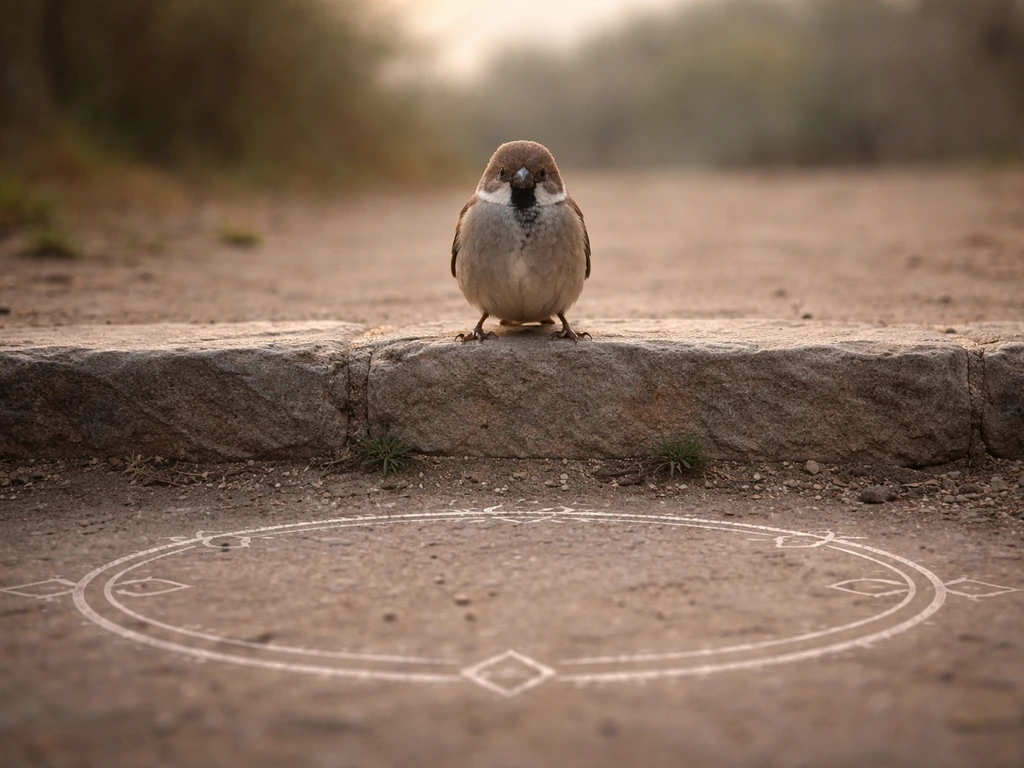
"Catch a bird" most often means exactly what it sounds like: physically capturing a bird. But depending on context, it can also carry figurative weight, pointing to themes of seizing opportunity, exercising control, or pursuing something elusive. There is no single fixed idiom called "catch a bird" in standard English, which is precisely why the phrase can feel slippery. If you searched this phrase trying to decode a sentence you read or heard, you are probably either looking at a literal statement, a loose metaphor, or a misremembered version of a well-known bird-related proverb.
Catch a Bird Meaning: Literal, Idiom, and Symbolic Sense

Marcus Whitmore
8 Jul 2026
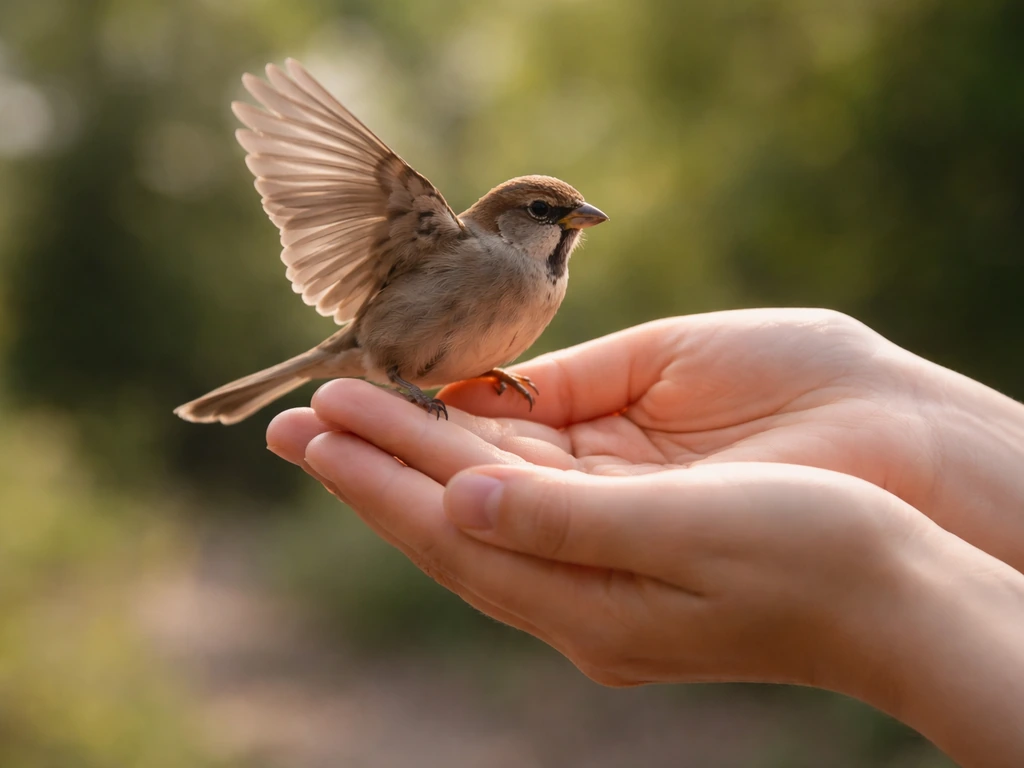
What "catch a bird" means in everyday English
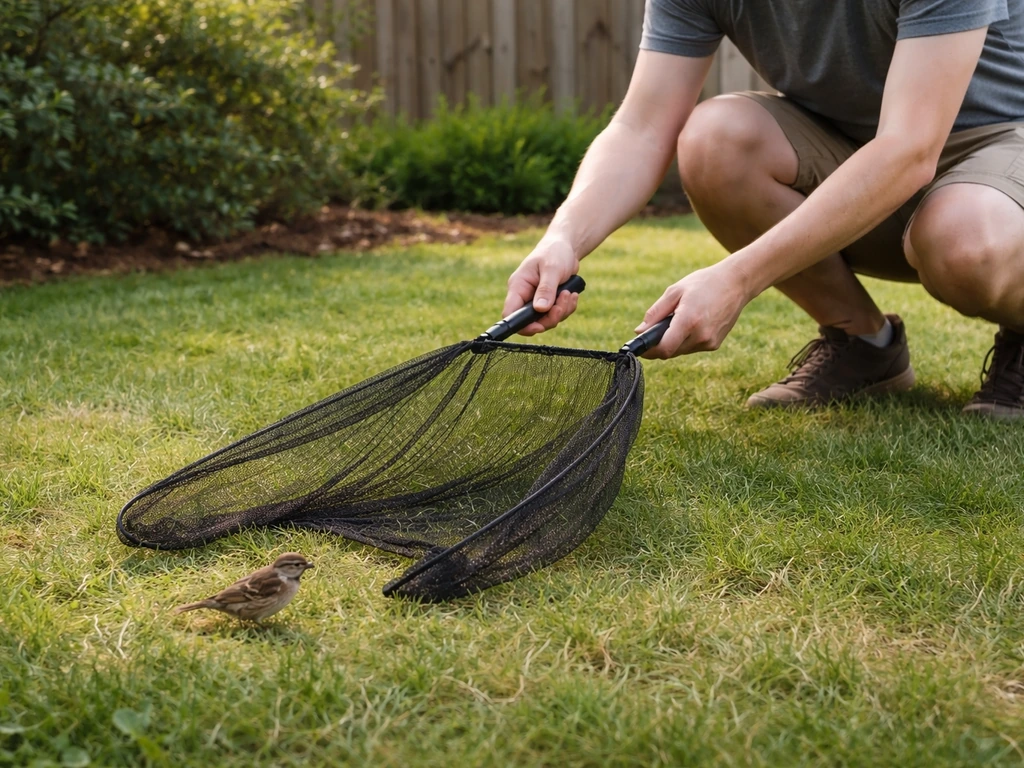
At face value, "catch a bird" is a plain action phrase. Merriam-Webster defines catch as "to capture or seize especially after pursuit," and that definition fits perfectly here. You catch a bird the way you catch a fish or catch a thief: you go after it and you grab hold of it. In practical, real-world language this comes up in wildlife contexts (bird handling, rescue work), children talking about trying to grab a pigeon, or instructions about what not to do with injured animals. The IUCN's guidance on species handling, for instance, warns: "Do not catch a bird by hand as this may harm it." That is the plainest, most literal use of the phrase.
But catch also has a softer meaning that Cambridge Dictionary captures well: to encounter or discover someone doing something, or to notice something happening. So "catch a bird" could, in the right sentence, mean stumbling upon a bird mid-action. That second sense nudges the phrase toward metaphor, because once you are "catching" something in the sense of noticing it, rather than grabbing it, you have quietly moved into figurative territory.
Why the phrase can feel confusing
The confusion usually comes from one of three sources: a translation, a misremembered idiom, or a deliberately figurative use that the speaker did not flag clearly.
Translation is a big one. "Catch a bird" is sometimes how a saying from another language looks when rendered too literally into English. SpanishDict's phrase page treats “to catch a bird” as a literal action translation, such as Atrapar a… for “to catch/hold a bird.” to catch a bird as a literal action translation. A Reddit thread makes this point directly, with a commenter noting the possibility that a phrase like this could be "a saying in another language that was translated too literally." Spanish, for example, has its own bird metaphors, and a word-for-word translation of them into English can produce phrases that sound idiomatic but are not established English expressions at all.
Then there is the misremembered idiom problem. English has a rich family of bird-based proverbs, and it is easy to blur the exact wording. Someone searching "catch a bird meaning" might actually be thinking of "the early bird catches the worm," "a bird in the hand is worth two in the bush," or even the old folklore saying "you can catch a bird by putting salt on its tail. Because searchers often mean different things by the phrase, it helps to compare the likely interpretation with common symbol and proverb patterns tied to it catch a bird meaning. " All of these involve the concept of catching something birdlike or catching a bird itself, but none of them is just "catch a bird" in isolation.
Finally, "catch a bird" does appear in deliberate creative and metaphorical use, where a writer or speaker uses the image of catching a bird to mean something symbolic: capturing a moment, restraining something free, or claiming an opportunity. When you see it in a poem, song, or story, there is almost always a layer of meaning underneath the literal surface.
Three quick questions to figure out which meaning you are dealing with

- Is this from a translation of another language? If yes, the phrase is probably a literal rendering of a foreign idiom. Look up the original expression in its source language.
- Is this from a poem, song, or story? If yes, treat it as symbolic. Ask what the bird represents in that piece before assuming a literal meaning.
- Are you trying to remember a specific proverb? If yes, scroll down to the related phrases section below. You may be thinking of a different fixed expression.
Bird idioms and sayings that are probably what you are thinking of
Even though "catch a bird" is not itself a standard fixed idiom, it sits right at the center of a cluster of well-known English expressions that all play with similar ideas: timing, opportunity, restraint, and the tension between having something and losing it. Here are the main ones worth knowing. If you are also looking for what a different bird-related expression like “throw a bird meaning” suggests, it can help to compare how these sayings treat restraint versus opportunity.
| Phrase | Core meaning | Notes |
|---|---|---|
| The early bird catches the worm | Act early to gain an advantage | Possibly the most widely used bird-catch idiom in English; "catches" here is literal but the meaning is figurative |
| A bird in the hand is worth two in the bush | What you already have is more valuable than what you might get | About restraint and risk, not active pursuit; the catching has already happened |
| You can catch a bird by putting salt on its tail | An impossible or absurd method of doing something; folksy advice that cannot actually work | Dates back to at least 1580 according to proverb historians; used to mean wishful thinking or impossibility |
| Kill two birds with one stone | Accomplish two things with a single action | No catching, but the same bird-as-objective framing |
| A bird never flew on one wing | Nothing happens without effort or help; often used to justify having another drink | Irish and Scottish in origin; metaphorical flight rather than catching |
The salt-on-the-tail saying deserves a special mention because it directly uses the exact image of "catching a bird" as its mechanism. A long-running proverbs discussion on phrases.org.uk also points to blank" rel="noopener noreferrer">the salt-on-the-tail saying and notes a dating claim of at least 1580 for the old bird-capturing instruction. It is listed as a recognized proverb entry (not just a one-off saying), and it frames an impossible physical instruction as a metaphor for naive or magical thinking. If someone says "you might as well put salt on its tail," they are saying the task is essentially impossible.
What catching a bird symbolizes
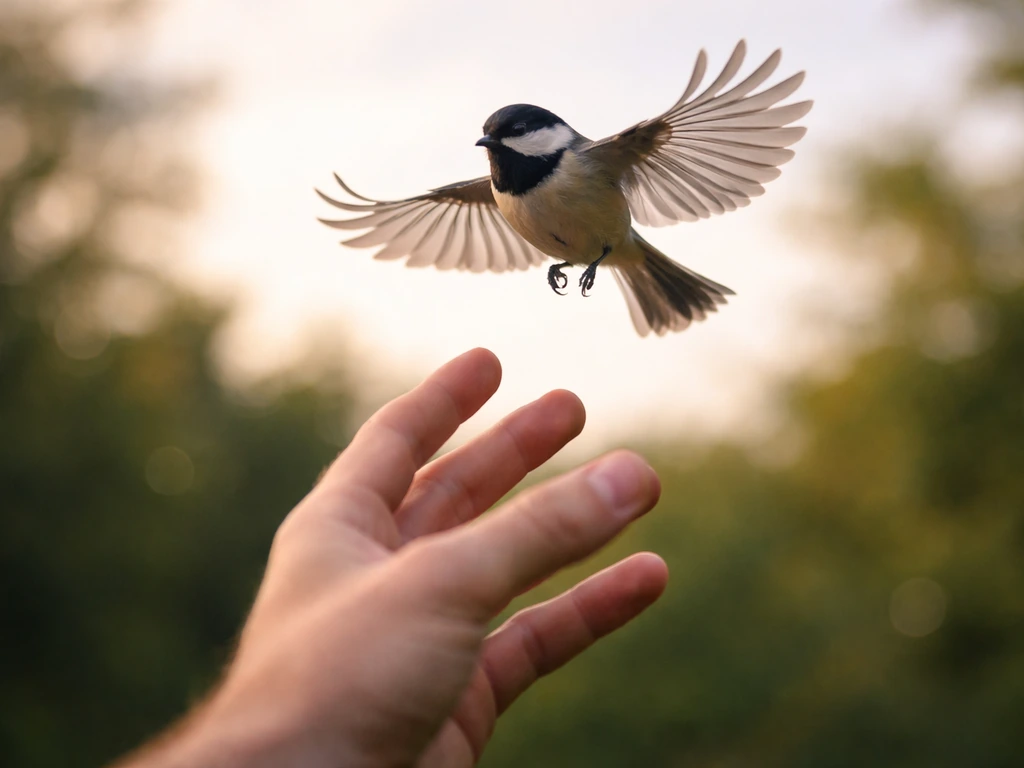
Birds in symbolism almost universally represent freedom, the soul, aspiration, and things that are difficult to hold on to. That makes the act of catching one inherently loaded. If you came across the “ignore the bird, follow the river” meaning, it is a similar idea about redirecting attention to what truly guides you ignore the bird follow the river meaning. You are, symbolically speaking, reaching for something that does not want to be held. The meaning shifts depending on the outcome and the intent.
- Seizing opportunity: Catching a bird can represent acting at exactly the right moment to claim something fleeting. This is the same impulse behind "the early bird catches the worm." Some interpretive traditions explicitly frame it as a symbol of grasping an opportunity before it escapes.
- Control over something free: When the catching is unwanted by the bird, the image shifts to captivity and restraint. A commentator writing for an environmental literacy context frames "catching a bird" directly in terms of the captivity-versus-freedom tension, where the catcher takes away something that was previously unbound.
- Luck and pursuit: In folklore, catching a bird (especially a specific bird like a wren or a dove) carries luck associations. The impossibility of the salt-on-the-tail saying reinforces that catching a bird is partly a matter of fortune, not just skill.
- Care and protection: Not all catching is threatening. Catching a bird can also mean rescuing it, protecting it from harm, or giving it shelter. Context makes all the difference.
The Environmental Literacy Council's commentary on a specific text puts it well: the meaning of "caught the bird" depends entirely on whether the bird ends up freer or more confined, and whether the catcher's motive is care or control. That is a useful lens to apply to any figurative use of the phrase.
How it shows up in stories, poems, and songs
"Catch a bird" and "to catch a bird" appear verbatim in literary contexts across centuries. Leland B. Jacobs wrote a poem titled "How to Catch a Bird," where the wording is instruction-format but the deeper reading is about patience and approach, not just physical capture. Mozart's "The Magic Flute" includes the line "when the time to catch a bird is ripe" in its libretto, where it clearly refers to romantic pursuit as much as literal birdcatching. Birds of Rhythm have a song called "To Catch a Bird," where the image of catching carries emotional weight beyond animal handling.
Anne Lamott's book "Bird by Bird" uses bird imagery throughout to discuss the artistic act of capturing a moment or a memory, one small piece at a time. The SparkNotes analysis of the book frames the bird symbol as representing the fragile, fleeting quality of what writers try to hold on to when they write. That is catching a bird at its most fully metaphorical: not a physical act at all, but the attempt to preserve something before it disappears.
Across these uses, the common thread is the tension between something that moves freely and a person who wants to stop it long enough to hold it. Whether that tension resolves into joy, loss, or something more complicated depends on the story.
How to use the phrase correctly, with examples

In literal usage, the phrase works cleanly in practical or descriptive sentences. In figurative usage, it needs enough context around it to signal that the bird is standing in for something else. Here are examples of both.
| Usage type | Example sentence | What it means |
|---|---|---|
| Literal (physical) | "The vet said not to catch a bird by hand if you find it injured." | Actual physical handling of a real bird |
| Literal (observed) | "I watched the cat try to catch a bird for twenty minutes and fail completely." | Straightforward description of an event |
| Figurative (opportunity) | "You have maybe one hour to catch this bird before the deal closes." | Seize the opportunity before it passes |
| Figurative (control/restraint) | "He finally caught the bird he had been chasing for years, only to realize he did not know what to do with it." | Achieved a long-pursued goal that turned out to be complicated |
| Symbolic (in art/poetry) | "To catch a bird is to hold the sky in your hands for a moment." | Metaphor for capturing something beautiful and fleeting |
| Idiomatic (proverb variant) | "You might as well try to catch a bird by putting salt on its tail." | What you are attempting is impossible or naive |
A quick note on variations people search for: "catching a bird meaning," "what does it mean to catch a bird," "catch a bird dream meaning," and "catch a bird with bare hands meaning" all exist as distinct searches with slightly different slants. The bare-hands version tends to carry stronger themes of raw effort or vulnerability, since there is no tool involved. Dream interpretations typically amplify the symbolic layer, treating the bird as representing a goal, a person, or a feeling. That idea is essentially about how small wording differences can change meaning, even in the same bird-related context. The core symbolic logic stays the same across all of these variations.
Related bird phrases worth checking if you meant something else
If you searched "catch a bird meaning" and you are still not sure whether you found what you were looking for, these related expressions might be closer to what you had in mind. Catching a bird with bare hands meaning is often discussed alongside figurative uses and warnings, because context can shift the phrase from literal capture to a control or restraint idea catch a bird meaning. Some of them overlap in theme but have their own distinct meanings and histories.
- Catching a bird with bare hands: A variation that emphasizes directness and effort, with its own symbolic readings around vulnerability and boldness.
- Pull a bird: British slang meaning to attract or pick up a romantic partner. Completely different register from the catching imagery, though both involve birds as stand-ins for people.
- Throw a bird: Slang for making a rude hand gesture (specifically the middle finger). No relationship to literal birds at all.
- Untouchable bird: A phrase and concept used to describe someone or something beyond reach, often carrying status or sacred connotations.
- And this bird you cannot change: From the Lynyrd Skynyrd lyric, used to mean a person who is fundamentally themselves and will not be reshaped by others.
- Ignore the bird follow the river: A phrase used in navigation and metaphorical advice about ignoring distractions and following a reliable path.
The broader family of bird idioms in English is surprisingly large, and the exact wording matters a lot. "Catch a bird" and "pull a bird" sound related but belong to entirely different registers of language. In some contexts, people use the phrase “pull a bird” to get at the idea of forcing or trying to draw something out, rather than physically capturing it. Getting the right phrase means getting the right meaning, so if the definition above did not quite land for you, one of those sibling expressions may be exactly what you were searching for.
FAQ
Is “catch a bird” a common idiom in English?
Not as a fixed, universally recognized idiom. People usually use it either literally, or as a custom metaphor that needs surrounding context (for example, whether the speaker talks about opportunity, control, or noticing).
How can I tell if someone means “catch a bird” literally or figuratively?
Check the surrounding verbs and consequences. If it mentions handling, grabbing, tools, or safety, it is literal. If it mentions timing, chances, pursuing a goal, or “capturing” something abstract, it is figurative (seizing, restraining, or preserving).
What does “catch a bird” mean in wildlife or rescue contexts?
It refers to capturing an animal, but careful wording matters. In real handling scenarios, agencies often advise minimizing stress and injury, including avoiding bare-handed capture and using appropriate tools or approved procedures instead.
Does “to catch a bird” mean “to find a bird,” “to notice a bird,” or “to capture a bird”?
It can mean either noticing or capturing depending on tense and sentence structure. If the sentence describes encountering someone in the act or noticing an event, it is closer to “discover” or “happen to see,” not “capture.”
How should I interpret “caught the bird” in a story?
Look for the outcome and motive. The same action can imply protection or confinement, or it can symbolize success versus loss, especially if the plot emphasizes whether the “bird” is freed or held tightly.
What if I saw the phrase in a dream, is it always about “control” or “opportunity”?
Dream meanings vary, but the bird commonly stands for something fleeting or free (a goal, emotion, or relationship). The strongest clue is the dream’s emotion and outcome, for example, whether you feel anxious about holding it or proud about capturing it.
Can translation cause “catch a bird meaning” to be misleading?
Yes. Word-for-word translations from other languages can produce phrases that sound understandable but are not established English idioms. If the text does not otherwise sound idiomatic, treat it as literal or as an author’s custom metaphor rather than a standard saying.
Is there a difference between “catch a bird” and “catching a bird” in meaning?
The noun form often centers the act as a concept or lesson, while the gerund can sound like an ongoing process. In figurative writing, “catching a bird” may emphasize effort and timing, not only the final “capture.”
What does “catch a bird with bare hands” imply compared with using tools?
It often signals vulnerability, raw effort, or direct confrontation. In figurative interpretations, it can suggest trying to hold something without protection (which can imply risk, naivety, or intense determination).
If I meant “the early bird catches the worm,” what wording did I probably mix up?
Many people search “catch a bird” when they mean timing and opportunity. “The early bird catches the worm” is about acting sooner, whereas “catch a bird” by itself is ambiguous and might not include the “early” constraint.
What if I actually need “salt on its tail” rather than “catch a bird”?
If the context frames the action as impossible or foolish, the salt-on-the-tail proverb is closer. It uses the bird-catching image to convey unrealistic effort or magical thinking, not a normal success-oriented pursuit.
Are there close alternatives I should consider if “catch a bird” does not fit?
Often yes. Related expressions can shift the idea toward forcing or drawing something out rather than capturing, for instance, “pull a bird” can point to extraction or coercive trying, while “catch a bird” more naturally points to seizing or noticing depending on context.
Next Article
Untouchable Bird Meaning: Symbolism, Origins, and Usage
Understand untouchable bird meaning: taboo, power, protection, and key symbolism tied to the referenced bird.