The flamingo most commonly symbolizes balance, grace, beauty, and social connection. In spiritual and cultural shorthand, it stands for standing out while still belonging to a group, being comfortable in your own skin, and finding elegance in unusual environments. If you saw or heard the word flamingo in a dream, tattoo, caption, or story, that core cluster of ideas is almost always what's being invoked. The unusual colors, blue and black, shift that meaning significantly, and I'll walk you through exactly how to read each one depending on where you encountered it.
Flamingo Bird Meaning: Red, Blue, and Black Interpretations

Marcus Whitmore
4 May 2026
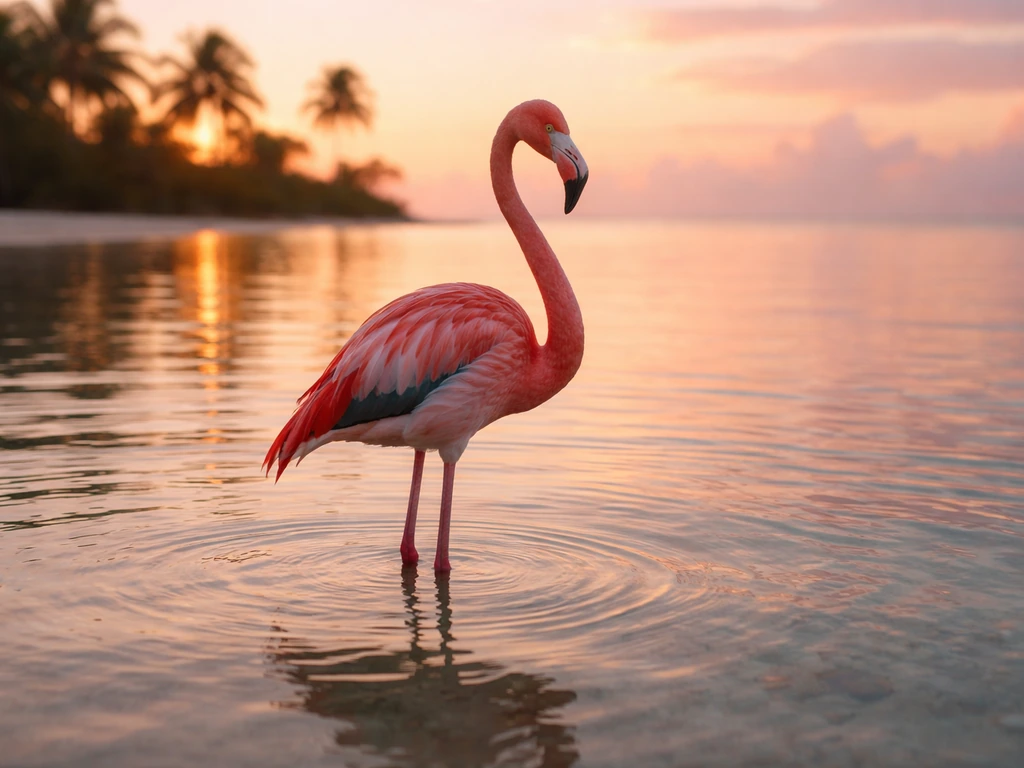
What the flamingo actually represents
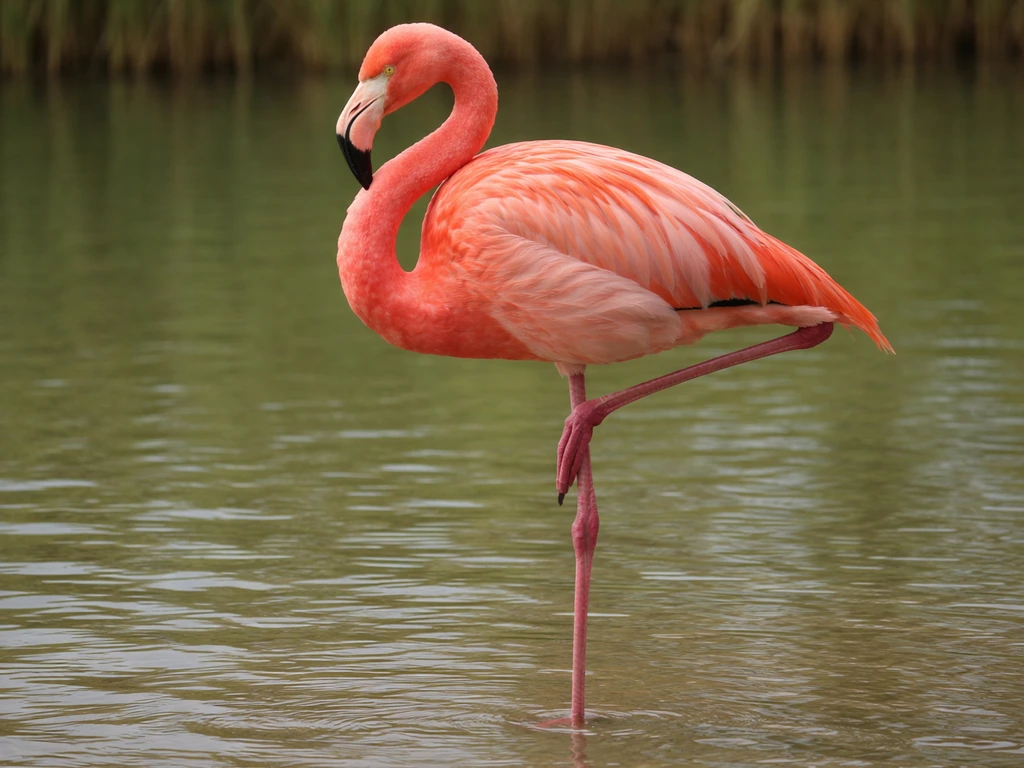
Flamingos are genuinely unusual animals, and a lot of their symbolism flows directly from how strange they look and behave. They're bright pink in a world of muted wetlands. They feed upside-down. They stand on one leg for long stretches. That combination of physical oddness and undeniable grace is why they get used, over and over, as a stand-in for the idea of being confidently different.
The one-leg posture alone has generated a surprising amount of cultural weight. The leading scientific explanation is thermoregulation: flamingos tuck one leg up to reduce heat loss while wading in cool water. A separate, equally valid explanation is balance efficiency, where their joints lock into a position that requires almost no muscular effort to hold, making it the path of least resistance for resting. Either way, what looks like an effortful, showy pose is actually deeply practical. That gap between appearance and reality is part of why the flamingo works so well as a symbol of grace under pressure or doing hard things with apparent ease.
The core symbolic associations are pretty consistent across spiritual, artistic, and casual cultural contexts:
- Balance and stability (literal and emotional)
- Grace and elegance in unlikely settings
- Visibility and confidence: being seen without apology
- Community and belonging, especially within a chosen social group
- Individuality within a collective (a flamingo flock is striking precisely because every bird looks the same but moves independently)
- Romantic and social vibrancy, especially in contexts tied to the color pink
In the U.S., there's a whole separate layer of cultural meaning baked into the plastic pink flamingo lawn ornament, which became a genuine American icon and a recurring symbol for class tension, kitsch, and rebellious taste. The same pink flamingo image can read as a cheerful retro decoration to one person and a deliberate provocation against suburban conformity to another. That ambiguity is worth keeping in mind: flamingo symbolism is deeply context-dependent.
Real life vs. metaphor: how to read flamingo symbolism depending on the context
If you're watching an actual flamingo at a wildlife sanctuary or in the wild, the symbolism question is separate from the natural history question. A real flamingo standing on one leg isn't performing grace for you; it's managing its body temperature. Keeping that literal layer in mind actually makes the metaphorical layer more interesting, not less.
In metaphorical use, the flamingo almost always lands in one of three registers. The first is aspirational: flamingo as a model for confident, visible individuality. This is the register most tattoos, inspirational quotes, and Instagram captions are working in. The second is social: flamingo as shorthand for a tight, visually distinctive social group, usually with warmth and community vibes attached.
Dream dictionaries tend to distinguish between a single flamingo (individuality, self-expression) and a flock (belonging, social dynamics, group identity), and that distinction holds up pretty well in other contexts too. The third register is ironic or campy: flamingo as kitsch, deliberate excess, or playful bad taste. This is the plastic lawn flamingo register, and it's very much alive in current aesthetic culture.
When you're trying to figure out which register applies to something you saw or heard, the most useful question is: what's the tone of the surrounding content? Aspirational, sincere, ironic, or playful? That tone usually tells you more than the flamingo image itself.
Blue flamingo meaning
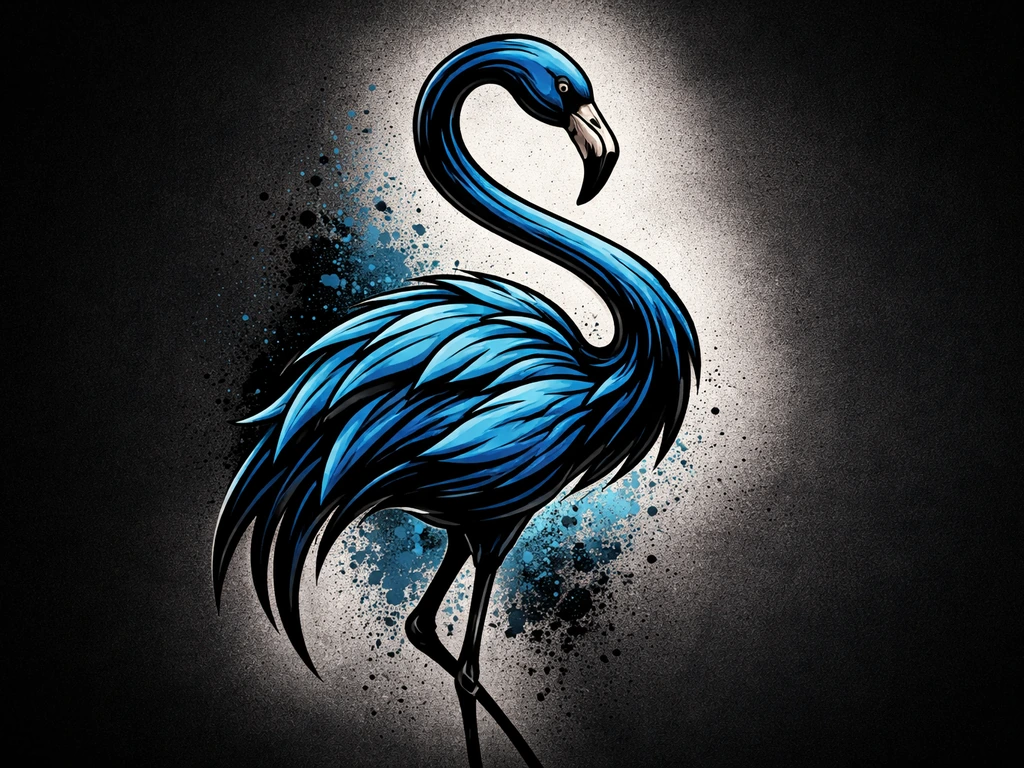
Here's the first thing to know: blue flamingos don't exist in nature. Blue flamingos are not considered naturally occurring in the wild because flamingo color comes from carotenoid pigments in their diet, so blue is typically treated as an artificial or dream claim rather than real plumage blank" rel="noopener noreferrer">blue flamingos don't exist in nature. Every flamingo species produces its pink-to-red coloration from blank" rel="noopener noreferrer">carotenoid pigments in the algae and crustaceans they eat. Without that diet, flamingos actually turn white. Blue is simply not in the biological palette, which means if you saw a blue flamingo, you're looking at something deliberate: an artistic choice, a digital creation, a dream symbol, or a metaphor.
In art, design, and tattoo culture, a blue flamingo almost always signals intentional subversion of the expected. The flamingo is already a symbol of standing out; making it blue doubles down on that by making it something that literally shouldn't exist. Common interpretations include:
- Uniqueness pushed to an extreme, beyond what's natural or expected
- Calm, introspective individuality (blue's associations with peace and depth layered onto the flamingo's existing meanings)
- Something beautiful that exists outside conventional categories
- In dreams, a blue flamingo often reads as a prompt toward self-expression or a signal that you're suppressing something distinctive about yourself
In social media and caption culture, 'blue flamingo' sometimes appears as a phrase or aesthetic tag for things that are visually unexpected or emotionally melancholy but still striking. If someone calls themselves or a friend a 'blue flamingo,' they're almost always pointing at that combination: beautiful, unusual, and a little out of place. It's a gentler, more wistful version of being the odd one out.
Black flamingo meaning
Unlike the blue flamingo, black flamingos have actually been documented in nature, though extremely rarely. There have been a small number of confirmed sightings of flamingos with melanism, a genetic condition that causes excess dark pigmentation. These birds are genuinely extraordinary, and the rarity makes them potent as a symbol.
In symbolic and metaphorical use, the black flamingo carries heavier, more complex weight than its pink counterpart. The meanings most commonly attached to it include:
- Radical otherness: standing out not just from other species but from your own kind
- Hidden depth or shadow self: the flamingo's grace and elegance translated into something darker and more mysterious
- Power and defiance: black's associations with strength and resistance combined with the flamingo's visibility symbolism
- In tattoo culture specifically, a black flamingo often signals intentional contrast, someone who identifies with beauty and grace but rejects the soft or pastel aesthetic usually attached to it
- In dreams, a black flamingo can signal transformation, the surfacing of something previously hidden, or a tension between belonging and standing apart
Where the blue flamingo tends to read as wistful or quietly different, the black flamingo reads as bold and deliberately transgressive. If you see it in a tattoo or artwork, there's almost always an intentional statement being made about identity and nonconformity, not just decoration.
Where flamingo meanings actually show up
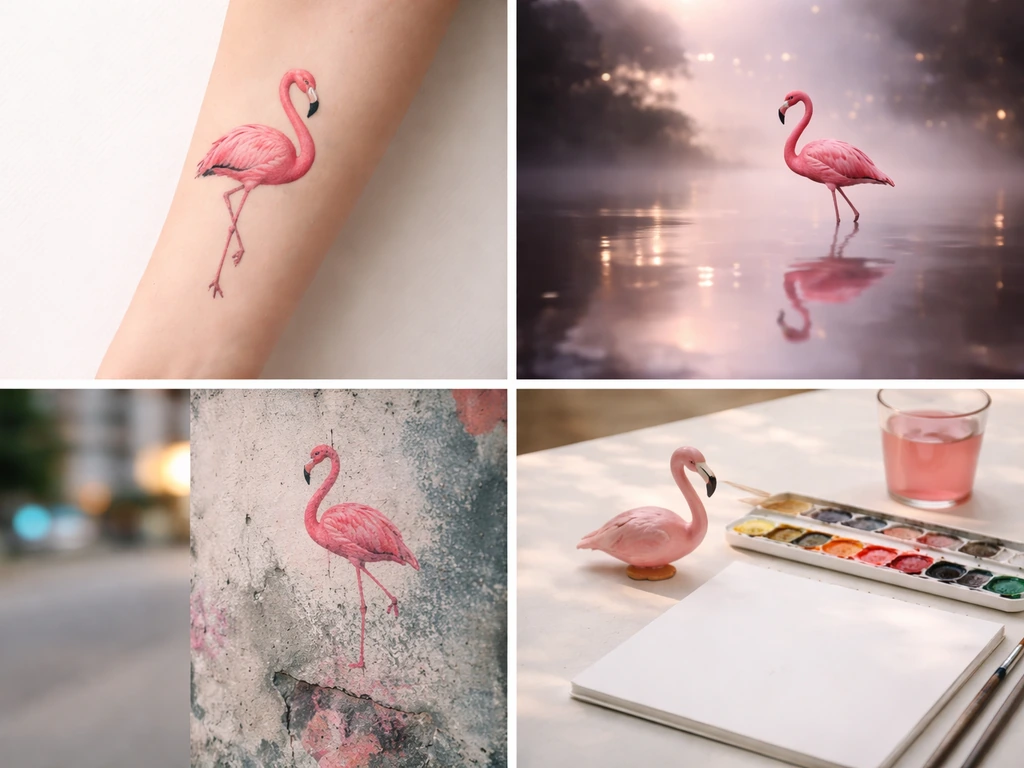
The flamingo appears across enough different contexts that it's worth mapping out where you're most likely to run into it and what the meaning usually is in each setting.
| Context | Most Common Meaning | Watch For |
|---|---|---|
| Tattoos (pink) | Confidence, individuality, grace, vibrancy | Placement and style: minimalist vs. bold can shift the tone |
| Tattoos (blue or black) | Intentional subversion, complex identity, shadow self or radical uniqueness | Often paired with other symbols that clarify the specific reading |
| Dreams (single flamingo) | Self-expression, individuality, a call to be seen | Emotional tone of the dream matters as much as the image |
| Dreams (flock) | Community, belonging, social dynamics | Who else is in the dream? Flock dreams often reflect a real social situation |
| Social media captions | Aesthetic vibe, confidence, kitsch, or playful self-branding | Ironic use is common; tone of the account clarifies whether it's sincere |
| Stories and literature | Balance, grace, visible difference, or campy excess depending on tone | Plastic vs. real flamingo is a meaningful distinction in written contexts |
| Spiritual or spirit animal framing | Balance, grace, elegance; negative readings: instability or difficulty with self-expression | These frameworks are interpretive tools, not fixed definitions |
How to figure out exactly what it means in your situation
The flamingo's symbolism is consistent enough that you can usually narrow down the meaning quickly if you ask the right questions. Here's a practical checklist to work through whenever you encounter a flamingo (especially in an unusual color) and want to figure out what's actually being communicated.
- What's the source? A tattoo artist's portfolio, a dream, a social media post, a story, or a physical decoration all carry different interpretive frameworks. Start here.
- What color is it? Pink sits in the standard grace/visibility/community register. Blue signals intentional subversion with a calm or wistful tone. Black signals bold nonconformity or shadow-self depth. Any other unusual color is almost certainly making a deliberate artistic statement.
- Is it alone or in a group? A solitary flamingo almost always points toward individual identity, self-expression, or being the odd one out. A flock points toward community, belonging, and social dynamics.
- What's the tone of the surrounding content? Sincere and aspirational? Ironic and campy? Melancholy? The flamingo itself rarely carries tone on its own; the context does.
- Is this a metaphor or literal? If someone called something a 'blue flamingo' in conversation or a caption, treat it as a phrase rather than a visual symbol and ask what quality they're pointing at: beautiful-but-unlikely, calm-but-unusual, rare-but-real.
- What other symbols appear alongside it? In tattoos and art especially, surrounding imagery (water, flowers, geometric shapes, specific color palettes) will anchor or shift the flamingo's core meaning.
- What culture or community is this coming from? The plastic flamingo as camp icon, the flamingo as spiritual symbol, and the flamingo as wildlife reference all coexist in current culture but belong to different communities. Knowing which community you're looking at helps enormously.
One thing worth noting: flamingo symbolism sits in a broader family of bird meanings where the specific color or context does most of the interpretive work. If you find yourself going down a rabbit hole of unusual or emotionally charged bird symbolism, that's not unusual territory for this kind of reference work.
Similar interpretive frameworks apply when you're trying to decode something like a fever bird or a bird on fire appearing in creative work or dreams, where the bird type is less important than the emotional register and context around it. If you're trying to interpret what does a bird on fire mean, focus on the emotional register and the scene details around it a fever bird or a bird on fire.
A fever bird meaning can shift based on the emotional register, the scene details, and what the dream or creative context is trying to emphasize. If you want to understand fever dream bird meaning, focus on the feeling and imagery around the bird, not the literal species.
The flamingo is a remarkably stable symbol once you understand its core logic: it's always about visibility, grace, and the tension between standing out and belonging. Every variation, pink, blue, black, solitary, or in a flock, is just a different angle on that same question. Once you have that anchor, the specific meaning in any situation becomes much easier to read. To apply the same approach to bird dreams, you can look at what the bird symbolizes and how the scene feels in the dream.
FAQ
How can I tell if flamingo bird meaning is literal or purely symbolic when the color looks unnatural?
If the symbol is blue or black, treat it as intentional rather than literal. Blue usually points to design, dream, or subversion of expectations, while black more often signals heavier, transgressive, or identity-focused messaging. If the piece is realistic and the color still looks blue or “unnaturally dark,” that is a strong sign you are reading metaphor, not “bird facts.”
What should I check first to decide whether a flamingo symbol is aspirational, social, or ironic?
Context tone matters more than color alone. If the surrounding text or artwork feels sincere, the message is usually aspirational or social. If it feels ironic, campy, or deliberately exaggerated, flamingo meaning tends toward kitsch, rebellious taste, or playful bad taste, such as the plastic lawn ornament vibe.
Does flamingo bird meaning change if the image shows one flamingo versus many?
The number of flamingos can change the emphasis. A single flamingo most often reads as individual self-expression and visibility, while a group or “flock” framing more often reads as belonging, community dynamics, or shared identity. If the image shows a crowd but highlights one standing out, it can blend both registers.
How do I interpret flamingo bird meaning in a tattoo if the same color meanings seem to fit multiple options?
For tattoos, people usually lean on the “visible individuality” or “nonconformity” angle, but the placement and style can narrow it further. For example, a small, delicate flamingo with soft shading often feels aspirational, while bold outlines or high-contrast colors often signal transgressive or identity-forward intent.
How does flamingo bird meaning work differently in social media captions or aesthetic tags?
If you are interpreting a caption or an online phrase, look at what the flamingo is used to describe, not just the bird. When “blue flamingo” is used as a tag, it often signals something striking and a little melancholy, but still desirable or emotionally compelling. If it is paired with humor or mockery cues, it may shift toward camp or irony.
If I saw a flamingo in a dream, what’s the best way to decode the meaning without overthinking the color?
Treat “dream flamingo” interpretations as emotional stories, not species identification. Ask what the dream made you feel (lonely, proud, challenged, playful), and whether the flamingo is the focus or just background. A blue flamingo in a dream is rarely about biology, it’s usually about that feeling of being unusual, out of place, or quietly wistful.
Why does flamingo bird meaning sometimes feel negative or confrontational, even though flamingos often read as graceful?
A common mistake is assuming all flamingo symbolism is positive. Depending on the context, flamingo imagery can be read as class tension (especially the iconic plastic-pink lawn variety), deliberately provocative taste, or a playful critique. If the surrounding cues include sarcasm, status games, or “mocking normal,” expect a less flattering, more rebellious register.
What’s the difference between interpreting a real flamingo versus interpreting flamingo symbolism in art or writing?
If you saw the bird in real life, keep the metaphor separate from the biology. The iconic one-leg pose has practical explanations like heat management and balance efficiency, so the “meaning” is optional unless the scene is presented as a metaphor (in art, writing, or personal symbolism). In other words, a real flamingo is not “performing grace,” it is conserving energy.
How do I use the same approach for other bird symbols, like “fever bird” or “bird on fire”?
If you encounter related bird phrases (like “bird on fire” or “fever bird”), don’t anchor on the species. Use the scene’s emotional register and the narrative role of the bird, because those systems usually trade on feeling and context more than literal identity. Apply the same method you would for flamingos, where tone is your fastest decoder.
What’s a fast checklist I can use to decide flamingo bird meaning when I have limited context?
If you want a quick decision aid, run a two-step check: (1) tone of the surrounding content (sincere, aspirational, ironic, wistful), then (2) color plus framing (blue as deliberate nonexistence, black as rarity and heavier nonconformity, pink as the baseline balance and belonging tension). This usually prevents getting stuck on one interpretation.
Next Article
Fever Bird Meaning: Real Species or Metaphor? Origins
Fe e r bird meaning explained: is it a real bird nickname or a metaphor for illness, frenzy, desire?