To flip him the bird means to extend your middle finger at someone as a deliberate insult, typically communicating something close to "I'm done with you" or the more colorful "fuck you. In everyday speech, the blank" rel="noopener noreferrer">[flip someone the bird meaning](/flip-the-bird-meaning/flip-someone-the-bird-meaning) is simply an obscene middle-finger insult directed at another person. " It's one of the most universally understood rude gestures in Western culture, and the phrase itself just means someone performed that gesture directed at a specific person. Whether you're trying to decode what someone meant when they said it, or you want to understand the phrase itself, this is the complete picture.
Flip Him the Bird Meaning: What It Really Says and Why

Marcus Whitmore
10 Jul 2026
What "flip him the bird" actually means
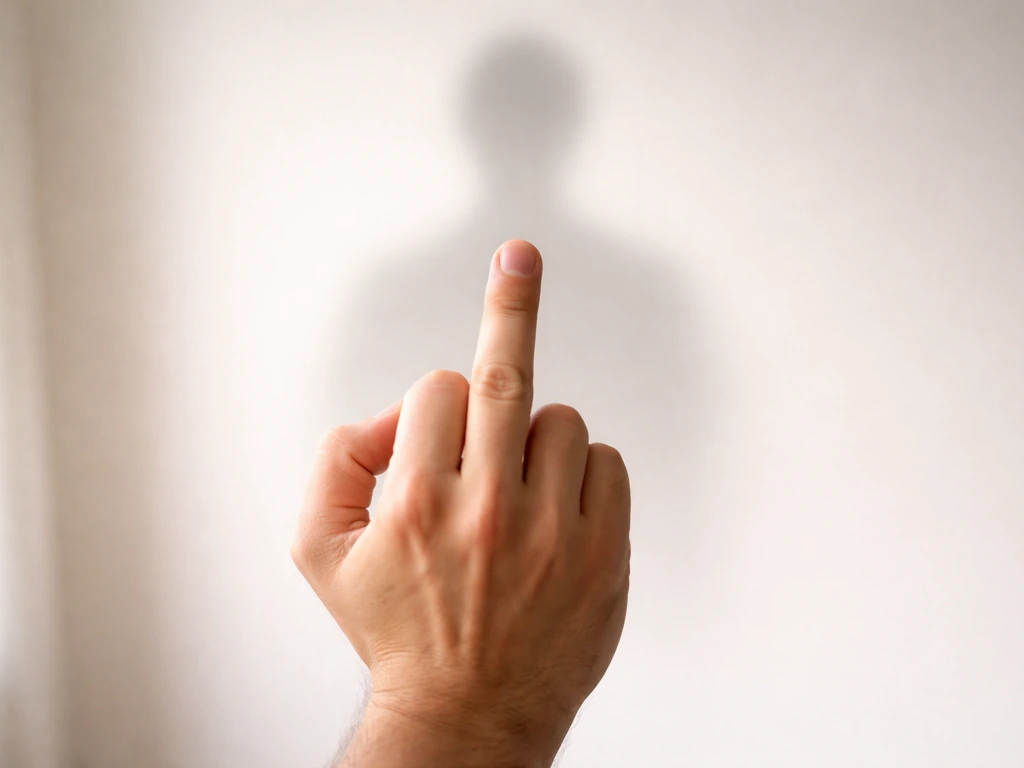
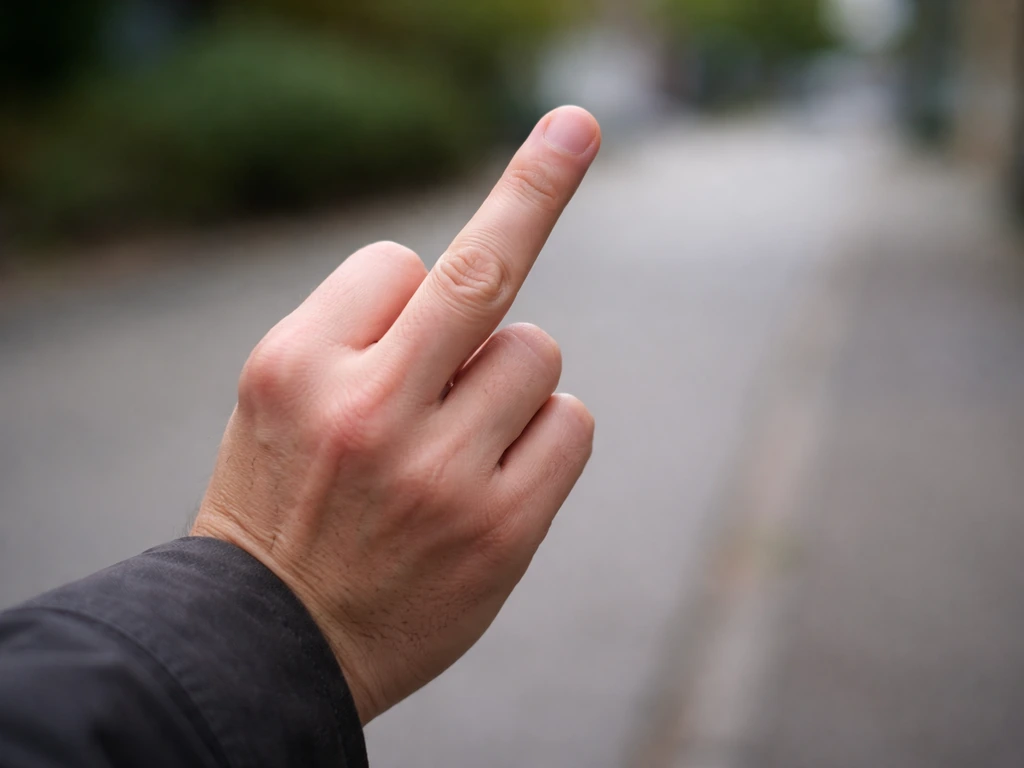
The phrase "flip him the bird" is a verb phrase describing the act of making an obscene hand gesture at someone. The gesture itself involves extending the middle finger upward while keeping the other four fingers folded down, turning the back of the hand toward the target. Merriam-Webster defines it plainly: to make an offensive gesture at someone by pointing the middle finger upward while keeping the other fingers folded down.
Merriam-Webster defines the phrase as making an offensive gesture at someone by pointing the middle finger upward while keeping the other fingers folded down Merriam-Webster defines it plainly. Cambridge adds that it involves turning the back of your hand toward the person, which is the detail that distinguishes it from just pointing.
The word "him" in the phrase just identifies who the gesture is aimed at. You'll hear the same idea expressed slightly differently across related phrases: "flip someone the bird," "flippin the bird," "flick the bird," or "flip the bird" (without naming a specific person). They're all pointing at the same gesture and the same general meaning. The core message is contempt, disrespect, or rejection, delivered without words.
The "bird" hand gesture explained
The "bird" in this phrase refers to the raised middle finger, which is also called "the finger" or "the flip." blank" rel="noopener noreferrer">Wikipedia describes it as communicating moderate to extreme contempt, roughly equivalent to saying "fuck you" out loud. In the US and most of Western Europe, the single raised middle finger is what people mean. In the UK, a similar gesture uses the index and middle finger raised together (the V-sign with the back of the hand facing out), but in American English, "the bird" almost always means the lone middle finger.
Why is it called "the bird" at all? The slang has a genuinely odd origin. According to Wikipedia and etymology discussions, the phrase traces back to an 1860s expression, "give the big bird," which originally meant to hiss at someone like a goose, the way a theater audience would boo a bad performer. Over time, that idea of crude dismissal merged with the 1960s hand gesture and the phrase transferred to the raised-finger insult we know today. So in a roundabout way, "the bird" in this idiom really does connect back to actual bird behavior, specifically the aggressive hissing of a goose.
When and why people use it
People flip someone the bird when words feel insufficient or too slow. It's a fast, nonverbal signal of anger, frustration, or outright dismissal. The intent is almost always to insult: you're telling the other person you have no respect for them in that moment, and you want them to know it immediately. The tone can range from genuinely furious (a road rage moment where someone cuts you off in traffic) to half-joking (two close friends ribbing each other, where nobody is actually offended). Context is everything.
It's worth knowing that the gesture is widely recognized in Western countries as obscene. That means the social cost of using it varies wildly depending on who sees it, where you are, and who you're directing it at. Between close friends, it can be playful and carry zero real malice. Between strangers, or in professional settings, it almost always reads as a serious insult.
What it means in different situations
In an argument or face-to-face conflict
When someone flips another person the bird during a heated argument, it's usually a sign the conversation has broken down. The person doing it has essentially stopped trying to communicate and is expressing pure frustration or anger. It can also function as an exit move, a way of ending the interaction on their own terms. In face-to-face conflicts, this gesture can escalate things fast, especially if there are witnesses or if the other person is already angry.
In a workplace or school setting
This is where the gesture gets genuinely consequential. School conduct policies in many districts explicitly list obscene gestures as conduct that can trigger discipline, including suspension. At work, using the gesture toward a coworker or supervisor can be treated as harassment, threatening behavior, or a violation of workplace conduct policies. The EEOC classifies this kind of conduct under hostile work environment rules, and the Department of Labor's workplace violence guidelines treat it as the kind of disruptive behavior that needs early intervention before it escalates. If someone flips a coworker the bird at the office, both parties are likely going to end up in an HR conversation.
Online and in digital conversations
Online, "flip him the bird" is often used as a description of something someone did ("he literally flipped the judge the bird on his way out of the courtroom") or as a metaphor for a defiant, dismissive act. You'll also see emoji stand-ins and text-based versions that communicate the same idea. The phrase itself in an online comment is rarely a direct threat, it's more often someone expressing that another person deserves that level of disrespect, or recounting an incident where it happened. The tone is often sardonic or approving of the audacity.
How to respond if you're on the receiving end

If someone flips you the bird, the first thing to figure out is the context: Was it playful, or was it genuinely hostile? A friend doing it as a joke after you beat them at something is completely different from a stranger doing it aggressively in public, or a coworker doing it at the office.
For casual or joking situations, the easiest response is to laugh it off or return the gesture in kind. There's nothing more to do. For genuinely hostile situations, de-escalation research is pretty consistent on the approach: don't mirror the aggression back, because that almost always makes things worse. A calm, steady tone and non-reactive body language go a long way toward preventing a tense moment from turning into a bigger confrontation.
In a workplace setting specifically, the guidance from the EEOC is straightforward: if you feel comfortable, you can tell the person directly that the behavior is unwelcome and needs to stop. If you don't feel comfortable doing that, or if the behavior continues, document what happened and report it to HR using your company's anti-harassment complaint process. Don't let it sit, because workplace conduct issues tend to escalate when they go unaddressed.
In a school setting, students and parents should refer to the school's student conduct handbook, since obscene gestures are typically defined there as a disciplinary matter, and there is a formal process for reporting and addressing it.
A few practical principles regardless of setting:
- Don't escalate by immediately retaliating with the same gesture in a serious conflict.
- In traffic or public spaces, disengage and move away when possible. Road-rage incidents can turn dangerous quickly.
- If you accidentally used the gesture toward someone in a professional context, a direct, sincere apology early is almost always better than waiting for it to become a formal complaint.
- Focus on what the other person is feeling rather than what they said or did. De-escalation experts consistently recommend shifting the conversation to emotions rather than actions.
Related bird idioms and slang with a similar energy
This phrase lives in a whole neighborhood of bird-related slang that deals with dismissal, defiance, and disrespect. "Flip the bird" and "flip someone the bird" are the closest siblings, referring to the same gesture with only minor wording differences. "Flick the bird" means exactly the same thing, just with a different verb. "Flippin the bird" is the informal, present-tense version you'll hear in casual speech or see written out online.
There's also "flip the bull the bird," which takes the phrase into more figurative territory, describing an act of extreme defiance or recklessness in the face of something dangerous. This is why the “flip the bull the bird” meaning is about extreme defiance rather than a literal insult. That usage leans into the symbolic idea of the gesture as pure bravado rather than a literal insult directed at a person.
Synonyms for the gesture itself include "give the finger," "flip someone off," "flick off," and "give someone the bird. In case you're wondering, the flick the bird meaning is essentially the same as “flip someone the bird” or “give the finger.”. " They all describe the same hand sign, just with slightly different stylistic flavors. "Give the finger" tends to sound a little more formal or journalistic; "flip off" or "flip someone off" sounds more casual and American. The bird-based versions carry that subtle nod to the weird goose-hissing etymology, even if almost nobody using the phrase is thinking about geese.
It's a good reminder that bird language in English does a lot of heavy lifting beyond literal species names. The same creature that gives us "early bird gets the worm" (optimism, effort) also gives us one of the most universally recognized insult gestures in the Western world. That range is part of what makes bird idioms so interesting as a category of language.
FAQ
Is “flip him the bird” the same as “the V-sign” people throw in the UK?
No. In the UK, a similar rude gesture can be made with the index and middle finger raised together (the back of the hand facing out), but in American English “the bird” almost always means the single raised middle finger.
What does “flip the judge the bird” or “flip him the bird” mean when it’s used in a sentence, not shown?
It’s usually a description or emphasis, meaning the person made the middle-finger gesture toward the judge as they left or during an exchange. In many stories it functions as a shorthand for defiance, not a literal threat.
Does “flip him the bird” always imply hatred?
Not necessarily. It typically signals disrespect or dismissal, but the intensity varies. Between close friends it can be playful, while in public or workplace contexts it almost always reads as a serious insult.
How should I respond if someone flips me the bird at work without escalating things?
Avoid mirroring the gesture. If you feel safe, tell them clearly and briefly that the behavior is unwelcome and must stop. If it continues, document dates and what was said or done, then use your company’s anti-harassment process.
If I laugh it off, can it still be treated as harassment or misconduct?
Yes. Even if you personally think it’s a joke, a gesture can still be considered hostile or threatening depending on the workplace norms, power dynamics (manager vs. employee), and whether others feel targeted or unsafe.
Is “flip him the bird” ever used as a threat?
Rarely as a direct threat, but it can function as an escalation signal in heated situations. If it’s paired with yelling, blocking your path, repeated unwanted contact, or threats of violence, treat it as more serious than the gesture alone.
What’s the difference between “flip him the bird” and “flip the bull the bird”?
“Flip him the bird” is a directed obscene insult. “Flip the bull the bird” is more figurative, pointing to extreme defiance or recklessness rather than a literal middle-finger exchange.
Can the phrase be used without being vulgar, like “he flipped him off”?
Yes. “Flip off” and “give the finger” are common alternatives that convey the same gesture meaning. They still describe an obscene insult, just in a less slang-heavy form.
What are common mistakes people make when trying to interpret the phrase?
Assuming it is always hate-based or always literal. Often it’s just a fast exit or frustration signal, and in online writing it can be metaphorical or descriptive of an event rather than an actual moment of confrontation.
Next Article
Flip the Bull the Bird Meaning: Origin, Usage, and Variations
Meaning of flip the bull the bird, origin, examples, variations, and how to spot the bird-based idiom context.