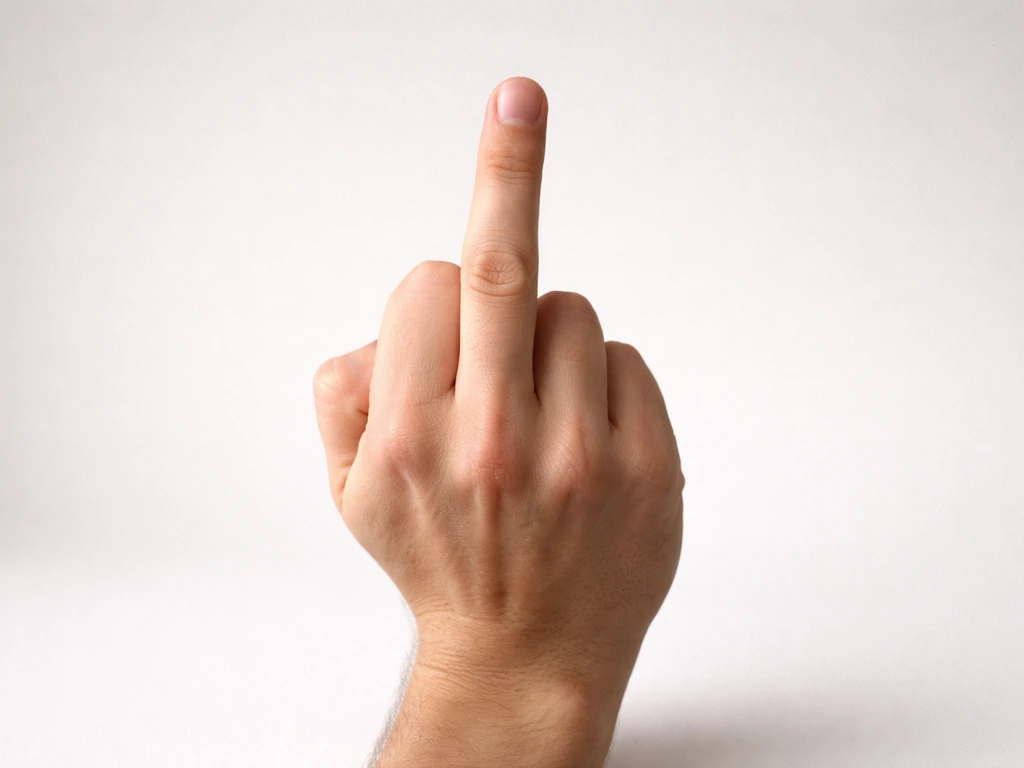
"Flip the bull the bird" means to defiantly give the middle finger to a bull, used both literally (as in rodeo imagery) and as a vivid metaphor for refusing to be beaten down by life's hardest moments.
Flip the Bull the Bird Meaning: Origin, Usage, and Variations

Marcus Whitmore
30 Jun 2026
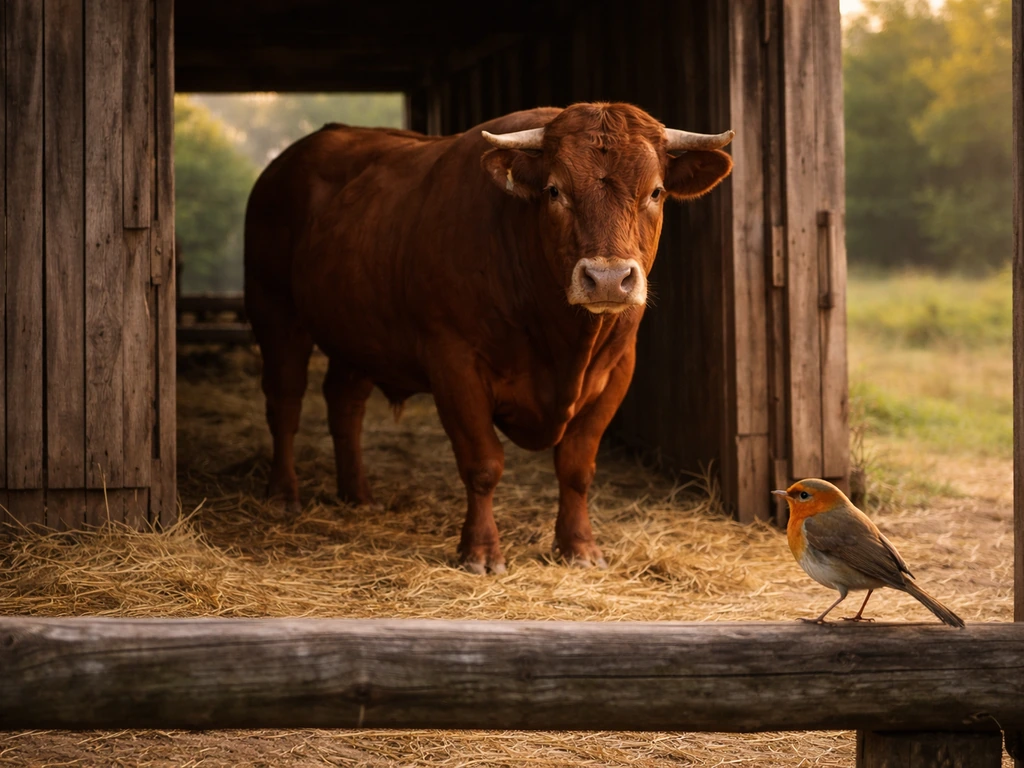
You'll most often encounter it in country music, specifically in Kip Moore's song "The Bull," where the line "laugh when I look back and flip the bull the bird" captures that feeling of surviving something brutal and having the nerve to look back at it with contempt. In a WUWm/NPR-affiliate review of Kip Moore’s album, the lyric “laugh when I look back and flip the bull the bird” is cited as part of the song “The Bull.
”. It's a clever mashup: it takes the classic American idiom "flip the bird" (meaning to extend the middle finger as an insult or act of defiance) and drops a bull right into the middle of it, creating a barnyard-flavored expression that hits harder than either phrase alone.
What the phrase actually means and where it comes from
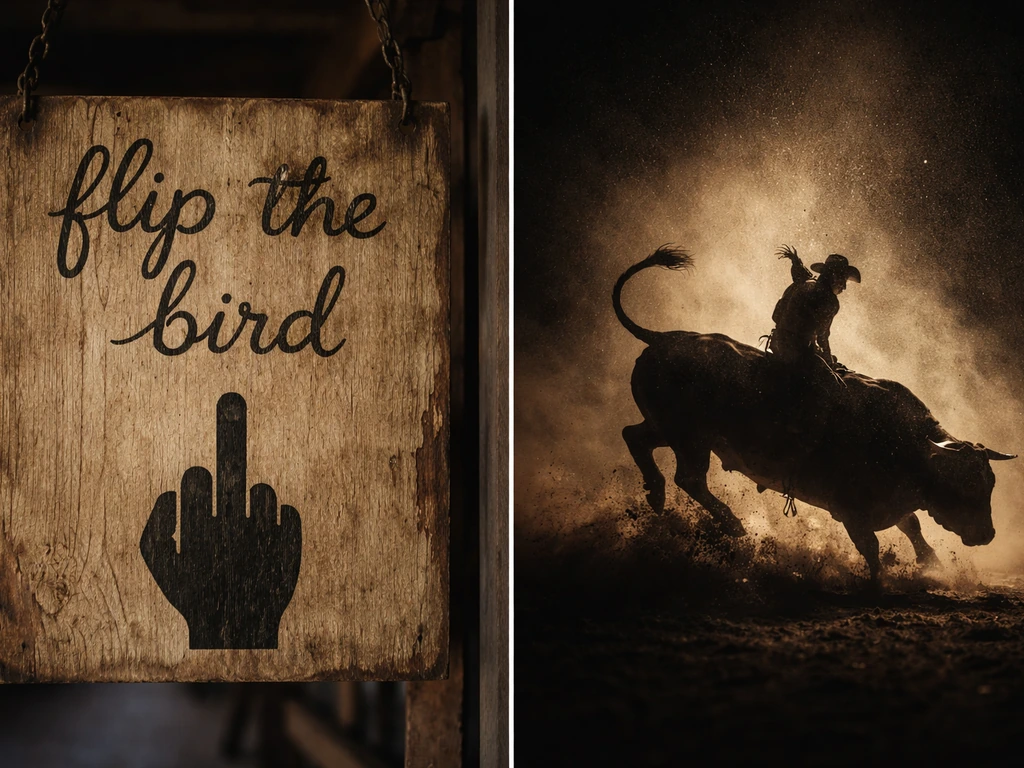
To understand "flip the bull the bird," you need both halves. "Flip the bird" on its own is a well-documented American idiom meaning to make an obscene gesture at someone by pointing the middle finger upward while keeping the other fingers folded down. Merriam-Webster includes it, Wiktionary lists synonyms like "give someone the finger" and "give the bird," and Phrase Finder describes it as "aggressively raising your middle finger at someone as a sign of displeasure.
" The phrase has been in common use since at least the 1960s, with the earliest printed attestations showing up around 1967. The slang connection between "bird" and the gesture itself has roots in older vaudeville and gesture traditions, where the word carried a rude or sexual connotation.
Now drop a bull into that phrase. In rodeo culture, "the bull" is the ultimate test of toughness. Getting thrown, stomped, and humiliated by a bull is a shared cultural shorthand for facing something overwhelmingly powerful and surviving it anyway. When Kip Moore's lyric says "flip the bull the bird," it's using the gesture idiom to mean: I got knocked down, I got back up, and now I'm giving that bull the middle finger.
It's defiance with a grin on its face. If you’re also wondering about the flip him the bird meaning, it refers to using the middle-finger gesture as a direct insult or show of defiance toward someone. The phrase only works because both halves are culturally loaded, and putting them together creates a double image that's equal parts funny and genuinely meaningful.
How to use it in conversation
This phrase lives in a pretty specific register: it's playful, rural-coded, and best used in contexts where someone has overcome a hard stretch and wants to signal that they've come out the other side with their spirit intact. It's not aggressive the way shouting an insult is. The tone is more like retrospective triumph, the kind of thing you say with a laugh. Here are some natural examples of how it shows up:
- "Lost my job, got it back six months later doing better work than before. I can finally laugh and flip the bull the bird."
- "She went through two years of that program and came out the other side ready to flip the bull the bird."
- "Country people get it immediately when you say you're about to flip the bull the bird. Everyone's had their version of the bull."
- "The whole album is about taking hits and still standing. That closing lyric, 'flip the bull the bird,' lands like a punctuation mark."
Who uses it? Mostly fans of country music and rural Americana, people who've encountered Kip Moore's song directly, and anyone who wants a colorful way to express hard-won defiance. It's more common in southern and midwestern US speech, but the underlying sentiment (surviving something tough and flipping it off on the way out) translates everywhere.
The symbolic layer: birds, bulls, and barnyard defiance
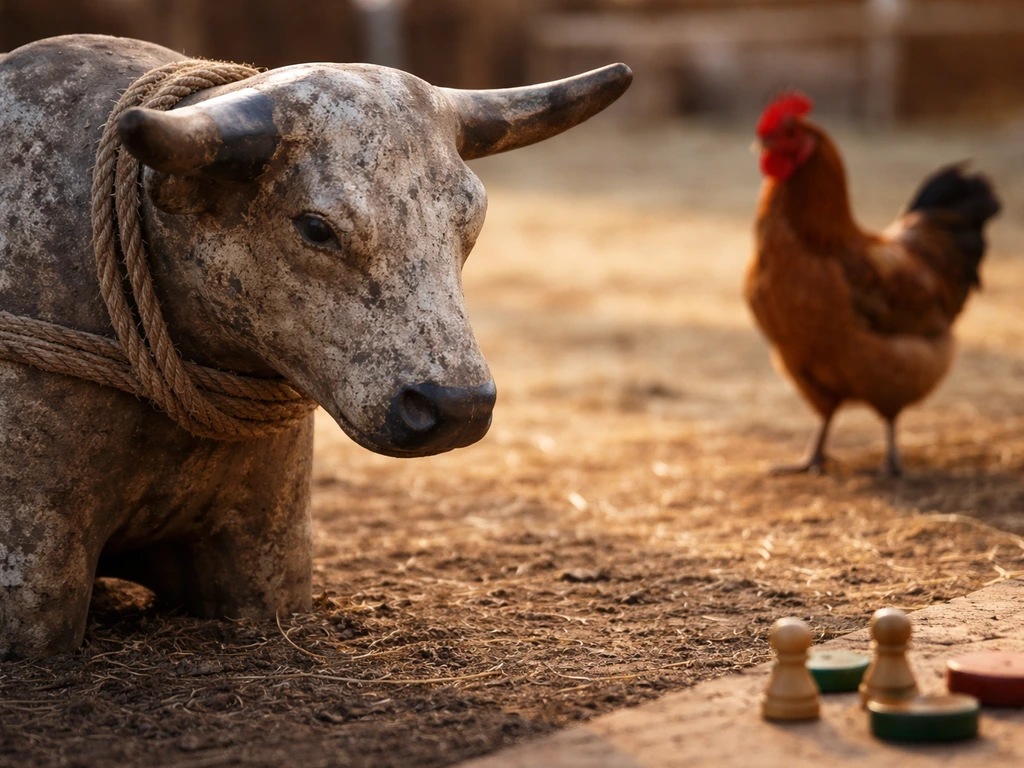
There's a reason this phrase lands so well symbolically, and it has everything to do with the specific imagery each animal carries. In American folklore and rural life, the bull represents raw, unstoppable force. It's what you can't control, what throws you in the dirt, what tests your will. The bird, meanwhile, has long been a slang stand-in for the middle-finger gesture, but birds in general also carry meanings of freedom, lightness, and the ability to rise above.
If you're also looking up variants like flick the bird meaning, you can treat it as a nearby defiance reference even when the exact wording shifts. When you "flip the bull the bird," you're using a creature of flight and defiance to answer a creature of brute power. It's the underdog gesture, small and sharp, aimed at something enormous.
There's also a fun pub-game angle worth noting. A game called "Cock & Bull: The American Pub Game" actually uses the shout "FLIP the BIRD!" as one of its barnyard-style commands, alongside things like "SHOOT the BULL" and "TIP the COW." This shows how fluidly farm-animal language gets played with in American humor and social culture. The phrase fits naturally into a tradition of treating barnyard animals as comic stand-ins for life's obstacles, and the gesture that goes with "flipping the bird" translates perfectly into that rowdy, playful context.
Variations and similar phrases you might confuse it with
Because the phrasing is a bit unusual, people sometimes encounter variations of this expression and wonder if they're hearing the same thing or something different. On Reddit’s r/AskReddit, a commenter also distinguishes “flipping (someone) off” and “flip the bird” as related ways to describe the same middle-finger gesture “flipping (someone) off” vs “flip the bird”. Here's how the close relatives stack up:
| Phrase | Meaning | Context |
|---|---|---|
| Flip the bird | Give the middle-finger gesture to someone | General American slang, used widely |
| Flip the bull the bird | Defiantly give the middle finger to your hardships (symbolized by a bull) | Country music, Kip Moore's "The Bull," rural Americana |
| Flip someone the bird | Make the middle-finger gesture at a specific person | Everyday insult or expression of frustration |
| Flip him the bird | Same gesture directed at a specific male individual | Conversational, narrative retelling |
| Flippin' the bird | Present-tense or casual version of the same gesture idiom | Informal speech, regional slang |
| Flick the bird | Near-synonym for flip the bird, regional variation | Less common, similar meaning |
| Give the bird / give someone the finger | Same core gesture, slightly older phrasing | Broader English usage |
The key distinction with "flip the bull the bird" is the bull. Every other variation in this family is about a person giving the gesture to another person. This one makes the bull the target, which is what gives it that distinctive metaphorical punch. If you see "flip the bull" on its own (like on a piece of Kip Moore merchandise), that's usually shorthand pulled from the full phrase and refers back to the same song and meaning.
Common misunderstandings and where the phrase shows up
The biggest misunderstanding is assuming this is literal advice about interacting with a bull. It is not. No one is recommending you extend your middle finger at a live bull at a rodeo. If you Googled this phrase expecting farm safety content, you've landed in idiom territory. English-idioms.info frames “flip the bull” and “flip the bird” as vulgar idioms used to express disrespect or defiance rather than literal instructions idiom territory. The phrase is entirely figurative: the bull is the metaphor for a challenge, not an actual animal you're addressing.
Another common confusion: people occasionally assume the phrase is a pure insult, like the standard "flip the bird" directed at a person. But "flip the bull the bird" has a distinctly triumphant, retrospective tone. You're not in the middle of the fight when you say it; you're looking back at it. The emotion is closer to relief and pride than anger.
Here's where you're most likely to encounter the exact phrase "flip the bull the bird" in the wild:
- Kip Moore's song "The Bull" from his 2017 album "Slowheart" (the original and most prominent source)
- Country music fan forums, lyric discussion threads, and review articles quoting the song
- Merchandise: T-shirts, can coolers, and other items featuring the phrase or imagery tied to Moore's song
- Social media posts and memes using the phrase to express personal resilience after hardship
- Regional American speech in country music communities, where the phrase has taken on a life beyond the song itself
It's also worth knowing that "flip the bird" as a standalone phrase has a long history in American slang dating back to the 1960s, so encountering it outside the Kip Moore context is totally normal. If you're really focused on the specific insult meaning, see flippin the bird meaning for how the middle-finger gesture is used as slang. The addition of "the bull" is what signals you're in lyric or Americana territory specifically.
Quick checklist: figure out exactly how it's being used
If you've just seen "flip the bull the bird" somewhere and want to confirm what it means in that specific context, run through these questions:
- Is it in song lyrics or a music reference? Almost certainly Kip Moore's "The Bull," meaning triumphant defiance after surviving something hard.
- Is it on merchandise (shirts, coolers, prints)? Same origin, merchandise inspired by the song and its message.
- Is it in a social media post or meme about personal hardship? Someone is borrowing the phrase to say they've gotten through a difficult period and are proud of it.
- Is it in a conversation about rodeos or farm life? Could be literal rodeo humor, but more likely still metaphorical given how culturally embedded the phrase is.
- Is "the bull" absent and it's just "flip the bird"? Then you're dealing with the standard middle-finger gesture idiom, not this specific expression.
- Is the tone triumphant or retrospective? That confirms the Kip Moore/Americana meaning. Is the tone angry or confrontational? Then someone may be using a variation closer to the straight insult meaning of "flip the bird."
In almost every real-world case, "flip the bull the bird" signals resilience and defiance, not literal advice, not pure insult. It's a phrase with a grin behind it: the grin of someone who got knocked flat, dusted themselves off, and had the last laugh.
FAQ
Is “flip the bull the bird” ever meant literally?
In most contexts it is metaphorical, the “bull” stands for a hard challenge (a tough time, setback, or opponent), and the gesture stands for defiant relief. Using it at a literal rodeo, or directed at a real person in a conflict, would change the tone and can be read as harassment or an escalation.
Does the phrase express anger or more of a triumph mood?
It is usually more like a “look back at what happened and smirk” line than an in-the-moment threat. If you say it while someone is actively angry, it can still sound provocative, but the original intent is retrospective toughness rather than current aggression.
What changes in meaning if someone drops “the bull” and only says “flip the bird”?
Yes, and it helps clarify usage. If you keep “the bull” in place, you signal the country, Americana, or Kip Moore-inspired resilience angle. If you remove it and just say “flip the bird,” people will more likely interpret it as a direct middle-finger insult to a person.
How should you use it when posting online or messaging someone?
If you’re using it in text or social captions, it’s safest as self-referential (“I got knocked down, but I flipped the bull the bird”) rather than aimed at another person (“you should…”). Aimed at someone, it can be interpreted as a personal insult even if you meant motivation.
How is “flip the bull the bird” different from “flip him the bird”?
“Flip him the bird” or “flip the bird” typically targets a person and reads as an obscene gesture directed outward. “Flip the bull the bird” uses the bull as the target, so it reads as confronting an obstacle, not retaliating against a specific individual.
Is it appropriate in professional or family settings?
The phrase itself is relatively lighthearted in register, but it’s still a reference to a rude gesture. If you’re speaking with coworkers, teachers, or anyone where profanity can be a policy issue, avoid it, or replace it with a cleaner version like “took the hit and kept my chin up.”
Someone took it literally and asked about interacting with a bull, what should I say?
Don’t treat it as rodeo advice. It does not provide safety guidance, animal-handling steps, or interaction instructions, it’s idiom slang. If someone seems confused and thinks you’re making a literal statement, a quick clarification like “It’s just a lyric saying I survived something tough” helps.
How do I interpret it when I see it outside of Kip Moore contexts?
If you see it as merchandise text, lyric quotes, or a pub game callout, it usually means the same thing as the song line, resilient defiance. If you see it on an everyday insult thread, context matters, and it may be borrowed as a general “don’t mess with me” line.
Are variants like “flick the bird” the same meaning, or can they shift the target?
Yes. “Flick the bird” and similar variants keep the defiant gesture reference, but they do not always keep the “bull as the obstacle” imagery unless “bull” (or the challenge target) appears. If “bull” is missing, assume the meaning shifts closer to a directed insult.
Next Article
Flip the Bird Idiom Meaning: Gesture, Origin, Usage
Meaning and origin of flip the bird, when to use or avoid it, plus polite alternatives and similar idioms explained.