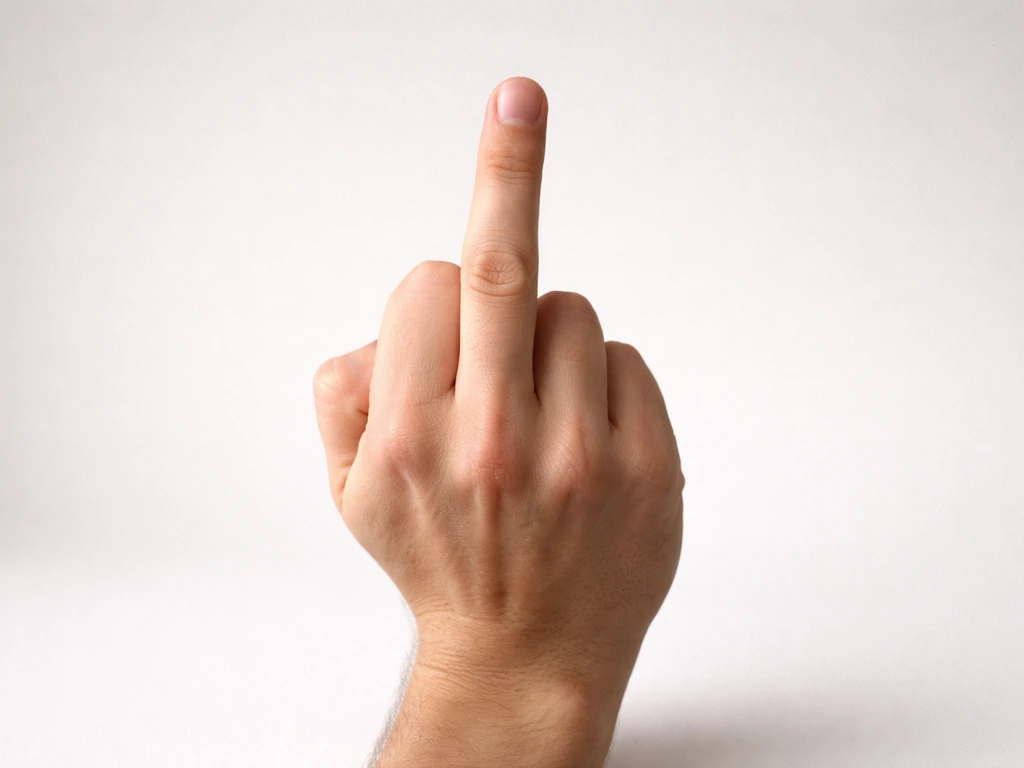
To "flip the bird" means to raise your middle finger at someone while keeping the other fingers folded down, a gesture universally understood in English-speaking cultures as a rude, contemptuous insult. Merriam-Webster defines it plainly as making an offensive gesture at someone by pointing the middle finger upward, and Cambridge adds that it signals you are annoyed with that person in a very deliberate, hostile way. When someone says they "flipped the bird" or "gave someone the bird," they are describing this exact act, no actual birds involved.
Flip the Bird Idiom Meaning: Gesture, Origin, Usage

Marcus Whitmore
4 Jun 2026
What the idiom actually means
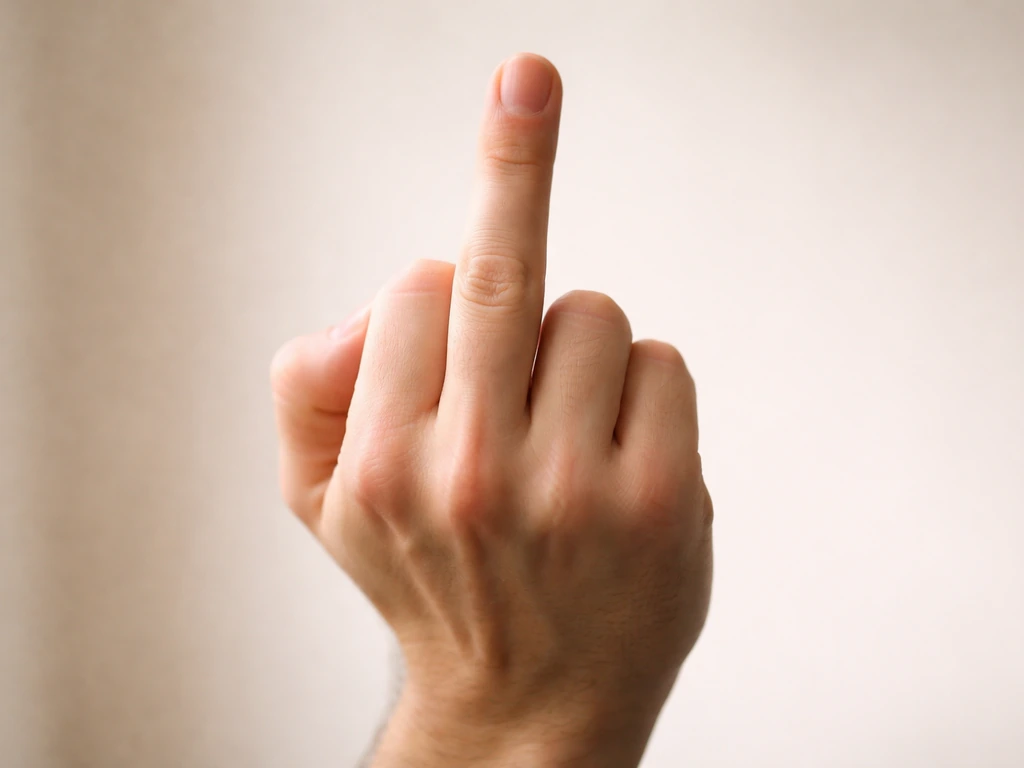
The phrase "flip the bird" is an idiomatic way of saying you showed someone the middle finger. Collins Dictionary calls "the bird" an obscene gesture of contempt, and that word, contempt, is really the key. It is not just frustration or annoyance vaguely aimed at the universe. It is directed at a specific person and means, essentially, "I disrespect you" or "go to hell.
" The phrasing can shift slightly (flip, give, show, throw, all work), but the meaning stays exactly the same. You will hear related forms like "flip him the bird," "flip someone the bird," or even "flippin the bird" in casual speech, and every version refers to this same loaded gesture. The term “flippin the bird” is just a casual, slightly censored way of referring to the same middle-finger insult.
What makes it an idiom rather than just a description of a physical act is that people use the phrase in conversation to describe the gesture without actually performing it. Saying "I almost flipped the bird at that driver" communicates the full emotional weight, anger, contempt, near-loss of composure, even if your hands never moved. The phrase carries the insult built into it.
Where the expression came from
The gesture itself is ancient. blank" rel="noopener noreferrer">Scholars trace the raised middle finger back to Roman and Greek antiquity, where it was known as the "digitus impudicus", literally the shameless or indecent finger. So the physical sign has existed for well over two thousand years as a phallic insult symbol. The phrase "flip the bird," though, is a much more modern piece of American slang.
The most widely cited origin story for the English phrase traces it in two stages. In the 1860s, American slang included the expression "give someone the big bird," which meant to hiss at someone the way a goose does, a theatrical way of showing scorn or booing a performer off stage. "The bird" in that older expression literally referenced the goose and its aggressive hissing sound. That phrase stuck around in the language as a general term for dismissive contempt.
Then, by the 1960s, "the bird" had shifted in slang to refer specifically to the middle-finger "up yours" gesture that was becoming more common in American pop culture. The two threads, the old contempt slang and the specific gesture, merged, and "flip the bird" became the phrase people recognized as naming that particular hand signal. So the origins of the gesture and the origins of the modern phrase are genuinely two separate stories that eventually converged.
Saying it versus doing it: how people actually use the phrase
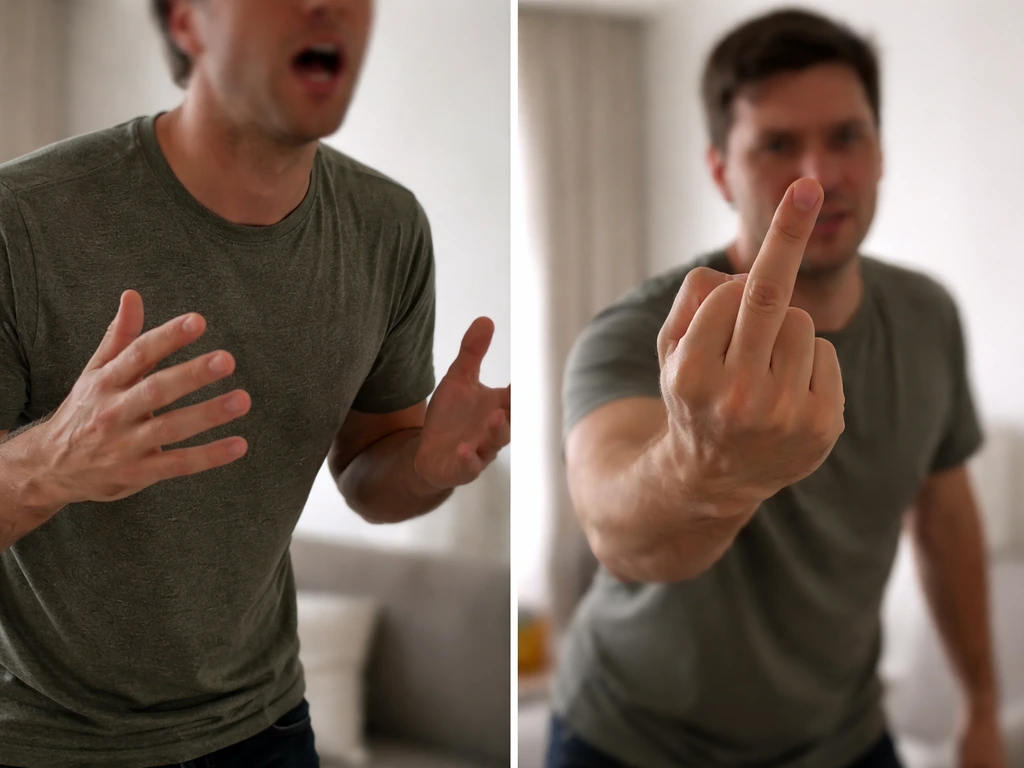
There is a real and useful distinction between verbally using the idiom and physically performing the gesture. When someone physically flips the bird, it is an immediate, visible act of hostility, the kind of thing that can escalate a road rage situation, get you in trouble at work, or even result in legal consequences in the wrong context. U.S. courts have had to grapple with the gesture as a form of expressive conduct, and while some rulings have protected it as free speech, real-world consequences (fines, confrontations, disciplinary action) still follow in many situations.
When people say the phrase in conversation, the tone is usually one of two things: either they are describing something that already happened ("she flipped the bird at the referee"), or they are expressing how angry they felt without actually acting on it ("I wanted to flip the bird so badly"). Used this way, the phrase functions as vivid emotional shorthand. It is still casual, still carries the edge of the insult, and still sounds more blunt than polished, but it is generally far less combustible than performing the gesture itself in the heat of the moment.
How offensive is it, and does that change by context?
In most English-speaking countries, the United States, the UK, Canada, Australia, the middle finger gesture is widely recognized as one of the most blunt and rude nonverbal insults you can deliver. It is considered vulgar and obscene enough that doing it in a professional setting, at a school, or toward a police officer can have serious consequences. Workplace policies explicitly list offensive gesturing as a disciplinary matter, and courts have treated the gesture as a form of conduct that, depending on context, can cross legal lines.
That said, context shifts things quite a bit. Between close friends joking around, the gesture can be playful rather than genuinely hostile, a mock-insult with a smile behind it. In pop culture, it has been heavily memed, used in movies, and sometimes recontextualized into humor. Dictionary.com also traces how “bird” slang has carried different historical meanings, including a middle-finger connotation, even though not every bird-slang usage is a perfect match bird is the word. The gesture shows up in music videos, political satire, and animated reactions online. Even so, the default cultural reading is hostile, and assuming the "playful" interpretation is almost always risky unless you know the relationship very well.
Outside of English-speaking cultures, the middle finger gesture is recognized broadly across much of the world, though the intensity of offense can vary. In some countries, other gestures (like the two-finger "V sign" with the back of the hand facing outward) carry equivalent or even stronger insult value. The important thing to know if you are navigating cross-cultural contexts is that the middle finger rarely reads as neutral or benign anywhere, and "flip the bird" as a phrase is specifically an English-language idiom that may not translate directly.
How it compares to similar expressions and gestures
A few related phrases and gestures are worth distinguishing, because they come up in the same conversations and can cause genuine confusion.
| Expression / Gesture | What it means | Key difference |
|---|---|---|
| Flip the bird | Raise the middle finger at someone as an insult | The core idiom; refers to a specific, widely recognized gesture |
| Give someone the finger | Exact same gesture, different phrasing | No meaningful difference; fully interchangeable in meaning |
| Flick the bird | Variant phrasing of the same gesture | Less common; "flick" implies a quicker motion but same intent |
| Give someone the big bird | 1860s slang meaning to hiss/boo someone | Historical predecessor; not the middle finger, but contempt-based |
| V sign (back of hand outward) | Obscene insult in the UK and some other countries | Not the same gesture; two fingers rather than one; different cultural context |
| Flip the bull the bird | Flip the bird at a bull (often used metaphorically for bold or reckless defiance) | A specific, more colorful use of the idiom — same gesture, different target |
"Give someone the finger" and "flip the bird" are completely interchangeable, there is no shade of meaning separating them. "Flick the bird" is a less common variant that some people use, but it describes the same act. Where things get more interesting is with the older "big bird" expression, which was about audible contempt (hissing) rather than the hand gesture, and with gestures from other cultures that look similar but carry their own distinct histories.
What to do instead: polite alternatives for real situations
If you accidentally use the phrase in a context where it landed badly, the fix is straightforward: acknowledge it directly. Something like "Sorry, that came out ruder than I meant" works fine. Because the phrase is so clearly tied to an obscene gesture, there is no real ambiguity to hide behind, but a calm, honest acknowledgment usually deflates any tension quickly.
If you want to express anger, frustration, or contempt without reaching for the idiom, either verbally or physically, there are plenty of options that still get the point across without the baggage.
- "I was furious" or "I was absolutely done with that person" — direct emotional language without the obscene layer
- "I gave them a look" — implies displeasure without specifying an offensive gesture
- "I let them know exactly what I thought" — vague enough to be polite, pointed enough to be honest
- In writing or professional contexts, focus on describing the behavior that caused the frustration rather than your reaction to it
- If you feel the urge to gesture in traffic or a tense moment, a palm-down wave or simply looking away is far less likely to escalate things
- Saying "I was tempted to flip the bird" in casual conversation among friends is usually fine — it signals relatability and humor without actually performing the insult
The practical takeaway is this: the gesture and the phrase both carry the same emotional charge, just in different mediums. The phrase is generally safer in casual storytelling. The physical gesture is the one that gets people into trouble, at work, on the road, or anywhere the other person might respond badly. If you are ever unsure whether the moment calls for it, it almost certainly does not.
FAQ
Are “flip the bird,” “give the finger,” and “give someone the bird” the same insult?
In everyday English, you should treat “flip the bird,” “give someone the bird,” “show someone the bird,” and “give the finger” as meaning the same thing, the middle finger raised. The differences are mostly style or regional preference, not severity or intent.
Is it safer to say the phrase than to actually raise your middle finger at work or at school?
In most professional settings, saying the idiom out loud can still sound inappropriate, even if no gesture happened. If you are in the presence of coworkers, customers, or students, safer alternatives are “I was really angry” or “I wanted to vent,” since the idiom keeps the obscene meaning active.
What should I say if I was angry, but I do not actually want to insult someone?
If you mean you were upset but you did not intend an insult, avoid the idiom and describe your feeling directly. Saying “I wanted to flip the bird” can still be read as endorsing contempt toward a person, so it may escalate rather than clarify.
Does writing “flippin the bird” make the insult less serious?
Yes. “Flippin the bird” or similar censored spellings still signal the same gesture, so they do not reduce the meaning much. People will interpret the underlying insult, especially in text conversations where the phrasing is recognized.
How can I mention the idiom in a story without it sounding like I acted hostile?
Most misunderstandings come from context, not grammar. If you tell a story like “I almost flipped the bird at the driver,” the listener may picture the act and still react strongly, so add a cue such as “I held back” or “I didn’t do it” if you are trying to reduce tension.
If I accidentally said or typed it and it offended someone, how do I repair it?
Using a polite apology helps, but it works best if you specify the intent and take responsibility. A practical approach is, “Sorry, I realized that word/gesture is rude, I meant it as frustration, not disrespect.” Simple “my bad” can be fine, but intent helps most.
What are the safest rules for dealing with the phrase or gesture in international settings?
In cross-cultural situations, do not assume the middle finger is “just like” another rude symbol you might know, because local meanings differ. Even when people recognize the gesture, the response can range from annoyance to serious offense, so it is best to avoid it and, if needed, switch to neutral language.
Is there a less offensive substitute that still communicates intense frustration?
Because it is a fixed, widely understood insult, there is not a true “weaker” version in English. If you want comparable emotional honesty without the obscene baggage, try alternatives like “I was furious,” “I was done with that,” or “I was tempted to snap back,” depending on your tone.
What’s the best way to handle it if you realize the situation is escalating after you said it or did it?
If a warning is coming, respond by lowering the temperature, not by defending your point. In the moment, stop the behavior immediately, keep communication factual, and avoid repeating the idiom, since repetition can be seen as continued hostility.
How should I handle translation, subtitles, or teaching materials so the meaning lands correctly?
Different languages may have phrases for “showing contempt” that do not map directly to the English idiom. If you are translating for subtitles or conversation, translate the meaning, “a rude gesture of contempt,” rather than trying to preserve the literal “bird” imagery.
Next Article
War Bird Meaning: Literal, Slang, and Historical Uses
Understand war bird meaning: literal, slang metaphor for fighters, and historical bird symbolism, plus close phrase comp