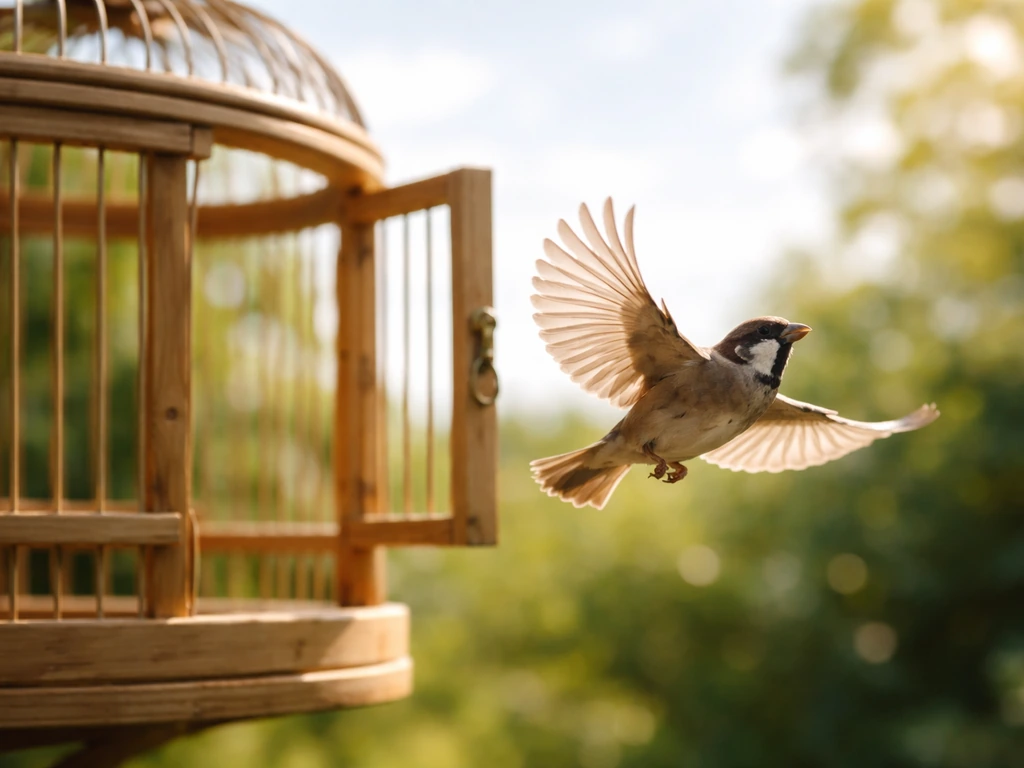
A "freedom bird" is most commonly a figurative expression where a bird stands for liberation, escape, or independence. When someone uses the phrase symbolically, they're drawing on the ancient human habit of watching birds fly away and thinking: that's what freedom looks like. The specific meaning shifts depending on context. It can mean peace (a dove released at a ceremony), raw independence (an eagle soaring with no one telling it where to go), escape from something painful (like the cage-and-release metaphor in song lyrics), or even the literal aircraft that flew U.S. soldiers home from Vietnam. So the first thing to pin down is: which kind of freedom bird are we talking about?
Freedom Bird Meaning: Symbolism, Birds, and How to Interpret

Marcus Whitmore
5 May 2026
What "freedom bird" usually means: literal vs. figurative
The phrase does double duty. In its most common figurative sense, "freedom bird" or "bird of freedom" is a metaphor: the bird represents an idea, a feeling, or a state of being free. You'll find this version in poetry, song lyrics, motivational quotes, and storytelling. The image works because birds physically do what freedom feels like. They go where they want, they're not bound to the ground, and when a cage door opens, they leave.
But the phrase can also be literal or semi-literal. Merriam-Webster actually lists "bird of freedom" as a name connected to a specific bird species, specifically the riflebird (Ptiloris magnificus), a bird-of-paradise. So in a strict taxonomic or dictionary sense, a "bird of freedom" can point to a real animal. And then there's the military usage: for U.S. veterans of the Vietnam War, "Freedom Bird" referred specifically to the commercial aircraft that flew them home at the end of their tour of duty. That's not metaphor at all. It's a proper noun with a very specific emotional weight. The San Francisco International Airport documented this usage in their exhibition "Flying the Freedom Bird: Airlines and the Vietnam War," which captures just how powerful that phrase was for the people who lived it. For more on that specific military meaning, that usage deserves its own deep look, and the topic of what "freedom bird" means in the military context is worth exploring separately. In the military context, it points to the Vietnam-era charter flights nicknamed “Freedom Bird” that brought U.S. veterans home military meaning.
Wikipedia's disambiguation page for "Freedom Bird" lists multiple distinct uses, which tells you something useful: this is a phrase without a single owner. Context is everything, and you'll need to read the surrounding signals to know which meaning someone intends.
The birds most commonly tied to freedom symbolism
Not every bird carries freedom symbolism equally. A few species show up repeatedly across cultures and time periods as the go-to stand-ins for freedom, and it's worth knowing which ones and why.
| Bird | Freedom Association | Why It Works |
|---|---|---|
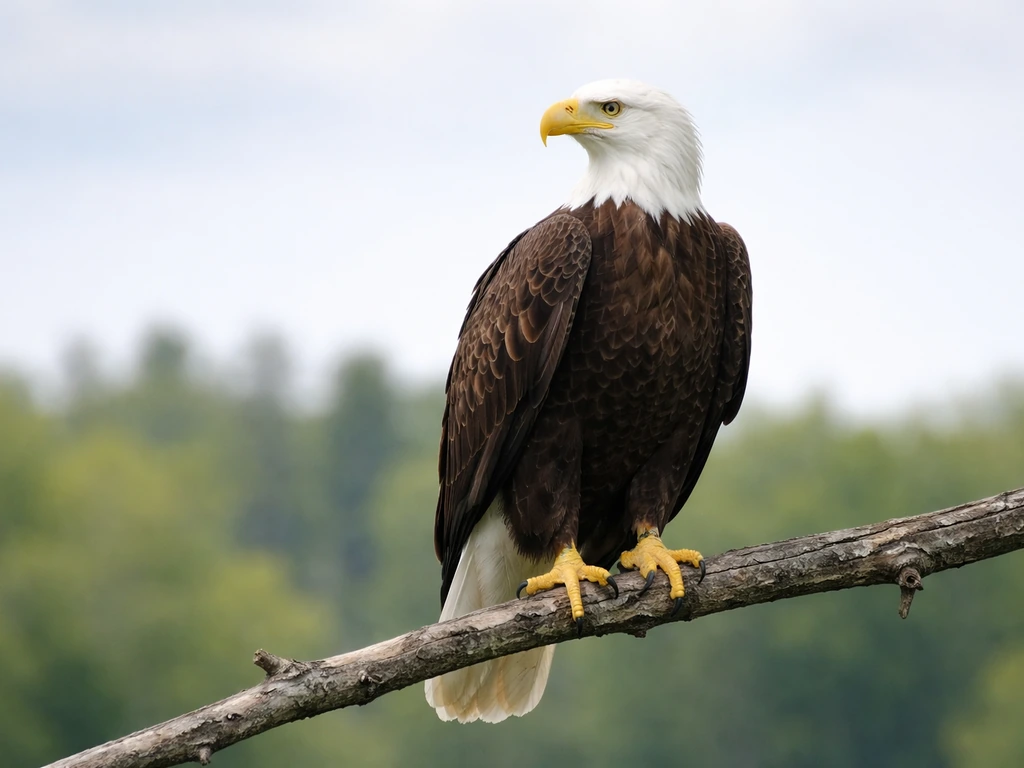
| Bald Eagle | Independence, national power, sovereignty | Used as the U.S. national symbol; soars at high altitudes; apex predator with no natural enemies |
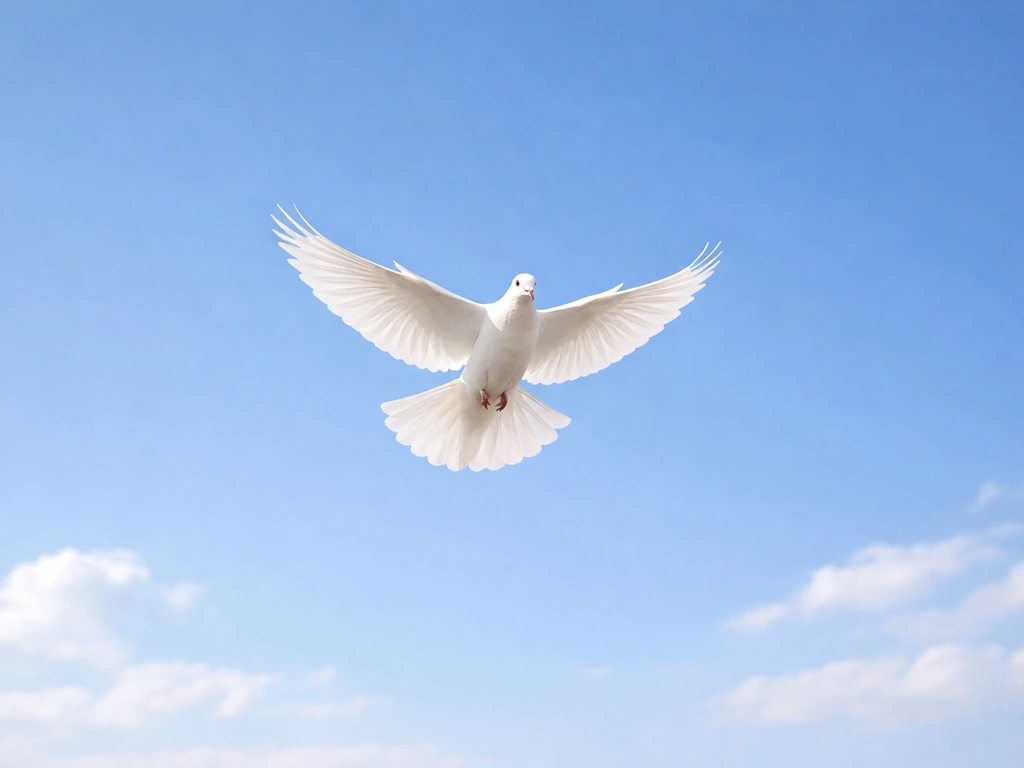
| Dove | Peace, spiritual freedom, release from conflict | Released at ceremonies worldwide; biblical associations with peace after the flood; white coloring signals purity |
| Swallow | Return, safe passage, escape from danger | Historically tattooed by sailors as a symbol of safe return; migrates vast distances freely |
| Crane | Longevity, spiritual ascension, freedom from earthly limits | Common in East Asian traditions; associated with souls traveling freely between worlds |
| Phoenix | Rebirth, liberation from destruction | Mythological bird that rises free from its own ashes; transcends death itself |
| Raven / Crow | Transformation, trickster freedom, breaking rules | In many Indigenous traditions, the raven uses cleverness to escape or liberate others |
| Albatross | Boundless wandering, unrestrained movement | Flies thousands of miles over open ocean; used in literature to represent freedom and its loss |
The eagle dominates in Western political symbolism, while the dove owns the peace-and-spiritual-freedom lane. Swallows and cranes carry more personal or cultural specificity. When someone says "freedom bird" without naming a species, they usually mean something like the eagle or the dove depending on whether the tone is powerful and defiant or gentle and hopeful.
The symbolic interpretations: what "freedom bird" can actually mean
Freedom itself isn't one thing, and neither is the freedom bird. Here are the main symbolic lanes the phrase travels in:
Escape and release
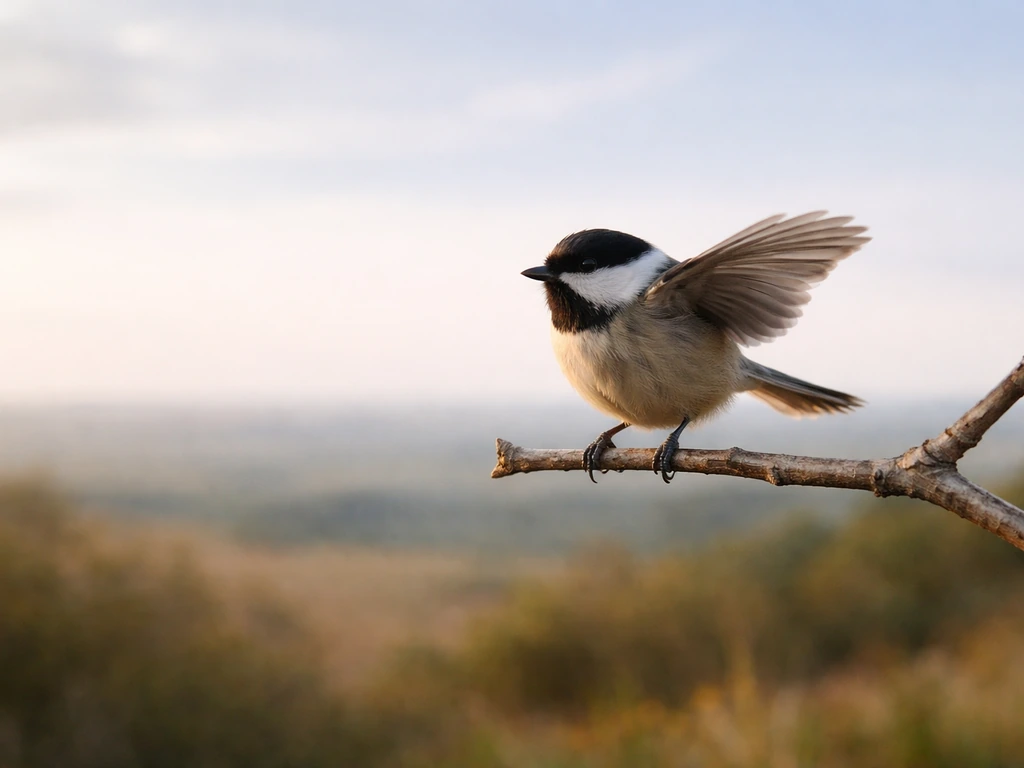
This is probably the most emotionally immediate meaning. A bird in a cage, then a bird flying free. It maps directly onto human experiences of confinement: imprisonment, an oppressive relationship, addiction, grief, or any situation where someone felt trapped. The song "Freedom Bird" from Cats uses this setup explicitly: catch a bird, put it in a cage, open the door and it flies away. The lyric then extends the metaphor to human freedom: "Our freedom is like a bird... it will fly away." This version of the freedom bird is about the fragility and preciousness of liberty, not just its power.
Independence and self-determination
Here the bird represents agency and autonomy rather than escape from something specific. The bird isn't fleeing a cage; it's simply going its own way, unbeholden to anyone. This is the eagle reading: sovereign, powerful, answerable to nothing. Political movements, national symbols, and motivational content lean heavily on this version.
Peace and resolution
The dove-as-freedom-bird carries a different charge: freedom from conflict, from violence, from suffering. Releasing a white dove at a memorial, a wedding, or a peace ceremony isn't about independence. It's about hope that the fighting is over. This is freedom as arrival, not departure.
Spiritual liberation
Across many traditions, birds represent the soul's ability to transcend the physical world. A freedom bird in this context is a soul freed from the body, karma, or the cycle of rebirth. In Christian iconography, a dove descending represents the Holy Spirit. In Sufi poetry, the bird in a cage is the human soul longing for union with the divine. In some Indigenous cosmologies, birds carry messages between the living and the dead, moving freely across boundaries that humans cannot cross.
Hope and possibility
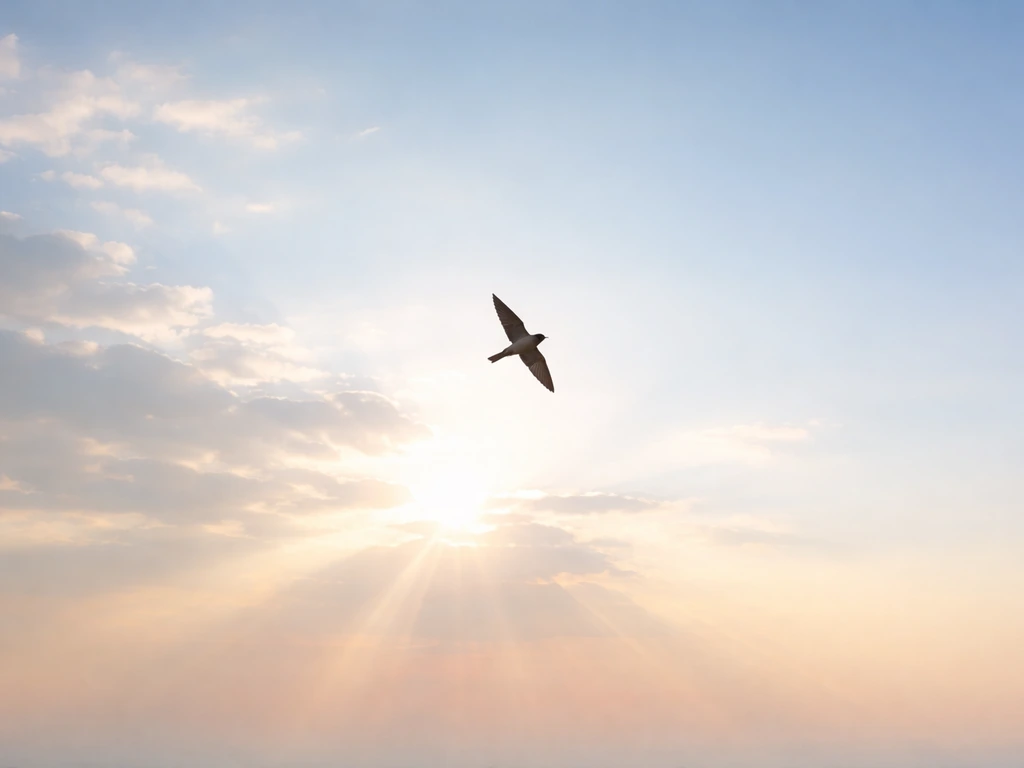
Sometimes the freedom bird isn't about a current state at all. It's aspirational. The bird that you see flying represents the freedom you don't yet have but believe you can reach. This is the most common usage in motivational and inspirational contexts, where the bird becomes a symbol of potential rather than present reality.
Cultural and historical contexts where freedom-bird imagery appears
Bird-freedom symbolism isn't a modern invention. It runs through recorded human history in ways that tell you a lot about how different societies thought about liberty.
In ancient Egypt, the ba, a human-headed bird, represented the soul's freedom to travel after death. In Greek mythology, Daedalus and Icarus used wings to escape imprisonment, with mixed results. The story works as a cautionary tale about freedom precisely because the bird-like apparatus gives them temporary liberation before pride destroys it.
In American political history, the bald eagle became the national symbol in 1782, explicitly chosen to represent freedom and strength. The choice wasn't random: eagles were seen as rulers of the sky, free from any earthly authority, which mapped neatly onto the new republic's self-image.
The Vietnam War era gave the phrase a very specific and deeply personal meaning for a generation of American soldiers. The "Freedom Bird" was the chartered commercial jet, often a TWA or Pan Am flight, that carried servicemembers from Vietnam back to the United States. Veterans have described the moment the wheels left the tarmac at Tan Son Nhut Air Base as one of the most emotionally overwhelming of their lives. That's a freedom bird that has nothing to do with metaphor and everything to do with survival.
In abolitionist and civil rights movements, bird imagery was used extensively to represent the experience of enslaved people and the aspiration for freedom. Spirituals like "I'll Fly Away" and imagery of birds breaking chains appear throughout African American cultural expression, connecting spiritual liberation to political liberation in a way that's inseparable.
In East Asian traditions, particularly Chinese and Japanese culture, cranes represent longevity and a kind of freedom from earthly constraints. Folding a thousand paper cranes is associated with a wish being granted, including wishes for peace and healing, connecting back to the dove-style freedom symbolism.
How "bird of freedom" shows up in language, quotes, and storytelling
The freedom bird is a reliable workhorse in figurative language because it's immediately visual and emotionally legible. Here's where you'll most commonly encounter it:
- Poetry and song lyrics: Birds in cages being released, birds flying toward an unreachable horizon, birds singing despite captivity. Maya Angelou's "I Know Why the Caged Bird Sings" is one of the most famous examples, where the caged bird's song itself becomes an act of freedom and defiance.
- Political speeches and rhetoric: Eagles, doves, and "soaring" metaphors are stock tools in political speechwriting across cultures. The freedom bird in this context signals aspiration and national identity.
- Memorial and ceremony: Releasing doves at funerals, peace ceremonies, or commemorations is a direct enactment of the freedom-bird metaphor, translating the symbol into a physical act.
- Tattoo culture: Swallows, eagles, and phoenixes are among the most tattooed birds specifically because of their freedom associations. A swallow tattoo on a sailor historically signaled safe return, one of the oldest forms of freedom-bird body art.
- Storytelling tropes: The caged bird that escapes, the bird guide that leads a hero to safety, the bird that carries a message across impossible distances. These are recurring story structures precisely because birds physically do what freedom narratively requires.
- Motivational content: "Be free like a bird," "spread your wings," and similar phrases are so common they've nearly become clichés, but they survive because the underlying image still resonates.
The phrase "let the bird out of the cage" operates in the same symbolic territory, as does the related idea that "the bird is freed" as a signal that something previously constrained has been released. These expressions cluster together in a family of idioms that all use bird-flight as a shorthand for liberation. the bird has landed meaning. Similarly, the idea of a "free bird" meaning someone unattached and unrestrained is a closely related usage worth knowing. If you hear someone use the phrase “let the bird out of the cage,” the meaning is also about releasing something restrained, though it is a different expression than “freedom bird.” let the bird out of the cage meaning. In everyday conversation, “free bird meaning” often comes down to the idea of someone being unattached and unrestrained a closely related usage worth knowing.
How to figure out which meaning is intended: a quick checklist
When you come across "freedom bird" or "bird of freedom" and you're not sure which sense is meant, run through these questions:
- Is a specific bird species named? If yes, the meaning may be literal or taxonomic (for example, the Ptiloris magnificus dictionary usage) rather than metaphorical.
- Is there a military or Vietnam War context? If the speaker is a veteran or the piece is about that era, "Freedom Bird" almost certainly refers to the aircraft that brought soldiers home, not a symbolic bird at all.
- Is there a cage or confinement image nearby? If the bird is being released from captivity, the meaning is about escape and liberation from a specific constraint.
- Is the tone political or national? An eagle in a political context is almost always about independence and sovereignty, not peace or spiritual freedom.
- Is the tone gentle, ceremonial, or spiritual? A dove in that context signals peace or spiritual liberation, not power.
- Is the speaker describing a person? A person called a "freedom bird" is likely being described as someone unattached, free-spirited, or impossible to pin down, similar to the "free bird" usage.
- Is the context motivational or aspirational? If the bird is described as something to aspire to or become, the meaning is about hope and possibility rather than current freedom.
- Is the phrase in a story or song? Check whether the bird is acting (flying, singing, escaping) or being acted upon (caged, released). Acting birds tend to represent power and independence; birds being released tend to represent fragile, newly achieved freedom.
Practical takeaways: using this symbolism well and reading it accurately
If you're trying to use freedom-bird symbolism yourself, the most important thing is to choose the right bird for the right kind of freedom. An eagle says "power and sovereignty." A dove says "peace and resolution." A swallow says "safe return after a long journey." A phoenix says "rebirth after destruction." Mixing the wrong bird with the wrong theme creates a muddled message, even if the audience doesn't consciously know why.
If you're reading or interpreting someone else's use of the phrase, resist over-literalizing it. When a poet says "I am a freedom bird," they are not claiming to be a Ptiloris magnificus or a Vietnam-era charter flight. They're reaching for an emotional truth about liberation. The metaphor works because it doesn't require precision; it requires resonance.
At the same time, be careful not to assume the purely metaphorical meaning when the historical one is in play. For Vietnam veterans and their families, "Freedom Bird" is not a poetic device. It's a specific, loaded term connected to real trauma and real relief. Treating it as just a pretty metaphor in that context misses the weight it carries.
Finally, remember that freedom-bird symbolism is culturally specific in ways that matter. An eagle means national freedom primarily in American and Western European contexts. A crane means something different in Japan than in West Africa. A raven means something different in Pacific Northwest Indigenous traditions than in European folklore. If you're working across cultural contexts, it's worth checking which bird carries freedom symbolism for that specific audience rather than assuming the eagle or dove will land the same way everywhere.
The bottom line: "freedom bird" and "bird of freedom" are flexible, durable phrases that can mean escape, independence, peace, hope, spiritual liberation, or a very specific aircraft depending entirely on who's using them and why. The bird is doing a lot of work in all of these cases. Once you know which kind of freedom is on the table, the right interpretation usually follows quickly.
FAQ
Is “freedom bird” the same thing as “free bird”?
Not always. “Free bird” is usually about someone being unattached or unrestrained, while “freedom bird” more often signals a broader liberation theme (escape, independence, peace, or sometimes a specific historical meaning). If you are interpreting a quote, check whether the speaker is talking about personal availability versus a liberty metaphor or “release” imagery.
How can I tell whether “freedom bird” is metaphorical or literal?
Look for proper-noun cues (capitalization like “Freedom Bird,” references to Vietnam or specific airlines), or for concrete settings like ceremonies, cages, or release imagery. If the surrounding text is about emotion, identity, or motivation, it is likely figurative. If it is about a particular flight, time period, or named species, it is likely literal or semi-literal.
What does “let the bird out of the cage” usually mean compared with “freedom bird”?
It typically emphasizes releasing something constrained or held back, often a situation or feeling rather than an abstract “state of freedom.” “Freedom bird” can cover escape, independence, and hope more broadly. So if the text focuses on “opening the door,” it may be closer to “let the bird out of the cage” than to the wider “freedom bird” metaphor.
If someone mentions a “bird of freedom,” does it always refer to the riflebird?
No. The phrase “bird of freedom” can be used descriptively for different contexts, but the taxonomic or dictionary-style meaning tied to a specific species (like the riflebird) is only one possible interpretation. In everyday writing, writers may use it figuratively, so rely on surrounding wording to decide.
Can “freedom bird” mean peace instead of independence?
Yes. A dove-style interpretation is common when the text includes memorials, weddings, ceasefire themes, or nonviolence language. The key is whether the “freedom” is framed as ending conflict and suffering (arrival or resolution) versus escaping control or asserting autonomy (departure or sovereignty).
What should I watch out for when interpreting “Freedom Bird” in Vietnam War stories?
Avoid treating it as a generic poetic phrase. In that context, it functions as a loaded proper term tied to charter flights that returned servicemembers, so details like the Vietnam timeframe, specific locations, and family/veteran recollections matter. If those signals are present, the metaphor framing is likely wrong.
Do different bird species always map to the same kind of freedom?
They map to tendencies, not universal rules. Eagles are often used for sovereignty or political strength in Western contexts, doves for peace, and cranes or swallows for other culturally specific meanings. If you are analyzing a work from a particular region or tradition, prioritize the culture’s established symbolism over a generic bird list.
Is it appropriate to use “freedom bird” in my own writing if I do not specify a bird species?
Yes, but be deliberate. Without a named bird, readers may read it as either eagle-style (defiant independence) or dove-style (gentle hope), depending on tone. To reduce ambiguity, pair it with at least one clarifier word, like “peace,” “escape,” “hope,” “cage,” or “sovereign,” and keep the tone consistent.
What does it mean if the text says freedom is “like a bird” or “a bird will fly away”?
That phrasing often treats freedom as precious and not permanently possessed, meaning it can vanish if conditions change. It is different from an autonomy-only reading where the bird simply chooses its own direction. If the surrounding lines mention fragility, timing, or risk, interpret it as “freedom that can slip away,” not just “freedom to roam.”},{
How do I handle the spiritual meaning of a freedom bird without overclaiming?
Use the safest cues in the text. Spiritual readings are usually signaled by language about the soul, transcendence, karma, rebirth, union with the divine, or messengers between life and death. If those cues are absent, treat it as a more general liberation metaphor instead of assuming a specific religion or belief system.
Next Article
Free Bird Meaning: Definition, Variants, and Examples
Meaning of free bird and related phrases in real conversation, culture, and lyrics, with examples and how to interpret.