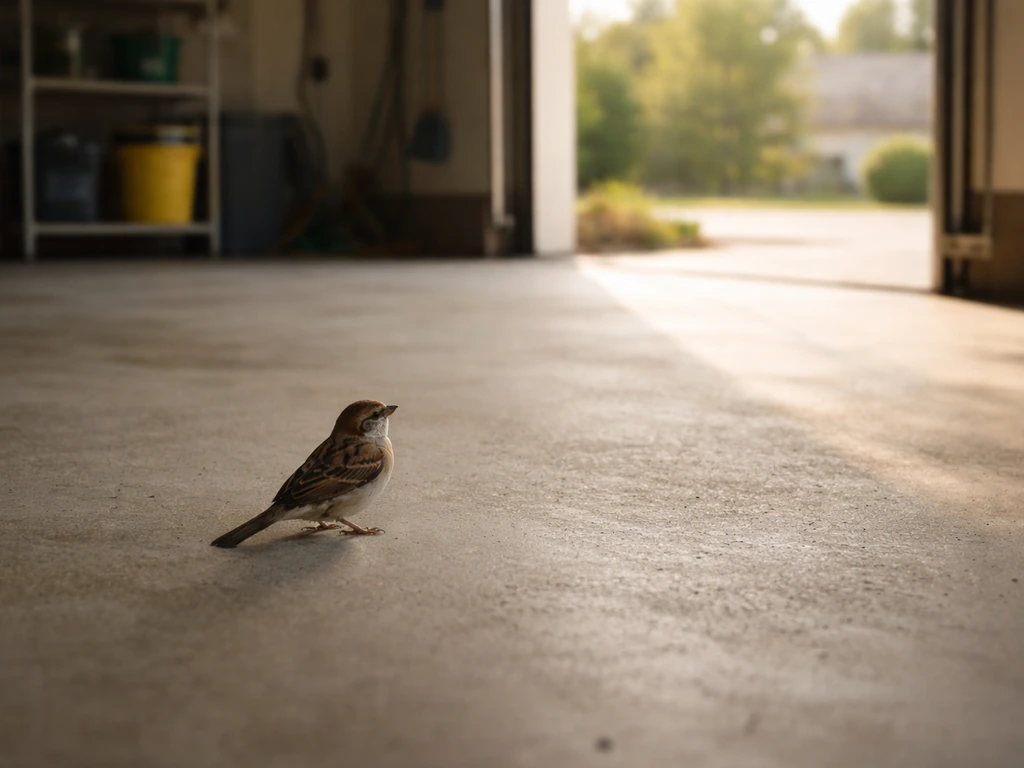
A bird on your car mirror is almost always doing one thing: fighting its own reflection. It sees what looks like a rival bird and keeps coming back to challenge it. A bird inside your car is a different situation entirely, usually one of panic and accident rather than any grand symbolic gesture. If you are trying to decode the bird in garage meaning, the same logic applies: start with what the bird is doing and then consider the cultural interpretations you may have heard bird in a different situation. Both scenarios have practical explanations, a handful of cultural meanings people genuinely attach to them, and clear steps you can take right now to handle them safely.
Bird on Car Meaning: Mirror vs Inside a Car Explained

Marcus Whitmore
25 Apr 2026
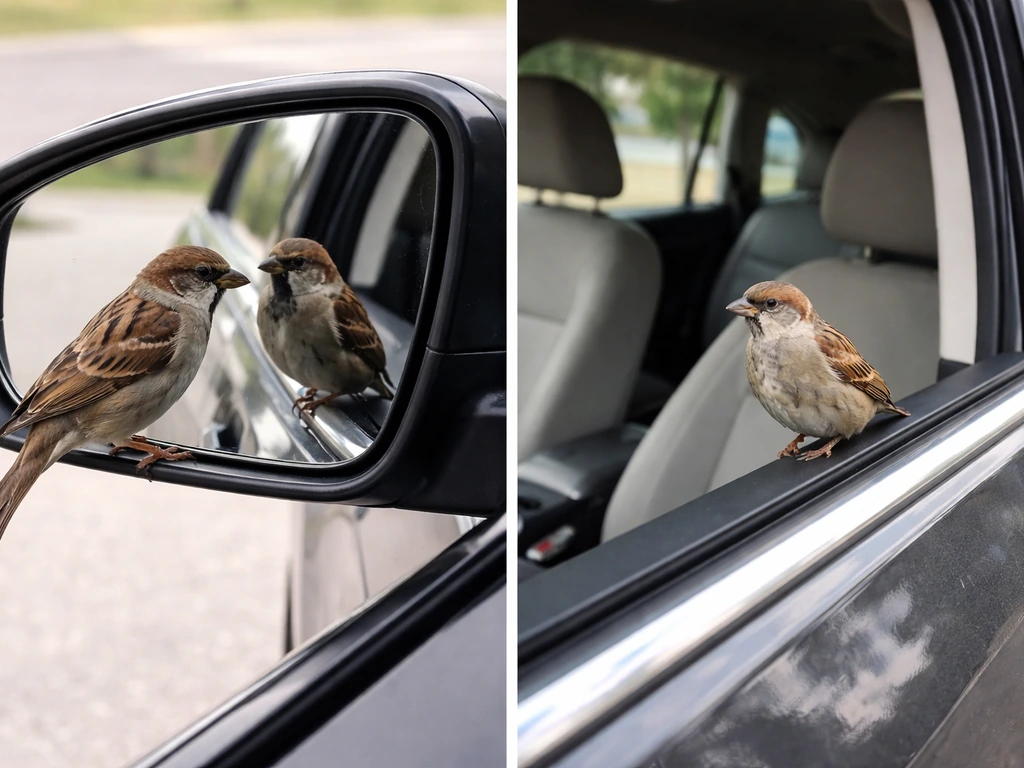
Bird on the mirror vs. bird in the car: two very different situations
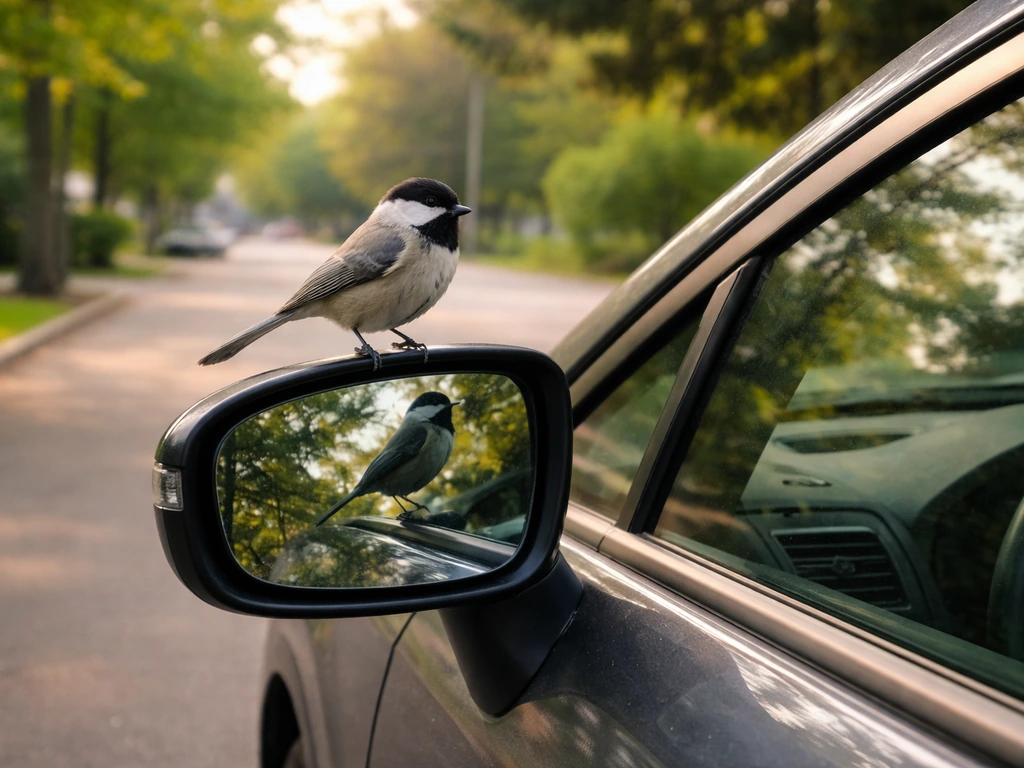
People search for 'bird on car mirror meaning' and 'bird in car meaning' expecting the same kind of answer, but these are really two separate events worth sorting out before anything else.
A bird on or near the mirror is almost always a territorial behavior problem. The bird sees its own reflection in the mirrored surface and interprets it as a rival, then keeps returning to confront it. This can happen dozens of times in a single morning and is especially common during breeding season in spring, when birds are actively defending territory. The bird is not visiting you. It is not sending a message. It is genuinely confused by a shiny surface.
A bird inside the car is a different situation. It either flew in through an open window or door and got trapped, or it was stunned by a collision with the windshield or glass and ended up in or near the vehicle. These incidents can involve an injured or distressed animal, which changes what you should do immediately.
Why birds keep coming back to your car (the real causes)
The mirror situation
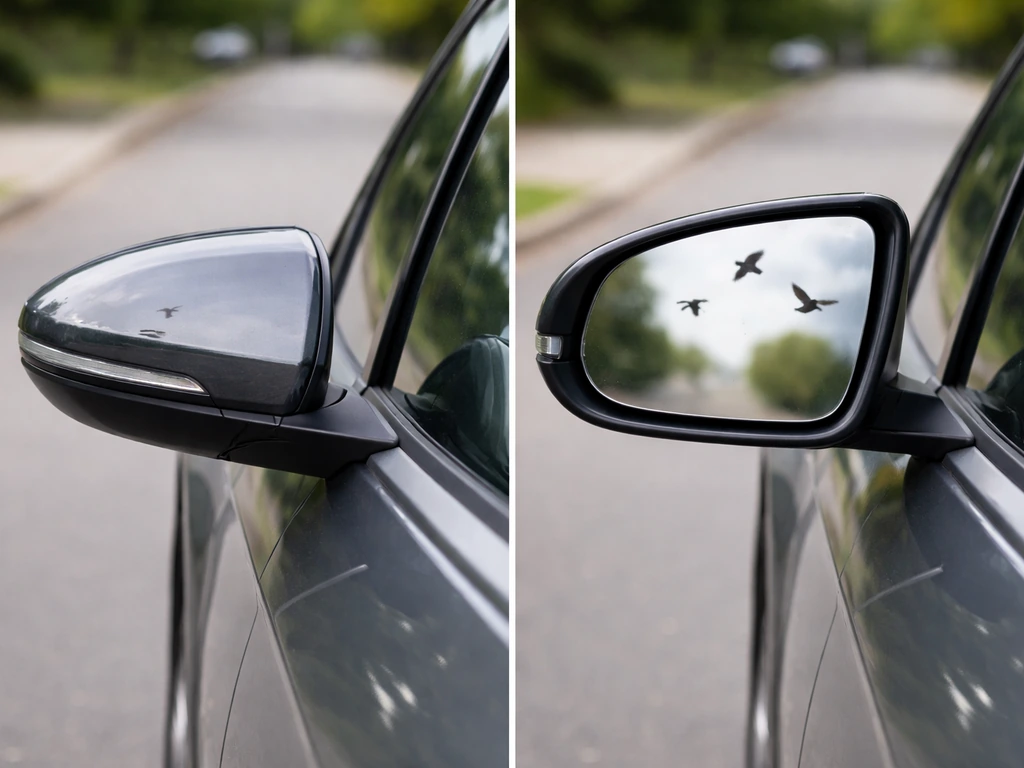
Car mirrors are essentially perfect bird-fight generators during nesting season. Audubon describes it clearly: birds approach reflective surfaces because they cannot distinguish their reflection from an actual rival bird. They peck, flutter, and sometimes attack the mirror repeatedly. Some birds will do this for days or even weeks. Robins, cardinals, and mockingbirds are particularly prone to this behavior because they are aggressive territory defenders. The reflection never backs down, which means the bird never gets the satisfaction of winning, and keeps returning.
The bird-in-car situation
Birds end up inside cars in a couple of ways. The most common is simple: someone left a window or sunroof open, a bird flew in looking for shelter or warmth (or just by accident), and then could not figure out how to get out. The second way is more serious: the bird collided with the windshield or side glass, was stunned, and either fell into an open door or was placed inside by a well-meaning bystander. Vehicle collisions kill an estimated 89 million to 340 million birds in the U.S. every year, so this kind of strike is far more common than most people realize.
What people believe a bird on a car means (symbolism and superstition)
The symbolism angle is real, and it is worth taking seriously as a cultural phenomenon even if you personally do not put stock in omens. People have been reading bird behavior as signs for thousands of years, and car-related bird encounters have slotted neatly into that tradition. If you are specifically wondering about the bird in space meaning, it helps to treat it as a separate symbolic theme rather than the same omen as a bird on a car mirror or in a garage car-related bird encounters. People sometimes also connect a bird on glass, like a martini glass, with similar symbolic interpretations and ask about the specific bird on the glass martini meaning.
- A bird repeatedly returning to a mirror or window is sometimes read as a persistent message from the universe or a deceased loved one trying to get your attention. The repetition is what gives it that feeling.
- A bird hitting a car windshield and leaving a mark (or dying) is widely considered a bad omen in Western folk tradition. HowStuffWorks notes this is one of the more common bird-as-bad-luck superstitions, with the car windshield version explicitly mentioned.
- A bird landing calmly on or near a car (without aggression) is often interpreted as a sign of good luck or incoming news, which connects to older European traditions where birds were seen as messengers.
- A bird entering an enclosed human space, whether a house, garage, or car, carries a long tradition of 'visitor coming' or, in some Appalachian and Southern American folklore, a death omen. The car version of this is borrowed from the house-bird superstition and tends to carry similar weight for people who hold those beliefs.
- Transition and change symbolism: seeing a bird unexpectedly in a personal space like your car is interpreted by some as a signal of life change, a journey beginning, or a need to pay attention to something you have been ignoring.
It is worth noting that Audubon lists bird poop landing on a person as one of the more common 'good luck' bird superstitions, which shows how flexible this symbolism tends to be: the same event can carry opposite meanings depending on the tradition. So if you are looking for a definitive supernatural verdict on the bird on your mirror, you probably will not find consensus. What you will find is a rich set of cultural responses to birds showing up unexpectedly in human spaces, and all of them reflect how deeply birds are woven into the way we talk about luck, change, and attention.
If you have come across related moments like a bird on your shoulder or a bird appearing in an unusual enclosed space, the symbolic interpretations tend to cluster around the same themes: messages, transition, and the boundary between wild and domestic life. For a more specific symbolic read, you can also look up what a bird with a leaf in its mouth is said to mean messages, transition, and the boundary between wild and domestic life.
What to do right now (practical steps for each case)
If a bird is on or attacking your car mirror
- Fold in your side mirrors immediately. Audubon specifically names this as the simplest and most effective fix for mirror-focused birds. No reflection, no rival, no more problem.
- If you cannot fold the mirrors, cover them temporarily with a plastic bag, cloth, or tape. Anything that breaks up the reflective surface works.
- Do not try to scare the bird off repeatedly. It will come back. The reflection is the problem, not the bird itself.
- If the bird is also pecking at your windows, the same logic applies: the car's reflective glass looks like open sky or another bird to it. Parking in a covered garage or in shade can reduce the reflectiveness of the glass and help.
- Give it a few weeks. This behavior peaks during breeding season (roughly March through July in most of North America) and tends to stop once territorial pressure eases.
If a bird is inside your car
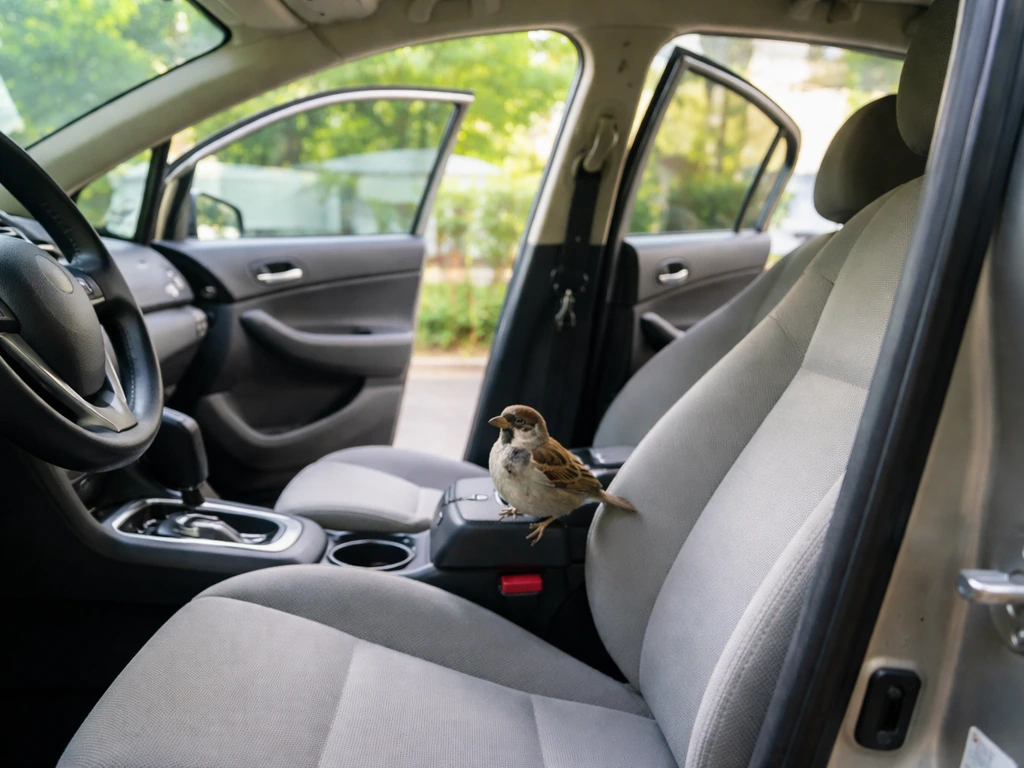
- Stay calm and move slowly. A panicking bird will hurt itself trying to escape. Sudden movements make it worse.
- Open every door and window fully. Give the bird the maximum number of exit options and then step away from the car entirely. Most birds will find their way out within a few minutes if you are not standing in the way.
- If the bird is not moving or seems stunned, do not immediately grab it. Give it 10 to 15 minutes to recover on its own. A bird stunned by a window strike often needs time to recalibrate before it can fly.
- If you need to move the bird (for example, it is in a position where it could be hit by traffic or attacked by a cat), put on disposable gloves first. All About Birds recommends this as standard practice when handling wild birds.
- To move a stunned bird, approach slowly from behind, cup your hands gently around its body, and place it in a small cardboard box with air holes. Keep it in a quiet, dark, warm spot. Do not offer food or water unless directed to by a wildlife rehabilitator.
How to stop it from happening again
Prevention is mostly about managing reflective surfaces and your parking habits. In a recent r/Ornithology thread, commenters discussed whether using non-dots for window visibility works, emphasizing that dots spaced 2 inches apart are a key detail for preventing collisions blank" rel="noopener noreferrer">managing reflective surfaces. Here is what actually works: American Bird Conservancy also advises using dot decals that follow its “two-inch-by-two-inch rule” for spacing to reduce home-glass collisions blank" rel="noopener noreferrer">the “two-inch-by-two-inch rule”.
- Fold your side mirrors whenever you park in areas where you have had mirror-attack problems. This takes two seconds and eliminates the issue entirely.
- Park in a garage or under cover during breeding season if mirror attacks are becoming a daily nuisance.
- If birds are repeatedly hitting your windshield in a particular spot, consider applying a bird-deterrent film or decal pattern to the glass. The key detail here: decals only work if they are dense enough. Research and guidance from Audubon, the Iowa DNR, and the American Bird Conservancy all point to the same rule, which is that markers or dots should be spaced no more than two inches apart. A single sticker in the corner does almost nothing.
- Do not leave car windows or sunroofs open unattended, especially if you park near trees, hedges, or bird feeders.
- Avoid parking directly under trees with active nests during nesting season. Birds will be more defensive and more likely to perceive your car as a threat.
- If you park in the same spot regularly and one bird keeps coming back to your mirror, move your parking spot by even 20 or 30 feet. It can be enough to break the habit.
When something is actually wrong: injury, illness, and getting help
Most bird-on-car encounters are harmless inconveniences. But some are not, and it is worth knowing when you are dealing with something that needs real attention.
A bird that has hit your windshield or window and is not recovering after 15 to 20 minutes is likely injured. Signs of serious injury include the bird lying on its side, inability to hold its head up, bleeding, or obvious wing damage. In these cases, do not wait it out or try to care for the bird yourself beyond basic stabilization.
Your first call should be to a licensed wildlife rehabilitator. All About Birds recommends calling ahead because not all clinics can accept all species or isolate birds from other patients. To find a rehabilitator near you, the Wisconsin Humane Society points people toward their state DNR wildlife rehabilitation directory, which is a useful model: most U. The Wisconsin DNR maintains a statewide searchable directory of wildlife rehabilitators, including species-acceptance and contact information, to help people find licensed care state DNR wildlife rehabilitation directory. S. state DNR websites maintain similar searchable directories. The U.S. Fish and Wildlife Service also recommends contacting a licensed wildlife rehabilitation facility and emphasizes getting the bird there quickly.
Until you can get professional help, keep the bird in a ventilated cardboard box in a warm, dark, quiet space. Do not put it in a plastic bag or a container without airflow. Do not give it food or water unless a rehabilitator specifically tells you to, as the wrong food can cause additional harm to a stressed bird.
If you are concerned about disease: wild bird handling carries a small risk, so gloves are always a good idea. Wash your hands thoroughly after any contact. If a bird appears severely ill rather than just stunned (for example, it seems lethargic, has discharge from the eyes or beak, or is acting disoriented without any obvious impact), your local veterinarian or animal control office can also be a useful first contact point to figure out next steps.
The bottom line is that a bird on your car mirror is almost always a territorial bird with a reflection problem, not an omen. But if you want to interpret it as one anyway, the tradition is long and colorful, and you have plenty of company. Handle the practical side first, find the symbolism that resonates with you second, and you will have covered everything the moment really asks of you.
FAQ
How can I tell if the bird on my car mirror is just fighting its reflection or actually stuck there for some other reason?
Look for repeated pecking or fluttering directly at the mirror surface (classic reflection aggression). If the bird is acting lethargic, cannot take off when you move away, or appears to have visible wing damage, treat it as a potential injury or collision rather than a normal mirror-fight behavior.
Should I cover the mirror, wash it, or use a car cover to stop the mirror pecking?
Covering the mirror temporarily or folding it in (when safe and possible) often stops the cycle by removing the reflective stimulus. Wiping the mirror may reduce glare but usually does not solve the underlying issue if the bird still sees the reflective surface. Car covers work only if they fully block reflection during the bird’s active period.
What if the bird keeps returning to the same spot, even after I drive away?
Some birds return to the exact same vehicle because they are defending a territory near that parking location, or they learned that the car reflects like a rival. Try parking elsewhere for a few days during breeding season, or use non-reflective covers on mirrors if you must park in the same place.
Is it ever safe to shoo a bird away from a mirror or scare it off with noise?
Yes for an alert, healthy bird, the goal is to reduce stress quickly. Step back, avoid sudden handling, and let it fly away on its own. If the bird seems confused, grounded, or injured, do not chase it, instead focus on calling a wildlife rehabilitator.
If a bird flies into my car, what should I do immediately before trying to get it out?
Open doors or windows on the same side the bird is closest to, turn off interior lights if it is at night (lights can pull birds toward enclosed areas), and keep the rest of the car dark and quiet. Avoid sitting near it or trapping it by blocking exits.
What is the best way to get a bird out of a parked car without harming it?
Keep one clear exit open, then gently encourage the bird toward the opening by opening additional doors only if needed for an obvious path. Avoid grabbing the bird. If it is not moving toward the exit quickly, contact local wildlife help rather than escalating attempts.
How long should I wait after a windshield collision before assuming the bird is injured?
If the bird is not improving within about 15 to 20 minutes, treat it as potentially injured. Look for inability to right itself, head held low, bleeding, or wing problems, then switch from “watch and wait” to contacting a licensed wildlife rehabilitator.
Can I give the bird food or water after a collision or when it is trapped in the car?
Do not offer food or water unless a rehabilitator specifically instructs you. Stressed birds can choke, aspirate, or ingest the wrong items, and feeding can delay proper treatment.
Where should I place the bird while waiting for a rehabilitator, and what should the container be like?
Use a ventilated cardboard box in a warm, dark, quiet place. Make sure it is breathable with no sealed plastic. Place the box where it is safe from pets and foot traffic, and keep handling to a minimum.
Do I need gloves because of disease risk when handling a wild bird?
Gloves are a good precaution because wild birds can carry parasites and pathogens. Even with gloves, wash hands thoroughly after contact. Avoid touching your face during handling, and keep children and pets away.
When should I call animal control instead of a wildlife rehabilitator?
If you cannot locate a licensed wildlife rehabilitator quickly, or the bird appears severely ill, lethargic, or highly disoriented, local animal control or a veterinarian can help triage next steps and determine whether wildlife care is required.
Does the same “reflection problem” explanation apply if the bird is near windows that are not side mirrors?
Often, yes. Birds also peck at glass and other reflective surfaces when they treat them like rival territory. However, if the bird hits the window and ends up downed or bleeding, switch from reflection interpretation to collision and injury assessment.
If I find a bird in an unusual enclosed space, like a garage, should I treat it the same way as a bird inside a car?
Treat it similarly in terms of safety, because many “enclosed space” cases involve either being trapped or stunned. The difference is logistics, for example you can usually open the main access point and create one obvious escape route, but if it is injured you should still prioritize professional help.
Next Article
Bird in Garage Meaning: What It Likely Signifies
Bird in garage meaning explained with safe next steps and common symbolic interpretations, from entry causes to preventi