A bird in the garage usually means one thing in the real world: a confused, panicked animal that accidentally flew in through an open door and now can't figure out how to get back out. The fix is straightforward once you know the steps. But people searching 'bird in the garage meaning' are often asking two separate questions at once: how do I handle this right now, and does it mean something? If you meant the broader question of what a bird in space or other enclosed spaces can symbolize, the meaning is often about transition, being “trapped,” and paying attention to what feels blocked in your life bird in the garage meaning. This article covers both.
Bird in Garage Meaning: What It Likely Signifies

Marcus Whitmore
24 Apr 2026
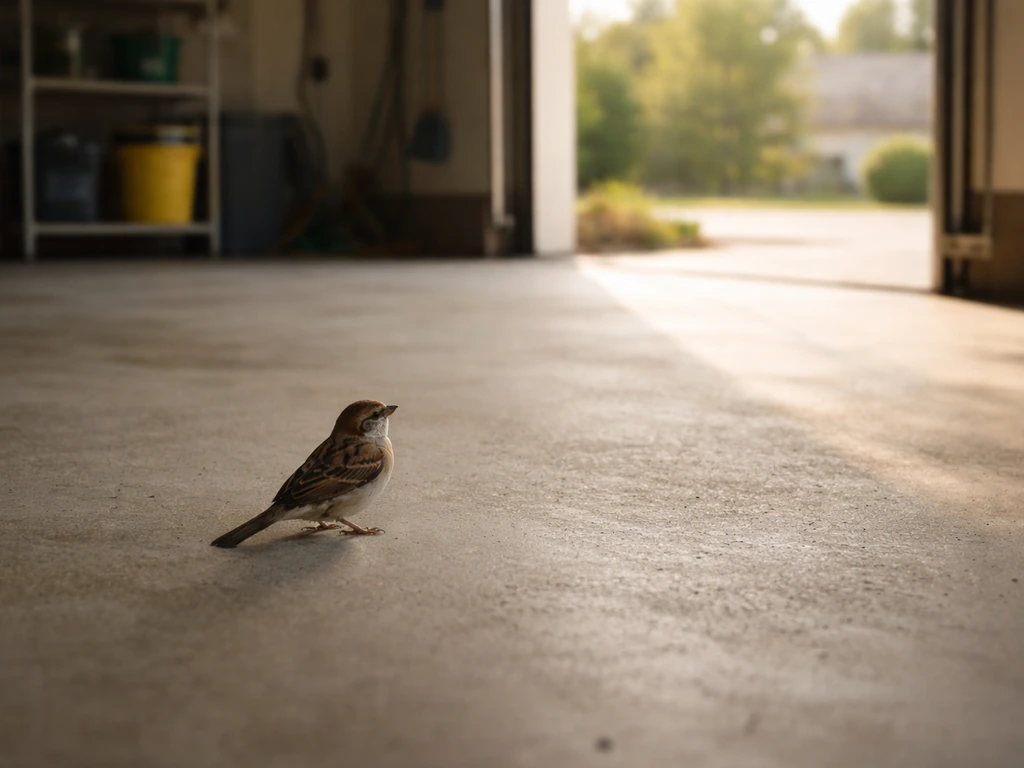
Literal vs. symbolic: what people actually mean when they ask this
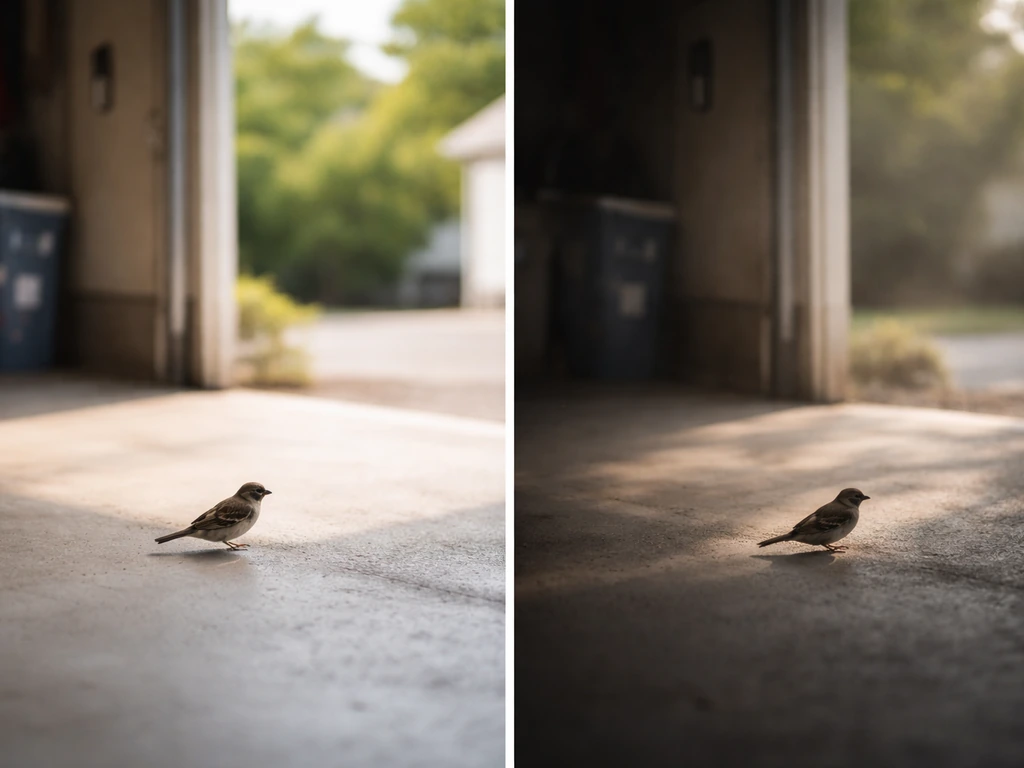
Most of the time, someone typing 'bird in the garage meaning' just found a bird in their garage. They want practical help, maybe with a side of reassurance that it's not a bad omen. But the phrase does carry genuine symbolic weight in storytelling, sermons, and reflective writing. A bird in a garage shows up in literary metaphor as an image of something wild and free getting trapped in a human-made space. It appears in sermon illustrations as a metaphor for legalism or spiritual confusion. It's used in eulogies and community reflections as a symbol tied to memory and music. So there's a real dual meaning here: the wildlife problem, and the image that resonates because it's genuinely poetic. This article separates both threads so you can get what you actually came for.
How a bird ends up in your garage (and how to tell which situation you have)
The most common scenario is simple: the garage door was open, the bird flew in, and now it can't find its way back out. Birds navigate by light and silhouette, and the inside of a garage is a maze of confusing shadows, shiny car hoods, and windows that look like sky but aren't. Barn swallows are repeat offenders here because they actively dart in and out of building entrances. House sparrows and starlings are drawn to sheltered, built environments and often probe garage interiors looking for nesting spots. Knowing which situation you're in (accidental entry vs. active nesting attempt) changes what you do next.
| Situation | What you'll observe | What it means for you |
|---|---|---|
| Accidental entry | Bird is flying around in panic, hitting walls or windows, not carrying material | Guide it out now using the steps below |
| Scouting for a nest | Bird keeps returning over several days, perching in rafters, exploring corners | Close access points while it's outside before it commits to a site |
| Active nesting with material | Bird is bringing in grass, twigs, or fluff but no eggs yet | Wait for it to leave, then close the door immediately |
| Eggs or young present | Nest built, eggs visible, or chicks audible | Do not disturb; legal protections apply under the MBTA |
How to get the bird out safely right now
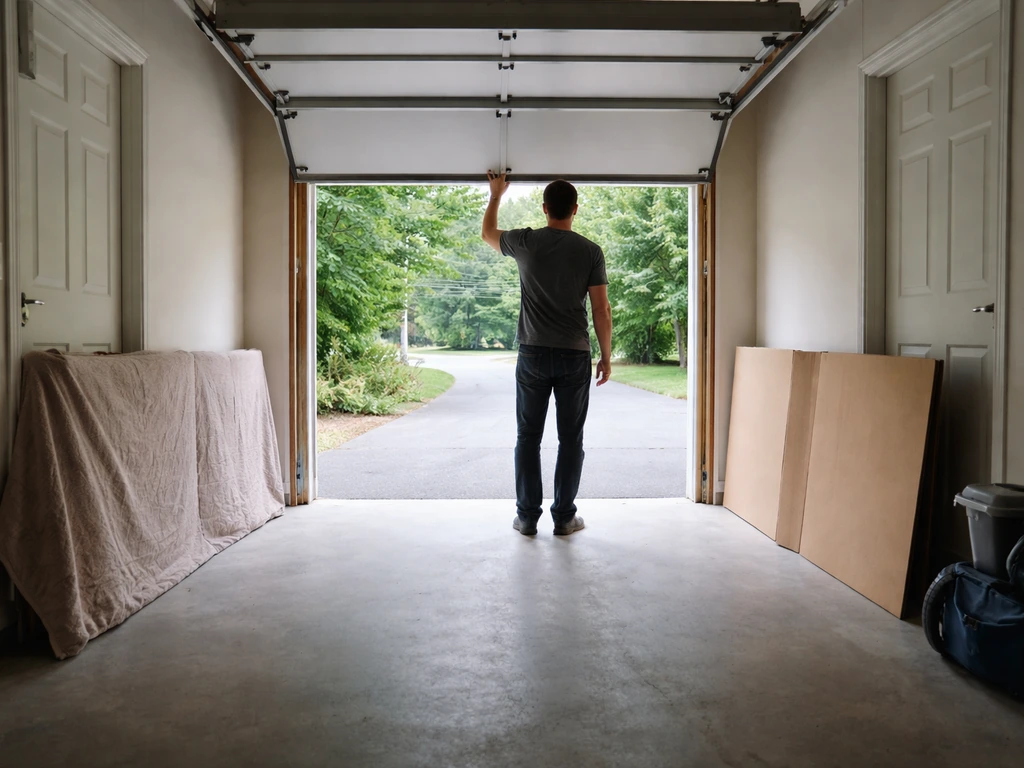
The core principle is: create one obvious escape route and reduce everything else that looks like an exit. The Wisconsin Humane Society also recommends covering non-opening windows with a blanket, sheet, towel, or cardboard so birds do not mistake them for an exit, and using a bright cloth or paper “flag” on a long stick if they stay stuck in high rafters create one obvious escape route and reduce everything else that looks like an exit. Don't chase the bird, don't shout at it, and don't make sudden movements. A panicked bird flies fast and into things. Your job is to calm the situation down, not escalate it.
- Open the largest door or window that leads directly outside. The main garage door fully open is your best bet.
- Close or cover any windows that don't open. A bird will fly toward light and mistake a window for sky. Cover non-opening windows with a blanket, sheet, towel, or cardboard to remove that false exit.
- Turn off interior lights if possible so the bright outdoor opening is the most obvious destination.
- Hold a large sheet or towel high and move slowly behind the bird, gently guiding it toward the open door without cornering it.
- Stay calm and quiet. The Canadian Wildlife Federation specifically notes: don't talk to the bird, don't make sudden movements.
- Leave the garage entirely if the bird is too stressed. Sometimes removing the human from the space is the fastest fix. Check back in 30 minutes.
- Do not offer food or water. Unless a wildlife rehabilitator has specifically instructed you to, don't feed or hydrate the bird. It doesn't need your help in that way; it needs an exit.
If the bird appears injured
If the bird has hit a window and is dazed or clearly can't fly, don't leave it on the floor. Place it gently in a ventilated box with air holes and paper toweling, close the box, and contact a licensed wildlife rehabilitator. Don't give it food or water while you wait. Search 'wildlife rehabilitator near me' or check your state's fish and wildlife agency website for local resources.
When it might be nesting: signs, timing, and what not to do
Nesting is a different situation entirely, both practically and legally. The window to act without legal complication is narrow: if a bird has just started carrying material in but hasn't laid eggs, you can wait for it to fly out to collect more material, then immediately close the garage door behind it. That's your window. Once eggs are present, the nest is protected under the Migratory Bird Treaty Act (MBTA), which makes it illegal to disturb, move, or destroy active nests of migratory bird species without a permit. USFWS’s 2025 MBPM-2 Nest Memorandum explains how the agency applies the Migratory Bird Treaty Act (MBTA) to “in-use” migratory bird nests and replaces the previous nest memorandum. This isn't a technicality; it's federal law with real teeth.
Common garage-nesting species include barn swallows (rafters are prime real estate for them), house sparrows (they love structural gaps and sheltered corners), and European starlings. Barn swallows and virtually all songbirds are protected under the MBTA. House sparrows and European starlings are not protected under the MBTA because they're non-native invasive species, which gives you a bit more flexibility with their nests, but check your local and state regulations before acting. Nesting season timing varies by species and climate, but spring through early summer is the highest-risk window for accidental nest establishment.
- Signs of nesting: bird returning repeatedly to the same spot, carrying grass, twigs, mud, or feathers, spending time perched in rafters rather than flying around in panic
- Eggs present: small, often speckled eggs in a cup-shaped or mud-based nest
- Young present: audible cheeping, adult birds making repeated food trips
- What not to do: don't use a one-way door if there are young inside who can't use it yet; don't attempt removal without confirming the legal status of the species; don't block all exits while the bird is still inside
If you're not sure whether eggs or young are present, or if the species is protected and you need the nest gone, call a licensed wildlife rehabilitator or your regional wildlife office before doing anything. This is genuinely the right move, not just a liability hedge.
Keeping birds out of your garage going forward
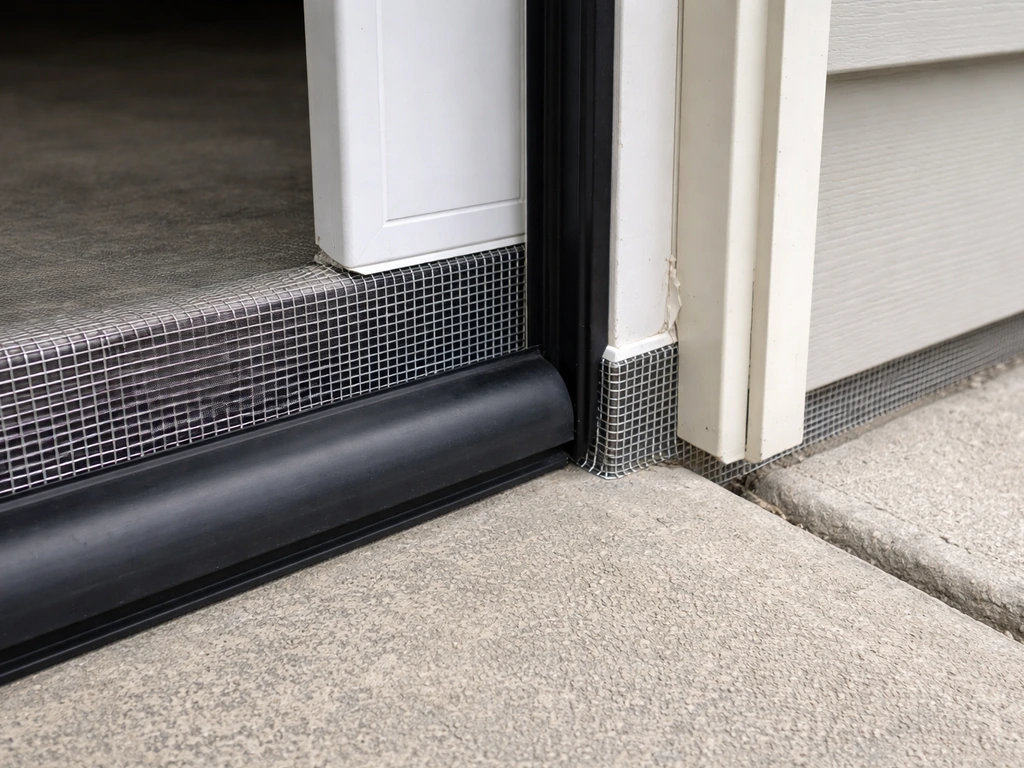
Prevention is far easier than removal, especially once a species has decided your garage is a good nesting site. The strategy is straightforward: reduce access and reduce attractants.
- Keep the garage door closed when you're not actively using it, especially in spring and early summer
- Install weatherstripping and seal gaps around the door frame, roof joints, vents, and any structural openings larger than half an inch
- Check for gaps in the roofline and cover dryer or exhaust vents with appropriate mesh or covers rated for wildlife exclusion
- Remove or cover shelving and ledges in rafters that would make attractive nesting platforms
- If you have interior lighting that shines through gaps at night during migration season, reduce it where possible; artificial light at night can attract and disorient migrating birds
- If swallows have nested before and you want to prevent a repeat, exclusion must happen before they return in spring, since once they're back and building, legal protections kick in immediately
For persistent access problems, physical exclusion is more effective than repellents long-term. Netting, hardware cloth over gaps, and physical blockers on ledges are the standard toolkit. If the garage doors themselves are the main entry point, adding a secondary screen or curtain across the opening while still allowing airflow can help during the seasons when you need ventilation but want to keep wildlife out.
What a bird in the garage symbolizes (and a grounded take on it)
People have been reading birds as messengers and omens for as long as human culture has existed, so it's no surprise that a wild bird appearing somewhere unexpected feels significant. The most commonly circulated interpretation of a bird flying into a home or enclosed space is that it signals a message or transition, sometimes framed as a warning, sometimes as a sign of incoming change. In some Appalachian and folk traditions, a bird flying into a building is considered a bad omen, linked to death or misfortune in the household. A Reddit discussion in r/witchcraft describes a different tradition too, where a mother’s guidance interpreted birds in the house as an omen tied to the death of someone close blank" rel="noopener noreferrer">a bad omen, linked to death or misfortune in the household. That belief is real, culturally specific, and worth knowing about, but it's not a universal interpretation.
Other traditions read the same event as a sign of arrival: something new coming in, or a spiritual presence making itself known. In reflective and literary contexts, the image of a bird trapped in a garage or house resonates as a metaphor for something wild being constrained by human-made structures, whether that's an idea, a feeling, a faith, or a person. If you're also wondering about the bird-on-the-glass martini meaning, the symbolism comes from how people connect unexpected birds with clarity, surprise, and a shift in mood a bird trapped in a garage or house. It's a genuinely evocative image precisely because birds represent freedom and instinct, and garages represent the domestic and mechanical. That tension is why the image keeps showing up in sermons, eulogies, and personal essays.
The honest framing is this: what a bird in your garage means symbolically is mostly what you bring to it. Cultural context shapes interpretation. A person from a tradition where birds are messengers will feel that differently than someone who sees it as a wildlife management problem. Both responses are valid. If the symbolic angle resonates with you, the most common positive reading is that an unexpected bird signals a reminder to pay attention, to notice what's trapped or blocked in your own life, and to open a door. That's not a bad thing to sit with while you're also, practically speaking, opening the actual garage door.
If you're interested in how this image connects to other bird symbolism, there are related threads worth exploring: a bird perching on your car carries its own set of folk interpretations, and a bird on your shoulder is one of the oldest symbols of guidance and communion with nature. A bird perching on your car is often interpreted in a similar “what’s blocked or changing” way, so you can compare it to the bird on car meaning too. A bird on a glass martini tends to be read as a symbol of “being trapped” in a moment, which is why people search its meaning alongside other enclosed-space bird stories bird perching on your car. The bird-in-an-enclosed-space image specifically tends to carry more urgency and transition in symbolic readings, which is part of why it sticks.
Quick recap and next steps
Here's the short version of everything above, structured as a checklist you can run through right now:
- Identify the situation: is this an accidental entry, a scouting visit, active nesting with material, or eggs and young already present?
- If accidental entry: open the main garage door fully, cover non-opening windows, reduce interior light, guide the bird calmly with a sheet if needed, and leave the space if the bird is too stressed
- If injured: place in a ventilated box, no food or water, contact a licensed wildlife rehabilitator immediately
- If nesting has started but no eggs: wait for the bird to leave, then close access immediately
- If eggs or young are present: do not disturb the nest; contact a wildlife rehabilitator or your regional wildlife office for guidance on your specific species and situation
- Check the legal status of the species before any nest removal; most songbirds and migratory species are federally protected under the MBTA
- Once the bird is out: seal gaps, install weatherstripping, cover vents, and keep the door closed during nesting season to prevent a repeat
- On the symbolic side: the most common interpretations center on transition, a message worth noticing, or something wild needing a way out; what it means to you is shaped by your own cultural context and what's going on in your life right now
FAQ
What should I do in the first 5 minutes after I find a bird in my garage?
Keep the bird calm by leaving the main garage door open to daylight if it is safe to do so, turn off indoor fans that could confuse it, and close off other areas (like a door to the house) so it does not keep flying in circles. If there are multiple exit-like points, choose one clear route back outdoors and reduce the rest.
Should I capture the bird and release it outside myself?
If the bird is flying normally, letting it find the open exit is usually safer than grabbing it. If it is injured or clearly dazed, use a ventilated box and contact a licensed wildlife rehabilitator instead of attempting a DIY release, because handling can worsen injuries and increase stress.
Why does the bird keep flying around even when the garage door is open?
Light and reflections can mislead it, car hoods and windows create false silhouettes of the outdoors, and some species are strongly attracted to sheltered corners. Try dimming interior lights near one intended exit and ensure there are no mirrors or bright reflective surfaces right by the open doorway.
How long should I wait before calling a wildlife rehabilitator?
If the bird has not used the open exit within about 30 to 60 minutes, or if it appears injured (lying still, bumping repeatedly, visible bleeding), call sooner. For nesting situations, do not wait if you suspect eggs or active nest building that could have legal protections.
What if the bird hit a window, and it seems uninjured?
Even if it seems responsive, a window strike can cause internal injury or disorientation. Place it in a ventilated, air-holed box for transport if it cannot immediately regain stable flight, and have a wildlife professional assess it rather than treating it as fine.
Do I need to worry about diseases or mites when cleaning up?
Yes, especially if there is droppings or nesting material. Avoid dry sweeping (it can aerosolize dust), wear gloves and a mask, and ventilate the space while cleaning. If there is a nest area, plan cleaning around guidance from a wildlife professional when protection rules may apply.
Can I remove a nest if it looks old or abandoned?
Do not assume it is abandoned, because some nests are reused or still under protection depending on timing and activity. If you are not certain whether eggs or young are present, contact a regional wildlife office or wildlife rehabilitator before removing anything.
Is it legal to relocate a nest to another part of the property?
Relocating nests generally increases the risk of violating wildlife protections, even if you are trying to be helpful. When eggs or active nesting are involved, the safer route is to have a licensed professional advise you and, if needed, obtain permits.
What signs tell me it is nesting versus a one-time entry?
Nesting signs include carrying nesting material into the garage, repeated return visits, visible nest structure in rafters or corners, and ongoing defensive behavior. A one-time entry usually looks like a single flight event with the bird exploring and then exiting once it finds a route outdoors.
What can I do during nesting season if exclusion is impossible right now?
You can temporarily restrict access by sealing gaps at entrances when feasible and reducing open entry points without disturbing the nest. Wait on removal, and coordinate exclusion timing with a wildlife professional so you do not block active nesting or trap adults inside.
Are house sparrows and starlings always safe to remove immediately?
They are not generally covered by the same federal migratory-bird protections as native songbirds, but local rules still apply. Check your state and local wildlife regulations first, especially if you are using methods that could harm wildlife or violate property and nuisance ordinances.
What is the safest way to prevent another bird-in-the-garage incident?
Focus on exclusion and sealing: close gaps with hardware cloth, add vent screening to match the size of the birds' access points, and keep garage doors shut unless you actively need them open. Repellents can help short-term, but physical barriers provide the most reliable long-term prevention.
Next Article
Bird with Leaf in Mouth Meaning: Symbolism by Species
Decode bird with leaf in mouth meaning by species, context, and leaf type, avoiding folklore and culture mix-ups.