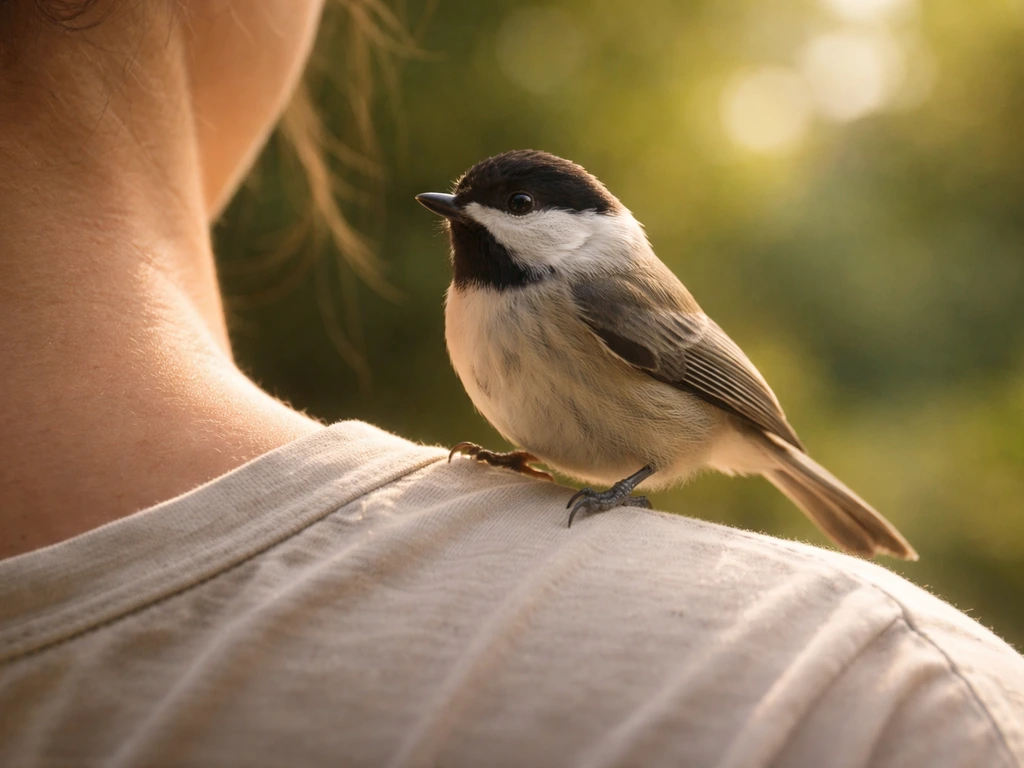
A bird on your shoulder most commonly symbolizes a message, a moment of spiritual connection, or a sign of good luck depending on the context you're in. Whether you're trying to decode a real-life encounter where a wild bird actually landed on you, unpacking a figure of speech, or planning a tattoo, the core theme is the same: a bird at shoulder height is intimate, intentional, and hard to ignore. If you were also wondering about more specific “meaning” interpretations like bird on the glass martini meaning, you can use the same context-first approach to avoid overreading the symbol. It's not perched on a fence post across the yard. It chose you, or at least that's how most cultural traditions frame it.
Bird on Shoulder Meaning: Messages, Luck, Protection

Marcus Whitmore
29 Apr 2026
What the phrase actually means in everyday language
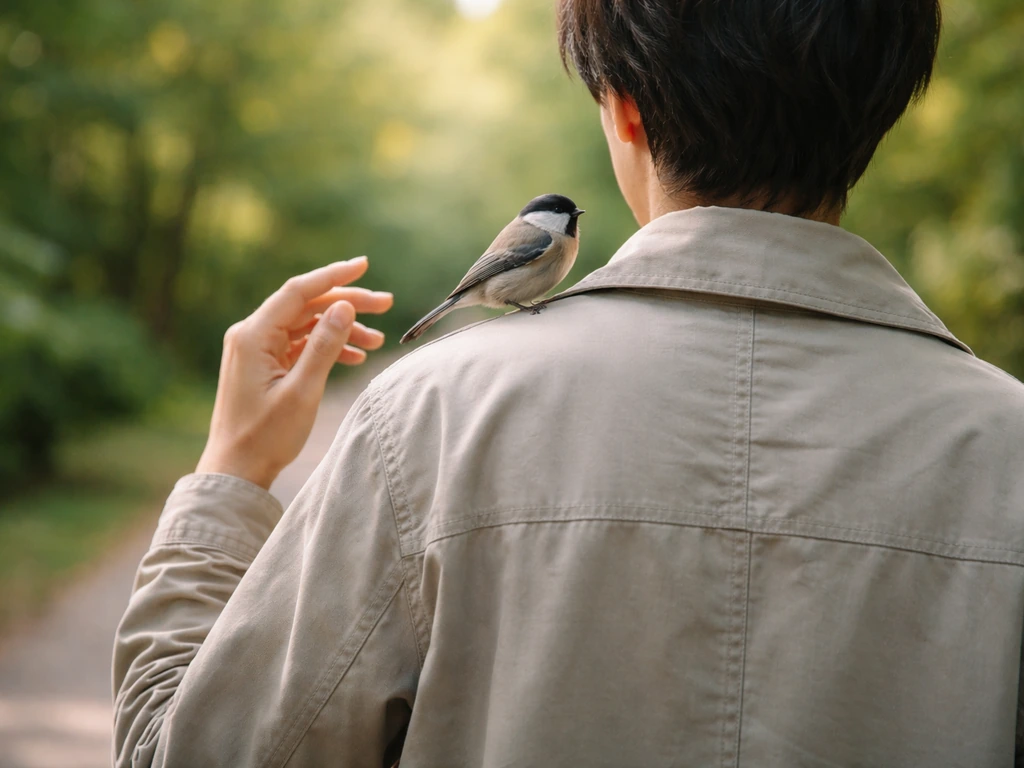
When someone says there's "a bird on my shoulder" or "a bird on your shoulder," the phrase usually carries one of two tones. The first is literal and wonder-filled: a real bird landed on a person, which is unusual enough to feel meaningful. The second is idiomatic, often used to suggest that someone is being whispered to, warned, or guided by an invisible force. Think of the classic image of a devil on one shoulder and an angel on the other. The bird fills the same role: an external voice that's influencing your decisions or conscience, whether it's cautioning you, cheering you on, or just watching.
The slight difference between "bird on my shoulder" and "bird on your shoulder" is mostly a matter of perspective. When it's yours, you're usually describing an experience that felt personal and pointed. When you say it about someone else, you're often making an observation about their behavior or intuition: "you've got a bird on your shoulder" can imply that person seems guided, protected, or even a little too confident about a decision. It's close kin to saying someone has good instincts or a lucky streak.
Symbolism: what the shoulder bird is trying to tell you
Across spiritual traditions and folklore, birds perching on a human body, especially on the shoulder, tend to cluster around a handful of consistent themes. Here's what shows up most often:
- Messenger energy: Birds have been read as carriers of messages between the human world and something beyond it, whether that's the divine, the spirit world, or simply your own subconscious. A bird landing on your shoulder in this frame is delivering something directly to you.
- Good luck and positive energy: In many folk traditions, a small bird landing on or near a person is treated as a good omen. Some interpretations specifically link it to positive energy arriving in your life, a turn in fortune, or reassurance that you're on the right path.
- Protection and guardianship: The shoulder is a place associated with support and bearing weight. A bird choosing to perch there carries a guardian quality, the sense that something is watching over you or "has your back," quite literally.
- Spiritual connection and awareness: In more spiritually oriented readings, a bird on the shoulder signals that you're in a period of heightened awareness or that a spiritual presence is near. Some traditions read it as a loved one who has passed checking in.
- Transformation and freedom: Birds can fly and humans cannot, so bird symbolism frequently ties to freedom, expanded perspective, and change. A bird choosing to rest on you can suggest you're at a threshold or about to enter a new phase.
- Attention and guidance: Sometimes the meaning is simpler and still worth taking seriously: pay attention right now. A bird on your shoulder is an interruption of your normal field of vision, a nudge to look up from whatever you're focused on.
The species matters too. A hummingbird landing on your shoulder is often linked to joy, lightness, and playfulness. A crow or raven carries older, more complex energy associated with intelligence, mystery, and transitions. A sparrow suggests simplicity and community. The emotional weight shifts significantly depending on the bird, which is worth keeping in mind before you settle on a single interpretation. The emotional weight shifts significantly depending on the bird, which is worth keeping in mind before you settle on a single interpretation, including specific motifs like bird with leaf in mouth meaning.
Where this symbolism comes from: culture and mythology
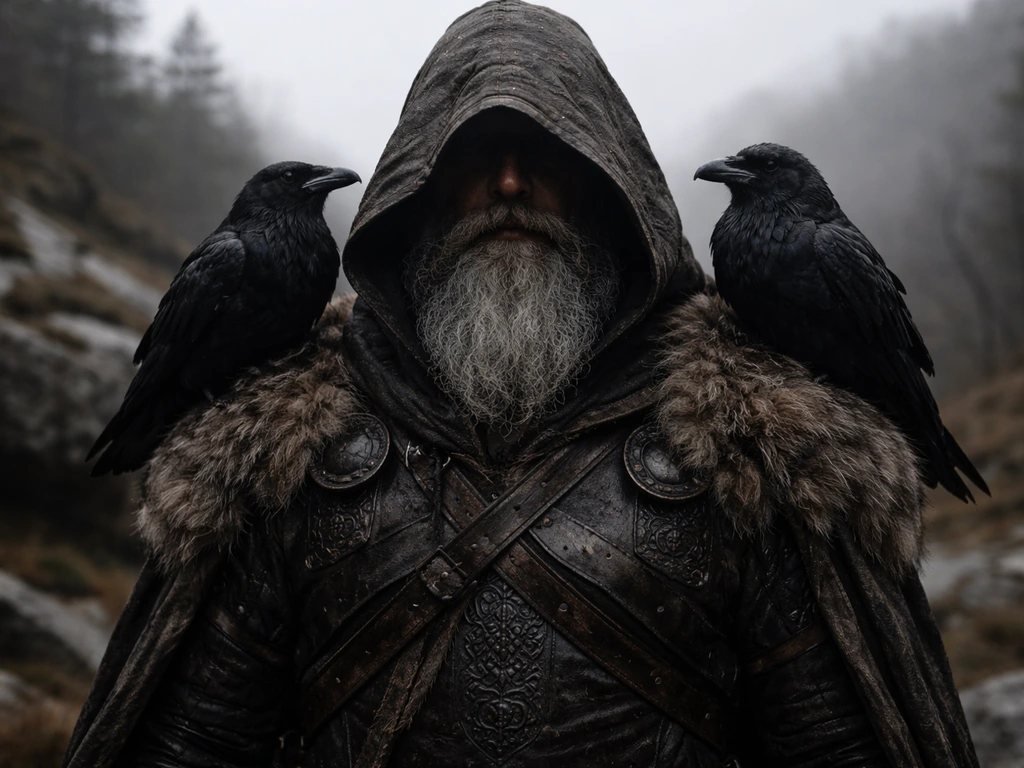
The image of a bird on a shoulder is genuinely ancient. The most famous example is Odin's ravens, Huginn and Muninn, which in Norse mythology perched on the god's shoulders and flew out across the world each day to gather information, returning to whisper what they had seen into his ears. Huginn means "thought" and Muninn means "memory," so Odin's shoulder-birds were literally the embodiment of knowledge and recollection. The image appears on artifacts like Thorwald's Cross, and it frames the shoulder bird not as decoration but as an active, intelligent partner.
In ancient Roman practice, augury was the formal art of reading bird signs to determine whether the gods favored a particular course of action. The direction a bird appeared from mattered enormously. In that tradition, a bird-sign appearing on the left was typically considered auspicious (favorable), while one on the right was inauspicious. In Roman augury, observers treated signs from the left as auspicious and signs from the right as inauspicious a bird-sign appearing on the left was typically considered auspicious. The side of the shoulder, in other words, wasn't a small detail.
Ancient Egyptian culture venerated certain birds as manifestations of specific deities. The sacred ibis was tied to Thoth, god of wisdom and writing. Birds in this tradition weren't just omens: they were gods taking on form, which meant an encounter with the right bird could be a direct interaction with divine intelligence. Similarly, in Greek mythology, specific birds served as attendants and signs of Athena (the owl) and Zeus (the eagle), and their appearance near a person was read as the deity's attention being on you.
Across cultures, birds have played the role of psychopomp, a guide for souls transitioning between life and death. Ravens, crows, vultures, owls, and sparrows all appear in funerary and soul-guiding roles in various traditions. The IEMed cultural framework draws a direct parallel between birds as messengers of the "Other World" and angels as intermediaries in Christian tradition, noting that both function as soul-guiding figures in their respective mythologies. This is why a bird encounter, especially after a loss, so often feels loaded with significance to people who weren't previously spiritual at all.
Real-world bird landings: how to read the moment without overthinking it
If an actual bird landed on your shoulder, the first thing worth noting is that it almost certainly means the bird is either unusually tame, injured, or temporarily disoriented. Wild birds don't land on humans out of spiritual intent. That said, the experience can still feel striking, and there's nothing wrong with sitting with that feeling. The practical checklist first: Is the bird injured? Does it seem like someone's escaped pet? Is it acting erratically? If yes to any of those, the encounter is about care, not symbolism.
If the bird is healthy and simply chose to hang out for a moment before flying off, you're in the territory where people most commonly ask about meaning. The honest answer is that the bird didn't have a metaphysical agenda. But the experience can still function as a prompt. It interrupted your day. It got close. If something about that moment felt resonant with what's going on in your life right now, it's worth asking why. That's not superstition; that's reflection.
Body language and behavior are also worth reading in a grounded way. A bird that lands calmly, looks around, and stays suggests comfort and trust in the environment. A bird that's agitated or quickly leaves is just a bird responding to stimuli, not sending a message about your future. Context in your physical environment matters more than the spiritual overlay. This is the same practical lens worth applying to other bird encounters, whether that's finding a bird in your garage or noticing one repeatedly flying near your car. If you meant a bird on car meaning, the same symbolism ideas often show up as a sign of change, luck, or a message, depending on what was happening in the moment. If you ever wonder about a bird in a garage, the same symbol systems can help you interpret the moment without jumping straight to superstition finding a bird in your garage.
Bird-on-shoulder tattoo meaning: species, style, and placement
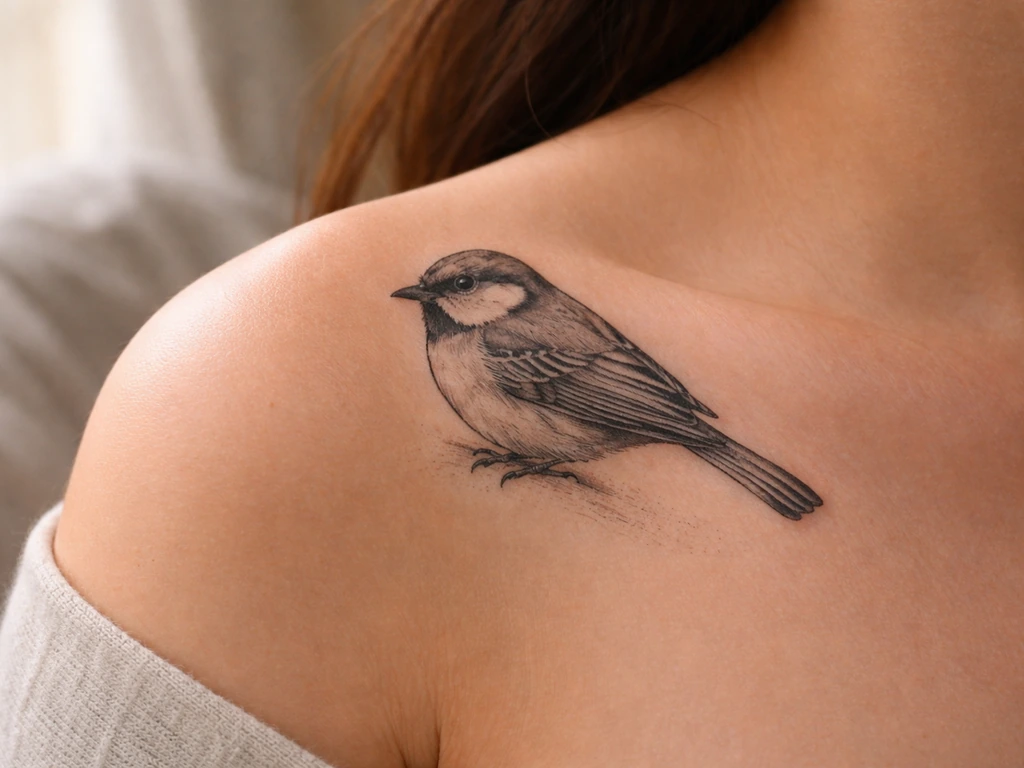
Bird-on-shoulder tattoos are one of the more semantically rich designs you can choose, partly because the shoulder itself adds its own layer of meaning. The shoulder is the part of the body associated with carrying burdens, offering support, and bearing responsibility. A bird perched there sits at that junction between weight and flight, which makes for symbolism that's both personal and visually striking.
Species and what they bring to the design
| Bird | Core tattoo symbolism | Tone |
|---|---|---|
| Raven or crow | Intelligence, transformation, mystery, psychopomp energy | Dark, complex, mystical |
| Swallow | Safe return, loyalty, freedom, nautical heritage | Classic, optimistic, personal |
| Owl | Wisdom, night vision, the unseen world | Introspective, protective |
| Eagle | Power, vision, national/spiritual authority | Bold, aspirational |
| Hummingbird | Joy, lightness, presence, speed of change | Delicate, uplifting |
| Phoenix | Rebirth, survival, transformation through fire | Dramatic, triumphant |
| Sparrow | Simplicity, community, resilience, belonging | Humble, warm |
| Peacock | Beauty, pride, confidence, visibility | Vibrant, expressive |
Style choices and what they signal
A realistic, finely detailed bird-on-shoulder piece reads as grounded and personal, almost like a photographic memory frozen in ink. It tends to emphasize the specific bird's identity and your relationship to that species. A minimalist or geometric design strips the image to its essential shape, leaning into the abstract or spiritual meaning rather than the literal creature. Watercolor and illustrative styles often suggest creativity, fluidity, and emotional expression. Traditional American tattoo style (bold outlines, flat color, classic motifs like the swallow) carries a specific cultural heritage that gives the piece a timeless, almost talisman-like quality.
Placement on the shoulder itself has variation worth thinking about. A bird sitting on the shoulder cap (the rounded top of the shoulder) reads as prominent and outward-facing. One on the upper shoulder blade can feel more private and protected, visible only when you choose to show it. The left shoulder, drawing loosely from Roman augury traditions, has historically been framed as the favorable, receptive side, which some tattoo wearers lean into deliberately. None of this is rigid, but it's worth factoring into your personal intention for the piece.
How to interpret a bird on your shoulder without falling into superstition
The biggest trap with bird symbolism, and honestly with any omen-style interpretation, is confirmation bias. This is the well-documented tendency to notice and remember information that confirms what you already believe or want to be true, while filtering out evidence that contradicts it. If you're anxious about a decision and a bird lands on you, it's very easy to read that as the universe saying "yes, go for it" because that's what you wanted to hear. The bird itself hasn't confirmed anything. Your existing feelings have.
Carl Jung's concept of synchronicity describes events that feel meaningfully connected in time without a discoverable causal link. It's a useful framework precisely because it doesn't claim the universe sent the bird on purpose. It just says: sometimes things happen simultaneously in a way that feels meaningful, and that feeling is worth examining. The key distinction, as psychologists emphasize, is that whether a coincidence feels meaningful is subjective. That doesn't make it useless, but it does mean it's not a reliable prediction of what will happen next.
The safe approach is to treat a bird encounter or the phrase "bird on my shoulder" as a prompt for reflection rather than a directive. It doesn't tell you what to do. It invites you to notice what you're already feeling. That's genuinely useful without requiring you to outsource your decisions to a sparrow.
Practical next steps: how to sit with this meaningfully
If you want to take the experience seriously without being swept into blind superstition, here are some concrete things you can actually do right now.
- Do a context check first. Where were you, what were you doing, and what were you thinking about before the bird arrived (or before this phrase came to mind)? The context is almost always more revealing than the symbol itself.
- Write it down. Journaling a bird encounter or a moment where the phrase felt meaningful gives you something to look back on. Patterns over time are more informative than a single data point. If birds keep appearing at significant moments, that's worth tracking. If this is the first time, hold it loosely.
- Ask what the symbolism connects to for you personally. Not what the internet says it means universally, but what does it mean to you given your history, your culture, and your current situation? That personal layer is almost always more useful than a generic spiritual reading.
- Identify the bird species if you can. A crow is not a hummingbird. If you're trying to interpret a real encounter, knowing what kind of bird it was gives you a much richer set of cultural and symbolic references to draw from.
- For tattoo planning: write down three words that describe why you want this piece, then check which bird and style maps most naturally to those words. Cross-reference with the placement question: is this something you want to carry visibly and outward-facing, or privately? That alone narrows the design significantly.
- Avoid using the symbol to make a specific decision. If you're looking for a sign to quit your job or end a relationship and a bird lands on your shoulder, you still need to make that decision with real information. The bird encounter can accompany the reflection, but it shouldn't replace the thinking.
Bird symbolism on the shoulder, whether it's a literal landing, a turn of phrase, or ink you're planning to wear for life, is ultimately about what you carry and what might be trying to reach you. That's a rich enough idea to take seriously without needing to treat every sparrow as a prophecy.
FAQ
What should I do immediately if a wild bird lands on my shoulder?
First check for safety and welfare. Keep still, avoid sudden hand movements, and look for obvious injury or frantic behavior. If the bird seems unwell, use a towel or carrier to gently contain it, and contact a local wildlife rescue rather than trying to “interpret” the moment right away.
How can I tell whether it was an unusual bird landing versus a meaningful omen?
Use a two-part test: (1) objective conditions, was the bird tame, escaped, or acting disoriented? (2) your context, did the moment coincide with a decision, grief, or a recurring concern? If the bird’s behavior is normal and your life context is the only “hook,” treat it as reflection rather than a prediction.
Does the meaning change if the bird looks at me, fluffs its feathers, or hops around?
Yes, behavior matters. Calm looking around and staying often suggests comfort with the environment, not a message. Aggressive displays, repeated agitation, or quick takeoff usually indicate stress or a stimulus nearby (light, sound, another animal). In those cases, the safer read is “normal bird response.”
Is there a difference between “bird on my shoulder” and “bird on your shoulder” in everyday speech?
Often, yes. “My shoulder” commonly signals a personal experience or a private feeling, while “your shoulder” is more likely an observation about someone’s intuition, confidence, or being influenced by advice or conscience. If you hear it from someone else, it can be read as encouragement or a gentle warning, depending on tone.
What if the bird landed on my right or left shoulder, does that affect the interpretation?
In some traditions it does, but it is not universally consistent. If you want to use the Roman-style idea, frame it as “a traditional lens” rather than a rule, since modern circumstances like bird direction, flight patterns, and chance are more controllable explanations.
Does repeating bird landings near me mean something, or is it just coincidence?
Repetition can feel significant, but coincidences become memorable when they match your attention. Keep a simple log for a week or two (time, location, species, your emotional state). If the sightings cluster around your decisions or stress, it supports the “prompt for reflection” approach rather than a guarantee of outcomes.
How should I interpret it if I’m grieving and a bird appears on my shoulder or nearby?
In grief, meaning often rises naturally. A grounded approach is to treat it as a symbol for connection and processing, not as evidence of a specific future event. If the encounter intensifies distress or leads you to avoid practical steps, consider talking with a grief counselor or trusted support.
Can a bird on my shoulder ever be a sign of danger or an emergency?
Usually it is not a supernatural warning. However, a real-world hazard can be present (bird is attacking due to nest defense, you are near traffic, or it is actually an injured animal). If the encounter affects safety, respond with caution first, then interpret feelings later.
What’s the biggest mistake people make when interpreting shoulder-bird signs?
Confirmation bias is the big one. People often remember the encounter that “fits” what they already want, and ignore the many birds that do not. A countermeasure is asking, “What would I think if I felt the opposite about my decision?”
If I’m getting a bird-on-shoulder tattoo, how do I choose the meaning without locking into one future?
Pick an intention that can flex over time. For example, rather than choosing a prophecy-like meaning, choose a value (protection during change, joy, curiosity, resilience) and match style to it (realistic for personal memory, geometric for abstract ideals). Also decide placement based on privacy, since upper blade designs often feel more personal than the shoulder cap.
Next Article
Bird in Space Meaning: Dreams, Symbolism, and Literal Facts
Bird in space meaning explained: symbolism in dreams and art, plus literal spaceflight facts and how to tell which fits.