"Bird in space" most commonly points to one of three things: the famous abstract sculpture by Romanian artist Constantin Brâncuși, a symbolic or spiritual image combining the freedom of birds with the vastness of the unknown, or (less often) a literal reference to animals sent into orbit during early spaceflight research. Figuring out which meaning applies to you takes about thirty seconds once you know what to look for.
Bird in Space Meaning: Dreams, Symbolism, and Literal Facts

Marcus Whitmore
28 Apr 2026
Literal vs. metaphorical: let's get this out of the way first
If you came across "bird in space" in an art museum, a song, a poem, or a spiritual reading, you are almost certainly looking at a metaphorical or symbolic use of the phrase. If you read it in a science article about NASA research or space biology, it could genuinely refer to animals studied in microgravity conditions, though actual birds are rarely the focus there (rodents and other model organisms are far more common in spaceflight biology programs). The literal "bird sent to outer space" reading is real but niche, and it almost never produces the kind of symbolic weight that leads people to search for a meaning.
The fastest disambiguation trick: check the surrounding text. If you see any of the following, you are in Brâncuși territory, and the meaning is about abstracted flight, transcendence, and artistic aspiration. If you see NASA, orbit, microgravity, or space biology, it is the scientific context. Everything else, including dreams, spiritual readings, songs, and personal reflections, falls into the symbolic category.
- The name Brâncuși (or Brancusi) anywhere nearby
- The French title "L'Oiseau dans l'espace"
- References to a museum, sculpture, or modern art exhibition
- Lyrics that say something like "I'm a bird in space" (a strong signal of artistic metaphor, not astronomy)
- Words like Maiastra, Romanian folk art, or abstract form
The most common symbolic interpretations
When people search for "bird in space meaning" without a specific artwork or scientific article in front of them, they are usually trying to interpret a dream, a piece of imagery they encountered, or a phrase someone used. In those contexts, the meaning almost always circles around three core ideas: transcendence, unlimited freedom, and the courage to move through the unknown.
Birds on their own carry heavy symbolic weight across nearly every culture: they are messengers between the earthly and spiritual realms, symbols of the soul in flight, and markers of hope, aspiration, and transformation. Stack "space" on top of that, and you amplify every one of those qualities. Space is not just sky, it is infinite sky, boundless and beyond human limits. A bird in space is not just free, it is beyond every boundary that normally defines freedom.
- Transcendence: rising above everyday limitations or mundane concerns
- Unlimited potential: moving through a space with no ceiling, no wall, no end
- Spiritual messenger: a soul or message traveling between worlds, not just between trees
- Aspiration in motion: the pure essence of flight rather than the physical act, which is exactly what Brâncuși was chasing in his sculpture series
- Isolation or solitude in a vast unknown: not always a positive reading, sometimes it signals feeling unmoored or ungrounded
How context completely changes the meaning
In dreams
Dreaming of a bird in space tends to combine two symbolic registers at once. Dream-interpretation traditions, including Islamic readings attributed to Ibn Sirin, associate birds in the sky with expansion, travel, increased livelihood, and easier access to goals. "Space" in dream symbolism adds a layer of the infinite unknown, a place where familiar boundaries dissolve. Together, they usually signal that something in your life is expanding beyond its previous limits, which can feel exhilarating or disorienting depending on where you are right now. Pay attention to how the bird behaves: soaring freely reads very differently from a bird that looks lost or frozen.
In art or storytelling
This is where Brâncuși almost always enters the conversation. His "Bird in Space" series (created between 1923 and 1940) does not show a bird with wings and feathers. It shows a slender, polished bronze or marble form that captures the feeling of upward motion, the essence of flight rather than its mechanics. The Metropolitan Museum of Art describes the work as concentrating on "the animals' movement, rather than their physical attributes." When a song, novel, or artwork references "bird in space," it is usually tapping into this same idea: strip away the literal, keep only the aspiration. The Screaming Females song "Bird in Space" makes this explicit, with lyrics that directly reference "Brancusi's gesture" and the line "I'm a bird in space," framing it as artistic and emotional identity, not a biology lesson.
In spiritual or astrological readings
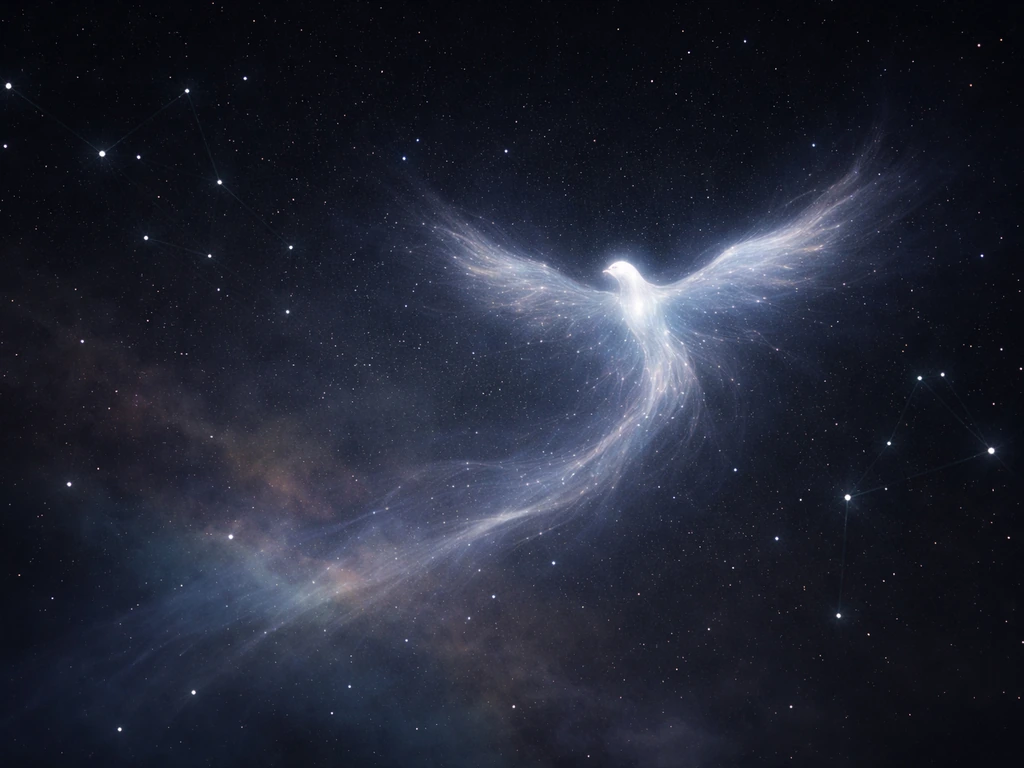
In spiritual contexts, a bird in space often functions as a symbol of the soul operating outside its normal constraints, traveling through spiritual dimensions rather than physical ones. Some traditions link it specifically to a soul that has transcended earthly concerns, which is why you will sometimes see this imagery in readings about major life transitions, near-death experiences, or periods of intense personal transformation. The connection to Brâncuși's Maiastra, a magical Romanian folk bird with supernatural powers, is worth knowing here: even before the modern sculpture existed, the cultural archetype of a bird inhabiting elevated or otherworldly space was already a powerful mythic image.
In real life or science
If someone is using "bird in space" in a genuinely literal, scientific context, they are likely referring to the broader history of animals in spaceflight research, or possibly to NASA's Space Biology program, which studies how living organisms adapt to microgravity. Actual birds have not been the primary subjects of spaceflight biology (that role mostly falls to rodents, fruit flies, and other model organisms), so a truly literal "bird in space" is historically unusual. If this is the context you are reading it in, the meaning is scientific adaptation research, not symbolism.
What "bird" symbolizes across cultures and why it matters
Birds occupy a unique symbolic position in nearly every human culture because they do something we cannot: they move freely between earth and sky. That vertical mobility has made them stand-ins for the soul, divine messengers, omens of change, and carriers of hope across traditions from ancient Egypt to Indigenous American cultures to medieval European folklore. In Mediterranean and Middle Eastern traditions, birds are frequently described as soul-carriers or spiritual intermediaries. In East Asian symbolism, specific birds (like the crane) carry meanings of longevity and transcendence. In Western folklore, birds arriving unexpectedly are often read as messages or portents.
The specific bird matters too. An eagle in space reads as power and vision. A dove carries peace and spiritual purity. An owl suggests wisdom moving through mystery. If your image, dream, or reference includes a particular species or color, that detail layers onto the broader "bird in space" meaning and can shift the interpretation significantly. A black bird in space, for instance, might feel ominous where a white bird would feel liberating.
What "space" adds to the picture
"Space" is doing serious symbolic heavy lifting in this phrase. On its own, space represents the infinite, the unknown, the realm beyond human-scale comprehension. It is where familiar rules stop applying. In dream symbolism, space is often interpreted as a psychological state of being suspended in the infinite, a place where known boundaries dissolve. In art history, Brâncuși literally called his work "Bird in Space" because he was not interested in birds as creatures. He was interested in what it feels like to move through infinite openness, to be unimpeded.
When you put a bird, a creature already associated with freedom and transcendence, into space, the symbolic result is something like "absolute freedom" or "transcendence without limit." It can also carry a shadow side: total freedom can feel like total isolation. Being a bird in space might not always be joyful. It can signal being unmoored, untethered, far from familiar ground. Context and emotional tone in the image or dream are your best guide to which reading applies.
| Element | Symbolic meaning | Combined effect in "bird in space" |
|---|---|---|
| Bird | Freedom, soul, messenger, aspiration, transformation | A conscious or spiritual being in motion |
| Space | Infinite unknown, no boundaries, expansion, isolation | A realm without limits or familiar constraints |
| Bird + Space | Transcendence, unlimited potential, spiritual journey, or feeling unmoored | Depends on tone: exhilarating or disorienting |
How to interpret it for your own situation
Before you settle on a meaning, run through a few quick reflection questions. Your answers will narrow the interpretation faster than any dictionary.
- Where did you encounter this phrase or image? (Dream, artwork, song, spiritual reading, science article?)
- What was the emotional tone? Did the bird feel free and joyful, or lost and alone?
- What is happening in your life right now? Are you in a period of expansion, transition, or uncertainty?
- Was there a specific bird species, or just a generic bird shape?
- Was the phrase used by someone else, or did it come to you in a dream or meditation?
If your answers point to a dream or spiritual context, the most common messages associated with "bird in space" are: you are entering a period of expansion that may feel unfamiliar; you are being invited to release limits you have placed on yourself; or something that once felt grounded is moving into a less defined, more open phase. If the tone felt isolating rather than liberating, the message might be about reconnecting with something grounding while still honoring your desire to expand.
If the phrase came from art or music, take it as an invitation to engage with Brâncuși's core question: what does pure aspiration look like, stripped of all the physical and practical details? It is a useful meditation for anyone working on a creative project or navigating a transition where the destination is not yet clear.
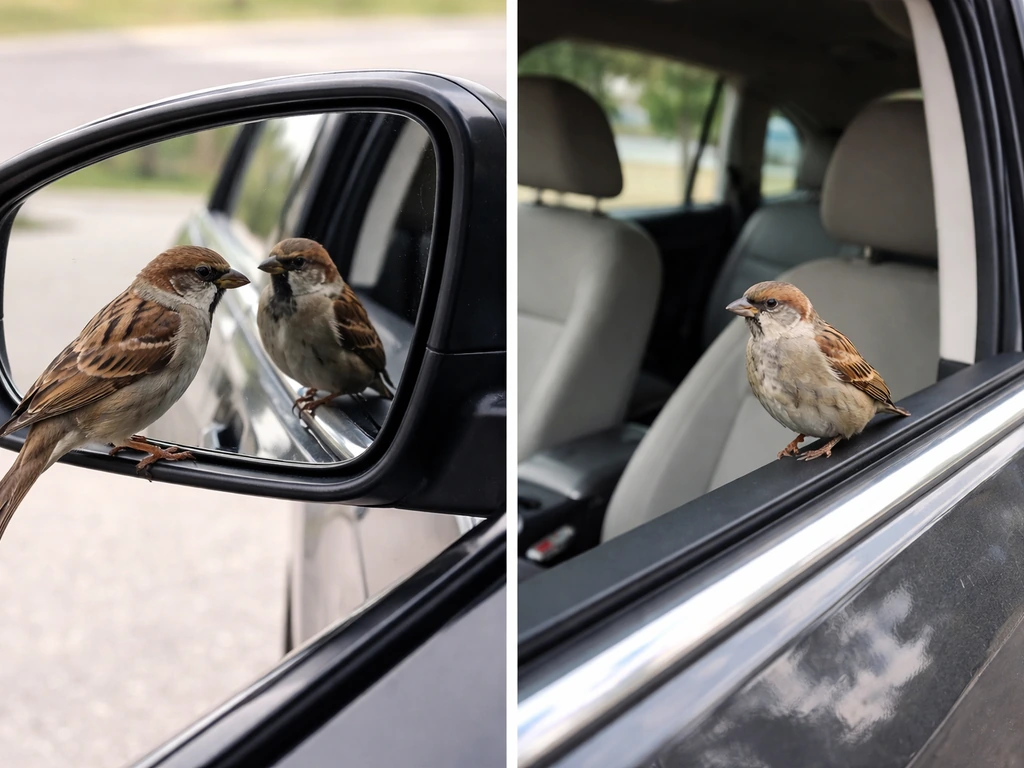
Other bird-in-unusual-locations imagery works in a similar way. A bird on a shoulder, a bird in a garage, or a bird appearing on a car each carry their own symbolic weight shaped by the specific setting, and the same "where is the bird, and what does that location mean? If you are wondering about the bird on shoulder meaning, the symbolism depends heavily on who is wearing the shoulder and how the bird behaves A bird on a shoulder. If you are seeing a bird on a car, the placement can shift the symbolism toward specific “bird on car” themes, which is what the bird on car meaning covers a bird appearing on a car. " logic applies across all of them.
Next steps: verify your source, check related phrases, and know when to look deeper
Start by confirming where the phrase actually came from. If there is any mention of Brâncuși, a museum, or "L'Oiseau dans l'espace," you are dealing with art history and the interpretation is about abstracted flight and aspiration. If the context is a dream journal, a tarot or astrology reading, or a spiritual conversation, lean into the symbolic readings above. If it appeared in a science or space-exploration article, it is almost certainly the literal spaceflight biology context, which has no hidden symbolic meaning to decode.
If you want to go deeper on the symbolic side, look up the specific bird species or color involved, since those details carry their own traditions and meanings that can sharpen the interpretation considerably. You might also explore what the "space" felt like in the dream or image: was it dark and vast, or bright and open? That emotional texture often matters as much as the symbolic content.
When to look even deeper: if the image recurs in dreams over multiple nights, or if it appeared during a significant life moment (a loss, a major decision, a health event), it is worth sitting with it longer, journaling about it, or bringing it to a spiritual advisor or therapist who works with symbolic language. Recurring imagery almost always has a personal layer that no dictionary entry can fully address. The general symbolic framework gives you a starting point; your own life context gives you the actual answer.
Related phrases worth exploring in the same symbolic neighborhood: a bird appearing with a leaf in its mouth carries very different connotations (peace, arrival, a message of new beginnings), while a bird on glass has its own set of folklore and omen traditions. The bird on the glass martini meaning is a specific variant of this symbolism, so its mood and setting matter just as much as the phrase itself bird on glass martini meaning. The common thread is that birds showing up in unexpected places or unusual contexts almost always invite interpretation, and the setting they appear in is the first and most important clue.
FAQ
How can I tell if “bird in space” is about Brâncuși’s sculpture versus a generic spiritual metaphor?
Check for art-specific cues like “Brâncuși,” “L’Oiseau dans l’espace,” “bronze or marble,” or museum-style language about form, motion, and essence. If the wording focuses on spiritual travel, the soul, or life transitions without any museum or artist reference, it is more likely a general metaphor.
What if the bird is described as frozen, falling, or unable to fly in the image or dream?
That usually shifts the meaning from unlimited freedom to being unmoored, stuck, or overwhelmed by the unknown. Pay close attention to your emotional tone in the dream, relief versus panic, because it often determines whether the message is “expansion” or “dissociation from grounding.”
Does the bird’s species or color change the interpretation of “bird in space meaning”?
Yes, species and color can override the default message. An eagle-like bird tends to read as power and vision, a dove as peace or spiritual purity, and an owl as wisdom in mystery. Color matters too, for example a white bird often feels liberating, while black imagery may feel ominous depending on your personal associations and the scene’s mood.
In dream interpretation, what does “space” add beyond just “bird”?
Birds usually point to freedom, messages, or aspiration, but “space” often represents the psychological experience of being suspended between old and new. In practice, this can mean boundaries are dissolving, your options are widening, or you feel disconnected from familiar supports.
Is it possible “bird in space” is literal, even if it appears in a blog or social post?
It is possible, but it is rarer than people assume. Literal readings usually include signals like “microgravity,” “space biology,” “orbit,” “NASA,” or a discussion of research organisms and experiments. If the post is mostly emotional or symbolic, treat it as metaphor unless those scientific markers are present.
If a song or novel uses “I’m a bird in space,” should I interpret it as art history (Brâncuși) or personal symbolism?
Song and novel usage often blends both, but you can disambiguate by checking whether the text explicitly references Brâncuși or frames the “bird in space” as an artistic gesture. If there is no direct reference, it typically functions as personal identity and aspiration rather than a close reading of the sculpture.
What’s a common mistake people make when searching for “bird in space meaning”?
Assuming there is one universal definition. The meaning depends heavily on context, especially whether the source is an artwork, a scientific discussion, or personal imagery like dreams and spiritual reflections.
If the phrase appears repeatedly across dreams, what should I do to refine the meaning?
Track variables over time: the bird’s species and color, lighting in the scene (dark vastness versus bright openness), your emotions, and what happens right before and after the image. Recurrence often means your mind is processing the same life transition from different angles.
What tone should I use to interpret “bird in space,” joyful freedom or isolation?
Both are plausible, and the scene’s emotional texture is your best guide. Soaring confidently commonly signals liberation and expansion, while distance, silence, or not knowing where you are can signal isolation or a need to re-establish grounding.
Do spiritual readings treat “bird in space” the same way as dream interpretations?
They often overlap, but spiritual readings more frequently frame it as soul movement or a transition between states of being. If the reading mentions major shifts like a rite of passage, loss, healing, or transcendence, it is more likely emphasizing spiritual travel than psychological expansion.
How can I quickly decide whether to seek professional help for dream-based symbolism?
Consider context. If the imagery is recurring and distressing, or it coincides with anxiety, sleep disruption, or major trauma, it may be worth talking with a therapist (especially someone comfortable with symbolism). If it is inspiring and occasional, journaling is usually enough to deepen the personal layer.
What other “bird in an unusual place” meanings can I use for comparison?
Use the same disambiguation method: identify the exact setting and the bird’s behavior. For example, birds in captivity-like scenes often point to constrained freedom, while birds on surfaces (like glass) can signal reflection, barriers, or “seen but out of reach” dynamics. The location is the first clue, not just the bird.
Next Article
Bird on Car Meaning: Mirror vs Inside a Car Explained
Bird on car mirror vs bird in car meaning, safe next steps, and common superstition symbolism without overthinking.