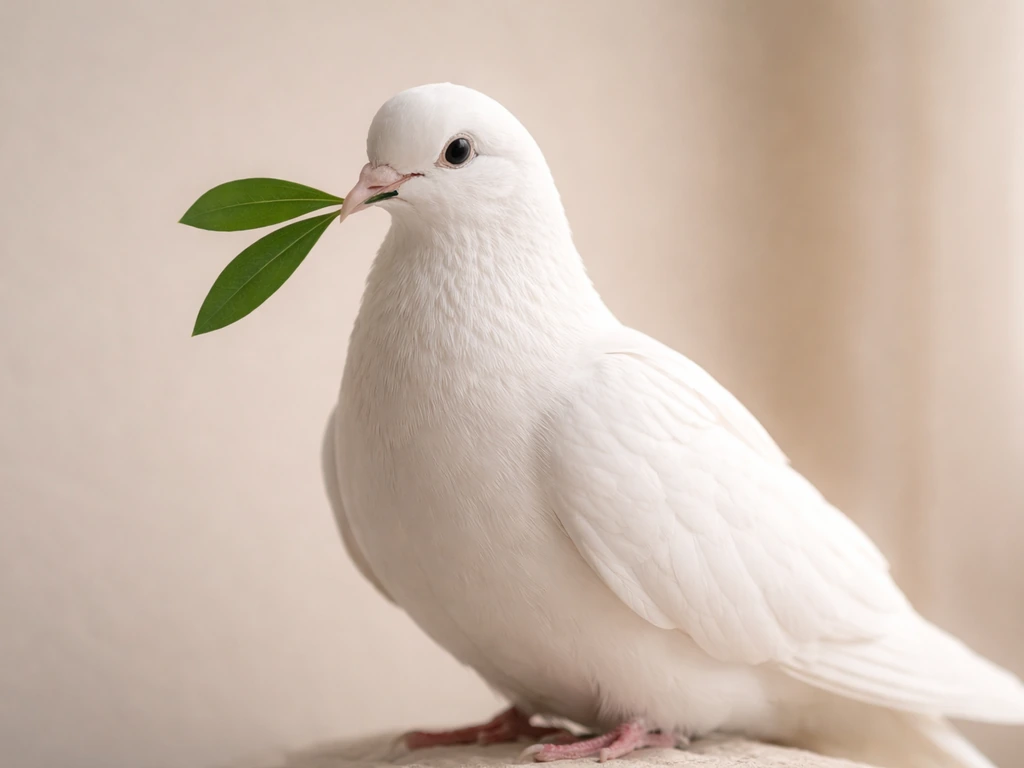
A bird with a leaf in its mouth almost always means one thing at its core: something good is coming after something hard. The most widely recognized version of this image is a dove carrying an olive leaf or olive branch, rooted in the biblical story of Noah's flood (Genesis 8:11), where the dove returns to the ark with a freshly plucked olive leaf as proof that the waters have receded and life has returned to the earth. From that single story, the image spread into Christian art, Jewish tradition, Western secular symbolism, tattoo culture, and everyday idiom. But here's the thing, the meaning shifts depending on which bird is carrying the leaf, what kind of leaf it is, and where you're encountering the image. Getting the right interpretation means paying attention to all three.
Bird with Leaf in Mouth Meaning: Symbolism by Species

What people actually mean by "bird with a leaf in its mouth"
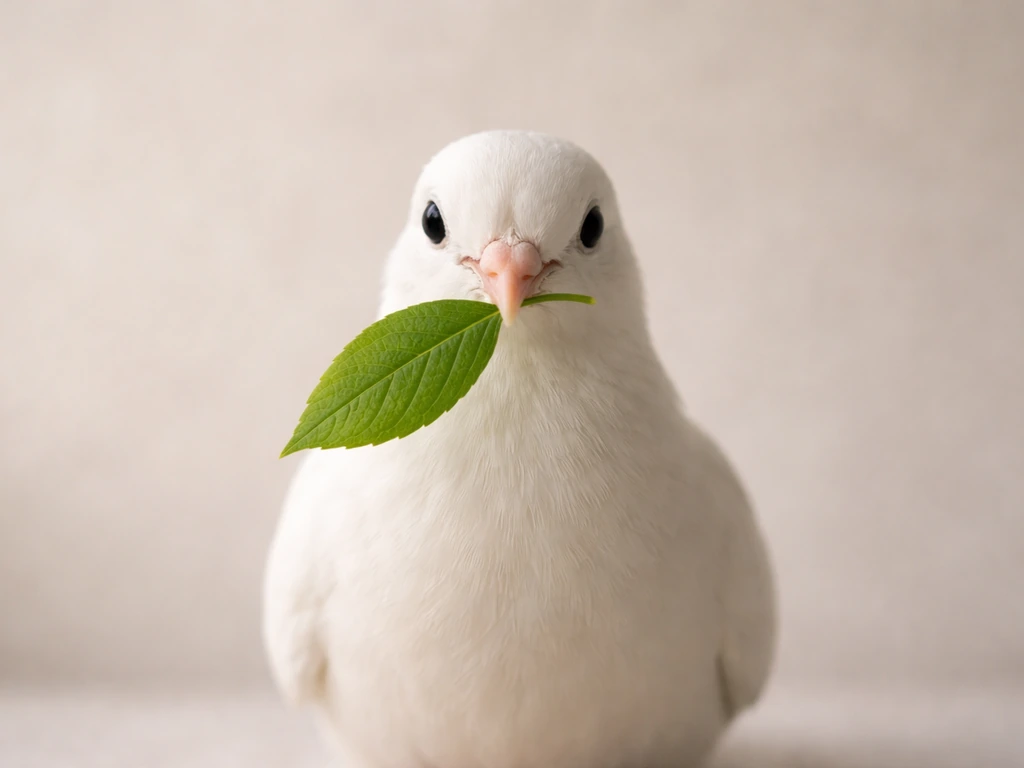
When most people search this phrase, they've seen the image somewhere, in a tattoo, a piece of art, a dream, a decorative object, or a phrase someone used in conversation, and they're trying to figure out what it's pointing at. The phrase itself isn't a single fixed idiom the way "early bird gets the worm" is. It's a description of a visual motif, and that motif carries a cluster of related meanings rather than one locked-in definition. Think of it as shorthand for a whole family of symbolism: peace, hope after hardship, renewal, healing, new beginnings after a period of trial. Those themes all orbit the same sun.
The phrase also shows up loosely in devotional writing, spiritual reflection, and even tattoo consultations, where people want to express something like "I survived a difficult season and I'm moving into something new." In that context, the bird-with-a-leaf image does a lot of emotional work with very little explanation required, which is exactly why it's been popular across so many centuries and so many cultures.
Where the image comes from: folklore, religion, and cultural history
The clearest and most influential origin is Genesis 8:11, Noah releases a dove after the flood, and it returns with "a freshly plucked olive leaf" in its beak. That leaf told Noah the floodwaters had receded and dry land had reappeared. It's one of the most compact pieces of symbolic storytelling in any religious tradition: a small bird, a single leaf, and an entire world being restored. The olive leaf in that story was immediately interpreted as a symbol of peace and new beginnings, and that reading stuck.
By the 5th century AD, St. Augustine was writing in "On Christian Doctrine" that "perpetual peace is indicated by the olive branch which the dove brought with it when it returned to the ark." That's not a casual observation, that's one of the most influential theologians in Western history locking in the interpretation for centuries of readers, artists, and worshippers. The motif appeared in Roman catacombs as early as the 2nd century AD, where doves carrying olive branches were used in funerary art alongside the word "Peace," signaling rest and the promise of resurrection.
The olive branch angle also has roots outside Christianity. In ancient Greece and during the Pax Romana, envoys carried olive branches as tokens of peace when approaching an enemy, the gesture of "I come in peace" made physical. So by the time Christian iconography absorbed the dove-and-olive-branch image, it was landing in a cultural landscape that already associated olive branches with peace and goodwill. The two traditions reinforced each other, which is part of why the symbol became so globally legible over time.
The bird species matters more than you'd think
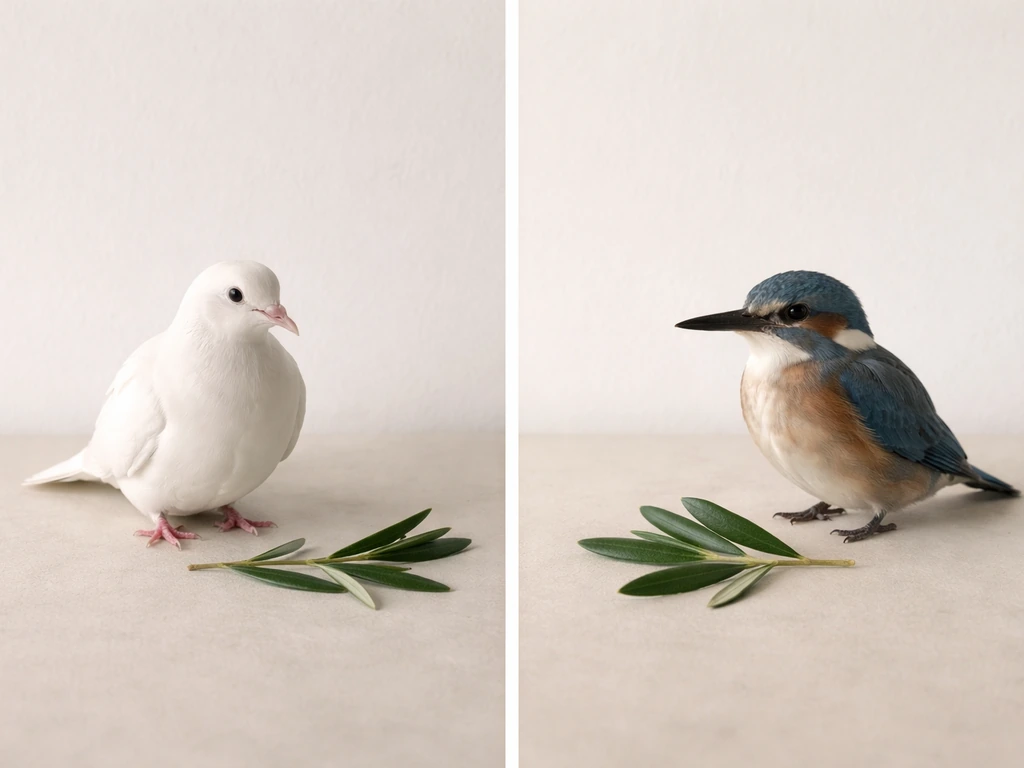
In the overwhelming majority of historical and religious depictions, the bird is a dove. But in tattoos, folk art, and contemporary design, people substitute other birds, and that substitution changes the meaning, sometimes subtly and sometimes dramatically. Here's how bird species typically shift the interpretation:
| Bird | Leaf type usually paired with it | Primary symbolic meaning |
|---|---|---|
| Dove (white or mourning) | Olive branch or olive leaf | Peace, reconciliation, new beginnings, Holy Spirit (Christian context) |
| Robin or small songbird | Green leaf or spring foliage | Seasonal renewal, arrival of spring, optimism |
| Raven or crow | Any leaf or branch | Intelligence, transformation, darker renewal — returning after chaos (echoes the raven Noah sent first) |
| Hummingbird | Flower or tropical leaf | Joy, healing, vitality, celebration of life |
| Swallow | Olive or bay leaf | Safe return home, loyalty, good fortune for sailors |
| Owl | Oak or laurel leaf | Wisdom, protection, knowledge carried forward |
The dove is so dominant in this motif that if you see a white bird with any kind of leaf or branch and you're not sure of the species, defaulting to the peace-and-renewal interpretation is a reasonable starting point. But if the bird is clearly something else, a raven, a robin, an exotic tropical bird, the meaning is probably being shaped more by the artist's or dreamer's personal symbolic vocabulary than by any single religious or folkloric tradition.
One bird worth noting separately: the raven. In Genesis 8:7, Noah actually sends a raven out before the dove. The raven doesn't return with a leaf, it just keeps flying back and forth until the waters dry. So a raven with a leaf is an invented or reinterpreted image, often used to signal a darker or more ambiguous kind of renewal. It's transformation rather than simple peace.
The symbolic themes: peace, renewal, healing, and blessing
The core symbolic cluster around this image is consistent enough that you can treat these as the default meanings unless something in the context redirects you:
- Peace and reconciliation: rooted in both the Noah story and ancient Greek and Roman tradition. The olive branch has meant "let's end the conflict" for thousands of years.
- New beginnings after hardship: the leaf signals that the worst is over. Life has returned. The flood is receding. This makes the image popular in contexts of recovery, grief, loss, or major life transitions.
- Renewal and green growth: the leaf being freshly plucked — still green, still alive — emphasizes that nature is restoring itself. This connects to spring symbolism, fertility, and regeneration themes.
- Healing: tattoo artists and their clients frequently use the dove-with-olive-branch image specifically to mark a period of emotional or physical healing, often after illness, trauma, or grief.
- Divine blessing or spiritual message: in Christian iconography, the dove also represents the Holy Spirit (Matthew 3:16, where the Spirit descends like a dove at Jesus's baptism). A dove with a leaf can carry that added layer of "God's presence and favor" in devotional art.
- Hope: in its most stripped-down form, the bird with a leaf is just hope — the signal that something good is on the way, or that the hardest part is behind you.
How to read the meaning based on where you're seeing it
Context is everything with this motif. The same image means slightly different things depending on where it appears:
In religious or devotional art
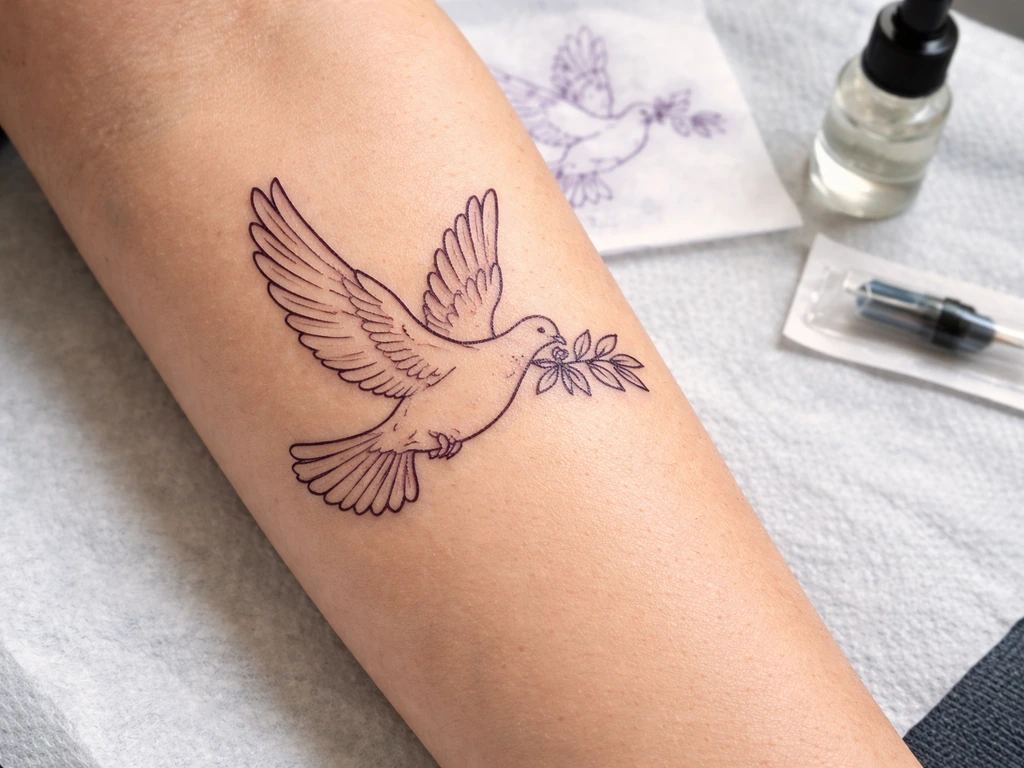
Lean toward the Noah-story interpretation by default. If you're looking at Christian art, especially anything from the early church period, the dove-with-olive-branch is almost certainly a peace-and-renewal symbol with Holy Spirit overtones. If you're looking at Jewish art or text, the olive leaf signals God's mercy and the restoration of the covenant relationship with humanity. In either case, the leaf is the proof of life, the tangible sign that things are going to be okay.
In tattoos
Tattoo artists will tell you that small details quietly transform the meaning. A mourning dove with an olive branch is a well-understood shorthand for peace, hope, and healing, it's one of the most requested meaningful tattoos precisely because it communicates so much without needing words. Adding other design elements (like a name, a specific date, or a heart) personalizes it further. The key question to ask when you see a tattoo like this: what was the person going through when they got it? That personal context is usually the most accurate guide to what it means to them specifically.
In dreams
Dream symbolism is the most subjective category, but the bird-with-leaf image in a dream is widely interpreted across multiple traditions as a positive omen, a message from your subconscious (or, depending on your beliefs, something beyond) that a difficult period is ending. The specific species and the condition of the leaf (fresh and green versus dried or wilted) can add nuance: a green leaf suggests vitality and active renewal, while a dried leaf might point more toward acceptance and letting go than active new growth.
In everyday phrases and conversation
When someone uses the phrase "bird with a leaf in its mouth" metaphorically in speech or writing, they're almost always invoking the Noah story, consciously or not. It's used to describe someone who brings good news after a long wait, or a sign that something difficult is finally resolving. It sits in the same family of bird-based idioms as other expressions tied to birds appearing as messengers or omens, the difference being that this one is almost always positive. You'll find similar interpretive logic in other bird-sighting symbolism, like what it means when a bird appears in an unusual location or perches close to a person. If the bird appears in space or a sci-fi setting, the meaning often shifts from religious renewal to wonder, curiosity, and a hopeful new phase unusual location.
In secular art and design
Outside explicitly religious contexts, the bird-with-leaf motif is used in everything from logo design to greeting cards to home decor. In these cases the meaning is usually the broadly positive cluster: hope, peace, new beginnings. The specific bird matters less here than in religious art, and the image has been so widely absorbed into general Western visual culture that it functions almost like a universal sign for "good things ahead."
How to figure out the exact meaning for your specific situation
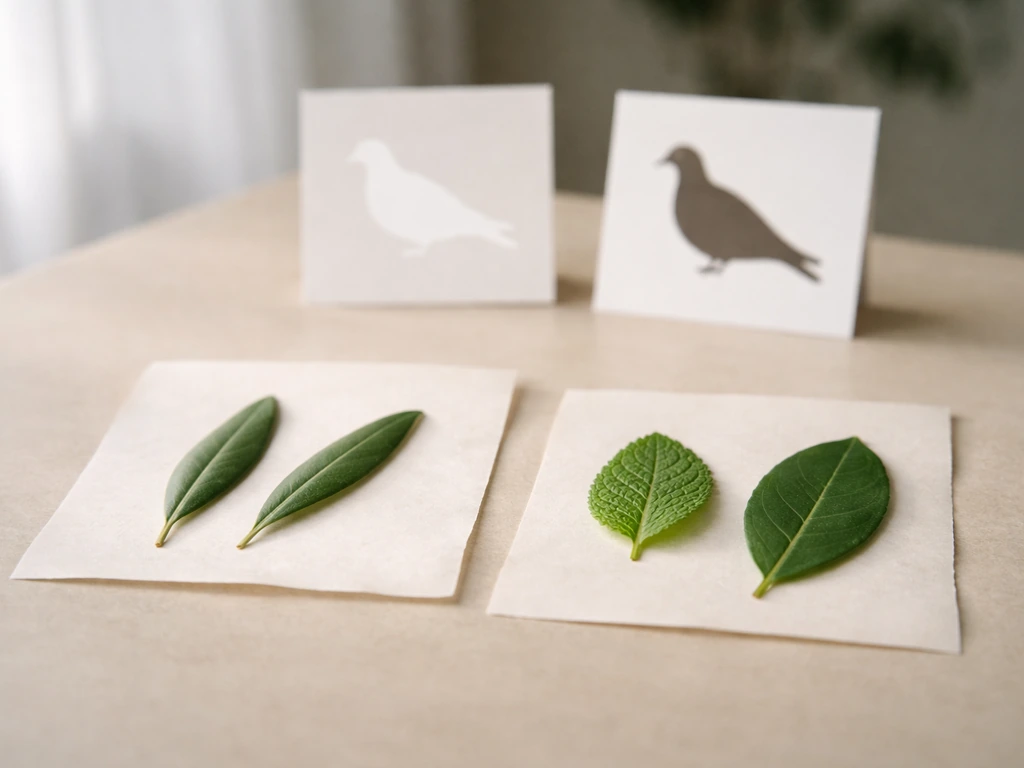
If you want to nail down the meaning as precisely as possible, work through these questions in order:
- Identify the bird species if you can. White dove = lean toward peace/Holy Spirit/Noah story. Mourning dove = similar, with added grief-and-healing nuance. Something else entirely = the artist or dreamer may be using personal symbolism, so look for other context clues.
- Look at the leaf type. An olive branch or olive leaf is the clearest signal you're in Noah/peace territory. A generic green leaf points more toward general renewal and growth. A flower or blossom is more about joy and vitality. A dried or dead leaf can flip the meaning toward endings rather than beginnings.
- Identify the cultural source. Christian or Jewish religious art? Classical Western secular tradition? Japanese or East Asian context? South American folk art? The same bird-and-leaf image can mean very different things in different cultural systems. A bird carrying a leaf in Japanese art, for example, might be connected to concepts of impermanence or seasonal change rather than Abrahamic flood narratives.
- Consider the artistic style and time period. A Byzantine mosaic dove with a branch is carrying different layered meanings than a modern minimalist tattoo of a bird with a single leaf. Historical context shapes what the artist could have been referencing.
- Ask about the person's intention if you can. For tattoos especially, the person wearing it is the most reliable source. For art pieces, look for the artist's statement or the piece's title.
- Check whether it's part of a known story or scene. If the bird-with-leaf appears alongside water, a boat, or a rainbow, you're almost certainly looking at a Noah reference. If it appears alongside a figure of a person or a religious figure, look at who that figure is — that will anchor the interpretation quickly.
Common misinterpretations to watch out for
The biggest mistake people make with this motif is assuming it means the same thing in every context. Here are the most common misreadings:
- Assuming any bird with any leaf means peace: peace is the most common interpretation, but it's specifically tied to the olive branch and the dove combination. A robin carrying a maple leaf in a piece of Canadian folk art is not making a peace statement — it's probably a seasonal or national identity image.
- Treating the olive branch and a generic green leaf as interchangeable: they're not. The olive branch has a specific cultural and religious history that makes it uniquely tied to the Noah story and the peace-symbolism tradition. A random green leaf carries a more general "nature and renewal" meaning without that loaded backstory.
- Reading the symbol through one culture's lens when it comes from another: a bird carrying a branch in South Asian or East Asian art may be pulling from entirely different traditions — longevity, fidelity, or seasonal cycles — that have nothing to do with Genesis.
- Ignoring the bird species: swapping in a raven, owl, or crow for a dove isn't a neutral substitution. Each of those birds brings its own symbolic weight that will color or even contradict the leaf's meaning.
- Assuming negative meaning just because the context is unusual: a bird arriving unexpectedly, perching near a person, or appearing in a dream is often interpreted as an omen of some kind. But the bird-with-leaf image almost universally skews positive — even in grief contexts, it signals peace rather than loss.
- Over-spiritualizing secular uses: sometimes a bird with a leaf on a coffee mug or a wallpaper print is just a pretty design, not a coded spiritual message. Not every iteration of the motif is meant to be decoded.
The short version when you need it fast
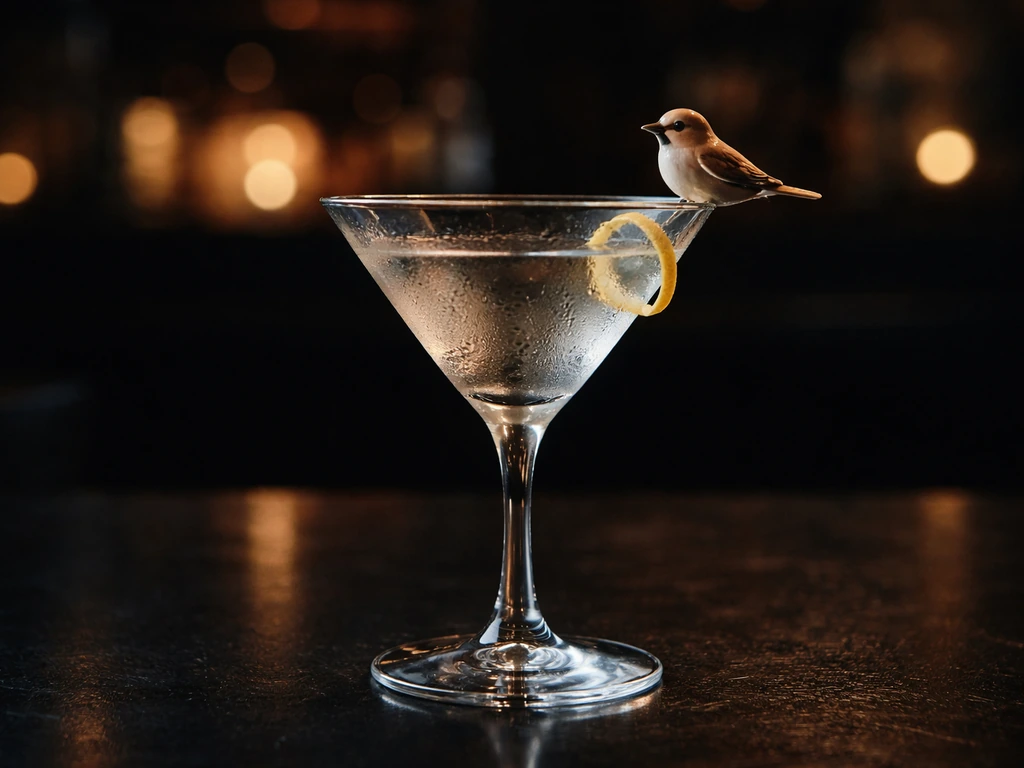
If you're pressed for time: a bird with a leaf in its mouth almost certainly means peace, hope, or renewal, especially if the bird is a dove and the leaf looks like an olive branch. If you're instead wondering about a bird on your shoulder, the interpretation can be different, which is why the bird on shoulder meaning matters. The bird on the glass martini meaning follows a similar idea: it can signal a moment of peace and a positive shift after a rough stretch a bird with a leaf in its mouth almost certainly means peace, hope, or renewal. That meaning comes directly from Genesis 8:11, was cemented by early Christian art and theology, and has been in continuous use for over 2,000 years across religious art, secular design, tattoos, and metaphorical language. To get more precise, identify the bird species, the type of leaf, and the cultural context it's coming from, and those three details will take you from the general interpretation to the specific one. The image rewards a closer look, but even at a glance, it's almost always saying something good.
FAQ
If the leaf is not an olive leaf, does the meaning change?
Yes, but only in a limited, “inspired by” way. A dove with a leaf is the historically dominant version, so most readers default to peace and renewal. If the leaf clearly looks like something other than an olive branch, the meaning often tilts toward general hope or healing rather than the specifically Noah-inspired “end of the flood” message.
How does a fresh vs dried leaf affect the interpretation?
Leaf condition is a quick nuance cue. Fresh, green, vibrant leaves typically point to active renewal or “something is starting now.” Wilted, brown, or dried leaves more often suggest acceptance, closure, and letting go after hardship, even if the overall tone stays positive.
What does the bird’s pose or direction of motion add to the meaning?
If the bird is perched, flying toward someone, or hovering close to you, it usually reads as a message arriving or a transition into a calmer phase. If the bird is shown as carrying the leaf away, that can imply moving on from the difficult season, rather than simply receiving peace.
How can I interpret the meaning of a bird-with-leaf tattoo more precisely?
For tattoos, artists commonly ask the same core question the article hints at, what you were going through. Add a practical detail check: the design often changes emphasis based on other objects (an ark, water, an olive grove, a dove’s direction) and on whether the date is tied to a recovery, loss, or turning point.
What should I pay attention to in a dream to interpret it correctly?
In dreams, look for your emotional context and the leaf’s status. A calm scene with a green leaf often aligns with “good news is coming” or regained stability. A tense scene, even if the symbol looks similar, can mean you are processing the ending of a trial rather than immediately receiving relief.
Is there ever a “darker” version besides a raven with a leaf?
Yes. The raven-with-leaf image is the main edge case the article covers, and it can signal transformation with moral ambiguity or a more painful kind of renewal. If you are unsure whether it is a raven, focus on details like beak shape and overall silhouette, because “dark bird” imagery is sometimes stylized and can be misread.
Does the symbol mean the same thing in logos, greeting cards, and home decor?
It can, especially in non-biblical art. If the style is clearly modern, decorative, or brand-like, the symbol is often used as shorthand for “hope, peace, new beginnings.” In that setting, the bird species and leaf type tend to matter less than the overall mood and placement in the design.
How do surrounding symbols in the artwork change the interpretation?
A practical rule: if the image is paired with explicitly Christian markers (crosses, church setting, Holy Spirit iconography), it will likely be read through that lens. If paired with Jewish cultural markers (olive-related imagery, covenant-themed text), readers may emphasize mercy and restoration. Without those markers, most people read it as broadly spiritual or inspirational.
When people use the phrase metaphorically, what context makes it most accurate?
If the phrase is said during an event like a reconciliation, recovery, trial, or long waiting period, it usually means “the resolution is here” or “the hard part is ending.” If it is used casually without a hardship context, some people use it for general positivity, but it will be less specific to “Noah’s flood” meaning.
Bird on the Glass Martini Meaning Explained
Unpack bird on the glass martini meaning: symbolism, slang or cocktail context, and tips to confirm the exact reference.