A '2 headed bird' can mean three very different things depending on where you encountered it: a real biological anomaly that occasionally shows up in backyards and goes viral, a rich symbolic motif woven through mythology and heraldry for thousands of years, or a meme, metaphor, or story reference using the image to say something about duality, conflict, or irony. Which meaning applies to your situation depends on context, and this guide will help you figure that out quickly.
2 Headed Bird Meaning: Biology, Symbols, and Metaphors

Marcus Whitmore
23 Mar 2026
What '2 headed bird' usually refers to
Most people land on this phrase in one of three ways: they saw a photo or video of an actual bird with two heads and want to know if it's real; they came across the image or phrase in a spiritual, cultural, or artistic context and want to know what it symbolizes; or they heard it used metaphorically, in a meme, a political cartoon, or a piece of fiction, and want to understand what point the creator was making. Each interpretation is genuinely distinct, and conflating them leads to a lot of confusion.
The literal case is rare but documented. The symbolic case is ancient and cross-cultural, spanning Buddhist parables, Hindu mythology, Byzantine heraldry, and Mesoamerican glyphs. The metaphorical/meme use is the newest layer and tends to borrow from both of those older traditions to make a specific point about contradiction, shared fate, or absurd power dynamics. Once you know which lane you're in, the meaning becomes clear fast.
The literal side: yes, two-headed birds do actually exist
Real two-headed birds are not a hoax category, though many viral images are. They result from a developmental anomaly called polycephaly, the biological term for any animal born with more than one head. In birds, the most common mechanism is a failure of normal embryonic division early in development. When a fertilized egg begins forming twins but the process doesn't complete cleanly, the result can be conjoined twins sharing a single body. In some cases, this produces two distinct heads on one body.
The embryology behind this is genuinely complex. Conjoined twinning in vertebrates results from incomplete splitting or partial fusion during early cleavage, which in humans occurs after day 13 of fertilization. In birds, a related process called rostral conjoining has been documented in chicken embryos, where the fusion happens at the head end, producing a heavily malformed shared head region and two fairly normal bodies below. A 2025 scientific paper specifically studied naturally occurring conjoined chicken twins and confirmed this pattern. It's an extreme developmental anomaly, not a supernatural event.
A rarer version involves something called diprosopus, or craniofacial duplication, where a single embryo develops two faces or two skulls due to a bifurcation of the notochord early in development. This produces what genuinely looks like a single bird with two complete heads rather than a merged, malformed structure. It has been documented in lambs and other vertebrates.
One well-documented real-world case: a woman in Northampton, Massachusetts discovered a baby cardinal with two heads and three beaks in her backyard. An adult cardinal was reportedly continuing to care for the chick. That story circulated widely, and the photos were genuine. These things do happen, they're just extraordinarily rare, and survival odds for two-headed birds are very poor because coordinating feeding and movement between two heads on one body creates insurmountable challenges.
What real two-headed bird sightings look like
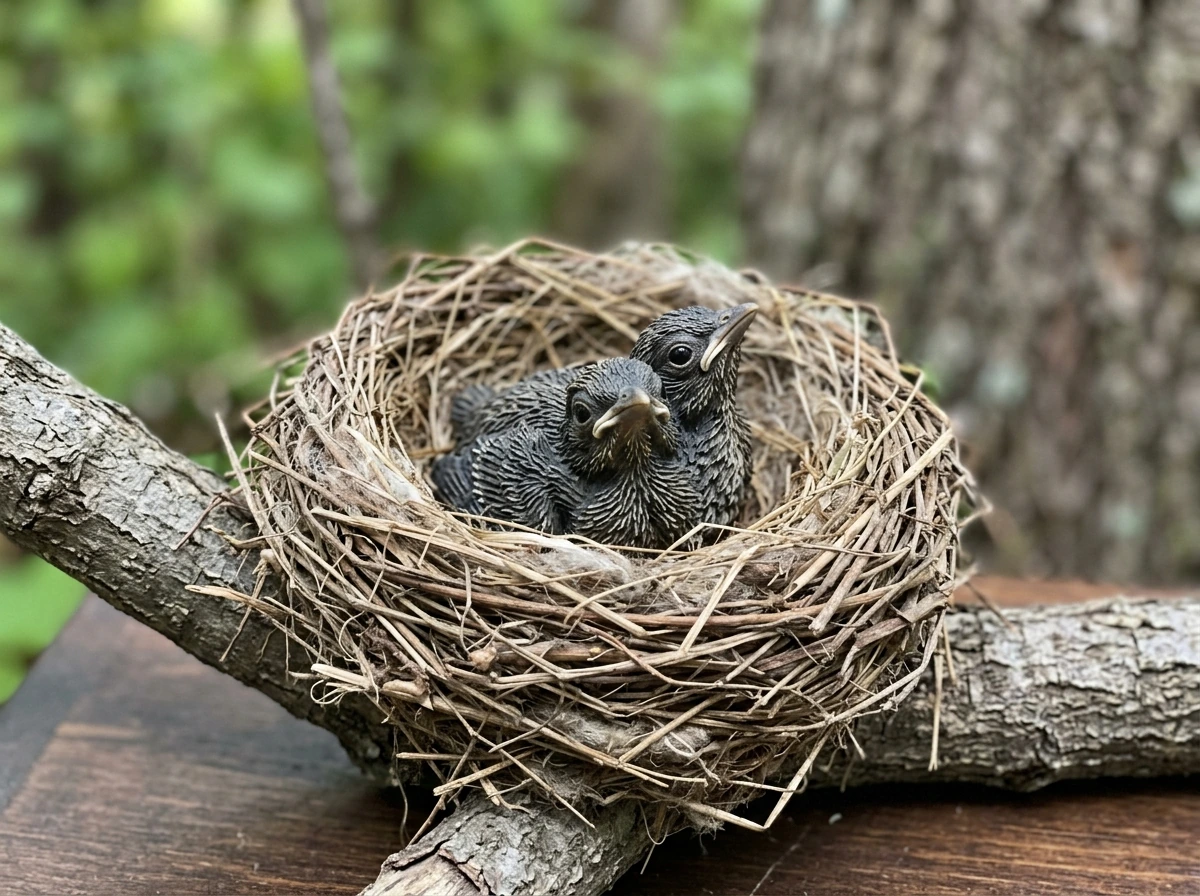
- Two distinct heads, sometimes with overlapping or extra beaks, on a single small body
- The bird is almost always a hatchling or nestling, rarely an adult
- Parents sometimes continue feeding the chick despite the anomaly
- Survival beyond a few days is uncommon due to feeding coordination issues
- Photos are often blurry or taken from a distance, which fuels skepticism
The symbolic meaning: what cultures have made of two-headed birds
The two-headed bird as a symbol has one of the longest documented runs of any image in human visual culture. It shows up in the ancient Near East, in South Asian mythology, in Byzantine imperial iconography, in Mesoamerican glyphs, and in folk art traditions across multiple continents. The meaning is not uniform, but a few consistent themes emerge: duality, divided power, watching in two directions at once, and the tension between opposing forces that share one fate.
Power and dual authority: the double-headed eagle
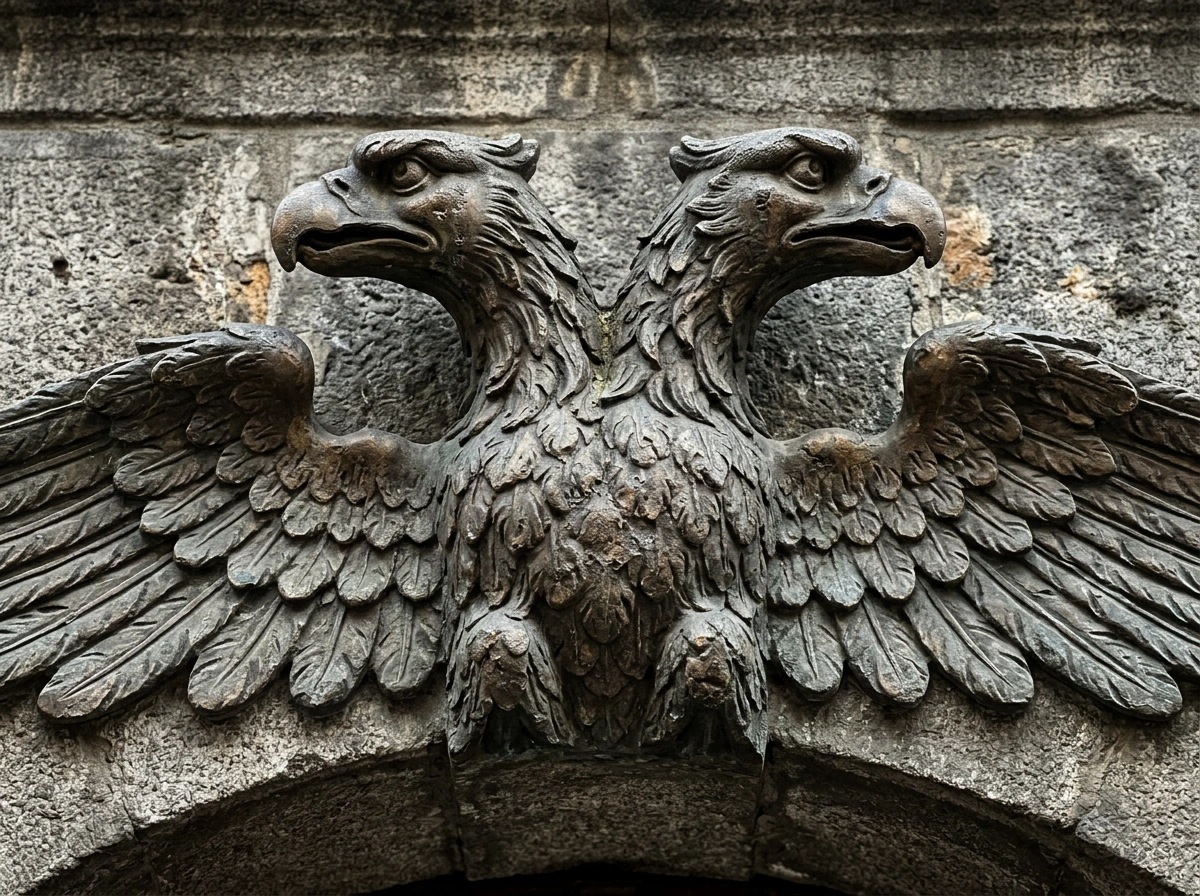
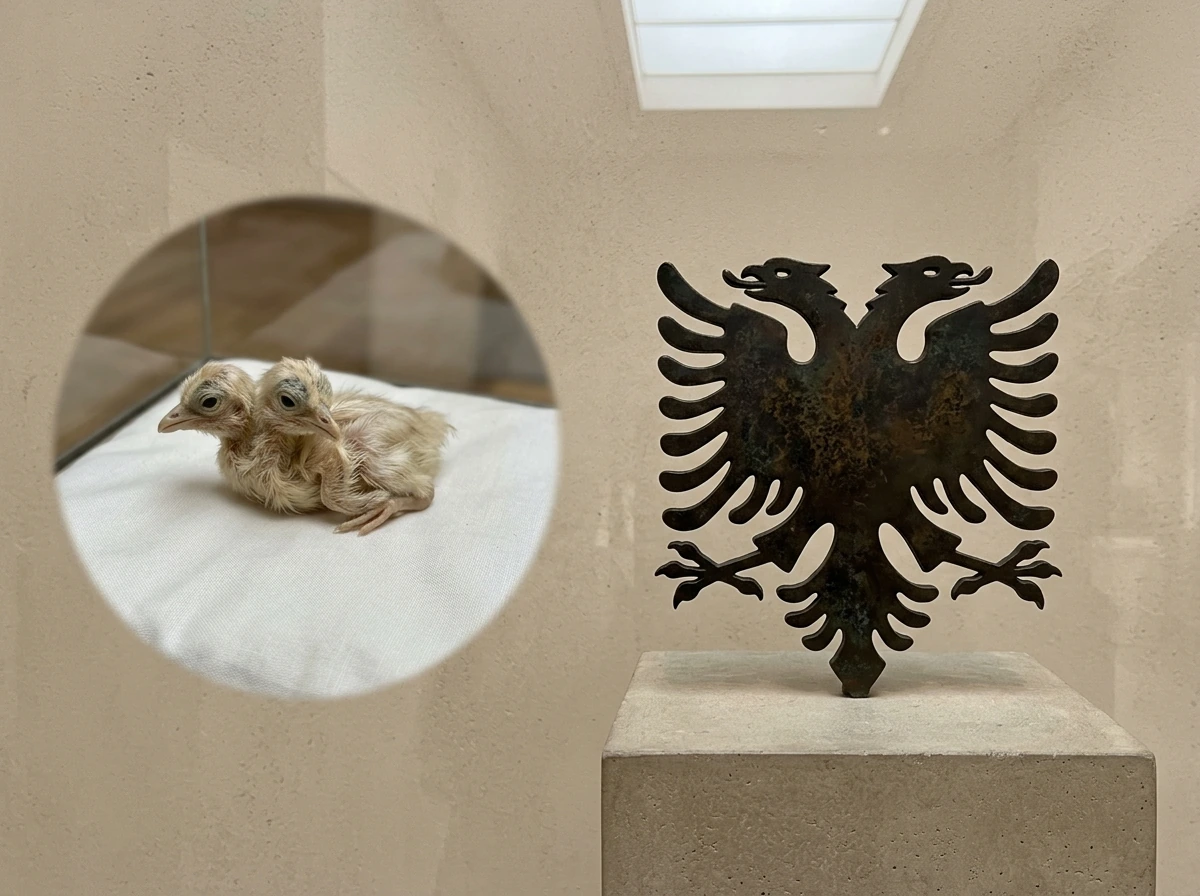
The most historically influential version is the double-headed eagle, which became one of the most politically loaded symbols in history. In the Byzantine Empire, the two heads were interpreted as representing dual authority, with one head looking west and one looking east, embodying the idea of ruling across two worlds simultaneously. In Byzantine heraldic contexts, the double-headed eagle is commonly explained as symbolizing dual authority, with one head oriented toward West and the other toward East. The symbol was later adopted by the Holy Roman Empire, Russia, and several other states, each adapting the meaning to their own political context. The earliest known depictions go back to ancient Near Eastern art, with ceremonial axe heads featuring the motif dating to well before the common era.
Spiritual warning: the Buddhist two-headed bird
In Buddhist tradition, the two-headed bird appears in a parable involving a creature called the jivajivaka, literally a 'life-sharing bird. Wikimedia Commons groups images under the term Jivajivaka, often described as a Buddhist “two-headed bird” motif. ' The story, referenced in Chapter 59 of the 'Fo benxing ji jing,' describes a bird with two heads sharing one body. One head eats a wonderful fragrant flower while the other is asleep. Later, the waking head, out of spite or jealousy, eats a poisonous flower, which kills both. The moral is pointed and practical: when you share your existence with another, harming them harms you. It's used as a metaphor for interdependence and the self-defeating nature of resentment. The MIHO Museum has a catalogued artistic depiction of this exact figure from Buddhist sutra art.
Divine force: Gandabherunda in Hindu iconography
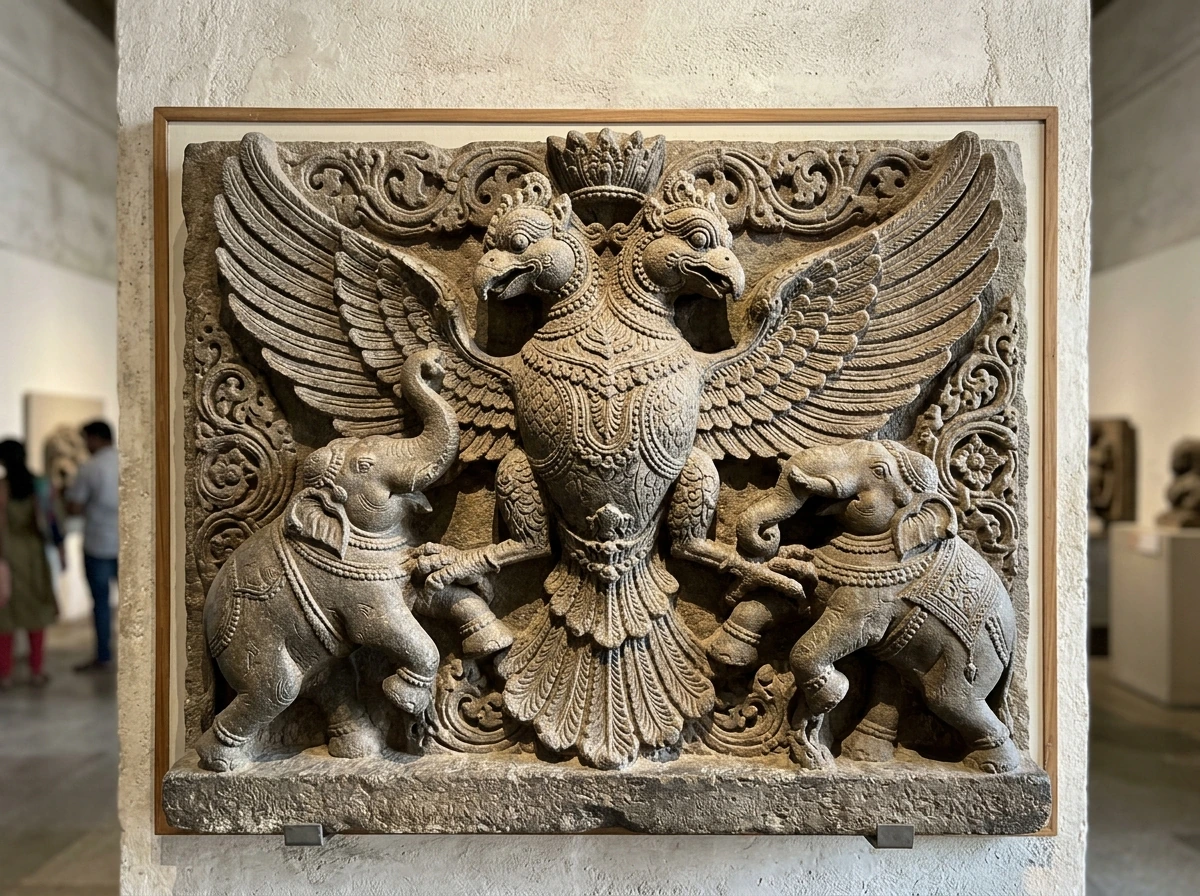
In Hindu tradition, Gandabherunda is a two-headed eagle or bird described as a form of Vishnu. The iconography is dramatic: the bird is depicted holding two elephants, one in each head, and appears in temple carvings in scenes associated with enormous cosmic power, sometimes destruction-level force. This is not a gentle symbol. The phrase “2 wings of the same bird meaning” is often used to frame that same idea of two parts needing to work together rather than turn on each other. It represents raw divine energy that is almost too powerful to contain, the kind of force that could unmake the universe if unchecked, ...so the “2 wings of the same bird meaning” is often read as the two parts needing to work together, or they’ll turn on each other. ... It's still used today as an official emblem of the Karnataka state government in India.
Past and future: the Mayan double-headed bird
Mesoamerican traditions also feature two-headed bird imagery. A Mayan glyph associated with the double-headed bird motif carries the meaning of facing both the past and the future simultaneously, a directional duality that turns the image into a metaphor for time, prophecy, or political transition. This interpretation has appeared in contemporary Guatemalan political commentary, suggesting the symbol remains active in cultural meaning-making.
Folk art and everyday symbolism
Beyond high mythology and heraldry, the two-headed bird also appears widely in folk art traditions as a more everyday decorative motif. The Museum of International Folk Art, for example, has a piece described simply as 'Double headed bird,' depicting a two-headed chicken with arched necks facing one another. In folk contexts, the image often carries a meaning of balance, opposition within unity, or simply the strangeness of the world made material. It's less about cosmic power and more about the human instinct to represent contradiction in a single form.
How symbolic interpretations of the two-headed bird compare
| Tradition / Context | What the Two Heads Represent | Overall Tone |
|---|---|---|
| Byzantine / European heraldry | Dual authority, looking in two directions, ruling multiple domains | Power, legitimacy |
| Buddhist parable (jivajivaka) | Shared fate, the danger of self-destructive choices when lives are linked | Warning, interdependence |
| Hindu mythology (Gandabherunda) | Overwhelming divine force, cosmic destruction capacity | Awe, danger, divine power |
| Mayan glyph tradition | Facing past and future simultaneously, time and transition | Prophecy, political meaning |
| Folk art traditions | Duality within unity, contradiction made visible | Neutral to playful |
Two-headed birds in stories, memes, and modern language
Outside of mythology and biology, the two-headed bird shows up as a recurring image in internet culture, fiction, game design, and political commentary. In these contexts, the meaning is almost always about internal contradiction: something that cannot agree with itself, that pulls in two directions, that is self-defeating by design. If what you saw is a meme-style metaphor about doing more with one action, you may also like the “killing one bird with two stones meaning” comparison for a related two-in-one idea. A political cartoon might depict a government or institution as a two-headed bird where each head is trying to eat the other. A meme might use the image to comment on someone publicly contradicting themselves, so the two bird with one stone meaning usually points to “duality, divided power, watching in two directions at once, and the tension between opposing forces that share one fate. If you meant the phrase in a meme or symbolic context, the two bird on a wire meaning usually points to duality and divided attention. ”
The metaphor also overlaps with idioms that explore similar territory. If you’re thinking about the two birds, one stone idea, that phrase is usually used to mean solving two problems with one action two birds, one stone meaning. If you're interested in how the idea of 'bird of a different feather meaning' works as a metaphor, that concept runs parallel to the two-headed bird but with a different emotional register: unity rather than conflict. If you're wondering about the left wing and right wing same bird meaning, it's another way people talk about shared identity and opposing forces bird of a different feather meaning. bird of a different feather meaning The two-headed bird tends to imply tension or absurdity, while the 'same bird, two wings' framing tends to imply connection and shared origin.
In video games, fantasy literature, and worldbuilding, the two-headed bird is a frequent design choice for creatures representing chaos, trickery, or uncanny intelligence. It signals immediately to the reader or player that something unusual and possibly dangerous is present. The visual shorthand is powerful precisely because the real-world rarity of the image makes it feel inherently symbolic.
How to figure out which meaning applies to your situation
If you came across a two-headed bird image or phrase today and you're trying to figure out what it means in your specific context, here's a direct checklist you can run through right now.
- Is it a photo or video? If yes, ask whether it shows a real animal, an artistic depiction, or a digital manipulation. The biological anomaly is real but rare, so skepticism is warranted.
- Does the image look like a news story or wildlife post? Look for a caption, a source account, or a date. Real two-headed bird cases almost always come with a specific location and a named observer.
- Is it part of a religious, cultural, or historical context? Images of stylized, symmetrical, or heraldic two-headed birds (especially eagles) are almost certainly symbolic, not biological.
- Is it being used in a political cartoon, meme, or editorial? The meaning here is almost always metaphorical: internal contradiction, self-defeating behavior, or divided authority.
- Is it from a game, book, or fictional world? Treat it as creative worldbuilding that borrows from the symbolic tradition rather than making a factual claim.
- Did someone share it with a spiritual or omen-related caption? That's the symbolic/superstition interpretation. Whether you take it seriously is your call, but knowing it's a cultural symbol rather than a biological fact is useful context.
Verifying a photo: practical steps that actually work
If someone sent you a photo of a two-headed bird and you want to know if it's real, do a reverse image search before drawing any conclusions. Upload the image to Google Images, TinEye, Yandex, or Bing's visual search. The goal is to find the earliest appearance of that image online, since the earliest-dated match is usually closest to the original source. If the photo has been circulating for years with different captions in different countries, that's a strong signal it's being misrepresented. If it traces back to a single news outlet or individual who posted it with specific verifiable details, it's more likely genuine.
Also check whether the image has already been fact-checked. A quick search of the image description plus words like 'real,' 'fake,' or 'hoax' will often surface fact-check articles from established outlets. Two-headed animal photos go viral regularly and get fact-checked regularly, so the work may already be done for you.
Superstition vs. reality: what to actually do with this
If you're dealing with the superstition angle, either because someone told you a two-headed bird is an omen or because you stumbled across spiritual content framing it that way, it helps to know what the actual omen traditions say. Across most of the cultures that use two-headed bird symbolism, the image is not straightforwardly good or bad. It represents duality, division, or the tension between two forces. If you’re thinking in the “two wings of the same bird” framing, that comparison usually points to the same core idea of two parts needing to align rather than turn on each other: two wings of the same bird meaning. In the Buddhist parable, it's a warning about how shared fate makes self-harm impossible. In the heraldic tradition, it's about power and vigilance. There is no single 'bad luck' verdict attached to the two-headed bird the way there is to, say, a black cat crossing your path in some Western traditions.
If someone is telling you that seeing a two-headed bird means something specific will happen to you, that's a personal or regional interpretation, not a universal one. It's worth asking where that specific meaning comes from before taking it on board. Most consistent symbolic meanings across cultures point to themes of duality and internal conflict rather than fortune or misfortune.
If you saw a real two-headed bird in your backyard and you're wondering what to do: the humane answer is to let nature take its course if the parents are present and caring for the chick, as in the Massachusetts cardinal case. These birds rarely survive more than a few days. Intervening is unlikely to help and may cause more stress. Documenting it with photos and reporting it to a local wildlife rehabilitator or naturalist society is the most useful thing you can do, both for the bird and for the scientific record.
So what does it actually mean in your case?
Here's the quick mapping of the most common scenarios and what the two-headed bird most likely means in each one:
| Your Situation | Most Likely Meaning | Next Step |
|---|---|---|
| Viral photo or social media post | Possibly a real biological anomaly, possibly a misrepresented or edited image | Reverse image search it before sharing |
| Religious or spiritual content | Cultural symbol of duality, shared fate, or interdependence (varies by tradition) | Identify which tradition it comes from for accurate interpretation |
| Heraldic, political, or governmental image | Dual authority, watching in multiple directions, power and dominion | No further action needed; this is intentional symbolism |
| Meme or political cartoon | Internal contradiction, self-defeating behavior, or divided leadership | Read the caption and context for the specific point being made |
| Game, book, or fictional setting | Creative borrowing from symbolic tradition; signals chaos, duality, or power | Treat it as worldbuilding, not a factual claim |
| Backyard or wildlife sighting | Genuine rare biological anomaly (polycephaly or diprosopus) | Document, contact a wildlife rehabilitator, do not intervene unless directed |
The two-headed bird is one of those images that has genuinely earned its symbolic weight because it's real enough to seem possible, rare enough to feel significant, and visually striking enough to carry a metaphor. Whether you're looking at a photograph of a hatchling cardinal, a temple carving of Gandabherunda, a Byzantine imperial seal, or a political meme, the core idea is almost always the same: two minds, one body, and the question of whether they'll find a way to work together or destroy each other. That tension is what makes the image so durable across such wildly different cultures and contexts.
FAQ
If I see a two-headed bird in a video, how can I tell whether it is edited or a real, conjoined chick?
Look for context clues like nesting location, parent behavior, and consistent body motion across frames. Edits often leave the background, lighting, or movement out of sync. If the clip shows a second head responding independently (pecking, swallowing, or turning) while the body remains anatomically plausible, it is more likely real than a composited image, but you still should reverse-search the exact frame to find the earliest source.
What does “polycephaly” mean for survival, and should I expect a two-headed bird to live long?
In most cases it is not just “one extra head,” it is a shared coordination problem, especially for feeding and balance. Even when both heads can function, survival tends to be very short because the nervous and muscular coordination is imperfect. So if you encounter a likely real case, the most helpful action is usually monitoring from a distance and contacting a wildlife rehabilitator rather than trying to manage feeding yourself.
Does a two-headed bird automatically mean the parents are “abnormal” or something is wrong with the environment?
Not necessarily. Polycephaly is an embryonic developmental anomaly, and it can occur without an ongoing environmental catastrophe. Environmental testing may be considered in unusual clusters, but a single rare case does not usually point to pollution or pesticides on its own. The practical step is to focus on documenting and reporting, not making broad environmental conclusions from one incident.
Are there differences in meaning between the “two-headed eagle” and “two-headed bird” as a general image?
Yes. The double-headed eagle in heraldry and state symbolism often emphasizes dual authority, geographic watchfulness, and formal power. The more general “two-headed bird” motif in folk art or internet contexts more commonly leans toward internal contradiction or shared fate. If a source explicitly names an eagle or imperial emblem, prioritize the political-heraldic interpretation rather than the meme-like one.
How do I interpret it if someone uses it for “good luck” or “bad luck” online?
Treat those claims as non-universal personal or regional readings. Across many traditions, the image is more consistently tied to duality, tension, and interdependence rather than a simple omen of misfortune. A useful check is to ask whether the claim points to a specific culture, story, or timeframe, and whether it matches the themes of shared fate and division found in older symbolic uses.
If the image is from a religious tradition, should I assume there is one fixed moral?
Not always. Some stories have a clear lesson, like warnings about harming a shared existence, but other appearances in iconography function more like a power descriptor than a single moral rule. When you can, identify the exact motif name or figure (for example, a named eagle form in a tradition) because the lesson can shift from ethical teaching to representing cosmic force.
What should I do if I think I found a real two-headed chick but the parents are nearby and behaving normally?
Minimize disturbance and observe briefly from a safe distance. If the parents appear to be feeding or guarding, intervention is usually low value and can increase stress for the chick and the adults. The most useful next step is to report the case to a local wildlife rehabilitator or naturalist group, and document with photos or notes without attempting to handle the animal.
Could a two-headed bird meaning be tied to “two birds with one stone” or other bird idioms?
Sometimes, but they usually operate on different mechanics. Two-headed bird imagery more often signals contradiction in one unified entity, while similar-sounding idioms about stones or different feathers shift toward cooperation, irony, or unity themes. A quick decision aid is to ask what the creator is targeting: conflict inside one being versus a clever outcome from a shared action.
Next Article
War Bird Meaning: Literal, Slang, and Historical Uses
Understand war bird meaning: literal, slang metaphor for fighters, and historical bird symbolism, plus close phrase comp