What it means, in plain English
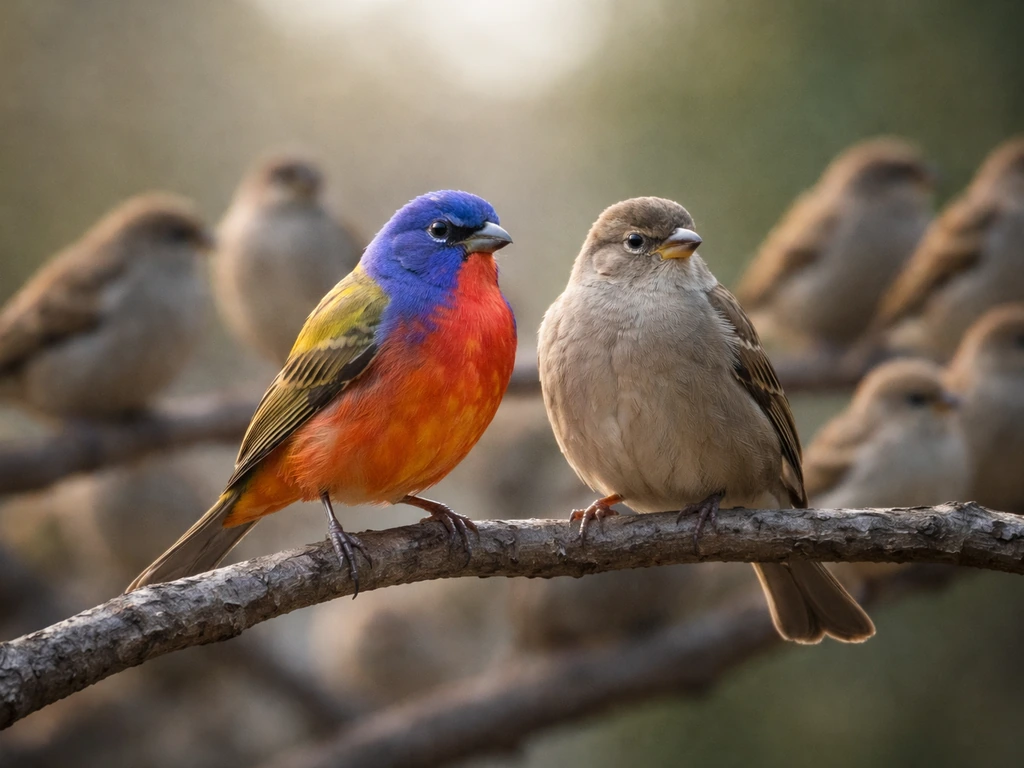
"Bird of a different feather" means someone (or a group) who is noticeably different from everyone else around them. If someone calls you a bird of a different feather, they're saying you don't fit the usual mold, that you stand out, that your personality, background, or way of doing things sets you apart from the crowd. It can be a compliment, a neutral observation, or mild criticism depending on tone, but the core idea is always the same: difference. Not belonging to the same type.
The variant forms all carry the same meaning. "Bird of a different feather," "birds of a different feather," and the extended "birds of a different feather flock together" all point to people whose nature, values, or habits mark them as distinct from a group or norm. The phrase leans on a simple visual metaphor: feathers mark which species a bird belongs to, so a bird with different feathers is visually, unmistakably other.
Where the phrase comes from
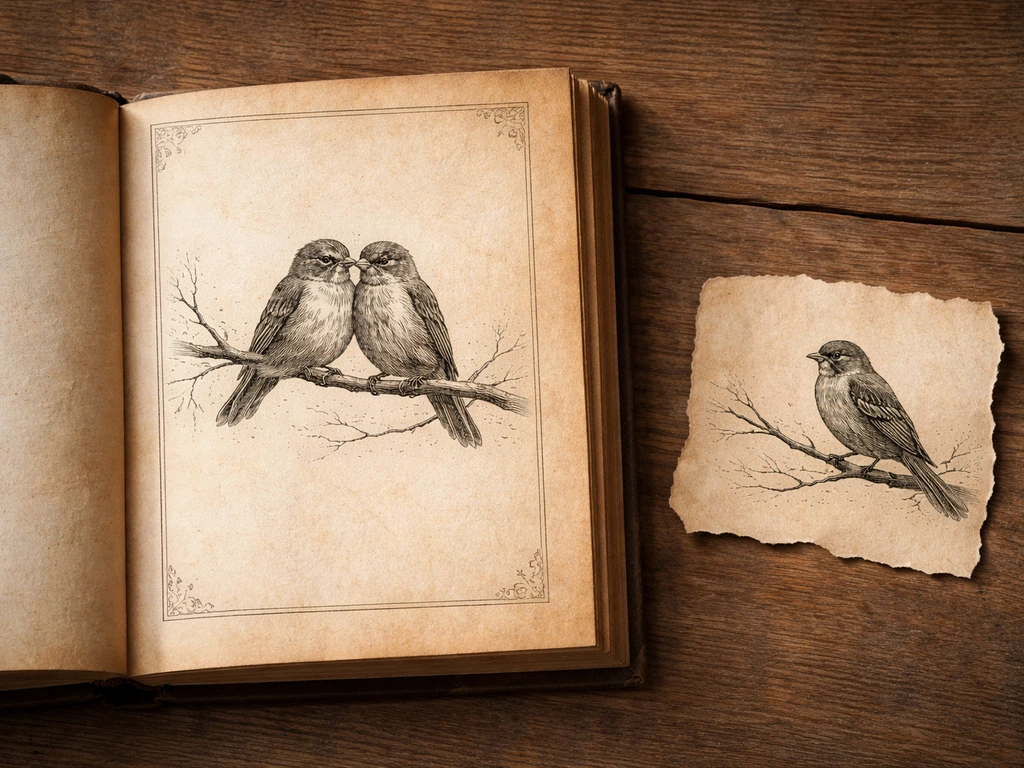
To understand "bird of a different feather," you have to start with its parent proverb, because this phrase is essentially a deliberate flip of a much older saying. "Birds of a feather" as a standalone expression has been around in English for centuries, but the full proverb "birds of a feather flock together" traces back much further. Wikipedia records metaphorical use of the concept as early as the 2nd century BC, rooted in wisdom literature from the Ben Sira / Sirach tradition. The idea that similar beings naturally group together is ancient and cross-cultural.
In English print, "birds of a feather flock together" became well established by the 16th and 17th centuries. The Oxford Dictionary of Proverbs glosses it as describing people of the same character, often with a slightly negative implication that such groupings tend toward unsavory company. Collins similarly defines it as people of a similar type associating with each other. The proverb stuck because it described something people actually observed about human social behavior.
"Bird of a different feather" grew as a natural inversion. If similar birds flock together, then a bird with different feathers is the outsider, the one who doesn't naturally belong to that flock. A translated Ainu tale preserved in Cambridge University Press archives contains the line "a bird of a different feather, he mingles with the rest," which shows the phrase doing precise narrative work: marking a character as distinct while noting they still move among the group. In an MA thesis on Ainu spiritual belief systems, this Ainu-related usage is noted as translating the “bird of a different feather” idea as a metaphor for someone being mixed into the flock blank" rel="noopener noreferrer">a translated Ainu tale preserved in Cambridge University Press archives contains the line "a bird of a different feather, he mingles with the rest". A 1935 Theosophical publication also used the extended variant "birds of a different feather flock together" in printed commentary, showing the phrase had enough currency to appear in reflective prose by that era.
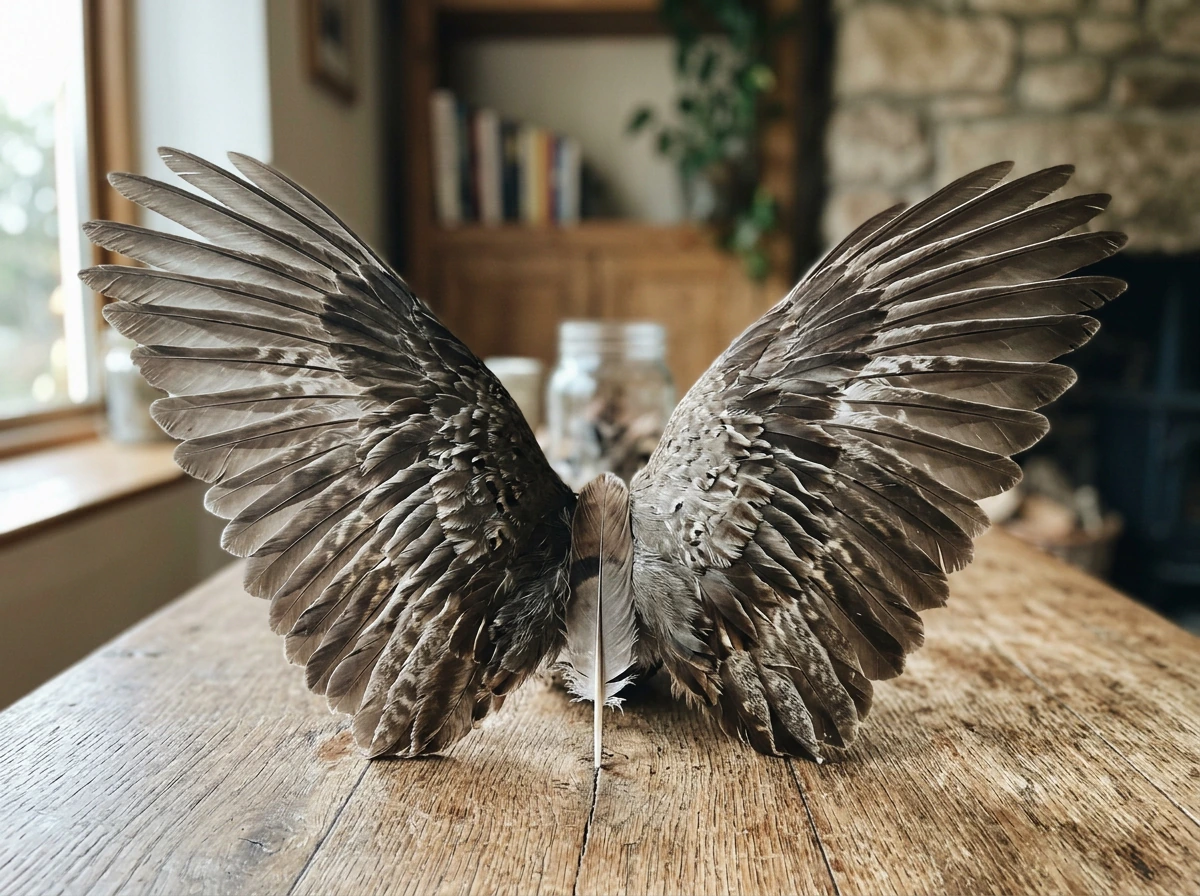
The wording "different feather" rather than, say, "different breed" or "different stripe" is deliberate and evocative. Feathers are visible, immediate, and species-specific. They do real work in bird biology as identity markers, which is exactly why the metaphor translates so cleanly to human difference.
How to use it correctly
This phrase is flexible but context-sensitive. It usually shows up in three situations: describing someone as a genuine individual or eccentric, commenting on a group that doesn't quite fit in with another, or marking someone as surprisingly different from what you expected. The tone shifts based on delivery.
- Neutral/admiring: "She's always been a bird of a different feather, the only one in the department who thinks in systems instead of processes."
- Observational: "Those two are birds of a different feather, so their collaboration was always going to be complicated."
- Mildly critical: "He walked into that meeting like a bird of a different feather and seemed surprised nobody agreed with him."
- Extended proverb form: "Birds of a different feather flock together, which is why that coalition never made much sense to outside observers."
Notice that the phrase usually describes difference from a specific group or context, not just general weirdness. "He's a bird of a different feather" lands better when there's an implied reference group: different from his colleagues, different from the team, different from what we usually see. Without that implied contrast, the phrase loses its edge. It's a relational description, not a standalone character verdict.
Don't mix it up with "birds of a feather flock together"
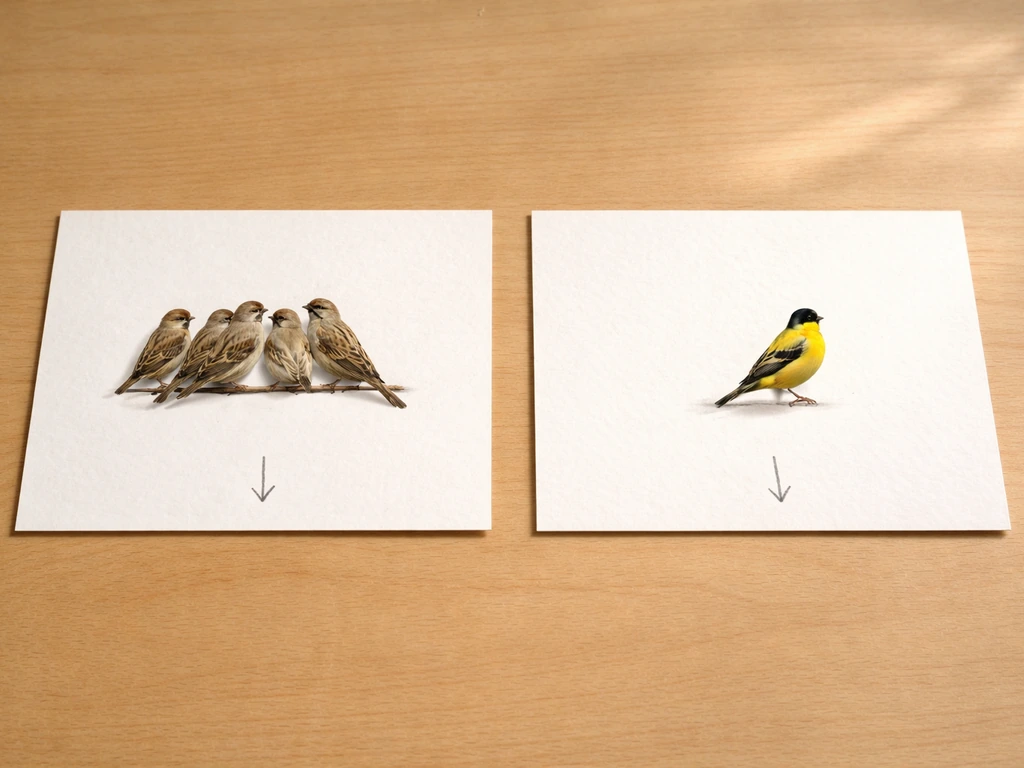
This is the biggest source of confusion around this phrase, and it's worth being direct about it: "birds of a feather flock together" and "bird of a different feather" mean essentially opposite things. Dictionary.com notes that the full proverb “birds of a feather flock together” was first recorded in 1545. The first says similar people group together. The second says this person or group is different from the others. Mixing them up reverses your meaning entirely.
| Phrase | Core meaning | What it describes |
|---|
| Birds of a feather flock together | Similar people naturally group together | Similarity, sameness, shared traits |
| Bird(s) of a different feather | This person/group is notably different from others | Difference, distinctiveness, standing out |
| Birds of a different feather flock together | Even those who are different end up grouping together | Unexpected similarity despite surface differences |
The extended form "birds of a different feather flock together" is the trickiest of all, because it sounds like the original proverb but flips its logic. It's sometimes used ironically, to note that people who seem very different still end up gravitating toward each other, often because they share some deeper trait or interest. Think of it as a commentary on unlikely alliances. If you hear someone use it, pay attention to context: they're usually making a point about surprising connection, not straightforward similarity.
Another phrase that plays with similar imagery is the idea of two wings belonging to the same bird, which actually moves in the opposite conceptual direction: it describes things that appear different but are fundamentally unified. That's the inverse of what "bird of a different feather" is doing, where something appears to be part of the group but is actually distinct.
Good paraphrases and when to skip the phrase entirely
If you want the same meaning without the idiom, you have plenty of options. The phrase is doing one of two jobs depending on context: marking individual distinctiveness, or marking group difference. Match the paraphrase to the job.
- For individual difference: "He's cut from a different cloth," "She's in a league of her own," "He marches to a different drummer," "She doesn't fit the usual mold."
- For group difference: "Those two groups don't have much in common," "They're operating from a completely different set of values," "They're more different than alike."
- For the ironic extended form: "Oddly enough, they ended up in the same place despite having nothing obvious in common."
When should you skip "bird of a different feather" altogether? In formal writing, especially academic or legal contexts, idioms in general can feel imprecise, and this one is still less fixed than something like "birds of a feather flock together." If your reader might not recognize it, a plain paraphrase is safer. Also avoid it in cross-cultural communication where English idioms involving animals may not translate or carry unexpected connotations. In those cases, saying directly "they have very different values and approaches" is cleaner and less likely to confuse.
It's also worth noting that the phrase should not be used as a synonym for outlier or outsider in a statistical or professional sense. If you're writing a business analysis and someone on a team performed very differently from others, "bird of a different feather" might read as too casual or even dismissive. Reserve it for conversational tone or intentionally informal writing.
What feathers actually symbolize
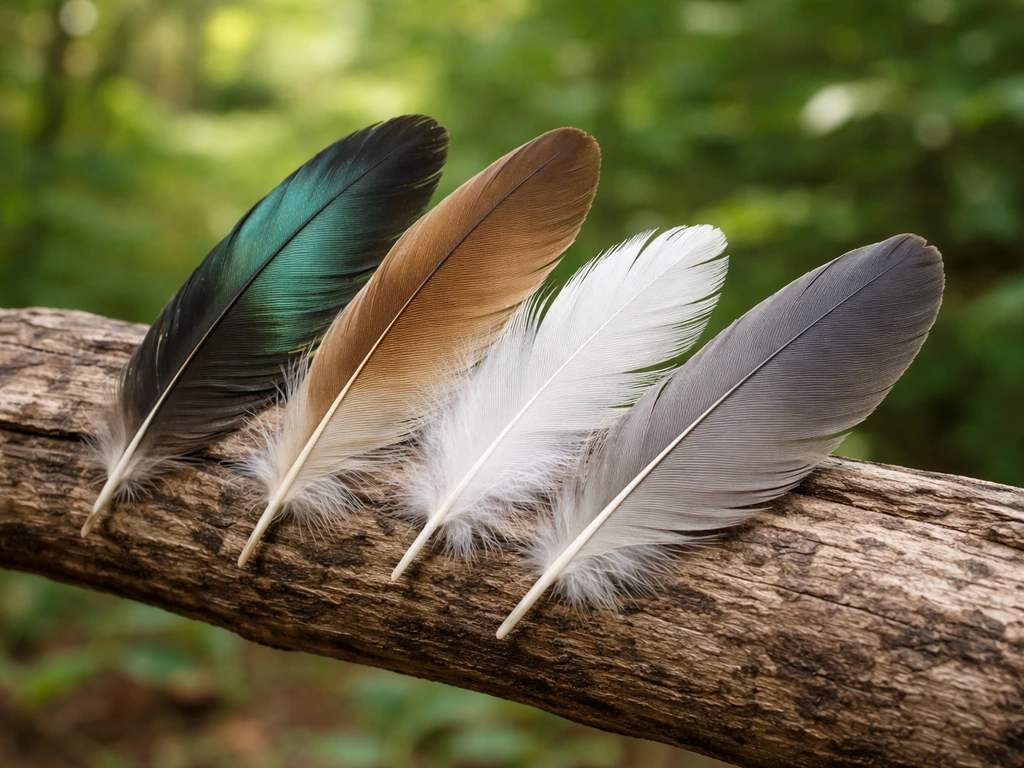
The reason this metaphor works so well is that feathers genuinely do carry meaning, both in biology and across cultures. In the natural world, plumage is identity. The color, pattern, and condition of a bird's feathers communicate species, sex, health, and social status. A bird with markedly different feathers in a flock is not just visually distinct: it's biologically other. Cuckoos exploit exactly this, practicing brood parasitism by placing their eggs in other species' nests, and their chicks eventually stick out as birds of a very different feather indeed. Science writers have used the phrase in precisely that literal-biological context, which shows how well the idiom maps onto actual bird behavior.
Across cultures, feathers have long been used as markers of rank, identity, and belonging. In many Indigenous traditions of the Americas, specific feathers identified clan membership or personal achievement. In medieval European heraldry, feathers and plumes marked lineage and allegiance. In everyday language even today, we talk about someone's "feathers being ruffled" (discomfort), "feathering their nest" (self-serving preparation), or earning "a feather in your cap" (a mark of distinction). Feathers are dense with meaning, and the "bird of a different feather" phrase taps directly into that: the feather is not just decoration, it is identity made visible.
This symbolic weight is also why the phrase carries a slight gravity even in casual use. Calling someone a bird of a different feather isn't just saying they're quirky. It implies something about their essential nature, not just their surface behavior. That's why tone matters so much when you use it: the same words can sound like admiration for a free thinker or mild disapproval of someone who can't get along with others.
Once you start noticing how birds work as metaphors for human groups and relationships, you'll spot them everywhere. The idea of unlikely pairings and combinations shows up across many bird idioms. Killing two birds with one stone is about efficiency, getting multiple outcomes from one effort, which is a different angle but shows how birds often represent goals or targets in English metaphor. There's even a playful inversion in the idea of killing one bird with two stones, which flips the efficiency metaphor entirely and suggests wasted effort.
The theme of duality and togetherness also runs through related imagery. Two birds on a wire often evokes companionship or connection, two creatures occupying the same space. By contrast, the idea of two wings on the same bird suggests that what looks like opposition is actually part of a unified whole, which maps onto political discourse about left and right being two wings of the same bird, a phrase used to argue that political divisions are superficial. And then there's the stranger, more mythological territory of the two-headed bird, a symbol that appears across multiple world traditions as a marker of dual power or split identity.
All of these expressions, including "bird of a different feather," work because birds have long served as mirrors for human social life: who belongs together, who stands apart, who is unified despite appearances, who is divided despite proximity. The next time you hear or use the phrase, that's the tradition you're drawing on.