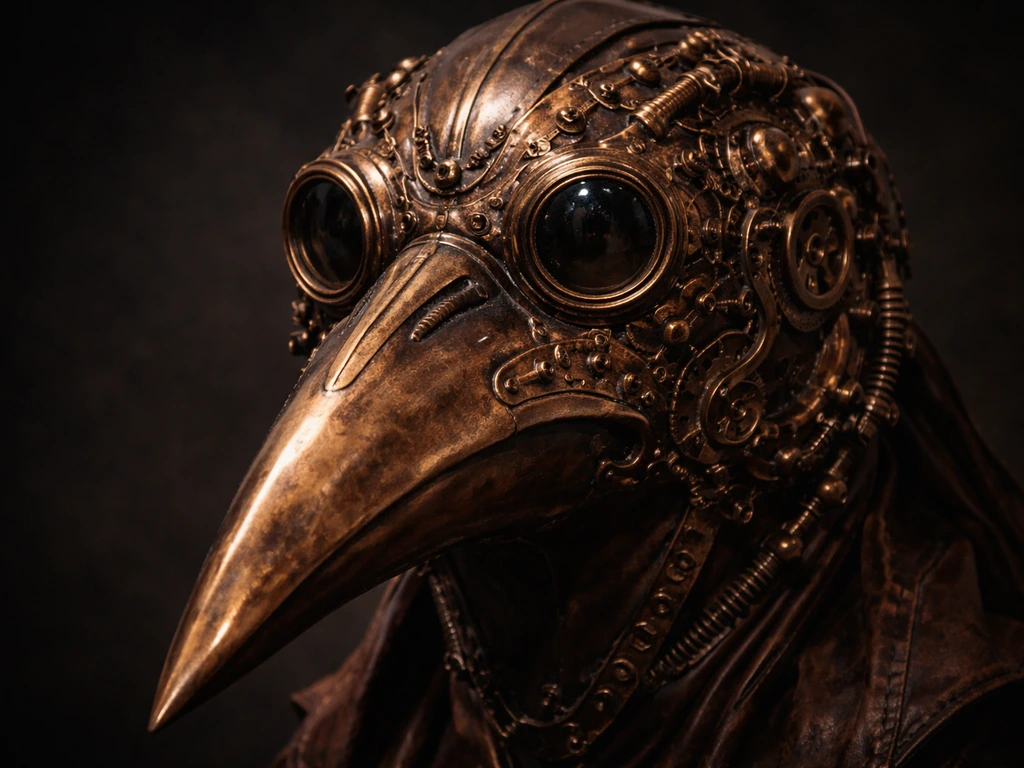
A steampunk bird mask is a mask styled with retro-futuristic mechanical details (brass fittings, gears, leather straps, clockwork cues) that either takes the full shape of a bird's head or, more commonly, features a long curved beak as its defining element. The meaning depends on two things working together: which bird the design evokes, and how the steampunk layer modifies that bird's traditional symbolism. The most common version people encounter is a plague-doctor-style beak mask re-skinned in steampunk materials, which carries a specific cluster of meanings around danger, protection, and grim ingenuity rather than anything light or whimsical.
Steampunk Bird Mask Meaning: Symbolism and How to Identify the Bird

Marcus Whitmore
25 Jun 2026
What a steampunk bird mask actually is
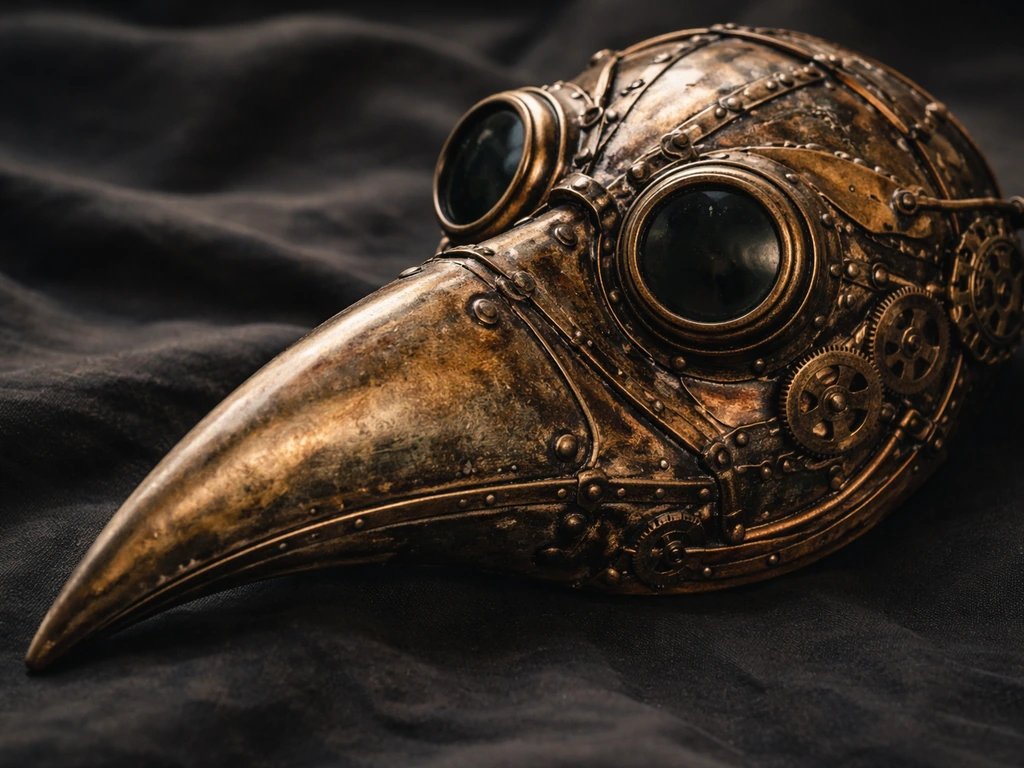
The term covers two slightly different things that often get blurred together. The first is a mask shaped like a full bird head or face, styled with mechanical/industrial details so it reads as a 'clockwork creature.' The second, and far more common in costume and retail contexts, is a plague-doctor-style mask: a half-face or full-face piece with a long, downward-curving beak, glass or goggle-style eye openings, and leather or faux-leather construction dressed up with rivets, brass tones, or gear motifs.
The plague doctor beak mask has a real historical origin. Physicians during plague outbreaks in Europe wore a long-beaked mask designed to hold aromatic substances like flowers and spices in the beak cavity, based on the (incorrect) miasma theory that bad air spread disease. In the broader Carnival of Venice context, plague doctor beaked masks are described as shaped to hold aromatic substances like flowers and spices to address the foul-odor miasma theory of disease plague doctor beaked mask shaped to hold aromatic substances. That silhouette became, over centuries, a symbol of the plague itself. When costume designers and makers started reworking it in steampunk materials, they inherited all of that historical weight and then layered on the retro-futurist 'engineered survival' aesthetic. The result is a mask that reads as both ancient dread and industrial problem-solving simultaneously.
If you spotted a steampunk bird mask and are not sure which category it falls into, the beak is your first clue. A long, curved, downward-pointing beak almost always signals the plague-doctor lineage, regardless of how many gears are on it. A more naturalistic bird-head shape (with a shorter, sharper beak and visible feather-like textures) is more likely to be referencing a specific species, and species identification matters a lot for interpreting the symbolism.
How steampunk style changes what the bird means
Bird symbolism in its natural form is tied to flight, instinct, and the natural world. Steampunk aesthetics pull the imagery in a very different direction. When you add clockwork gears, brass plating, rivets, and goggles to a bird mask, you are essentially saying: this creature's qualities have been engineered, formalized, or weaponized by industrial ingenuity. An owl mask in isolation suggests organic wisdom or mystery. An owl mask with brass gears and a mechanical eye lens suggests a character who has systematized that wisdom, a calculated strategist or inventor rather than a mystic.
The steampunk layer also shifts tone toward the ominous or the authoritative depending on the specific material choices. Darker, soot-stained, corroded-looking pieces lean into dystopian or gothic readings. Cleaner, polished brass and copper pieces read more like a gentleman adventurer or an eccentric engineer. This is why two steampunk bird masks featuring the same bird species can give off completely different character vibes: the finish and details are doing as much symbolic work as the bird itself.
Importantly, steampunk styling tends to move bird imagery away from 'cute' or 'natural' territory and into 'clockwork creature' territory. Community discussions among steampunk enthusiasts treat the gear-and-metal aesthetic as a transformation signal: if it has the hardware, the creature is no longer wild, it is part of a machine-age world. That framing intensifies traits like cunning, surveillance, or calculated power while softening associations that feel too soft or pastoral for the genre.
What different birds symbolize in a steampunk mask context
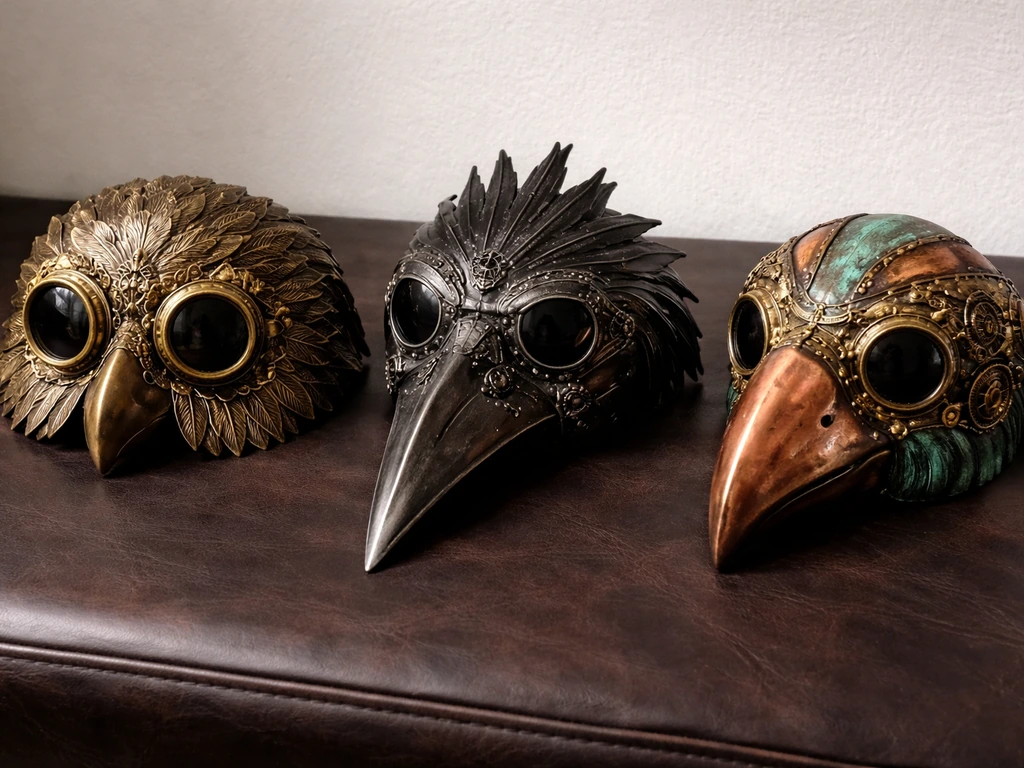
Not every steampunk bird mask depicts a named species clearly, but when one does, the species carries its own symbolic load that runs underneath the steampunk styling. Here is how the most common bird types tend to read in costume and visual storytelling:
| Bird | Core traditional symbolism | Steampunk costume read |
|---|---|---|
| Owl | Wisdom, knowledge, death-warning in some traditions | Mystic strategist, clockwork scholar, or 'night operative' with dangerous intelligence |
| Raven / Crow | Death, omens, trickster, divine messenger, creation | Double-faced character: brilliant and threatening; prophet or saboteur; knowledge that cuts both ways |
| Hawk / Eagle | Authority, power, strength, courage, independence | Commander, guardian, or imperial enforcer; leadership-coded rather than trickster-coded |
| Goose | Intuition, protection, vigilance, communal guidance | Sentinel or protector archetype; less common in steampunk but reads as watchful and loyal |
| Generic long-beak (plague doctor) | Historical: disease protection, death, survival technology | Ominous survivor, field medic, or grim scientist; horror and industrial dread combined |
Owl masks are probably the most flexible symbolically because the owl holds two major meanings that can coexist: Athena's companion (wisdom, learning, clear-seeing) and the folklore 'bogeyman' bird (death-warning, night dread). A steampunk owl mask can support a wise inventor reading or a sinister night-watcher reading depending on costume context. Raven and crow masks work similarly: the raven is both a trickster-creator in traditions like Tsimshian mythology and a war-and-death omen in Norse and Celtic contexts, so a raven steampunk mask often gets read as a character who operates in moral grey zones. Hawk and eagle masks are more straightforwardly authority-coded and tend to signal leadership, guardianship, or militarized power.
How to figure out which bird a mask is showing
Steampunk stylization can obscure natural features, but bird identification still works if you go silhouette-first rather than looking for realistic feather detail. Focus on these four features in order:
- Beak shape: Is it long and curved downward (plague doctor/corvid range), short and hooked (raptor: hawk/eagle/owl), thick and straight (corvid/raven), or flat and rounded (waterfowl like goose/duck)? Beak shape is the single most diagnostic feature.
- Crest or head silhouette: Are there ear tufts or a raised crest on top of the mask? Prominent ear tufts strongly suggest an owl (especially great horned owl or similar). A flat or smooth head suggests corvid or raptor.
- Eye treatment: Steampunk masks usually place goggles or lens apertures where the eyes go. If the lenses are forward-facing and large relative to the face, that leans owl (forward-facing eyes are an owl trademark). Side-angled or smaller apertures lean raptor or corvid.
- Color and material finish: Natural owl coloring tends toward brown/amber tones. Corvid-styled masks often use black or iridescent-dark finishes. Eagle/hawk styles may use gold, bronze, or two-tone treatments. These are not definitive, but they add context once you have beak and head shape.
One important disambiguation: a very long, curved, downward-pointing beak is almost never meant to represent an actual bird species. It is the plague-doctor beak template, and its symbolism is rooted in that medical/horror history rather than in any specific species. If the beak looks impractically long and Pinocchio-esque, interpret it through the plague-doctor lens, not through owl or raven symbolism.
Also worth knowing: if the mask combines bird features with an explicitly human face placement (human lips, human nose positioning with bird head framing above), that may be referencing a hybrid-creature archetype rather than a specific species. Traditions like the Korean Inmyeonjo (a bird with a human face) represent a distinct category of bird-human hybrid imagery with its own meanings, separate from masked costumes depicting a pure bird species.
What the mask signals in storytelling and costuming
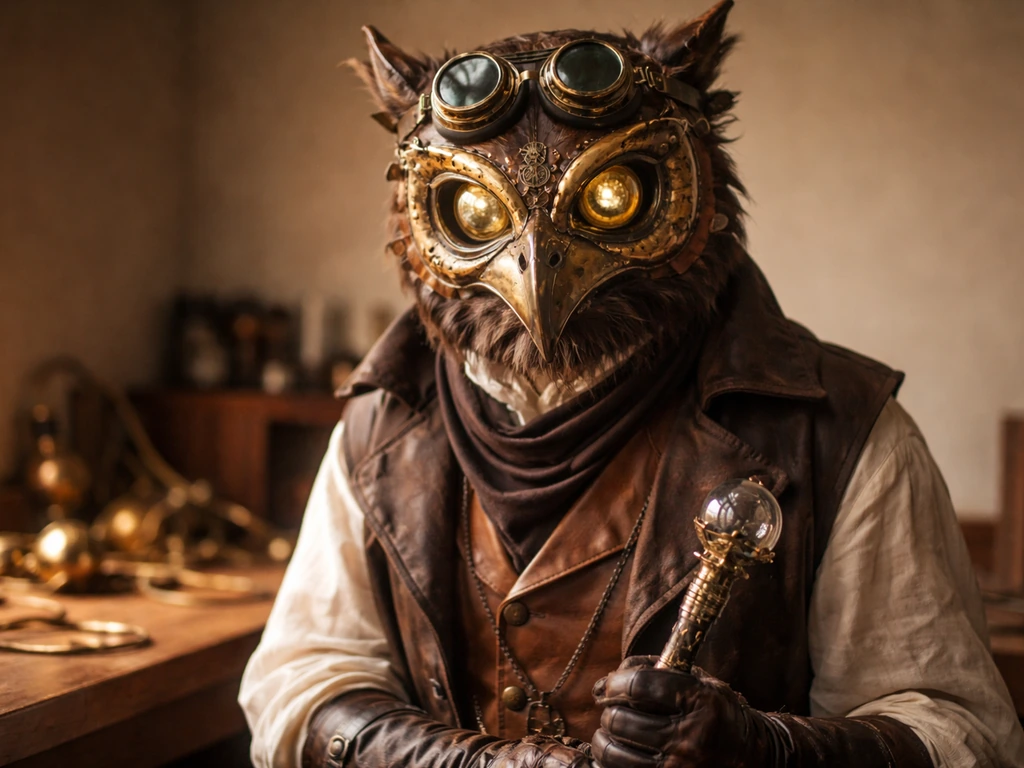
In practice, when someone wears a steampunk bird mask at an event, in a photo shoot, or as a character choice, the mask is doing character-shorthand work. The bird species and the steampunk treatment together suggest a character type before a single word is spoken. Here are the most common character reads:
- Clockwork scholar / inventor: Usually an owl mask with clean brass hardware and goggle lenses. The character is intelligent, detail-oriented, and probably morally complicated in a 'plays by their own rules' way.
- Grim field operative or plague medic: The plague-doctor beak mask in any steampunk finish. This is the most horror-adjacent read, suggesting a character who deals with death or disease professionally and has made a kind of peace with it.
- Trickster or prophet: A raven or crow mask, especially in darker finishes with some iridescence or patina. This character knows things they should not, may be an unreliable ally, and operates between worlds (living/dead, order/chaos).
- Commander or imperial figure: An eagle or hawk mask, particularly with gold or polished brass, larger proportions, and formal costuming. Authority is the primary signal here.
- Sentinel or guardian: A goose or waterfowl-style mask, or any mask with a 'vigilant' forward stance and protective styling. Less dramatically ominous but strongly protective and community-minded in its read.
It is worth noting that the same mask can read differently depending on the rest of the costume. A plague-doctor beak mask worn with clean white linen and medical tools leans 'tragic healer.' The same mask with a dark leather coat, chains, and a top hat leans 'villain or enforcer.' The bird mask establishes the symbolic baseline; the surrounding costume completes the sentence.
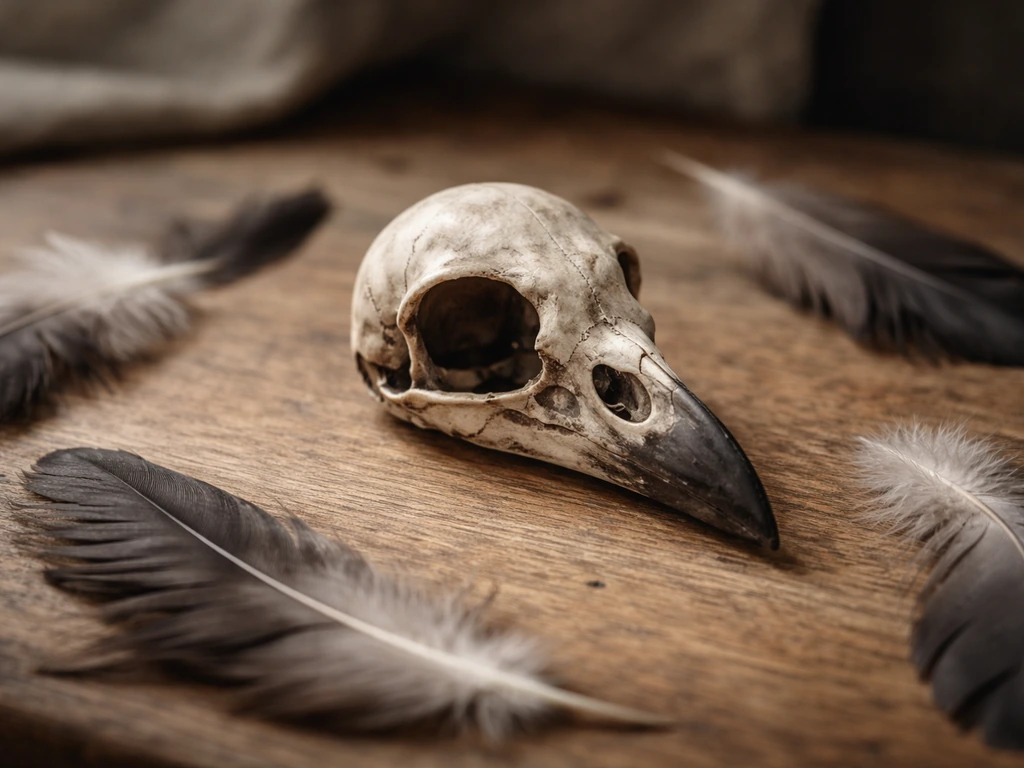
Adjacent topics like bird skull symbolism and bird-with-human-face imagery are related but distinct. Bird skull symbolism is a related but distinct tradition you can use to refine what the mask is signaling beyond the plague-doctor beak history. A bird skull, for example, carries mortality and memento mori readings that overlap somewhat with the plague-doctor beak mask but come from a different visual tradition. If you are trying to pin down a specific mask's meaning, it helps to be precise about what the mask is showing: a beak, a full skull, or a hybrid face.
How to research a specific mask you saw
If you are trying to identify the meaning of a particular steampunk bird mask you spotted (in a photo, at an event, in a piece of art or media), the fastest practical workflow is a combination of visual search and targeted keyword refinement.
- Take a clear screenshot or photo of the mask. Crop it tightly to the mask itself, removing as much background as possible.
- Run it through Google Lens first (available in Google Images and the Google app). Google Lens is now the primary reverse-image search tool on Google and handles stylized or artistic objects well.
- If Lens gives weak results, try Bing Visual Search and TinEye as backups. TinEye is particularly useful for tracking down an original artist listing or finding earlier instances of an image if the mask is a manufactured product.
- Once you have a name or visual match, search that name plus 'symbolism' or 'meaning' to find the bird-species angle, and separately search plus 'steampunk' to find character and costume community interpretations.
- If the mask appears to be from a film, game, or illustrated series, note any text, logos, or series names visible in the surrounding image and search those directly alongside 'bird mask character' to find lore-specific explanations.
If you cannot get a clean image and are working from memory, describe the beak shape and any notable features (ear tufts, eye lens style, color, visible gears or straps) to yourself first, then search that description. Something like 'steampunk mask long curved beak brass goggles' will narrow results quickly. Once you have identified the probable bird type, you can layer in the symbolism using the species-to-meaning guide above. If you are still unsure, revisit what does the bird mask mean by first matching the beak style and implied bird type to the symbolism context.
One practical caution: do not assume that a retailer's product name (like 'steampunk raven mask') is symbolically authoritative. Manufacturers sometimes name products loosely, calling any dark, beak-ish mask a 'raven' for marketing appeal. Verify the design features against actual raven/crow characteristics (beak shape, color, head silhouette) before committing to a raven-specific interpretation. The visual features are always more reliable than the label.
FAQ
How can I tell if a steampunk bird mask is meant to be the plague-doctor style rather than a specific bird species?
Use a silhouette test first. A very long, downward-curving beak with a beak that looks impractically extended, paired with glass or goggle-style eye openings, almost always points to the plague-doctor lineage. If you suspect an actual species, look for a shorter, sharper beak and clearer head silhouette instead of relying on “raven” or “owl” wording from the package.
Does the color or finish of the steampunk bird mask change the meaning?
Yes, strongly. Clean polished brass and copper tends to read as inventor, gentleman adventurer, or controlled intelligence, while soot-stained, corroded, or heavily darkened finishes push toward gothic, dystopian, or punitive interpretations. Small choices like rust texture versus bright plating can flip whether the same bird archetype feels ominous or empowered.
If the mask has visible feathers, does that mean it is not plague-doctor symbolism?
Not necessarily, but visible feather-like textures make it more likely the maker is trying to evoke a specific bird. Still, if the beak is extremely long and curves downward in the classic template, treat it as plague-doctor first and treat feather detailing as secondary styling, not as proof of a particular species.
What should I look at if the photo angle makes the beak hard to see?
Prioritize the eye housing and face construction. Plague-doctor inspired masks often have lens-like eye openings or goggle-style framing, plus leather or faux-leather around the beak area. If the beak is blocked, the eye lens shape and the overall half-face layout can still help you decide which symbolism lane you are in.
Can one steampunk bird mask have multiple meanings at once?
Often, yes. The steampunk layer adds an “engineered world” reading, and the bird archetype adds another layer. For example, an owl-inspired mask can support both wisdom imagery and night dread, while the mechanical detailing shifts it toward surveillance or systematized strategy depending on the surrounding costume cues.
Does the rest of the outfit matter more than the bird mask itself?
It usually matters at least as much. The mask sets the baseline symbolic vocabulary, but elements like medical tools, white linen, chains, top hat, or military-like accessories can redefine the character as healer, tragic figure, villain, or enforcer. If you are interpreting meaning from a character, assess the entire styling package, not the mask in isolation.
How do I interpret a steampunk bird-human hybrid face placement?
Treat it as a distinct hybrid-creature reference rather than “just an owl” or “just a raven.” When the human nose and lips placement feels dominant, with a bird head framing above, it suggests an established hybrid archetype with its own mythic meanings. In that case, do not map it to single-species symbolism until you confirm the hybrid intent.
Are retailer names like “steampunk raven mask” reliable for symbolism?
No. Product names are often marketing shorthand, and “raven” can be used for any dark beak-ish silhouette. Verify with design features you can see: beak length and curve, head shape, and color, then interpret symbolism from those visual cues rather than the label.
What common mistake causes misidentifying steampunk bird masks?
Over-trusting realistic-feather assumptions. Many people try to identify the species from small texture details, but steampunk designs often stylize or exaggerate forms. A better approach is beak silhouette first, then head shape, then eye lens style, and only then any species-like cues.
If I want to find meaning for a mask I saw online but I only remember vague details, what is the fastest search strategy?
Describe the geometry and materials before the bird name. Use terms like “long curved downward beak,” “brass goggles,” “leather straps,” and “gear rivets,” then narrow from there. Beak template keywords usually outperform species keywords because plague-doctor inspired designs share a recognizable construction pattern.
Next Article
The English Bird Skull Meaning: Idiom, Bird Species, Symbol
Meaning of the English phrase or symbol behind the bird skull search, plus checks for idiom, bird species, or death imag