If you searched 'the English bird skull meaning,' you are most likely looking for one of three things: a tattoo or visual motif meaning (bird skulls as symbols of death, transformation, or memento mori), a slang or colloquial term with user-generated meanings, or the literal anatomical phrase 'bird skull' used in science and illustration. There is no single fixed English idiom using both 'bird' and 'skull' together, which is exactly why pinning down what you actually mean requires a quick context check.
The English Bird Skull Meaning: Idiom, Bird Species, Symbol

Marcus Whitmore
24 Jun 2026
Why this phrase is so hard to pin down
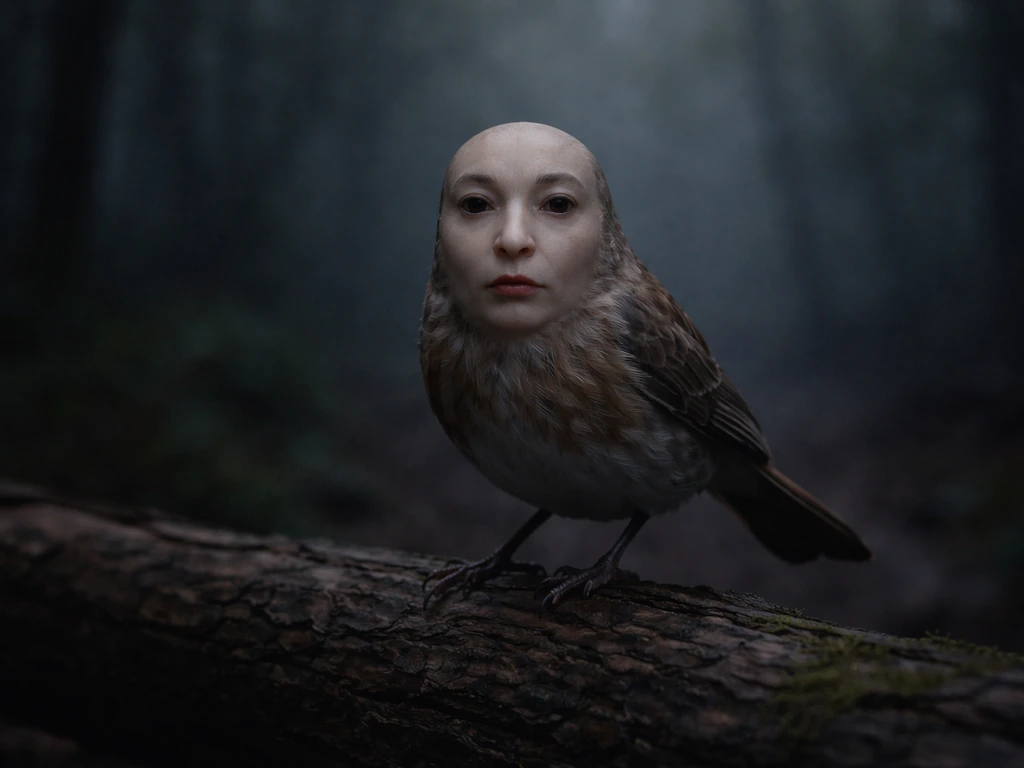
The phrase 'the English bird skull meaning' bundles together three separate search intents, and the English language doesn't help by having a tidy, dictionary-approved idiom that matches all three words at once. When someone types this in, they are usually: (1) trying to decode a symbolic image or tattoo they've seen somewhere, (2) vaguely remembering a slang term or phrase they heard and can't quite place, or (3) looking up the literal anatomy of a bird's skull in a scientific or educational context. A small number of searchers may also be conflating 'bird skull' with nearby visual motifs like bird masks or birds with human-like faces, which are separate but related ideas worth knowing about.
The ambiguity is also partly a product of how 'bird' works in English. As the etymology of compound terms like 'bird-brain' shows, 'bird' attaches freely to other words to create informal or figurative meanings, so readers naturally assume 'bird skull' must mean something beyond the anatomical. Sometimes it does. Sometimes it doesn't. The context is everything.
Idiom, species, or symbol? Find your exact source first
Before you can interpret 'bird skull,' you need to identify where you encountered it. The meaning shifts dramatically depending on the source.
If you saw it in a tattoo, artwork, or design context
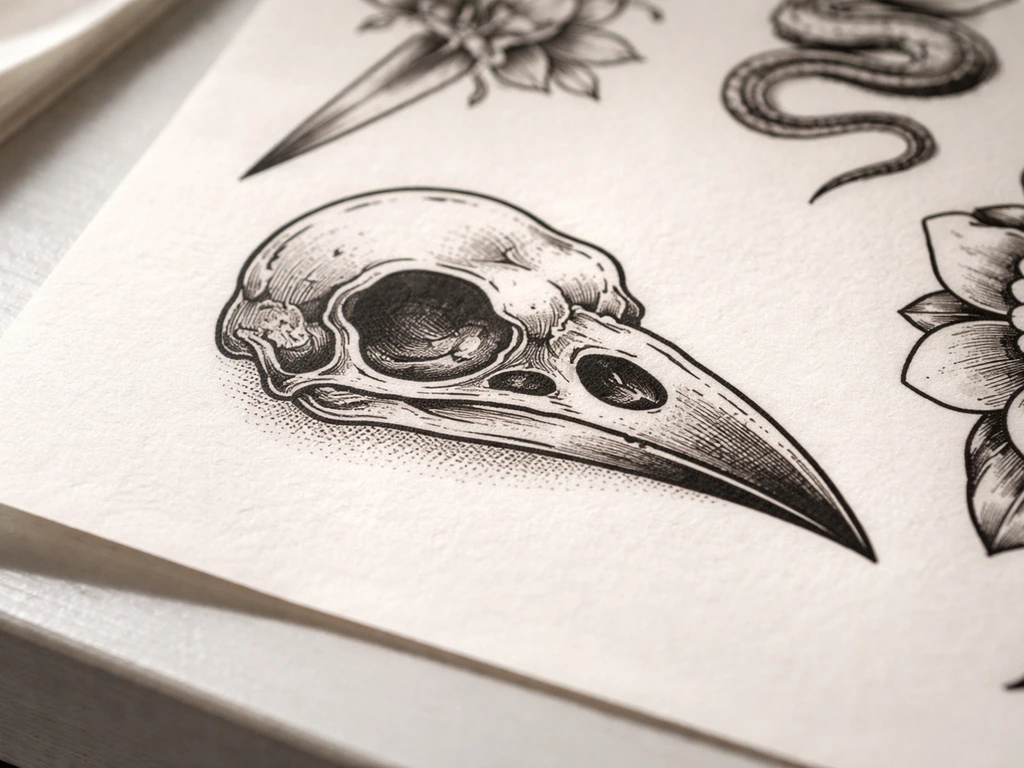
This is the most common use. A bird skull in visual art, especially tattoo culture, is a deliberate symbolic choice. It combines the flight-and-freedom associations of birds with the mortality symbolism of a skull. The result is a layered image that typically reads as: death is inevitable, but the spirit transcends it.
This places the bird skull firmly in the memento mori tradition, a Latin phrase meaning 'remember that you must die,' which entered English usage in the 1590s and became a staple of Northern European art and decorative objects through the 16th and 17th centuries. The National Gallery explains memento mori as Latin for “reminder of death,” connecting skull imagery with Northern European art and saints contexts [memento mori tradition, a Latin phrase meaning 'remember that you must die,'](https://www. nationalgallery. org.
uk/paintings/glossary/memento-mori).
If you saw it used as slang or a colloquial term
There is an Urban Dictionary entry for 'bird skull,' which means it has at least some presence in informal or internet slang. User-generated definitions on platforms like Urban Dictionary are not standardized, so the meaning can shift based on subculture, region, or even individual coinage. If you heard 'bird skull' used conversationally and it didn't sound like art symbolism, this is probably the lane you're in. The best move is to look up the exact wording alongside the community or platform where you heard it.
If you're thinking of a specific bird species
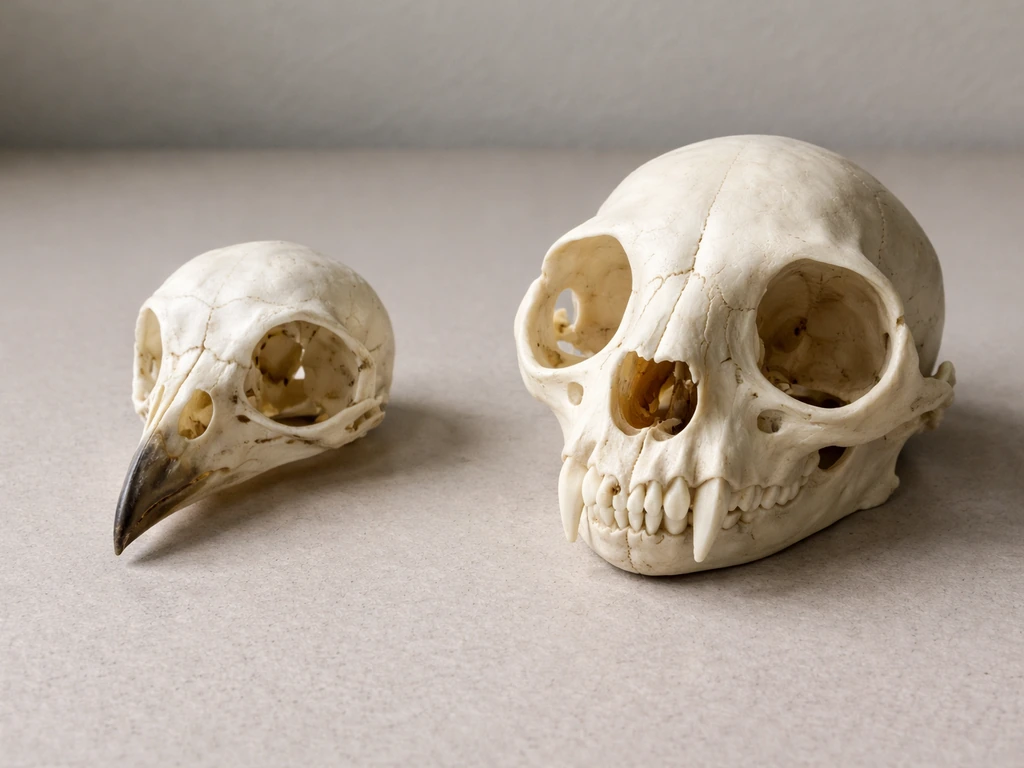
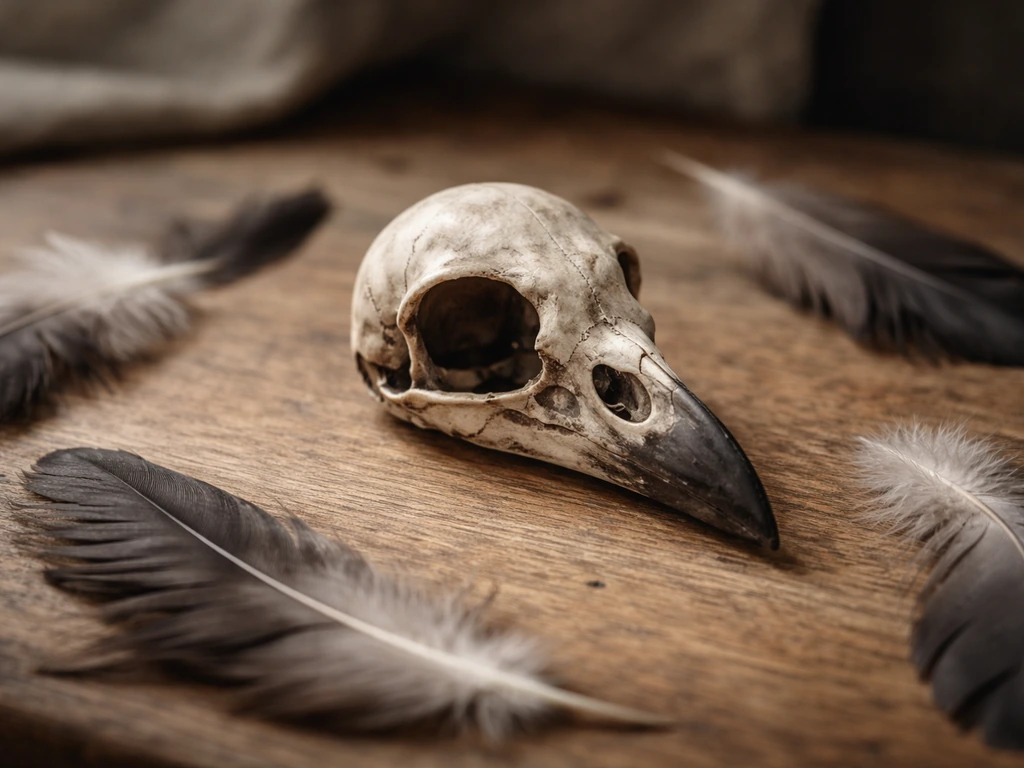
No widely known English bird species carries 'skull' in its common name. The word does appear in scientific contexts, for example the extinct genus Aenigmatorhynchus is known from an isolated preserved skull, and bird anatomy articles note that a typical bird skull weighs around 1% of the bird's total body weight. So if you're chasing a species name, you may be misremembering something or conflating a visual nickname with a formal name. Check the exact wording you saw.
What 'bird skull' most commonly means in English
Across most contexts, 'bird skull' in English operates on two levels: a literal one and a metaphorical one. They're worth keeping separate.
| Interpretation | Context | What it usually signals |
|---|---|---|
| Literal anatomy | Science, education, illustration | The actual skull bone structure of a bird species |
| Tattoo/visual symbol | Body art, design, gothic imagery | Mortality, transformation, freedom after death |
| Memento mori motif | Art history, literature, cultural symbolism | A reminder that death is universal and inevitable |
| Slang/colloquial | Internet culture, informal speech | Variable; depends heavily on subculture and context |
| Folkloric omen | Storytelling, mythology, bird symbolism | Death, bad luck, or supernatural warning |
The metaphorical readings dominate in popular culture. When people talk about a 'bird skull' as a symbol rather than a bone, they almost always mean something in the mortality-and-transformation cluster. The bird half of the image carries associations with soul, spirit, and transition between worlds, while the skull half anchors it in death and the physical body's end. Together they create a surprisingly hopeful image in many traditions: the body dies, but something takes flight.
The cultural weight of 'skull' when attached to birds
Skulls have carried death symbolism in English-language culture for centuries. The word 'skull' itself traces back through Old Norse roots, and by the medieval period the skull had become one of the most recognizable shorthand symbols for death in Western art and literature. Shakespeare's Hamlet, meditating over the skull of the jester Yorick, is one of the most famous literary moments where a skull triggers a full philosophical reckoning with mortality, and it's been lodged in English cultural memory ever since.
When the skull is paired specifically with a bird, the symbolism gets more specific. Birds have long been messengers between the living and the dead in folklore across many cultures. Owls, for instance, appear in mythic narratives as omens or voices from the other side. Ravens and crows carry similar weight in English and Northern European traditions. So a bird skull is not just 'death' in a generic sense: it tends to suggest a creature that exists at the threshold between life and death, or a soul in transit.
The skull-and-crossbones iconography follows a related trajectory: originally a maritime danger symbol, it migrated into wider culture as a warning of death or poison. The Yale secret society Skull and Bones adopted it as an institutional emblem, showing how deeply skull imagery embeds itself into English-language naming and symbolism. None of this is accidental: skulls communicate danger, mortality, and hidden power in a visual shorthand that crosses from fine art to street culture without losing its core meaning.
Bird skull imagery in storytelling and art
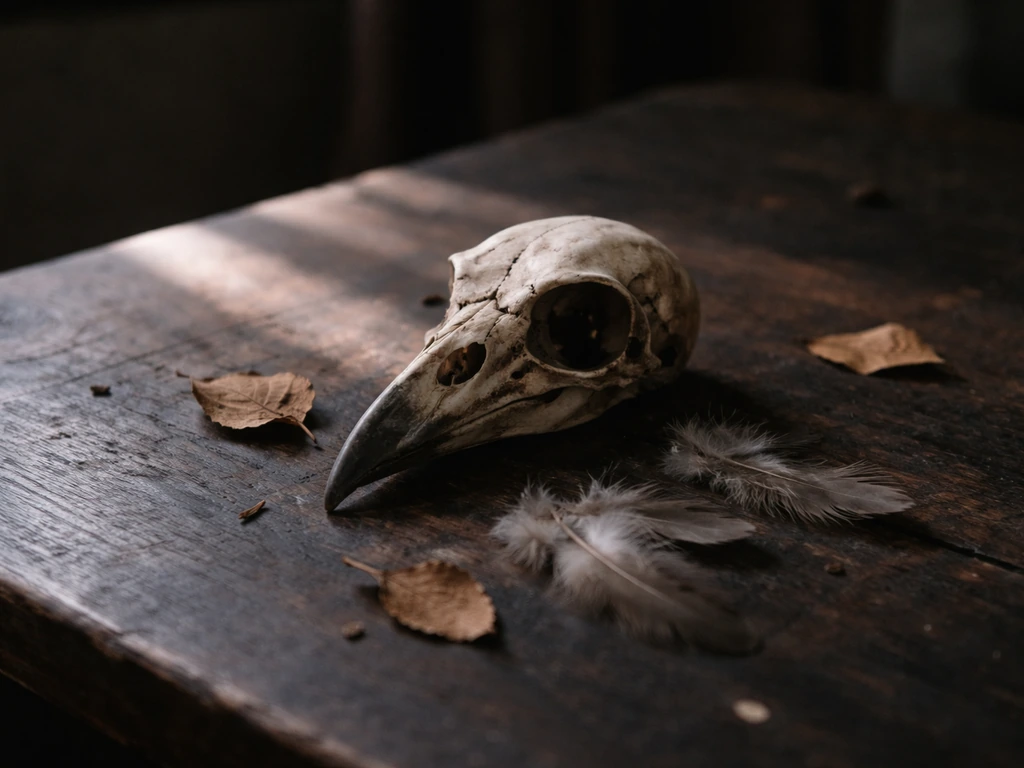
In storytelling, the 'bird skull' as a physical object or image tends to show up in one of a few recurring roles. It appears as a talisman or omen, as a decorative element in gothic and dark aesthetic traditions, and as a shorthand for a character who walks close to death or the supernatural. Think of shamanic or folkloric figures carrying animal bones as protective objects, or the visual grammar of memento mori still-life paintings where animal skulls sit alongside flowers and fruit as reminders that everything living will decay.
The bird mask is a close cousin in this symbolic family. Plague doctor masks, with their long bird-like beaks, are one of the most recognizable bird-human face fusions in Western history, and they carry an immediate association with death and disease. This is why searches for 'bird skull meaning' sometimes bleed into 'bird mask meaning' territory, and why the visual motifs overlap. The bird skull and the bird mask are both ways of encoding death or transformation into a bird-shaped image.
It's also worth noting that 'bird with human face' motifs, found in myths like the Korean Inmyeonjo or the mythological Simurgh, sometimes surface in the same searches as 'bird skull meaning. A bird with human face is usually taken to signal a being that bridges ordinary life and the supernatural, often tied to a human-like presence, message, or transformation bird with human face motifs. ' These are distinct concepts, but they share the core idea of a bird-shaped creature carrying something beyond ordinary animal nature: a soul, a message, or a warning.
How to confirm the meaning quickly
The fastest way to resolve 'what does bird skull mean in this context' is a three-step check.
- Locate the exact source. Where did you encounter the phrase? A tattoo design site, a conversation, a book, a social media post? The platform alone narrows the likely meaning significantly.
- Quote-check the wording. Search the exact phrase in quotes to see what results actually use it. If the results are all tattoo symbolism pages, you have your answer. If they're slang or science pages, that tells you something different.
- Check adjacent context. What words or images surrounded 'bird skull' where you found it? Symbolism language (transformation, soul, death) points to the memento mori tradition. Casual or humorous framing points to slang. Anatomical or educational framing points to the literal meaning.
- Try spelling variants and near-matches. If you're half-remembering a phrase, try 'bird skull tattoo meaning,' 'skull bird symbolism,' or 'bird bones meaning' to see if a related term is closer to what you actually encountered.
- Check a reliable dictionary for 'skull' in isolation first. Cambridge and Merriam-Webster both confirm that the core English meaning of 'skull' is anatomical. If the surrounding context doesn't push it into metaphor, the literal reading is the default.
One practical tip from dictionary guidance: when a word has multiple senses, look at the example sentences for each sense and find which one resembles your context most closely. The same logic applies here. 'Bird skull' in a sentence about anatomy reads completely differently from 'bird skull' in a sentence about grief, identity, or body art. The sentence around it is your best clue.
The short version: what to take away
There is no single authoritative 'English bird skull meaning' that covers all uses. The phrase is genuinely ambiguous, and that ambiguity is the whole challenge. In symbolic and artistic contexts, a bird skull almost always connects to death, transformation, and the idea that something of the self survives the body's end. In steampunk bird mask designs, the same kind of death-and-transformation symbolism often shapes what the bird mask is “supposed to mean” in the scene Bird skull.
In slang contexts, meaning is community-specific and worth verifying on the platform where you heard it. In literal contexts, it's just the skull of a bird, used in science and education with no symbolic baggage at all. Figure out where you saw it, check the exact wording, and the meaning will follow.
FAQ
How can I tell if “bird skull” is literal (biology) or symbolic (tattoo or art) in a sentence?
In English, “bird skull” is usually literal only when it appears with anatomy cues such as “specimen,” “skull morphology,” “osteology,” or “forensic/medical illustration.” If it is used alongside words like “memento mori,” “tattoo,” “symbol,” “omen,” or “transformation,” you should treat it as an image meaning rather than a biological description.
Is “the English bird skull meaning” an actual idiom I can look up in a dictionary?
There is not a standard, widely recognized English “idiom” that locks those exact words together. If someone claims it is slang or an idiom, ask for the exact quote and where it was used (music lyric, forum, region, or platform), because meanings can be entirely community-specific.
Can the symbolism change depending on the bird species implied in the design?
Yes, a “bird skull” tattoo or artwork might not be a generic death symbol. Many artists choose the bird species indirectly (owl, raven, crow) even if the skull itself is stylized, so the intended symbolism can shift toward wisdom, omen, or transition depending on what the design resembles.
What if the bird skull appears in gothic, steampunk, or other subcultural artwork, does that change the meaning?
If you saw “bird skull” next to a specific creature, time period, or aesthetic label, the context should override the generic meaning. For example, gothic decoration usually leans into memento mori imagery, while steampunk layouts often blend death symbolism with machinery, mortality as “punk realism,” or rebirth themes.
How reliable are user-generated meanings like those on slang dictionaries for “bird skull”?
In informal spaces, “bird skull” can be coined to describe a look, a character, or an inside joke rather than a universal definition. To avoid being misled, confirm whether it is a one-off nickname (created by one user) or a repeated term (used across multiple posts) before adopting a “meaning.”
What other details should I look for to interpret a bird skull image accurately?
If you encounter “bird skull” in a discussion about death imagery, check whether the artist is pairing it with other elements like flowers, hourglasses, bones, or birds in flight. Those added symbols often refine the message from “death” alone to “decay,” “memory,” “endings,” or “survival of the spirit.”
How is “bird skull” meaning different from “bird mask” meaning or “bird with human face” motifs?
A common mistake is mixing up similar motifs, especially “bird mask” or “bird with human face.” Bird masks often center on disease, warning, or role-based identity (face-as-protection), while “bird skull” centers on mortality and transition. Treat them as adjacent but not the same message.
In storytelling or games, how do I interpret whether a bird skull is an omen, a talisman, or just set dressing?
When you see “bird skull” used as a character prop, it can function as an omen, talisman, or status marker. The deciding factor is the surrounding action: if the character consults it for guidance, it reads as omen or power object, if it is displayed with mourning, it reads as grief and memento mori.
Does adding “bird” specifically change the skull meaning compared with a plain skull motif?
If “skull” appears without a bird, the meaning often stays broader (generic mortality, danger, threat). If “bird” is present, the interpretation narrows toward transition themes, messengers between worlds, or a “spirit leaving the body,” rather than only the physical fact of death.
What is the fastest method to figure out what “bird skull” means in my specific context?
If you want to identify the most likely intended meaning, do a quick three-part check: (1) where you saw it (tattoo, slang, anatomy, artwork), (2) the exact neighboring words, and (3) whether a bird species or bird-like feature (beak, wings, owl/raven cues) is referenced. That combination usually resolves the ambiguity faster than guessing from “bird skull” alone.
Next Article
Bird with Human Face Meaning: Myths, Art, and Symbols
Interpret bird with human face motifs in myths, art, games, and creepypasta, with symbol meanings and quick ID tips.