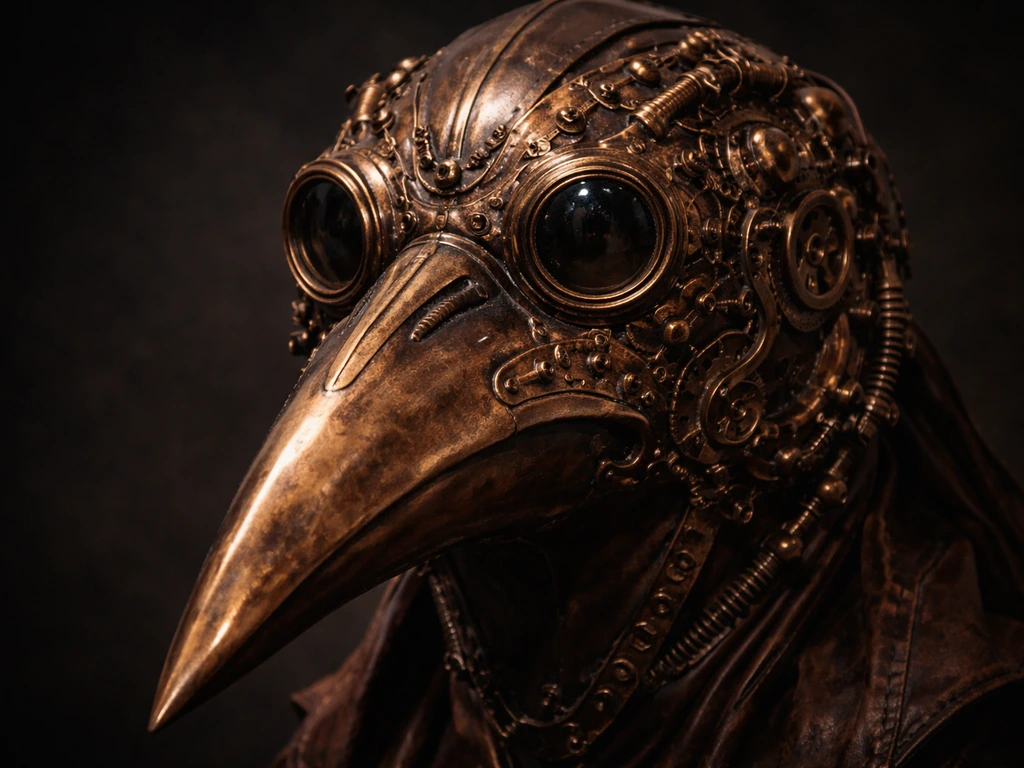
A bird mask means different things depending on where you saw it, but the core idea running through almost every use is transformation: the wearer is becoming something other than an ordinary human. Whether it's a raven mask in a Northwest Coast ceremony, an owl mask in a Bembe ritual, a plague doctor's beak mask at a Halloween party, or a crow-headed figure in a fantasy TV show, the bird mask signals a shift in identity, status, or world. The exact meaning narrows down fast once you know the bird species, the setting, and any symbols alongside it. In steampunk bird mask culture, the meaning is usually tied to the Victorian love of transformation and character display, but the exact symbolism depends on the bird species and the scene steampunk bird mask meaning.
What Does the Bird Mask Mean? Symbolism by Context

Why a bird mask is used in the first place
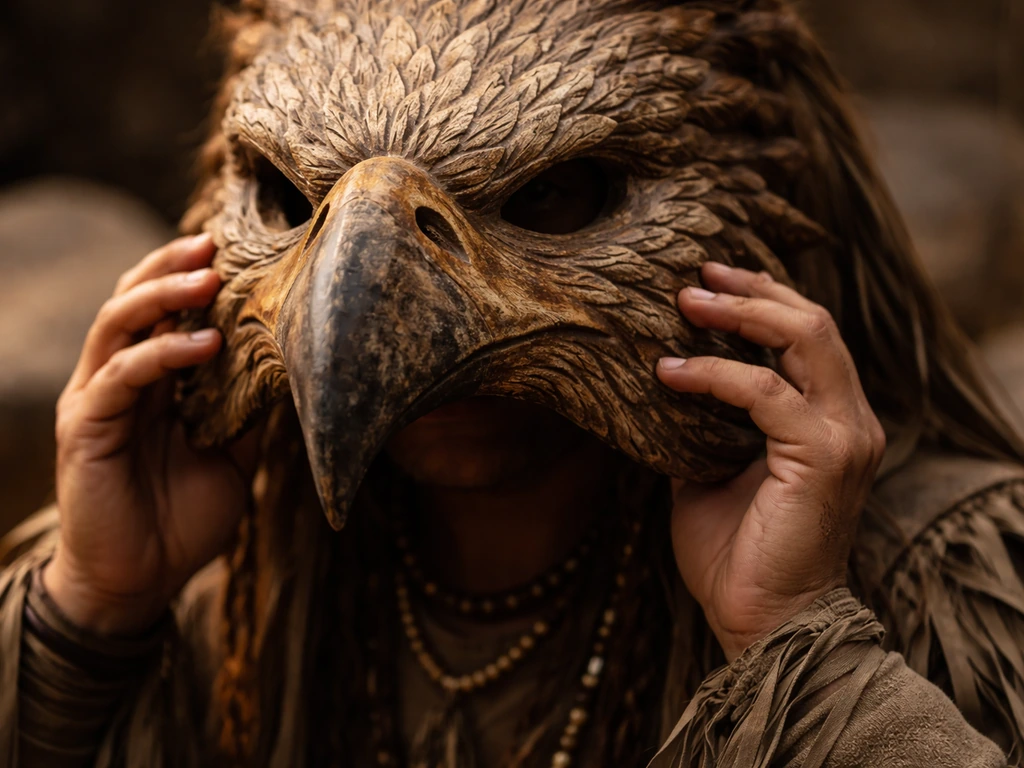
Masks in general do one thing consistently across cultures: they obscure one identity so another can emerge. MIT Theater Arts scholarship puts it plainly: the performer in a mask suppresses their own identity to embody a character, creature, or force. Bird masks take that logic and add the specific symbolic weight of birds themselves, which across most human cultures carries ideas of flight, freedom, crossing between worlds, transformation, and communication between the living and the dead.
In ritual contexts, wearing a bird mask isn't costuming in the casual sense. Northwest Coast Indigenous transformation masks, for example, literally hinge open to reveal a human face underneath an animal outer face, which physically enacts the idea of moving between the natural world and a supernatural realm. If what you saw was a bird mask with a human face underneath, that's a related motif worth considering alongside these species meanings bird with human face meaning. The mask isn't a disguise: it's a doorway. In theater, the logic is similar. The mask tells the audience which kind of being they're looking at before a single word is spoken.
Even in everyday modern costume use, the bird mask carries residue of this older meaning, which is why a crow or raven mask reads as darker and more ominous than a parrot mask, even on a party shelf. The species does a lot of the symbolic heavy lifting. So does the design: feathers versus a hard beak, open versus closed eyes, color palette. All of it is readable once you know what to look for.
What the bird species on the mask actually signals
Museums that catalog bird masks almost always identify the specific bird in the title, and that's not accidental. A hawk mask, a vulture mask, an owl mask, and a raven mask are four completely different objects with four different symbolic jobs. Here's how the most common ones break down.
Raven
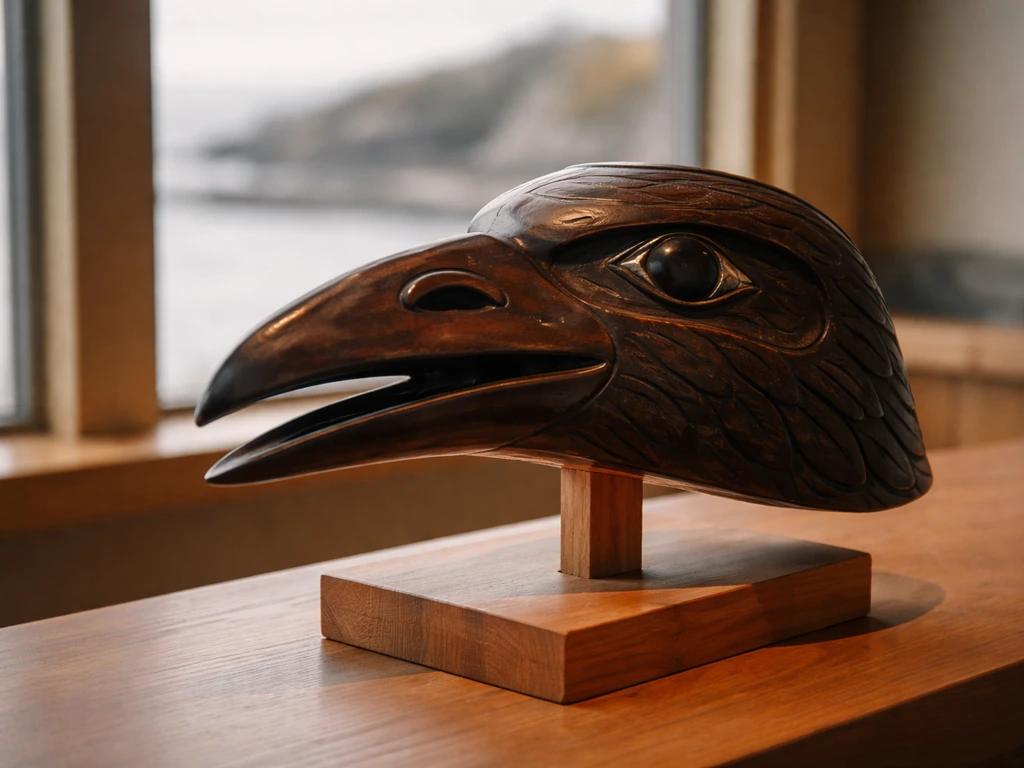
The raven mask is one of the most loaded bird masks in existence. In Yupik and Northwest Coast traditions, the raven is a creator figure, the being that freed the sun and set it in the sky. A raven mask in ceremonial contexts signals something cosmological, a connection to world origins or to powerful supernatural agency. In Western European and modern pop culture contexts, the raven skews toward mystery, intelligence, death adjacent symbolism, and trickster energy. If you see a raven mask in a story or game, it almost always marks a character who operates outside ordinary rules.
Crow
Crow overlaps with raven in many traditions but tends to sit slightly more in the trickster lane. Named trickster figures across Plains Indigenous traditions, like Old Man in Crow and Blackfoot storytelling and Iktomi in Lakota tradition, are connected to animal-persona roles where disruption and chaos coexist with wisdom.
A Plains Humanities encyclopedia entry documents “Old Man” (Crow and Blackfoot), Iktomi (Lakota), and Veeho (Cheyenne) as named trickster figures, showing how animal-persona masks can connect to trickster and chaos roles [Old Man in Crow and Blackfoot storytelling and Iktomi in Lakota tradition](https://plainshumanities. unl. edu/encyclopedia/doc/egp. fol.
044. html). A crow mask in modern spiritual communities often signals being watched, protected, or tested. In the plague doctor image, the crow-beak mask was popularly understood as a protective disguise meant to fool or repel evil spirits.
That folk interpretation still shapes how people read a crow-beaked mask today.
Owl
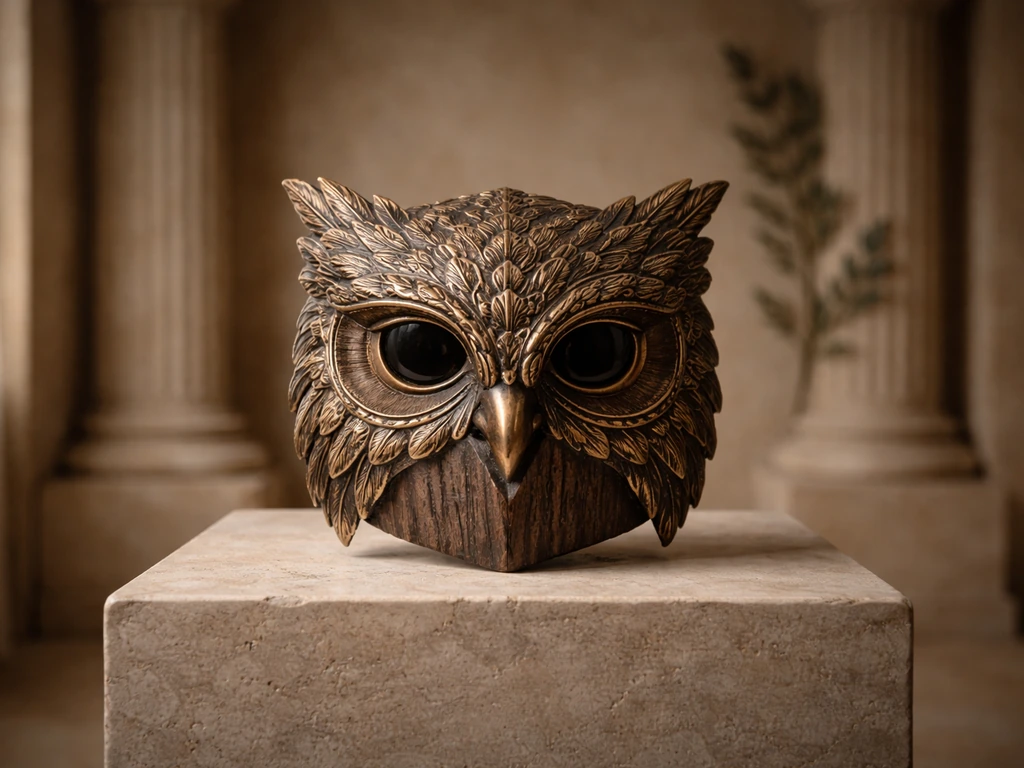
The owl mask has the widest symbolic range of any bird mask, which makes it the trickiest to interpret. In Greek-derived Western tradition, the owl connects to Athena and therefore to wisdom and knowledge. In many European folk traditions and in several Indigenous American traditions, the owl is a death omen or a messenger from the spirit world.
Wikipedia’s “Owl of Athena” summary notes that, alongside wisdom associations, the owl also appears in European folklore with death-omen contexts European folklore death-omen contexts. In Bembe-culture wooden masks held in museum collections, the owl appears alongside other iconographic motifs that add layers of meaning beyond just the bird species.
The short version: an owl mask can mean wisdom, mystery, death, protection, or spiritual sight depending on the context. You genuinely need the surrounding details to pin it down.
Eagle
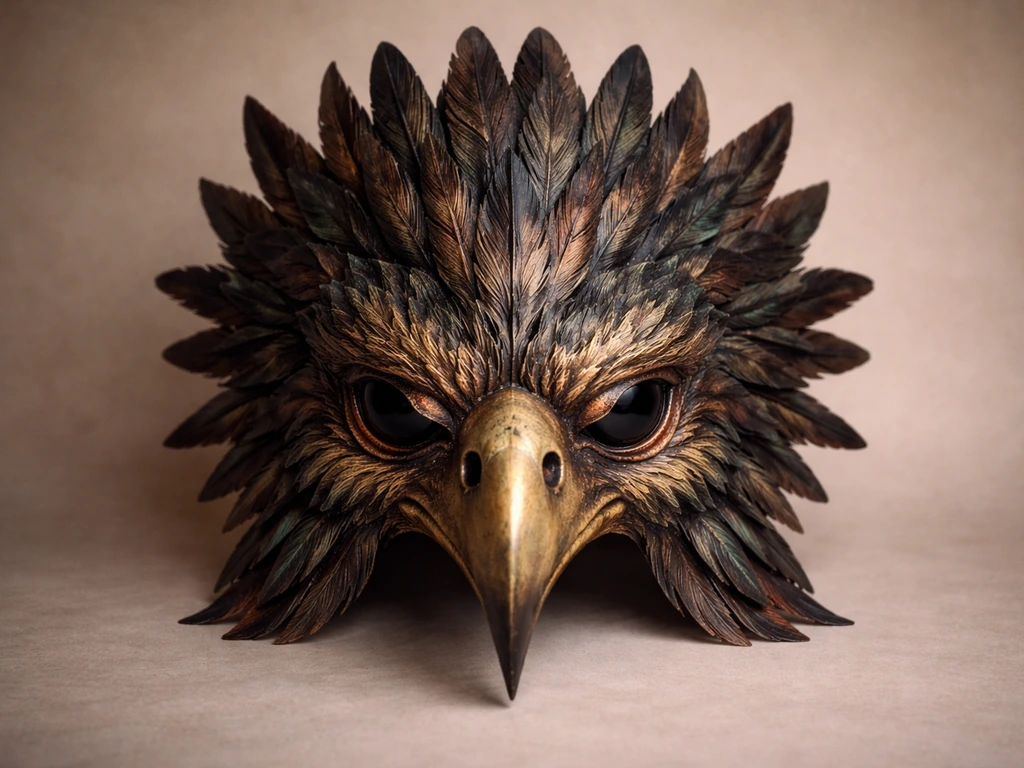
Eagle masks tend to read as power, authority, and divine protection. The Cleveland Museum of Art has an eagle mask with accompanying text that reads, 'I am the mask, the bird, the animal, the spirit,' capturing the layered embodiment idea perfectly. In Indigenous ceremonial contexts across North America, eagle feathers and eagle imagery carry specific protocols and deep spiritual weight. In modern and nationalist contexts, the eagle mask often signals strength or sovereignty. It's one of the less ambiguous bird masks in terms of its general emotional register.
Peacock
Peacock masks are the aesthetic outlier in this group. They tend to signal beauty, protection, and magical display rather than death or transformation. The British Museum has a dance mask featuring a peacock figure with outstretched wings integrated into a composite ceremonial object. In modern esoteric contexts, peacock feathers on masks are treated as protective and amuletic, 'brimful of magical symbolism' as one museum puts it. At a masquerade or Venetian-style event, a peacock mask is almost always about glamour and concealment for social pleasure rather than ritual transformation.
Hawk and vulture
Hawk and vulture masks show up clearly separated in museum records, like the Bwa peoples' hawk mask (duho) and vulture mask (duba) at the Metropolitan Museum. Hawk masks tend to carry precision, speed, and warrior or hunter associations. Vulture masks are less common in modern contexts but in traditional settings connect to death, purification, and the necessary work of the cycle of life, not malevolent but serious and liminal.
Ritual and ceremony versus everyday costume use
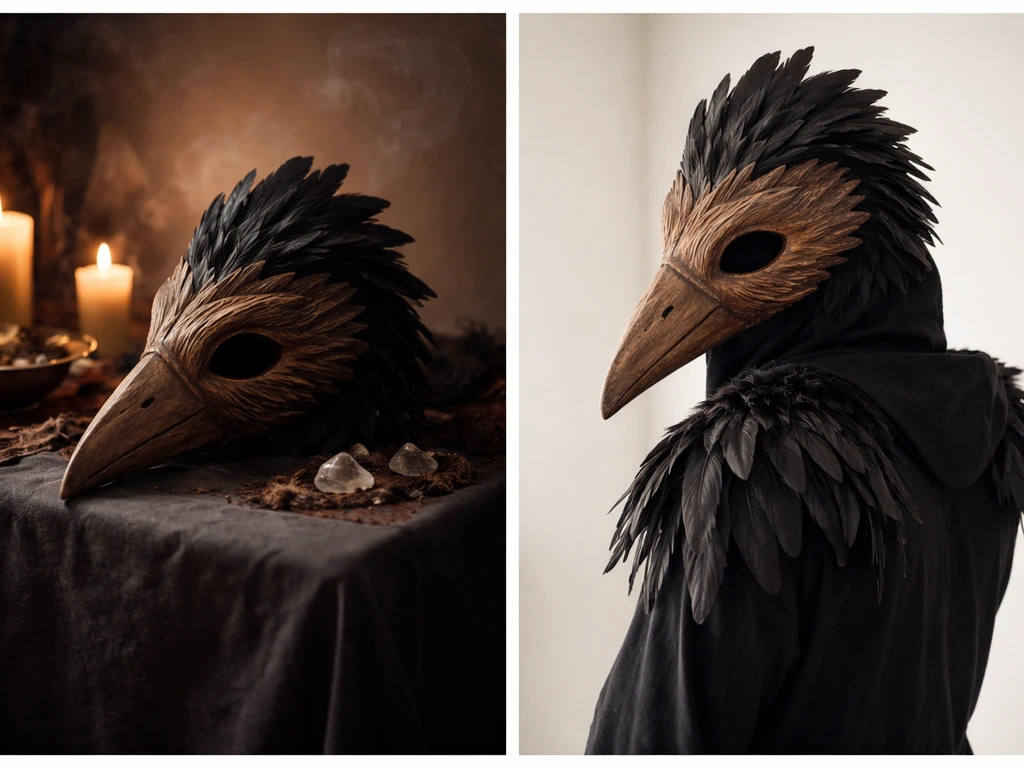
The same visual object, a wooden mask with a beak and feathers, can mean something sacred or something decorative depending entirely on context. This is the biggest source of confusion when people try to interpret a bird mask they've seen.
In ritual contexts, the mask is doing active spiritual or communal work. West Australian Museum documentation of PNG village ritual contexts describes participants dancing around masks and eventually burning them to complete a cycle of renewal, returning the community to ordinary time. The mask is functional, not just symbolic. Northwest Coast transformation masks are similarly operational: they physically demonstrate a supernatural passage during the ceremony rather than just representing the idea of it.
In everyday costume or festival use, the bird mask is borrowing the symbolism without invoking the full ritual structure. A crow mask at a Halloween party references trickster and death-adjacent associations without actually performing a ceremony. The meaning is more like a cultural shorthand: 'this figure is mysterious/dark/otherworldly.' The design usually signals which register you're in. Ritual bird masks from museum collections tend to be more abstract, more geometrically coded, more obviously tied to a specific visual tradition. Costume bird masks tend to prioritize recognizable bird features: realistic beaks, lifelike feathers, or exaggerated cuteness.
There's also a middle ground in modern spiritual and esoteric practice communities, where people use bird masks or bird-feather masks in personal ritual that isn't tied to a specific cultural tradition but draws consciously on older symbolic frameworks. In those contexts, the individual wearer usually assigns meaning deliberately, and asking them is genuinely the fastest way to understand what a specific bird mask means in that setting.
How bird masks work in stories, art, and theater
In theater, bird masks function as immediate character shorthand. In Noh theater, every mask type is tied to a specific character role: age, gender, whether the character is human, divine, or demonic. The mask choice is prescribed, not improvised, which means audiences read the bird mask as a clear signal about what kind of being is in the scene. A performer doesn't need to act mysterious if the mask already codes for it.
In visual art and narrative storytelling, bird masks often mark a character as operating between worlds: the human world and the spirit world, the mortal and the divine, the known and the unknown. The Cleveland Museum's framing of 'I am the mask, the bird, the animal, the spirit' captures exactly how these layers stack. The bird is not just decoration on the character. The bird is part of what the character is.
In fan communities around contemporary storytelling, like animated shows and games that feature bird-masked characters, the interpretive work is similar: viewers ask what the bird species signals about the character's role, alignment, and symbolic function. That's not overthinking it. That's how visual storytelling works. Writers and designers choose bird species on masks deliberately because those species carry pre-loaded meaning.
One thing worth noting about theatrical bird masks specifically: even a static mask can communicate emotion depending on how the performer holds and moves their body, the relationship of the mask to light, and the mask's angle. A raven mask tilted slightly down reads as threatening. The same mask tilted up reads as curious or transcendent. The static face is a frame. The body and staging fill in the expression.
Quick checklist for reading the specific bird mask you saw
If you're trying to figure out what a specific bird mask means right now, these are the things to look at in roughly this order:
- Bird species: Can you identify the bird? Raven, crow, owl, eagle, hawk, vulture, peacock, parrot, and duck all carry different base symbolism. If the beak shape, feather coloring, or eye placement is realistic, that's useful data. Museum records show that even within a tradition, 'hawk mask' and 'vulture mask' are treated as categorically different objects.
- Color palette: Black and red together is common in Northwest Coast ceremonial work and signals serious spiritual intent. All black tends toward death, mystery, or night associations. Gold or iridescent tends toward status, divinity, or protection. White can signal purity, grief, or ghostliness depending on the tradition.
- Design style: Is it naturalistic or abstracted? Highly geometric, stylized bird masks are more likely to be ritual or traditional in origin. Realistic or exaggerated-cute masks are more likely to be theatrical costume pieces. A mask that is clearly showing emotional expression in the eye design (sorrow, anger, serenity) is doing deliberate iconographic work.
- Accompanying symbols: What else is on or near the mask? Feathers attached versus painted feathers mean different things. Serpent motifs alongside an owl mask, as in some African mask traditions, change the meaning significantly. Fire, moon, sun, or skull symbols all narrow the interpretive field.
- Setting and event: Where did you see it? A museum context usually provides species identification and cultural origin in the label. A festival context (Mardi Gras, Dia de los Muertos, a masquerade ball) signals decorative-theatrical use. A ceremony or ritual context means the mask is doing active spiritual work. A game, show, or film means the designer chose the bird for character symbolism.
- Character or tradition name: Is the mask associated with a named character or a named cultural tradition? 'Spirit of the Raven' in Yupik context means something specific and traceable. A raven mask in a fantasy novel means something the author defined. Named context always overrides general symbolism.
How to pin down the exact meaning of the mask you encountered
If you saw the mask in a specific cultural or ceremonial context, the fastest path to a precise meaning is the cultural tradition it belongs to. Search the bird species plus the cultural group or region: 'raven mask Northwest Coast,' 'owl mask Bembe,' 'hawk mask Bwa.' Museum collection databases at the Smithsonian, the Met, the British Museum, and university art museums often have object pages that explain the specific symbolic role in accessible language. These are more reliable than general symbolism lists.
If you saw the mask in a story, game, or show, look at the character's narrative role first. Is the character a trickster, a guide, a villain, a spiritual authority? Then match that to the bird species. Crow or raven with trickster energy is an extremely common combination. Owl with wisdom or death-adjacent mystery is nearly universal in Western storytelling. Eagle with power and divine authority is the other reliable constant. If the character breaks that pattern, that break is probably intentional and worth investigating as a specific authorial choice.
If you saw the mask in a modern costume or festival context, the wearer's intent matters more than the bird's traditional symbolism. Someone wearing a peacock mask at a Venetian masquerade is signaling beauty and mystery. Someone wearing a crow mask at a pagan seasonal festival is probably engaging with crow-as-trickster-or-guardian symbolism consciously. When in doubt, asking is legitimate and usually welcome in those communities.
One useful disambiguation frame: is the mask primarily about the bird species, or is it primarily about the mask as an object of concealment? A plague-doctor-style bird mask is more about the mask function (protection, disguise, the liminal role of a person who deals with death) than about crow or raven symbolism specifically, even though the beak shape borrows from those birds. A raven transformation mask from a Northwest Coast tradition is primarily about the raven's specific cosmological role. Both are bird masks. They're asking to be read in entirely different registers.
Comparing the most common bird mask meanings at a glance
| Bird | Core symbolic register | Common contexts | Watch for |
|---|---|---|---|
| Raven | Creation, cosmic power, trickster, mystery | Indigenous ceremony, fantasy fiction, gothic aesthetic | Named creator-figure roles; black coloring; Northwest Coast design elements |
| Crow | Trickster, protection, observation, death-adjacent | Modern spiritual practice, Halloween, theater | Trickster character roles; crow feathers; community/coven contexts |
| Owl | Wisdom OR death omen (context-dependent) | African ceremonial masks, Western storytelling, esoteric practice | Accompanying symbols (serpent, moon); tradition of origin changes meaning entirely |
| Eagle | Power, authority, divine protection, sovereignty | Indigenous ceremony, nationalist imagery, epic storytelling | Scale and feather detail; named warrior or divine character roles |
| Hawk | Precision, speed, warrior energy, hunting | African ceremonial masks, Plains traditions | Paired with vulture in Bwa tradition; warrior character associations |
| Vulture | Death, purification, life-cycle, liminal passage | African ceremonial contexts, rarely modern costume | Serious and ritual rather than decorative; not malevolent |
| Peacock | Beauty, protection, magical display, concealment | Venetian masquerade, festival, esoteric practice | Iridescent or eye-feather motifs; glamour over transformation |
| Duck/waterfowl | Liminal water-sky transition, sometimes sorrow | Some Pacific and Arctic spirit masks | Duck-bill shape; spirit-face rather than realistic bird design |
If the bird mask you're researching has a strong skull or skeletal element, that's a separate interpretive thread worth following, since skull-and-bird combinations carry their own distinct symbolism across folk and esoteric traditions. If you also notice skull imagery, that can change the meaning, so it helps to understand the finding bird skull meaning in the same context skull-and-bird combinations. Similarly, if the mask has a specifically steampunk aesthetic design with mechanical elements alongside the bird imagery, that context shifts how the bird symbolism is being deployed. Both of those are their own rabbit holes with enough material to fill a separate guide.
The main thing to hold onto: a bird mask almost always means something. The question is just which tradition or context is doing the defining. Start with the species, add the setting, check for named characters or traditions, and you'll have a clear interpretation faster than you'd expect.
FAQ
If I tell you the bird species, will you know what a bird mask means for sure?
Not necessarily. The same bird can shift meaning if the mask is functioning as a disguise (costume, plague-doctor style) versus a ritual mechanism (hinging open to reveal a face, being danced around or ceremonially transformed). Check whether the object is meant to be “read” as a doorway into another state, or simply worn to signal vibe.
How much does the mask design (beak shape, eyes, colors, feathers) change the meaning?
Design elements often narrow the meaning fast. A sharp, elongated beak tends to read as harsher or more predatory than a rounded beak, and closed versus open eyes can flip a mask from “watchful” to “spirit-seeing.” Color palette matters too, darker blacks and grays usually push death or ominous symbolism, while saturated blues or golds often read as protective or celebratory.
Can the same bird mask look different depending on how it’s worn or lit?
Yes, staging can override a “static” look. Even with the same mask, how the performer holds posture and the mask angle relative to overhead light can change the perceived emotion (threatening, curious, authoritative, sacred). If you saw it live, note where the light came from and whether the performer moved in ways that made the mask look more animal-like.
What does it indicate when a bird mask reveals a human face underneath?
If the mask includes a human face underneath, or transforms in a staged sequence, treat it as more than costume. That “human-under-bird” or “animal shell” motif often points to enacted transformation, bridging realms, or a shift in identity state during the ceremony. Without that reveal or functional action, it may be closer to aesthetic symbolism.
How can I tell whether a bird mask is using the bird symbol or just borrowing the bird look (like plague-doctor designs)?
A plague-doctor-style beak often signals the liminal role and protective/disguising function more than the crow or raven’s specific mythology. In other words, the meaning can be anchored in “dealing with death or sickness” and the beak shape is borrowed as visual shorthand.
Is “owl mask = wisdom” always correct?
Don’t treat “owl means wisdom” as universal. Owl symbolism can be wisdom, but it can also be death omen or a messenger, depending on the culture and the other motifs around the owl. If you only have the owl but no context, look for accompanying iconography (such as specific patterns, companion symbols, or character role in a story).
How do I interpret a bird mask I saw at a party or festival?
If it’s a modern event, the wearer’s intent usually matters more than traditional lists. Ask yourself whether the setting is a masquerade, Halloween, a seasonal festival, or a personal practice. The same crow mask can read as glamour and mystery in one context, and consciously invoked guardian or trickster symbolism in another.
What changes if the bird mask also has skull or skeletal elements?
Skull-and-bird imagery adds a distinct interpretive thread, because skulls often move the meaning toward mortality, purification, ancestor or spirit-cycle themes. If you saw bones, skeleton faces, or skull outlines integrated into the mask, treat that as a second symbolic channel and not just an extra decoration.
How does a steampunk or mechanical bird mask affect the interpretation?
In steampunk-style masks, mechanical elements often shift the emphasis toward Victorian-era character display, crafted transformation, and “engineered” identity change. The bird still brings its core symbolism, but the aesthetic can signal a deliberate, character-building fantasy rather than a community ritual or prescribed role.
What should I do if the bird mask symbolism doesn’t match the character in a story or game?
If the character role doesn’t match the expected bird stereotype, it may be intentional. For example, if an owl is used as a villain or an eagle is framed as powerless, that mismatch can be authorial commentary or a subversion of traditional symbolism. Note the character’s alignment, behavior, and how other characters react to them.
Steampunk Bird Mask Meaning: Symbolism and How to Identify the Bird
Interpret steampunk bird mask meaning, identify the bird by features, and match bird symbols to costume storytelling.