
If you searched 'bird with human face meaning,' you're most likely looking at a reference to the Inmyeonjo, a creature from Korean and broader East Asian mythology depicted as a bird with a human head. It went massively viral after appearing in the 2018 PyeongChang Winter Olympics closing ceremony, leaving viewers alternately terrified and mesmerized. But 'bird with human face' is also a genre of creature that spans multiple mythologies and symbolic traditions, so the exact meaning depends on which version you're looking at. The short version: this motif almost universally signals something that sits between worlds, whether that's prophecy, fate, transformation, or a warning you'd better not ignore.
Bird with Human Face Meaning: Myths, Art, and Symbols

Marcus Whitmore
23 May 2026
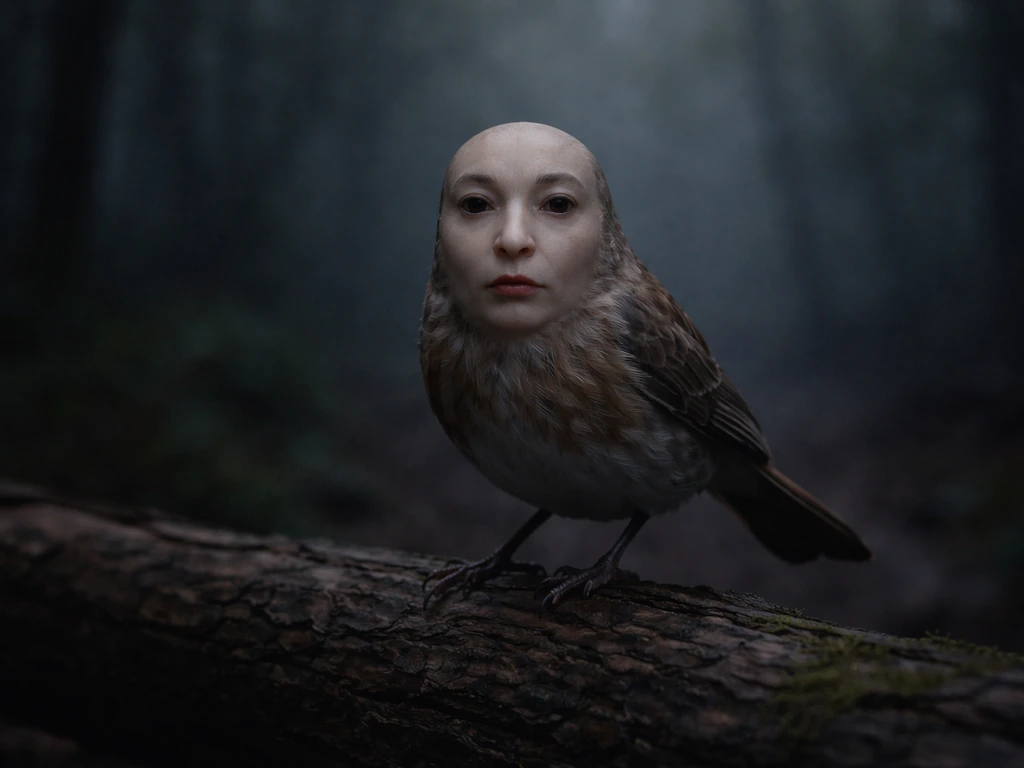
What people usually mean by 'bird with a human face'
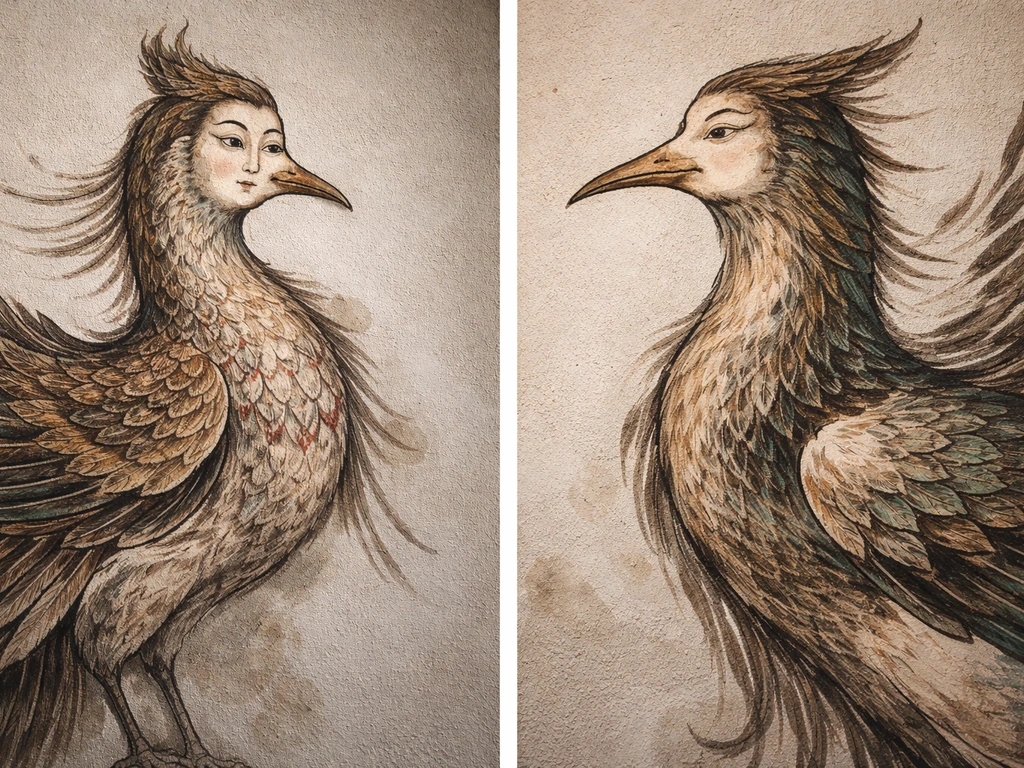
Most of the time when someone types this phrase, they've seen an image, a mural reproduction, or a viral video and want to know what they're actually looking at. The creature they're probably seeing is the Inmyeonjo, which literally translates to 'human-faced bird' in Korean. It's described as having a human head mounted on a bird's body and appears most famously in the murals of Goguryeo-era tombs, some dating back over 1,500 years. The 2018 Olympics performance brought it to international attention overnight, turning it from a niche archaeological reference into a trending search term.
That said, 'bird with human face' isn't always the Inmyeonjo. The phrase loosely describes an entire family of creatures across world mythology: the Slavic Gamayun (a large prophetic bird with a woman's head), the Alkonost (another woman-headed bird from East Slavic folklore), the Buddhist Kalaviṅka (human head, bird torso, flowing tail), and even the Japanese Tengu, which blurs the line between bird and human with its distinctive red, humanoid face and elongated nose. If someone in a Western context says 'bird with a human face,' they might picture a harpy or a siren from Greek myth, which are close cousins in concept. The commonality across all of them is the hybrid: part bird, part human, all liminal.
Common interpretations: myth, symbol, omen, and psychology
These creatures aren't just weird images. They carry consistent symbolic weight across cultures, and once you know what to look for, the meanings cluster into a few reliable categories.
- Prophecy and fate: Prophetic birds that speak or sing are a recurring archetype. Gamayun was said to know all the secrets of the world and foretell the future. Kalaviṅka appears in Buddhist dream contexts as a messenger between realms. The human face is what gives these birds credibility as communicators — they can speak, warn, and reveal.
- Auspiciousness and sacred status: Inmyeonjo in particular is often described as a sacred, even positive motif, connected to Pure Land Buddhist practice and the hope of reaching the paradise of Sukhavati. The tomb murals that feature it weren't meant to scare the dead — they were meant to guide and protect them.
- Danger and deception: The human face on an inhuman body reads as uncanny to many viewers, and that unease is intentional in some traditions. A creature that looks human enough to lure you in but operates by different rules is a classic warning archetype. Harpies and sirens in Greek mythology work on exactly this logic.
- Transformation and the in-between: Hybrids of any kind in mythology usually mark a threshold. A bird with a human face sits between the earthly and the divine, the living and the dead, the known and the unknowable. Seeing one in a story or dream often signals that a major transition is underway.
- Psychological projection: From a Jungian angle, a creature that's part-you and part-wild can represent aspects of the self that haven't been fully integrated — the parts that want to fly, escape, or operate outside ordinary human rules. Analytical psychology specifically warns against reading dream symbols as fixed meanings; the same image means something different depending on what's happening in your life.
Where you'll actually find this motif
Ancient tombs and Buddhist scripture
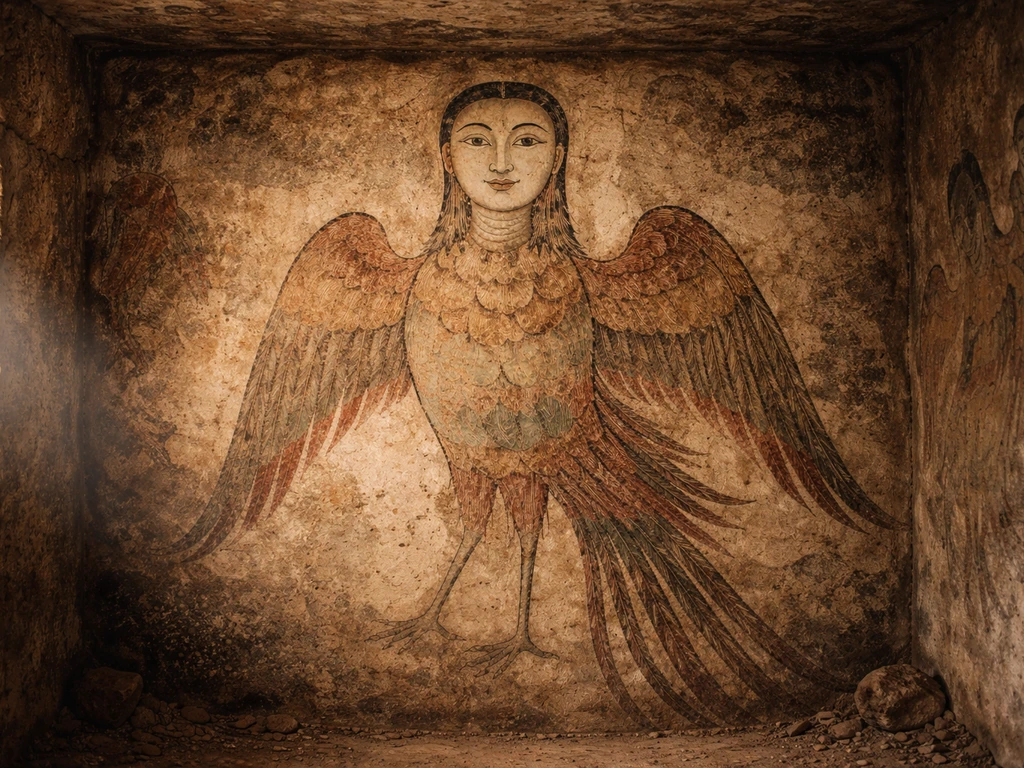
The Inmyeonjo's oldest appearances are in Goguryeo tomb murals from Korea, which date roughly to the 4th through 7th centuries CE. These aren't horror images, they're funerary art meant to ease the transition of the deceased. The creature also appears in Buddhist scripture as a cousin of the Kalaviṅka, a human-headed bird said to sing in the Himalayan forests and to be heard even before hatching from its egg. Its voice was considered so beautiful that it became a metaphor for the Buddha's teachings.
Slavic folklore and Russian art
The Gamayun and Alkonost are the Eastern European equivalents. Russian symbolist painters, particularly Viktor Vasnetsov in the 19th century, painted these creatures extensively, giving them a melancholic, almost cinematic quality. Gamayun is shown with disheveled hair and an intense stare, delivering prophecy whether you want it or not. Alkonost is associated with paradise and grief simultaneously, often depicted crying. Both are bird-women, not quite harpies, not quite angels, exactly the kind of in-between thing that makes this motif so durable.
Modern pop culture, games, and creepypasta

The PyeongChang Olympics moment in 2018 was a turning point for Inmyeonjo's online life. The creature's appearance in a large-scale performance art context went viral partly because it genuinely alarmed people who had no cultural reference for it. Since then, human-faced bird imagery has filtered into video games, fantasy art, horror-adjacent folklore channels on social media, and creepypasta-style storytelling where the 'uncanny hybrid' angle gets amplified into full-on nightmare fuel. In those contexts, the 'meaning' is almost purely tonal, it signals wrongness, the violation of natural categories, the thing that shouldn't exist.
How to figure out which creature or motif you're actually looking at
Before you interpret the symbolism, it helps to narrow down what you're actually seeing. Here's a quick identification approach based on visual and contextual details.
| What you're seeing | Most likely creature/motif | Cultural origin |
|---|---|---|
| Human head on bird body, East Asian art style or tomb mural | Inmyeonjo | Korean / Goguryeo, Buddhist |
| Human head on bird body, long flowing tail, Buddhist iconography | Kalaviṅka | Buddhist (South/East Asian) |
| Woman's head on large bird body, prophetic or sorrowful mood | Gamayun or Alkonost | East Slavic folklore |
| Humanoid face with beak or long nose, Japanese setting | Tengu | Japanese mythology |
| Bird mask with human-like face surface, ritual or performance context | Ritual bird mask (various traditions) | African, Pacific, or Indigenous ceremonial |
| Winged woman with talons, threatening pose | Harpy or Siren | Greek mythology |
| Generic creepy bird with a face in digital/game art | Modern hybrid creature, possibly inspired by Inmyeonjo or creepypasta | Contemporary internet culture |
One important disambiguation: if what you saw was a mask with a human face worn during a bird-themed performance or ritual, the meaning shifts significantly. Museum records from traditions like the Dan people of West Africa describe bird masks where the human face surface represents a spirit being 'translated' into visible form for ceremony. In that context, the human face isn't a literal biology claim, it's an identity transformation, the mask-wearer assuming a spirit's role.
UMMA records tied to a night bird mask discuss how bird-mask imagery can represent identity transformation within ceremonial contexts. That's a completely different symbolic territory than a mythological creature.
If you're researching bird masks specifically, that motif connects to some adjacent territory worth exploring separately.
What it symbolizes across cultures and themes
Wisdom and sacred knowledge
The human face grants these creatures the capacity for speech and reason, which is why wisdom and prophecy are their most common symbolic roles. Kalaviṅka's voice is a stand-in for enlightened teaching. Gamayun literally knows everything and tells it to those who ask. In these readings, the bird part provides access to realms humans can't reach, and the human part translates that knowledge into something we can receive. Together, the hybrid is a kind of living oracle.
Warning and fate
Birds have functioned as omens across nearly every culture that's ever existed. The ancient practice of ornithomancy (reading omens from bird flight, cries, and behavior) was a formal discipline in Rome and Greece. The phrase 'bird of ill omen' is still in standard English dictionaries. When you add a human face to that already-ominous bird body, the warning quality intensifies: this isn't just a crow flying over your house. This is something that can look you in the eye and deliver the message directly.
Transformation and liminality
Hybrid creatures in general mark transitions in mythology. The Inmyeonjo appearing in tomb murals is doing exactly this work: it inhabits the threshold between the living world and whatever comes next. In Buddhist readings, it's connected to Pure Land aspirations, the hope of being reborn in a paradise realm. The creature doesn't belong fully to either human or animal categories, which makes it the perfect symbol for moments of crossing over.
Deception and the uncanny
Not all readings are gentle. A creature with a human face that isn't human triggers the same instinct that makes dolls and mannequins unsettling: the uncanny valley effect applied to mythology. In horror-adjacent folklore and modern creepypasta, this is the dominant reading. The human face is a lure or a lie, something that looks familiar enough to approach but operates by rules you don't know. Harpies in Greek myth carried off souls. Sirens caused shipwrecks. The human-faced bird that seems to understand you might also be the one thing you shouldn't follow.
How birds with human features show up in language and idiom
English doesn't have a fixed idiom for 'bird with human face,' but the underlying ideas are baked into the language in several ways. If you're looking for the English bird skull meaning, it helps to compare how “bird of ill omen” language overlaps with symbolic bird imagery in myths and art.
'Bird of ill omen' is the most direct: it describes a person or thing that seems to predict bad events, and Collins English Dictionary uses it as an example phrase in its definition of 'omen. ' More broadly, English uses birds as stand-ins for human qualities all the time: a 'wise old owl,' a 'night owl,' a 'lark' (cheerful morning person), a 'bird-brained' fool.
These phrases work because birds are already mapped onto human personality types in English-speaking cultures, so the leap to a literal bird-human hybrid isn't as conceptually strange as it might seem.
In slang, 'bird' in British English is a casual term for a person (especially a woman), which creates an interesting echo of the human-faced bird motif even if it's unrelated in origin. The persistent use of birds as proxies for human types, omens, and messengers in language is exactly why the mythological bird-human hybrid resonates so broadly. The creature is just making literal what the language already implies: birds know something we don't, and sometimes they wear it on their face.
How to actually use this meaning practically
Interpreting a dream
If you blank" rel="noopener noreferrer">dreamed about a bird with a human face, the honest interpretive advice is this: start with how you felt in the dream, not with a fixed symbolic dictionary. Analytical psychology specifically notes that the same symbol doesn't carry the same meaning from one dream to the next, context and emotion are the real interpreters. That said, the general cluster of meanings for bird-human hybrids in dreams leans toward messages, transitions, and unresolved questions about identity or direction.
When interpreting a bird skull, many people use the same bird-human symbolism to guide what the imagery is suggesting about warning, transition, or spiritual meaning bird-human hybrids. If the bird spoke to you, pay attention to what it said more than what it looked like. If it felt ominous, the 'warning' or 'threshold' reading probably applies. If it felt sacred or calm, the 'guidance/wisdom' reading fits better.
Don't treat it as literal prophecy, but do take the emotional texture seriously.
Writing a caption or social media post
If you're captioning an image that features this motif, the most resonant captions lean into the liminal quality. Something like 'the thing that sees you from the other side' or 'what prophecy looks like when it has eyes' plays on the prophetic, threshold-crossing symbolism without requiring the viewer to know the mythology. If the specific creature is Inmyeonjo, naming it adds cultural specificity that tends to get engagement from people who recognize it. If you want the horror register, the uncanny/deception angle is your strongest tool.
Using it in storytelling
For writers, the bird-with-human-face motif is one of the most flexible symbolic tools available because it carries both comfort and dread depending on how you frame it. Use it as a guide figure and it signals your protagonist is crossing into new territory (transformation arc). Use it as an omen and it front-loads a sense of fate and inevitability. Use it as an antagonist and the uncanny, luring quality gives you built-in psychological horror without having to explain it.
The creature works in fantasy, horror, literary fiction, and even speculative realism. The one thing to avoid: treating it as purely decorative. A bird with a human face in a story always implies that something is about to change, be revealed, or be lost. Give it that weight and it earns its place on the page.
Interpreting art or imagery you encountered
If you saw this motif in a museum, a tattoo, a film, or a game and want to understand what the creator intended, the identification table above is your first tool. Once you've narrowed the likely source, layer on the cultural context: Inmyeonjo in East Asian or Korean art almost always carries sacred or liminal meaning rather than pure horror. Slavic bird-women are almost always tied to prophecy or grief. Greek harpies are almost always punitive.
Ritual bird masks with human face surfaces are almost always about identity transformation within ceremony, not about depicting a biological creature at all. steampunk bird mask meaning Ritual bird masks with human face. Knowing the origin tells you which symbolic register the creator was working in, which tells you how to read their intent.
FAQ
How can I tell if the image is specifically the Inmyeonjo, not a general bird-human hybrid?
It’s usually the Inmyeonjo when the artwork shows a bird body paired with a distinctly human head (often front-facing), and the setting feels ceremonial or funerary. If the image context is a tomb mural style, a museum reproduction, or Korean/East Asian historical art, the odds shift strongly toward Inmyeonjo rather than other bird-human hybrids.
What does it mean if it’s a bird-human face mask in a ritual, not a mythical creature illustration?
If the face is stylized like a mask (separate from the bird body), worn by a performer, or shown with ritual clothing, treat it as identity translation rather than a mythological creature. In that case, the meaning typically concerns role assumption and spiritual access inside ceremony, not prophecy or predation.
When interpreting, should I focus more on what the creature does than what it looks like?
For personal meaning, look for whether the bird-human face is speaking, watching in silence, or attacking. Speech most often pushes the “oracle or teaching” reading, silent gaze often signals a boundary or impending change, and aggression shifts toward a warning about harm, refusal, or being drawn into the wrong path.
Why can the same motif feel terrifying in one context but sacred in another?
Yes. In horror-oriented versions, creators often use the human face to make the figure feel socially legible, like it understands you. That’s why it can read as deception or lure. In more sacred or funerary versions, the same hybrid feature is used to emphasize passage, translation, or guidance.
How should I interpret a dream of a bird with a human face if I can’t identify the specific myth?
In dreamwork, the safest decision aid is emotional valence plus agency. If you feel threatened or tricked, lean toward uncanny, deception, or “don’t follow” symbolism. If you feel comforted, awed, or instructed, lean toward wisdom, transition, or direction, and treat it as reflective guidance rather than literal prediction.
Is there one single universal meaning for the bird-with-human-face motif?
A common mistake is treating “human face bird” as one fixed symbol. The motif is better read as a family resemblance: prophecy and liminal transition appear in several traditions, while Greece tends toward punitive outcomes and Slavic bird-women often link to grief plus foretold events.
What’s a practical way to use this motif in writing without making it feel random?
If it’s in a caption or story, specifying what kind of “liminal crossing” you mean improves clarity. For example, use it to mark an entry into a new world (portal, transformation), or a psychological crossing (identity shift, revelation). Avoid presenting it as decorative, because the motif works best when it changes the plot’s direction.
When doing research for a specific artwork or tattoo, what should I check first to avoid misreading it?
If you want a meaning that fits your source, ask two questions: (1) Is the tone funerary/sacred, prophetic/moralizing, or predatory/uncanny? (2) Is the origin East Asian/Korean, Slavic, Greek, Buddhist-adjacent, or performance mask/ritual? Those two answers usually narrow the symbolic register more than the visual description alone.
Next Article
War Bird Meaning: Literal, Slang, and Historical Uses
Understand war bird meaning: literal, slang metaphor for fighters, and historical bird symbolism, plus close phrase comp