If you searched 'bill bird meaning,' you're most likely looking for one of three things: the biological definition of a bird's bill (the hard mouthpart used for eating, preening, and more), the meaning of the phrase 'bird bill' as a descriptive term, or a metaphorical or symbolic use of 'bill' in a story, idiom, or quote. In most cases, the answer is the first one: a bird's bill is simply the anatomical structure covering its jaws, the same thing people call a beak. But the wording of your search matters, and a little context goes a long way in figuring out exactly what you need.
Bill Bird Meaning: What It Refers to and How to Tell

Marcus Whitmore
3 May 2026
What a bird's bill actually is
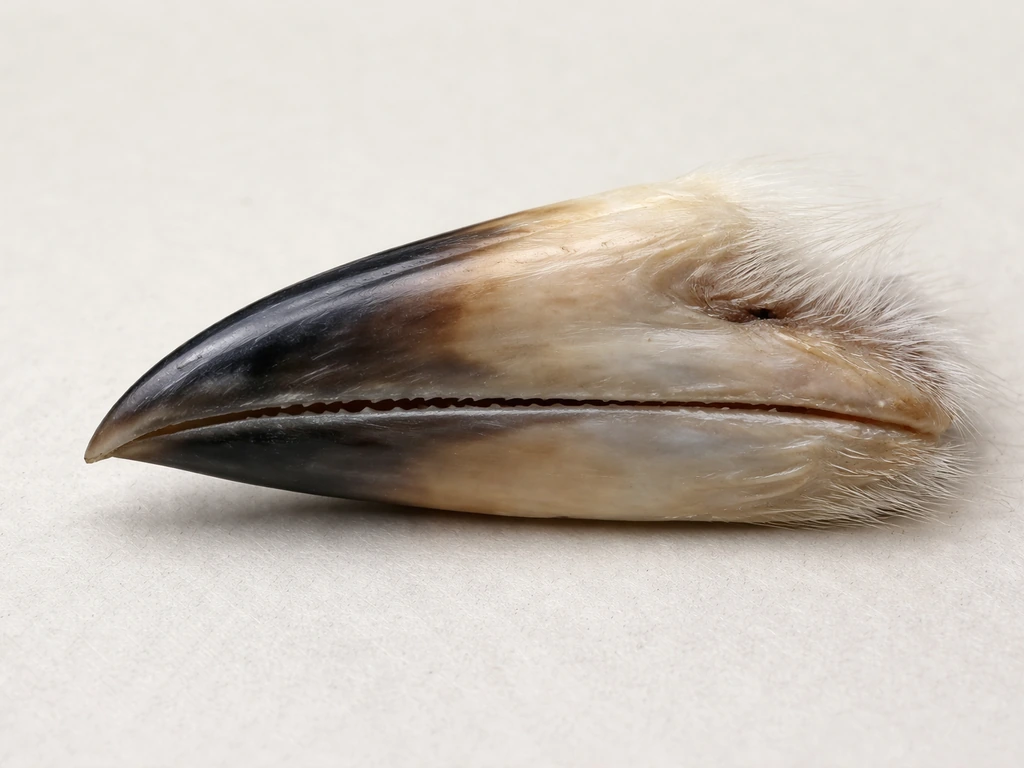
A bird's bill is the hard external structure that covers a bird's upper and lower jaws. Merriam-Webster defines it precisely as 'the jaws of a bird together with their horny covering,' which is about as literal as it gets. The Field Museum describes it as a 'perfectly evolved tool' that functions like a combination of a mouth and a hand, which gives you a better sense of just how much work this one structure does.
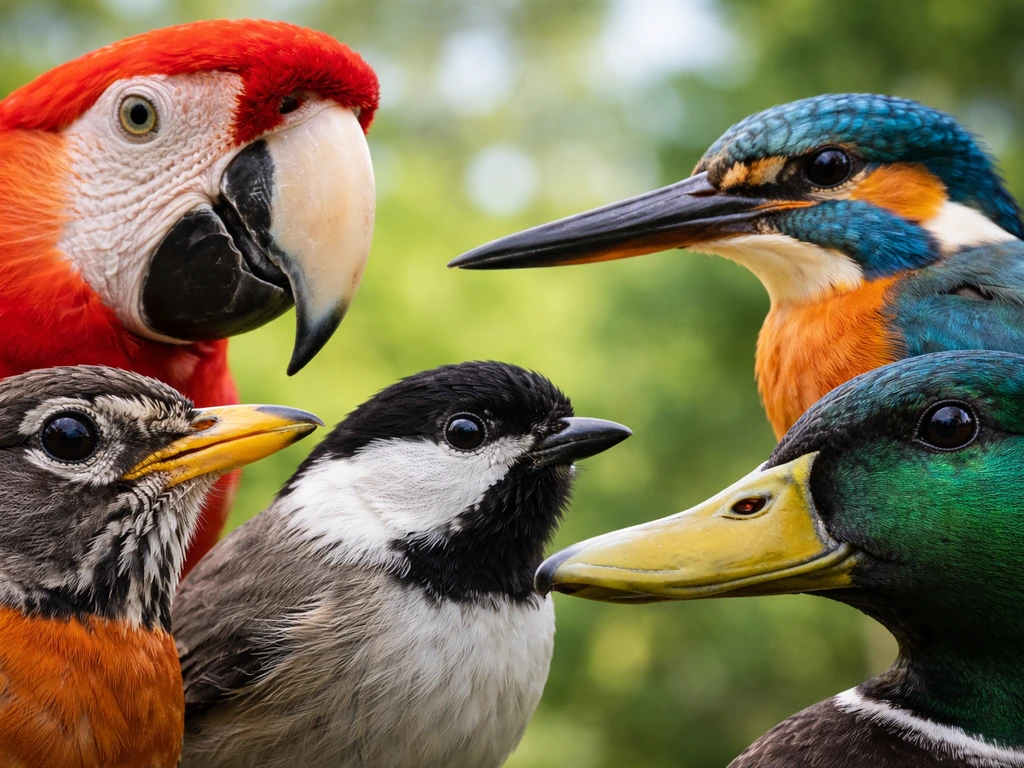
Birds use their bills for far more than just eating. According to National Park Service lesson materials on bird adaptations, the bill handles eating and gathering food, yes, but also preening feathers, drinking water, killing prey, manipulating objects, fighting rivals, and even performing courtship displays. The U.S. Fish and Wildlife Service puts eating and food gathering front and center as the bill's primary job, but that undersells its versatility. Think of the bill as an all-purpose instrument shaped by millions of years of evolution to suit whatever lifestyle a given bird leads.
In technical ornithological contexts, 'bill' gets even more specific. The USGS, for example, measures the culmen, which is the upper ridge running along the length of the bill, as a standard metric for identifying and classifying waterbirds. So when you see 'bill' used in a scientific birdwatching or field guide context, it often comes loaded with precise anatomical meaning.
What 'bird bill' means as a phrase
As a two-word phrase, 'bird bill' simply means the bill (or beak) belonging to or found on a bird. It's a descriptive compound noun, not a technical term or idiom. You'd encounter it in a nature guide saying something like 'the bird bill is shaped for cracking seeds,' or in a school worksheet asking kids to label a bird bill on a diagram. There's no hidden meaning here. The phrase is just a handy shorthand for 'a bird's bill' without the possessive apostrophe.
That said, the phrase does show up in compound contexts with more specific meaning. 'Spoonbill,' 'shovelbill,' and 'crossbill' are all real bird names that use 'bill' as a descriptor of bill shape. In those cases, 'bill' is part of the species name, not a standalone term. If you saw 'bird bill' in a piece of writing, the most natural reading is still the anatomical one unless the surrounding text signals otherwise.
Breaking down 'bill of a bird' and why people phrase it that way
Searches like 'bill of a bird meaning' or 'bill of bird meaning' are really just grammatical variations of the same question. In English, you can express possession or association in two main ways: the apostrophe-s form ('a bird's bill') or the 'of' construction ('the bill of a bird'). Cambridge grammar notes that both are standard, and people often swap between them naturally depending on how a sentence flows. So if someone writes 'bill of a bird' instead of 'bird's bill,' they mean exactly the same thing. The word order feels more formal or definition-style, which is probably why it shows up in searches: people are phrasing it the way they'd expect a dictionary entry to read.
The answer to 'bill of a bird meaning' is therefore the same as above: the hard jaw-covering structure that birds use as their primary tool for interacting with the world. Britannica explicitly notes that 'bill' is the preferred term in ornithology for this structure (over 'beak'), and Merriam-Webster traces the word back to Old English 'bile,' confirming it has referred to a bird's mouthpart for a very long time.
Bill vs beak: why the confusion exists
Here's the thing: bill and beak refer to the exact same structure. The confusion mostly comes from the fact that both words are in common use, people use them interchangeably, and different sources seem to have different preferences. Merriam-Webster defines beak as 'the hard, pointed part of a bird's mouth.' Collins notes that 'beak' can mean 'a bird's bill.' Oxford traces 'beak' back through Old French 'bec' and Latin 'beccus.' So etymologically and anatomically, you're looking at synonyms.
The practical difference, according to Cornell Lab's All About Birds, is mostly a matter of context and convention rather than anatomy. In formal ornithological and zoological writing, 'bill' tends to be preferred, which is why Britannica flags it as the preferred technical term. In everyday speech, people are more likely to say 'beak.' Birdwatchers sometimes use 'bill' because it sounds more precise, and field guides often do the same. But if someone says 'beak' instead of 'bill,' they are not wrong. Cambridge's dictionary even lists 'the beak of a bird' as one definition of 'bill,' completing the circle.
| Term | Common Usage | Technical Preference | Etymology |
|---|---|---|---|
| Bill | Birdwatching, field guides, ornithology | Preferred in zoological writing | Old English 'bile' |
| Beak | Everyday speech, children's books, casual writing | Also accepted in science | Old French 'bec,' Latin 'beccus' |
One more thing worth noting: 'bill' also applies beyond birds. Merriam-Webster mentions that a platypus has a bill, and the term even appears for dinosaur mouthparts in paleontology. So if you see 'bill' in a non-bird context, don't be surprised. The word has always been broader than birds alone, even if birds are where most people encounter it.
When 'bill' takes on a metaphorical or symbolic role

In storytelling, folklore, and symbolism, a bird's bill can carry meaning beyond its literal function. A sharp, hooked bill is often used in literature to signal predatory power or danger, think hawks and eagles in fables where the bill signals authority and strength. A long, probing bill in a story might symbolize curiosity or persistence. A brightly colored bill, like on a toucan or puffin, tends to show up symbolically as a sign of attraction, flamboyance, or identity. These are not fixed universal meanings, but they're patterns that appear across storytelling traditions.
The word 'bill' itself also has a long life in idioms that have nothing to do with birds at all. 'Fit the bill,' 'foot the bill,' and 'a bill of goods' are all common English idioms where 'bill' means something entirely different (to meet requirements, to pay costs, or to be deceived by false promises, respectively). Merriam-Webster records 'sell a bill of goods' as an idiom meaning deception through false promises. Cambridge lists 'be on the bill' as another standalone phrase. So if you encounter 'bill' in an idiom or figurative expression, the bird meaning is almost certainly not what's intended. Context will tell you quickly.
Where it gets interesting for this site specifically is when a bird's bill becomes a focal point of symbolic language. The doctor bird (a Jamaican hummingbird) is known partly for its distinctive long bill, which factors into local legend and national symbolism. Similarly, the jian bird of Chinese mythology is defined significantly by its anatomy, including features that parallel how a bill functions as an instrument of connection or unity. If you're researching a specific bird's symbolic meaning, the bill's shape and function often inform the symbolism directly.
How to figure out which meaning applies in your situation
The fastest way to nail down which 'bill bird meaning' you're actually dealing with is to look at the surrounding context. The jian bird meaning you may be searching for is tied to its symbolism in Chinese mythology and how its anatomy is described. Here's a simple method:
- If the phrase appears in a nature article, field guide, biology lesson, or birdwatching resource, it's the anatomical meaning. The bill is the bird's mouthpart. Full stop.
- If the phrase appears in a description of a specific bird species (like 'the jay bird's bill is strong and pointed'), it's still anatomical, but it's giving you information about that particular bird's feeding habits or behavior.
- If 'bill' appears in an idiom, proverb, or figurative passage without a bird nearby in the text, it's almost certainly the non-bird meaning of 'bill' (a payment, a list, a law, or a deceptive promise).
- If 'bill' appears in a mythology, folklore, or symbolism context alongside a specific bird name, look up that bird's symbolic profile specifically. The bill's shape will usually be part of what drives the symbolism.
- If the phrasing is 'bird's bill' or 'bill of the bird,' it's possessive and descriptive: you're looking at the bill that belongs to or characterizes a particular bird. Treat it as the anatomical term.
- If you're still unsure, search for the specific bird name alongside 'meaning' or 'symbolism' rather than just 'bill.' That will route you to the right kind of cultural or linguistic entry.
For this site in particular, the most useful place to keep digging is the individual bird entries. Terms like jay bird, drake bird, or j bird all have their own meanings and symbolic histories that go well beyond their physical bills. Terms like jay bird, drake bird, or j bird all have their own meanings and symbolic histories that go well beyond their physical bills. See also what j bird meaning usually points to, since some compound bird names carry both literal and symbolic context. Terms like jay bird, drake bird, or j bird each have their own meaning and symbolic history jay bird meaning. The bill might be part of the picture, but the bird's full identity, its behavior, its place in folklore, and how its name has evolved in language, is usually where the richest meaning lives.
So if your original search was a genuine 'what does this mean?' question, the direct answer is: a bird's bill is its hard jaw-covering mouthpart, used as an all-purpose tool for feeding, grooming, fighting, and communicating. Bill and beak are the same thing, with 'bill' being the slightly more formal and technically preferred label. If you saw the phrase in a symbolic or storytelling context, start with the specific bird involved and work outward from there.
FAQ
Is “bird bill” ever used as a slang term or an idiom with a hidden meaning?
Usually no. In normal writing it just means the bill of a bird, especially when paired with an animal name (like “sparrow bird bill”) or anatomy wording (shape, length, ridge). If you see “bill” used without a bird nearby, that is more likely an idiom like “fit the bill” rather than anything about birds.
What’s the difference between “bird bill” and “billed bird” (like “red-billed tropicbird”)?
“Bird bill” describes the anatomical structure, while “billed bird” describes a species characteristic, typically the color or shape of the bill (for example, “red-billed” means the bill is red). If the phrase is hyphenated or attached to a species name, it is likely descriptive taxonomy rather than a general anatomy term.
When someone writes “the bill of a bird,” does that ever mean something other than the beak/bill itself?
In standard grammar, it is still the same structure. The only time it can feel broader is in field guide phrasing that talks about “bill form” or “bill shape,” meaning measurements and traits of the bill, not an unrelated concept.
In ornithology notes, what does “culmen” mean in plain terms?
The culmen is the upper ridge running along the length of a bird’s bill. It matters because many identification keys use measurements along the upper ridge, not just overall bill length or width.
Why do some bird guides prefer “bill” while others say “beak” (and are they interchangeable in quizzes)?
They generally refer to the same structure. In formal bird identification, “bill” is often the preferred word, so quizzes and textbooks that use scientific vocabulary may mark “bill” as the expected answer, even if “beak” is understood as correct in everyday speech.
If I see “bill” used with non-bird animals, does it change the meaning?
Not necessarily. “Bill” can be used for other animals with a similar mouthpart shape or function, such as platypus (and some paleontology contexts). The key is whether the context describes an anatomy tool-like mouth covering, not whether the animal is classified as a bird.
What are common mistakes people make when searching “bill bird meaning”?
Most searches are really about “bird bill” as an anatomy term, but people also mix it up with idioms that use “bill” for payments or deception. If the results include phrases like “fit the bill” or “bill of goods,” you are almost certainly in an idiom track, not a bird track.
If a story mentions a “hooked bill,” is there a reliable symbolic meaning?
There are patterns, but there is no single universal code. A hooked bill in fiction often signals predation, power, or threat, while a long probing bill may suggest curiosity or persistence. To be accurate, read the surrounding description and the character or scene it is associated with.
How can I quickly tell whether the “bill” in a sentence is literal anatomy or figurative language?
Look for nearby cues. Literal use will mention birds or anatomy traits (length, shape, preening, feeding). Figurative use will pair “bill” with actions like paying, presenting, deceiving, or meeting requirements (for example, “foot the bill” or “sell a bill of goods”).
Next Article
Drake Bird Meaning: Literal and Symbolic Interpretation Guide
Understand drake bird meaning: literal male duck sense plus symbolism and how to tell slang vs species.