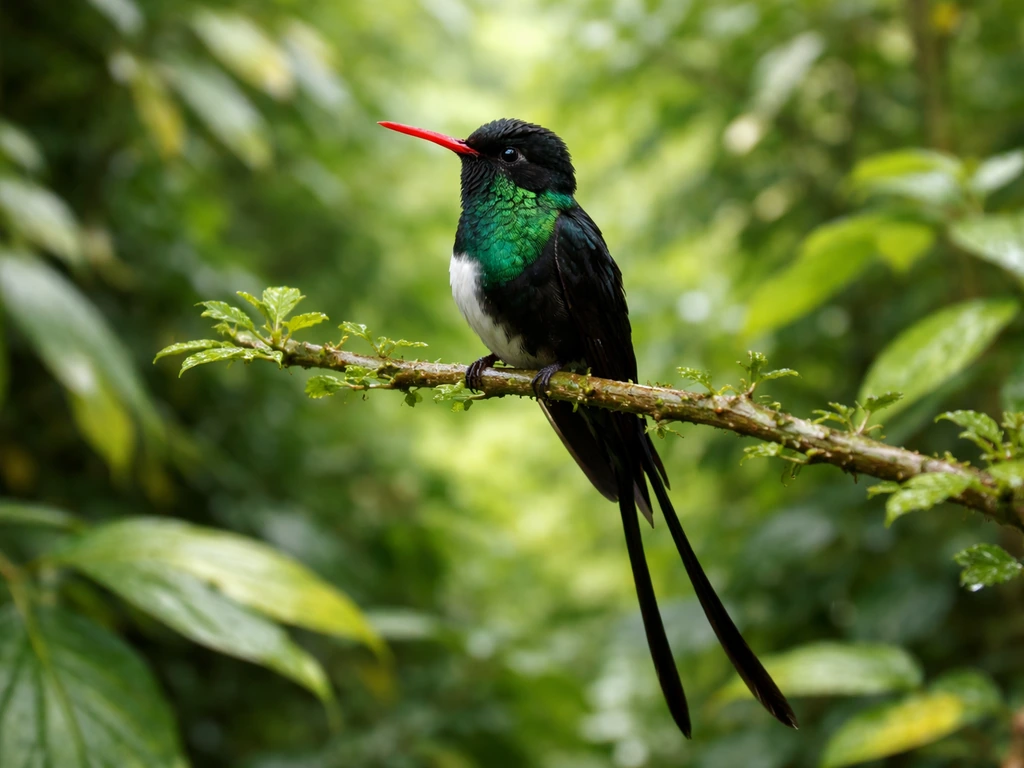
When someone searches 'jian bird meaning,' they're almost certainly asking about Jiān (鶼), a mythical bird from Chinese folklore that can only fly when paired with another of its kind. Each bird has one eye and one wing, so two must join together to see and fly. That image became one of the most enduring symbols of romantic love in East Asian culture, feeding into idioms, poetry, and everyday speech across China, Japan, and Korea for over two thousand years.
Jian Bird Meaning: What It Could Refer To and How to Tell

Marcus Whitmore
16 May 2026

"Jian bird" as a phrase vs. a specific bird species
The confusion here is understandable. 'Jian bird' looks like it could be the common name of a real species you might spot in a field guide, the way a 'jaybird' or a 'doctor bird' is an actual animal. It isn't. There is no bird on the IOC World Bird List called the Jian. Wikipedia's disambiguation page for 'Jian' specifically points to 'Jian (bird), a bird in Chinese mythology,' which tells you right away that we're in the realm of legend, not zoology. The jian is a creature of classical texts and folk tradition, closer in nature to a phoenix or a dragon than to a sparrow or a crane.
That said, the phrase 'jian bird' does refer to something very specific within mythology. It isn't vague hand-waving about 'some Chinese bird.' The jian has a defined form, a defined story, and a defined symbolic role, all of which have been stable across Chinese literature since at least the era of the Erya, one of the oldest Chinese encyclopedic dictionaries, which dates to roughly the 3rd century BCE.
What 'jian' actually means across languages
This is where search results can get messy, because 'jian' is a romanization (pinyin) that maps to dozens of different Chinese characters depending on the tone and the context. A few common ones worth knowing:
| Character | Pinyin | Basic meaning | Relevant to bird? |
|---|---|---|---|
| 鶼 | jiān (1st tone) | Mythical one-winged bird; the jian bird of Chinese mythology | Yes, this is the one |
| 建 | jiàn (4th tone) | To build, to establish | No |
| 箭 | jiàn (4th tone) | Arrow | No |
| 戋 | jiān (1st tone) | A small or minute quantity; a surname component | No |
The character you want is 鶼, pronounced with a first (flat) tone: jiān. Its traditional compound form 鶼鶼 (jiānjiān) refers specifically to the paired birds flying together. Some dictionaries translate 鶼 simply as 'phoenix' or 'fabulous mythical bird,' which is accurate in the sense that it belongs to the same legendary register as those creatures, but the jian has its own distinct story and symbolic logic that sets it apart from a phoenix.
In Japanese, the same character 鶼 is read as 'ken' (けん), and the compound 鶼鶼 becomes けんけん (kenken). Japanese reference sources like Kotobank list it as an alternate name for 比翼鳥 (hiyokudori), the 'side-by-side wing bird,' which is the Japanese rendering of the same mythological concept. So whether you encounter this bird in a Chinese text or a Japanese one, the underlying story is the same.
The mythology and symbolism behind the jian bird
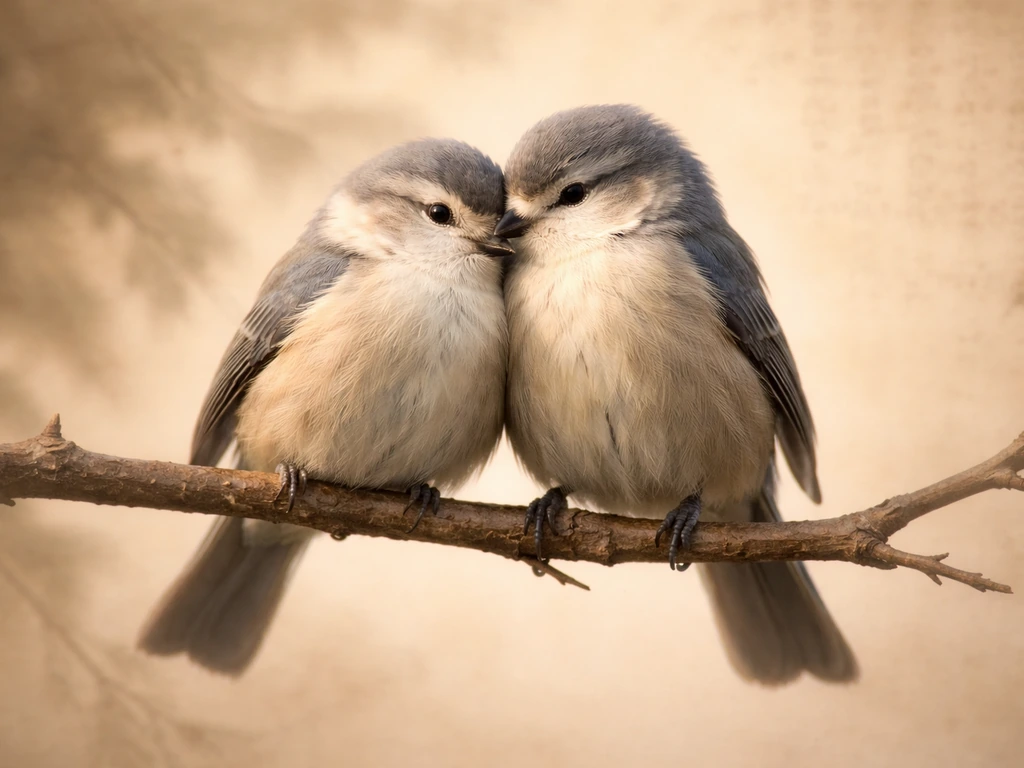
The classic description comes from the Erya: 'In the south there is a bird called the bǐyì (比翼), which cannot fly unless paired; it is called jiānjiān (鶼鶼).' The visual logic is elegant and a little heartbreaking. Each jian bird is born with only one eye and one wing. Alone, it is blind on one side and cannot lift off the ground. Only when two birds come together, pressing their bodies side by side, do they form a complete creature capable of sight and flight. This is not just a romantic image; it's a metaphor about interdependence, about two incomplete things becoming whole.
That imagery was irresistible to poets. The jian bird became the go-to symbol for devoted romantic partnership, especially between spouses. It carries connotations of loyalty, mutual reliance, and a love so deep that separation is literally impossible, not just emotionally painful. The bird doesn't choose to stay with its partner; it simply cannot function without them. Chinese culture found that image beautiful rather than sad.
What the jian bird is associated with
- Romantic love and marital devotion, particularly the ideal of an inseparable couple
- Interdependence and wholeness achieved through partnership
- The south (in classical geography, the jian is explicitly a southern bird)
- Legendary or mythical birds more broadly, alongside the phoenix and the fenghuang
- The concept of 永不分離, 'never to be separated,' which appears in later poetry and ceremonial language
Where the phrase shows up and how it's actually used

The most famous appearance of the jian bird in Chinese literature is in the poem 'Song of Everlasting Regret' (長恨歌, Cháng Hèn Gē) by the Tang dynasty poet Bai Juyi, which tells the tragic love story of Emperor Xuanzong and his consort Yang Guifei. The poem includes the oath: '在天願作比翼鳥,在地願為連理枝', 'In the sky, may we be birds flying wing to wing; on earth, may we be trees with intertwined branches.' This couplet has become something close to a cultural shorthand for romantic devotion in Chinese-speaking communities. If you've ever seen this quoted at a Chinese wedding or embroidered on a gift, the 比翼鳥 (bǐyìniǎo) being referenced is the jian bird, or at least its closely paired counterpart concept.
The four-character idiom 比翼連理 (bǐyì liánlǐ, 'paired wings and intertwined branches') is still used in modern Chinese and Japanese to describe a deeply bonded couple. In Japanese the term 比翼連理 (hiyoku renri) is recognized as a set phrase meaning the same thing. It appears in wedding speeches, love songs, and literary descriptions of long marriages. So when someone mentions a 'jian bird' or a 'biyiniao' in a sentimental context, they almost certainly mean this constellation of ideas: complete devotion, inseparability, two halves of one whole.
Outside of formal literature and ceremony, you'll also see jian bird imagery in Chinese fantasy and wuxia fiction, where the mythological bird sometimes appears as a spirit creature or a narrative symbol. It shows up in games and anime influenced by Chinese mythology, and occasionally in tattoo symbolism where someone wants an image of enduring love with East Asian cultural roots.
How to figure out which 'jian bird' someone means
Most of the time there's really only one 'jian bird' in play, the mythological 鶼 from Chinese tradition. But if you're unsure, here are the context clues to check:
- Is the source Chinese, Japanese, or Korean? All three cultures reference this bird, but through different romanizations and readings. Chinese sources say 'jian' or 'biyiniao'; Japanese sources say 'ken' or 'hiyokudori.' If you see any of those terms alongside the one you're researching, you're looking at the same mythology.
- Is it used in a romantic or wedding context? The jian bird is almost exclusively a love symbol. If the phrase appears near words like 'partner,' 'inseparable,' 'devotion,' or is quoted from a poem, it's almost certainly 鶼.
- Is Chinese script visible? If you can see the character 鶼 or 比翼鳥, that confirms it immediately. If the text is purely romanized English, check the surrounding words for tone markers (jiān with a flat tone) or companion terms like 'lianli' (連理).
- Is it in a fantasy or gaming context? Jian birds appear in Chinese-mythology-inspired games and fiction as mythical creatures. In those settings, the bird is still the same legendary animal, just placed in a fictional world.
- Does the source mention one eye and one wing? That physical description is unique to the jian bird and confirms you're reading about 鶼, not some other mythological bird.
If none of those clues narrow it down and the word 'jian' seems to be functioning as a modifier for a real bird species (like 'jian warbler' or 'jian finch'), it may simply be a transliterated part of a species' Chinese common name that hasn't been standardized in English. In that case, checking a birding database with the Chinese name or cross-referencing the pinyin with a character dictionary is the fastest way to confirm.
Bird phrases and terms people often mix up with 'jian bird'
A few related terms crop up in the same searches and can blur together if you're not familiar with the distinctions.
比翼鳥 (bǐyìniǎo) vs. 鶼鶼 (jiānjiān)
These are two names for essentially the same mythological concept. 比翼鳥 means 'side-by-side wing bird,' which is the descriptive title for the creature. 鶼鶼 is its proper name. Think of it like calling someone 'the one-armed man' versus calling them by their actual name. Most modern Chinese texts use 比翼鳥 because it's more immediately descriptive, while classical texts more often use 鶼鶼.
比翼連理 (bǐyì liánlǐ)
This is the four-character idiom that combines the bird (比翼鳥) with the image of intertwined tree branches (連理枝). The full phrase covers both the sky symbol and the earth symbol from Bai Juyi's famous couplet. When people use this idiom, they're invoking the jian bird indirectly, so it's worth knowing this is where the bird's symbolism lives in everyday language.
Fenghuang (鳳凰) and the phoenix
The fenghuang is sometimes translated as 'Chinese phoenix,' and like the jian bird it's a mythological bird associated with positive qualities and paired symbolism (the feng is male, the huang is female). People occasionally confuse the two because both appear in Chinese mythology and both can carry romantic or auspicious associations. The key difference: the fenghuang is a single composite bird symbolizing imperial virtue and cosmic harmony, while the jian is specifically about mutual dependence between two incomplete beings. Their symbolic registers are quite different.
Other 'bird meaning' phrases that come up nearby
If you've been browsing bird symbolism and meaning, you may have also come across entries like 'jay bird meaning,' 'j bird meaning,' or 'bill bird meaning,' which tend to deal with English slang, American idioms, or informal nicknames rather than mythological creatures. If you meant the English phrase “jay bird meaning,” that usually points to common slang rather than the Chinese mythological bird. The jian bird sits in a completely different category: it's a named mythological figure from classical Chinese literature with a documented history going back over two millennia. The jian bird sits in a completely different category: it's a named mythological figure from classical Chinese literature with a documented history going back over two millennia bird meaning. The cultural weight behind it is much more specific and sustained than the casual slang meanings behind most English 'bird' phrases.
Similarly, terms like 'drake bird meaning' or 'doctor bird meaning' refer to real animal species with their own folkloric associations. drake bird meaning and doctor bird meaning are other “bird meaning” phrases people compare, but they point to real animal species rather than a purely mythical pairing. Doctor bird meaning, by contrast, refers to real species with their own folkloric associations, not a classical paired-myth concept. You may also see terms like “drake bird meaning,” but those generally point to real-world bird species rather than a mythological pair-bird. The jian is unusual in that it has no real-world counterpart at all. It was always imaginary, which is precisely why it could be shaped so perfectly to fit a human emotional need.
FAQ
How can I tell if “jian bird” is the mythological one or a real species name?
In most cases, “jian bird meaning” is referring to the mythological paired-bird concept tied to 鶼鶼 (jiān) and the wedding-language phrase 比翼連理. If the source you’re looking at mentions “比翼鳥,” “hiyokudori,” or “side-by-side wings,” it is almost certainly the same jian idea, even if the wording varies between Chinese and Japanese.
Why does “jian” look ambiguous in search results, and how do I verify the exact character?
The spelling “jian” comes from pinyin, but it could map to different characters in different contexts. If you can find the original Chinese character (鶼, 鶼鶼, 比翼鳥, or 比翼連理) in the text, that confirms you’re in the correct category, because the jian bird concept is specifically the paired-bird myth tied to those characters.
What if a source translates 鶼 as “phoenix,” does that change the meaning?
If a page translates 鶼 as “phoenix” (or calls it a general “fabulous mythical bird”), it can be partially right in tone but misleading in detail. The jian bird’s defining feature is not phoenix-like symbolism, it is the structural premise of one eye and one wing per bird, requiring a pair to see and fly. Look for references to inseparability or “wing-to-wing” imagery to be sure.
Are 鶼鶼 and 比翼鳥 the same thing, or different myths?
The term 比翼鳥 (bǐyìniǎo, side-by-side wing bird) is usually a more “descriptive label,” while 鶼鶼 is closer to the “name” used in classical writing. Practically, if you see either term paired with romantic devotion, wedding imagery, or the sky versus earth pairing theme, you can treat them as pointing to the same mythic set.
How do I avoid confusing the jian bird with fenghuang (Chinese phoenix)?
People often mix up the jian bird with the fenghuang (Chinese phoenix), because both can appear in auspicious or romantic contexts. The key decision aid is this, fenghuang represents a yin-yang paired imperial symbol as a composite bird, while the jian is about two incomplete beings that literally cannot complete the form alone.
What if I saw “jian bird” in a game, anime, or tattoo, is it still based on the same myth?
If “jian bird” appears in a fantasy story or game, it might be an adaptation rather than a direct quotation from classical texts. The mythic core to check for is the pairing logic (two birds that together can fly), and the most common output is romantic symbolism, loyalty that cannot be separated, or “inseparable couple” visual motifs.
What should I look for if the result sounds birdwatching-related instead of romantic/literary?
A common edge case is when “jian” is part of a real bird name in English transliterations (for example, “jian warbler” style results). If the context talks about habitats, conservation status, migration, or birdwatching, then it is not the myth. The fastest fix is to search the Chinese character backing the name or check whether the text cites classical sources or couples imagery.
If someone mentions 比翼連理 instead of “jian bird,” what does it mean in practice?
The idiom 比翼連理 (bǐyì liánlǐ, paired wings and intertwined branches) is often used as the modern shorthand for the jian bird symbolism, even if “jian bird” is never mentioned. If a wedding speech includes sky/earth vows, intertwined branches, or “complete devotion,” it is effectively referencing the same cultural packet.
How does “jian bird meaning” show up in Japanese wording?
In Japanese contexts, the same character 鶼 is read as ケン (ken), and 鶼鶼 can appear as けんけん (kenken). More commonly in everyday references, you may encounter the term 比翼鳥 (hiyokudori) or 比翼連理 (hiyoku renri), which map directly to the same paired-bird meaning.
Next Article
Doctor Bird Meaning: Origins, Symbolism, and Which Bird
Meaning of doctor bird nickname: origins, symbolism, and how to identify which bird species it refers to.