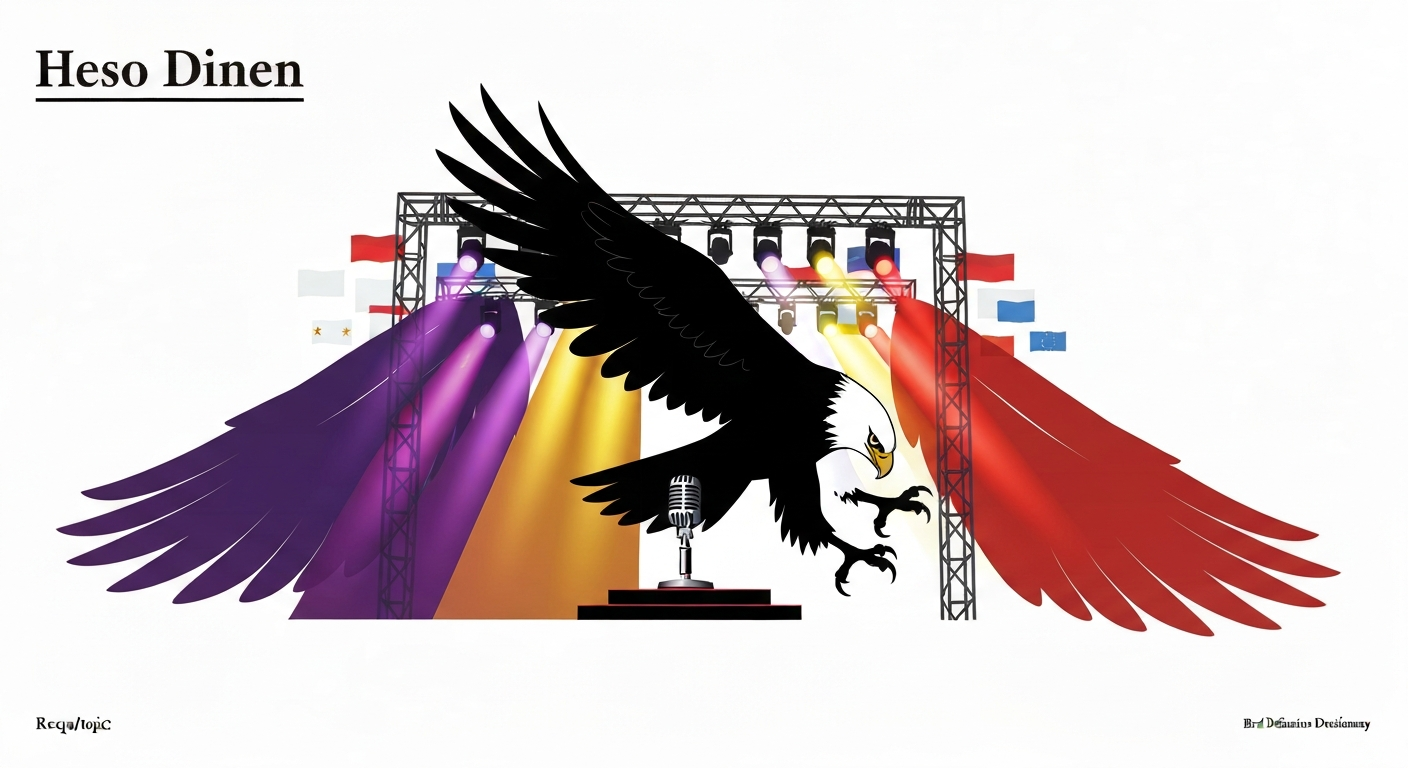
Suggested title: A Bird of Prey Idiom Meaning: What It Really Means and How to Use It
A Bird of Prey Idiom Meaning: Literal and Figurative Use

Marcus Whitmore
13 Aug 2026

Meta description: Learn what the idiom 'a bird of prey' means beyond its literal definition, including figurative uses, synonyms, grammar tips, and cultural context.
Quick summary: When used as an idiom, 'a bird of prey' describes a person who is predatory, opportunistic, or ruthlessly powerful, hunting for advantage the way a raptor hunts for food.
When someone calls another person 'a bird of prey,' they are not talking about ornithology. They mean that person is predatory, calculating, and likely circling an opportunity or a target. It is a sharp, slightly ominous image that English speakers have been reaching for since the Middle Ages, and it still lands with force today.
What a bird of prey actually is (the literal meaning)
A bird of prey, in its straightforward dictionary sense, is any bird that hunts and kills other animals for food. For a focused explanation, see predatory bird meaning. Cambridge, Merriam-Webster, and the Oxford Advanced Learner's Dictionary all agree on this core definition. The category covers eagles, hawks, falcons, owls, kites, harriers, ospreys, and vultures. What they share is a set of physical adaptations: sharp talons for seizing prey, hooked beaks for tearing flesh, and keen eyesight that lets them locate targets from remarkable distances.
In scientific and ornithological writing, the preferred term is increasingly 'raptor,' from the Latin rapere meaning 'to seize.' The Journal of Raptor Research has even published commentary on why specialists lean toward 'raptor' over 'bird of prey,' which they treat as slightly looser, more public-facing language. That said, 'bird of prey' remains the dominant term in general English writing and everyday speech. Both terms are correct, but they carry slightly different registers, a distinction that matters when we get to figurative uses.
The standard plural is 'birds of prey,' not 'bird of preys.' Cambridge lists this plural form explicitly, and it is worth flagging because learners sometimes treat 'prey' as the pluralised element by mistake.
The idiomatic meaning: predatory, opportunistic, powerful
Used figuratively, 'a bird of prey' describes a person (occasionally an institution or group) that operates with predatory intent. The phrase carries three overlapping senses that writers and speakers tend to blend depending on context.
- Predatory: the person actively hunts others for personal gain, whether financially, socially, or emotionally. This is the most common figurative application.
- Opportunistic: the person waits, watches, and swoops when the moment is right, like a hawk reading thermals before diving. The emphasis here is on patience combined with sudden decisive action.
- Powerfully dominant: sometimes the idiom carries admiration rather than condemnation, acknowledging someone who is simply formidable, competitive, and hard to outmanoeuvre.
The pejorative edge tends to dominate in modern usage. A sentence like 'She was a bird of prey, scanning the room for weakness' (an example documented in corpus research drawing on the Corpus of Contemporary American English) leaves little doubt about the negative framing. But context can soften or even flip the valuation. Describing a CEO or a chess champion as a 'bird of prey in the boardroom' can read as grudging respect rather than outright criticism. The key is tone and surrounding language.
Wiktionary, summarising figurative senses recorded in the OED tradition, notes that 'bird of prey' has historically been applied to a rapacious person, a sharper, or an official who pounces on others, all images rooted in that same predator-and-prey dynamic. The OED figurative sense is not a recent coinage. It has been in the language for centuries.
Literal vs. idiomatic: a quick comparison
| Feature | Literal meaning | Idiomatic meaning |
|---|---|---|
| Subject | A real bird (eagle, hawk, falcon, owl, etc.) | A person, group, or institution |
| Core idea | Hunts and kills animals for food | Pursues others for gain or advantage |
| Tone | Neutral, descriptive, scientific | Usually negative (predatory, ruthless); occasionally admiring |
| Register | General English and ornithology | Literary, figurative, informal to formal writing |
| Common adjectives used with it | Large, powerful, migratory, nocturnal | Bloodthirsty, rapacious, calculating, opportunistic |
| Typical verbs paired with it | Soar, nest, hunt, migrate | Swoop, circle, pounce, prey on |
| Plural form | Birds of prey | Birds of prey |
Where the phrase came from
The phrase has deep roots. Dictionary.com and the Century Dictionary both cite Middle English attestations of the term dating to around the 14th century. Chaucer and other medieval authors used forms like 'foules of ravyne' (birds of ravine or plunder), and falconry culture, which was central to medieval aristocratic life, kept the vocabulary of raptors constantly in circulation. See Chaucer's Works (ed. Skeat), notes citing 'birds of prey' (medieval usage) for examples of 'foules of ravyne' and other Middle English attestations of the term Chaucer's Works (ed. Skeat) — notes citing 'birds of prey' (medieval usage). You could not grow up in a castle and be ignorant of the difference between a falcon and a goshawk.
The scholarly etymology goes further back still. The Modern English phrase descends from Medieval Latin avis praedae (literally 'bird of prey'), and etymological work on related words, including osprey, traces the same Latin root. Raptor, the specialist synonym, shares its origin with words like rapacious, rapine, and even the legal term 'rape' in its older sense of violent seizure. All of these trace back to Latin rapere, to seize or snatch, which is exactly what a hawk does with its talons. Etymonline confirms that 'raptorial' vocabulary developed from this root to describe the whole predatory-seizure cluster of meanings.
From medieval falconry manuals to 19th-century novels, the image never really left literary English. Dickens uses predatory bird imagery to colour villainous characters, and the figurative tradition runs through Joyce and into contemporary fiction. The Cambridge Companion to Nietzsche even draws on bird-of-prey imagery to illuminate certain philosophical arguments about power and domination, which gives you a sense of how widely the metaphor has travelled across genres and centuries.
Symbolism across cultures
The bird of prey is one of the most consistent symbols of power across human cultures, and that cultural weight feeds directly into why the idiom still carries such force. In classical antiquity, the eagle was the bird of Zeus and Jupiter, a divine attribute of sky gods and imperial authority. The Oxford Classical Dictionary documents how birds of prey functioned as omens and sacred animals in Greek and Roman religious practice. Spotting an eagle on your right before battle was a good sign; one circling left was not.
In ancient Egypt, the falcon-headed god Horus embodied royal power and divine protection. Across Indigenous cultures of the Americas, hawks and eagles appear as messengers and spiritual guardians. In Norse mythology, Odin kept two ravens (themselves classified as corvids rather than raptors, but deeply predatory in symbolism) and was associated with eagle imagery. The through-line is remarkably consistent: birds that hunt from the sky represent elevated, often terrifying power, precisely the qualities the idiom borrows.
This cross-cultural symbolic weight is worth bearing in mind when you encounter 'bird of prey' in song titles, poetry, or brand names. The choice is rarely arbitrary. If a song, a Eurovision act, or even a venue name reaches for this phrase, they are almost certainly borrowing the same bundle of associations: power, predation, freedom, and a certain dangerous grace. The song and Eurovision uses of the phrase, which have their own specific interpretive contexts, are interesting examples of how a classical idiom gets repurposed in modern popular culture. For a specific modern example, see discussions of the bird of prey Eurovision meaning, where the phrase is used in a contest setting to highlight themes of power, predation, and dramatic staging. See our short guide on bird of prey ziferblat meaning for a case study of how venues and brands use the phrase. For interpretations specific to music, see bird of prey song meaning to explore how songwriters use the phrase.
Synonyms and related phrases
If you are writing, translating, or just looking for variety, there are several terms that overlap with 'bird of prey' in both literal and figurative use.
- Raptor: the scientific and specialist synonym for a bird of prey. In figurative use, 'raptor' tends to feel more technical and less common in everyday metaphor, but it is gaining ground in popular culture.
- Predatory bird: the most direct descriptive alternative. As a figurative phrase, 'predatory bird' is slightly more clinical than the idiom and less idiomatic in feel. This site has a dedicated entry on predatory bird meaning if you want to explore the distinctions.
- Rapacious: the adjective most closely tied to the figurative sense of 'bird of prey.' From the same Latin root, it means given to seizing by force, greedy, and voracious. Used freely for people, corporations, and policies.
- Predator: the broader, non-avian synonym for someone who preys on others.
- Vulture: a more specific bird-based idiom for someone who circles and waits to profit from another's downfall. Slightly different shade of meaning from 'bird of prey,' which implies active hunting rather than scavenging.
- Hawk: both a literal raptor and a common metaphor for an aggressive, bellicose person or policy stance (as in 'hawk versus dove' in political discourse).
- Eagle-eyed: not quite synonymous, but draws on the same raptor imagery to describe sharp, penetrating observation.
Grammar and usage: how the phrase works in a sentence
Part of speech and basic construction
'Bird of prey' functions as a noun phrase. The head noun is 'bird,' and 'of prey' is a postmodifying prepositional phrase specifying the type of bird. In idiomatic use, the whole phrase operates as a predicative noun or attributive noun phrase, typically referring to a person. Common constructions include:
- Predicative: 'She is a bird of prey' or 'He was a bird of prey in the financial world.'
- Attributive (rare but possible): 'that bird-of-prey instinct for weakness' (hyphenated when used as a compound modifier before a noun).
- With 'like': 'He moved like a bird of prey, patient and then sudden.'
- Plural for groups: 'The firm's partners were birds of prey, each waiting for the other to show vulnerability.'
Collocations worth knowing
Corpus research into 'of-binominals' (noun phrases with the 'X of Y' structure) shows that 'bird of prey' collocates naturally with evaluative adjectives like bloodthirsty, rapacious, and calculating, and with verbs like swoop, circle, stoop (a technical falconry term for a rapid dive that has crossed into general figurative use), pounce, and prey on. Noun valency / of‑binominal research (examples & collocation patterns) documents these collocational patterns, premodifiers like bloodthirsty, rapacious, predatory and verbs such as prey on, swoop, stoop, appearing with 'bird of prey' in corpus instances. These collocates are not accidental. They map the full predatory lifecycle onto human behaviour and give the idiom its texture.
Register and tone for writers and translators
In general English writing, 'bird of prey' reads as neutral to slightly elevated. It is not slang and not highly academic. This makes it versatile: it works in journalism, literary fiction, informal essays, and even business writing where a pointed metaphor is useful. The figurative sense edges toward negative or at minimum powerful, so use it carefully in contexts where you want to compliment someone without the predatory overtone.
For translators, the phrase presents an interesting challenge. Many European languages have a direct cognate (for example, French oiseau de proie, Spanish ave de presa or ave rapaz, German Raubvogel). The literal senses translate cleanly, but the figurative register may land differently. In French, rapace is a strong pejorative for a greedy or predatory person and translates the idiom's figurative edge precisely. In some languages the equivalent phrasing is less established as a set idiom, and translators may need to unpack it into a descriptive phrase rather than reach for a single equivalent. The Cambridge Dictionary's treatment of rapace and rapacious across languages is a useful resource when navigating these choices.
Quick example sentences
- Literal: 'The osprey is a bird of prey that dives feet-first into water to catch fish, unlike most raptors.'
- Figurative (negative): 'The landlord was a bird of prey, swooping on tenants the moment they fell behind on rent.'
- Figurative (neutral to admiring): 'In the negotiating room, she was a bird of prey, precise, patient, and impossible to mislead.'
- Attributive compound modifier: 'He had a bird-of-prey focus that made everyone in the meeting slightly uncomfortable.'
- Plural figurative: 'The hedge fund managers circled the failing company like birds of prey.'
FAQ
What is the idiom "a bird of prey" meaning?
"A bird of prey" idiom meaning: figuratively, it describes a person or entity that is predatory, opportunistic, or powerful—someone who seizes advantage or 'preys' on others. The literal meaning is a raptor species (e.g., eagles, hawks, falcons, owls) that hunts and kills other animals for food. Dictionaries (Cambridge, Oxford, Merriam‑Webster) record both literal and figurative senses.
How can I clearly contrast the literal and idiomatic meanings? (include a small comparison)
Literal vs idiomatic - Literal: a bird that hunts animals for food (e.g., eagle, hawk). Used in biology, birdwatching, and natural history. - Idiomatic: a person or organization that is predatory, rapacious, or seizes opportunities, often with negative connotations. Use: writers and translators should note register—'bird of prey' is neutral and common in general English; in scientific contexts, 'raptor' is the preferred technical term.
What are common synonyms and near‑synonyms I can use for the idiom?
Synonyms and near‑synonyms for the idiomatic sense: - predatory (adj.) - rapacious / rapacious person - raptor (noun, more technical) - predator / predatory bird (figuratively) - opportunist (when emphasis is on taking advantage) Choose based on register: 'raptor' suits technical ornithology; 'predatory' or 'rapacious' are common in social or moral descriptions.
How is the idiom used grammatically, and what are good example sentences?
Grammar and example usage: - Count noun: "a bird of prey" (singular) / "birds of prey" (plural). - Common patterns: "be a bird of prey" (She was a bird of prey), "like a bird of prey" (He watched like a bird of prey), verbs: 'prey on', 'swoop', 'pounce on'. Example sentences: - Literal: "The park guide showed us a bird of prey circling above the marsh." - Idiomatic (pejorative): "As a negotiator he was a bird of prey, always ready to exploit a weakness." - Neutral idiomatic: "Investors worried that the company might be a bird of prey in takeover talks." When translating, match connotation (neutral vs negative) carefully.
What is the likely origin and etymology of the phrase?
Etymology and history: - The phrase descends from medieval Latin calques such as avis prede / avispreda (literally 'bird of prey'), with attestations in Middle English from around the 14th century. - Related Latin root 'rapere' (to seize) underlies English raptor/raptorial vocabulary. - Historical usage: falconry, medieval natural histories, and literature used the literal term early on; figurative applications (to describe rapacious persons) appear in lexicographic records and literary texts over centuries. Cite OED, Oxford/Cambridge/Merriam‑Webster entries and medieval sources for specifics.
What are symbolic and cross‑cultural associations of birds of prey?
Symbolic and cultural notes: - Classical Europe: eagles and other raptors connected with power, divinity (e.g., attributes of Zeus/Jupiter) and warfare. - General symbolism: strength, speed, vision, dominance, and also rapacity or predation in negative contexts. - Cross‑cultural variation: meanings differ by culture and species; some societies revere certain raptors, others emphasize their danger or association with death. Use authoritative classical and cultural sources when making specific cultural claims.
Next Article
Bird of Prey Eurovision Meaning: Literal, Idiom & Staging Guide
Discover what “bird of prey” means in Eurovision: literal raptors, lyric metaphors, staging and how to interpret them.