
If you searched 'bird of prey ziferblat meaning,' there is a very good chance you came across the Ukrainian art-rock band Ziferblat, who represented Ukraine at Eurovision 2025 with a song called 'Bird of Pray. ' That title is intentional wordplay, swapping 'prey' for 'pray,' and a lot of the confusion around this search stems from people seeing the two spellings mixed up in coverage of the song.
Bird of Prey Ziferblat Meaning Explained and How to Confirm

Marcus Whitmore
14 Jun 2026
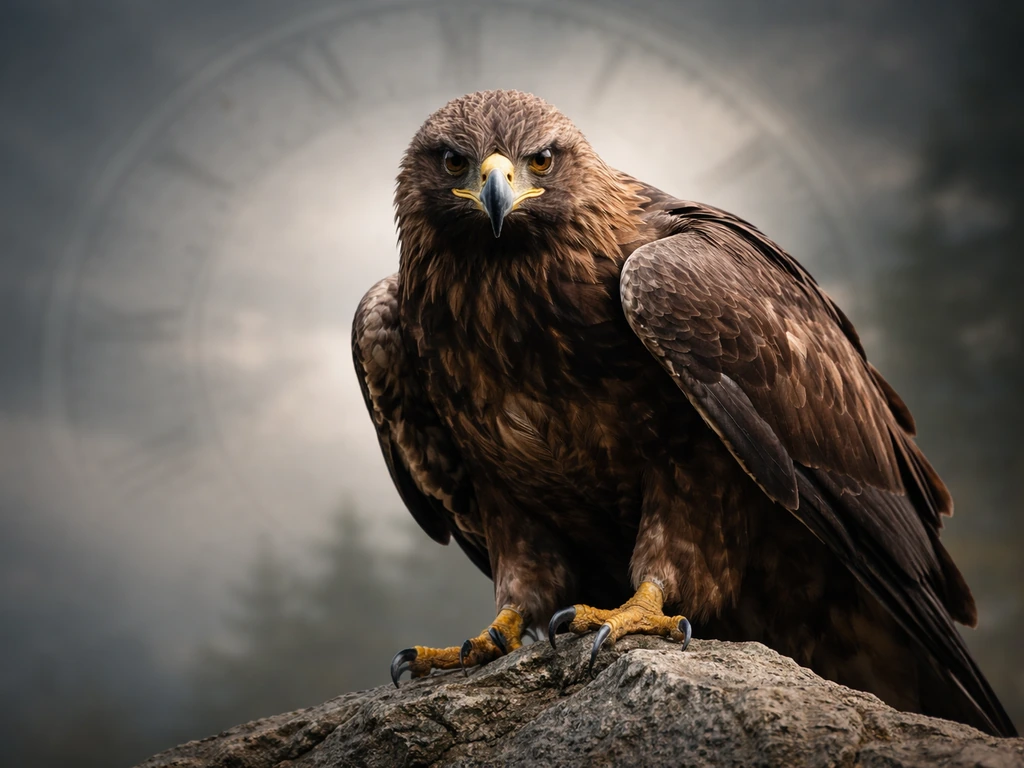
So the short version: Ziferblat is a band name, the song is 'Bird of Pray,' and the meaning layers together the predatory symbolism of a bird of prey with the act of prayer or supplication. But there is more to unpack depending on exactly where you saw the phrase, so let's walk through all of it.
What 'Ziferblat' Actually Is

Ziferblat is a Ukrainian art-rock band, and the word itself comes from the German 'Zifferblatt,' which means 'clock face' or 'dial.' That word passed into Russian as a loanword and then into Ukrainian usage, and the band adopted the Romanized spelling 'Ziferblat.' So right away you have a name that carries a quiet layer of meaning: a clock face, measuring time, marking moments. It is the kind of poetic band name that works in multiple languages at once.
There is also an unrelated London project called Ziferblat, an anti-café concept that uses the same etymology, where you pay for time rather than drinks. If you encountered 'Ziferblat' in a context involving clocks, timekeeping, or café culture rather than music, that could be the reference. But in 2025 and 2026, the vast majority of people searching this phrase are finding it in the context of Eurovision, where Ziferblat the band made a significant impression. Check the context where you first saw the word and that will tell you which version you are dealing with.
What 'Bird of Prey' Means in Language and Symbolism
As a literal term, a bird of prey is any carnivorous bird that hunts and feeds on other animals, essentially what biologists call a raptor. If you are looking for the bird of prey meaning on its own, it typically refers to predatory symbolism as well as the literal raptor definition. That group includes blank" rel="noopener noreferrer">hawks, eagles, falcons, kites, harriers, vultures, and owls. Merriam-Webster defines it as a carnivorous bird that feeds chiefly on meat taken by hunting, and Britannica extends that to any bird that pursues other animals for food. So the literal meaning is clean and straightforward: a predator with wings.
Metaphorically, 'bird of prey' has been used in English for centuries to describe a person or force that is predatory, opportunistic, and ruthless. You might see it in a sentence like 'she watched the room like a bird of prey, waiting for her moment.' It carries connotations of sharp attention, patience before a strike, dominance, and a certain cold efficiency. Collins Dictionary example sentences use it in exactly that vivid, threatening register. The phrase sits in the same family as other predator metaphors in English, like 'shark' or 'wolf,' but with the added implication of height, distance, and aerial vision, seeing everything from above before diving in.
Unpacking 'Ziferblat Bird of Prey': Three Ways to Read It

Because 'Ziferblat' is not a common English word, when you see it next to 'bird of prey,' there are three plausible readings, and knowing which one applies depends on where you found the phrase.
- The Eurovision / music context: Ziferblat the band released 'Bird of Pray' (with a 'y') for Eurovision 2025. Much of the online coverage either misspells or alternates between 'pray' and 'prey,' which is why the search term surfaces. In this case, the title is deliberate wordplay, and the meaning of the song blends the predator image of a bird of prey with spiritual imagery of prayer.
- The clock face / etymological reading: If someone is using 'Ziferblat' as a synonym for 'clock face' and pairing it with 'bird of prey,' it could be a poetic or metaphorical label, something like 'the predator that watches time,' though this reading is rare and would only appear in very specific creative contexts.
- A spelling or translation artifact: Sometimes 'Ziferblat' appears as a mistranslation or Romanization quirk when people copy text from Ukrainian or German sources. If you found it in a translated article or social media post, the author may simply be using the band name without explaining it, and 'bird of prey' is either the song title (misspelled) or a description of the band's aesthetic.
The most likely scenario by far is the Eurovision one. Ziferblat's 'Bird of Pray' generated a lot of international coverage, and the prey/pray distinction got blurred constantly in English-language reporting. If you are trying to understand what the song is about, the wordplay is central to its meaning: it invites you to sit with both words at once, the predator and the supplicant.
What Birds of Prey Symbolize Across Cultures
Birds of prey carry dense symbolic weight across nearly every culture that has existed in close proximity to them, which is most of human civilization. Here is how those meanings cluster across different traditions.
Ancient Rome and Greece: Power and Imperial Authority
For the Romans, the eagle was the apex symbol of imperial power. Roman legions carried eagle standards into battle, and the bird's flight was read by augurs as divine messaging. Seeing an eagle overhead could mean victory or divine approval; a vulture circling was a different omen entirely. The eagle's association with Jupiter made it both a military emblem and a religious one, which is why it has been borrowed by so many empires and nations since.
Indigenous North American Traditions: Sacred Messengers
In many Indigenous nations across North America, eagle feathers are considered deeply sacred, used in ceremonies as symbols of strength, protection, and connection to the Creator. It is worth noting that the specific meaning varies significantly by nation and tradition, so 'eagle means X in Native culture' is an oversimplification that erases enormous diversity. What is consistent across many traditions is the idea that these birds exist at the intersection of the earthly and the spiritual, closer to the sky and therefore closer to whatever is above it.
Egyptian and Middle Eastern Traditions: Vision and Divinity
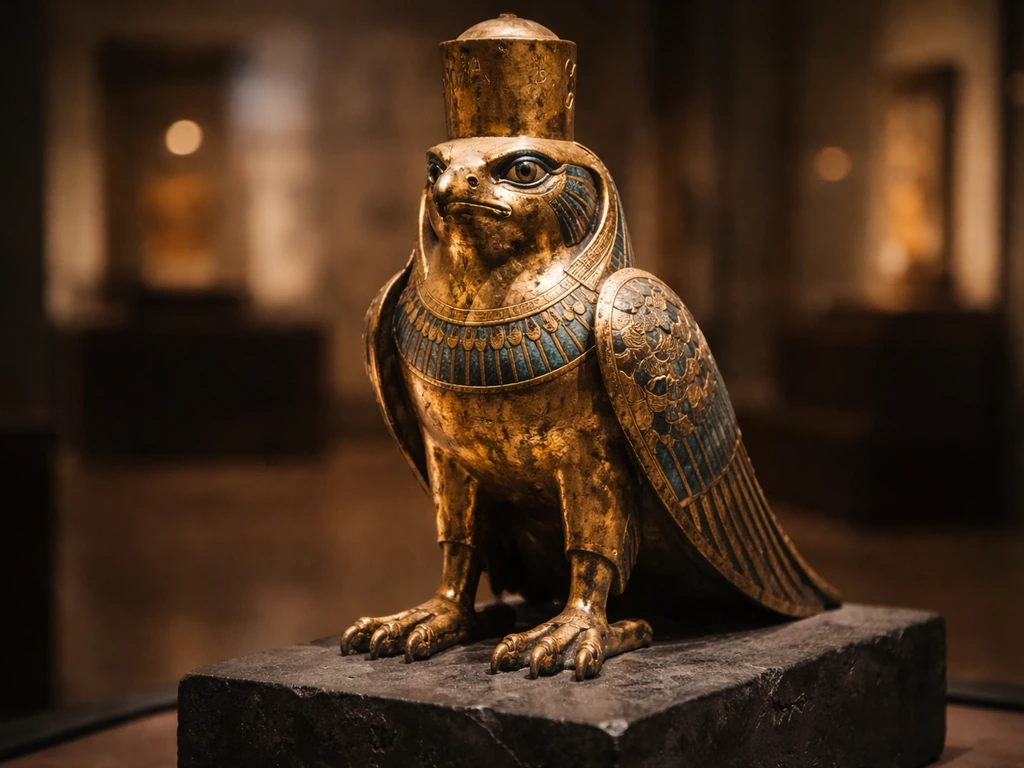
The falcon was central to ancient Egyptian religion, most famously as the form of Horus, the sky god whose eyes were the sun and the moon. A bird of prey seeing everything from a great height made the falcon a natural symbol of divine oversight and royal authority. The pharaoh was often depicted with falcon imagery, reinforcing the idea that the ruler sees and knows all.
Medieval Europe and Heraldry: Nobility and the Hunt
Falconry was not just a sport in medieval Europe; it was a social language. The species of bird you flew announced your rank. Eagles and gerfalcons were for emperors and kings; peregrines for earls; sparrowhawks for priests and holy men. Birds of prey in heraldry carried ideas of nobility, martial skill, and vigilance. That association between raptors and high social status has lingered into modern symbolism, which is partly why eagles still appear on national flags and state seals.
| Culture / Tradition | Primary Symbolic Meaning | Key Bird |
|---|---|---|
| Ancient Rome | Imperial power, divine favor, military victory | Eagle |
| Ancient Egypt | Divine vision, royal authority, sky deity | Falcon (Horus) |
| Medieval Europe | Nobility, rank, martial vigilance | Falcon, Eagle |
| Indigenous North America (varies by nation) | Sacred messenger, spiritual strength, connection to Creator | Eagle |
| Modern Western usage | Predatory ambition, dominance, opportunistic intelligence | Eagle, Hawk |
Using 'Bird of Prey' in Stories, Metaphors, and Everyday Language
If you want to use 'bird of prey' as a metaphor in writing or speech, its power comes from that combination of patience, precision, and sudden violence. A character described as having 'the eyes of a bird of prey' is someone who misses nothing and strikes when the moment is right. It is a more elegant phrase than simply calling someone predatory because it carries that aerial perspective, the idea that this person sees the whole landscape before choosing their target.
In storytelling, birds of prey work well as symbolic companions or totems for characters who are hunters in some sense, whether literal, political, or emotional. A detective, a lawyer, a chess player, a survivalist: all of them can carry bird-of-prey symbolism without it feeling clichéd, as long as you choose the right species. A hawk suggests speed and instinct. An eagle suggests power and majesty. A falcon suggests precision and training. An owl (often classified separately from diurnal raptors but still a bird of prey) suggests wisdom operating in the dark.
In everyday English, the phrase tends to come up in descriptions of intense focus or predatory behavior. If you are specifically asking what predatory bird meaning is in symbolism and everyday language, that usage often points to dominance and sharp, tactical attention predatory behavior. 'He watched the negotiation like a bird of prey' or 'she had the patience of a raptor, circling until the deal was hers.
' Those usages are idiomatic but not fixed expressions, so they carry the full weight of the metaphor rather than being frozen phrases like 'early bird gets the worm. ' If you are interested in how bird idioms function more broadly as fixed expressions in English, that is a separate but related thread worth exploring. The expression “a bird of prey” idiom meaning is also often used to describe someone predatory, opportunistic, and ruthless bird idioms.
How to Figure Out Exactly What You Are Looking At
If you still are not sure which 'Ziferblat bird of prey' meaning applies to your situation, here are the fastest ways to confirm it.
- Check the spelling: is it 'Bird of Pray' or 'Bird of Prey'? If it says 'pray,' you are almost certainly looking at the Ziferblat Eurovision song, and the meaning is built around that intentional wordplay between predation and prayer.
- Check the context: is Eurovision, Ukraine, or 2025 mentioned anywhere nearby? That locks in the band interpretation.
- Look for the word 'Zifferblatt' (double f, double t): if the spelling is the full German version, the reference is most likely to the etymological meaning of 'clock face,' either the anti-café brand or a linguistic discussion.
- Search 'Ziferblat band' directly: their Eurovision entry is well documented and you will find the song and its meaning explained quickly.
- If none of those fit: consider whether 'ziferblat' might be a transliteration artifact or a proper noun from a specific book, game, or film. Run the exact phrase through a search with the source medium included (e.g., 'ziferblat bird of prey novel' or 'ziferblat bird of prey game').
- To verify the bird-of-prey symbolism layer: decide whether the context is literal (actual raptors being discussed) or metaphorical (a character, situation, or force being described using predator imagery). That distinction determines which of the cultural symbolism threads above is most relevant.
The prey/pray distinction in Ziferblat's song title is genuinely interesting because it collapses two opposite postures into one image: the predator and the one who prays are usually on very different ends of a power dynamic. If you are trying to pin down the bird of prey song meaning, that double image is the key clue to the track’s theme prey/pray distinction. That tension is probably intentional, and it connects to how birds of prey have always held that double symbolic role across cultures, both the instrument of divine power and the embodiment of worldly dominance. Whichever interpretation led you here, that layered quality is what makes the phrase worth looking up in the first place.
FAQ
When people search “bird of prey ziferblat meaning,” are they usually mixing up “Bird of Pray” with the phrase “bird of prey” itself?
Yes, it is common to conflate them. The band name is Ziferblat, and the Eurovision song title is “Bird of Pray,” so the “bird of prey” phrase is mainly showing up as the predatory half of the intended wordplay rather than as the official title.
How can I tell quickly whether “Ziferblat” refers to the band or the London anti-café concept?
Look for context words. If you see Eurovision, Ukraine, art-rock, or a song title, it is the band. If you see pay-for-time, café, anti-café, or clock-like time budgeting, it is the London concept, even though the spelling and name origin overlap.
Is the “bird of prey” meaning purely negative, or can it be positive too in symbolism?
It can lean negative, but it is not always purely so. In many traditional readings, the “bird of prey” link includes protection, divine oversight, and vigilance, not just ruthlessness, so tone depends on the specific culture and the species being referenced.
Does “bird of prey” automatically mean “raptor” in everyday usage, or is it mostly metaphorical?
In everyday speech it is often metaphorical, used for intense focus or predatory behavior. The literal “raptor” sense is most likely when the context mentions biology, hunting, or specific bird types like hawks and falcons.
If I’m writing, should I specify a species (hawk, eagle, falcon, owl) or keep it general as “bird of prey”?
Specify when you want to control the emotional implication. “Falcon” tends to feel trained and precise, “eagle” feels majestic and commanding, “hawk” feels fast and instinctive, and “owl” often signals wisdom. If you keep it general, the reader may default to the broad “watchful predator” vibe.
What is the most common mistake people make when interpreting “Bird of Pray” versus “Bird of prey”?
People usually assume one spelling is the error and the other is the “real” meaning. In practice, the title’s point is the deliberate clash of predator imagery and prayer imagery, so the interpretation should hold both angles at once rather than choosing only one.
Can “bird of prey” be used for someone who is strategic but not cruel?
Yes. The phrase often signals patience and calculating timing, so you can frame it as strategic awareness rather than malice. Pairing it with words like “careful,” “measured,” or “methodical” can steer the connotation toward skill instead of cruelty.
Is “bird of prey” ever used as an idiom in a fixed way, like “early bird gets the worm”?
Not as a fully fixed idiom. It is more like a flexible metaphor that works inside sentences to describe attention, dominance, or timing, so readers interpret it from the surrounding wording rather than expecting a standard punchline.
Next Article
War Bird Meaning: Literal, Slang, and Historical Uses
Understand war bird meaning: literal, slang metaphor for fighters, and historical bird symbolism, plus close phrase comp