
In military slang, 'Freedom Bird' almost always means the aircraft that carried a service member home at the end of a combat tour or overseas deployment. For Vietnam War veterans especially, it referred to the commercial airliners contracted by the U. S. Air Force Military Airlift Command to fly troops back to the States after their tours ended.
What Does Freedom Bird Mean in the Military?

Marcus Whitmore
6 Jul 2026
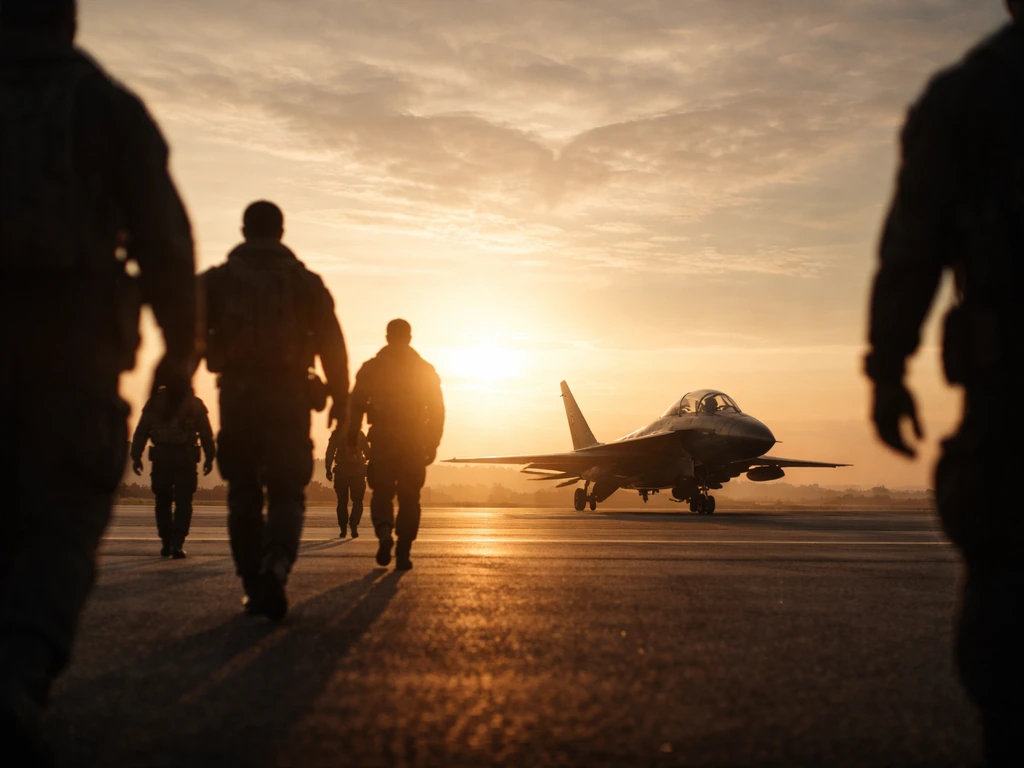
That's the core meaning. But depending on era and context, 'Freedom Bird' can also be the informal name for a specific Department of Defense contracted charter program (now called the Patriot Express), a unit nickname, a patch tradition, or just a metaphor for the feeling of being released from a long, hard assignment. Knowing which one someone means usually comes down to a few contextual clues, which this guide walks through.
What 'Freedom Bird' means as military slang
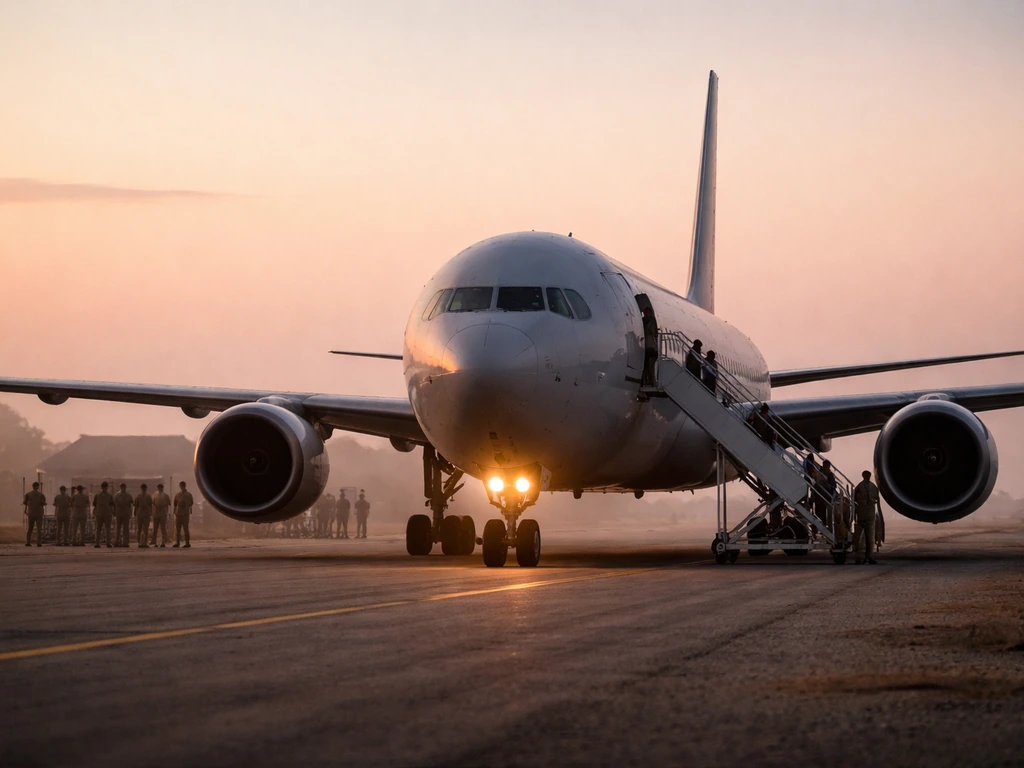
The most documented and widely recognized use of 'Freedom Bird' in U.S. military culture describes any airplane carrying soldiers home at the end of a combat tour or after being severely wounded. Vietnam War slang dictionaries define it exactly that way, and the routing tells you everything: Vietnam to Japan or a Pacific island, then Hawaii, then the U.S. West Coast. That flight, on a contracted commercial airliner, was the Freedom Bird. The Library of Congress has collected oral histories where veterans use the phrase directly. The SFO Museum has dedicated exhibits to it, explicitly framing these flights as culturally significant for the Vietnam generation.
The emotional weight of the phrase is the whole point. 'To return to the world' was the accompanying idea: you were leaving a combat zone and returning to ordinary civilian life. The Freedom Bird was the physical vessel that made that transition. It wasn't a military aircraft in most cases; these were regular commercial jets, which made the experience all the stranger and more meaningful. Troops would sometimes cheer the moment the wheels lifted off Vietnamese soil. That's the tradition the phrase carries.
The term has also been used more broadly for any contract flight returning military members from an overseas assignment, not just Vietnam combat tours. Forum discussions and travel guides for active-duty personnel show the phrase being applied to any rotation home after a deployment of roughly one to three years, regardless of branch or theater.
Is it a named program, aircraft, call sign, or patch?
Here's where it gets specific: 'Freedom Bird' was actually used as a semi-official program name before it was retired. Official USAF and DoD documents, including a 15th Wing brochure and TRADOC-distributed PDFs, explicitly state that the Patriot Express was 'formerly known as Freedom Bird, Rotator, or Cat B.' That makes 'Freedom Bird' a real named program designation, not just colorful slang, at least during its active period. So if someone uses the phrase in a PCS travel or Space-A context, they may literally be referring to what is now called the Patriot Express, the DoD contracted commercial charter mission run through Air Mobility Command (AMC).
As for aircraft, unit patches, and call signs: 'Freedom Bird' appears in those contexts too, but less consistently. Unit history books for aircraft like the AC-119 Gunship mention 'freedom bird flights' as a category alongside R&R and Patriot Express flights, suggesting it was part of official unit documentation language. A DC-10 aircraft was actually named 'Freedom Bird' and appears on a Wikipedia disambiguation page. So yes, specific aircraft have been given the name as a proper noun at various points. If you're seeing 'Freedom Bird' on a patch or in a call sign, it is worth checking whether it refers to the program, a specific airframe, or a unit tradition.
Where and when you'll actually hear this phrase
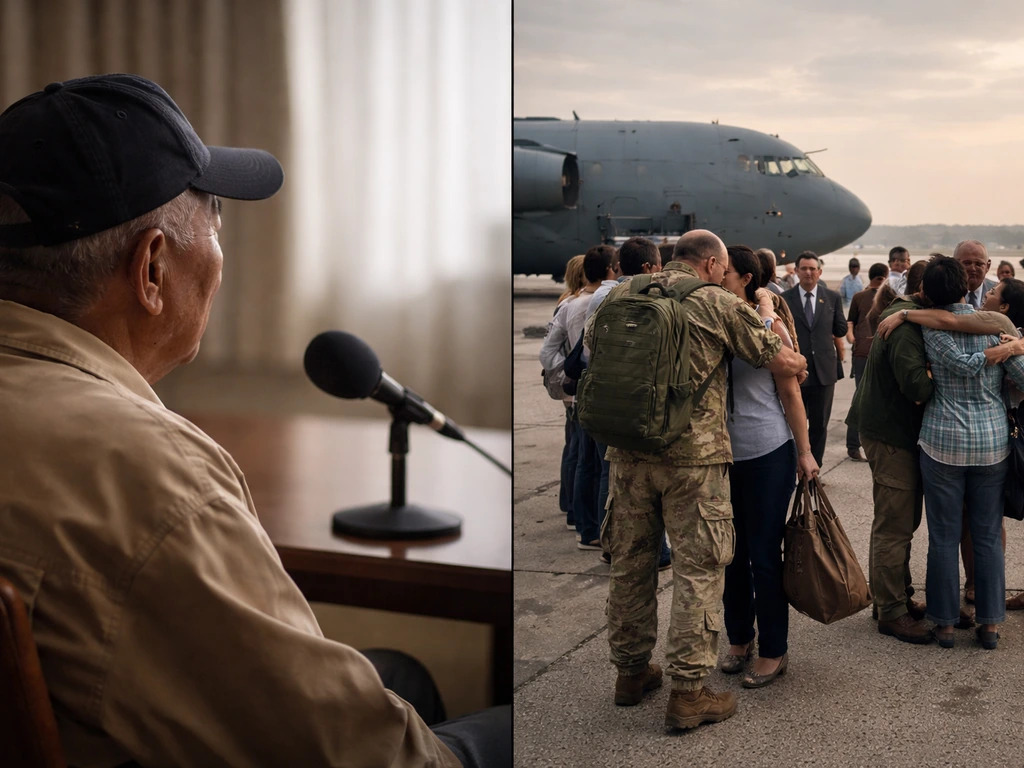
The phrase comes up in several distinct settings, and the meaning shifts slightly in each one:
- Veteran storytelling and oral history: Almost always refers to the Vietnam-era homecoming flight. This is the most emotionally loaded version of the phrase and where it carries the deepest cultural resonance.
- Active-duty PCS and Space-A travel conversations: Here it often means the Patriot Express rotator, the AMC contracted charter. Old-timers in military travel forums use 'Freedom Bird' and 'rotator' interchangeably.
- Unit history documentation: Appears as a category of flights in history books and after-action-style records, usually alongside R&R or Patriot Express references.
- Military slang glossaries and dictionaries: Listed as a defined term in resources like COMBAT MilTerms and VeteranTV's military slang dictionary, showing it's recognized as formal enough to document.
- Casual deployment conversation: Any service member might call their homeward-bound flight the Freedom Bird in the same way someone calls a Friday 'the best day of the week.' Low-stakes, obvious metaphor.
Why 'bird' and 'freedom' language runs so deep in military culture
Birds are one of the oldest and most universal symbols of freedom across cultures, and that symbolism maps onto military life in very direct ways. If someone says the bird is freed, they are usually pointing to the moment of departure from danger and the return home. Flight itself represents escape, transition, and liberation. For someone who has spent a year in a combat zone, the image of a bird lifting off and flying home is not an abstract metaphor; it's a visceral description of what that flight literally feels like. The 'freedom' part of the phrase does real emotional work: it marks the end of constraint, danger, and separation from home.
This is part of a broader pattern in military slang where 'bird' appears frequently, both for aircraft (calling a helicopter or plane a 'bird' is standard) and for symbolic language around liberation. Expressions like 'free bird,' 'the bird has landed,' 'the bird is freed,' and 'let the bird out of the cage' all draw on the same symbolic well, that birds stand for things that cannot or should not be confined. In a military context, where so much of life is about constraint, hierarchy, and assignment, the idea of the bird finally flying free carries enormous weight.
The Freedom Bird phrase also taps into homecoming as a culturally loaded event in military life. The flight home isn't just transportation; it's a rite of passage and a transition point between two different versions of yourself. Naming that aircraft after freedom rather than calling it a troop transport or a charter flight says something about how service members chose to frame the experience for themselves.
How the meaning shifts by era, branch, and context
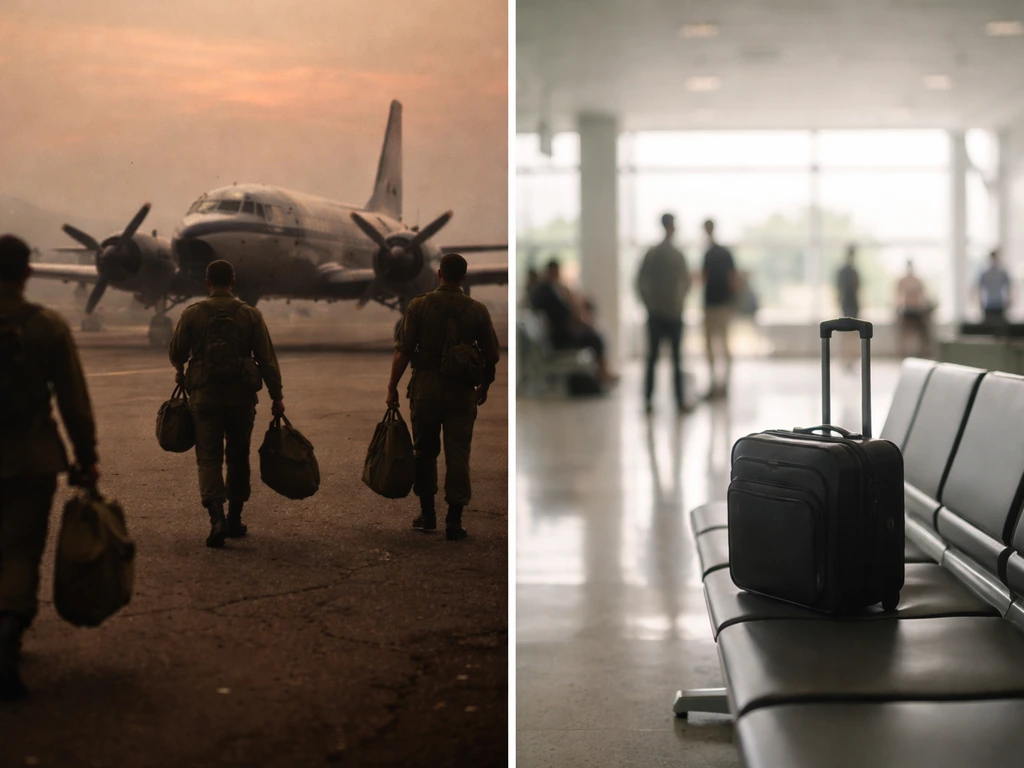
The phrase carries the most emotional charge in a Vietnam War context, where it was coined and most widely used. For that generation, it specifically meant the commercial airliner at the end of a 365-day tour in-country. The SFO Museum explicitly frames it as a phrase belonging to the 'Vietnam generation' of veterans.
For later eras and branches, the meaning becomes more diffuse. In Korea-based operations, base officials at Osan Air Base reportedly discouraged use of the nickname 'Freedom Bird' because it implied a negative sentiment about the assignment there, as though everyone was counting the days until escape. That tells you something important: the phrase has emotional undertones that military leadership sometimes wants to manage. If you hear it used by someone who served in Korea or in a post-Vietnam context, there may be a layer of irony or pointed commentary embedded in the choice to use it.
In the Space-A and PCS travel community, the phrase skews older. Younger service members are more likely to call it the 'Patriot Express' or 'rotator,' while veterans who served in earlier decades reach for 'Freedom Bird.' Branch-wise, you hear it most in Army and Air Force contexts because of how their overseas rotation systems worked, but it's not exclusive to either.
| Context | Most likely meaning | Key clue words |
|---|---|---|
| Vietnam War veteran storytelling | The commercial airliner home at end of tour | Tour, in-country, homecoming, 365 days |
| Post-Vietnam PCS/Space-A travel | The Patriot Express / AMC rotator charter | Rotator, Cat B, AMC, Patriot Express |
| Unit history / official documentation | A category of transport flights (homebound) | Flights, missions, R&R, MAC |
| Korea-based operations | Generic homecoming flight, sometimes used critically | Osan, tour, discouraged by officials |
| Casual deployment talk | Generic metaphor for any flight home | No specific program reference, emotional tone |
How to figure out exactly what someone means
If you encountered the phrase in a specific context and need to pin down what it refers to, here are the most practical steps you can take today: If someone says the phrase instead of asking for the aircraft name, they usually mean the idea of homecoming after a deployment.
- Check the surrounding words first. If you see 'patch,' 'squadron,' 'tail number,' or 'call sign' next to 'Freedom Bird,' you're likely looking at a named aircraft or unit tradition. If you see 'Patriot Express,' 'rotator,' or 'Cat B,' it's the AMC charter program. If you see 'tour,' '365,' or 'homecoming,' it's the Vietnam-era slang usage.
- Search the COMBAT MilTerms glossary online. It cross-references 'Freedom Bird' under Air Transport Service and points to related terms. This is one of the most comprehensive free military slang references available and will give you the definitional context quickly.
- Look up the Patriot Express program on official AMC or Defense.gov pages. Multiple DoD documents confirm that 'Freedom Bird' was a former name for this specific contracted charter program. If the context is travel-related, that's almost certainly what's being referenced.
- Ask in branch-specific forums. Air Warriors and other branch forums have threads where veterans and active-duty members discuss exactly this kind of naming confusion. Search 'Freedom Bird' in those communities and you'll find direct comparisons between the Vietnam-era meaning and modern Patriot Express usage.
- For unit patches or call signs, check unit lineage and honors records through official branch history offices. The Air Force Historical Research Agency (AFHRA) and the Army Center of Military History both maintain searchable records that can confirm whether 'Freedom Bird' is an official unit designation.
- If someone used the phrase in conversation or writing and the era isn't clear, just ask what branch and approximate year they served. That single piece of information usually resolves the ambiguity immediately.
One more thing worth keeping in mind: 'Freedom Bird' appears on a Wikipedia disambiguation page pointing to non-military uses, including a specific aircraft that was written off in Baltimore. If you're doing research and pulling sources, make sure you're not accidentally mixing up a military slang reference with one of these unrelated uses. The military-specific meaning will almost always involve deployment, tours, homecoming flights, or the Patriot Express program, so context makes it easy to separate.
The phrase sits in a rich tradition of bird language in military culture, sitting alongside expressions like 'free bird,' the idea of a bird being freed, or finally letting the bird out of the cage. If you are also wondering about “free bird meaning,” it draws from the same liberation imagery used for homecoming flights. All of them reach for the same thing: the moment when a period of confinement, danger, or separation finally ends and a person gets to fly back to something like normal life. 'Freedom Bird' just happens to be the most literal version of that idea, because the freedom was delivered, physically, by an actual aircraft.
FAQ
If someone says “Freedom Bird” at a reunion, are they usually talking about a specific aircraft, or the idea of going home?
Most of the time it is the homecoming concept, the aircraft or flight that brought someone back after a tour. If they mention dates, a route (often Pacific to Hawaii to the U.S. West Coast), or the Vietnam War, that is a strong clue they mean the contracted “ride home” tradition rather than a particular airframe.
How can I tell whether “Freedom Bird” means Patriot Express versus general slang for any return flight?
Look for exact program language. If the speaker refers to “formerly known as” or uses terms like “rotator” in the same breath, that points to the Patriot Express naming history. If they describe simply returning from an overseas rotation (without program naming), it is usually general slang.
Does “Freedom Bird” always mean a commercial airliner, or could it refer to military aircraft too?
The best-known usage is a contracted commercial charter type of flight, especially in the Vietnam context. However, the term can also show up as an unofficial label for unit traditions, patches, or even a named airframe, so if someone is discussing a gunship unit or a particular plane name, it may not be the commercial-airliner meaning.
What does it mean if the phrase comes up in a PCS or Space-A conversation?
In that setting, it often signals an older or veteran-specific way of describing military home-transport, but it can also be used literally to refer to the Patriot Express mission concept. If the person is modern-day active duty and uses the phrase casually, expect it to be slang for “the ride home,” not a guaranteed historical or program-specific booking.
Is “Freedom Bird” ever used sarcastically or with a negative tone?
Yes. In post-Vietnam or Korea-related contexts, some bases discouraged the nickname because it could sound like people were eager to escape an assignment. If someone uses it while discussing hardships, delays, or criticism of leadership, the tone may be ironic rather than celebratory.
If I’m researching, how do I avoid mixing up military “Freedom Bird” with unrelated uses?
Check whether the reference includes deployment, overseas return flights, tour length, or Patriot Express. If the context is about an unrelated aircraft or non-military references, it is likely a different use of the same phrase. Route details and mentions of AMC or contracted troop transport are good filters for the military meaning.
Can the phrase be linked to “bird” slang in general, like “free bird” or “bird is freed”?
Yes, they draw from the same symbolism: confinement ends, and the service member “flies free” toward home or normal life. Even when the wording changes, the emotional core is usually the homecoming transition, not just a generic term for an aircraft.
What’s the most common mistake people make when interpreting “Freedom Bird”?
Assuming it always refers to a specific aircraft model or that every use is tied to Patriot Express. A safer approach is to treat it as a spectrum: homecoming after a tour is the base meaning, and only certain clues (program naming, routes, era) narrow it down to the formal Patriot Express reference.
Next Article
Let the Bird Out of the Cage Meaning and How to Use It
Understand the let the bird out of the cage meaning, uses, examples, and how to interpret intent and related idiom mix-u