
"Let the bird out of the cage" most commonly means releasing someone or something from a state of confinement, control, or suppression. In the military, people also use the idea of a “freedom bird” to describe how restrictions are lifted or aircrew leave confinement, but the exact meaning depends on the unit and context let the bird out of the cage. Depending on context, it can mean giving someone their freedom, losing control of a situation, or allowing something hidden to escape into the open. It does not have a single locked-down dictionary definition the way some idioms do, which is exactly why people search for it. The meaning shifts based on who says it and what surrounds it.
Let the Bird Out of the Cage Meaning and How to Use It

Marcus Whitmore
23 Jun 2026

What the idiom means in plain English
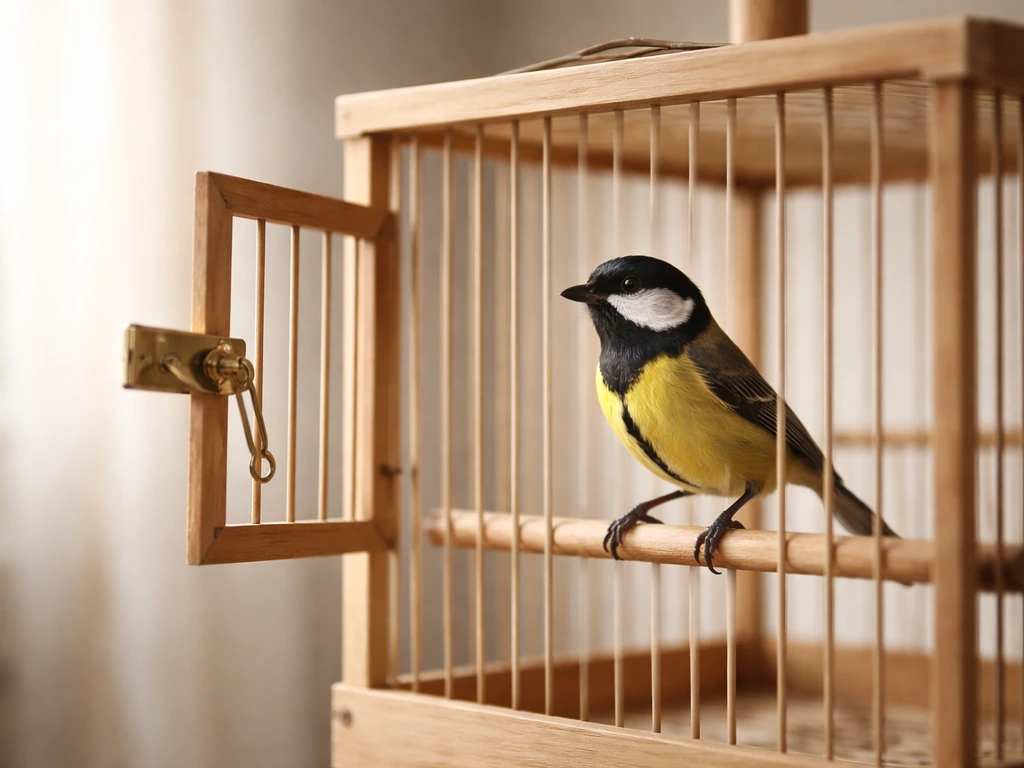
At its core, "let the bird out of the cage" is a release metaphor. The bird represents something that has been held back, contained, or controlled, and the cage represents whatever structure, rule, or force was keeping it in place. To "let the bird out" is to end that containment, whether intentionally, reluctantly, or accidentally.
The phrase covers a few distinct situations in practice. First and most literally, it describes freeing a person or thing from restriction. Think of a parent finally letting a sheltered teenager move out, a manager giving an employee creative freedom, or a country lifting a long-standing ban. Second, it can describe losing control of something you were trying to keep contained, like a plan that leaks before it's ready or a secret that escapes before the moment is right. Third, in some uses it nudges toward disclosure, meaning that something previously hidden is now out in the open.
That third use is where a lot of the confusion comes from, and it's worth addressing head-on: this phrase is not the same as "let the cat out of the bag," even though they share almost identical grammatical structure. An older publication example in The household (July 1884) shows “let the bird out of his cage” used as literal instruction, which supports the idea that the bird phrase does not function like a fixed idiom with the same disclosure meaning as “let the cat out of the bag.” this phrase is not the same as "let the cat out of the bag". More on that in a minute.
What the "bird in a cage" metaphor implies
The cage part of this metaphor does a lot of work. Cages imply ownership, protection, restriction, and sometimes safety, depending on your perspective. A bird inside a cage is alive but not fully itself. It can't fly, can't migrate, can't behave according to its own nature. That tension between the bird's potential freedom and its actual confinement is what gives this metaphor its emotional charge.
When someone invokes this image in figurative speech, they're usually pointing at a similar tension in real life: a person who has untapped potential being held back by circumstances, a truth that's being suppressed but is straining to come out, or an energy or force that's been contained but is ready to be released. The bird isn't passive in this picture. It wants out. That's part of what makes the phrase feel urgent or loaded when it appears in conversation.
Birds across cultures and literature have long symbolized freedom, the soul, aspiration, and communication, which is why this particular animal-in-a-container metaphor resonates so strongly. If you have heard the term “freedom bird meaning,” it comes from the same broader idea of symbolic release and denied freedom. A caged bird specifically carries connotations of denied freedom, which Maya Angelou's work made iconic in modern English literature. When someone uses a cage-bird image in speech, they're drawing on that deep symbolic reservoir whether they know it consciously or not.
Common contexts and example sentences

The idiom shows up in a pretty wide range of registers. Here are examples across a few different tones so you can see how the same phrase flexes:
- Casual / personal freedom: "She finished school, got her own apartment, and honestly her parents finally let the bird out of the cage. She's thriving."
- Workplace / creative freedom: "The new director basically let the bird out of the cage for the design team. No more approval layers, just build."
- Cautionary / warning tone: "Be careful how you handle this. Once you let the bird out of the cage, you can't guarantee it comes back."
- Humorous / light: "Three cups of coffee and a deadline? Yeah, they let the bird out of the cage on that one. The presentation got a little intense."
- Relationship / emotional: "He never let the bird out of the cage with her. Always controlled, always measured. She got tired of it."
You'll notice that in all of these, the central idea is release from containment, but the emotional coloring shifts. Sometimes it's celebratory, sometimes it's ominous, sometimes it's wry. The phrase sounds natural when the context clearly involves something or someone being held back and then freed. It starts to sound forced if there's no real sense of prior constraint in the story.
How to tell which interpretation the speaker means
The biggest clue is whether the release was intentional or accidental, and whether it's framed positively or negatively. These two axes tell you almost everything.
| Framing | Likely meaning | Emotional tone |
|---|---|---|
| Intentional + positive | Granting freedom, removing restrictions | Celebratory or empowering |
| Intentional + negative | Releasing something risky or unpredictable | Cautionary or resigned |
| Accidental + negative | Losing control, information or situation escaping | Alarmed or regretful |
| Accidental + neutral/humorous | Something unexpected coming out or happening | Wry, self-deprecating |
Context surrounding the phrase is your best guide. If the speaker is talking about a person, an employee, a creative project, or someone who was previously restricted, lean toward the freedom-granting meaning. If they're talking about a plan, a secret, or a situation that "got away" from them, lean toward the loss-of-control or disclosure reading. If you're still not sure, the simplest move is to ask: "Do you mean that in a good way or a bad way?" People will usually tell you.
Related phrases and common confusion points

The phrase people most commonly mix this up with is "let the cat out of the bag." That's a fully established idiom with a clear single meaning: accidentally revealing a secret before the right moment. The structure is almost identical (let the [animal] out of the [container]), and the vibes overlap when "let the bird out of the cage" is used in an accidental-disclosure context. But the two are not interchangeable.
"Let the cat out of the bag" is specifically about premature or accidental disclosure of information. "Let the bird out of the cage" is broader and more flexible. That flexibility helps explain why the bird is freed meaning can shift from granting freedom to revealing something that was previously held back broader and more flexible. It can include disclosure, but it can just as easily mean granting freedom, releasing control, or setting something in motion that can't be undone. If someone is clearly talking about spilling a secret, "let the cat out of the bag" is the more precise, more widely recognized phrase. If they use the bird version instead, they may be reaching for a slightly different shade of meaning, or they may just be mixing their animal metaphors.
Other phrases that live in the same neighborhood and can cause confusion include "free as a bird" (describing someone who has already been freed, with no implication of cage or control), and "the bird has flown" (meaning someone or something has already escaped or left, often used when the opportunity to catch them has passed). "Free bird" as a standalone phrase carries its own symbolic weight in American culture, particularly through the Lynyrd Skynyrd song, and leans more toward personal independence than any sense of a controlled release. But the phrase "free bird" meaning is not the same as the idiom about letting a bird out of a cage. "Freedom bird" is a separate term with strong military slang meaning, referring specifically to the aircraft that brought US service members home from Vietnam, a usage that carries a very specific emotional charge completely unrelated to the cage metaphor.
Cultural and symbolic meaning of birds and cages in language
The bird-in-a-cage image appears across cultures and time periods precisely because it captures something universal about the tension between freedom and control. In Western literary tradition, the caged bird became a central symbol of oppression and denied potential, most powerfully codified in Paul Laurence Dunbar's poem "Sympathy" and later in Maya Angelou's autobiography title "I Know Why the Caged Bird Sings." In that tradition, the caged bird doesn't just represent restriction. It represents a living thing that still has voice and will even inside its confinement.
In East Asian literary and artistic traditions, caged birds appear in poetry and painting as symbols of longing, romantic captivity, and the tension between civilization and wildness. Releasing a bird from a cage in Chinese cultural practice has historically been associated with acts of compassion and the accumulation of spiritual merit. The act of letting the bird out is itself loaded with meaning, not just the bird's freedom afterward.
In everyday English idiom, this symbolic weight doesn't disappear. When someone uses a cage-and-bird metaphor, even casually, they're tapping into that deep cultural memory. That's part of why it lands with more emotional resonance than, say, "let the dog off the leash," which implies supervision rather than genuine confinement.
How to use it or respond to it today
If you want to use this phrase yourself, it works best when the context genuinely involves something that has been constrained and is now being released. It sounds natural in conversations about overprotective parenting, creative restrictions being lifted, long-held secrets finally coming out, or situations that have escalated beyond someone's ability to manage. It sounds strained when there's no real sense of prior containment in the situation.
If someone says it to you, the fastest way to interpret it correctly is to look at what came right before it in the conversation. In some circles, people also ask about the bird has landed meaning as a similar-sounding phrase with different implications. Was there talk of restriction, control, or something being held back? That's your anchor. Then check the tone: are they relieved, worried, amused, or resigned? That tells you whether the release is welcome or not.
A quick practical guide for responding in the moment:
- If the speaker sounds relieved or happy, mirror that: "Good, it was time" or "That must feel like a weight off."
- If the speaker sounds worried, acknowledge the risk: "Yeah, once it's out there you can't really walk it back."
- If you're genuinely not sure what they mean, ask directly: "Are you saying that's a good thing or are you worried about it?"
- If they seem to be mixing this phrase with 'let the cat out of the bag,' you can gently clarify: "Do you mean someone spilled a secret, or more like the situation got out of hand?"
The phrase is flexible enough that it rarely causes real miscommunication on its own. Most listeners read the surrounding context well. But if you're writing with it rather than speaking, be specific enough that readers understand which kind of release you mean. The bird-out-of-the-cage image is vivid and evocative. Give it enough context to land the right way.
FAQ
Can “let the bird out of the cage” ever mean something positive, or is it usually negative?
It can be either. It tends to read positive when the speaker frames the change as deserved freedom (lifting a ban, granting autonomy, giving creative space). It reads negative or ominous when the cage removal implies harm, risk, or loss of control (a plan going public too early, a secret getting loose).
What’s the safest way to interpret the phrase if the conversation is vague?
Use the “two-axis” check: was there prior restriction or containment, and is the release being treated as welcome or problematic? If you cannot identify either axis, ask a clarifying question like, “Do you mean someone’s freedom is being granted, or that a secret is coming out?”
How is it different from “let the cat out of the bag” in real-life conversations?
“Let the cat out of the bag” is almost always about accidental or premature disclosure. “Let the bird out of the cage” usually signals release more broadly, so it can cover granting freedom or losing control, not just spilling information. If someone specifically mentions secrecy, “cat” is the more precise idiom; “bird” may suggest a wider “things are now out in the open” idea.
Does the phrase imply the release was intentional?
Not automatically. The literal structure suggests a deliberate act, but in practice people use it for accidental outcomes too. Look for cues like “we didn’t mean to,” “by mistake,” or “it got ahead of us” to determine whether it was intended or an uncontrollable slip.
Is “let the bird out of the cage” appropriate for formal writing?
It can be, but it works best when you add explicit context so readers know which meaning you intend. In formal writing, the safest approach is to follow it with a clarifier (for example, releasing a person from a restriction, or preventing premature disclosure). Otherwise the metaphor can feel imprecise compared with more direct phrasing.
Can it be used when nothing was actually “confined,” like in a general metaphor?
People often accept it only when there is a real sense of prior restraint, such as rules, supervision, limits, or suppression. If there is no genuine “cage” in the situation, the phrase can sound forced or overly dramatic. If you want a looser metaphor, consider choosing a different expression (like “set in motion” or “come to light”) that fits better.
What if someone says it about a project or business, not a person or a secret?
In that context, it usually means releasing a project from constraints, such as removing approvals, lifting a developmental freeze, or allowing marketing to proceed. It can also imply scope creep or uncertainty if the team “lost control” of timing or messaging. Tone matters, especially whether the speaker sounds excited, relieved, or concerned.
Could the phrase be confusing with “free as a bird” or “the bird has flown”?
Yes, because they all involve birds but different meanings. “Free as a bird” describes being free already, without focusing on the moment of release. “The bird has flown” emphasizes that escape has already happened and it might be too late to retrieve. “Let the bird out of the cage” centers the act of releasing (or the consequences of releasing).
If I want to use the idiom in a message, what wording reduces the chance of misunderstanding?
Add a concrete object of release and a brief consequence. For example, mention whether it’s a person (employee autonomy), a policy (lifting restrictions), or information (coming out early). That extra detail pins down whether you mean freedom, loss of control, or disclosure.
Next Article
The Bird Has Landed Meaning: Literal and Metaphorical Use
Meaning of the bird has landed in plain English and as metaphor: arrival, success, completion, or a finalized signal.