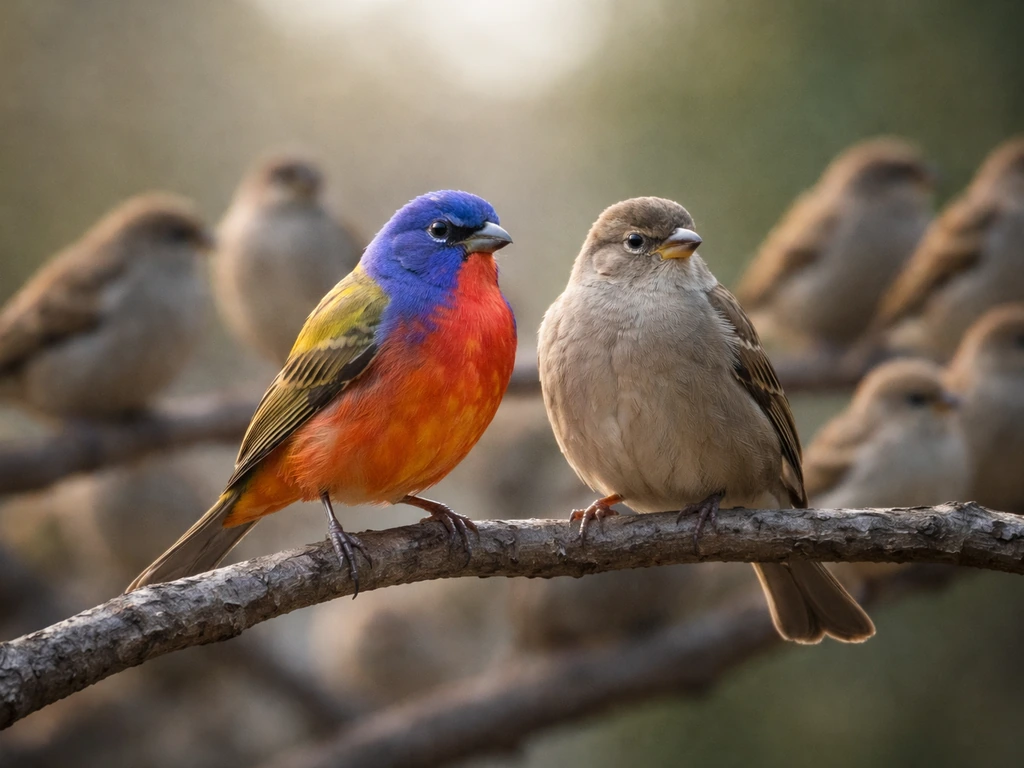
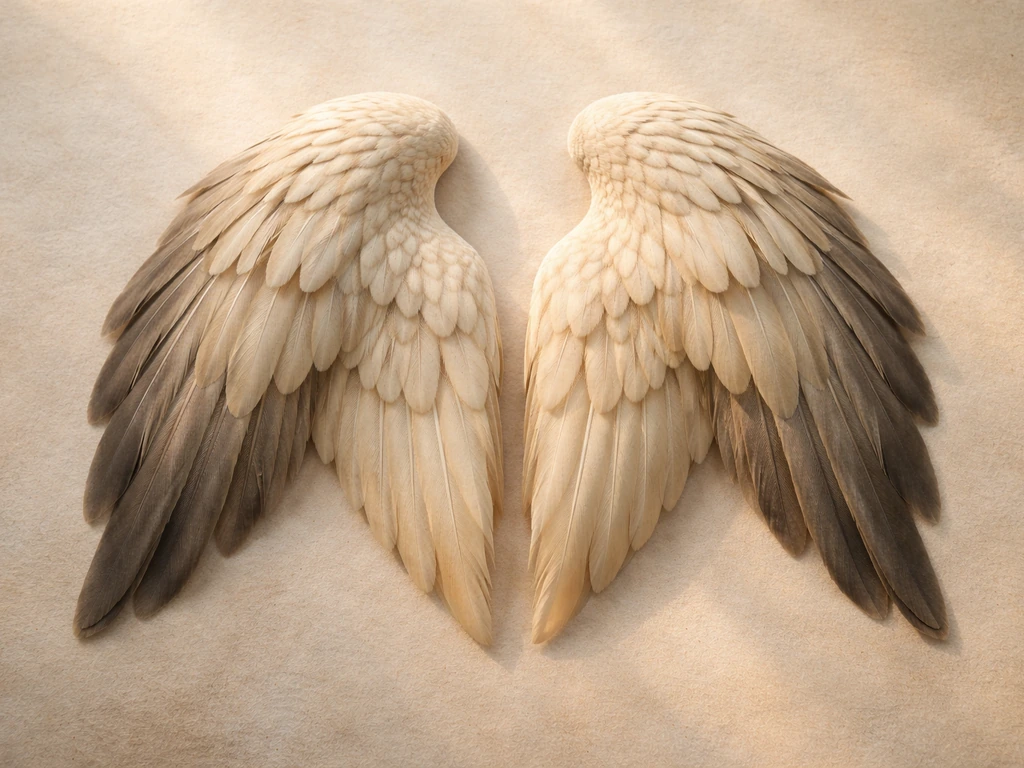
Two wings of the same bird most commonly symbolize two things that are different from each other but absolutely dependent on each other, the way a bird's left and right wings are physically distinct yet must work in perfect coordination for flight. If you're trying to put this into words, the phrase's two wings of the same bird meaning is essentially mutual necessity rather than mere similarity. Strip away one wing and the bird doesn't just fly less well, it doesn't fly at all. That's the core idea: not just similarity or partnership, but mutual necessity. Whether you're seeing this phrase in a quote, a tattoo design, a dream, or a piece of art, that baseline meaning of complementary interdependence is almost always underneath it.
2 Wings of the Same Bird Meaning: Symbolism by Context

Marcus Whitmore
21 May 2026
What 'two wings' usually symbolizes
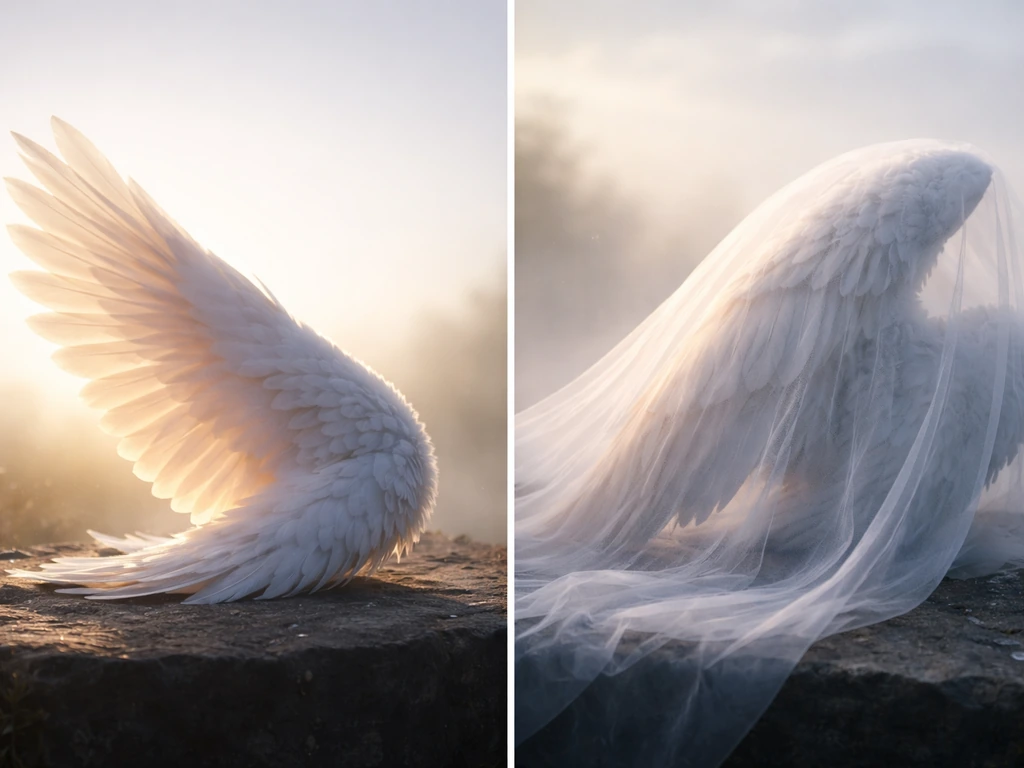
Wings on their own already carry a heavy symbolic load. Across cultures and centuries, wings show up as markers of freedom, aspiration, protection, spiritual ascent, and power. Dream interpretation resources consistently link wings to movement and support, the idea that something is lifting you or carrying you forward. In religious art, wings signal divine agency: the Bible describes seraphim with six wings (two to cover the face, two to cover the feet, two to fly) and cherubim with four, each pairing assigned a distinct function. In Christian iconography derived from Ezekiel, cherub depictions commonly use two pairs of wings, meaning multiple wing configurations carry theological and art-historical significance cherubim with four. The wing count and arrangement isn't decorative detail, it's encoded meaning.
When you bring two wings together as a pairing, the symbolism shifts from individual qualities toward balance and wholeness. Two wings suggest a complete, functioning thing. They can represent two halves of a person's identity, two forces in the world, two people in a relationship, or two ideas in an argument, depending entirely on what those wings are attached to. The 'two' is the key: it signals that something requires both parts to work.
Why 'same bird' changes the meaning
This is the part that people sometimes gloss over, but it's doing most of the work in the phrase. 'Same bird' tells you the two wings don't just coexist, they belong to one unified thing. They come from the same source, serve the same body, and exist for the same purpose. That's very different from two birds flying side by side, which suggests alliance or similarity. The 'same bird' framing insists on structural unity.
The most widely known use of this exact construction comes from the Bahá'í tradition, where 'Abdu'l-Bahá describes science and religion as 'the two wings of one bird.' The point isn't that science and religion are similar or friendly toward each other. It's that human civilization literally cannot advance without both, just as a bird with one wing only goes in circles. Religion without science leads to superstition and fanaticism; science without religion leads to its own distortions. Each wing corrects the excess of the other. The phrase has since been borrowed into academic and political writing to describe Eastern and Western civilizations, or left and right political wings, using the exact same logic: two opposing-seeming forces that are actually structural parts of the same whole.
So when you see 'same bird' in any version of this phrase, it's a strong signal that the speaker is arguing against separation. They're saying: you cannot meaningfully split these two things apart, because they only make sense together.
How bird species symbolism maps to wing imagery
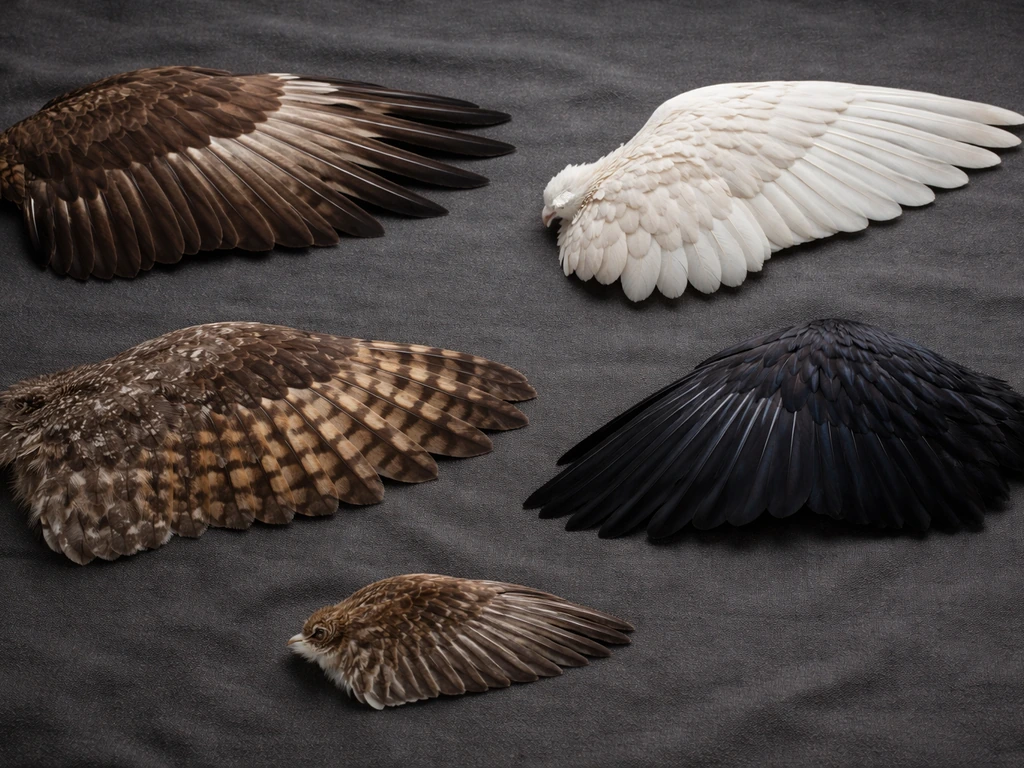
The phrase 'two wings of the same bird' works as a general metaphor, but the specific bird species involved dramatically changes the emotional and cultural meaning. Wings are the mechanism of the metaphor, but the bird is the soul of it. Here's how some of the most common species shift the interpretation:
| Bird Species | Core Symbolism | What 'Two Wings' Tends to Mean |
|---|---|---|
| Eagle | Power, national identity, freedom, vision | Two equal forces of strength or sovereignty; balance of authority |
| Dove | Peace, purity, the divine, remembrance | Paired spiritual protection or memorial meaning; a soul's ascent |
| Owl | Wisdom, protection, introspection, the night | Two modes of knowing; protection from two directions; guarding presence |
| Raven | Thought, memory, prophecy (especially Norse) | Paired cognitive forces, think Odin's Huginn and Muninn (thought and memory) |
| Phoenix/Fenghuang | Renewal, complementary opposites, transformation | Male/female or yin/yang balance; a union of contrasting energies |
| Butterfly (honorary) | Transformation, the soul | Transition through paired stages; often memorial or identity-change themes |
Chinese mythology offers a particularly vivid precedent here: the Biyiniao is a mythological bird whose paired wings literally require two individuals to fly together, one bird physically incomplete without the other. That's a different structure than 'same bird,' but it shows how deeply wing-pairing as a symbol of interdependence runs across cultures. If your question is specifically about a 2 headed bird, the meaning can shift from symbolic interdependence to traits about duality and balance rather than literal wing pairing 2 headed bird meaning. The Fenghuang, often described in male/female pairings, works similarly, representing complementary energies that only produce their full meaning when held together. When you're looking at any 'two wings' image and trying to interpret it, the species is your first and most important clue.
Context check: tattoo, dream, art, or quote
Where you encountered 'two wings of the same bird' matters as much as the phrase itself, because different contexts use the imagery for very different purposes.
- Tattoo: Paired wing tattoos most often represent partnership, a completed identity, or memorial meaning. A dove design is frequently used to honor someone who has passed, carrying themes of peace and the soul's ascent. Eagle wing pairs lean toward personal freedom or shared strength. If the wings are split across two people (one wing each), the meaning almost always points to 'we are incomplete without each other.'
- Dream: Seeing two wings in a dream typically connects to how supported or capable you feel. Dream interpretation resources note that the condition of the wings matters enormously: intact paired wings suggest balanced capability or a harmonious relationship, while a broken wing shifts the meaning toward imbalance or loss. The species of bird in the dream is worth noting if you can recall it.
- Art or jewelry: In decorative contexts, two wings from the same bird often appear as a symmetrical motif signaling wholeness, protection, or spiritual guardianship. Religious art especially (cherubim imagery, angel iconography) uses paired wings to signal sacred function. In secular jewelry and wall art, the same motif more often reads as balance or aspiration.
- Quote or writing: When you see 'two wings of the same bird' in a sentence, it's almost always being used as a rhetorical metaphor arguing that two things are inseparable. The Bahá'í framing (science and religion) is the most cited version, but the structure gets borrowed into political, philosophical, and personal essays regularly. The political version, left and right as two wings of the same bird of prey, uses the same logic to make a darker point about systemic unity.
How to interpret placement and style details
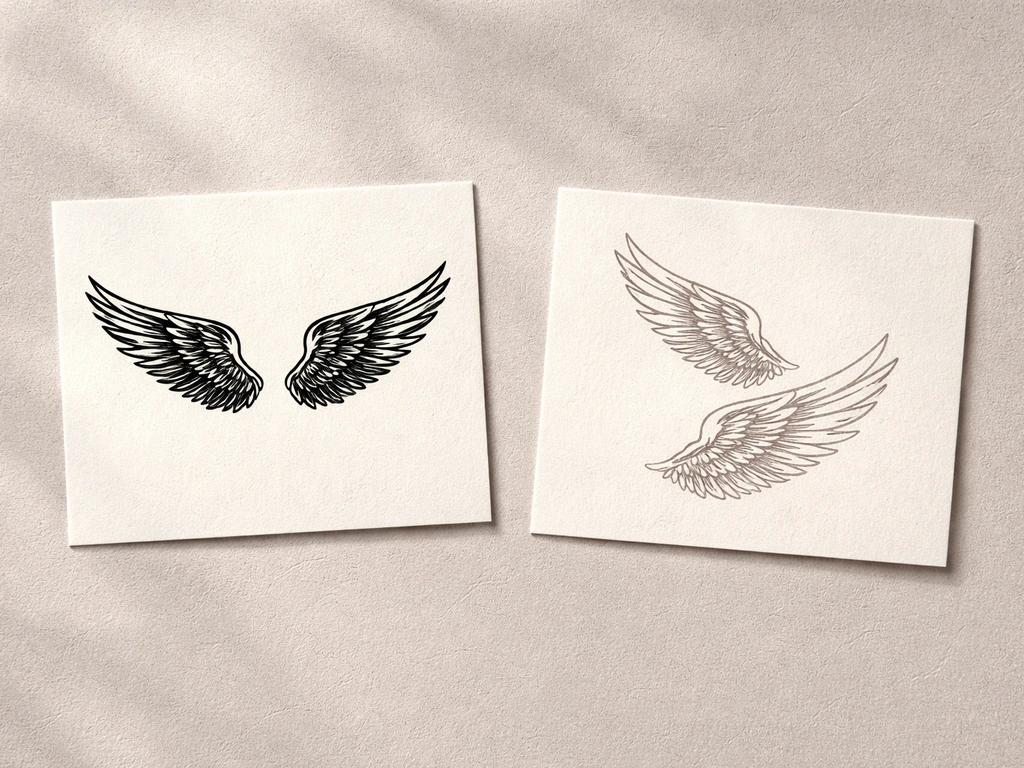
Once you've nailed down the context, the physical details of how the wings are arranged give you a second layer of meaning. This is especially useful for tattoos and visual art, where design choices are intentional.
- Side by side vs. top and bottom: Wings arranged side by side (like an outstretched bird seen from above) suggest active readiness, flight, freedom, or open protection. Wings stacked vertically or folded suggest rest, shelter, or guardianship wrapping around something.
- Symmetry and mirroring: Perfectly mirrored wings reinforce the 'two halves, one whole' theme. If one wing is slightly different (different feather count, different curve, different species details), look for intentional asymmetry as a meaning, two things that balance each other precisely because they're not identical.
- Spread vs. closed: Fully spread wings emphasize liberation, reach, and aspiration. Folded or partially closed wings lean toward protection and enclosure, something being held or sheltered rather than released.
- Placement on the body (tattoos): A paired wing tattoo across the shoulder blades or chest sits close to the heart and lungs, areas culturally associated with emotion and breath, which often reinforces spiritual or emotional meaning. Wings on the forearms or wrists tend to read as personal freedom and action-oriented symbolism.
- Color and detail style: In tattoo and art, black wings often carry heavier themes (mortality, grief, the sacred unknown), while white or light wings lean toward peace, purity, and hope. Realistic feather detail pushes toward species-specific meaning; more abstract or geometric wings tend to stay at the conceptual level.
How to find the exact meaning for your specific bird
If you're trying to pin down what 'two wings of the same bird' means in a specific case you've encountered, here's a practical process you can use right now.
- Identify the bird species first. Can you tell which bird the wings belong to? Look at feather shape, color, size, and any accompanying imagery. Eagle feathers are broad and layered; dove wings are narrower and softer; owl wings show distinctive facial disc or talon detail in most depictions. If you genuinely can't identify the species, treat the meaning as staying at the general 'complementary interdependence' level until you can.
- Confirm whether the wings are paired and identical. Two wings from the same bird, arranged symmetrically, signal wholeness and balance. Two wings that differ from each other (different sizes, different styles) suggest a 'two distinct things from one source' message, more like the science-and-religion framing where the two wings are genuinely different but unified.
- Check the context you saw it in. Use the context breakdown above: tattoo, dream, art, or quote each pulls the meaning in a different direction even when the imagery is identical.
- Note orientation and condition. Are the wings spread, folded, in flight, or broken? Each state carries its own layer of meaning on top of the species symbolism.
- Cross-reference the species meaning. Once you know the bird, look up what that species specifically represents in the cultural tradition most relevant to where you saw the image. An eagle in American folk art carries different weight than an eagle in Germanic heraldry. A dove in a Christian memorial tattoo means something distinct from a dove in a Japanese peace context.
- If it's a quote, find the full source. The phrase 'two wings of the same bird' is almost always doing argumentative work in a sentence. Find what the two wings are being named as (science and religion? left and right? two cultures?) and the meaning becomes immediately clear because the writer is defining it for you.
A few sibling ideas are worth keeping in mind as you work through this. The phrase 'bird of a feather' emphasizes similarity rather than structural unity. 'Two birds with one stone' is about efficiency, not partnership. The two bird with one stone meaning is similarly about getting two benefits from one effort, but in the context of bird imagery it often points to one unified cause Two birds with one stone. And the political 'left wing and right wing are the same bird' framing is a direct application of the 'same bird' logic to ideology, arguing that opposing political parties share a common structural purpose regardless of surface differences. In political talk, the left wing and right wing same bird meaning is that the opposing sides belong to one shared system and need each other’s balance left wing and right wing are the same bird framing. Each of these uses bird imagery to make a point about human relationships, but the 'two wings, same bird' construction is the most emphatic version of the 'you cannot separate these two things' argument.
The bottom line: whenever you see this phrase or image, someone is telling you that two things, whether ideas, people, forces, or identities, are not just compatible but structurally necessary to each other. Sometimes people use the contrasting expression "bird of a different feather" to say two things are not actually the same kind at all bird of a different feather meaning. The specific bird tells you the emotional register and cultural tradition. The context tells you whether it's personal, political, spiritual, or decorative. A Dove tattoo example used by Temporalis shows dove ascending through clouds as a spiritual memorial theme, reinforcing blank" rel="noopener noreferrer">peace-after-passing and “soul rising” meanings in tattoo symbolism. And the arrangement of the wings tells you whether the emphasis is on flight and freedom, or shelter and protection. Put those three things together and you'll have a clear, grounded interpretation every time.
FAQ
Does “2 wings of the same bird” mean the two things are identical?
It usually points to interdependence between two parts of one whole, not symmetry or equality. If the imagery shows noticeably different wing sizes or shapes, the “same bird” idea is often about complementary roles (one part corrects or completes the other) rather than both parts being identical.
What does it usually mean if the dream shows both wings but they do not work together?
Dreams are especially sensitive to what else is in the scene. If you see one wing drooping, broken, or missing, the metaphor often shifts from “balance” to “incompleteness” or “stalled progress,” implying you may be trying to move forward without a needed support system.
How can I tell whether the phrase is being used as an argument for unity or a reminder about mutual support?
“Same bird” can also be used rhetorically to argue that two opposing viewpoints share underlying assumptions or dependencies. In debates, listen for a claim like “you cannot have X without Y,” then decide whether the speaker is advocating integration, mutual restraint, or a shared origin.
Can “2 wings of the same bird” be used to mean a simple friendship or partnership?
It can, but the phrase is stronger when it is explicitly framed as one unified source (same body, same purpose). If someone instead emphasizes compatibility, romance, or agreement without the “cannot separate” logic, a closer match is often “partnership,” not the full “mutual necessity” meaning.
What is the most common mistake people make when interpreting the “left wing and right wing are the same bird” version?
Yes. One common misread is treating “left and right wings” as mere similarity. The intended point is usually coordination within a shared system, so ask what function each side performs, how they balance each other, and what happens if one side is removed.
What should I do if I cannot identify the bird species in an image?
Species details matter most when the artist or writer signals them clearly. If the bird type is unknown or stylized, the safer default is the generic “paired support for one purpose,” then refine based on whether the wings are shown spread (freedom) or protective and folded (shelter).
How do I interpret the meaning for a tattoo if the artist shows the wings folded inward instead of spread?
In tattoos, placement and orientation can flip the emphasis. Wings near the shoulders and spread outward often read as aspiration or empowerment, while wings wrapped inward or positioned like armor can lean toward protection, guarding, or caretaking responsibilities.
Does the “two wings of one bird” meaning change if it is used outside science-and-religion contexts?
If the phrase appears alongside religion and science, it is commonly used to claim that each corrects the other’s blind spots. If it appears in personal growth contexts, it often translates to “head and heart” type integration, meaning you need both reasoning and values to function well.
What visual or wording clues confirm the “same bird” idea rather than two unrelated wings?
The clearest “same bird” signal is wording or design that implies unity, such as one body, one origin, matching patterns, or explicit language about being inseparable. If the two wings look like they belong to different birds or different silhouettes, the message may drift toward “coexisting” or “pairing,” not structural necessity.
Next Article
Bird of a Different Feather Meaning, Origin, and Use
Meaning and origin of bird of a different feather, plus when to use, variants, and how it differs from related idioms.