When someone says they need to have "the bird and the bees talk" with their kid, they are not planning a nature documentary screening. They mean a conversation about sex and reproduction. The phrase (more commonly written as "the birds and the bees") is a long-standing English idiom for When someone says they need to have "the bird and the bees talk" with their kid, they are not planning a nature documentary screening.
The Bird and the Bees Meaning: What It Really Says

Marcus Whitmore
23 Mar 2026
They mean a conversation about sex and reproduction. The phrase (more commonly written as "the birds and the bees") is a long-standing English idiom for the introductory sex education talk that parents give children. Both Cambridge Dictionary and Merriam-Webster define it plainly as an informal, colloquial way of referring to explaining human reproduction and sexuality to kids. That is the core meaning, full stop.
that parents give children. Both Cambridge Dictionary and Merriam-Webster define it plainly as an informal, colloquial way of referring to explaining human reproduction and sexuality to kids. That is the core meaning, full stop.
What "the bird and the bees" actually means
The phrase functions as a euphemism: a softer, indirect way of naming something that many people find awkward to say outright. Instead of saying "I need to explain sex to my child," a parent might say "it's time for the birds and the bees talk." The meaning is identical; the euphemism just lowers the discomfort level slightly. Dictionary.com, Wiktionary, and Wikipedia all classify it as an idiom used for basic, age-appropriate information about sex, sexual intercourse, and pregnancy given to children, usually by a parent or caregiver.
A small note on spelling and form: the most standard written version is "the birds and the bees" (plural, with both articles). You will also see "the bird and the bees," "birds and bees," or "the birds and the bee" floating around in casual writing. They all point to the same meaning. The plural form is what the major dictionaries recognize, but none of the variations would confuse a native English speaker in context.
When and why people actually say it
You will hear this phrase in a handful of predictable situations. A parent might say to a spouse, "I think it's time we had the birds and the bees talk with Jamie." A sitcom character might nervously stammer through an awkward monologue described as "the talk." A friend might joke, "Did your parents ever give you the birds and the bees speech?" In all of these, the phrase signals the same rite-of-passage moment: a caregiver sitting down with a child to introduce the basics of where babies come from, how bodies work, and how reproduction happens.
It also shows up in media, song lyrics, and parenting articles as a shorthand for the entire concept of childhood sex education. You might see a headline like "Beyond the Birds and the Bees: Talking to Teens About Healthy Relationships," which uses the phrase as a familiar hook before expanding the conversation into broader territory. In that context, the phrase is almost a brand name for a specific cultural ritual.
Why birds and bees? The euphemism explained
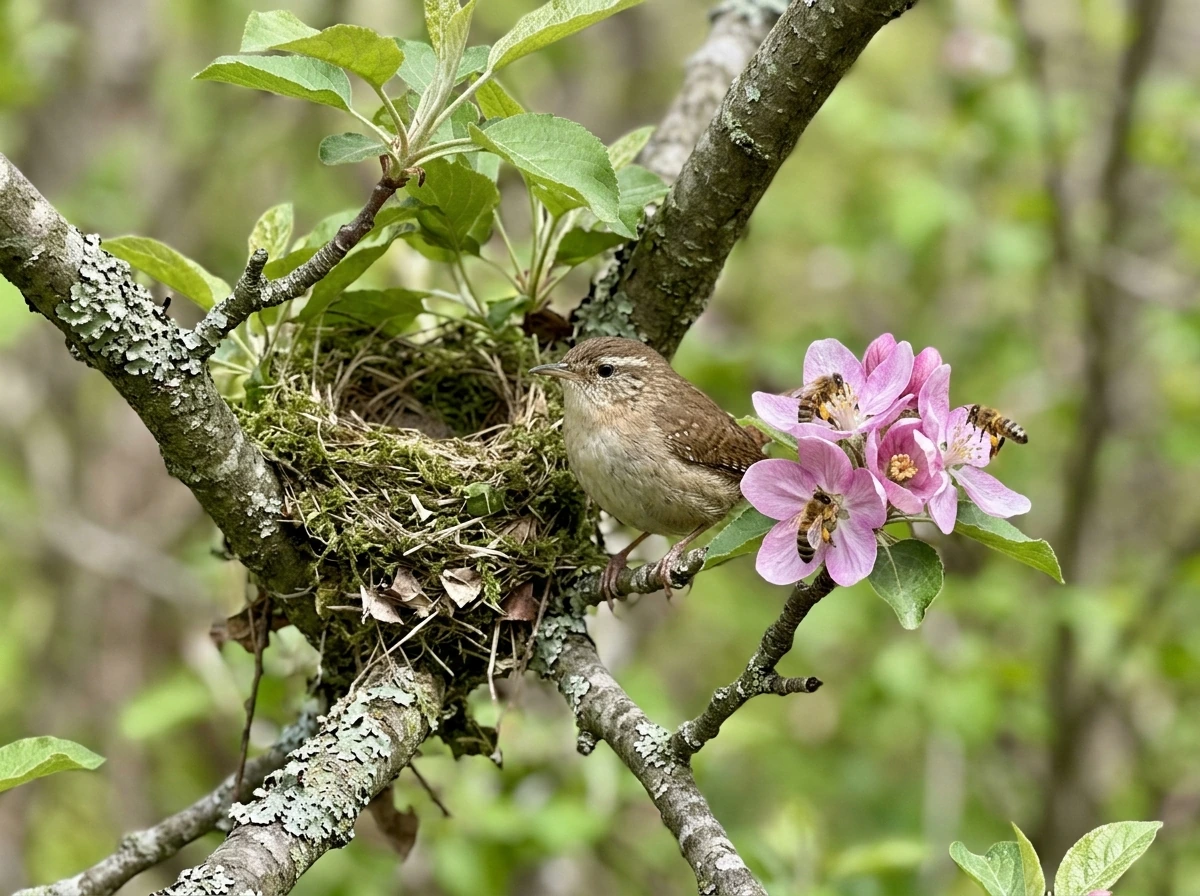
Birds and bees are creatures that reproduce visibly and inoffensively in nature. Birds build nests, lay eggs, and raise young. Bees pollinate flowers, which is itself a metaphor for fertilization. By pointing to these natural processes, adults historically created a way to gesture toward reproduction without ever using clinical or explicit language. The phrase lets you talk about the general concept (living things reproduce) in a way that can ease into the human-specific version gradually.
Wiktionary explicitly notes that the idiom often involves describing animals' sexual activity as a stepping stone rather than directly describing humans'. That framing is part of why it has endured: it gives adults an on-ramp. The problem, as many child development professionals will tell you, is that the metaphor can also obscure more than it clarifies, which is worth keeping in mind when you actually use it.
Where the phrase comes from
The exact origins of the idiom are a little hazy, which is true of most idioms that evolve gradually in everyday speech rather than being coined by a single person. What we do know is that birds and bees imagery attached to themes of love, romance, and reproduction long before the phrase became the specific cultural shorthand it is today. One widely noted early reference is Cole Porter's 1928 song "Let's Do It, Let's Fall in Love," which alludes to birds and bees doing "it" in a playful, suggestive lyric that both audiences and performers understood clearly without saying anything explicit.
By the mid-20th century, the phrase had settled into its modern role as shorthand for parental sex education. Jewel Akens released a song literally called "The Birds and the Bees" in 1965, and the idiom was already familiar enough to audiences that the title required no explanation. The association between the phrase and parent-to-child sex talks was already cemented in popular culture by that point. Later, the UK release of Telex's album "Sex" under the alternate title "Birds and Bees" reinforced how directly interchangeable the phrase had become with the concept of sex in casual public usage.
Similar phrases and how they differ
The idiom sits alongside a cluster of related expressions, and it helps to know how they differ. If you have come across a related phrase and are not sure how it connects, this table covers the main ones:
| Phrase | What it means | Key difference |
|---|---|---|
| The birds and the bees | Euphemism for the sex education talk given to children | The standard, most widely recognized form |
| The bird and the bee | Same meaning as above in most contexts; also the name of a musical duo | Singular form; identical meaning in conversation; may sometimes refer to the band |
| The talk / "having the talk" | Direct shorthand for the same parental sex education conversation | No animal metaphor; slightly more direct and modern-sounding |
| The facts of life | Broader phrase for sex and reproduction information; sometimes refers to the realities of adulthood generally | Wider scope; not always child-specific |
| The bird and the worm | A different idiom related to effort and reward ("the early bird catches the worm"); no sexual connotation | Completely different meaning; about diligence, not sex education |
Worth flagging: "the bird and the worm" means something entirely different and has nothing to do with this conversation. Worth flagging: "the bird and the worm meaning" belongs to the idiom family around effort and reward. If you are curious about that phrase, it belongs to the idiom family around effort and reward. Similarly, if you have seen references to what "bird" means in slang within a relationship context, that is a separate usage covered in its own entry on this site.
How to interpret it correctly (and avoid common mix-ups)
The biggest misunderstanding is taking the phrase too literally. Someone saying "we had the birds and the bees conversation" is not telling you they discussed ornithology or beekeeping. Context almost always makes this obvious, but if you are reading it in a parenting article, a family memoir, or a conversation about raising children, it means sex education without question.
A subtler misuse is treating the phrase as if it describes a single, one-time event. St. Louis Children's Hospital explicitly frames the "birds and the bees talk" not as a speech but as an ongoing conversation. Johns Hopkins Medicine echoes this, advising that discussions with tweens and teens should cover puberty changes, hormones, and thoughts about sexuality in age-appropriate stages, not in a single sit-down. Using the phrase to imply that one awkward chat checks the box permanently is a misreading of how the actual process works.
Another common slip is assuming the phrase covers only the mechanics of reproduction. In modern parenting and health education contexts, the "birds and the bees conversation" has expanded to include puberty, consent, healthy relationships, and emotional safety. The WHO's guidance on comprehensive sexuality education, for example, identifies early childhood content as focusing on understanding bodies, emotions, family structures, and basic consent and safety, not sexual activity details. The phrase has become an umbrella for a much wider subject area than it might suggest.
What the experts say about having the actual conversation
If you landed on this page because you are trying to figure out what to actually say to a child, the research is pretty consistent across pediatric and public health sources. Start earlier than feels comfortable, keep answers simple and honest, and build on them over time.
The American Academy of Pediatrics recommends starting age-appropriate conversations about bodies and reproduction with young children, treating it as part of healthy development rather than a one-off crisis conversation. For young children, HealthyChildren. org, the American Academy of Pediatrics, advises caregivers not to give a formal speech and instead to teach the proper names for body parts while letting the child's questions guide the conversation [the American Academy of Pediatrics recommends starting age-appropriate conversations](https://www. healthychildren.
org/English/ages-stages/preschool/Pages/Talking-to-Your-Young-Child-About-Sex. aspx). [Planned Parenthood suggests that as soon as children are learning to talk, caregivers can begin teaching the correct names for body parts. ](https://www.
plannedparenthood. org/learn/parents/bodies) Using real anatomical terms rather than euphemisms helps children communicate clearly, especially if they ever need to describe a medical issue or, in more serious situations, report a safety concern. NYC guidance on child safety has specifically noted that children mirror adults' discomfort with body part language, so using accurate terms from the start sets a healthier baseline.
The AAP also flags that media often presents irresponsible or inaccurate sexual content, which makes caregiver-led conversations more important. If children are getting information from screens before they get it from a trusted adult, the framing they receive may be distorted. That is a strong practical reason to not delay "the talk" indefinitely.
Practical scripts and real alternatives to the classic speech
If you want to go beyond the idiom and actually have a useful conversation, here are some concrete approaches backed by guidance from pediatric and sexual health organizations.
For young children (roughly ages 3 to 7)
Keep it short and literal. Planned Parenthood offers this example phrasing for when a child asks what "sex" means: "Sometimes when two grownups like each other, they want to kiss and touch each other's bodies, especially their penis or vulva." That is it. You do not need a lecture. Answer the question asked, use correct terms, and let the child lead follow-up questions. The goal at this age is familiarity with bodies and the idea that babies grow inside a parent's body.
For tweens (roughly ages 9 to 12)
This is when puberty becomes a concrete topic. Johns Hopkins Medicine advises covering physical body changes, hormonal shifts, and the beginning of thoughts about sexuality. You do not have to introduce everything at once. A conversation about what periods are, or what erections mean, or why emotions feel more intense during puberty, is a legitimate and complete conversation on its own. The Illinois Department of Public Health recommends framing these talks as safety-oriented and ongoing, not as a one-time confession.
For teenagers
The conversation shifts toward relationships, consent, contraception, and emotional health. Planned Parenthood's guidance on consent describes it as something both people need to know and agree to, and frames this as a healthy relationship principle worth naming directly. The WHO's comprehensive sexuality education framework includes contraception, pregnancy, STIs, and bodily autonomy as appropriate teen-level content. At this stage, "the birds and the bees talk" as a phrase might actually be less useful because it sounds juvenile. Talking directly and by name about the topics your teenager is navigating works better.
A few practical scripts to have ready
- "I want to make sure you're getting accurate information about your body, so let's talk about what's happening during puberty."
- "You can always ask me questions about sex or relationships. I'd rather you hear it from me than somewhere else."
- "Do you know what consent means? It means both people need to actually want something before it happens, and either person can change their mind."
- "There's a lot of confusing stuff online about sex. What have you heard, and do you want to talk through what's actually true?"
- "It's normal to be curious about sex. Let me tell you what I know, and if I don't know something, we can find the answer together."
None of these scripts require you to use the phrase "birds and the bees" at all. That idiom is useful as a cultural shorthand between adults, but when you are actually sitting down with a child, direct language tends to work better than euphemisms. The phrase has done its job by letting adults signal what kind of conversation is coming. Once you are in the room, plain words are your best tool.
The bottom line on the phrase
"The bird and the bees" (or "birds and the bees") means one thing in practice: a conversation about sex and reproduction, usually between a parent and child. It is a euphemism, not a literal reference to wildlife. Its origins in popular culture stretch back at least to the late 1920s, and by the mid-20th century it had fully settled into the parenting vocabulary.
Today it serves as a recognizable shorthand for an entire category of age-appropriate health and relationship education, one that health organizations from the AAP to the WHO now describe as an ongoing process rather than a single speech. If you hear someone use this phrase, you now know exactly what they mean.
And if you need to have the actual conversation it refers to, starting earlier, speaking plainly, and coming back to it regularly is the approach that holds up across every credible source on the subject.
FAQ
Does the phrase “the bird and the bees meaning” always refer to sex, or can it include puberty and relationships too?
In most real-life parenting contexts, it includes more than the mechanics of reproduction. Caregivers often use it as shorthand for a whole age-appropriate education track that can cover puberty changes, consent, and healthy boundaries, not just “where babies come from.”
What age is typical for starting the “birds and the bees talk,” without making it too serious?
A practical rule is to start with the child’s current questions and capacity for basic body vocabulary. You can begin with simple naming and reassurance early, then expand as puberty approaches, so the topic feels normal rather than like a sudden “event.”
Is it better to use the euphemism “birds and the bees,” or should I say the topics directly?
For actually communicating with a child, direct language usually works better. Euphemisms can confuse children or make them think the topic is taboo. Use the idiom only as an adult shorthand, then switch to clear terms when you are in the conversation.
Does “we had the birds and the bees talk” imply a one-time conversation?
Not accurately. Even if adults say it that way, effective guidance treats it as ongoing. Revisit key topics (body changes, consent, safety, relationships) at different stages because questions and risks evolve over time.
What if my child asks a question that feels too early or too detailed?
Answer the question they asked at the level they can handle, and pause there. You can also add a simple boundary like, “We can talk more about that when you’re older,” then return to the topic later with age-appropriate detail.
Are there common misconceptions that lead to harmful or incomplete “birds and the bees” conversations?
Yes. One mistake is focusing only on reproduction while skipping consent, privacy, and emotional safety. Another is letting media become the main source of information before you talk, which can set inaccurate expectations.
What should I do if there’s limited comfort or I don’t know the right words?
Use correct anatomical terms you can say calmly and then build from there. If you are unsure, prepare short answers in advance, and focus on accuracy and safety rather than perfect phrasing.
Is “the bird and the bees” ever used in slang or other unrelated ways?
Usually it refers to parent-child sex and reproduction education, but context matters. If you see “bird” or “bees” separately, they may mean something else in slang or idioms, so treat “birds and the bees” as a specific phrase only when it appears together.
Next Article
War Bird Meaning: Literal, Slang, and Historical Uses
Understand war bird meaning: literal, slang metaphor for fighters, and historical bird symbolism, plus close phrase comp